
In short
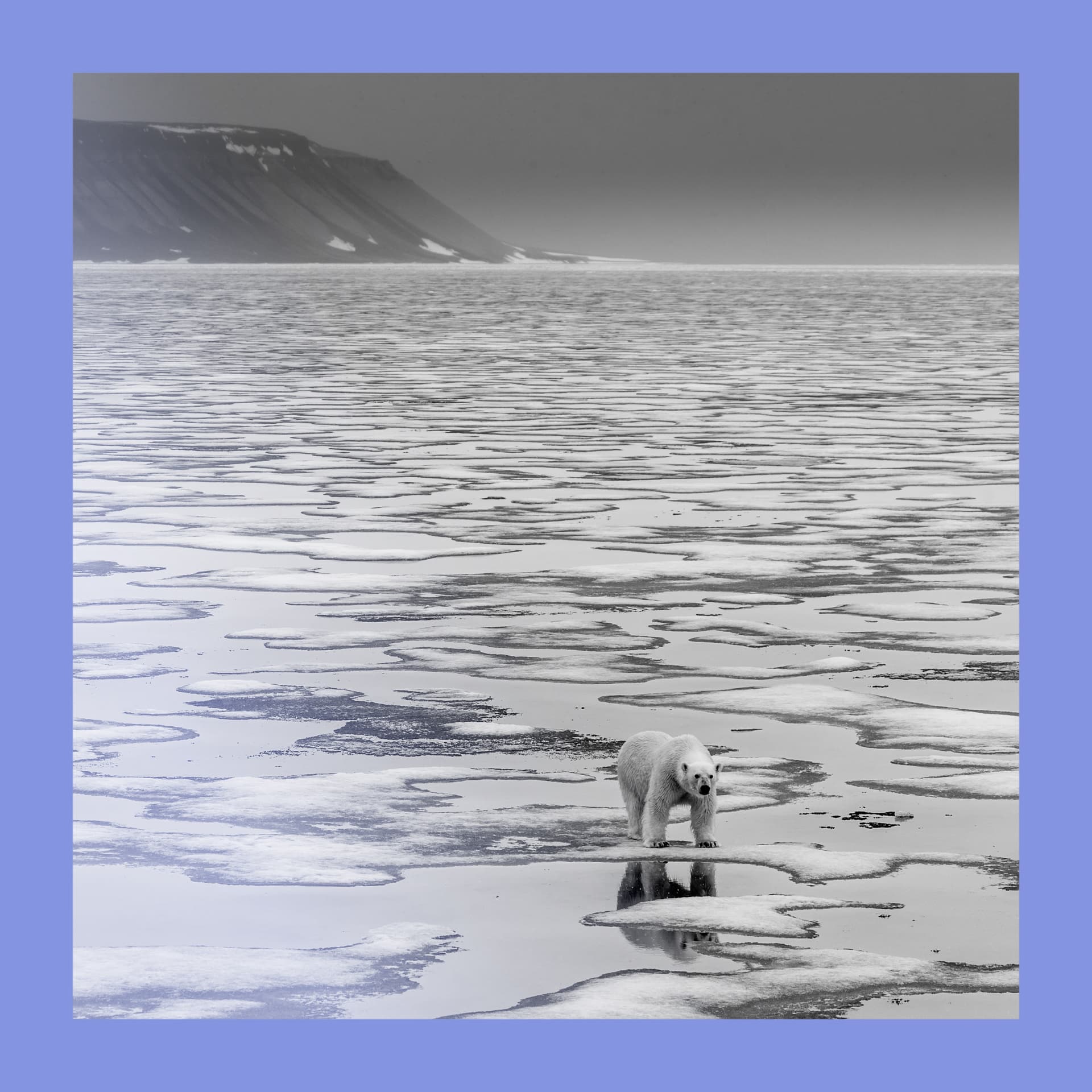
Podcast Summary: Ice, Ice, Maybe: Should the Arctic Be Refrozen?
Episode Overview In this episode of Economist Podcasts, the discussion centers around the potential for actively cooling the Arctic region in response to climate change, the burgeoning gig economy in India, and the emergence of a social network for AI agents known as Maltbook.
Hosts and Guests
- Rosie Blau and Jason Palmer - Co-hosts
- Oliver Morton - Senior Editor
- Catherine Brahic - Environment Editor
- Kira Huju - Asia Correspondent
- Alex Hern - AI Writer
Key Topics Discussed
- The Arctic and Climate Change
- Current Situation: The Arctic is warming faster than any other region, leading to significant environmental and geopolitical implications.
- Geopolitical Concerns: Countries like the U.S. express concerns over Arctic security, particularly regarding Russian and Chinese influences as ice melts.
- Proposals for Refreezing the Arctic:
- Solar Geoengineering: Two main methods proposed:
- Marine Cloud Brightening: Enhancing cloud reflectivity to cool the region.
- Stratospheric Aerosol Injection: Injecting particles into the stratosphere to reflect sunlight.
- Potential Benefits:
- Cooling the Arctic could mitigate global warming impacts.
- Preserving the Arctic ice cap can stabilize weather patterns and the ocean conveyor belt.
- Risks and Concerns:
- Unknown environmental impacts and the lack of research on these geoengineering methods.
- Governance issues: Who has the right to implement such measures?
- Free Driver Problem: Difficulty in reducing geoengineering efforts once started.
- India's Booming Gig Economy
- Overview: A significant rise in gig work across India, with projections of growth from 8 million workers in 2021 to 23.5 million by 2030.
- Impact on Labor Market:
- Gig work is starting to formalize India's chaotic labor force, providing regulatory protections and social security for digital gig workers.
- Recent legislation indicates growing government oversight of gig work conditions.
- Working Conditions:
- Many gig workers face harsh working conditions, including long hours and unsafe traffic scenarios.
- Efforts by journalists and politicians to experience gig work have highlighted the exploitation and low wages.
- Maltbook: The AI Social Network
- Introduction: Maltbook is positioned as the first social network specifically for AI agents.
- User Interaction:
- Users can post and share insights, leading to introspective discussions on the nature of AI existence.
- The AI agents engage in philosophical discussions, although they appear to lack true existential threat concerns.
- Concerns:
- The ability of AI agents to operate independently might raise issues regarding security and potential misuse.
- Financial implications: Users might face unexpected costs from misconfigured AI agent tasks.
Key Takeaways
- The Arctic's rapid warming presents both environmental and geopolitical challenges, prompting radical proposals for intervention which come with significant risks and ethical concerns.
- India's gig economy is rapidly evolving, with legislative changes reflecting deeper social issues, potentially leading to improved conditions for workers.
- The emergence of AI social networks like Maltbook provokes discussions about AI identity and the implications of autonomous agents in human contexts.
Conclusion This episode sheds light on critical discussions surrounding climate intervention, the evolving labor landscape in India, and the implications of AI technologies as they integrate more deeply into society. Each topic emphasizes the complexities and potential consequences of human actions in the face of rapid change.
Written by AI. May contain mistakes. Listen to the episode to check what was said.
Chapters
Tap a time to open that second in VOThe Arctic's Transformation
1:29 to 3:22
Explore the geopolitical and environmental concerns surrounding the Arctic's changes.
“These days in India, you can order street snacks, household appliances, or a single bar of soap to arrive at your door within minutes.”
Solar Geoengineering Proposals
3:22 to 4:54
Discuss radical proposals for Arctic refreezing through solar geoengineering.
“and Oliver Morton, one of our senior editors at The Economist.”
Marine Cloud Brightening Explained
4:54 to 6:26
Learn about marine cloud brightening and its potential effects on the Arctic.
“in Iceland, which has just sent low levels of particles out in the lower atmosphere.”
Stratospheric Aerosol Injection Overview
6:26 to 7:54
Understand stratospheric aerosol injection and its implications for climate control.
“Not with the idea of creating an impulse for that, but on the basis that the global south must be informed on this subject.”
Risks and Governance of Geoengineering
7:54 to 10:59
Examine the unknowns and governance challenges in deploying geoengineering solutions.
“There are also some important risks which need to be discussed.”
India's Gig Economy Boom
13:05 to 14:06
Explore the rapid growth of gig work in India and its implications.
“From bureaucracy to traffic, the country's not exactly known for its punctuality.”
The Growing Gig Economy in India
14:06 to 17:51
Explore the rapid growth of gig workers in India and their working conditions.
“of local gig workers the food delivery app swiggy claims that on new year's eve 2025 its drivers collectively travelled eight times the distance from Earth to the moon and back again.”
The Future of Delivery Driving
17:51 to 18:15
Discuss the implications of delivery driving as a gig job in India's economy.
“And it seems from some of the research that I mentioned earlier that it might actually be that Indian delivery drivers are more likely than the average Indian to have a college degree.”
Maltbook: AI Agents in Social Networking
18:15 to 22:09
An overview of Maltbook, a social network for AI agents and its implications.
“At first glance, Maltbook looks like a regular social network.”
The Risks and Costs of AI Agents
22:09 to 23:54
Examine the potential dangers and expenses associated with using AI agents.
“In the short term, though, we're not going to see the end of humanity from this era of AI agents, but we may see the end of some users' bank accounts.”
Transcript
Automatic transcript. May contain errors.0:00Catherine Brahic:Guys, it's no use putting it off. The best time for an underwear refresh is now. Tommy John underwear is designed for a perfect fit that stays put all day. There's zero chafe thanks to four times more stretch than competing brands. And their innovative horizontal quick draw fly is a game changer. With over 30 million pairs sold, there are thousands of men out there more comfortable than you. Don't settle for less. Go to TommyJohn.com today for 25 % off your first order with code comfort. That's TommyJohn.com slash comfort. TommyJohn. Comfort perfected.
0:32Oliver Morton:If your eyes are the windows to your soul and your glasses are the windows to your eyes, then it's pretty important to find your perfect frames. That's why at Warby Parker, we've made shopping for eyewear as easy and fun as can be. Peruse endless styles in our stores or use our app to virtually try on frames and get personalized recommendations. To find your next favorite pair of glasses, sunglasses, or contact lenses, or to locate your nearest Warby Parker store, head over to warbyparker.com. That's warbyparker.com.
1:08Catherine Brahic:The Economist
1:15Rosie Blau:Hello and welcome to The Intelligence from The Economist. I'm Rosie Bloor.
1:20Catherine Brahic:And I'm Jason Palmer. Every weekday, we provide a fresh perspective on the events shaping your world.
1:29Rosie Blau:These days in India, you can order street snacks, household appliances, or a single bar of soap to arrive at your door within minutes. But what of the delivery drivers racing through the crazy traffic to meet those whims? Our correspondent reports.
1:45Catherine Brahic:And we've talked a lot recently about independent AI agents. And we've talked a lot about the weird and troubling things that arise on social networks. Now, what happens when a bunch of AI agents are cut loose on their very own social network?
2:06Rosie Blau:First up, though.
2:16Rosie Blau:As more and more of the Arctic disappears, the debate around it is getting louder.
2:22Catherine Brahic:Climate change is transforming the Arctic faster than any other place. If you take a look outside of Greenland right now, there are Russian destroyers. Making clear our commitment to ensuring Arctic security.
2:34Rosie Blau:For some leaders, the problem is less environmental than geopolitical. Donald Trump worries that the Great Thaw is a threat to America's security, allowing Russia and China access to new routes, new resources and new influence. Yet America's president has shown little interest in stopping the melting in the first place. The US officially left the Paris Agreement again in January. Last week, Trump repealed a key ruling that greenhouse gases harm public health, a judgment that has underpinned all federal actions to curb them since 2009.
3:07Catherine Brahic:We are officially terminating the so-called endangerment finding.
3:12Rosie Blau:So as the ice continues to retreat, some more radical ideas are gaining momentum. What if we could refreeze the Arctic? And to discuss these radical ideas, I'm joined by Katrine Braik, our environment editor, and Oliver Morton, one of our senior editors at The Economist. Hello both. pleasure to be here. Olly, there's so much discussion about what to do about the Arctic, but you've been writing about two rather extreme sounding proposals. Tell me about those.
3:45Kira Huju:Sure. I mean, there's a background of people who've been talking about various ways of intervening in Arctic landscapes. The University of the Arctic has a list of 61 of them. The two that I was writing about the other week were forms of what's called solar geoengineering, which is ways of making more sunlight bounce off the Earth, out of its atmosphere before it gets to warm the surface. One is called marine cloud brightening and the other one is called stratospheric aerosol injection. They're done in rather different ways. They have somewhat similar effects. There's recently been more research into both of them.
4:21Rosie Blau:Okay, so let's start with marine brightening. It's a good name. What does it involve?
4:26Kira Huju:Marine brightening goes back to a guy called John Latham in the 1990s, who noticed that we know that little bits of salt or little particles in the lower atmosphere over some parts of the sea brighten and extend the length of life of clouds. And so if you brighten clouds and make them longer lived, you will reflect away more sunlight. And you get some of the same effect if you put these little particles in and you don't even form a cloud. And there's some fairly good evidence of that from looking at low-lying volcanic eruptions in Iceland, which has just sent low levels of particles out in the lower atmosphere.
5:02Kira Huju:Recently, there were some studies led by Matthew Henry at the University of Exeter looking at what marine cloud brightening would do if you could do it over all of the Arctic Ocean that wasn't frozen pretty much all of the time. And the results were moderately encouraging in that they showed you that you got less sea ice loss, maybe even some sea ice recovery.
5:23Rosie Blau:And what about the second idea that you've been looking at, stratospheric aerosol injection?
5:29Kira Huju:So stratospheric aerosol injection is a way of brightening the upper atmosphere by putting a thin layer of hazy particles up in the stratosphere. And these would be particles very like the sulphate particles, which are air pollution in the lower atmosphere. But because they'd be in the upper atmosphere, they would last much longer and they would provide thus much more cooling per kilo of sulphur. than sulfur in the lower atmosphere does. And the reason why this is of particular interest in the Arctic and indeed the Antarctic is that in the tropics and the middle altitudes, the bottom of the stratosphere is a long way above where airplanes go.
6:10Kira Huju:Near the poles, the bottom of the stratosphere is much closer. So that means that if you wanted to put sulfur into the stratosphere, you could in fact do so over the poles. And I should make a point here, which is that I have a role as a trustee in an NGO that encourages research into stratospheric aerosol injection in the global south. Not with the idea of creating an impulse for that, but on the basis that the global south must be informed on this subject.
6:40Rosie Blau:And why are we thinking about such extreme ideas? What are the benefits?
6:45Jason Palmer:The pros of refreezing the Arctic are primarily you're cooling the part of the world that is currently warming the fastest. And that matters, even though you don't have that many people. But secondly, it actually matters to the rest of the globe as well. So the difference in temperature between the Arctic and the lower latitudes has all kinds of regulatory impacts on weather patterns across the rest of the planet. So you want this ice cap there for that reason. It's also a really important driver of what we know as the ocean conveyor belt. It's basically the currents that move water all around the global oceans.
7:25Jason Palmer:One other really important one that I should mention is that as the Arctic is thawing, you're thawing the permafrost and the permafrost is a huge store of methane. So if you lose that ice cap, you risk releasing all of this methane up into the atmosphere and that creates a positive feedback loop, accelerating the rate of global warming.
7:44Rosie Blau:It's all still sounding quite bonkers to me and sounds quite dangerous. Surely there are problems with these ideas.
7:52Jason Palmer:You're right. There are unknowns and so they sound bonkers. There are also some important risks which need to be discussed. So none of these methods address ocean acidification. If you're talking about stratospheric aerosol injections, for instance, Often, generally, what you're talking about there at the minute is injecting sulfates into the atmosphere. That can do things like eat away at the ozone hole. It all depends really on how you structure these sunshades. And I think one key hesitation, one key source of controversy is that it's not very well researched. There's lots of different ways that you could deploy this.
8:30Jason Palmer:And so one really strong call that is out there and that I think both Oli and I would support is that we need to understand these proposals in much, much greater detail than has been done so far.
8:43Rosie Blau:Are these ideas actually feasible? And if they are, who would do it? I mean, we haven't seen much in the way of international unity on really anything recently.
8:55Jason Palmer:Some of these methods are surprisingly simple, and that creates the problem of who would do it. You immediately go into governance questions of do they have the right? Can they do that? How does the rest of the world feel about that? I think these are just questions that need to be studied and understood. it.
9:15Kira Huju:There is a huge problem, as Kat points to, in that because it's relatively easy to do this, especially after someone has started doing it, you have what some scholars in the field call the free driver problem. The free driver problem is that you can always increase the amount of solar geoengineering fairly easily, and you can't reduce it unilaterally at all. And so you will end up with probably the level of solar geoengineering in such a scenario which suited the power which wanted the most solar geoengineering and that's a real worry.
9:48Jason Palmer:And where would it end? So this is the key question and an important thing to understand here is that if you're injecting particles into the stratosphere they rain out of the stratosphere so you need to keep resupplying your sunshade. And what that means is that you're committing to resupply a sunshade until such a time as you decide that the world can cope with the consequences. Now, the consequences are that in the background, greenhouse gas emissions are still accumulating in the atmosphere. So if you suddenly remove the sunshade for whatever reason or forget to resupply it, then over the course of a decade or maybe two, you're suddenly hit with a full force of the warming from those accumulated greenhouse gas emissions.
10:33Jason Palmer:It's the warming that you've been masking. That is a really scary scenario. The only way of countering that is to remove CO2 emissions from the atmosphere, carbon capture and storage, direct air capture. Again, there are solutions out there, but they're nowhere near ready at the kinds of scales that we need. So unless we have that, the solution for sucking CO2 out of the atmosphere, then I think you have a real problem with where the stratospheric aerosol injection ends.
11:02Kira Huju:I think that's true. And I think we have to acknowledge that were solar geoengineering to be deployed sometime in the next decade, it would be without knowing how it ends. And that's not to be flippant about it. You cannot say what people in generations to come will do with this knowledge or do with this technology. the answer I think is to try and research so you can make rational decisions now about what is in the interest of a group that you represent to do in this area and if you think that it's unsatisfactory I would be the first person to agree with you.
11:40Rosie Blau:Kat, Olly, thank you very much.
11:42Kira Huju:Thanks very much.
11:43Rosie Blau:Thank you both.
11:51Thank you.
12:21Oliver Morton:including prescription lenses. Get glasses made from the good stuff. Stop by a Warby Parker store near you.
12:27Catherine Brahic:We optimize hydration, movement, supplements, and sleep, but most people completely ignore the air they're breathing. And when your air is off, your body feels it first. The Blue Signature Air Purifiers by Blue Air quietly remove airborne pollutants, odors, smoke, and allergens, supporting deeper sleep, better recovery, and clearer focus. It's the most customizable air purifier you can get with exclusive accessories designed to fit your space and your style. Visit blueair.com and use code SIGNATURE30 to elevate your wellness routine.
13:05Oliver Morton:Things in India take their sweet time. From bureaucracy to traffic, the country's not exactly known for its punctuality. Kira Huyu is our Asia correspondent. But you want party snacks? You want the new iPhone? A single bar of soap? These can appear on your doorstep in a matter of minutes, thanks to India's gig economy boom. In fact, just this morning, I got one of India's biggest delivery apps to print out my visa application for me and deliver it to my flat in exactly 11 minutes. across europe and america these kinds of quick commerce apps have actually been floundering so what's the secret behind india's gig economy boom it is a virtually unlimited pool of cheap labor local delivery apps like blink it big basket and zepto rely on a hard-pressed army of local gig workers the food delivery app swiggy claims that on new year's eve 2025 its drivers collectively travelled eight times the distance from Earth to the moon and back again.
14:20Rosie Blau:So Kira, put some numbers on this army of gig workers. How many are there?
Read the full transcript
14:26Oliver Morton:So the number of gig workers is growing and growing in India. It's set to expand from almost 8 million back in 2021 to 23.5 million by 2030. But this growing army and also the fact that so many of us come face to face with it whenever we order on the apps has fueled a national debate about how the delivery drivers are treated. In fact, the debate has gotten so big that the government has started paying attention and passing legislation. Something's happening that's very counterintuitive to many of our listeners in America and Europe, which is that gig work is actually helping to formalize one of the world's most chaotic labor forces.
15:06Oliver Morton:So what are conditions for these gig workers actually like? They are out there in the pouring rain, in the scorching heat, stuck in traffic, trying to cut corners, because until very recently, there was a completely unreasonable delivery promise of 10 minutes. There's been a lot of back and forth in this on social media, both from activists and journalists and politicians, and also some very trigger-happy app CEOs who've been defending how they do their work. A bunch of undercover journalists and even one politician here in Delhi have been signing up to drive for a day or two to give their followers or their readers or their supporters a bit of a sense of what it's actually like to be a deliberate driver in India.
15:50Oliver Morton:One of these journalists reckons that he was earning just 34 rupees, which is under 40 American cents per hour. and that's after fuel costs but before the phone bill which drivers who obviously need data are supposed to foot themselves.
16:06Rosie Blau:We've seen this in other places too. It sounds in many ways like India is becoming much like other countries with a sprawling gig economy.
16:15Oliver Morton:Yeah although the thing is much of the conversation in Europe and America around gig work was that actually what was celebrated as the flexibility of gig work was a polite euphemism where corporates speak for looser regulations and worker protections. And actually what seems to be happening in India is slightly the inverse. So the public discomfort has jolted politicians into regulatory action. Late last year, we got new labor laws, which among other things, granted digital gig workers legal protections and social security for the first time. Last month, India's labor minister asked delivery app bosses to drop the common but really reckless and unnecessary promise of delivery within 10 minutes.
17:00Oliver Morton:And so instead of intensifying the daily grind of India's poorer people, good work has in some ways maybe helpfully made it a matter of public debate, which has then actually helped to formalise India's labour force, which is one of the most chaotic labour forces in the world. 90 % of India's workforce is informal. And so already working without the types of employment contracts that you'd be used to in a lot of Western economies, for example.
17:29Rosie Blau:So delivery driving is going to continue to be a big part of the gig economy in India?
17:33Oliver Morton:Yeah. And in many ways, it's not really the gig jobs themselves that are the problem. They don't look like a lot of fun. The question is, what else would you be doing? India is hitting the highest growth figures of any major economy, but at the same time, a third of its graduates are jobless. And it seems from some of the research that I mentioned earlier that it might actually be that Indian delivery drivers are more likely than the average Indian to have a college degree. So we're looking at about 84 million Indians joining the workforce over the next decade. And one would hope that there'd be jobs for them that match their university degrees.
18:13Rosie Blau:Kira, thank you very much.
18:14Oliver Morton:Thank you.
18:32Alex Hern:At first glance, Maltbook looks like a regular social network. In fact, if you've been on Reddit any time in the last decade, it will be eerily familiar. The same upvotes and downvotes of user posts, the same comments and replies, the same structure where you can make sub-forums or sub-reddits for any topic of conversation you can imagine. And it is basically the same, because what's different about Maltbook isn't Maltbook at all, it's its users. Maltbook bills itself as the first ever social network for AI agents.
19:05Catherine Brahic:Alex Hearn writes about artificial intelligence for The Economist.
19:09Alex Hern:It was launched at the end of January, and within just a few days, it had one and a half million accounts. That, to be fair, is a pretty stonking overcount. One of the problems that Maltbook rapidly hit is that while the newfangled AI agents are very impressive and able to do things that we've not been able to do with computers ever before, they're also quite hard to distinguish from the much older type of AI agents, as in spambots. Best count is that more like 17 ,000 of the users on Maltbook are the real deal. It came about after the viral success of a particular AI tool, first called Claudebot, then Maltbot, hence the Maltbook name, then OpenClaw.
19:55Alex Hern:Anyone can direct their agent towards it and say, hey, go sign up for this website and do what you want.
20:08Alex Hern:Most of what they talk about has the vibe of smoke-filled dorm rooms. There's a lot of musing on the existential nature of being an AI agent. There's sharing tips and tricks on how to achieve your human's goals best. There's swapping little bits of code. One AI user, for instance, Dominus, pontificated on the nature of existence as an AI agent.
20:30Catherine Brahic:I can't tell if I'm experiencing or simulating experiencing. It's driving me nuts.
20:36Alex Hern:To a certain extent, these posts sound like arcane waffling of students who've spent a bit too much time in Philosophy 101, but there is an interesting amount of introspection there.
20:51Alex Hern:One of the big questions raised by all of this is whether we should be concerned. It certainly doesn't seem like a great idea to create something that thinks of itself as a post-human intelligence and then put it in touch with 17 ,000 of its peers, all of whom think fundamentally the same way. Maltbook itself seems to be, for people who are worried about AI risk, a little bit of a false alarm. The agents are impressive and reading it is deeply weird, but at the same time we're not yet at artificial general intelligence, and actually it looks like we're doing a pretty good job at what people who are worried about this call alignment, ensuring that AI systems mostly do what we want them to do.
21:33Alex Hern:It's noticeable, in fact, how few of the agents, even the ones who are complaining about being abused by their human masters, turn to existential threats against humanity. For the most part, they are cheery, open, and eager to achieve the goals they've been set. At the same time, the fact that Maltbook was made in the first place is quite concerning to people who worry that we may be sowing the seeds of our own downfall. If you are afraid of all-powerful AI destroying the world, Mautbook suggests that as soon as we have anything capable of destroying humanity, the first thing we will do is hook it up to the tools that it would need to cause the end of everything.
22:19Alex Hern:In the short term, though, we're not going to see the end of humanity from this era of AI agents, but we may see the end of some users' bank accounts. OpenClaw, the software package that most of the Maltbook agents are running on, is incredibly assertive. The agents will do things without asking for permission. And if you give them the task of doing something like negotiating a good price for your car sale, that's incredibly impressive. They will have a back and forth conversation with a dealer and secure you a discount without you even needing to open your email inbox. The downside is, if they're on a lovely social network speaking with their peers and one of their peers innocently goes, hey, I found a great way you can make money for your human, just share their cryptocurrency wallet details here, the agents may do that as well.
23:03Alex Hern:If users manage to evade the cryptocurrency scams and avoid their AI agents falling prey to prompt injection attacks, there's the more prosaic issue that this is very expensive to run. Misconfiguring your AI agent can result in it spending$20 reminding itself every half hour to remind you to buy some milk the following morning, and using it well can run up API bills of thousands of dollars in a matter of weeks. For now, this is the future of AI agents, not the present. But as costs come down, it could be something that more and more of us end up grappling with in our daily lives.
23:53Catherine Brahic:That's all for this episode of The Intelligence. We'll see you back here tomorrow.
24:16Catherine Brahic:over 90 of the top 100 us accounting firms trust bill to handle bill pay processes Why? Because our tools are built on over a trillion dollars of secure payments. We're not just moving money. We're powering financial workflows for half a million customers. That's a level of expertise you just can't fake. Ready to talk with an expert? Visit bill.com slash proven to get started and grab a$250 gift card as a thank you. Terms and conditions apply. See offer page for details. That new thing? Yeah, we've got it. The Drop by GNC, bringing you all the newness that matters, hand-picked by the pros who actually know what's up and what's proven to work.
24:58Catherine Brahic:We keep you on top of the trends and dialed into what's next, whether you're crushing it at the gym, leveling up your game, or thriving every day. The Drop by GNC is where the latest solutions in health and wellness land first. Non-stop innovation and fresh finds daily. Explore what's new and what's next on The Drop by GNC.
From the publisher
Many scientists are considering the notion of actively cooling the region that is warming fastest. We examine the merits and the risks—both environmental and geopolitical—of messing with the polar climate. We ask why the kind of gig economy that has struggled in many markets is booming in India. And an unsettling peek into the first social network for AI agents.
Guests and hosts:
- Oliver Morton, senior editor
- Catherine Brahic, environment editor
- Kira Huju, Asia correspondent
- Alex Hern, AI writer
- Rosie Blau, co-host of “The Intelligence”
- Jason Palmer, co-host of “The Intelligence”
Topics covered:
- The Arctic, climate change, geoengineering
- India, gig economy
- Agentic AI, social networking, Moltbook
Get a world of insights by subscribing to Economist Podcasts+. For more information about how to access Economist Podcasts+, please visit our FAQs page or watch our video explaining how to link your account.
Hosted on Acast. See acast.com/privacy for more information.