In short
The Intelligence episode covers three topics: (1) a UK by-election in Clacton, Essex where Reform UK leader Nigel Farage faces a joke candidate, Count Binface; (2) why internet in Nigeria and across Africa is unreliable and how Starlink may help; (3) culture commentary on Christopher Nolan’s upcoming Odyssey adaptation and the backlash over casting and details.
Guests and backgrounds
Hugo Jai, British political correspondent for The Economist; Ore Ogunbiyi, Africa correspondent for The Economist; Catherine Nixey, culture correspondent for The Economist.
Key claims
Clacton’s political rules allow fringe candidates with a £500 deposit and 10 voter signatures; Farage triggered the by-election amid investigations into unreported donations (including £5m from crypto entrepreneur Christopher Harbourn and donations from “Posh George” George Cottrell). Starlink can be a stopgap where fiber is scarce (Nigeria needs ~90,000 km more fiber; current fiber reaches <1%); satellite plus mobile operators should form a mixed connectivity ecosystem. Nolan’s Odyssey reflects modern anxieties and flattens Odysseus’ flaws; trailer criticism includes race/costume details and anachronistic dialogue.
Notable examples
Count Binface is comedian John Harvey (46), previously ran against Theresa May, Boris Johnson, Rishi Sunak, and Andy Burnham; Starlink “drops when it rains”; Odyssey trailer commenter said they’d “walk out” on a plane.
Written by AI. May contain mistakes. Listen to the episode to check what was said.
Chapters
Tap a time to open that second in VOQuirky Political Candidates in UK
1:46 to 2:18
Explore the ease of running for office in Britain and its implications.
“Listeners outside Britain probably don't know about one quirky facet of the country's political system.”
The Clash of Farage and Count Binface
2:22 to 4:08
Insight into the political rivalry between Nigel Farage and Count Binface.
“We don't need to review the rise and rise of Nigel Farage, leader of the populist right Reform Party.”
Count Binface's Background
4:10 to 5:50
A deep dive into the persona and past of Count Binface.
“to give him more votes than Farage, he will become their MP.”
Political Implications of the By-Election
5:52 to 7:56
Discusses the political stakes of the by-election and its candidates.
“He first came to fame in 2017 when he stood against then Prime Minister Theresa May.”
Farage's Controversies and Future
7:59 to 9:09
Analyzes the controversies surrounding Nigel Farage and his political future.
“Nigel Farage was under no compulsion to resign.”
The Internet Infrastructure Challenge in Africa
14:00 to 17:52
Explore the growing internet demand in Africa and the challenges in infrastructure.
“So, Ori, this is not just a big problem.”
Reactions to Christopher Nolan's Odyssey Adaptation
17:52 to 22:41
Discussion of the public reactions and cultural implications of Nolan's adaptation of The Odyssey.
“Christopher Nolan's adaptation of The Odyssey was causing conniptions long before anyone had even seen the thing.”
Cultural Reflections in Modern Adaptations
22:41 to 24:26
Examine how modern adaptations of The Odyssey reflect current societal values and issues.
“So I'm like all aboard the hype train now.”
Cultural Reflections in Modern Adaptations
24:37 to 25:19
Examine how modern adaptations of The Odyssey reflect current societal values and issues.
“It's pretty much all he talks about, in a good way.”
Cultural Reflections in Modern Adaptations
25:23 to 25:45
Examine how modern adaptations of The Odyssey reflect current societal values and issues.
“Their products are trusted in Michelin-starred restaurants worldwide and designed to perform just as well in your kitchen.”
Transcript
Automatic transcript. May contain errors.0:00With no fees or minimums on checking accounts, it's no wonder the Capital One bank guy is so passionate about banking with Capital One. If he were here, he wouldn't just tell you about no fees or minimums. He'd also talk about how most Capital One cafes are open seven days a week to assist with your banking needs. Yep, even on weekends, it's pretty much all he talks about. In a good way. What's in your wallet? Terms apply. See CapitalOne.com slash bank. Capital One N.A. Member FDIC.
0:32This intelligence podcast is sponsored by Backmarket, the leading global marketplace for refurbished tech. When the kids need phones, laptops, or tablets for school, buying refurbished tech makes sense for families trying to save money without sacrificing quality. At Backmarket, tech costs up to 50 % less compared to new. All devices have been professionally refurbished and come with a one-year warranty and 30-day return policy. Start saving money. Visit Backmarket.com or the Backmarket app to shop now.
1:05The Economist
1:12Hello and welcome to The Intelligence from The Economist. I'm Jason Palmer.
1:21Today on the show, fed-up Africans turn to Starlink for their internet and our culture editor's take on the new Odyssey adaptation.
1:36First up, though.
1:46Listeners outside Britain probably don't know about one quirky facet of the country's political system. It's really easy, practically speaking, to run for office. What that means is you sometimes get fringe parties and fringe individuals campaigning. The official monster-raving loony party. The Church of the Militant Elvis party. The list is long, and the media love this stuff. Now, when one of those fringe candidates goes head-to-head against the country's poll frontrunner in a surprise by-election, oof, media gold dust. We don't need to review the rise and rise of Nigel Farage, leader of the populist right Reform Party.
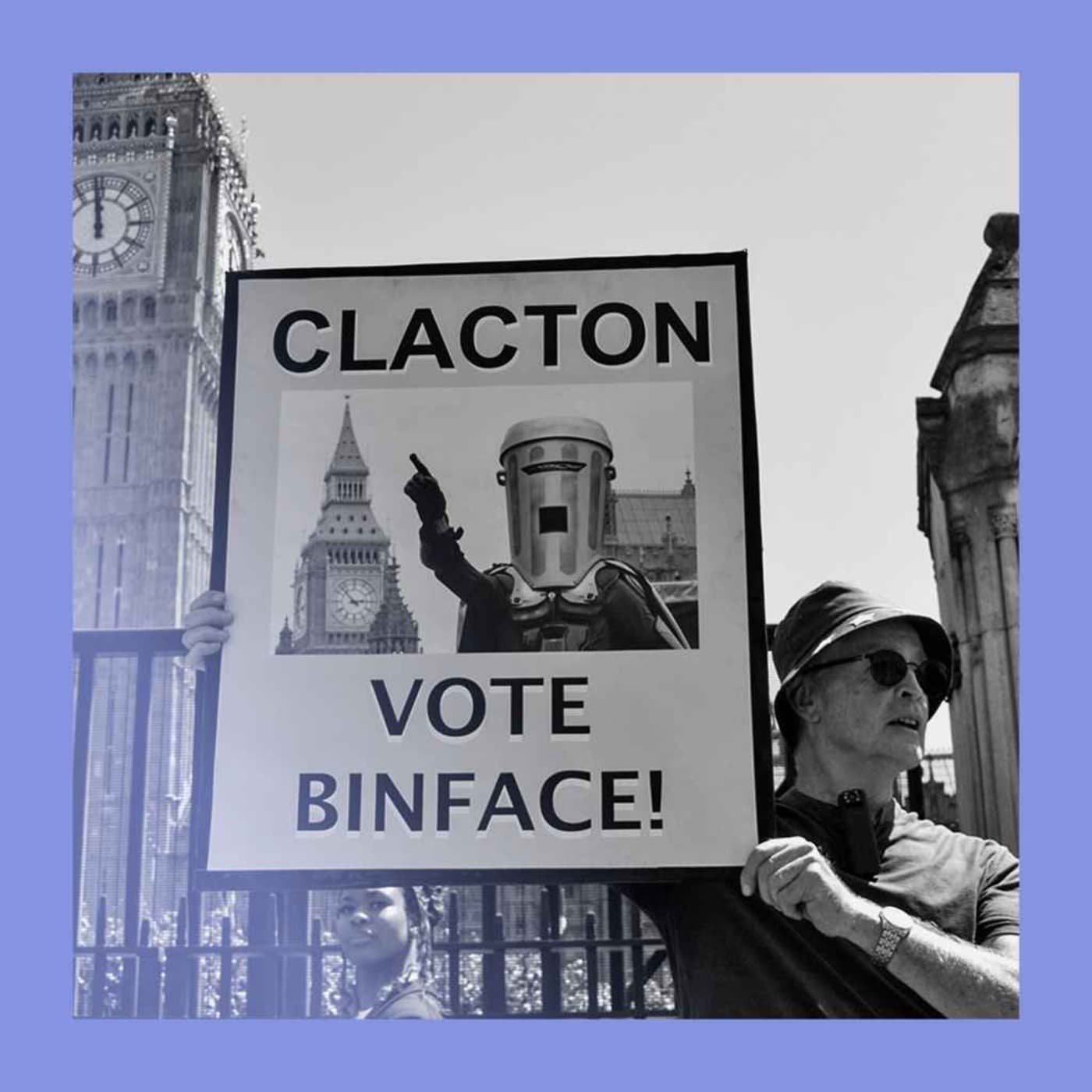
2:28He has stepped down and is running again to be a member of Parliament in Clacton-on-Sea. The people of Clacton should be the judges of my actions. This will be a people versus the establishment by-election. It's a chance to stick two fingers up to the entire establishment. And evidently the representative of the establishment in the contest? Count Binface here, intergalactic space warrior. And I'm speaking to you from my starship, the Albarata, which is now parked nicely in orbit. Count Binface. He claims to be thousands of years old. He wears a cape and a helmet shaped like a dustbin, a garbage can.
3:10And he's taken to the likes of BBC Breakfast to lay out his policies. I will tailor my manifesto to the local area as always, but most of my national policies will remain. Building at least one affordable house, nationalising Adele, bring back Cifax, and of course... On the country's flagship morning news programme today, he showed disarming honesty. What is your appeal going to be to the people of Clacton? Well, I'm not Nigel Farage.
3:43It would be laughable, or more laughable, if not for the serious reasons behind the by-election. Technically, there is no reason that Count Binface could not be the next MP for Clacton. Hugo Jai is our British political correspondent. All he has to do is pay a£500 deposit, get the signatures of 10 voters, and he's there, he's on the ballot paper, taking on Nigel Farage directly. If Count Binface can persuade the voters of Clacton to give him more votes than Farage, he will become their MP.
4:21So before we get on to Count Binface, tell me how we ended up in this situation in the first place. Nigel Farage has been under growing and increasingly intense scrutiny over his finances, particularly over a number of donations that he has received and not reported. Five million pounds from a crypto entrepreneur called Christopher Harbourn and a series of donations from a close friend and convicted fraudster called George Cottrell known as Posh George. He says he didn't have to register these gifts because they were just personal gifts rather than political donations but there are investigations underway by the Parliamentary Standards Commissioner to work out whether he has actually followed the rules.
5:07As I repeat, I've done nothing wrong. He triggered this by-election to try and, in his words, clear his name. The problem he has, though, is that the rest of the main parties, the Conservatives, Labour, etc., want nothing to do with it. They've said they're not even going to stand a candidate, leaving essentially just Farage himself versus Binface. Well, then let's get into the political meat of Count Binface. Who is he? So he's not actually a 6 ,000-year-old space warrior, you'll be surprised to hear. Don't tell me he's not a count either. His aristocratic claims are exaggerated, I'm afraid. He is a 46-year-old comedian, scriptwriter, author called John Harvey.
5:51He's stood in multiple elections before, actually. He first came to fame in 2017 when he stood against then Prime Minister Theresa May. He repeated the trick against Boris Johnson in 2019, Rishi Sunak in 2024, and against Andy Burnham in the Makerfield by-election, which brought Burnham back to the Commons just a few weeks ago. He's never won more than a couple of hundred votes in those sorts of contests, although when he stood for Mayor of London twice, He managed to reach the giddy heights of 1%, picked up 24 ,000 votes, which is quite a lot for a joke candidate. But he's never been in the spotlight in the same way as he is going to be now.
6:33And so what chances do you give him in what might be a farcical contest on both sides? It's really pretty unlikely that Count Binface is going to win. Nigel Farage is very divisive in Britain as a whole. And actually, there was a poll recently of the country at large, which found that 33 % of voters would like been faced to win this by-election and only 21 % would back Farage. But luckily for Farage, it's only the voters specifically of Clacton who get a say. This town in Essex is possibly the most pro-reform part of the whole of the UK. Nigel Farage would probably win pretty easily, even if all the other serious opposition parties were standing against him.
7:22But Bimface could put up a decent fight, and I wouldn't be surprised to see him get 5%, 10%, maybe 15 % of the vote, which would be pretty impressive, given the limitations of being quite fundamentally a joke character. Well, I mean, that is the point, I think, looking at this from the outside. You wonder about the utility of the farcical nature, I guess, this part of British politics. Do you think it's good for the political system that people can, in this very tongue-in-cheek way, hold people to account? So I would make two points. In this specific instance, this by-election is a farce, but that's not because of Count Binface.
7:57It's because of Nigel Farage. Nigel Farage was under no compulsion to resign. There was no reason for him to trigger this by-election, and he won't have any serious opponents. He's created that situation. it is ridiculous and I think it probably is good and humbling in a very useful way to have Count Bimface there in this case really highlighting what a joke it is but I have to say without wanting to be too curmudgeonly my view is that in our political culture as a whole in Britain we've maybe erred too much on the light-hearted too much on the jokes there's a long tradition of really taking the mickey relentlessly out of British politics.
8:40And it does have its time in place. And as I say, in this by-election, that's fine. But I think British politics is in a bad way. Britain's society economy stagnating. And I think it's good to be able to laugh at ourselves. But actually, this is a time when maybe we should be taking the duties of British politics a bit more seriously. And coming back to Mr Farage himself, in all cases, even if he wins, he is tarnished by all of this, right? Yeah, it's potentially pretty damaging for him. There have long been questions about the propriety of his personal financial dealings. To be clear, Nigel Farage thoroughly denies any wrongdoing.
9:23He still stands a realistic chance of being the next prime minister. Reform UK did very well in the local elections in May. and reform is still the most popular party in the country. That said, of course, Labour is about to have a change of leadership. New Prime Minister Andy Burnham replacing Keir Starmer. Labour hoping for a popularity bounce from that. The Conservatives undergoing a modest revival at the moment under Kemi Badenoch, their leader, who seems to be more popular than she was. Reform is at the moment past its peak. Whether that continues to happen is another case. But another problem is, bizarre as it sounds, this might not even be the last Clacton by-election.
10:02Because if he is found guilty of wrongdoing over his finances, that could trigger another by-election. And let me tell you, in that one, the other parties would be running against Farage and they would be running pretty hard.
10:17The thing about Nigel Farage, he's been around a long time. He's been through a lot of adversity. He's had lots of downs. And every time he's found a way to make a comeback. So it does look like he's at a relatively low ebb, but I would never write off his chances of making it back to the top again. Hugo, thanks very much for your time. Thank you, Jason. Thank you.
11:08or minimums on checking accounts. It's no wonder the Capital One bank guy is so passionate about banking with Capital One. If he were here, he wouldn't just tell you about no fees or minimums. He'd also talk about how most Capital One cafes are open seven days a week to assist with your banking needs. Yep, even on weekends, it's pretty much all he talks about, in a good way. What's in your wallet? Terms apply. See CapitalOne.com slash bank. Capital One N.A. Member FDIC.
11:48Ọrẹ Ogunbiyi:In Abuja, which is the capital of Nigeria, people complain almost every day about the lack of reliable internet. Glitches and outages that last sometimes 15 minutes or as long as an hour have become part of daily life. And so I went to a tech mall to hear a little bit about what people are struggling with. Ore Ogunbiyi is an Africa correspondent for The Economist. When you walk into Banex, everyone's trying to sell you something. They're trying to sell you a phone. They're asking you if you need your laptop fixed, if you need a screen fixed, if you need a ring light or a tripod. This is the centre of Abuja's tech scene.
12:25Ọrẹ Ogunbiyi:So it seems like a logical place to come and ask people what they think about their internet connections. The internet has become part of us and you hardly do without it. I use it often. I use it to browse, I use it to advertise my business. I'm a businessman. The internet is not yet where it's supposed to be. The speed is not what it's supposed to be. You understand? Sometimes when I want to download something, it takes longer time. I'm watching something on YouTube. It blobs. At times. Most times. Most times. Most times, what? Every time. No service. No service. No service. There are many reasons why Africa's internet infrastructure still continues to fall short.
13:12Ọrẹ Ogunbiyi:And one of them is that it relies very heavily on cheaper mobile broadband instead of fixed-line internet. You have over 400 million Africans accessing the internet via their mobiles. But this technology isn't robust enough to meet the growing demand for data. Starlink, Elon Musk's satellite option, is increasingly filling the void, but not without its own issues. The efficiency is high compared to other networks, but my little experience with it is that when it rains, I think it drops. It's far cheaper than mobile routers. Mobile routers will give you data for a particular period. Starlink will give you unlimited access for a particular period of time.
13:54It's good for now. It's working. Yeah.
14:12So,
14:21Ori, this is not just a big problem. It is a problem that is getting bigger.
14:26Ọrẹ Ogunbiyi:Well, exactly. More people are streaming videos and they're taking longer to buffer. People do video calls on WhatsApp now and they're glitchy or they drop out without warning. And as more people use AI-powered applications, they're going to need even more data than they're using at the moment. So things are going to keep getting worse. More people want more data. Traffic is expected to at least triple by 2030. And the current infrastructure just isn't good enough. But why though? Why hasn't the infrastructure kept up with usage? When the internet age kicked off a few decades ago, the continent did a lot of leapfrogging.
15:04Ọrẹ Ogunbiyi:They basically skipped over building costly landline infrastructure like much of the rich world did and jumped straight to using mobile phones. But the thing is, the old school landline infrastructure that they jumped over, the stuff that can actually be repurposed to deliver fiber internet, which is much more powerful, which can handle streaming, which can handle the big fancy AI powered applications, they skipped over that too. And now most of Africa is still playing catch up. So take Nigeria, where I live, for example, the country needs 90 ,000 kilometers more of fiber optic networks. It's used by less than 1 % of the population because the existing networks are being expanded way too slowly to keep up with the pace.
15:43And so the question here is whether satellite providers, Starlink in particular, can bridge that gap or not.
15:50Ọrẹ Ogunbiyi:And well, exactly. And in some places, it looks like they can. So take a state like Ikiti, for example, which is in the southwest of Nigeria. It's very rocky terrain. It's about 250 kilometers away from Lagos, which is where the subsea internet cables land. They've got a young and super literate population that their government's trying to turn into an economic powerhouse. But because of how far away it is from Lagos, it's really expensive to get these guys good internet. But now the government's trying Starlink. It's still pricey, but at least it works. There's some irony here that your connection is kind of coming and going.
16:27Are you hearing us okay?
16:29Ọrẹ Ogunbiyi:Oh, for God's sake, and I'm using Starlink. Okay. In which case the question then is the economics of it. Clearly using Starlink at least for some time is cheaper than trying to put in tens of thousands of kilometers of fiber. Well, this is the thing. It's a pretty expensive stopgap. It's not going to be an option for everyone. But their entrance into the market is a good thing because it's forcing mobile operators to get their act together. These guys don't want to lose their top customers to Starlink. But it seems clear one way or the other that satellite internet is the answer for the continent.
17:02Ọrẹ Ogunbiyi:Well, it's definitely one part of it. But I think that a more plausible future is one where all these different bits work together to create a nice mixed connectivity ecosystem. You're going to have the mobile operators working with satellite companies. So take Utilsat, for example, which is a French firm that works directly with businesses, helping them get mobile internet to more remote areas. That's a way in which I see satellite operators and existing mobile operators working together to make sure that both people in urban areas, as well as people in the more remote areas, all just get a better connection.
17:36Ọrẹ Ogunbiyi:So I think more likely it's not that satellite alone is the future, but that lots of operators are going to be working together to make sure that young, digitally native Africans all have a way of getting a reliable connection. All right, thanks very much, as ever, for your time. Thanks so much for having me, Jason.
18:10Christopher Nolan's adaptation of The Odyssey was causing conniptions long before anyone had even seen the thing. Catherine Nixie is a culture correspondent at The Economist. Ahead of its release on July the 17th, there was harrumphing over everything, from the actress playing Helen, too black, the colour of the plume on Odysseus' helmet, it, the style of the soldier's armor, also too black and too Batman-like, and the vocabulary of Odysseus' son, too American. At one point he says, Dad! My dad is coming home. They're pining for a daddy he didn't even know. On YouTube, the film's trailer was met with criticism.
18:53One disgruntled commenter wrote that if they saw this on a plane, they would still walk out.
19:01The film itself is unlikely to relay any anxieties about anachronisms. Everything, from its scenery to its psychology, says far more about the modern West than it does about ancient Greece. Startling liberties are taken with the plot to turn Odysseus, the archetypally flawed ancient hero, into a simple modern goody by flattening those flaws. No one could stand between my men and home. Any bad behavior is explained away either by drug use, or it's hinted to be due to some kind of proto-PTSD, the over-diagnosis epidemic apparently having reached the ancient shores of Ithaca. Remember a wife, a son, home.
19:53The scenery is similarly unsuitable and often far too pretty. Soldiers in elegant gunmetal grey look less like ancient warriors than like warhammer toys. The ochre and candlelit palaces do not resemble warlords' lairs, but boutique hotels. During the beach scenes with the nymph Calypso, Odysseus seems to be less in agonising exile than on a Caribbean mini-break. They are wearing lots of linen.
20:21Every adaptation of an ancient text is as much about its own era as about the original work. Lesser Lens Than a Mirror. Ancient Athenians transformed Homeric epic into psychologically acute tragedy. In the 18th century, Alexander Pope's translation managed to make Odysseus sound like an effete Enlightenment poet rather than an ancient warlord. In 1922, James Joyce's version offered sex, stream of consciousness, and that modernist literary staple, boredom. So Christopher Nolan's retelling is part of a time-honoured tradition. It is manifestly a product of the present day. Female characters offer frequent apologias for feminism.
Read the full transcript
20:59The casus belli of the Trojan War is given as a desire to improve trade routes. But then, the Odyssey contains multitudes. In the three millennia since it was composed, it has been on an Odyssey all of its own. The poem has become a play, a TV series, and a porn film. Odyssey, the ultimate trip.
21:22It is therefore not surprising that Odysseus had been transformed by Christopher Nolan. Though in other ways it is surprising, as the Odyssey has been a filmic wrecker of reputations. A 2024 film starring Ralph Fiennes was dismissed as dull. A movie of 1954, starring Kirk Douglas, was described as weird and vapid. Though Christopher Nolan has form on tricky topics, his previous film Oppenheimer about nuclear weapons raised almost one billion dollars at the box office. Still even he has probably learned that the Odyssey is not an easy book to film. Its structure is tricky. It is a bout of disuse but readers do not meet him for four books.
22:04But then it's also very famous. The first Penguin classic ever printed was the Odyssey. Look up Odyssey in the British Library catalogue and you are offered 34 ,000 titles. Almost three for every line of the poem. A couple of weeks ago, we went to meet fans standing in a pendant area near Leicester Square, waiting to be let into the red carpet area for the premiere. Although I have the book in my hand, I've only read about half of it. So I did stop halfway through until I realised, you know, The Odyssey's coming out. The debate around the film and the excitable interest in it is in many ways further proof of The Odyssey's permanence.
22:41So I'm like all aboard the hype train now. I didn't know too much about the Odyssey before the trailer came out. But yeah, I'm really invested now. Honestly, a lot of people are overheating on a lot of the castings and how Christopher Nolan's going to depict the movie, but honestly, I have faked it. There are two ways to see the squabbles that have erupted over the Odyssey. One is to engage with them on their own terms. The gripes that people have about the trailer seem to have some validity. In Homer, Helen is clearly described as white-armed. Odysseus probably didn't wear a red-plumed helmet.
23:13as red was a Spartan habit. And Odysseus's son definitely didn't say dad, because he was talking in ancient Greek. But the other way to see these arguments is as proof of the Odyssey's malleability. It can fit almost any age. In an era anxious about the excessively manly manosphere, it allows people to fret over excessively manly armor. In an era driven by debates over race, it allows people to engage in a bad-tempered argument over casting. Each generation remakes the Odyssey in its own image. You get the version you deserve. So the clever, quarrelsome ancient Athenians took Homer and transformed him into clever, quarrelsome tragedies.
23:52In the 20th century, the modernists took Homer and turned him into brilliant modernist prose and poetry. The simplistic, visual modern world has now taken Homer and turned him into online spats about race and a very silly Cyclops. And thus, it has turned Homer into a tragedy that is all our own.
24:25That's all for this episode of The Intelligence. We'll see you back here tomorrow.
24:36Thank you.
25:07It's pretty much all he talks about, in a good way. What's in your wallet? Terms apply. See CapitalOne.com slash bank. Capital One N.A. Member FDIC. This podcast is sponsored by Made In Cookware. Made In partners with multi-generational artisans and some of the world's best chefs to create professional quality cookware, knives, and kitchen tools. Their products are trusted in Michelin-starred restaurants worldwide and designed to perform just as well in your kitchen. From five-ply stainless clad to carbon steel, every piece is built to last and made to actually make you a better cook. Discover award-winning cookware at MadeInCookware.com.
From the publisher
We take a peek into a quirk of British politics as the country’s populist-right polling leader goes up against a man who wears a bin on his head. It is more serious than it sounds. Africans tired of shoddy internet services are turning to Starlink—for a price. And our culture editor reviews an anachronism-laden take on a classic epic.
Guests and host:
- Hugo Gye, British political correspondent
- Ọrẹ Ogunbiyi, Africa correspondent
- Alexandra Suich Bass, culture editor
- Jason Palmer, co-host of “The Intelligence”
Topics covered:
- Nigel Farage, Count Binface, British politics, farce
- Africa’s internet infrastructure, Starlink
- “The Odyssey”, Christopher Nolan
Listen to what matters most, from global politics and business to science and technology—subscribe to The Economist.
Hosted on Acast. See acast.com/privacy for more information.