 Ask ChatGPT



Canada’s Alberta independence referendum and the broader separatist pressure in Quebec, alongside Canada’s trade-war and economic challenges; the episode also covers China’s push to catch up in neurotech (brain-computer interfaces) and Britain’s “bug highways” conservation efforts.
Robert Russo, Canada writer for The Economist; Don Wineland, China business and finance editor for The Economist.
Alberta feels treated as an “unwanted stepchild” despite vast oil reserves; Trudeau-era hostility to oil development fuels the referendum. Quebec separatism is driven more by French language/culture and perceived threats from immigration, but only ~30% support independence. Prime Minister Mark Carney is portrayed as highly competent while facing US trade conflict and tariff threats; Canada is diversifying exports (US share down from ~75% to ~66% in July) and fast-tracking infrastructure approvals.
“Building Canada Act” approval timeline; potential Alberta referendum sentiment “metastasizing” if above 30%; BrainCo bionic arm/piano demo; China’s neurotech policy (2015 strategic industry, 2024 ethical guidelines, hospital billing codes); Britain’s insect decline (~3/5 drop in flying insects over five years) and Bug Life’s habitat “highways”/“buzz lines.”
Written by AI. May contain mistakes.
Exploration of the referendum in Alberta and its implications.
“Today, in the Canadian province of Alberta, people are heading to the polls.”
Discussion on Prime Minister Carney's political challenges and regional grievances.
“Robert Russo writes about Canada for The Economist.”
Insights into Canada's trade issues and government response to economic challenges.
“But of course, Mark Carney, the prime minister, is trying to manage those at the same time as he's got the trade war with the US.”
Speculation on the outcomes of the Alberta referendum and trade diversification efforts.
“Rob, you said at the beginning it's a moment of maximum peril for Canada.”
Wrap-up of the discussion with reflections on Canada's political landscape.
“the handcuff they need on a mercurial, tempestuous Donald Trump in order to allow them to either come to some sort of manageable agreement or play out the string until he's replaced in 2029.”
Explore the progress and implications of neurotechnology in China and the US.
“He was using a bionic arm made by a company called BrainCo, which is a Chinese neurotech company.”
Hear a firsthand account of trying a neurotech device and its effects.
Learn about the decline of insect populations in Britain and conservation efforts.
“you can see the field is full of herbs and flowers, which feed a variety of different insects.”

Get the gist, explore an idea or ask about something said.
 Claude
On Economist Podcasts, what are the key points of this episode?
Searching your listeningAutomatic transcript. May contain errors.
0:00Your call has been forwarded to an automatic voice message system. A missed call doesn't feel like anything. No red flag, no notifications screaming at you. It just disappears into your call log. And nine times out of ten, that was someone ready to hand you money. That's why today's episode is brought to you by Quo, spelled Q-U-O, the business phone system built so you never miss a call. Here's what I like about it. All your calls, texts, and voicemails live in one place, so anyone on your team can pick up a conversation, see the full history, and respond fast. No more, wait, who talked to this customer last?
0:36And if you're worried about after-hours leads slipping through, Quo's optional built-in AI agent can answer questions and even book appointments while your team's offline. It's the number one rated business phone system on G2, and over 90 ,000 businesses already trust it to stay reachable. Money is on the line. Always say hello with Quo. Try Quo for free. Plus, get 20 % off your first six months when you go to Quo.com slash tech. That's Q-U-O dot com slash tech.
1:07This intelligence podcast is sponsored by Business Travel on Hotels.com. Does booking business travel feel like another job? Hotels.com makes booking work trips easy and rewarding. It's easy because you can set your preferences once and get results tailored to your business travel needs every time. It's rewarding because with Hotels.com's free rewards program, you can save instantly on your next work trip and earn rewards for future travel. Book faster with confidence at Hotels.com. Loyalty members 18+.
1:47Hello and welcome to The Intelligence from The Economist. I'm Rosie Bloor.
1:56Today on the show, the rise of neurotech in China and building superhighways for bugs.
2:12But first...
2:20Today, in the Canadian province of Alberta, people are heading to the polls. Not to elect a new leader, but to vote on whether this oil-rich region should remain part of Canada. Though the referendum is not binding, it's been a fierce campaign. Alberta can do better. We need change. We need leverage. Vote option two to give the Alberta government leverage. Option one is surrender. The idea of splintering is popular elsewhere too. Earlier this month, the French-speaking province of Quebec elected a separatist party to lead the regional government. In his election night speech, the party's leader, Paul Saint-Pierre Plamondon, raised the prospect of a referendum in Quebec too.
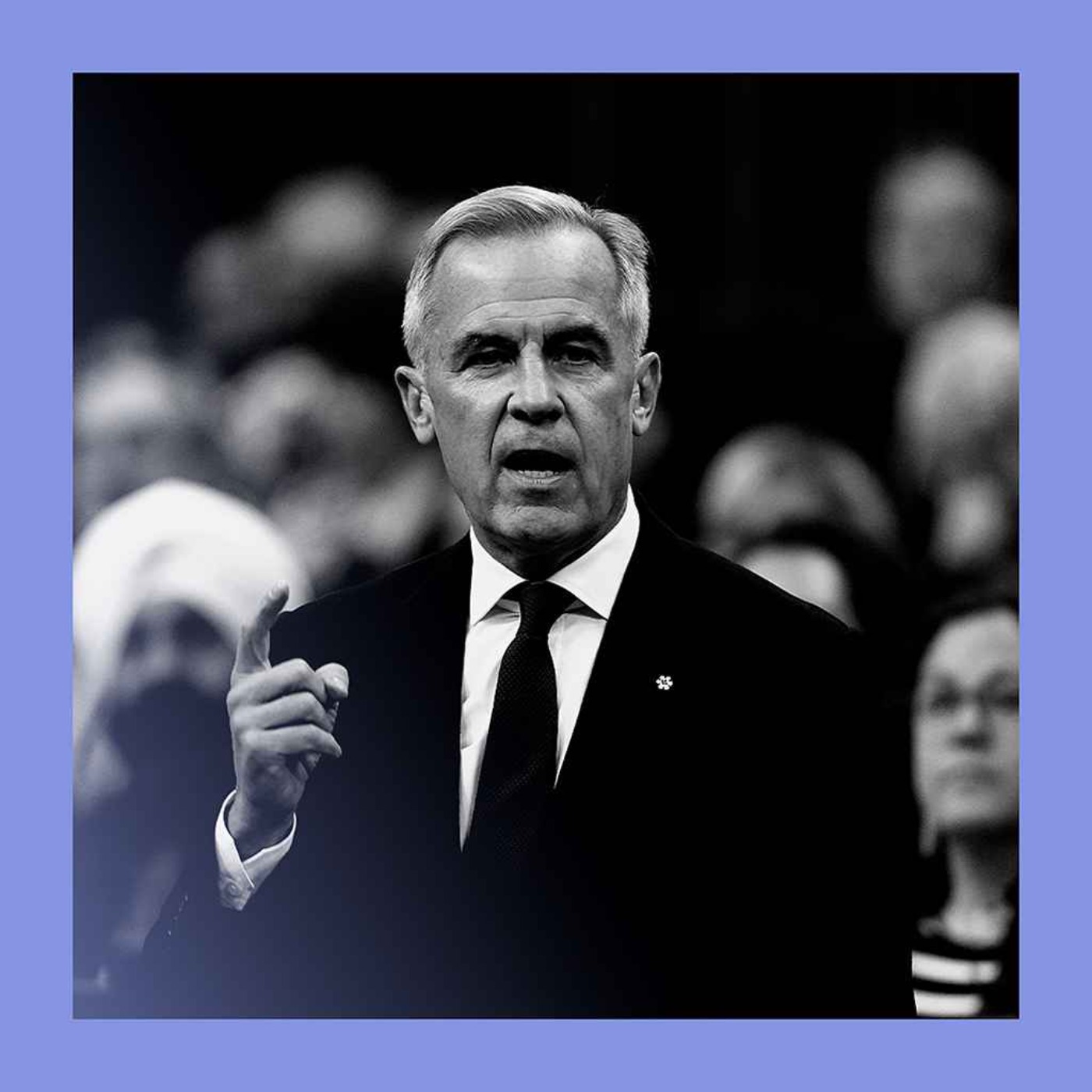
3:11All of this comes at a moment when Canada faces unprecedented challenges from a shifting geopolitical landscape. And of course, its neighbour to the south. This is a moment of maximum peril for Canada and for its prime minister. Robert Russo writes about Canada for The Economist. I've never seen a prime minister who's facing as many challenges simultaneously as Mr Carney is facing. He does have great wellsprings of political capital. He is approaching 70 % in personal approval. This is rather remarkable for somebody who spent great swaths of his life outside of the country. But competence is charisma in Canada right now, given the grave threats that we face.
4:01So Rob, there's a lot for us to get through, but let's start with the regional grievance in Alberta. Why is there a referendum there now? Well, for a long time, they feel, and with some justification, that they have been looked on as the rich and unwanted stepchild of the Canadian Federation. There is more oil under the ground in Alberta than there is anywhere else in North America. And yet, for the last decade or so, the Liberal government under Justin Trudeau has been hostile to the development of those resources. Now, Mr. Trudeau would probably beg to differ. And as a result, they're wondering why they need to contribute as much as they do to the Canadian Federation and to a central government 3 ,000 kilometers away that doesn't understand Alberta, doesn't understand its dynamic entrepreneurial nature, and doesn't understand its desire to live a frontier capitalist kind of way.
5:01You've talked about what's happening in the West. Of course, in Quebec, the separatist movement is much longer running. There's been a separatist movement in Quebec now for more than 60 years. It is distinct from the one in Western Canada. In Quebec, the distinction isn't about wealth. They feel they're distinct because of the predominance of the French language and French culture, French civil code when it comes to law, and that there's a sense that that's under threat. Right now, the threat that's being brandished, they believe, is one of immigration. So the problem for those in the province of Quebec who are trying to propose independence is that there is no real support for it.
5:42Only about 30 % of the population believes in independence. The Parti Quebecois government, which has just been elected, is going to have to try to manufacture consent by beginning a series of battles with Ottawa to try and raise the ire of slumbering separatist supporters in that province. OK, so we've got these two surprisingly strong separatist movements. But of course, Mark Carney, the prime minister, is trying to manage those at the same time as he's got the trade war with the US. How is that going? Carney is seen as very, very competent. He's going to need all of that competence because he is facing a blistering trade war with Mr.
6:22Trump in the South, who's decided to hobble a lot of the industry, particularly in eastern Canada. Quebec is particularly being hard hit as well. And at the same time, he's threatening to withdraw entirely from the trade agreement that's kept a lot of Canada's economy sheltered from Mr. Trump's tariffs. The sectors that are being hit, however, the automotive sector, the steel sector, aluminum, which is based in Quebec, those industries are really being hobbled. What is Carney doing about those domestic challenges then? Well, he's tried to ease the burden on the affected areas. He's cut taxes. He's cut the carbon tax, for instance, to make fuel cheaper for people.
7:08He has cut the capital gains tax. He is trying to encourage business investment in Canada. He's brought in something that he calls the productivity mega deduction, a tax break on new investments in infrastructure. He's doing that to try and encourage investment and at the same time to show the separatists, primarily those in Alberta, that Canada can still work. Canada can still do things like build pipelines, build ports for a long, long time. That's been a problem in the country. He's launched something called the Building Canada Act to fast track these infrastructure projects. Once they receive this benediction from the federal government, they have just a year before they can be approved.
7:51This would be a revolutionary change in Canada, where it can sometimes take a decade to get approval for large infrastructure projects. One of the challenges for Canada, and for Carney specifically, is the dependence on exports to the US. How is the effort to diversify exports going? It's going slowly, but it's inexorable, it seems. July trade figures showed that our exports to the United States had gone down from about 75%, which is where they were at the beginning of last year when Mr. Trump came in, to about 66 % in July. That's significant. However, the reality is that we will never stop trading in a large and substantial way with the most lucrative market of$340 million of the richest consumers easily available across a land border by truck and by rail.
8:49The United States will always be our largest trade partner. What Mr. Carney is aiming to do, however, is to make sure that we're no longer in the position where we have only one large customer, that we diversify our trade in Canada. And so to that end, he went to China in January to try to increase trade with the Colossus across the Pacific. He's about to conclude a free trade agreement with India, probably going to do that in December this year. He is beginning discussions with the European Union as well. But all of this seems to be bearing some fruit. Mr. Carney will need it to bear fruit relatively quickly because if the trade war with the United States endures, more job losses will ensue.
9:37Canadians are clearly prepared to make some sacrifices. They are piqued, they are vexed, they are outraged. But how long they'll be prepared to pay more to be Canadian will be the question all political watchers are going to be keeping an eye on over the next year or two. Rob, you said at the beginning it's a moment of maximum peril for Canada. You've laid out some of the stakes. What happens next? The first thing we'll all be watching for in Canada is the referendum result. If that result is below 30%, which is historically where it's been, the feeling is that that will be manageable. If it's above 30%, there is a fear that a referendum separatist sentiment in Alberta will linger, will endure, could metastasize and threaten Canada the way the separatist movement clearly had an impact on Canada's economy, Canada's dollar for decades in Quebec.
10:35So that'll be the first thing that we'll watch for. Then we'll watch to see what battles the Parti Québécois, the separatist party in Quebec, starts to enjoin with the federal government in order to try to manufacture the conditions to win a referendum in a few years in the province of Quebec. But the biggest hurdle Canada is going to have to try and surmount is to diversify its economy while at the same time trying to come to some sort of trade arrangement with the president of the United States. They feel like the midterms might provide the fetter, the handcuff they need on a mercurial, tempestuous Donald Trump in order to allow them to either come to some sort of manageable agreement or play out the string until he's replaced in 2029.
11:28Rob, thank you very much. My pleasure.
11:56tools that promised to fix this. They didn't. They were just another tab I had to open, explain myself to, and abandon by Thursday. Superhuman is different. It's at your service, not after your job. It's already where you work, so I'm never starting from a blank tab. It's from the makers of Cramarly, living right inside of the tools I already use, like Gmail and Slack. When I'm drafting a message or making sense of a messy thread, it just helps, like a thought partner that's already caught up, so we get to the hard part together. The problem was never too little time. It's that busy work crowds out the work that actually matters.
12:32Start streamlining your workflows with Superhuman. Try today at superhuman.com.
12:55someone ready to hand you money. That's why today's episode is brought to you by Quo, spelled Q-U-O, the business phone system built so you never miss a call. Here's what I like about it. All your calls, texts, and voicemails live in one place, so anyone on your team can pick up a conversation, see the full history, and respond fast. No more, wait, who talked to this customer last? And if you're worried about after-hours leads slipping through, Quo's optional built-in AI agent can answer questions and even book appointments while your team's offline. It's the number one rated business phone system on G2, and over 90 ,000 businesses already trust it to stay reachable.
13:33Money is on the line. Always say hello with Quo. Try Quo for free. Plus, get 20 % off your first six months when you go to Quo.com slash tech. That's Q-U-O dot com slash tech.
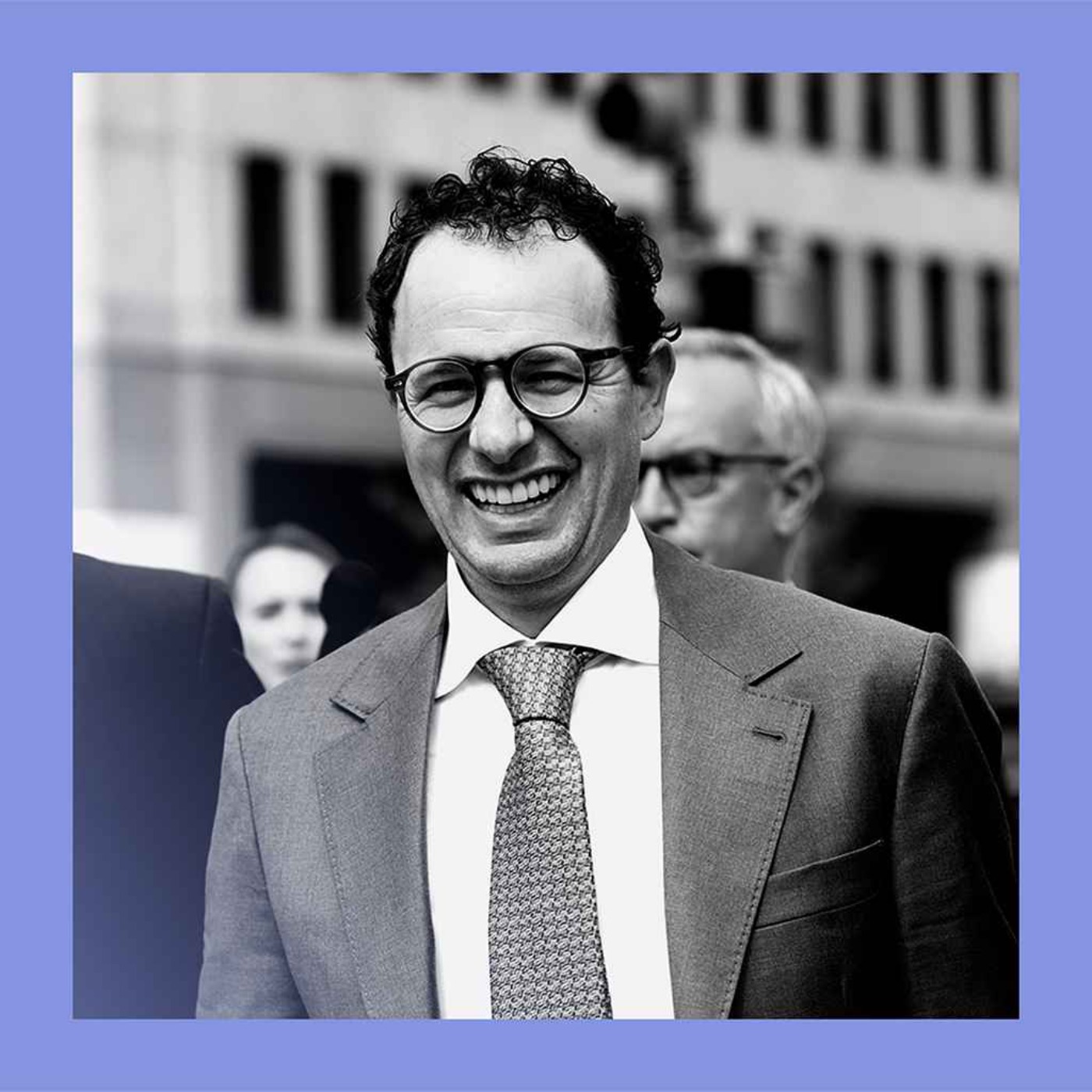
13:55Recently in the city of Hangzhou, I watched an amputee play the piano. He was using a bionic arm made by a company called BrainCo, which is a Chinese neurotech company. Don Wineland is our China business and finance editor. This bionic hand attaches without surgery. It reads signals on his arm to communicate to the bionic limb. I also watched somebody paint my name in classical Chinese calligraphy using a bionic hand, so these things are quite dexterous. And BrainCo, the company, is part of a growing industry working on what's called brain-computer interfaces. These are technologies that read signals from the brain and sometimes send signals to the brain.
14:47When it comes to this technology, no country is more advanced than America. But China wants to catch up and quickly. Don, we talk a lot about the battles between China and America. But this one over neurotech, why is America so far ahead? American labs have been working on this for a long time. In fact, BrainCo was actually founded by a Chinese student in America. So the U.S. has a lot of educational facilities that are linked to brain computer interfaces. Neuralink, the company that was founded by Elon Musk in 2016, has done a lot of the most advanced work on this. So this includes invasive surgeries where they implant sensors into the brain and are able to use those to transmit signals outside of the brain.
15:38Neuralink is generally thought to be the leader in this area, although there's a lot of companies in the U.S. working on this. China is not quite there, but trying to catch up. Aside from it being rather nice to have the piano played to you or your name written in classical Chinese, what are the wider uses of this kind of technology? What are the stakes here? It seems like we're really just the beginning of this industry. People imagine how swarms of drones could be controlled through the mind. It wouldn't be too surprising in the future if people were able to communicate without speaking to one another through these types of implants.
16:20So it's a very wide field. There are probably lots of applications we can't really even think of right now. In the future, it could be a very, very large industry. So what is China doing to try and close the gap with America? So brain-computer interface has been popping up in policy papers for the past couple of years. In 2015, it was named as a strategic industry. Earlier this year, in one of the top planning documents, the five-year plan, Neurotech was also named as a strategic industry in this. So what that does is it brings together lots of resources. Once the central government has listed an industry as a top priority, that means local governments are going to start investing in these areas a lot.
17:07regulators are going to start paying more attention to what's going on in this industry. In 2024, China introduced ethical guidelines for the neurotech industry. Last year, hospitals received standard billing codes for neurotech treatments. So that means when one of these devices is used in a hospital, it's much easier to charge for them. They are working out the insurance schemes and reimbursement for these things as well. And just this autumn, Tianjin University launched its first undergraduate class in neurotech technology. So there's a lot of things going on around the technology. This is often how Chinese industrial policy works.
17:48There's a lot of resources being focused on this, and that could eventually lead to a breakthrough in the science. And are there Chinese companies that are close to catching up with the American ones?
18:28StairMed, which is backed by the e-commerce company Alibaba, is making a lot of progress on trials. NeuroCyber is another big one that is actually state-backed. So you do see companies starting to make lots of progress in clinical settings and in clinical trials. What sort of devices do you think are going to become popular in China because of the investment in this sort of tech? One thing you can do for the neurotech industry is divide it into two halves. There's the area that is invasive and is going to be used for people with disabilities. So potentially restoring eyesight, restoring the use of limbs.
19:08There's another area that is non-invasive that is more focused on consumers and consumer devices. So there's a lot of applications for things like ADHD intervention, helping people focus better, sleep aids. There's really a long list of ways that you can use these devices. It wouldn't be too surprising in 10 years from now if lots of people were using neurotech devices in some aspect of their life. And are you tempted? Well, when I was at BrainCo, they invited me to try out their sleep device. Are you guys touching my head or is it moving by itself? She's touching it. Make sure your forehead should be close contact.
19:59I laid down. They put this thing on my forehead and they flipped it on. Do you feel the tingling? Yeah, I do. Is it too strong or? Okay. Seems okay. Have you ever tried anything like this? I have not. It's odd because you can certainly feel it pumping microwaves into your brain. This specific device was supposed to produce relaxation and help me sleep. That's not how I felt at the time. I can't say that this device helped me relax, but it's not too hard to imagine a world where there are lots of people using these devices. China is very, very good at finding applications for science. And people are very open to new technologies.
20:48China is very open to AI usage, where the West can often be more skeptical. So it's not a stretch to think that China could become a big market for these kinds of neurotech devices. Don, thank you very much. Thank you.
21:37you can see the field is full of herbs and flowers, which feed a variety of different insects. If you're lucky, you might spot a rufous grasshopper or an adonis blue, one of Britain's rarest butterflies. When I visited a few months ago, I even saw a kestrel in the sky, probably hunting for its next meal, a mouse or a vole. Britain's insect population has been shrinking for decades. Recently, that loss has accelerated. Over the past five years, the number of flying insects, hoverflies, fumblebees and butterflies has fallen by about three fifths. Mostly this is to do with habitat loss. After the Second World War, farms started expanding and they replaced wild grass with a kind of high protein grass monoculture, which is good for feeding livestock, but not so good for insects.
22:32Insects require a variety of grasses and herbs to thrive. Britain has lost over 97 % of its species-rich grasslands since the 30s. Much of the remaining good habitats, like cowslip meadow, remain in patches. That has obviously been bad for insects, but it has also been bad for the small mammals that feed on them and the birds that feed on those small mammals and so on. It's bad for farmers too. Insects pollinate plants, break down dung and keep pests at bay. Without bugs, for example, we wouldn't have any fruit or flowers or honey. In the early 2010s, a group of conservationists got together to find a way to help invertebrates.
23:16They realised that if they were able to connect the remaining good bits of habitat, insects would be able to escape hostile conditions when they set in, and they'd be able to survive better. The group, called Bug Life, spent the next decade creating a map of where all the remaining good habitats in the country were so that they might be joined together with imaginary highways for bugs. They used old maps from national and local record offices, spoke to landowners and wildlife experts. Since the project began, many rare insects that were thought lost had been spotted around the country. Britain's rarest bumblebee, the shrill carder bee, was found on some brownfield sites near Cardiff.
23:56This year, Surrey's bug highways were filled in, but at the same time, another project called Space for Nature was begun. This was a collaboration between Bug Life, Surrey Wildlife Trust and the University of Surrey. Data gathered by citizen scientists on Surrey's flora and fauna, high-resolution habitat imagery gathered from satellites and imagery also from drones, were used to train a machine learning model. This model is now able to predict and distinguish between different types of habitats. The tool, when it's rolled out, will help conservationists identify and connect habitats more quickly and cheaply.
24:35Bug Life has also started working with a French conservation charity to map France. It's also planning to work with the European Commission to map the rest of Europe. Although in Europe, the bug highways will be called buzz lines. So with luck, a lot more insects might soon be able to move from A to B.
25:09That's all for this episode of The Intelligence. We'll see you back here tomorrow.
25:17Thank you.
25:47designed to make supplementation easier. The Daypack supports cognition, focus, and cellular energy production. At night, the Nightpack helps you wind down and supports a calm, relaxed state. Less time managing your supplements, more support for your day and night. Shop Total Human now at onnit.com. ACAST powers the world's best podcasts. Here's a show we recommend. There's a reason Greek mythology is still relevant after 3 ,000 years. And it's not just because humans always love a monster story. Whether you've just become hooked on Homer's Odyssey, or are a dyed-in-the-wool nerd looking for a deep dive into the depths of myth and history, let's talk about myths, baby, as for you.
26:36Every week, I, Liv Albert, bring you stories and histories from ancient Greece and the wider Mediterranean. With over 800 episodes and counting, we've done the research so you don't have to. Find Let's Talk About Myths, baby, wherever you get your podcasts. ACAST helps creators launch, grow, and monetize their podcasts everywhere. ACAST.com
The province of Alberta will vote on secession today. It is unlikely to go ahead, but the separatist vibe is just one of Prime Minister Mark Carney’s many headaches. Our correspondent examines China’s efforts toward brain-computer interfaces, finding the country is closing the gap with America. And Britain’s “bug superhighways” link up the shrinking number of lush insect habitats.
Guests and host:
Topics covered:
Listen to what matters most, from global politics and business to science and technology—subscribe to The Economist.
Hosted on Acast. See acast.com/privacy for more information.