
In short
The episode covers two main stories. First, Indonesia’s recent riots: protesters set cars on fire and burned two regional parliament buildings, ransacked homes of five officials (including the finance minister), and violence followed lawmakers’ self-approved increases to spending allowances. A key flashpoint was the police killing of Afan Kuniyawan, a 21-year-old delivery driver, who became a symbol of protesters’ anger. The guest, Sulin Wang (Asia correspondent; host of Scam Inc.), argues the unrest reflects deeper grievances: inequality (wealth of 50 richest Indonesians equals 50 million others), elite corruption, and economic uncertainty (IMF projects high unemployment). She notes Prabowo’s populist policies (e.g., free school lunches) are seen as misdirected, with health/education budget cuts. Second, the episode explains climate “tipping points,” focusing on the Atlantic meridional overturning circulation (AMOC) and its potential collapse, with effects like colder, drier Northern Europe and shifted rainfall patterns. The guest is Oliver Morton (Planetary Affairs Editor).
Written by AI. May contain mistakes. Listen to the episode to check what was said.
Chapters
Tap a time to open that second in VOClimate Change and Cultural Symbols
0:29 to 0:48
Explore the cultural phenomenon of the facekini and its growth in popularity.
“IT teams go from drowning in tickets to building what actually matters.”
Climate Change and Cultural Symbols
1:58 to 2:34
Explore the cultural phenomenon of the facekini and its growth in popularity.
“Today, we're discussing another aspect of climate change that I'd never heard of before.”
Protests Erupt in Indonesia
2:47 to 3:59
Understanding the violent protests in Indonesia sparked by political corruption.
“This weekend, the cities of Indonesia were ablaze.”
Underlying Economic Issues
4:04 to 6:15
Delving into the economic disparities and frustrations fueling the protests.
“So this current round of protests kicked off about a week ago sparked by anger that politicians had a monthly housing allowance that is almost 10 times as much as the monthly minimum wage.”
Government Response to Protests
6:16 to 10:10
Examine how Prabowo is handling the protests and the government's actions.
“And so the government has slashed budgets at the health ministry and the education ministry to fund what are seen as pretty wasteful policies.”
Closing Thoughts
10:40 to 10:52
Final reflections on the protests and potential future developments.
“They're simplifying financial operations for nearly half a million customers.”
Climate Change and the North Atlantic
14:03 to 17:39
Exploring the potential collapse of the North Atlantic circulation and its impacts.
“And that's why the North Atlantic is considerably warmer than the North Pacific.”
Mitigating Tipping Points
17:40 to 19:22
Discussion on the potential for positive tipping points to reduce emissions.
“That there may be tipping points where society becomes less emitty quite quickly.”
Babbage Podcast Mention
19:23 to 19:46
Promotion of the Babbage podcast on planetary tipping points.
“That's always what I come here trying to do.”
The Rise of Face Kinies in China
19:47 to 24:42
Analyzing the cultural shift and popularity of sun protection face coverings in China.
“A new odd clothing fad has taken hold on the streets of China.”
Show all 11 chapters
The Rise of Face Kinies in China
25:03 to 26:14
Analyzing the cultural shift and popularity of sun protection face coverings in China.
“That's all for this episode of The Intelligence.”
Transcript
Automatic transcript. May contain errors.0:28I'm Jake Stouk, co-founder and CEO of Serval. IT teams go from drowning in tickets to building what actually matters. With Serval, IT becomes the AI engine powering the entire company. This is a new way to run IT. We guarantee you'll automate 50 % of all tickets and we'll prove it to you in a free four-week pilot. Go to serval.com slash tickets. That's S-E-R-V-A-L dot com slash tickets.
1:02This intelligence podcast is sponsored by Backmarket, the leading global marketplace for refurbished tech. When the kids need phones, laptops, or tablets for school, buying refurbished tech makes sense for families trying to save money without sacrificing quality. At Backmarket, tech costs up to 50 % less compared to new. All devices have been professionally refurbished and come with a one-year warranty and 30-day return policy. Start saving money. Visit Backmarket.com or the Backmarket app to shop now.
1:35The Economist
1:42Hello and welcome to The Intelligence from The Economist. I'm your host, Rosie Blore. Every weekday, we provide a fresh perspective on the events shaping your world.
1:57We've talked about the heatwaves, hurricanes, ice caps and so much more. Today, we're discussing another aspect of climate change that I'd never heard of before. And now I have. I can't get it out of my head. And they look a little like a balaclava, with small holes for your nose, eyes and mouth. The facekini, formerly spied only on a Chinese beach, is now becoming popular as streetwear in the country.
2:34But first...
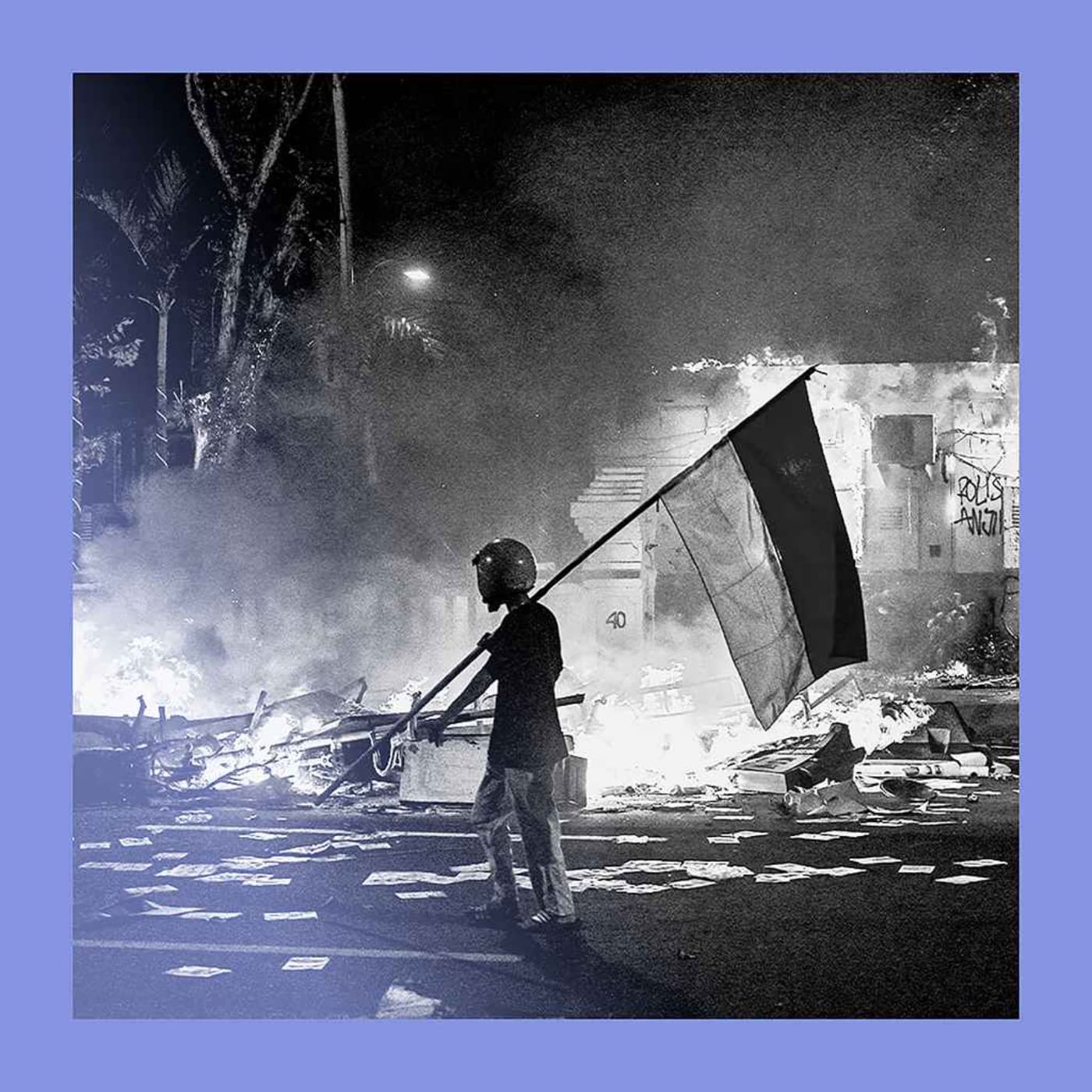
2:47This weekend, the cities of Indonesia were ablaze. Protesters massed on the streets, some through Molotov cocktails and fireworks, setting cars on fire and burning to the ground two regional parliament buildings. The homes of five officials were ransacked, including that of Indonesia's finance minister. Demonstrations started last week after the country's lawmakers granted themselves giant increases to their own spending allowances. But as people have clashed with police and a number have died, outrage against the government has only spiralled.
3:29This is the worst crisis for Indonesia since Prabowo took power about a year ago. Sulin Wang is an Asia correspondent and host of our podcast series, Scam Inc. And it really reflects huge problems facing the country, a slowing economy, a growing perception among ordinary Indonesians, that the country's politicians are out of touch with them. And even if these protests peter out, I think we should expect they're very likely to return unless the government deals with the underlying problems in the country. So we'll come to the underlying problems in a minute, but what sparked these protests? So this current round of protests kicked off about a week ago sparked by anger that politicians had a monthly housing allowance that is almost 10 times as much as the monthly minimum wage.
4:20in Jakarta. And, you know, of course, that's just one stat. There are so many others. There was a report out last year showing that the wealth of the 50 richest Indonesians is roughly equal to the total wealth of 50 million Indonesians. So there's a massive, massive inequality problem. There's also frustrations about corruption among the elite and frivolous behaviour of politicians in parliament. And actually one video that went viral recently was of lawmakers in parliament dancing to this popular Indonesian song. And then late last week, things really escalated when police killed Afan Kuniyawan, who was a 21-year-old delivery driver who happened to be at a protest in Jakarta and was also the sole breadwinner for his family.
5:11And he's really become a symbol of the protesters' anger. There are many, many millions of delivery riders all across the country, and there were these very powerful images of couriers in their big green jackets escorting his coffin through the streets. I think he's really seen as sort of the everyman of the protests. So it sounds like the underlying problems are really fundamental ones to do with the Indonesian economy then. Yes, that's right. So Prabowo is very much a populist and he's pursued these flashy vote-winning policies to entrench his own power. But unfortunately, these policies have done very little to grow the actual economy.
5:58His signature one being giving free school lunches out to children across the country because Indonesia has a big stunting problem. But the reality is if you want to tackle Indonesia's stunting problems, what really should be happening is pregnant women and babies and toddlers should be given more nutritious food, not school children. By then it's a bit too late. And so the government has slashed budgets at the health ministry and the education ministry to fund what are seen as pretty wasteful policies. Coupled with this is growing economic uncertainty with the trade war with the US. And the IMF projects that Indonesia's unemployment rate this year is going to be the highest in Southeast Asia.
6:41So one really important thing to note is that these aren't the first protests we've seen in Indonesia. In fact, earlier this year, there were large protests in the country. And all this economic frustration that's really fueling the general discontent that we now see pouring out onto the streets. And how has Prabowo actually responded to the violence? So far, these protests have actually mostly targeted politicians and the police. And it's not really yet about Prabowo, although, of course, this could change. But on Sunday, he came out and announced that Parliament had agreed to cut some of the allowances that lawmakers received, although the specific details are still hazy.
7:31And he's also promised an investigation into the killing of the delivery driver and pledged to help the delivery driver's family. And just today, on Monday, police have set up checkpoints across Jakarta, told people to work from home, and some very prominent civil society organisations have told protesters to stay at home because they fear the police might really escalate on the streets today. Sulin, it seems to be a strange situation here where you've got these massive protests, and yet you say they haven't been directed at the president. What's going on? Yes, Rosie, that is really puzzling in all of this.
8:09I guess one thing I would say is we don't actually know what Prabowo's current popularity level is because the most credible surveys happened earlier this year in January. But those polls suggested that Prabowo's popularity was beyond 80%, which is pretty extraordinary. He won 58 % of the vote in last year's presidential election, partially because he aligned himself with Jokowi, Indonesia's previous president, who was very, very popular, and partially because he had a very, very effective social media campaign on TikTok. He was always seen awkwardly dancing and he was perceived to be this sort of cuddly grandpa, despite his very sketchy human rights record as a general in the Indonesian army.
8:59So he was very popular last year in the lead up to the election, during the election, and into his first term. And this moment really marks the very first time where his presidency is being called into question. So what comes next? If there's one thing we know about Rabot, is that he is very much a populist and he is going to do whatever is in his power to appease ordinary Indonesians, try and have this all blow over, shift the blame to the police or other politicians and very much deflect off himself. And we can see that from his press conference yesterday where he came out and he said, you know, yes, I'm going to cut down on some of these allowances for politicians and help the family of the delivery driver who was tragically killed.
9:49But the reality is, unless he addresses the underlying grievances of the protesters and ordinary Indonesians, which are very much, as we were talking about earlier, a slowing economy, rising unemployment, a perception that politicians are disconnected from ordinary Indonesians, a growing wealth gap, these protests might calm down over the next little while, but I wouldn't be surprised if they flare up again in the future. Suleen, thank you so much for talking to me. Thanks so much, Rosie.
10:40They're simplifying financial operations for nearly half a million customers. Bill has securely processed over a trillion dollars in transactions. That's proven infrastructure. Ready to talk with an expert? Visit bill.com slash proven and get a$150 gift card as a thank you. That's bill.com slash proven. Terms and conditions apply. See offer page for details.
11:06Back to school is busy enough. The last thing you need is shopping that makes it harder. Whether you're moving into a dorm, your first apartment, or just getting organized for the semester, Wayfair makes it easy to get everything you need in one place. Furniture, bedding, storage, decor, study essentials, all at prices you'll love. With fast shipping before move-in day. Get everything you need for back-to-school season. Shop Wayfair.com today.
11:48Atlantic meridional overturning circulation. Atlantic meridional overturning circulation. Atlantic meridional overturning circulation. Falls mainly on the plane.
12:01Oliver Morton is our Planetary Affairs Editor. I have known experienced earth science journalists who can also not say meridional, and I've been among their number. It's one of those things where suddenly you find yourself saying it, and say, oh, I've only ever seen it written down. All right, Ollie, let's do this. Okay. This summer at a big climate conference in southwest England, the topic at hand was tipping points, the thresholds beyond which the Earth's climate system might shift irreversibly from one state to another. Alongside the usual suspects at the meeting, climate scientists, activists, journalists, other occupations are also now paying increasing attention, like actuaries, insurers and pension fund managers.
12:46Understanding how these tipping points could reshape our world is critical. And for a European audience in particular, there's a term we all need to get our tongues round. As you've already heard, I've been practicing. The Atlantic meridional overturning circulation is admittedly something of a mouthful, known to its friends, enemies and detractors as AMOC. But the four words all tell you something important. It's in the Atlantic. It's meridional, which means it flows along from north to south and south to north. It's overturning, so what was on the surface goes down into the bottom. And it's a circulation.
13:22It continues like a conveyor belt. What this means is that water comes up from the south to the north, turns around and goes back to the south on the bottom of the ocean. Oli, I think I'm probably not alone in never having heard before of Atlantic meridional overturning circulation, and now you're telling me it's an incredibly important thing that's about to cause a catastrophe, I think. Just explain what's going on. Well, lots of people hadn't heard of the ozone layer. You know, the Earth has these funny little elbows and quirks that actually turn out to be quite important. What's important about AMOC is that it moves a huge amount of heat out of the tropics and up into the North Atlantic.
14:03And that's why the North Atlantic is considerably warmer than the North Pacific. It's why Europe is much warmer than other places at similar sort of latitudes. And it's all around, from a Eurocentric point of view, a very good thing. And what's happening? The worry is that it is weakening as a result of climate change. the more severe worry is that it will not only continue to weaken but that it may actually collapse. That the sinking of water in the North Atlantic which drives the circulation will simply stop. So if it actually collapses the sea is still there so what's happening? The sea is still there but this circulating current is no longer moving through the sea.
14:48So at the moment warm actually sometimes quite hot water, which is salty, is coming out of the tropics. It's getting into the North Atlantic, which is less salty, so already it's dense, and it's cooling down that's making it denser still. And eventually, this cool, salty water just sinks to the bottom. Now, if it's not as salty, or if its contrast with the temperature of the water around it is not so large, then it won't sink. And so if it doesn't sink, then everything else backs up and it just stops. And so the heat in the tropical Atlantic stays in the tropical Atlantic and does not helpfully come to Bournemouth.
15:29And what effect does that have on us earth dwellers in Bournemouth and elsewhere in Europe? In Bournemouth and elsewhere in Europe, it's pretty bad. If it stops completely, and there are gradations of collapse and stoppiness here, but if it stops completely, Northern Europe gets drier and a lot colder. And by a lot colder, I mean bad winters in Brussels are now minus 20 degrees Celsius. Bad winters in Oslo are about minus 50 degrees Celsius. And that's seriously Siberian. At the same time, drying happens. So the east of England, which is where most of England's arable farming is, is too dry for arable farming unless you irrigate, which probably wouldn't make sense.
16:10So massive shift in the agricultural productivity of Britain and other places. More storms and also really perturbingly in summers, some worse heat waves, at least in some models. It really is a very nasty version of Europe. And would it only affect Europe? No, it only affects Europe in terms of actively cooling it because that's where the heat transfer is. But when you move one of these systems in the Earth around, you actually have knock-on effects. And one that's particularly worrying here is that there's something called the Intertropical Convergence Zone, or ITCZ. The ITCZ reflects how warm the two hemispheres are.
16:53It's like a belt of rain close to, but not actually on the equator. If you shift the temperature of the northern hemisphere dramatically by shutting down AMOC, then you move the ITCZ. And that has effects on the Amazon rainforest, on rainfall in the Sahel, on monsoons. It shifts a lot of things and often in a not helpful way. OK, so you've painted an apocalyptic picture. And we know that there are a lot of efforts underway to try and mitigate the effects of climate change. But is there anything that can be specifically done to try and stop this collapse? Not obviously. The clear answer to all these issues is to reduce carbon dioxide emissions to net zero as quickly as possible, as though we knew what possible meant.
17:39Other than that, there's little you can do specifically about AMOC. And one of the things that people interested in non-linear dynamics, which is what tipping points come under, is the possibility that some of these tipping points in human society and economics may actually work in favor of reducing greenhouse gas emissions. That there may be tipping points where society becomes less emitty quite quickly. So one thing might be sort of the rapid uptake of electric vehicles or some might suggest of vegetarianism. authoritarianism. These are things that they call positive tipping points that might indeed help the world reduce its carbon dioxide emissions.
18:20It's not a certain thing, but then neither of the negative tipping points, they're out there. We just don't know when we cross them. So clearly we're not stopping climate change. Presumably we need to prepare better then for if this circulating current does collapse. Yes, at the moment, to the extent that governments think about climate risk at all. They tend to think about sort of like general trends rather than sudden jumps from one state to another when a tipping point is crossed. And they definitely don't think about the idea that one tipping point can then trigger another. So one of the things that drives the Atlantic meridional overturning circulation is the question of how much fresh water there is in the north.
19:00And that depends on how the ice sheets are doing on Greenland. And then this whole idea, these cascading tipping points are really not in anyone's planning or thinking about this outside the scientific world, I think. And it would be a really good idea if governments did understand the magnitude of what was there and what they might do to prepare for such things, because at the moment, there's really no thinking about it. Thank you, Ollie. I can't say you've improved my day. That's always what I come here trying to do. And so often I fail. It's very sad, Rosie.
19:39And planetary tipping points is also the subject of our most recent episode of Babbage, our science podcast. Do check it out. It's fascinating and yes, a bit terrifying. You'll need to be a subscriber.
20:05A new odd clothing fad has taken hold on the streets of China. Don Wineland is our China business and finance editor. When I'm outside, everywhere I go, I am seeing people of all ages wearing designer sun protection face coverings, also known as face kinies. So these are very different from COVID-19 surgical masks. These are masks that cover your entire face. Sometimes they cover your upper chest and your neck. And people are wearing them all over the place. I see them every day when I'm outside. Which are scorching parts of China. Retailers say the sale of sun protection clothing is eating up.
20:49With the so-called facekini becoming... One might even say they're becoming fashionable.
20:59Chinese people have been wearing sun protection gear for a long time. Face-kinies have also been around long before the pandemic. So if you went to Chinese beach towns during the summer, you might run into some older ladies on the beach who had basically covered their entire bodies with some sort of clothing, including their faces. These kind of look like balaclavas. They are very odd looking. They never really caught on. And I don't think they were socially acceptable if you got away from the beach. Things have changed a lot in China over the past five years. So COVID has really helped popularize the idea of wearing masks in public all the time.
21:45People here were forced to wear surgical masks for several years when they were outside. I think this is one factor that has helped the sun protection face kinis gain some social acceptance. The companies that are making these now are trying to make these fashionable. They're not exclusively purchased by older people. Young people are buying them, especially young women who want to protect their skin from the sun.
22:15I popped into a shop recently to see what kind of gear they were selling. and I got to talking with the shop attendant about which mask I should buy. And he actually said I shouldn't buy any of them because they are mainly intended for women. So I didn't make a purchase at the time. One of the analysts that I spoke with who looks at this type of consumer gear said that young people want face keenies that match their office attire or they want it to match their outdoor gear when they're going outside. Companies are really cashing in on this trend. So there's a number of large companies, national companies, even companies going overseas that are making a lot of money off these things.
23:00So sales of facekinies, which are targeted at women, probably increased by about 50 percent in July from a year earlier. There's some other products such as sleeves that you can pull over your arm that are even growing at a faster rate in terms of sales. They range in price from a couple bucks to up to around$50. Benne Under, which is from Shenzhen, it was founded in 2013, offers a full line of these types of masks and other UV gear. So this includes things like umbrellas, hats. In 2022, they fetched a valuation of$3 billion, which many people thought was quite high at the time. Just in the past couple of years, there's a lot of other traditional sports brands that are trying to sell these things as well.
23:52It makes sense why companies would want to cash in on this. Last year, the UV industry, which includes all sorts of face-kinies and hats and sleeves, was worth around 80 billion yuan, which is 11 billion US dollars. And it's still growing very rapidly. it's a bit unclear what the communist party leadership thinks about this trend the communist party newspaper the people's daily recently used the phrase sun protection anxiety in a article on face keenies and other uv gear that could be bad news for these companies it's not totally clear where this industry is going and whether or not the general public will fully embrace it, which I don't think they have yet, and whether or not the leadership in this country will embrace it.
24:42We'll have to wait and see.
25:03That's all for this episode of The Intelligence. We'll see you back here tomorrow.
Read the full transcript
25:26I'm Jake Stouck, co-founder and CEO of Serval. We built Serval to automate the IT work that slows companies down. Onboarding, password resets, access to applications, my laptop stopped working. While employees wait for help, their real work is put on hold. IT desperately wants to automate this work, and that's why they need Serval. You just tell Serval what you want to automate in plain English, and it's built. No drag-and-drop workflows, no expensive consultants. Employees get unblocked, and IT teams go from drowning in tickets to building what actually matters. With Serval, IT becomes the AI engine powering the entire company.
26:05This is a new way to run IT. We guarantee you'll automate 50 % of all tickets and we'll prove it to you in a free four-week pilot. Go to serval.com slash tickets. That's S-E-R-V-A-L dot com slash tickets.
26:27Back to School is busy enough. The last thing you need is shopping that makes it harder. Whether you're moving into a dorm, your first apartment, or just getting organized for the semester, Wayfair makes it easy to get everything you need in one place. Furniture, bedding, storage, decor, study essentials, all at prices you'll love with fast shipping before move-in day. Get everything you need for back to school season. Shop Wayfair.com today.
From the publisher
For the past week in Indonesia, protesters have taken to the streets and cities have burned. President Prabowo is still popular – now he faces a big test. Climate change threatens the collapse of an Atlantic current that helps make Europe habitable. And facekinis become a fashion item in China.
Listen to what matters most, from global politics and business to science and technology—Subscribe to Economist Podcasts+
For more information about how to access Economist Podcasts+, please visit our FAQs page or watch our video explaining how to link your account.
Hosted on Acast. See acast.com/privacy for more information.