In short
Democrats’ strong election results in the US (New York mayoral, Virginia and New Jersey governor races, and California redistricting), implications for next year’s House of Representatives, plus Turkey’s opposition crackdown and a global “mood” survey suggesting slight improvement in emotions.
Guests/backgrounds
John Priddo, The Economist’s US editor; Piotr Zilevsky, The Economist’s Turkey correspondent; Ainsley Johnston, The Economist data journalist.
Key claims
Democrats’ “upper level of expectation” win; Trump’s absence reduces turnout of his coalition; gerrymandering could still favor Republicans. In Turkey, Erdogan’s government uses investigations/arrests to hobble CHP ahead of elections; most Turks see charges as politically motivated. Global emotion data (Gallup World Poll) shows worry/stress/anger/sadness at 2024 lows since 2019, but stress remains high.
Notable examples
Zoran Mamdani (34, “Democrat socialist”) wins New York mayoral race; Abigail Spanberger (CIA background) wins Virginia governor; Mikey Sherrill (former Navy helicopter pilot) wins New Jersey; California Proposition 50 overturns nonpartisan redistricting commission. Turkey: Ekrem İmamoğlu jailed; CHP mayors and officials detained; Özgür Özel’s leadership court case dismissed.
Written by AI. May contain mistakes. Listen to the episode to check what was said.
Chapters
Tap a time to open that second in VOElection Night for Democrats
0:57 to 2:49
Discussion on the significance of recent Democratic victories in key elections.
“That's been going on for a while in Turkey, but it hasn't all gone smoothly.”
Zoran Mamdani's Victory
2:49 to 4:12
An analysis of Zoran Mamdani's rise to mayor of New York and the implications.
“John Priddo is The Economist's US editor.”
Virginia and New Jersey Governor Races
4:12 to 6:15
Overview of the governor races in Virginia and New Jersey and their outcomes.
“Tell me about the challenges that Mandani faces in New York.”
California's Redistricting Vote
6:15 to 8:07
Discussion on California's Proposition 50 and its impact on gerrymandering.
“So Virginia, very good for Democrats, but you'd expect them to do well there.”
Implications for Future Midterms
8:07 to 9:39
Insights on how recent election results affect the upcoming midterm elections.
“In the short term, it counterbalances somewhat what's happening in Texas and makes life a bit better for Democrats in next year's midterms.”
Reflections on Dick Cheney's Death
9:39 to 10:56
Exploration of the political impact and legacy of Dick Cheney's passing.
“The party's slightly likelier to win the House of Representatives than they were two days ago, but the midterm's still very much open.”
Political Challenges for CHP and Imamoglu
14:00 to 20:18
Explore the political landscape and challenges faced by Turkey's CHP and its leaders.
“The case brought against him sought to annul the 2023 Congress during which Özgür Özell was elected.”
Global Emotional Trends and Survey Insights
20:18 to 25:01
Discuss the findings of a global survey on emotions and how they vary across demographics.
“The world has spent much of the last two decades in an increasingly bad mood.”
Transcript
Automatic transcript. May contain errors.0:00To grow beyond limits and even beyond your aspirations, you need the London Business School. MBA. Ranked fourth in the world by the Financial Times, the program delivers academic excellence and unlocks access to leading global businesses and a network of over 58 ,000 professionals. 86 % of the most recent class accepted a role within three months of graduating, and the returns continue beyond today. Search Discover London Business School MBA to find out more.
0:35The Economist.
0:42Hello and welcome to The Intelligence from The Economist. I'm Jason Palmer. And I'm Rosie Blore. Every weekday, we provide a fresh perspective on the events shaping your world.
0:56In the autocrat's playbook, one of the most common plays is stifling the opposition. That's been going on for a while in Turkey, but it hasn't all gone smoothly. We ask how far President Erdogan is willing to go to hobble his would-be challengers. And apparently a lot of us are pretty grumpy. Polls suggest that we've been getting angrier and sadder by the year. But a global emotion survey, yes, these things really do exist, now point to the possibility that we're feeling just a tiny bit sunnier.
1:34First up, though.
1:42It was a big night for the Democrats. We are breathing in the air of a city that has been reborn. Years from now, may our only regret be that this day took so long to come. New York has turned out at the highest rate in nearly six decades to elect Zoran Mamdani, a 34-year-old Democrat socialist, as mayor. My fellow Virginians.
2:16This was a tough fight. And this is a tough state. But I know you, New Jersey. And I love you. The party also got their governors into New Jersey and Virginia. And a ballot initiative passed in California will allow Democrats there to redraw congressional districts in their favor. Less than a year into Trump's second term, what do these elections tell us about the mood in America today? It was the first electoral test of the second Donald Trump era. John Priddo is The Economist's US editor. Democrats were always bound to have a good night, given where these elections were. The question was how good, and the results are now in.
3:01And I think it's fair to say it was the upper level of expectation. So Democrats have done really well. OK, so John, a lot of elections for us to talk about. Let's start with New York. Last week on Checks and Balance, you spoke all about Mamdani, the 34-year-old Democrat, who is now New York's mayor. Tell me about him. Yes, it's an amazing political story. In some ways, if you're a romantic, a real New York story, this is somebody who's come almost from nowhere and through his remarkable campaign style, propelled himself to the front of the race. It's worth saying that in the Democratic primary, He faced a pretty weak field.
3:41And once you're running as the Democrat in the New York mayoral election, you're highly likely to win. But huge turnout, and he won by a long way. When it comes to the national picture, it's worth just reminding people that New York is a very democratic town. I think the last Republican presidential candidate to win in New York City was over a century ago, Calvin Coolidge. So you don't want to read too much into national politics here, but it's an amazing story about a meteoric political rise. And obviously a big win and big ambitions. Tell me about the challenges that Mandani faces in New York.
4:18Well, he's partly got there by promising a lot of things, which frankly, I don't think he can do. I mean, if you run through his agenda, some of the splashy promises are within the mayor's gift and wouldn't actually cost an enormous amount of money. The government run grocery stores. He's talked about the free buses. Those would be expensive, but probably doable. And then some of the other things, like free universal childcare, he just can't do. Some of his plans rely on tax rises, which are not within his power. And so in a way, you could see this as part of a trend of politicians promising things they can't deliver and cutting through with those promises.
5:00But ultimately, I think that's a recipe for disappointment among electorates. But not yet. Right now, Mamdani is riding high. And Trump's made it clear that he could make it difficult for Mamdani, right? He has indeed. Before the election, he was threatening to withhold funds from New York. There's a whole load of constitutional questions about whether he could actually do that, but he'd do his best. And as we know already in the second term, Donald Trump is keen to reshape the Constitution. So, yeah, he's threatened New York already. And the federal government provides about 6.5 % of New York City's budget.
5:32And so that's quite a lot of leverage. John, as you've said, New York does not represent all of the US. What about the contests elsewhere? Well, two really big ones in terms of governor's races. So let's start with Virginia. Virginia is a pretty democratic-leaning state now. Abigail Spanberger, very strong candidate, worked for the CIA before entering politics. She's very much seen as a centrist in the party. So quite a contrast with Zoran Mamdani, who's a Democratic socialist. No Republican has won the Virginia governor race when there's been a Republican in the White House since 1973. So people, including The Economist, expected her to win.
6:11The question was by how much, and the answer was she won by a lot. So Virginia, very good for Democrats, but you'd expect them to do well there. And New Jersey? New Jersey, people expected to be closer. On the one hand, Donald Trump's in the White House, and that should favor a Democrat running in New Jersey. But there's a specific Jersey dynamic here. The Democratic Party has held the governorship of New Jersey for two terms. It's very hard for a candidate from the same party to follow that. In fact, it hasn't happened since 1961. And Mikey Sherrill, the Democratic candidate there, has done really well.
6:49Like Spanberger, she has national security credentials. She was a former Navy helicopter pilot. So she scores highly on patriotism and love of country, which are areas where Republicans often poll stronger than Democrats. But I think it's fair to say that some people said New Jersey would be close. It wasn't. Just very briefly, in California, there was a vote on redistricting, though I hate that term. What happened there? Yes, this was Proposition 50, a ballot measure or referendum. And the backstory here is that Texas decided to go hell for leather on gerrymandering, which is the practice of allowing politicians to essentially draw their own districts and make it easier for them to win and harder for their opponents.
7:33And to dissuade them from doing so, Governor Gavin Newsom in California threatened to do the same in California. And Texas went ahead and gerrymandered. This thing took on a life of its own. California had been a state that had a non-partisan districting commission, like most Western democracies, frankly. In Proposition 50, voters overturned that. So politicians in California will now have an easier time drawing their own districts. I think overall, this is not a great thing for America's democracy, this slide towards more and more gerrymandering. In the short term, it counterbalances somewhat what's happening in Texas and makes life a bit better for Democrats in next year's midterms.
8:17John, so you mentioned the midterms there. What do you think all this does actually mean for them next year? Well, looking at betting markets, overnight the Democrats' chance of winning a majority in the House of Representatives jumped by about 10 percentage points from mid-50s to mid-60s. So I think you would conclude from that they're slightly more favoured to win the lower house than they were before yesterday's elections. but 60 % is not a slam dunk so the House of Representatives is very much in play. Democrats still have huge problems. There was a report on how the party's doing published about a week ago called Deciding to Win and that showed that the party's still associated with unpopular positions on immigration and climate change and race in particular and also not seen to be focused on things that voters care the most about like the economy and cost of living.
9:11One other thing I would say, which is perhaps more positive for Democrats, when Donald Trump is not on the ballot, which he wasn't yesterday and he won't be in next year's midterms, his unique coalition of voters just doesn't seem to show up. And so the results yesterday are a reminder of that. On the other hand, if we have more and more gerrymandering between now and the midterms next year, that will favor Republicans. So overall, a good night for Democrats. The party's slightly likelier to win the House of Representatives than they were two days ago, but the midterm's still very much open. And John, there was, of course, another earthquake in US politics yesterday with the death of Dick Cheney.
9:56How are Americans grappling with that today? Well, it's prompted a lot of discussion of how the Republican Party has changed since he was the vice president and a lot of discussion about the lingering after effects of the Iraq war, both for the Middle East, but also America being America, the effects on American politics. I think it's really possible to trace the current disenchantment with pretty much whoever is in power back to the failures of Iraq. One of the striking things is that if you look at polling questions, a majority of Americans have said that the country is on the wrong track every year since 2004, which was when the Iraq war started to really go wrong.
10:37So Cheney at the time was vilified by Democrats, as often happens in America. I think he'll be remembered more fondly, but he will forever be associated with Iraq and the misadventures there, despite some of the other good things he did while he was in government. John, great to talk to you. Thank you. Thanks, Rosie. and John and his crew will be doing a more detailed dissection of these results on this week's checks and balance our u.s politics podcast out on friday to listen to that you'll need to be a subscriber to grow beyond limits and even beyond your aspirations you need the london Business School MBA.
11:26Ranked fourth in the world by the Financial Times, the program delivers academic excellence and unlocks access to leading global businesses and a network of over 58 ,000 professionals. 86 % of the most recent class accepted a role within three months of graduating, and the returns continue beyond today. Search Discover London Business School MBA to find out more.
11:56It is a dangerous time to be part of Turkey's Republican People's Party, or CHP. Since the opposition party made big gains in local elections last year, people in it have been given a disproportionately, suspiciously hard time.
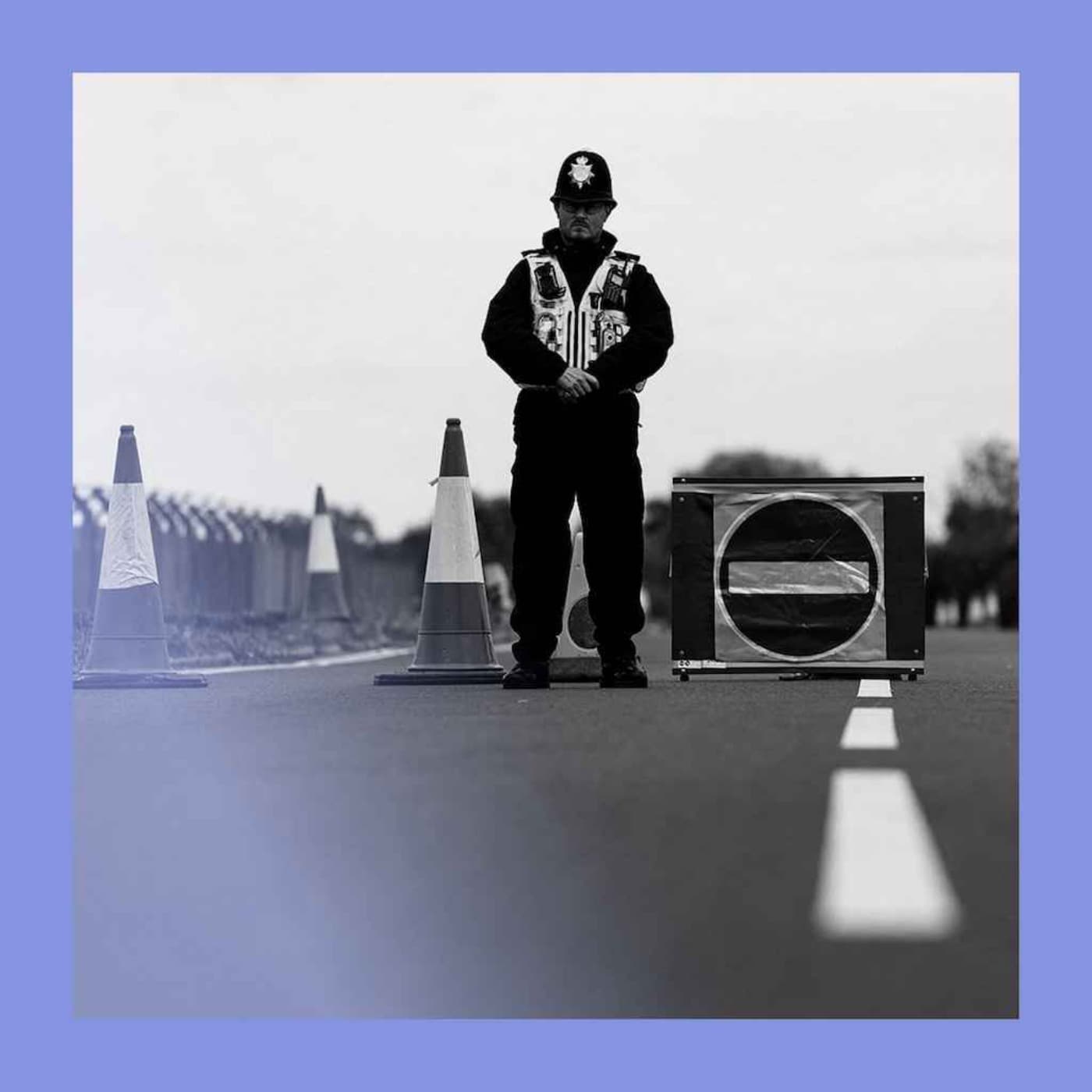
12:14In March, the party's presidential candidate, Ekrem İmimoglu, was chucked in jail. His arrest triggered a wave of protests across Turkey. But that was just the most high-profile case. Hundreds of CHP municipal officials have been arrested. A television channel that's been critical of the government has been seized. President Recep Tayyip Erdogan just keeps flicking to new pages of the authoritarian playbook. Last year's local elections were a wake-up call for Erdogan. Piotr Zilevsky is The Economist's Turkey correspondent. Under him, the presidency has amassed sweeping powers. He has now essentially taken over the role of prime minister and president in one.
12:58And he has set about consolidating power further at the expense of Turkey's main opposition, which has faced an unprecedented crackdown over the past year. Now, Pyotr, we've been speaking for some time now about how Mr. Erdogan is consolidating his powers and trying to shut down the opposition. What's going on at the moment? The opposition has been subjected to a slew of investigations and arrests over the past few months, starting in March when the opposition's, that is to say the CHP's candidate in the presidential elections, which are scheduled to take place in 2028, but expected to take place earlier, Ekremi Mamoru was arrested on seemingly trumped-up corruption charges.
13:47Since then, more than a dozen CHP mayors have been detained and investigated. Hundreds of CHP officials have been detained as well. And Özgür Özel, the party's leader since 2023, has faced a challenge to his leadership through the courts. The case brought against him sought to annul the 2023 Congress during which Özgür Özell was elected. The case rested on allegations that vote buying and procedural violations were involved. All of this has been denied by Özell and the CHP. And vindication for Özel came on October 24th when the court threw out the case that sought to have him ousted as CHP leader.
14:41I spoke to him a few days after the decision was announced. And what does he make of that decision? Well, Özel told me that he always believed that the case against him would be dismissed.
15:03He told me that the case was more about the process than about the result. That is to say that the purpose of the case was to intimidate the CHP, to wear down the CHP. So the verdict was less important than the uncertainty which had surrounded the case, which had in fact dragged on four months. He also added that the slew of cases and arrests that the CHP has faced since March when Eke Mamolu was arrested are all politically motivated.
15:53He added that most Turks agreed, and cited a poll saying that 65 % of Turks believed the charges were politically motivated, and only 25 % said that the process was legal. And what do you make of that, the idea that the electorate is unmoved, is seeing through this ruse? Well, I mean, it's quite clear that these cases are meant to target the CHP. Erdogan's government maintains that Turkey's courts are free from political influence. Most Turks, including some of his own voters, would beg to differ. And since the start of the year, the opposition has had the book thrown at them repeatedly. The most egregious example to most Turks is Imamoglu's arrest.
16:43Imamoglu is not only the opposition's candidate in the presidential elections, he's also the mayor of Istanbul. Imamoglu is a danger to Erdogan because he is the CHP's and the opposition's probably best chance of defeating Erdogan or his hand-picked successor in the next elections. And that obviously makes him a prominent target. Azel pointed out that Imamoglu has faced an astounding array of charges ranging from corruption to theft or embezzlement to terrorism. And he says that espionage is only the latest of these.
17:31And he says that the espionage charge against him is baseless and that all of Turkey knows that he will eventually be acquitted.
17:45He adds that the arrests that Turkey has witnessed since March, including Imamoglu's arrest, are all intended to prevent Imamoglu from running for president and defeating Erdogan or his successor, and to prevent the Republican People's Party from coming to power. I mean, Mr. Özil himself has reason to believe there's hope here. he's just survived as head of the party, charges against him dismissed. Does that give you hope that this whole business might stop, or slow at least? Well, I don't think anyone in Turkey believes that this will stop. Whether it will slow for the time being remains to be seen.
18:23What Ozel says is that it does expect similar operations to continue against other prominent CHP politicians and suggests that Mansur Yavaş, who has been the CHP's backup candidate for president in Imamoglu's absence, may be next to face investigation. He also adds that his personal ordeal may not be over.
18:50He says that Erdogan is trying to lift his immunity so as to expose him to prosecution.
19:03He told me effectively that if you eliminate your main opponent at the ballot box, you will have also eliminated the ballot box itself. That is to say, Turkey cannot expect a free and fair election if Imamoglu is to remain in prison. I suppose a positive spin on all of this is that Mr. Erdogan recognizes that Turkey does have a strong opposition. if it's worth chasing in this way, going to all this trouble, they're a worthy opponent, that they have the ear of the people. Yes, and I think that's what has him anxious, in that he understands that the opposition is actually stronger than ever, and that he or his party is weaker than they have been in a long time.
19:48So he senses that he is vulnerable ahead of the next elections. That is one reason why many analysts expect the operations and the crackdown against the CHP to continue and possibly to pick up pace ahead of the elections. But there is a sense that the government cannot get carried away because indiscriminate repression could trigger mass protests or a market backlash. And that is something Erdogan cannot afford. Piotr, thanks very much for your time. Thank you for having me.
20:34The world has spent much of the last two decades in an increasingly bad mood. Ainsley Johnston is a data journalist at The Economist. Polls suggest that levels of anger and sadness and stress have just crept up year on year, with an extra boost in the pandemic. But now there's a new survey of global emotion that suggests that people are now becoming just a little bit cheerier. Our analysis shows though that this is not really an even recovery across the world unfortunately. Before we get into it how do you even go about measuring whether people are cheerier or not? The data comes from the Gallup World Poll which is this annual poll that surveys people in 140 countries around the world.
21:21It asks them questions about their demographics but it also asks them about their mood. So it says yesterday did you experience any of these emotions? What they found in the most recent survey from 2024 was that just under 40 % of respondents to the survey said that they felt worried the previous day and over a third said that they felt stress. But that's actually the lowest level since 2019. For the other emotions a quarter said they felt sad and just over a fifth were angry in the previous day, which is still high but down from previous years. That may sound like still quite a lot of misery, but actually a far greater share of people say that they feel positive emotions.
22:05So nine in 10 people say they felt respected yesterday and around 70 % of people said that they laughed or smiled and enjoyed themselves. Did you laugh, smile or enjoy yourself yesterday? I think I did, yeah. It's all still kind of broad brush, though, and more, I guess, about day-to-day lives rather than how would you rate your life. Yeah, there's a lot of different questions that capture different levels of nuance, but what you say is correct. These are very broad questions about people's mood. But also when we talk about global averages, that kind of masks differences that you can see across demographics.
22:39So, for example, age plays a pretty important role. Young adults everywhere said they felt angrier than older people, for example, and people in middle age are the most stressed. But one of the biggest differences that you could see was across countries. There's really big differences in how people said they felt. Presumably those relentlessly cheery Scandinavians are an outlier here. Yeah, exactly. Rich countries like Denmark are where most people had positive emotions and the fewest people had negative emotions. So around 90 % of people in Denmark said they felt enjoyment yesterday. But also there was a lot of middle-income countries that were also very happy as well.
23:21When you look at the gloomier end of the scale, you see countries again that may not be that surprising. Places like Chad, Sierra Leone, and places affected by war like Iraq. And this is just a snapshot, I guess, of this year's poll, but you said that it was sort of in contrast to trends over decades. Let's take a sort of a little wider lens here. When you're looking across countries you see very different trends across the past 20 or so years. In rich countries for example things are looking pretty much the same as they have over the past few decades if not maybe a little better. The share of people who say they feel angry for example in rich countries has fallen pretty steadily since 2006.
24:03Levels of stress are a little bit higher but other negative emotions have remained roughly stable. And as for positive emotions enjoyment has dipped slightly but people report feeling more respected than they did in the past. But if you look in poorer countries, the picture is very different. For people there, they often report feeling angrier, more sad, more worried than they did in the past, and far fewer say they feel respected. Interestingly, stress in particular has really surged in poorer places as well. So some of that is not entirely surprising. Some of it is, well, broadly positive, I guess.
Read the full transcript
24:42but the point is that for wealthy countries anyway you might be a little bit happier but you're still going to be stressy. Yeah, unfortunately that seems to be true. Stress levels around the world are pretty high. They have been improving in recent years but I guess it's just something that everybody suffers with. Thanks very much for your time Ainsley. Thank you Jason.
25:18That's it for this episode of The Intelligence. See you back here tomorrow. Thank you.
25:52academic excellence and unlocks access to leading global businesses and a network of over 58 ,000 professionals. 86 % of the most recent class accepted a role within three months of graduating and the returns continue beyond today. Search Discover London Business School MBA to find out more.
From the publisher
In the first electoral test of Donald Trump’s second term, Democrat supporters voted in a socialist mayor of New York and governors to New York and Virginia. What does this mean for next year’s midterms? Democracy in Turkey is being eviscerated. And the world may be becoming less grumpy.
Listen to what matters most, from global politics and business to science and technology—Subscribe to Economist Podcasts+
For more information about how to access Economist Podcasts+, please visit our FAQs page or watch our video explaining how to link your account.
Hosted on Acast. See acast.com/privacy for more information.