In short
The episode of The Intelligence from The Economist covers (1) how British Green Party leader Zack Polanski reshaped the party and what his background suggests about left-wing populism, (2) the creation of synthetic “spud cells” with no biological ancestors, and (3) why human travel agents still matter despite AI and online booking.
Guests/backgrounds
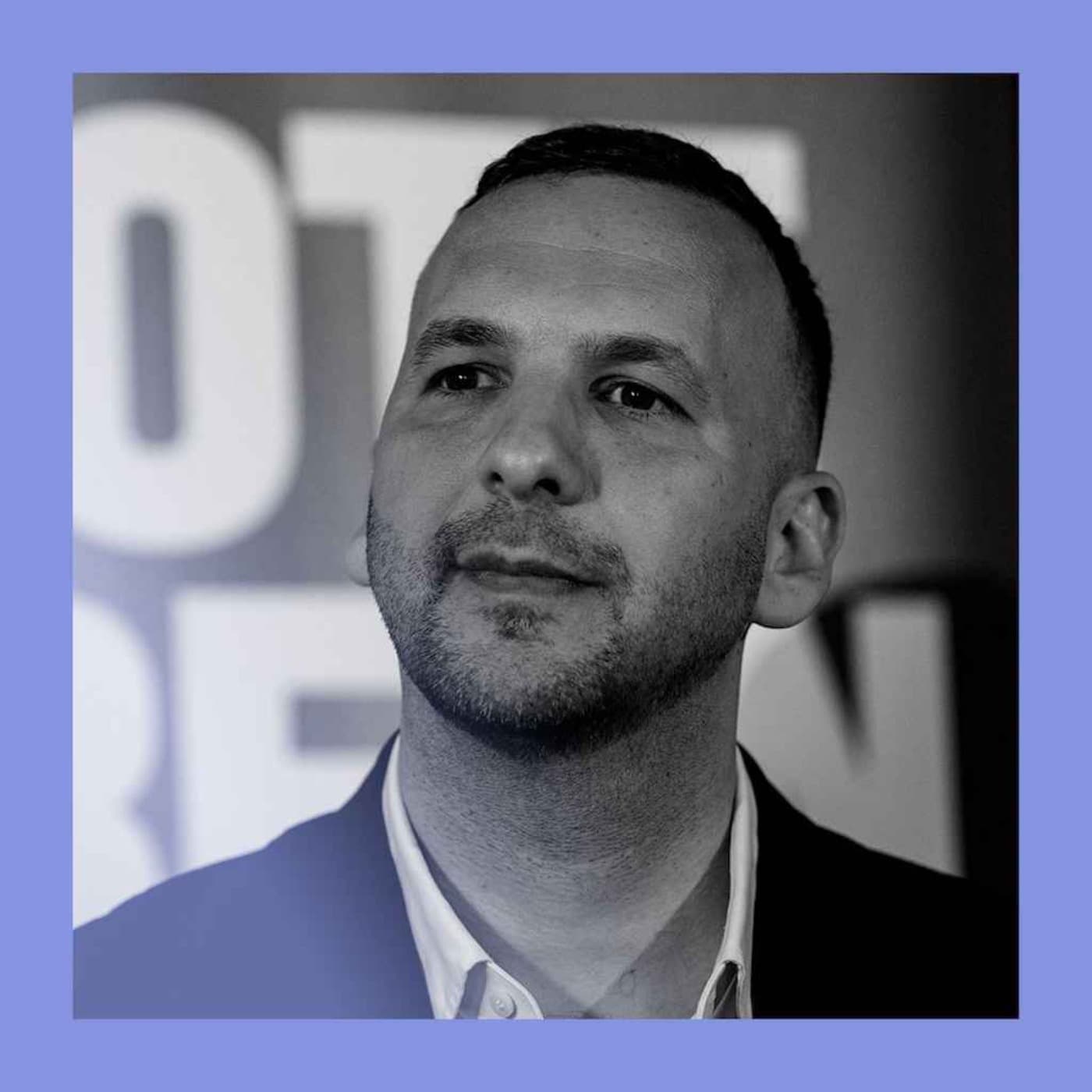
Andrew Miller (The Economist special correspondent) interviews Zack Polanski (British Green Party leader; grew up near Manchester; gay and Jewish; bullied; studied drama and sociology at Aberystwyth; worked in acting, nightclubs, waiter, hypnotherapy). Rosie Bloor (host) also introduces Oliver Morton (Planetary Affairs Editor) and Caitlin Talbot (culture correspondent).
Key claims
Polanski’s acting background and personal precarity helped him connect with voters; critics cite past controversies (including hypnotherapy claims). Spud cells can reproduce for a few generations and are made from lab-synthesized membranes and seven DNA molecules. Travel agents persist for curation, niche expertise, and real-time crisis support; AI helps with admin.
Notable examples
Polanski’s “God save immigration” rave appearance; Habonim involvement; Gaza as a “green touchstone”; his 2013 tabloid hypnotherapy controversy; Lib Dem years; spud-cell “gloop” membranes and feeder blobs; travel diversion example (“stuck in Cyprus… diverted to Madrid”); Fora’s AI-assisted travel-advisor platform.
Written by AI. May contain mistakes. Listen to the episode to check what was said.
Chapters
Tap a time to open that second in VOZack Polanski and the Green Party Rave
0:30 to 1:13
Explore Zack Polanski's impact on the Green Party and British politics.
“Summer is supposed to be the easy season.”
Zack Polanski and the Green Party Rave
1:50 to 4:24
Explore Zack Polanski's impact on the Green Party and British politics.
“Today on the show, the first cells with no biological ancestors, and why we still use human travel agents.”
Polanski's Unconventional Journey
4:24 to 7:42
Delve into Polanski's background and personal struggles shaping his political views.
“As I came to understand it, Polanski is a man who needs a public, and he has found one that needs an underdog leader just like him.”
Political Career and Ideology
7:42 to 11:14
Discuss Polanski's political evolution and the ideological shift within the Green Party.
“Now we're going to have to do a lot of work in the next three days, but we can make this happen.”
Challenges and Future Prospects
11:14 to 13:20
Analyze the potential challenges facing Polanski and the Green Party moving forward.
“for what is sometimes called eco-populism or eco-socialism.”
Populism and Political Transformation
14:00 to 15:01
Explore how a politician's unique background challenges perceptions of populism.
“No, I think there's no humanity in having a detention camp.”
Understanding Life at Its Core
15:01 to 17:10
Delve into the biological definition of life and its essence through cellular structure.
“The dream of a magically improved future.”
The Creation of Synthetic Cells
17:10 to 20:06
Learn about the groundbreaking development of synthetic cells and their implications.
“They're the first that can reproduce themselves.”
Spud Cells and Their Potential
20:06 to 20:46
Discover the unique characteristics and potential applications of spud cells.
“In theory, the people involved hope to be able to build cells that are really streamlined for doing particular things, but I think they are mostly research tools.”
Spud Cells and Their Potential
21:31 to 22:14
Discover the unique characteristics and potential applications of spud cells.
“So why are so many people quietly Googling a therapist between summer Fridays?”
Show all 11 chapters
The Enduring Relevance of Travel Agents
22:38 to 26:16
Examine why people still prefer human travel agents in the era of AI.
“Now you might think that travel agents are on their way out.”
Transcript
Automatic transcript. May contain errors.0:00With no fees or minimums on checking accounts, it's no wonder the Capital One bank guy is so passionate about banking with Capital One. If he were here, he wouldn't just tell you about no fees or minimums. He'd also talk about how most Capital One cafes are open seven days a week to assist with your banking needs. Yep, even on weekends, it's pretty much all he talks about. In a good way. What's in your wallet? Terms apply. See CapitalOne.com slash bank. Capital One N.A. Member FDIC. Summer is supposed to be the easy season. So why are so many people quietly Googling a therapist between summer Fridays?
0:37Because more daylight doesn't fix the hard stuff. Sometimes it just turns the volume up. Grow does therapy differently. Grow connects you with thousands of high-quality licensed therapists across the U.S., offering both virtual and in-person sessions, nights and weekends. There are no subscriptions, no long-term commitments. You just pay per session. Grow helps you find therapy on your time. The therapist you want takes your insurance on Grow. Grow accepts over 125 insurance plans. Sessions average$21 with insurance and some pay as little as$0 depending on their plan. Visit growtherapy.com slash ACAST today to get started.
1:18That's growtherapy.com slash ACAST. growtherapy.com slash ACAST. Availability and coverage vary by state and insurance plan.
1:34The Economist.
1:41Hello and welcome to The Intelligence from The Economist. I'm Rosie Bloor.
1:50Today on the show, the first cells with no biological ancestors, and why we still use human travel agents.
2:06But first...
2:15A couple of months ago, much to my children's amusement, I found myself reporting from a place way out of my comfort zone. I was at an outdoor rave, and the dance floor lay between the hulk of a defunct industrial building in London's Docklands and the murky Thames. I was surrounded by a thousand or so Gen Z clubbers, women with peroxide hair, men with mullets and inexplicably fashionable moustaches. Andrew Miller is a special correspondent at The Economist. This didn't look like your typical political meeting, but the people had gathered there in solidarity with the British Green Party. More specifically, they'd come because of one man, Zach Polanski, whose election as the Greens' leader last year put the party into British party politics, as he set about recruiting acolytes in their late teens and early 20s.
3:10If you didn't notice, London is turning green! Phone cameras were held aloft as Polanski appeared at the decks, a trim figure with stubbly cheeks and a T-shirt proclaiming God save immigration. And who's ready to pack the rich?
3:35Until recently, a Green Party rave would have seemed like an outlandish idea. For years, the Greens were perceived as inoffensive, sandal-wearing environmentalists. But Polanski has transformed the party, more than tripling its membership and boosting its poll rating. The Greens' rise under his leadership was instrumental in driving Sir Keir Starmer out of Downing Street. To his critics, he's dangerous or even a con artist. I think Polanski's rise is more interesting than those critiques imply. The arc of his life has intersected with the careening path of Western politics. As the economy stagnates, people consider themselves failed by the established parties, and power and votes are flooding from the centre to the populist fringes, not only in Britain but elsewhere too.
4:24As I came to understand it, Polanski is a man who needs a public, and he has found one that needs an underdog leader just like him. I asked her whether you had to do a dance audition to become a candidate. There he is. OK. Hi. Hi, Andy. Hi, nice to see you again. How are you doing? This is my colleague. After a lot of trying, I managed to get a sit-down interview with Polanski. We met in a courtyard cafe near Euston Station in London. More than once, we were interrupted by admirers. Of course I can. No, no, no problem at all. What's your name? Kira. Cool, thanks. Since he became party leader, scrutiny of Polanski's background has increased.
5:16Unlike, say, Zoran Mamdani, New York's mayor, who is a skian of the city's intellectual elite, Polanski took a circuitous route to frontline politics. I think it was really deeply unhappy, kind of younger years, like 11 years old, just because of my parents' divorce and kind of coming to terms with my sexuality. Polanski grew up on the edge of Manchester. When he was 11, his parents divorced. His mother remarried and he got on badly with his stepfather. He is gay and he was bullied for it. Yeah, so I was attacked on Canal Street, I think, when I was about 15, 16. It's hard because you're only ever the person you are with the experiences you are.
5:56So I'd like to think even if I hadn't been attacked, I would still be someone who cared about injustice or cared about... Polanski is also Jewish, as am I, as it happens, and he was bullied for that too. As a teenager, he, like me, was involved with Habanim Draw, a Zionist socialist youth movement. I asked him whether his politics were influenced by the concept of Tikhan Olam, a Hebrew phrase meaning repairing the world, which many liberal Jews interpret as a call to political action. As I mentioned, I'm Jewish. I think, were you involved a bit with Habonim? Yeah, that's right. I was with Habonim.
6:28And actually, so that's interesting, because I just said that wasn't political, but Habonim, you know, a very political organisation, but the politics was like through games or theatre. These days, though, many British Jews see Polanski as a traitor to his origins, not a disciple of Jewish ideas. He's embraced the anti-Israel fervour that has swept the new left. Under his leadership, Gaza has become a green touchstone, featuring in local election campaigns that you might think should turn on road repairs or recycling. In April, amid an uptick in anti-Semitic crimes, Polanski himself courted controversy by questioning whether British Jews were experiencing actual unsafety or only a perception of unsafety.
7:11It must be very painful to hear that kind of criticism. It's been incredibly painful.
7:20You don't have time to write or produce anything. Look at this. What liberated Polanski from his unhappy childhood wasn't politics, but acting. He studied drama and sociology at Aberystwyth University with a year in America. Whilst he was there, he starred in a student gross-out comedy about competitive milk drinking called The Gallon Challenge. Now we're going to have to do a lot of work in the next three days, but we can make this happen.
7:51Those are now familiar tones. After university, Polanski moved to London to make go of acting. Watching him canvas for elections in May, I glimpsed his axily talents for attention, both paying it and getting it. He had a charming, nervous laugh on the doorstep, cooed over babies, engaged with children and posed patiently for selfies. Acting was a tough background, and to make ends meet, he worked, among other things, in nightclubs, and as a waiter, and as a hypnotherapist. I've got to ask you about the hypnotherapy, obviously. In 2013, Polanski told a tabloid journalist that hypnotherapy could enlarge women's breasts.
8:32If there's one thing British people know about his background, this is going to be it. I asked him whether the simple truth was that he was broke and courting some useful notoriety as a hypnotherapist. I wouldn't say hypnotherapy specifically because I didn't charge for it, so I didn't make any money from it. And it's not something I ever charged for. I think more generally, though, there is something about, if you put it in the category of unusual job, I was doing lots of unusual jobs. I mean, I was at times... Here's an exclusive for you. I don't think I've talked about this one, like handing out free yoghurt pops outside Euston Station.
9:05For Polanski's critics, the hypnotherapy episode and various other old embarrassments that have resurfaced, such as his misleading claim to have been a spokesperson for the Red Cross, are proof that he can't be trusted. I wonder, though, whether Polanski's zigzagging past may actually have a political upside. Some of it is telling about the view that the establishments sometimes have about how people actually live and how people struggle. In Britain as elsewhere, jobs for graduates have grown scarcer. Amid punishing rents, more than two-thirds of 23-year-olds live with their parents. Polanski's first-hand experience of precarity makes him, for many of these people, a timely tribune of the gig economy.
9:49Let's ask you a bit about your Lib Dem years. This is a really embarrassing bit. By his own admission, Polanski had little interest in political parties in his youth. Then, in 2015, he joined one. Not the Greens, but the centrist Lib Dems. His choice and timing were curious. The Lib Dems were coming out of a coalition government with the Conservatives, which had made them extremely unpopular. But for a young man keen to be noticed, the choice made a kind of sense, since clambering up a defeated party is easier than rising in a buoyant one. Former Lib Dem colleagues of Polanski's who I spoke to have two memories of him.
10:31One is that he broke into an a cappella rendition of Ain't No Mountain High Enough on stage at a party conference.
10:44And the second is that he tried to secure the party's candidacy for a parliamentary by-election in 2016. According to Lib Dem law, when he failed, he flounced out. It's not true I flounced out, though. I think what's true is I complained about it, and I think it's people's right to complain. Polanski switched to the Greens in 2017 and four years later was elected as a member of the London Assembly, a job he still holds alongside his party leadership. Under him, the Greens have become a vehicle for what is sometimes called eco-populism or eco-socialism. The party's still interested in the environment, but it's a much less prominent issue than the kind of economic grievances that animate the new left everywhere, in particular squeezing the rich.
11:30Polanski's emphasis on affordability for ordinary people and his talent for short-form propaganda have encouraged comparisons to Mamdani in New York. An analogy Polanski liked less is with Nigel Farage, the leader of Reform UK, an anti-immigrant right-wing party in Britain. Each is accused of offering simplistic solutions to complicated problems. Farage blames immigrants, Polanski fingers the rich. So you know there's a view that you're kind of mirroring of one another, insofar as you're both populist? I think it's not just unfair, I think it's absurd. Farage isn't a populist, is the first thing to say.
12:05So a populist, if you look at the dictionary definition, is someone who is with the people, the 99 % versus the elite. Nigel Farage literally represents the elite, he represents the 1%. Still, Farage and Polanski are undeniably useful to each other. Polanski's attacks on Farage are one of the attributes that his fans most value.
12:27Polanski's immediate challenge is responding to Andy Burnham's arrival as Prime Minister. Burnham already seems to be adapting to green pressure. You seem to have soured on him a bit. Maybe I'm misreading about it. Is that fair? I think you're exactly right. I don't think we'd have this version of Andy Burnham that he's trying to paint right now if the Green Party weren't doing so well. When we met, Polanski seemed sceptical about Burnham. And if the new Prime Minister disappoints those who want him to flout the bond markets and splurge on spending, Polanski will be there to cry betrayal. A general election is due in Britain by 2029.
13:01On current polling, the Greens could wind up as coalition partners for Labour. In theory, Polanski could wind up in the Cabinet. Alternatively, the Greens could pinch enough Labour votes to help throw the election to Farage. Or, before then, they could flame out. Lots of voters may not have fully grasped the radicalism of Polanski's platform. And when they do, many could peel away. Could you tell me any of these things that you don't agree with or want to actively disavow so I make sure I don't include them? Just for accuracy. So nationalised water, rent controls, increased top rate of income tax and capital gains.
13:40The Greens, for example, want to legalise and regulate all drugs, ditch Britain's monarchy and nuclear weapons and find an alternative to NATO. Their biggest vulnerability may be an extremely liberal migration policy, including more or less an end to detention for illegal immigrants. No detention camps for migrants or failed asylum seekers? No, I think there's no humanity in having a detention camp. But whether he soars or sinks, this actor-turned-hypnotherapist-turned-politician has already made his mark, not least in proving that populism can fly on the left as well as the right. And whatever the merits of his policies, he's drawn attention to problems that for many, many people are desperately real.
14:24Hi there. I'm sorry for interrupting you. Sorry. Please carry on doing what you're doing. Oh, thank you. It's so nice to see you. Yeah, it's really lovely to see you. Oh, thank you both. Thank you. And ignore the doubters. After that rave, I looked up the brutalist building where it was held, In its heyday, it turns out, it was a hub for industrial firms. And it occurred to me that, for those convinced Britain is in decline, this transformation would be a neat symbol, from muscular enterprise to nightclub for cosplaying revolutionaries. Polanski isn't a declinist, though. He offered something much more powerful.
15:03The dream of a magically improved future. To make hope normal again!
15:27Biology is the study of life. But what really is life? Oliver Morton is our Planetary Affairs Editor. Animals are one recognisable form, as are plants, fungi, bacteria, other sorts of single-celled organism. And that's the clue. Single-celled organisms. At the simplest level, life is a cell. A bubble of biological membrane full of molecules with purpose. This single unit of life can grow and reproduce. over time populations of cells can evolve under natural selection that opens up a crucial connection once you add that to the origin of species and to Darwin you get this extraordinary vertiginous feeling that all cells are descended from earlier cells all the way back to cells from whom not just all humans but all living things are descended It all goes back in one long chain.
16:43Except at the University of Minnesota.
16:49OK, tell me about what's happened at the University of Minnesota. Well there, a lab run by Kate Ademala has created cells which are synthetic. They are made from scratch, from chemicals you could take off the shelf. They have no ancestors, they have not evolved, they are creations of the laboratory. And these are the first cells with no biological ancestors? They're the first that can reproduce themselves. Okay. People have made cells before, but they've taken these synthetic cells further than anyone has by building what's called the spud cell, a line of cells that can reproduce themselves for a small but real number of generations.
17:33And in terms of what you put together in a lab, that's pretty something. As you say, a spud cell with no ancestors doesn't sound like massive competition to all that we see around us. But tell me how you do that. How did they create the spud cells? Well, it's a matter of squeezing out little bits of membranes so that they take a little bit of gloop inside them. That's a technical term, gloop. And inside that, there are seven different little DNA molecules that are acting as the chromosomes. And reading those DNA molecules produces some of the things that the cell needs. But they're fed little sort of like feeder blobs, which add to their membranes.
18:13and eventually when the membranes get big enough, the genes cause them to snip themselves in two and you get two of these little spud cells. So these spud cells are alive. So to most people, alive is a very sort of like binary thing. You're alive or you're not. It's much more complicated. We're in the biology lab and this was put into words beautifully by a chemist in the 1930s called Bill Pirrie, who was a bolshie guy. And he said, of life and death, The words still have a very definite meaning when used by poets, knackers or soldiers, but little or none when used to describe the phenomena observed in tissue culture, virus research and kinetic studies of enzyme systems.
18:55And it's kind of true. What he's saying is that, you know, acid and alkali, there's a whole spectrum between them. And there's a spectrum between being a living thing and a non-living thing. And these spud cells are further along the spectrum towards being a living thing than anything else anyone's ever made in a lab, I would say. But are they all the way there? No, not really. They can't reproduce themselves perfectly. They have almost no metabolism. But their proponents say that this is a way of understanding life unlike any other. People are used to the idea of pure science, science you just pursue because you want to know something.
19:36and these are kind of pure engineering. They're things that you build because you want to know how to build things. By building it from the bottom up, you have to think through the function of everything that happens and when you look at the cell, you know the function of everything that happens and that's not true of living cells that have been reproduced the old-fashioned way. No one knows quite how a living cell works. These spud cells do a lot less, but the scientists who created them know exactly why they do what they do. So spud cells help us understand life. They're cool. They're not entirely not dead.
20:09What might we use them for? In theory, the people involved hope to be able to build cells that are really streamlined for doing particular things, but I think they are mostly research tools. I mean, for pretty obvious reasons, most biology tends to be about already living cells and particularly about the sort of biology that might help people be better, people be healthier, understand why diseases happen. And this is a more sort of like fundamental conceptual stuff, because understanding the line that separates a living cell from a lump of biochemical goo is one of biology's enduring projects.
20:46Fascinating. Oli, thank you so much. It's always a pleasure, Rosie.
21:03It's no wonder the Capital One bank guy is so passionate about banking with Capital One. If he were here, he wouldn't just tell you about no fees or minimums. He'd also talk about how most Capital One cafes are open seven days a week to assist with your banking needs. Yep, even on weekends, it's pretty much all he talks about. In a good way. What's in your wallet? Terms apply. See CapitalOne.com slash bank. Capital One N.A. Member FDIC. Summer's supposed to be the easy season. So why are so many people quietly Googling a therapist between summer Fridays? Because more daylight doesn't fix the hard stuff.
21:41Sometimes it just turns the volume up. Grow does therapy differently. Grow connects you with thousands of high-quality licensed therapists across the U.S., offering both virtual and in-person sessions, nights and weekends. There are no subscriptions, no long-term commitments. You just pay per session. Grow helps you find therapy on your time. The therapist you want takes your insurance on Grow. Grow accepts over 125 insurance plans. Sessions average$21 with insurance and some pay as little as$0 depending on their plan. Visit growtherapy.com slash ACAST today to get started. That's growtherapy.com slash ACAST.
Read the full transcript
22:23growtherapy.com slash ACAST. Availability and coverage vary by state and insurance plan.
22:38Now you might think that travel agents are on their way out. We're in an age of AI itineries, online travel review websites. What more could you need? Caitlin Talbot is a culture correspondent. But it turns out that people are still going to humans for their holiday needs.
23:00Travel fever first shows itself in a recurring tendency by the victim to visit tourist agencies and get in the mood. Mrs Smith, you don't know how lucky you are to go to France. Well, what accommodations would you have for my poodle? For your poodle, no problem whatsoever. In Britain, about a third of travellers booked their holidays through a human last year, reckons ABTA, a British trade association. In America, more than 310 ,000 agents are members of the American Society of Travel Advisors, up from nearly 200 ,000 in 2024. LinkedIn recently named the job one of the fastest growing in America, though the Bureau of Labor Statistics reckons it will grow more slowly than average over the next decade or so.
23:51Ladies and gentlemen,
23:56So why are people turning to travel agents? Travel agents often go above and beyond for their clients. They offer a level of taste and judgment and curation that AI can't provide. They might have superior knowledge of a particular country or a network of exclusive hotels and VIP perks. Some stick to a particular niche. If you have food allergies or you want to travel solo or with your pets, then you can find a travel advisor suited to your requirements. Travel agents also provide an extra layer of support. After all, you can't call your AI if your room is wrong or you missed your transfer. But a human advisor is there for any conundrum you might face.
24:40People are more likely to book with travel agents during geopolitical ructions or periods of extreme weather when it feels riskier to make bookings. I'm here stuck in Cyprus. So we were diverted to Madrid Airport and now we are all trying to get back. They've tried their best. I'm on my flight. We're not sure about him. Advisors can be a little bit snarky about AI's shortcomings, but many of them have started using it in their work. Some agencies even treat AI as another member of the team getting bots to do the boring jobs that they don't want to. A company called Fora, which calls itself a modern travel agency, has built a billion dollar business by providing travel advisors with an AI powered platform that speeds up those boring administrative tasks.
25:30so I recently booked my honeymoon with a travel agent I wanted a luxury experience I wanted to go in person I'm going on a safari so I wanted to have someone at the other end of a phone to advise me on my visas I just didn't want to think about it I wanted to take the stress completely out of the booking experience rather than my usual techniques of asking a chatbot for advice. We had a thoroughly enjoyable afternoon booking the honeymoon. So while I think that as bots get better at planning trips, people may enlist the help of human advisors less, the top-end services will probably endure. After all, there's always going to be someone booking a honeymoon, a special trip, or just wanting a level of human support and curation that AI can't yet provide.
26:35That's it for this episode of The Intelligence. See you back here tomorrow.
26:58With no fees or minimums on checking accounts, it's no wonder the Capital One Bank guy is so passionate about banking with Capital One. If he were here, he wouldn't just tell you about no fees or minimums. He'd also talk about how most Capital One cafes are open seven days a week to assist with your banking needs. Yep, even on weekends, it's pretty much all he talks about. In a good way. What's in your wallet? Terms apply. See CapitalOne.com slash bank. Capital One N.A. Member FDIC.
From the publisher
To critics, Britain’s Green Party leader is dangerous, even a con man. To fans, he is a national saviour-in-waiting. Our correspondent meets him to see what is behind the hype. So-called SpudCells have just seven bespoke DNA loops, but represent a revolutionary step toward life made from scratch. And the many ways travel agents still beat the bots.
Guests and host:
- Andrew Miller, special correspondent
- Oliver Morton, planetary affairs editor
- Caitlin Talbot, culture correspondent
- Rosie Blau, co-host of “The Intelligence”
Topics covered:
- Zack Polanski, Britain’s Green Party
- SpudCells, synthetic biology
- travel agents, luxury travel
Listen to what matters most, from global politics and business to science and technology—subscribe to The Economist.
Hosted on Acast. See acast.com/privacy for more information.