
In short
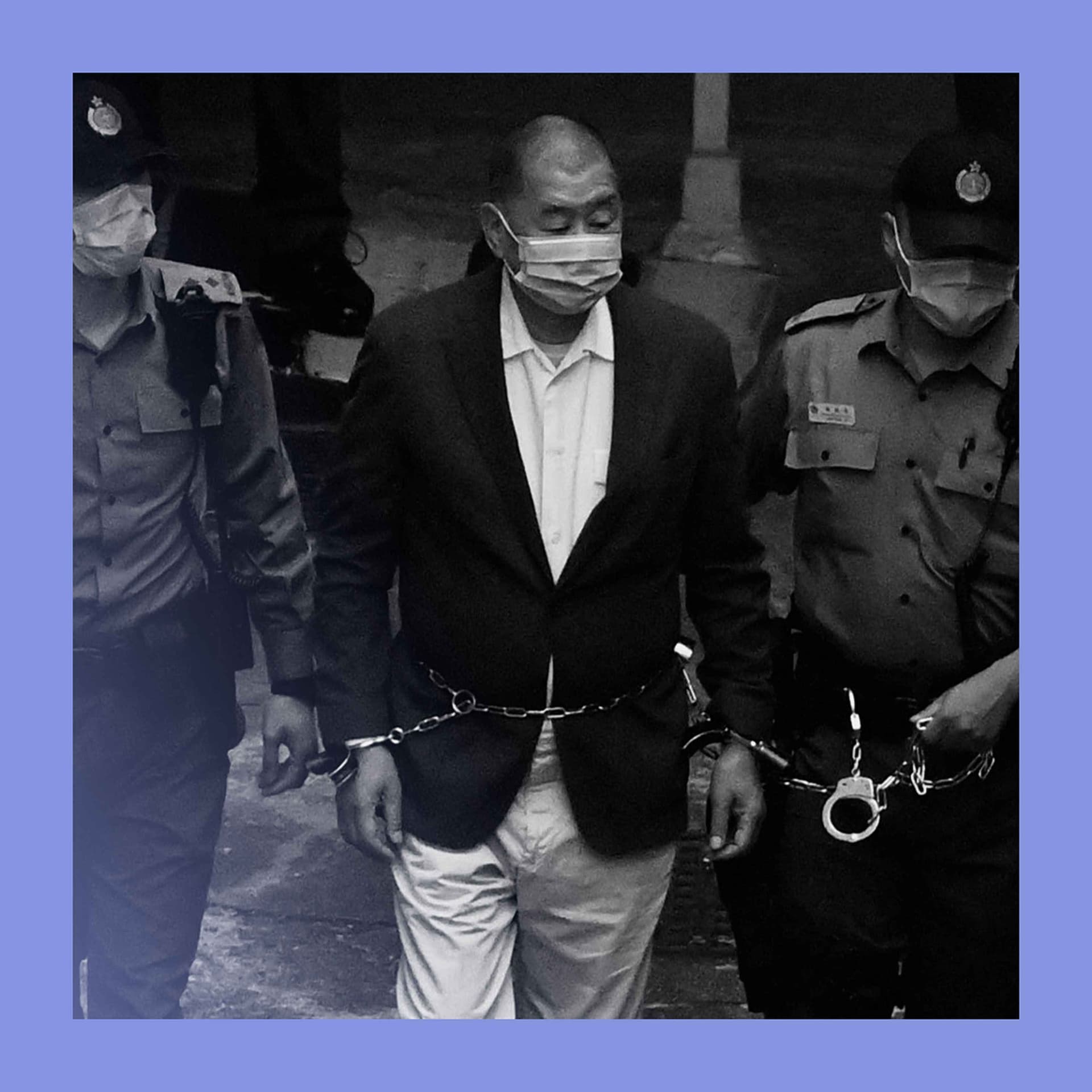
The episode mixes three topics: (1) Hong Kong’s national security crackdown, focusing on Jimmy Lai’s conviction; (2) how the UK Labour government’s 2024 policies may harm London; (3) a science segment on hangovers and why “cures” are hard.
Guest backgrounds
Alice Su (senior international correspondent; former host of Drum Tower, China podcast). Joel Budd (The Economist social affairs editor). Alex Hearn (The Economist AI writer; “hangover correspondent”).
Key claims and examples
Lai, Apple Daily founder, was convicted of collusion with foreign forces and sedition after a national security trial; he previously served five years for fraud and unauthorized assembly. The law enables ambiguous crimes (subversion/collusion), juryless trials, and special judges. Convictions are expected (95%). London: funding formula changes cut central grants to boroughs, pushing higher council tax; immigration and foreign-student fee levies hurt London universities (UCL gets 4/5 fees from foreign students). Hangovers: toxins like acetaldehyde and congeners; prevention is “don’t drink”; cures lack profitable evidence; “hair of the dog” only delays symptoms.
Written by AI. May contain mistakes. Listen to the episode to check what was said.
Chapters
Tap a time to open that second in VOContext of Jimmy Lai's Conviction
0:30 to 1:10
Exploration of the political backdrop leading to Lai's trial.
“But the current Labour government has made some surprising policy decisions that could be really bad for the capital.”
Jimmy Lai's Profile
1:10 to 3:08
Discussion on Lai's background, his media influence, and arrest.
“The story of Hong Kong over the past five years is one of progressive stifling.”
CCP Control Over Hong Kong
3:08 to 5:30
Analysis of how the Chinese Communist Party exerts control in Hong Kong.
“How is the CCP really exerting its control here?”
Public Reactions to the Verdict
5:30 to 6:31
Insights into public sentiment and reactions following Lai's verdict.
“And back then it was just three days after the U.S.”
International Implications of the Verdict
6:31 to 7:36
Discussing potential international responses to Lai's conviction.
“Alice, thank you very much for talking to me.”
Changing Politics of London
7:42 to 14:00
Examination of the current Labour government's impact on London.
“Jackson is short for Jackson Financial Incorporated, Jackson National Life Insurance Company, Lansing, Michigan, and Jackson National Life Insurance Company of New York.”
Labour Party's London Dynamics
14:00 to 15:17
Explore why the Labour Party may be neglecting London despite its leadership's roots there.
“So why in the end is the Labour Party, led by Keir Starmer, who is himself born in London, doing this?”
Understanding and Preventing Hangovers
15:51 to 21:12
Discuss the mechanics of hangovers and explore potential prevention strategies.
“Just the hangover correspondent will do.”
Understanding and Preventing Hangovers
21:45 to 22:18
Discuss the mechanics of hangovers and explore potential prevention strategies.
“That's it for this episode of The Intelligence.”
Transcript
Automatic transcript. May contain errors.0:28The Economist biased Londoner. But the current Labour government has made some surprising policy decisions that could be really bad for the capital. What's going on? And tis the time of year to be merry, which means that many of us will be nursing a hangover on a not-infrequent basis. But before you reach for the fry-up or that apparently curative mid-morning beer, our correspondent has some sober words of advice.
1:02But first...
1:10The story of Hong Kong over the past five years is one of progressive stifling. In that painful history, today will stand out. Jimmy Lai was one of the most powerful and outspoken critics of the regime. His publications cheered the millions of Hong Kongers who marched against the territory's government in 2019 and which later became violent. Now, after a long-running trial in which Lai was accused of flouting national security laws, judges have announced their verdict. Jimmy Lai is Hong Kong's most famous media mogul, and today he was found guilty of collusion with foreign forces and of sedition.
1:49Alice Su is our senior international correspondent and a former host of Drum Tower, our China podcast. He's a tycoon who has already been in jail for five years on a separate conviction of fraud, and he now potentially faces a life sentence. It speaks to the state of Hong Kong's civil liberties. So Alice, let's just take a step back for a minute. Tell me a bit more about Jimmy Lai himself and what he really stands accused of. Jimmy Lai is one of the wealthiest and most famous men in Hong Kong. He actually built his fortune on a clothing empire. He founded this newspaper called Apple Daily that was very popular in Hong Kong and famous because it printed a lot of tabloid-style gossip about celebrities.
2:31But it was also the most outspoken publication in favor of pro-democracy movements in Hong Kong and in mainland China. Apple Daily openly backed pro-democracy protests in 2014 and in 2019, which then turned violent. In 2020, the central government imposed a new national security law on Hong Kong. Apple Daily was shut down shortly afterwards and Jimmy Lai was arrested. He is now the most prominent public figure who has been convicted under the national security law. Prior to this, he had already spent five years in prison on separate charges of fraud and unauthorized assembly. So Alice, we've spoken before about how the Hong Kong authorities are acting with the Chinese Communist Party in Beijing very much on their shoulder.
3:15How is the CCP really exerting its control here? The crux of this control is really a national security law that was passed in 2020. And it was passed by the national parliament in Beijing in the wake of sweeping unrest throughout the entire year before. And this new law created these ambiguous categories of crime that were previously unknown in Hong Kong, like subversion and collusion with foreign forces. Last year, there was also another set of local national security laws called Article 23. and they kind of backed up the first national security law by introducing harsher sentences for national security offenses.
3:51And trials under both of these laws can be held without juries, and they involve judges who are drawn from a special pool. Since the national security law was passed, a lot of people who were outspoken in Hong Kong in the past, who were seen as leaders of the pro-democracy movement or activists, a lot of them have actually fled if they could or have gone into prison. And Lai is perhaps the highest profile figure who had a chance to leave at one point. He's actually a British citizen, but he chose to stay in Hong Kong and to, as he put it in a previous interview, to live meaningfully and to continue to stand for what he believes in.
4:27And so how are people in Hong Kong likely to respond to this verdict then? I've been to the courts in Hong Kong many times. People show up so that they can attend as members of the public, but over time you've seen that people become more and more afraid to speak to journalists when they're there. Today, some people were just quietly eating apples, maybe a sign of solidarity with Apple Daily, the newspaper that Jimmy Lai ran. There's not much that people can do anymore. And I have to say that it's not surprising that Mr. Lai was found guilty. This is what was expected, especially under the national security law, where 95 % of cases end in convictions.
5:01And that includes people who have pleaded guilty. Even just earlier this month, our publication and several other foreign media publications were summoned by the National security police. And they warned that foreign media should not publish overly critical accounts of the government because it might sow discord. And that warning was in response to coverage of the fire that recently happened. But for many of us who have spent time working in mainland China as well, the takeaway was that Hong Kong is really becoming more and more like the mainland. So what is the international response likely to be to this verdict then?
5:34Well, that's also hard to say. So Jimmy Lai was arrested in 2020. And back then it was just three days after the U.S. had imposed sanctions on Hong Kong and Chinese officials for implementing policies that suppressed freedom. But five years later, the international situation has changed quite a lot. Donald Trump and Keir Starmer have both appealed to Xi Jinping for Jimmy Lai's release in the past. But right now, Mr. Trump is very keen on getting a trade deal with China. He has plans to visit Beijing next year. China seems to be really operating from a place of geopolitical strength right now. And in Hong Kong, the authorities are very keen to please the central government.
6:14Authorities in Hong Kong are going to hope that the world will just move on quickly and that news of this verdict will die down. But for many people who have seen Mr. Lai take a stand for his convictions and refuse to be silent for all these years, they will continue to see him as a sort of martyr for his convictions. Alice, thank you very much for talking to me. Thank you, Rosie. And you can hear more on the Jimmy Lai trial and its consequences for Hong Kong in tomorrow's episode of Drum Tower, our China podcast. You'll need to be a subscriber to listen.
7:15We'll be right back. offer to sell or investment advice. Investing involves risks, including loss of capital. Past performance is not indicative nor a guarantee of future results. Please review performance and offering materials before investing. This message comes from Jackson. Taxes aren't something you can only think about once a year. With investments, planning for tax days year-round. Fortunately, Jackson offers tax-efficient products. Visit jackson.com for more information on how our products can make your tax bill a little bit less painful. Jackson is short for Jackson Financial Incorporated, Jackson National Life Insurance Company, Lansing, Michigan, and Jackson National Life Insurance Company of New York.
7:49Purchase New York.
8:00Bashing London and Londoners has long been a popular pastime. Catch the train to London, stopping at rejection, disappointment, backstabbing central and Shattered Dreams Parkway. From the title character in the BBC sitcom I'm Alan Partridge to British politicians throwing barbs at their right honourable friends. I was, of course, surprised to see the honourable gentleman in North Yorkshire, but probably, although probably not as surprised as he was when he realised he couldn't take the tube there, Mr Speaker. That was former Prime Minister Rishi Sunak, attempting last year to paint his soon-to-be successor Keir Starmer as a creature of the capital.
8:43And yes, Starmer was born in London, and his constituency is there. But when it comes to the capital, he doesn't seem to be throwing it any favours. Britain's government, which took power in July 2024, has turned out to be remarkably bad for London. Joel Budd is our social affairs editor. It's pursued several policies that hurt the city, even though seemingly it's not trying to hurt the city. What's wrong with London? Why would anyone want to hurt it? Well, I think that people in many countries have a tendency to sneer at the capital. So Americans sneer at Washington DC, for example, the French sneer at Paris.
9:28But I think London is particularly looked down on by the rest of the UK because it's so much wealthier, so much more productive, has much better public transport, so much more investment. It just seems like a place apart, a privileged place. So what are the policies that the Labour government's pursuing that are hurting London? Well, they've done a series of things that aren't directed at London. It's not as though Labour has an anti-London policy. It's launched a series of policies that are nationwide that just happen to affect London very badly. One big thing it's done, and this is really angering London boroughs, is that it's changing the formula that determines how money flows from the centre to local government.
10:18Local governments in Britain do many of the things that people notice when they're kind of out walking their dogs. So they pick up the bins and they maintain the roads, they fill potholes, they provide money for schools and some of the money comes indirectly from central government and the new formula that's going to come in looks like it's going to be extremely bad for London so London boroughs which provide many of these services are going to receive much much less money from central government to do these things. The national government has also pursued an immigration policy that's really bad for London.
10:56If it wasn't for immigrants London's population would be falling all the time. So how's all of that going to affect life in London? One big painful change is that Londoners are going to be paying much higher taxes. Everybody in Britain pays something called council tax, which is a charge levied on households. And Londoners have for many years paid not very high taxes when you consider how valuable their homes are. And that is going to change because central government funding has been cut so much. The borough councils, they're probably going to turn around and raise taxes on households. Joel, I obviously speak as a Londoner here, but surely people are going to want to live in London anyway.
11:42Well, they will want to live in London. London is a fantastic city. It has a terrifically good public transport system. It's very exciting. It's got wonderful culture, wonderful restaurants. and it's certainly, by the way, much, much better than the London I grew up in in the early 1970s. People will still come, but it's just going to become, I think, that much less attractive. It's particularly going to be less attractive for the footloose super rich because they used to be subject to a rather lenient tax system. They were known as non-doms, meaning they weren't domiciled in Britain for tax purposes.
12:20And in effect, they had rather low taxes. The Labour government has changed the system for them entirely, meaning that they will be paying much higher taxes. And some at least appear to be leaving London and going to live in jurisdictions that are friendlier for them, of which the big two at the moment are Dubai and Milan. And what about foreign students who are another big cohort in the city? The government has made universities less attractive to foreigners. And that's a problem for all universities. But it's particularly a problem for London universities because they're so very, very dependent on foreign students.
13:00They're hugely valuable because they pay much, much higher fees than British students do. So University College London gets four-fifths of its fees from foreign students. They're really essential. and the government is going to introduce essentially a levy on foreign tuition paid to universities. So it's going to take 6 % of the fees that they pay, which is just going to make Britain as a whole much less attractive to foreign students. But because London universities are so very, very dependent on foreign students, it's going to particularly affect them. You said at the beginning that one of the reasons people don't like London is because it's wealthier.
13:39So won't all of these policies actually damage Britain's economy overall in the end? Yes, they will. Unfortunately, there's no way of damaging London that doesn't damage Britain. It is the most important economic engine in the country by far. It pays much, much more in tax than it gets in services. It's a crucial part of the national economy and damaging it is going to damage Britain as a whole. So why in the end is the Labour Party, led by Keir Starmer, who is himself born in London, doing this? Yeah, it's really strange. So Keir Starmer, the Prime Minister, was born in London, although his family then moved him just to the south of the city.
14:21And then he came back and he's now an MP for a London constituency. Rachel Reeves, the Chancellor, was also born in London and speaks still with a South London accent. And so we do have a government that is dominated by Londoners. I think one reason they are shortchanging London is because they don't think they need to fight particularly hard for Londoners' votes. In the 1980s, London was a marginal area. It was just as likely to vote Conservative as it was to vote Labour. And in the 1987 election, it voted more Conservative than the country as a whole. but since the late 1990s it's become a pretty solidly Labour city with a side of Liberal Democrats and so I think Labour politicians just don't feel they need to compete very hard for it.
15:15Joel, thank you very much indeed. Thank you.
15:38Tis the season to be merry, and that means a lot of hangovers for some of us. I'm joined in the studio by Alex Hearn, The Economist, AI writer, and our hungover correspondent. Oh, sorry, I meant to say hangover correspondent. Hi, Alex. Hello. I'm fine, honestly. Just the hangover correspondent will do. When was your last hangover? Thursday. Okay, what happened? It was a friend's party and he overstocked the bar to the point that he was telling people to take bottles of wine home after. Fun night. Friday at work was less fun. I thought you were here to tell me how not to get a hangover. There is one absolutely foolproof way that I've discovered in reporting this piece out.
16:21I assume that's lots of water and a bag of chips on your way home? Don't drink anything. So boring. It works. It is foolproof. Okay, is there any way other than being completely abstinent? There's a lot of things that might work. And one of the really annoying things about hangover prevention and cure is that we can't say anything more than might. Why is that? Hangover is a medical symptom. You can read it in textbooks. It is the result of a bunch of toxins interacting with your body in a bad way. and what that means is claiming to be able to treat this medical symptom is a medical claim you need to do clinical trials that can cost hundreds of millions of dollars to be able to make that claim in a legally safe way when selling products and the problem is that the economics of hangover just don't really work you wouldn't be able to sell this as a prescription medicine you wouldn't be able to sell the tablets for all that much I mean I'd pay quite a lot for a hangover cure but this is not one of those million pound a dose medicines and on top of that a lot of the things that people pass around as folk remedies for hangovers that have a small amount of evidence behind them aren't medications that you could patent or profit from in any real way so even if you did go to the work of spending a hundred million dollars on doing a clinical trial to prove whether say activated charcoal prevents a hangover the following morning at the end of it all you've got a very expensive piece of paper that says that something anyone can make and sell if they can get hold of some wood is a hangover cure.
17:56Well, that's not a great business. There must have been research on this that gives us some sense. Give us a few things that might work. Let's go with the might. Firstly, we can talk about what hangover actually is. A hangover is the outcome of your body being unable to process all of the alcohol and all of the things it breaks alcohol down to before they start having a negative effect on, well, your body. Alcohol is itself a poison, and a lot of the things alcohol breaks down into are actually worse poisons. Eventually, alcohol becomes water and sugars and gets excreted through the body, but before then, it breaks into things like acetaldehyde, a really quite nasty byproduct of the process.
18:37While that builds up in your body, you feel really rough. There are a lot of other things included in most alcoholic drinks, things called congeners, chemicals that are present alongside alcohol, So things like methanol, which is very bad if you drink large amounts of it, but is naturally present in most alcoholic drinks. And then all of the weird chemicals that make things like whiskey or red wine have their colour to them. Stuff beyond just the water and ethanol in a pure shot of delightful triple distilled vodka. Those usually aren't great either. And so hangover is just a buildup of all of these products.
19:12And the trick to most hangover preventions is getting them out of your body faster. so treating the hangover so there must be then some more research on hangover cures cures is less helpful the problem with a cure is you're already poisoned there's not a huge amount you can do then on top of that a hangover is in large part this poisoning through the various toxins that you've ingested or created as part of the metabolic process but it also gets mixed up with all the other effects of being drunk the night before. Your sleep has been disrupted because you were drunk. Your metabolism is disrupted because as well as you probably didn't eat a normal meal, did you?
19:53And you just drank several litres of fluid when you wouldn't normally. There's also the fact that alcohol is an irritant on your stomach lining. So that gives you a stomach upset that feels like part of the hangover, isn't strictly the same as the systemic poisoning that you're experiencing, but isn't going to go anywhere. You've just got to sit it out. And what about folk cures, like my bag of chips on the way home? Any food before you go to bed, any food there will help, but not that much. And food the morning after really doesn't do that much at all. You need to get more nutrients in yourself.
20:27You certainly need to get more liquid inside yourself. Caffeine and painkillers help, but nothing's going to cure the hangover entirely. Hair of the dog? Well, that's where you can start going down some of the interesting things about the metabolic pathways of alcohol, right? The reason why you don't get a hangover while you're still drinking is because while ethanol is being broken down, your body is actually more actively breaking down the rest of the byproducts as well. It's also working harder to break down the methanol and the byproducts of that, which means that so long as ethanol is coming into your system, you tend to avoid the symptoms of hangover, which is why hair of the dog does work for a bit.
21:04The problem is, of course, eventually you have to stop drinking, and once the hair of the dog wears off, you are in fact more hungover than when you started. Alex thank you so much for talking to me Thank you Rosie If Alex's sage words of advice aren't enough to get you through the coming festivities this week's episode of Babbage our science podcast offers a scientific guide on how to survive Christmas that's out on Wednesday for subscribers
21:45That's it for this episode of The Intelligence. See you back here tomorrow.
22:07This message comes from Jackson. Taxes aren't something you can only think about once a year. With investments, planning for tax days year-round. Fortunately, Jackson offers tax-efficient products. Visit Jackson.com for more information on how our products can make your tax bill a little bit less painful. Jackson is short for Jackson Financial Incorporated, Jackson National Life Insurance Company, Lansing, Michigan, and Jackson National Life Insurance Company of New York. Purchase New York.
From the publisher
Today Hong Kong’s most prominent media mogul was convicted of flouting national security legislation. Our correspondent explains the consequences for the territory. Why the policies of Britain’s Labour government are damaging London. And our correspondent offers sober advice on how (not) to cure a hangover.
Listen to what matters most, from global politics and business to science and technology—Subscribe to Economist Podcasts+
For more information about how to access Economist Podcasts+, please visit our FAQs page or watch our video explaining how to link your account.
Hosted on Acast. See acast.com/privacy for more information.