In short
The Economist’s “The Intelligence” episode mixes geopolitics and sports/business. Main segment: Brazil’s Supreme Court convicts former president Jair Bolsonaro for trying to ignite a coup after the 2023 storming of Brazil’s capital, and examines how the US response (tariffs and Magnitsky sanctions) could strain Brazil-US relations. It also discusses why niche sports are booming financially and in viewership, and ends with an interview about Julian Fellowes and Downton Abbey’s finale.
Guests
Hal Hodson (The Economist, edits the America section). Carlos Subirana (The Economist news editor; discusses niche sports investment). Julian Fellowes (Downton Abbey writer/creator; interviewed about Downton Abbey and class).
Written by AI. May contain mistakes. Listen to the episode to check what was said.
Chapters
Tap a time to open that second in VOBolsonaro's Conviction and Its Impact
0:00 to 0:17
Discussion on Jair Bolsonaro's sentencing and its implications for Brazil and US relations.
“There's never been a better time to get outside and experience the benefits of nature.”
Bolsonaro's Conviction and Its Impact
1:04 to 3:45
Discussion on Jair Bolsonaro's sentencing and its implications for Brazil and US relations.
“Football, Formula One, tennis, there are just piles of money sloshing around in the big established sports.”
US Reaction and Political Tensions
3:45 to 6:39
Analysis of the US's involvement and response to Bolsonaro's conviction.
“in no small part because of the meddling that they've seen coming from the United States in this process.”
Political Landscape Post-Conviction
6:39 to 11:38
Exploration of Brazil's political dynamics and Bolsonaro's future influence.
“The list of people who have had them placed on them in the past are pretty nasty people, people who have killed people, who have tortured people.”
Niche Sports Gaining Popularity
11:48 to 14:00
Insight into the rise of niche sports and their commercial success post-pandemic.
“to choose your trail and know what to expect.”
The Rise of Niche Sports Post-Pandemic
14:00 to 19:14
Explore how niche sports gained popularity and audience engagement post-pandemic.
“The Nation League, volleyball's main tournament, saw its audience jump by more than 40 % last year.”
Julian Fellowes: A Look into Downton Abbey
19:14 to 23:02
Delve into the life and career of Julian Fellowes, creator of Downton Abbey.
“For all of us, in all our lives, we must be prepared to change if we want to hold on to what we care about.”
Class and Society in Downton Abbey
23:02 to 25:51
Discuss the themes of class and social dynamics portrayed in Downton Abbey.
“To its detractors, Downton offers an overly rosy view of a stratified era.”
Transcript
Automatic transcript. May contain errors.0:00host unknown:There's never been a better time to get outside and experience the benefits of nature. Discover nearby trails and explore the outdoors with all trails. Download the free app today and find your outside.
0:17host unknown:This intelligence podcast is sponsored by Back Market, the leading global marketplace for refurbished tech. When the kids need phones, laptops, or tablets for school, buying refurbished tech makes sense for families trying to save money. without sacrificing quality. At Backmarket, tech costs up to 50 % less compared to new. All devices have been professionally refurbished and come with a one-year warranty and 30-day return policy. Start saving money. Visit Backmarket.com or the Backmarket app to shop now.
0:50Julian Fellowes:The Economist
0:58Julian Fellowes:Hello and welcome to The Intelligence from The Economist. I'm Jason Palmer.
1:02host unknown:And I'm Rosie Blore. Every weekday we provide a fresh perspective on the events shaping your world.
1:12Julian Fellowes:Football, Formula One, tennis, there are just piles of money sloshing around in the big established sports. But the sporting scene is changing. Sponsorship and broadcast deals are booming in volleyball, paddle, even tag.
1:30host unknown:And I hope it hasn't escaped your notice that Now Out in Cinemas is the grand finale of Downton Abbey. And it is very grand. Our correspondent met the real Lord of Downton, its creator Julian Fellows.
1:48host unknown:But first
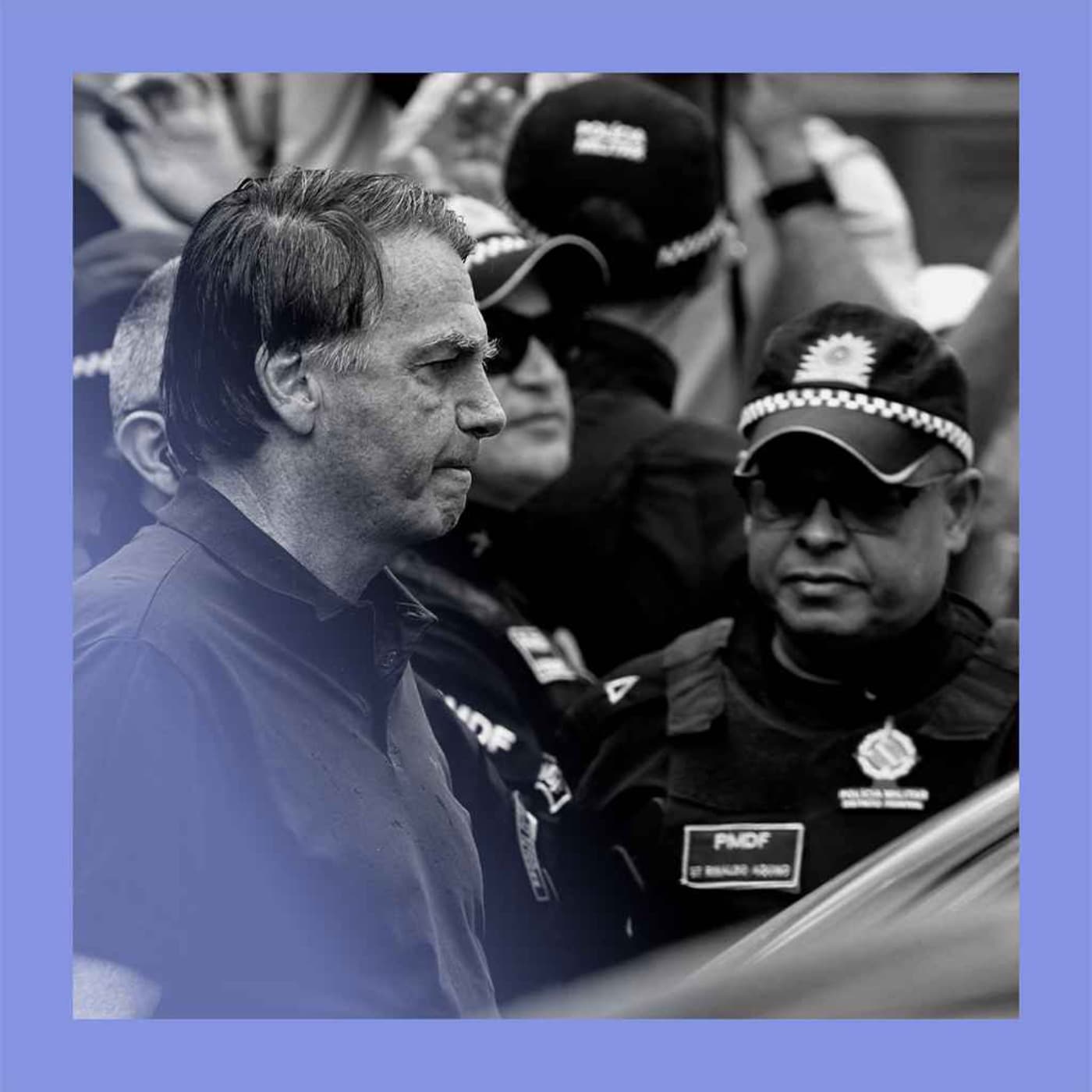
1:57host unknown:Last week, the former president of Brazil, Jair Bolsonaro was sentenced to over 27 years in prison for attempting to ignite a coup It's an extraordinary conviction for an extraordinary crime In January 2023, Brazilian rioters stormed their capital Supporters of the far-right Bolsonaro Protesting against the election of Luiz Inácio Lula da Silva They smashed the windows and doors of the Supreme Court And of Congress buildings The streets erupted in chaos
2:36host unknown:Two and a half years on and 1 ,600 of those rioters had been charged for attacking the capital, along with Bolsonaro himself, for his attempts to orchestrate the coup.
2:54host unknown:Supreme Court Justice Carmen Lucia said in her judgment on Friday that Bolsonaro had tried to organize a systematic plan of attack on Brazil's democratic institutions, and that he'd enlisted the help of people within the government and the intelligence services. That judgment now changes the course of politics within Brazil. But it will also alter the country's relationship with a crucial ally, America.
3:21Julian Fellowes:Almost straight away after Bolsonaro's conviction, the Trump administration came out strongly against the ruling and called it unjust and once again called it a witch hunt against Bolsonaro and promised that America would respond accordingly.
3:37host unknown:Hal Hodson edits the America section of The Economist.
3:41Julian Fellowes:Meanwhile in Brazil, it seems that in general, Brazilians are standing behind the Supreme Court decision, in no small part because of the meddling that they've seen coming from the United States in this process.
3:54host unknown:So let's just look at that U.S. reaction. To call this a witch hunt is a big accusation. why did the US involve itself in the case?
4:03Julian Fellowes:It's not 100 % clear why the US has involved itself in this case from the beginning. Eduardo Bolsonaro, who is Mr. Bolsonaro's son, put his job as a congressman in Brazil on pause and moved to Texas in order to lobby for his father's cause. And he appears to have been somewhat successful. And it's clear that Donald Trump sees Bolsonaro as a compatriot. He thinks he's innocent because Donald Trump, of course, presumably thinks he's innocent of orchestrating an attack on the Capitol, of attempting to retain power after losing an election. Bolsonaro has been sentenced to jail for doing that. And Mr.
4:40Julian Fellowes:Trump is president of the United States once again.
4:43host unknown:I thought he was a good president of Brazil.
4:45Julian Fellowes:And it's very surprising that that could happen. That's very much like they tried to do with me, but they didn't get away with it at all. but I can only say this, I knew him as president of Brazil, he was a good man. And the American view is that what Bolsonaro was doing was not plotting a coup, he was merely practicing his right to freedom of speech. And over and over again, Washington has reiterated the idea that this is about free speech, voiced regularly by White House Press Secretary Caroline Levitt.
5:16host unknown:Freedom of speech is arguably the most important issue, and the president believes in it strongly, which is why we have taken significant action with regards to Brazil in the form of both sanctions and also leveraging the use of tariffs to ensure that countries around the world are not punishing their citizens in this way.
5:34Julian Fellowes:The Brazilians dismiss this out of hand and say there's reams and reams of evidence that he was plotting a coup and hey presto, he has been convicted and sentenced to 27 years.
5:45host unknown:So what did the US actually do?
5:48Julian Fellowes:Well, it started with Trump making vague sort of threats that he was going to tariff Brazil. And of all the tariffs that he's put on countries all over the world, these tariffs seem to be the most politically motivated. Usually there's, at the very least, some kind of cover in the form of a trade imbalance that America dislikes. But with Brazil, it really has no trade problems with the United States to speak of. And Trump didn't even try and pretend that there were. He basically just said, we don't like the trial of Jair Bolsonaro. And so we are putting tariffs of 50 % on a number of Brazilian imports.
6:25Julian Fellowes:And later, soon after that, the US State Department placed what are called Magnitsky sanctions on Alejandro de Moraes, who is the judge who led the trial against Bolsonaro. And these Magnitsky sanctions, they're usually reserved for warlords and dictators. The list of people who have had them placed on them in the past are pretty nasty people, people who have killed people, who have tortured people. And a Supreme Court judge in a relatively robust democracy is a totally weird and surprising person to place Magnetic actions upon.
7:00host unknown:I think that very likely, after the julgamento of Bolsonaro, we'll have a response.
7:05Julian Fellowes:Over the weekend, Eduardo, Bolsonaro's son, said that he expects U.S. actions against Brazil to escalate, including the possibility of harsher sanctions or sanctions on more of the Supreme Court judges that convicted Bolsonaro.
7:19host unknown:So what happens next?
7:21Julian Fellowes:Well, there will almost certainly be an appeal. As soon as the court publishes its official written ruling, which it has 60 days to do, then Bolsonaro's lawyers have five days after that to file their appeal. We're also pretty confident that it won't change the outcome of the case. One of the Supreme Court justices during his vote to convict said, did anyone really think that losing access to credit cards or not being able to go and see Mickey Mouse was going to change the outcome of this important case, which I thought kind of summed it up. But also, Mr. Bolsonaro's supporters in Congress were preparing an amnesty bill to try and potentially get him off the hook.
8:02Julian Fellowes:But there's just so much evidence. So whether it's an appeal or whether it's an amnesty law passed by his allies, or even whether it's a pardon from some future president of Brazil, all of those things are very unlikely to change the outcome of the case. What is possible is that Bolsonaro's sentence gets reduced or he's allowed to serve it from home or something like that. What is changing, though, is Brazil's attitude to America and the polling numbers of Luis Ignacio Lula da Silva, who's known as Lula the President. Both those things have rallied around both the Supreme Court and against the United States' action.
8:43host unknown:And what has Lula himself said?
8:46Julian Fellowes:Lula has been surprisingly frank.
8:57Julian Fellowes:Lula said that if Trump lived in Brazil, he would have been prosecuted for the January 6th attack on the Capitol. That if Trump had done what he did in America, in Brazil, he would have been convicted.
9:09host unknown:And what does it even look like for Brazilians to rally around Lula?
9:13Julian Fellowes:Well, it looks like poll numbers going up, as mentioned. Thousands of the 40 % Brazilians who say they would never in a million years vote for Jair Bolsonaro were out partying in the streets, blowing trumpets and impromptu marching bands and all that kind of classic Brazil festival vibe. But one thing that you saw a lot, in particular online, was Brazilians crowing about how their democracy was so great because they had managed to do a thing that the United States had not done.
9:45host unknown:And Bolsonaro? Is his political career over?
9:49Julian Fellowes:Bolsonaro's career as a politician who is physically in politics himself is almost certainly over, barring some extremely unlikely events. But there's a block of voters, Brazilian evangelicals, who stand by Bolsonaro no matter what. And it's quite hard for anyone on the right to win without that block of voters. Politicians who are in line for the presidency next year, sort of center-right or even just straight center politicians. They both don't want to be connected with the American assault. They don't want to look like they support that or think that's a good thing. But they also want to look like they support Bolsonaro.
10:27Julian Fellowes:So they end up taking this weird sort of soft line where they say, we think the court has overreached, but we do think that Mr. Bolsonaro has done some bad stuff. And that tension between trying to support Bolsonaro so that you can gain his supporters behind you if you run for president, and also not appearing to be on the side of Bolsonaro and the US actions. That's been a tricky tightrope for politicians on the right to walk. And so what Bolsonaro is now is a kingmaker.
10:58host unknown:Hal, thank you very much for talking to me.
11:00Julian Fellowes:Thanks very much for having me, Rosie.
11:15host unknown:At The Economist, we like to think we're pretty good at writing clearly. And we reckon you can do that too for your business. And yes, you've guessed it, we've got a course and a deal for you. We're offering you, dear listeners of the intelligence, 15 % off a business writing and storytelling course. It's written by Economist editors and journalists and run by our colleagues at Economist Education. Head to economist.com slash writing course and use the code intelligence. And you'd better get a wriggle on. The next one starts on Wednesday. The link is in the show notes.
Read the full transcript
12:08host unknown:to choose your trail and know what to expect. You can also download the map in case service gets spotty. Plan and experience your next hike with AllTrails, the app for exploring the outdoors. Download it today and find your outside.
12:25Julian Fellowes:Hi, I'm Nick, co-host of The Best One Yet. You optimize your workouts, your portfolios, and that rando startup idea that hit you in the middle of the shower. But if you're not hydrated, you're already playing catch-up. So we keep a stash of Liquid IV in our studio. One stick mixed into 16 ounces of water is clinically demonstrated to hydrate faster than water alone with three times the electrolytes of the leading sports drink, plus eight vitamins and nutrients. Whether you're traveling, exercising, or podcasting, the best business news ever, Liquid IV makes it easy to stay hydrated wherever life takes you.
12:53Julian Fellowes:So shop now at liquidiv.com. Liquid IV hydration that goes wherever life takes you.
13:03host unknown:Some of the craziest action I have ever seen. It was personal. Time is running out. Oh, no. The clip you're hearing right now is from a World Chase Tag competition.
13:15Julian Fellowes:Carlos Subirana is a news editor at The Economist.
13:18host unknown:It's a simple game. Two athletes crouch inside a kind of jungle gym full of bars and rumps. And when the buzzer goes, one sprints off, and the other has just 20 seconds to try and catch them.
13:31Julian Fellowes:Listen to the reaction from the fans.
13:34host unknown:World Chase Tag has basically turned a playground game into a professional sport. There are referees, sponsors, even TV deals. Millions have watched. It's on ESPN in America and Channel 4 here in Britain. And tag isn't the only niche sport getting that kind of backing. ESPN has bought a minority stake in the main lacrosse league. And CVC, a private equity giant, has pumped more than$300 million into a new venture called Volleyball World that runs the sports commercial side. It's really paying off. The Nation League, volleyball's main tournament, saw its audience jump by more than 40 % last year.
14:16Julian Fellowes:So I'm still struggling with the idea that tag has been turned into like a professional sport. Why are all of these, any of these niche sports getting such attention and cash?
14:24host unknown:I know these sports can sound a bit ridiculous at first, but they're really booming, both in popularity and in money flowing in. And a lot of the momentum goes back to the pandemic. When the big leagues shut down, lockdown audiences went looking for anything else to watch. And then that gave smaller sports a chance to break through. And then once things reopened, people wanted those shared in-person experiences again. So this boosted attendance in smaller sports. So for example, last year, a women's volleyball match in Nebraska pulled in more than 92 ,000 fans. And that set a world record for attendance at a women's sporting event.
15:06host unknown:And then streaming is a big part of this too. Because unlike TV channels, which only have so many slots to fill, streaming platforms can have unlimited amounts of content. That gives smaller sports a chance to sit alongside the big ones. and find their own audiences.
15:22Julian Fellowes:Well, what are those audiences, though? Is there a particular demographic that's gotten into these weird little sports?
15:27host unknown:They're mostly designed with younger audiences in mind. So traditional sports like golf or tennis are really struggling with aging fan bases. But these newcomers, they don't have to stick to old rule books, so they can redesign the whole product for digital natives with shorter attention spans. So take the King's League in Spain, for example. It's five-a-side football, but the game has lots of wild rules. Like, for example, fans get to vote online for rule changes during the match. And then that helps keep people engaged. Or take TGL, a new golf league set up by Tiger Woods and Rory McIlroy. The matches are staged indoors and the players hit into computer simulators and then finish the holes in person on a live putting green.
16:14host unknown:and its audience is on average 12 years younger than the PGA Tour, the sports main circuit. And then another thing that has pulled younger audiences in is that the atmosphere in those events often isn't like a traditional match. So they're more like a festival with music, light and a party vibe that attracts young fans.
16:35Julian Fellowes:And where lots of fans go, lots of investors follow, you're saying?
16:39host unknown:It actually really started with the big mainstream sports. So franchise values in the NFL, the NBA, European football all shot up in recent years. And so then investors realized that sport itself had become an asset class and then everyone wanted in. But the chances to buy into those top leagues are rare. So stakes hardly ever come up for sale. So with all this capital chasing limited opportunities, investors have started looking into smaller leaks instead. So for them, these sports are kind of a way to get a foot in the door. The idea is that if you can launch a leak from scratch and show that you understand how the business works, that gives you the track record to invest when the bigger franchises eventually let investors in.
17:25Julian Fellowes:But still, in terms of relative income investment interest, these are still small leaks, right? They're not going to catch up with your NFLs and your NBAs.
17:34host unknown:Yeah, smaller leagues actually rely on the same three revenue streams as the big ones. They rely on media rights, ticket sales and merchandise and sponsorships. But the difference is that the mix looks very different. So in the NFL, for example, about half of the income comes from broadcasters. And then with the smaller sports, it's often the reverse. So some leagues charge tiny fees or even nothing at all just to get airtime. And then early on, most of the money comes straight from fans. So social media is a key part of that. For example, if you get a viral clip on TikTok or Instagram, that can quickly turn into jersey sales or even ticket sales for an event coming up.
18:14Julian Fellowes:And how much of this do you think is just interest in something that's new and niche? How much of it might be a fad or is this the way of sport now?
18:21host unknown:Well, there is a risk here, which is that only a handful of new leagues will be able to hold people's attention in the long term. So in some sports, the rush of capital is already creating chaos, with rival leagues competing for the same tiny pool of fans. Pickleball in America is a good example. At one point, there were three different official circuits, which just ended up confusing audiences. And some of the new leagues are struggling. Just last month, Grand Slam Track, which is a new kind of athletics league which introduces teams and shorter contests, admitted that it was late paying athletes their prize money because funding hadn't come through.
19:01host unknown:But the appeal is strong, so if you happen to back the next Major League Soccer or UFC, the returns can be huge. And for now, that prospect is enough to keep investors in the game.
19:14Julian Fellowes:Thanks very much for your time, Carla.
19:16host unknown:Thank you, Jason.
19:34Julian Fellowes:For all of us, in all our lives, we must be prepared to change if we want to hold on to what we care about. The reigning bard of the eternal English subject of class, Julian Fellows is the writer and creator of the Downton Abbey saga.
19:52host unknown:Andrew Miller writes our backstory column.
19:55Julian Fellowes:Her smash-hit story depicts the noble Crawley clan facing up to the social changes of the 20th century. Downton Abbey, the grand finale, the last instalment in the extended Downton universe, is out in cinemas now. Once again, the Crawleys are adapting to modernity, led by Lady Mary, the story's tough-nut heiress.
20:18host unknown:Families like ours must keep moving to survive.
20:22Julian Fellowes:I met Lord Fellows to look back on the triumph of Downton, and the twists and turns in his own life that led to it.
20:32Julian Fellowes:Ennobled in 2011, Lord Fellows was born a son of the landed gentry. By his own account, he was a plain and timid teenager who reinvented himself on an oil tanker bound for South America. I realised that I could be whoever I wanted to be when I got off the boat because they have no previous knowledge of me as an adult. The newly gregarious version of him studied at Cambridge and danced at coming out balls. If you have the misfortune to be born into a generation which must earn its living, his father advised him, you might as well do something amusing. Lord Fellows took him with his word and went on to drama school.
21:11Julian Fellowes:Being a jobbing actor was perfect training for screenwriting, he told me. It gave him a new perspective on the rarefied world he'd grown up in, and it involved a lot of what he called rescue work on dodgy scripts. I think I learnt in those years what is sayable and what is not sayable.
21:34Julian Fellowes:Now, there are two legendary moments in his life after that. First, he proposed to his wife, Emma Kitchener, a relative of the First World War titan, Lord Kitchener, 20 minutes after they met. She wrote in her diary, a funny little man asked me to marry him. And as I pointed out, I had the last laugh because she did. Then, in 2002, he won an Oscar for the screenplay of Gosford Park, a country house film directed by Robert Altman. After that came Downton Abbey. Who, critics wondered when it first aired in 2010, was still interested in the tiny, aloof British aristocracy. An awful lot of people, it turns out, who tuned in around the world to follow the lives and loves of the Crawleys from the sinking of the Titanic in 1912 to 1930, and across six TV series and now three movies.
22:26Julian Fellowes:Partly that's down to the modern storylines about love and feelings and scandal, but in a period setting. Then there's his artful balance between the upstairs lives of the Toffs and the downstairs servants. And there's a mix of seismic events like war, epidemics, ruin, and everyday challenges, such as in the new film, planning a country fair. Someone once said of life, it's the business of solving problems and then you die. And on the whole, that's true of all of us. To its detractors, Downton offers an overly rosy view of a stratified era. That's a bit of a simplification, I think, because angst lurks amid the turrets and frocks, especially for gay characters and women of all classes.
23:17Julian Fellowes:What is true is that, as Hugh Bonneville, one of the stars, put it to me, Lord Fellows writes from a default position that people try to be good. No one and no social group is all bad, nor immune from hardship. Speaking of the actors, Maggie Smith, as the Dowager Countess, became the supreme goddess of the Downton cult. She died last year and appears only in flashback in the new film. In the role, Lord Fellows told me, she was perfect.
23:49Julian Fellowes:Lots of American viewers loved Downton, maybe because its social hierarchy is soothingly benign. Now, Lord Fellows has adapted his upstairs-downstairs formula in The Gilded Age, another multi-series hit. This one set in the 1880s, among New York's robber barons and their servants. Well, I'm up against all these fellows with money and position. Well, you have position, even if you don't have money. But that's the thing, without money, you just don't count.
24:16host unknown:Well, then you must find a way to make some.
24:20Julian Fellowes:In The Gilded Age, there's a writer character who publishes a tell-all book about high society and is banished. I wondered if Lord Fellowes had suffered any pushback for lifting the veil on the Uppercrust world. Yes, he said, at the beginning. A fellow guest once questioned him at a house party. When you're writing the dialogue, do you write what the ladies say as well? Of course, I wanted to say certainly not, but I did admit to writing that Minus Thallow, which rather shocked him. Lord Fellows is to the posh what the naturalist Sir David Attenborough is to guerrillas, if Sir David were a guerrilla himself, an expert insider guide to dinner placement, shooting parties, and the gap between what nabobs say and what they really think.
25:10Julian Fellowes:but he knows that in modern Britain, poshness is rarely conducive to popularity. Everyone tries to persuade you that they're working class, even if their mother was the daughter of a duke. I think that will pass. It's a kind of rather silly naivety. Perhaps surprisingly, he's wryly sceptical about the whole concept of class. It's a natural arrangement, he thinks, but also in part a confidence trick, as he put it, played by the elite on the masses. It seems to me that his own life conforms to the system and confounds it. Combining a lucky start with hard work, risks and talent, he struck me as that English oxymoron, a self-made toff.
25:56Julian Fellowes:Before we said farewell, I asked where this genial arbiter of etiquette and protocol would put me on the class spectrum. He politely declined. What rank am I, do you think? Oh, no, I never get anyone else set rank. I don't have to figure it out for myself.
26:21host unknown:That's all for this episode of The Intelligence. We'll see you back here tomorrow.
27:05host unknown:We'll see you next time. Black Friday in July, ends July 27th. Shop today at Wayfair.com. Wayfair, every style, every home.
27:14Julian Fellowes:Hi, I'm Nick, co-host of The Best One Yet. You optimize your workouts, your portfolios, and that rando startup idea that hit you in the middle of the shower. But if you're not hydrated, you're already playing catch-up. So we keep a stash of liquid IV in our studio. One stick mixed into 16 ounces of water is clinically demonstrated to hydrate faster than water alone with three times the electrolytes of the leading sports drink, plus eight vitamins and nutrients. Whether you're traveling, exercising, or podcasting the best business news ever, Liquid IV makes it easy to stay hydrated wherever life takes you.
27:43Julian Fellowes:So shop now at liquidiv.com. Liquid IV hydration that goes wherever life takes you.
From the publisher
After Jair Bolsonaro was sentenced to 27 years in prison for trying to organise a coup in 2023, Donald Trump accused Brazil of staging a “witch hunt”. How will America respond? Niche sports like padel and tag are now attracting sponsorship and broadcast deals. And meet the real Lord Downton: Julian Fellowes.
Listen to what matters most, from global politics and business to science and technology—Subscribe to Economist Podcasts+
For more information about how to access Economist Podcasts+, please visit our FAQs page or watch our video explaining how to link your account.
Hosted on Acast. See acast.com/privacy for more information.