
In short
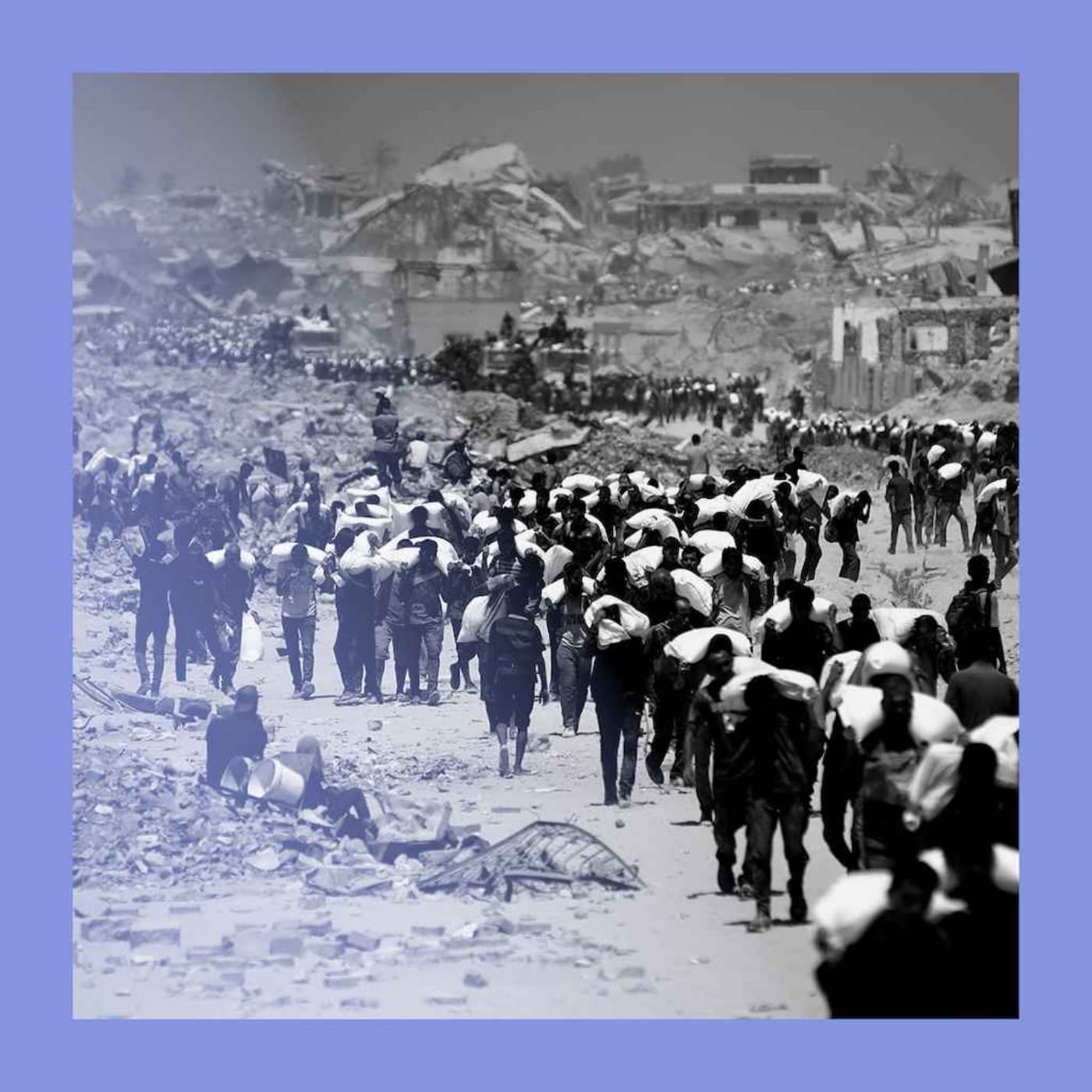
The episode “Not all’s fair: Israel and accountability” focuses on whether Israel’s legal system can realistically investigate and prosecute alleged war crimes during the Gaza war. It also includes segments on US job-hopping economics and a culture story about Father Patrick Ryan and IRA bomb timers.
Guest
Shul Pfeffer, The Economist’s Israel correspondent, who reports on Israeli accountability mechanisms and their shortcomings.
Key claims
alleged crimes fall into (1) soldier actions (shootings/demolitions), (2) IDF operations (airstrikes/artillery with excessive civilian deaths), and (3) government policy (humanitarian restrictions/starvation strategy). Israel cites the complementarity principle, arguing domestic courts can handle cases. Pfeffer argues the system is overwhelmed and slow, with few indictments/trials and examples like Gaza demolitions by commanders without authorization. He also criticizes limited Attorney General intervention and notes past commissions (e.g., after Sabra and Shatila).
Written by AI. May contain mistakes. Listen to the episode to check what was said.
Chapters
Tap a time to open that second in VOWar in Gaza: Current Situation
0:00 to 0:43
Discussion on the ongoing war in Gaza and Israel's military plans.
“Summer's supposed to be the easy season.”
War in Gaza: Current Situation
1:30 to 1:59
Discussion on the ongoing war in Gaza and Israel's military plans.
War in Gaza: Current Situation
2:13 to 4:19
Discussion on the ongoing war in Gaza and Israel's military plans.
“The Terror Priest, the Devil in a Dog Collar, the Devil's Disciple.”
Legal Accountability in Israel
4:19 to 6:15
Examination of Israel's legal mechanisms for accountability regarding war crimes.
“Why don't we start with what it is that is before the courts, before the legal establishment?”
Challenges of Legal Accountability
6:15 to 12:39
Exploration of the shortcomings in Israel's legal accountability system.
“But what does Israel have that fits that description, that there's sort of the police inside the country, if you like?”
Challenges of Legal Accountability
14:00 to 14:58
Exploration of the shortcomings in Israel's legal accountability system.
“Grow connects you with thousands of high-quality, licensed therapists across the U.S., offering both virtual and in-person sessions, nights and weekends.”
The Changing Landscape of Job Hopping
15:42 to 21:22
Explore the evolution and current trends in job hopping and wage growth.
“Job hopping is going to get you your salary and your dream position a lot quicker.”
The Story of Father Ryan and Timed Bombs
21:22 to 28:00
Discover the intriguing history of Father Ryan and his involvement with the IRA.
“The sound as he stepped into the shop was overwhelming.”
Credits and Acknowledgments
28:00 to 28:38
Learn about the production team behind the podcast.
“I regret that I wasn't even more effective.”
Credits and Acknowledgments
29:02 to 29:12
Learn about the production team behind the podcast.
“Taxes aren't something you can only think about once a year.”
Transcript
Automatic transcript. May contain errors.0:28Summer's supposed to be the easy season. your time. The therapist you want takes your insurance on Grow. Grow accepts over 125 insurance plans. Sessions average$21 with insurance and some pay as little as$0 depending on their plan. Visit growtherapy.com slash ACAST today to get started. That's growtherapy.com slash ACAST. growtherapy.com slash ACAST. Availability and coverage vary by state and insurance plan. This intelligence podcast is sponsored by Backmarket, the leading global marketplace for refurbished tech. When the kids need phones, laptops, or tablets for school, buying refurbished tech makes sense for families trying to save money without sacrificing quality.
1:15At Backmarket, tech costs up to 50 % less compared to new. All devices have been professionally refurbished and come with a one-year warranty and 30-day return policy. Start saving money. Visit Backmarket.com or the Backmarket app to shop now.
1:58The Economist people they should job hop, change employers frequently just to ratchet up their pay. What? In this economy, we show why for many workers it's smarter to stay put. And Father Patrick Ryan ended up with many nicknames. The Terror Priest, the Devil in a Dog Collar, the Devil's Disciple. We look back on a life ostensibly spent serving God, but also spent unrepentantly improving the bombs of the IRA.
2:32First up, though...
2:41There's even less hope today for an end to the war in Gaza. This morning in Jerusalem, reportedly against the recommendation of Israel's military, its security cabinet approved a plan to launch a full-scale occupation of Gaza City. Will Israel take control of all of Gaza? We intend to, in order to assure our security, remove Hamas there. In an interview on Fox News before the cabinet meeting, Israel's Prime Minister Benjamin Netanyahu set the tone, outlining a plan to eventually pass control of the territory to other regional powers. Well, we don't want to keep it. We want to have a security perimeter.
3:24We don't want to govern it. We don't want to be there as a governing body. We want to hand it over to Arab forces. Yet more destruction is coming for a devastated region, and Israel's allies, including Britain's prime minister, are already voicing their opposition. The claims that Israel is committing war crimes against Palestinians will only increase. The question, as those allegations mount, is whether Israel's justice system will or even could look into them all. We have tried in the last few weeks to work out how Israeli legal establishment is dealing with all the accusations of war crimes in Gaza.
4:07And Shul Pfeffer is our Israel correspondent. And I think that we've managed to achieve an accurate picture of what they've been doing and mainly of its shortcomings. Why don't we start with what it is that is before the courts, before the legal establishment? What are the crimes as alleged? The allegations against Israel can be roughly divided into three types. One is actions of soldiers, officers on the ground in Gaza, whether it's shootings or demolition of civilian buildings. This is something that the IDF, Visual Defense Forces, would regard as a deviation from the orders. Then there's the official operations.
4:50This is mainly airstrikes and artillery barrages of the IDF, where there are accusations that they killed too many civilians, that they either targeted civilians or they were targeting ostensibly military targets, but the number of civilians who were killed in these strikes was excessive. The third category regards the Israeli government. and these are more matters of policy, especially the humanitarian policy, what supplies Israel allows to go into Gaza during the war. And we know that there have been extensive periods in which almost all the crossings and supplies into Gaza were cut off by Israelis.
5:30And this is also the basis for the arrest warrants of the International Criminal Court against Benjamin Tanial, the prime minister, and former defence minister Yavghan, that they use a starvation strategy against the Palestinian population in Gaza. Israel said it's fighting Hamas. They deny any war crimes being carried out. And on a legal level, they use something called the complementarity principle, which means if a country has its own competent and independent legal courts and investigative agencies that can hold its own soldiers and officers and even politicians to account that there doesn't need to be any kind of international or external judicial intervention.
6:15But what does Israel have that fits that description, that there's sort of the police inside the country, if you like? So there are a number of tiers of accountability within the Israeli system. On ground level, there's a fact-finding mechanism, which is a group of experienced former combat officers who can go in and make initial assessments of what has happened in any incident. Then there's the military police, their investigative division. They do carry out criminal investigations. Above them, within the army, there is the military advocate general, who's the chief legal counsel of the army.
6:52She and her officers are the army's legal advisors, and they also decide whether to open criminal investigations and to press charges against the soldiers and officers who may have broken the laws of war. Outside of the army, there's a civilian legal establishment, which is headed by Israel's Attorney General Ghalibar Avmiyara. They are supposed to be the professional guides of the military lawyers as well, and they are also supposed to advise the Israeli government on matters of policy pertaining to this war. Above them all is the Israeli Supreme Court, And then potentially there could be a national commission of inquiry which would have wide powers of both investigation and to recommend charges be pressed or any other type of sanctions against people who are involved in war crimes.
7:41It sounds as if there are plenty of people, mechanisms, institutions within Israel to hold its military to account, its government in fact to account. Do you think that's all working, that's happening? Well, the number of cases, I think, would overwhelm any type of legal system from lawyers and officers within the IDF's legal system. I've spoken to, they say they have hundreds of complaints and allegations to deal with. They have beefed up both the fact-finding mechanism and the military CID with additional investigators. But they still admit that it will take years to investigate all of the cases.
8:21Now, critics of the system, including also people in the army, say that some of this has been too slow, that there hasn't been enough attempts to seriously press charges or discipline officers. There are at least two division commanders. One has been promoted, the other one has remained in his position, despite the fact that they have carried out demolitions of public buildings in Gaza without a military authorization or against the orders they were given. and there's only been so far a handful of indictments and soldiers brought to trial. So on the face of it, at this point, it doesn't look like the accountability is working very hard.
8:57The explanation that constantly returns is that a war is going on and to reach a conclusion of how well Israel's system of accountability has worked, it's just too premature. The idea that you can reel off just a couple of examples here doesn't seem to match the scale of the fighting of what we've seen over these now couple of years. We're talking here about a war in which at least 63 ,000 people have been killed on the battlefield. Even according to the Israeli assessments, at least two-thirds of those have been civilians. So the question arises, how can you even say that there haven't been war crimes and that they're being dealt with when we're talking about such a high death toll?
9:39Now, there are two answers that the Israeli legal authorities use in this case. One is that we're still investigating things. Give us time, we'll do it. And the other is that if you could show that in each of the strikes in which people were killed, you were pursuing a legitimate military target and you were taking into account the collateral damage that could happen as a result, and this is once again the explanations of Israel's military lawyers, then you can justify even such a high number of casualties. Now, I've been into Gaza during this war as an embed. I've spoken to a large number of Israeli soldiers and officers.
10:17And I have to say that this doesn't confirm to what I've seen and heard, not with the level of destruction. You see entire neighborhoods which have been flattened. And we know from the assessments that are carried out by various researchers that we're talking about 70 % of the buildings in Gaza by now. So to justify every single one of these demolitions, I don't see how they can actually do that under any kind of law. What we've been talking about so far seems to cover the first and the second categories that we started from, the sort of battlefield level and the operational level, but we haven't yet talked about action at the governmental level.
10:54What's your view of that, having looked into this? The decision and the policies of the Israeli government should be under the purview of Israel's Attorney General Ghali Barav Miharash. He's supposed to scrutinize from a legal standpoint any of the Israeli war policies. There are huge questions here about ethnic cleansing and other types of war crimes. And from what I'm hearing from most of the government and military lawyers, they're complaining that the Attorney General hasn't really intervened in any way in the government's decision-making on this. And this is interesting because Attorney General Barav Miara is a well-known opponent of the government.
11:30This, I think, is another major shortcoming of the system that should be holding the Israeli government to account over this war. In the past, most notably in 1982 after the Saba and Shatila massacre in Beirut, the Israeli government has set up commissions to examine these issues. If one was set up, I think it could deliver at least a degree of accountability. And this is something that we can only expect to see happening if and when the Netanyahu government is replaced by a different government. From what you're saying, it seems unclear whether anyone from soldier level up to prime minister level will be held to account, will get their day in court.
12:08As we've argued in Olida this week, Israel still does claim to be a democracy with a functioning and independent legal system, and therefore it behooves Israel to use that to keep itself accountable and to prove that it still is that democracy. Obviously, there have been terrible things that have happened on the battlefield, and the legacy of this war, if it doesn't hold itself, and its officers and leaders to account for what has happened in Gaza, I think will be dire and will very much determine the kind of country Israel will be after this war. Angel, thanks very much for your time. Thank you for having me, Jason.
13:05Tomorrow marks 80 years since the atomic bombing of Nagasaki. There's hardly anyone still alive in Japan who remembers it. But remember it they do. I found my sister and her four-year-old child were burned badly. They were not recognizable. They were simply melting. that little boy, my nephew, that his small body was simply melting, vaporized, carbonized. On tomorrow's episode of The Weekend Intelligence, our Tokyo Bureau chief speaks with some of the remaining survivors of the bombings. And he speaks with what are called memory keepers, who are learning the stories from those survivors so that when they go, their stories can live on.
13:58The Weekend Intelligence is out tomorrow and every Saturday.
14:28Grow connects you with thousands of high-quality, licensed therapists across the U.S., offering both virtual and in-person sessions, nights and weekends. There are no subscriptions, no long-term commitments. You just pay per session. Grow helps you find therapy on your time. The therapist you want takes your insurance on Grow. Grow accepts over 125 insurance plans. Sessions average$21 with insurance, and some pay as little as$0, depending on their plan. Visit growtherapy.com slash ACAST today to get started. That's growtherapy.com slash ACAST. growtherapy.com slash ACAST. Availability and coverage vary by state and insurance plan.
15:15Back to school is busy enough. The last thing you need is shopping that makes it harder. Whether you're moving into a dorm, your first apartment, or just getting organized for the semester, Wayfair makes it easy to get everything you need in one place. Furniture, bedding, storage, decor, study essentials, all at prices you'll love. With fast shipping before move-in day. Get everything you need for back-to-school season. Shop wayfair.com today. Wayfair, every style, every home.
15:51Did you job hop and be a job hopper? Job hopping is going to get you your salary and your dream position a lot quicker. Job hopping is moving from job to job, and that's become very popular in the past few years. And part of that job hopping boom has been really accelerated by social media. Archie Hall is our US economics editor. So the idea is rather than sitting around at work, waiting for your boss to finally notice how brilliant you are, you can hop to a different workplace, re-interview, knock up your salary, do a year or two there or even less, hop somewhere else and keep ratcheting that pay up.
16:25I'm 23 and my CV is three pages long. So let's talk about it. 16 jobs in 11 years, but it's what I've heard. So average a new job every eight months. So you'll see countless TikTok videos of people kind of dancing to jaunty music and saying my salary in year one was this and year two was that and year three was that and so on and using that to kind of show people this is a really effective way, or at least in some cases was a really effective way to raise their salary. But Munch's job hopping used to be a very, very good idea. the data increasingly suggests that might have changed. And actually, these days, the premium to doing so has fallen a fair bit.
17:00And that old rationale that every time you move jobs, you consistently be able to increase your pay doesn't seem to be holding up quite as well, at least in the data. What is it that's informing that view, though? The one bit that we're particularly looking at to see that is data from the Federal Reserve Bank of Atlanta, which tracks wage growth in America over time, kind of looks at the same people consistently. And what they found is that until about this year, until the past few months, there was a consistent premium for job switchers. So people who moved to different jobs rather than stayed in their current job would have higher wage growth relative to the others.
17:34That was particularly pronounced when the job market was really screaming hot, like it was in 2022, a bit into 2023. But that even remained until more recently. But now for the first time in 15 years, that premium is gone. And it's effectively kind of equally good to stay or switch in your jobs. And if the direction of travel continues, it may soon be better to actually stay at least at the overall data. Why is that the case though? Why has that premium changed? So that reflects the overall state of the jobs market. And then it's gone from being very, very strong two, three years ago, say, on the back of that big post-COVID boom to really softening quite recently.
18:10And that's been happening gradually. and then now seems to be kind of really happening quite aggressively. And so there was a lot of controversy very recently around the payrolls numbers in the US. That's kind of how many jobs were added each month. And the very latest print showed a fairly soft number of jobs being added for the most recent months. This was covering the month of July. And then very strikingly, really revised down the numbers for the two months before that. So for May and June, said that there was barely any job growth at all in those two months. And the initial numbers were really very, very strong.
18:40So the combination of that kind of softish for the most recent month and a big knockdown for the previous few months before that has raised concerns that the American job market is not crashing or cracking by any means, but certainly is really kind of slowed down quite a bit from the kind of boom time we were seeing even a few years ago. So simply put, it's harder to find a better place to jump to so you shouldn't be jumping. Is that the lesson we take from this? Exactly. People are no longer quite so desperate to grab new hires and juice their pay to make them stay. hey, it's better potentially to count your blessings and stay put.
19:11So I want to be careful about the verb that I choose here, cooling, not cracking. Why, though, is the jobs market cooling? It's a big question, and many reasons, if only we knew. We bring you in for the big questions. I know, and I'm sure I'll disappoint. No, several factors behind it. So some of this is, that is the sort of deliberate strategy right now of American monetary policy, which is to say there was, as Americans will have noticed, quite a lot of inflation over the past few years. And the conventional response to that inflation is the Federal Reserve raises interest rates. That kind of slowly starts constricting the economy, constricting demand.
19:47And that eventually kind of flows through to a softer job market that flows through to slower wage growth and so on in time that sort of tames inflation. So that's your very conventional story. And that is effectively what seems to be happening. And it often happens kind of quite gradually. And so we had a very sharp rise in interest rates in 2022 and 2023, and they're now actually going down, but we're still seeing the kind of lagged effect of that tightening and interest rates remaining high. So that's part of the story. The other part of the story is sort of everything that's been happening in the White House for the past six months.
20:17And there's obviously a lot of economic chaos of various sorts going on. Probably the most notable of those is the big tariff push, and particularly the fact that after a lot of churn, a lot of volatility, we seem to be settling in a world where America is going to have the highest tariffs it's had since the 1930s and a very, very sharp rise in the overall tariff rate. And that almost certainly is going to and has already been constricting American growth. And one of the ways you can see that is in terms of how that flows through the labor market and softens that too. But coming back to the TikTok creators, American workers should ignore them and not expect to hop anywhere anytime soon.
20:56Whether you should be taking job advice from TikTok at any point is not something I'll leave up to you. But yes, certainly, if you are relying on the kind of red hot job market of 2022, 2023 to be your guide, and then during that job market genuinely does seem to have been a very, very good idea to job hop, at least if you're really purely trying to amp up your salary, the situation's changed a fair amount and that may not apply anymore. RT, a pleasure as always to speak with you. Thanks for your time. Thanks a lot.
21:39Tick, tick, tick. The sound as he stepped into the shop was overwhelming. There were simple crocs and fancy crocs, pocket crocs and, this was Switzerland after all, cuckoo crocs. A cacophony of ticking.
22:00Catherine Nixie is a culture correspondent for The Economist and is standing in for Anne Rowe this week.
22:10But Father Patrick Ryan wasn't interested in cuckoo clocks. His eye had been caught by the small round timers in the window. Locals used them to remind themselves when their parking meter was about to run out. Set the timer going. tick, tick, tick and when it went off, your time was up he asked the shopkeeper for one and the shopkeeper just laughed at him what a cheap thing to choose of all of his clocks and Father Ryan smiled the world could laugh at him, he thought in time, it would see that the joke was on it and in time, the world did see but it didn't laugh Father Ryan brought around 900 of those timers.
22:54Then the IRA set them going. Tick. Tick. Tick. And when they went off, your time was up. Time up for the 12 soldiers killed by a timed bomb in Warren Point in 1979. For the two people killed by bombs in Canary Wharf in London in 1996. Almost time up for Margaret Thatcher, who staggered out of her room, cement dust still in her mouth. The little timers that made all the difference. They certainly made all the difference to Father Ryan. He'd been born in Tipperary in Ireland and grown up in a world that was clockwork with Catholicism. Fish on Fridays, fasting on Sundays. The rosary every night. Oh my Jesus, forgive us our sins, save us from the fires of hell.
23:43His mother brought him up to love Jesus and hate the enemy. the English, who would in time hate Father Ryan right back. He became known as the mad priest, the terror priest, the devil in a dog collar, the devil's disciple, and more prosaically, as one of Britain's most wanted men. He'd not started out to be a devil, though he wasn't exactly saintly either. He signed on to be a priest at 14, worked hard at his studies, and played hard too in hurling. He showed his roguery in that. Paddy would hit another player, say sorry, then hit him again straight after. They nicknamed him sorry, because they could see he wasn't really ever sorry.
24:28When he finished his studies, he was shipped out to be a priest in Tanganyika for a time, where he helped locals with their engineering and learnt to fly. It was when he was back home in Ireland that the IRA approached him. Would he perchance like to work for them? Perchance he would.
24:47It was in Switzerland that he saw the timers and instantly realised their worth. It immediately became clear to him that the IRA needed not just more money, but better engineering. The number of bombs they were planting was going up fast. They'd planted just 153 by the end of 1970. Then they managed 1 ,300 in 1972 alone. But the accuracy was not going up. The bombs went off all the time, in cars, in kitchens, in people's hands. They called these the own goals. There was never very much left of someone after an own goal. Just bits and pieces under a car. Swiss timepieces to fight an enemy that ran like clockwork.
Read the full transcript
25:32Take the household cavalry's changing of the guard. 10.28, the cavalry would start to leave their Hyde Park barracks. They'd be out by 10.30. they'd go on past Buckingham Palace and then on to Horse Guards Parade by 11am. They were so regular you could set your watch to them. So regular you could set your timer to them. When the bomb exploded, it created a vacuum so powerful that a nearby soldier's eardrum was destroyed. Four men were killed, and seven horses. That one, Father Ryan later said, was him. Absolutely 100%. Oh yes. But in war, you didn't just need timing. You needed luck. The British knew that.
26:16The IRA knew it. And few bombs showed it better than the Brighton bombing in 1984. That bomb had been so tricky. The security services in Britain had known for years that they wanted to assassinate Margaret Thatcher. So their hotel had been crawling with police all week. So the IRA punted their bomb with its tiny little Swiss timer early. 24 days early, to be precise. But it didn't work. They got the right time, but the wrong suite. Thatcher survived. She had, as the IRA's infamous statement would note, been fortunate. Today, their statement said, we were unlucky. But remember, we only have to be lucky once.
27:00You will have to be lucky always. And then it was over. There was the Good Friday Agreement in 1998 and peace in Northern Ireland and handshakes with the Queen and the troubles were suddenly much less troubling. Gerry Adams, a former leader of Sinn Féin, formerly the political wing of the IRA, took to Twitter and started tweeting whimsical, avuncular tweets. He tweeted about cupcakes, his dog, and about how bothersome it was switching off all the fairy lights in one's home at Christmas. Not everyone was charmed. Surely, someone tweeted back, you know someone who can fit a timer. And the man who had provided the IRA with its timers?
27:43Well, he was much less avuncular. A few years before he died, Father Ryan was interviewed about his past, about whether he, a former priest, had any regrets. Oh yes, he said. I have big regrets. Ever one for timing, he paused. I regret that I wasn't even more effective.
28:30Our audio correspondent is Sarah Larniuk. Our senior creative producer is William Warren. Our producers are Henrietta McFarlane, Benji Guy, and Jonathan Day. And our assistant producer is Anne Hanna, with extra production help this week from Emily Elias, Eleanor Sly, and Maria Clara Montoya. We'll all see you back here tomorrow for The Weekend Intelligence.
29:01This message comes from Jackson. Taxes aren't something you can only think about once a year. With investments, planning for tax days year-round. Fortunately, Jackson offers tax-efficient products. Visit jackson.com for more information on how our products can make your tax bill a little bit less painful. Jackson is short for Jackson Financial Incorporated, Jackson National Life Insurance Company, Lansing, Michigan, and Jackson National Life Insurance Company of New York. Purchase New York. Back to school is busy enough. The last thing you need is shopping that makes it harder. Whether you're moving into a dorm, your first apartment, or just getting organized for the semester, Wayfair makes it easy to get everything you need in one place.
29:42Furniture, bedding, storage, decor, study essentials, all at prices you'll love with fast shipping before move-in day. Get everything you need for back to school season. Shop wayfair.com today. Wayfair, every style, every home.
From the publisher
We take an expansive look at how much the Israeli justice system is holding its war machine to account. The results are so far unpromising. The idea, popular on social media, of “job-hopping” to ratchet up pay is looking ever less wise. And a look back on the life of Father Patrick Ryan, unrepentant improver of the IRA’s bombs.
Get a world of insights by subscribing to Economist Podcasts+. For more information about how to access Economist Podcasts+, please visit our FAQs page or watch our video explaining how to link your account.
Hosted on Acast. See acast.com/privacy for more information.