In short
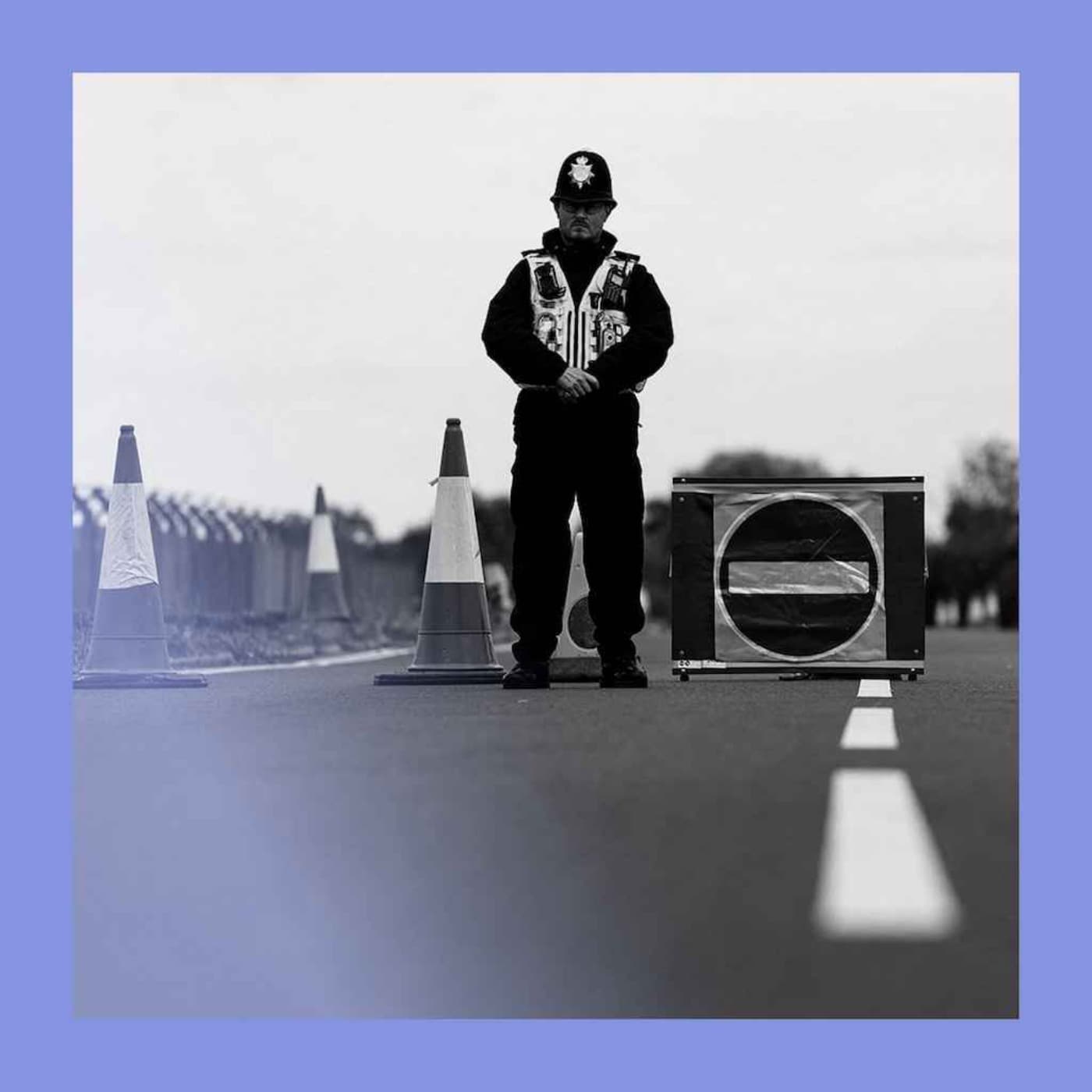
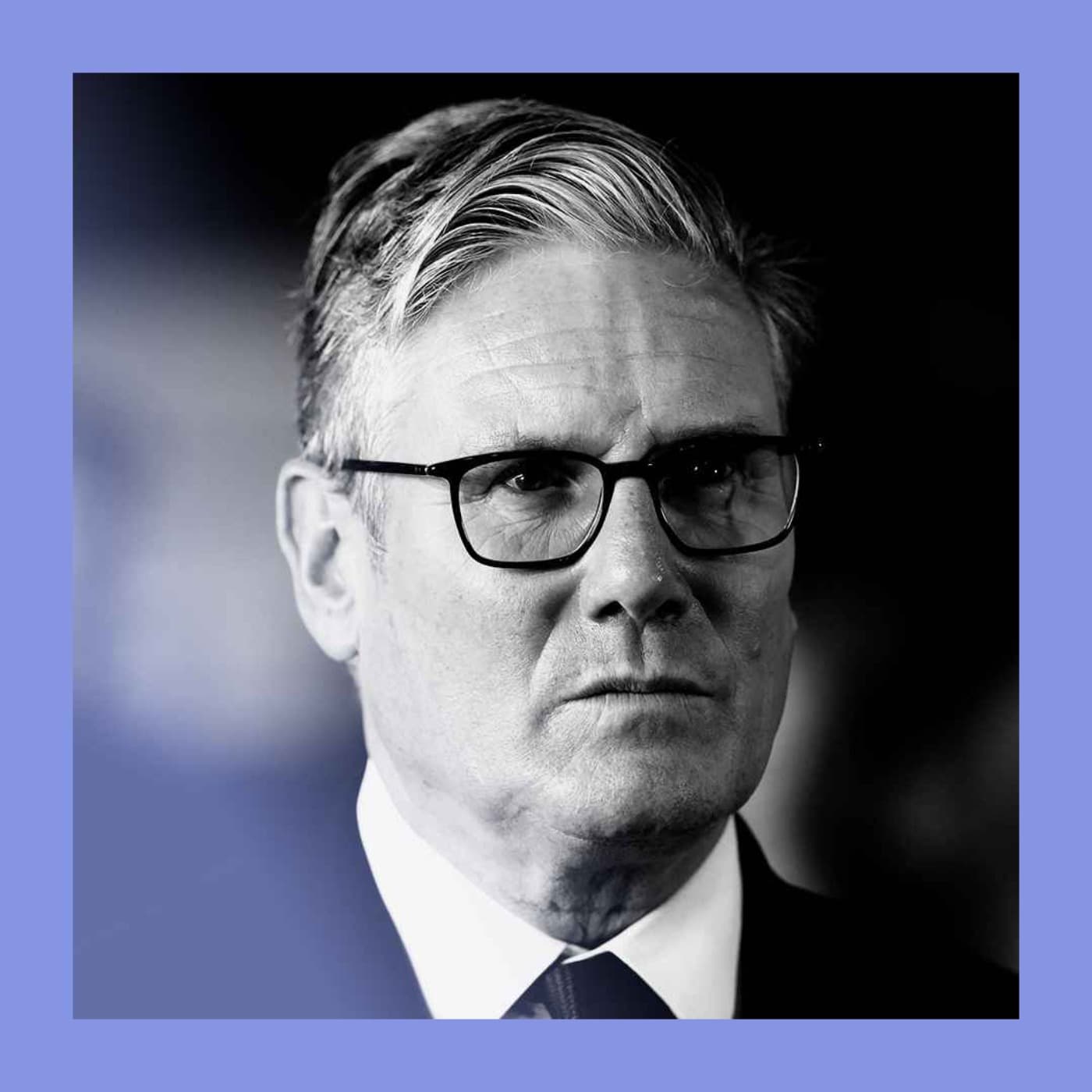
The Economist’s “Intelligence” episode covers (1) Labour’s first year in power in the UK, focusing on policy reversals and slow progress toward targets; (2) Bangladesh’s political and economic situation nearly a year after Sheikh Hasina fled; and (3) why Ferrari remains wildly valuable despite selling far fewer cars than mass-market rivals.
Guests/backgrounds
Matthew Holhouse (British politics correspondent). James Fransham (Economist data journalist). Vishnu Padmanavan (Asia correspondent). Tom Lee Devlin (Economist business editor).
Key claims
Labour’s popularity fell from 34% to 24% in a year; a disabled/ill-health welfare bill was “gutted” after an MP rebellion; energy and NHS metrics drive voter support. Bangladesh’s interim government (led by Nobel laureate Mohammed Yunus) avoided economic collapse via FX reserve rebuilding and banking reforms, but political uncertainty persists, including pressure to ban the Awami League. Ferrari’s exclusivity is maintained through aggressive price increases, personalization, and loyal owners; its main risk is the EV transition.
Notable examples
Labour scrapped parts of the disabled benefits bill; reversed winter heating-payment cuts; focus-group confusion over “13,000 neighbourhood police” and “1.5m homes.” Bangladesh: Hasina sentenced in absentia; interim government banned Awami League; mob attacked a former election commissioner. Ferrari: new 12-cylinder priced ~30% above predecessor; 80% of buyers are existing Ferrari owners; Electrica due next year, second EV delayed to 2028.
Written by AI. May contain mistakes. Listen to the episode to check what was said.
Chapters
Tap a time to open that second in VOLabour's Troubled Year Overview
0:03 to 0:31
An analysis of the Labour government's struggles to fulfill its promises during its first year.
“It's called Chat Concierge and it's simplifying car shopping.”
Labour's Troubled Year Overview
1:17 to 2:26
An analysis of the Labour government's struggles to fulfill its promises during its first year.
“This week, Bangladesh's former Prime Minister Sheikh Hasina was sentenced in absentia to six months in prison by a domestic court.”
Key U-Turns and Political Crisis
2:26 to 4:34
Discussion on recent political decisions affecting Labour's popularity and governance.
“Countries only come together, truly come together, behind ideas, a shared purpose, a national project for a better future.”
Foundations of Labour’s Policies
4:34 to 7:18
Exploring Labour's foundational policies aimed at fixing economic and social issues.
“But they also reflect something much, much deeper in the government that is amounting to something of a crisis in how they govern.”
Public Reception and Voter Concerns
7:18 to 10:41
Insights from focus groups revealing public sentiment towards Labour's policies and priorities.
“A huge amount of effort behind the scenes to establish with Donald Trump that the UK is a good ally of the United States and they've got many shared interests.”
Labour's Challenges and Internal Conflicts
10:41 to 14:01
A deep dive into the ideological struggles facing Labour under current economic conditions.
“Labour had so much time to prepare for office.”
Internal Conflict in Labour
14:01 to 14:39
Discussion on Labour's fiscal dilemmas and internal conflicts.
“And really confront that dilemma of do you have fiscal restraint or do you raise taxes across the board?”
Internal Conflict in Labour
15:19 to 15:42
Discussion on Labour's fiscal dilemmas and internal conflicts.
“Capital One's tech team isn't just talking about multi-agentic AI.”
Bangladesh's Political Turmoil
15:54 to 22:43
Analysis of the political situation and recent protests in Bangladesh.
“Tens of thousands of students flooded into Bangladesh's capital.”
Ferrari's Unique Market Position
23:39 to 28:00
Exploration of Ferrari's business strategy and market challenges.
“Devoted fans have been cheering on the famous red Formula One racing cars since the 1950s.”
Show all 12 chapters
Ferrari's Electric Transition Challenges
28:00 to 30:05
Explore Ferrari's struggle to transition to electric vehicles and its market implications.
“There are some that think it's been too aggressive in raising prices.”
Ferrari's Electric Transition Challenges
30:09 to 30:33
Explore Ferrari's struggle to transition to electric vehicles and its market implications.
“It's called Chat Concierge and it's simplifying car shopping.”
Transcript
Automatic transcript. May contain errors.0:00This episode is brought to you by Capital One. Capital One's tech team isn't just talking about multi-agentic AI. They already deployed one. It's called Chat Concierge and it's simplifying car shopping. Using self-reflection and layered reasoning with live API checks, it doesn't just help buyers find a car they love. It helps schedule a test drive, get pre-approved for financing, and estimate trade in value. Advanced, intuitive, and deployed. That's how they stack. That's technology at Capital One. A new school year always feels like a fresh start. New teachers, new classmates, new opportunities.
0:36As students head back to the classroom, parents and teachers are teaming up with the same goal, a safe, supportive school year. Every child deserves a bright future, and together, parents and teachers can make it happen. Help your family get back to school ready at nea.org slash back to school.
0:55The Economist.
1:02Hello and welcome to The Intelligence from The Economist. I'm your host, Rosie Bloor. Every weekday, we provide a fresh perspective on the events shaping your world.
1:17This week, Bangladesh's former Prime Minister Sheikh Hasina was sentenced in absentia to six months in prison by a domestic court. Nearly one year after she fled the country, our correspondent analyses how its new leader is doing. And say Ferrari, and we can all summon up the slick, super-fast car. Not quite so many of us actually own them. And given the cost, most of us never will. So how is the company still doing so well?
1:53But first
2:02It's been a humiliating week for Britain's Labour government Elected in a landslide and promising radical renewal It's since had to scrap many of its plans To save money or to get its own party to back it Labour MPs backed what was supposed to be one of the government's flagship welfare reforms but only after ministers stripped out its most controversial elements What just happened in there at the 11th hour in front of MPs' very eyes were ripping out bits of the bill, folding on all of their planned changes really That torrid week came at the end of its almost equally torrid first year in power The Prime Minister, Sakhir Starmer, had promised change and control.
2:46Countries only come together, truly come together, behind ideas, a shared purpose, a national project for a better future. And right now, there's an idea in this country that desperately needs renewal. The idea that this country still works for those who work hard for this country. But so far, he's a long way of delivering that. The verdict so far is that Labour is making dreadfully slow progress towards its targets. Matthew Holhouse is our British politics correspondent. And the public is not impressed. Labour's support has fallen from 34 to 24 % in just one year. And James Fransham is a data journalist with The Economist.
3:31And that puts them about five percentage points behind Reform UK, an insurgent party on the right of Britain's political spectrum. Matthew, let's start with this week. It's been a dreadful one for Labour. What's happened? It really has been the unhappiest first birthday party. So over the past week, the government was forced to gut its bill, which would have cut the benefits paid to disabled people and people with ill health after this pretty enormous rebellion of its own MPs. That U-turn wipes out pretty much all the savings that had been contained in the bill. And it follows an earlier U-turn by the government having cut the payments paid to old people to pay their heating bills in winter.
4:16That was very unpopular, so they reversed that. And then this week we saw Rachel Reeves, the Chancellor of the Extreca, shed tears in the House of Commons at Prime Minister's Questions, the big parliamentary event of the week. Now, these are really horrible images for the government in their first year of office. But they also reflect something much, much deeper in the government that is amounting to something of a crisis in how they govern. So let's talk then about that first year. Labour promised to fix broken Britain. How has it tried to do that? So in the general election, Keir Starmer set out what he described as three foundations.
4:54So the basics that you could always rely on the Labour Party to get right. One of them was economic stability after the real volatility under Liz Truss, the short-lived Conservative Prime Minister. But the economic outlook for Britain is pretty challenging. Economic growth in the five years before they came in office had been 3.6 % compared to 12.7 % in America. Inflation remains above the Bank of England target of 2%. The cost of British government debt is at a 17-year high. Okay, so economic stability is foundation one. What's number two? Yes, so the Labour Party went into the election talking about secure borders, which was basically a synonym for controlling immigration, reducing regular migration and bringing under control irregular migration.
5:45So looking at regular migration, in 2024, net migration, so the people arriving to the UK minus those leaving, fell by half to 430 ,000. Now, that was a pretty sharp drop, but it was kind of always going to because that big increase in migration was partly driven by flows of people from Ukraine and Hong Kong, but also a liberalization of visa policy, which had then been reversed by the conservatives. But nonetheless, if you're a party of government who wants to reduce migration, those figures were good news for them. On the irregular migration side, the outlook is much trickier for the government.
6:24So the most acute and obvious problem is that the crossings of people in small boats across the Channel from France continue. And there is still a large backlog of asylum seekers whose claims are still being processed. Now, what that means is that those people under the law are required to be housed somewhere. where many of them are staying in former converted hotels. And that is often pretty unpopular with the people who live in those communities. And Matthew, what about foreign policy and national security? Keir Starmer's been quite keen to show that Britain can punch above its weight and increase defence spending.
7:00What's going on with that? Yes, so there's a pretty broad consensus in Westminster that Keir Starmer's played a pretty deft hand on this with an incredibly challenging backdrop. So he appears to have nannied with some degree of success. President Donald Trump managed to alleviate some of the worst of the tariffs that were applied to the UK as part of Trump's tariff policy. A huge amount of effort behind the scenes to establish with Donald Trump that the UK is a good ally of the United States and they've got many shared interests. He certainly has warmed relations with the European Union as an institution, but also with individual European countries.
7:35So that's a combination of bilateral relations, particularly with France and Germany, but also what was termed a reset. So there's been a substantial but still in the round fairly moderate liberalisation of the trade relationship with the EU. So some of the sharp edges that came out about the result of Brexit have been shaved off. And the third big front of this is defence spending. So Starmer's made some pretty huge commitments on this. Open question about whether they're enough given the world that we live in. But it is true that defence spending is going to increase from 2.3 to 2.6 % of GDP by 2027 and aim to raise it to 3.5 % by the middle of the next decade, 5 % if you include resilience and security.
8:16James, a lot of those policies and plans are quite abstract for most people. So how are they going down with the population? Yeah, I think the first question would be you might want to set targets for political purposes. You might want to set targets to deliver change through government. but do they actually resonate with voters? And that's the question we want to ask kind of front and centre. So to do that, we did a focus group with More & Common who are a polling firm. I sat in on that. There were eight Labour voters from last July and it was very illuminating insofar as that no one really heard of any of the missions or milestones or foundations.
8:50A few had kind of got through to one or two people. So the house building target of one and a half million homes, for example. But one of the milestones is to recruit 13 ,000 new neighbourhood police. And so, yeah, focus group doesn't really get it. Then we did some national polling and we said to people, OK, thinking about, for example, transport, what's the kind of one metric that if it was achieved would basically increase your propensity to support the government to the next general election? So what did the polls show? So we gave people a suite of options. So with respect to transport, we said, like, would it be more road building?
9:23Would it be reducing times on trains? Would it be fewer potholes? Guess what? It's fewer potholes. That was the most popular metric. So with that, we kind of narrowed that down to eight metrics across these domains, transport, environment. With respect to growth and income, it's their pay packets, not GDP growth that matters most of them. With respect to house building, they just want more houses. So we've got these kind of eight domains and then we've gathered them all together and we've gone back to 2019. So we get a sense on these kind of populist measures, how the government is performing.
9:54The answer is not great, basically. So you've set up the Starmer tracker to see how Starmer's doing, how Labour's doing. And from that, what can you see about where Labour could actually manage to make some wins? The one that matters most in terms of swinging votes would be on energy. An overwhelming 54 % of respondents to our poll said that actually they just want lower energy bills. And what about the NHS? NHS is super salient, yeah. Within the NHS domain, what was the most important one was the most salient one, actually it was emergency department waiting times. So there the NHS has a target that 95 % of people will be seen within four hours.
10:34Currently, it's about 60%. So it's way down. It's not been met for 12 years. But that's the goal that most voters would like the government to meet. Labour had so much time to prepare for office. So it seems astonishing, really, both how little they've done, but how fast and how far their popularity has fallen. Why is that? Yeah, the kind of underbaked question is one that I think we've bounced around a lot in the Britain team. And the plan for change not being released until December is, who knows? And then I think in terms of the policy stuff, a lot of stuff has followed from the spending review that happened a couple of weeks ago.
11:12So a lot of government departments were waiting in order to find out what their settlement was and then to make long term changes. I defer to Matthew's judgment on the politics of planning. Obviously, Rishi Sunak called the election a bit sooner than we all expected, but I don't think that's any excuse. I'm going to be much crueler than James on this. There has been so much excuse making. You know, Rishi Sunak called the election three months earlier than we thought. Sue Gray, the Prime Minister's Chief of Staff, wasn't up to snuff. The truth is this. The last time that power has changed hands in this country, in 2010 when the Conservative Coalition under David Cameron came in and before that Labour under Tony Blair in 1997.
11:54Both those times, those were parties that, after a long spell in opposition, had a deep analysis of what was wrong in their view with the state and the British economy. And they had a project that flowed across every frontier of policy. And within the first year, if you look through the records, you see that in the first year of those administrations, You have a cascade of bills, like a stack of telephone directories slamming on a desk. Kirsten's administration, who told a very compelling story about how these guys were the technocrats. These guys were, you know, the competent people who thought really deeply.
12:27They might be boring, but my goodness, there was a lot going underneath the hood. Did not complete that analysis. They barely began it, frankly. And they enter office just remarkably unprepared. But there was a genuine belief amongst some ministers that it was the job of the civil service to come up with policy. And they would walk in and the civil service would present them with policy ideas, which is not its job. And some of this was a legacy of the fact that he went from turning around the Labour Party, which was a bit of a smoking wreck after Jeremy Corbyn, to an organisation that was fit to win more than 400 seats in the space of five years.
13:02So it was just a speed thing. But it was also downstream of an electoral strategy, which spoke of a small target that said, And abundance of caution means that we just won't do the intellectual ranging because it's dangerous. Because, you know, if you do that, then you start to think thoughts that might be unpopular. So you just keep it really sort of retail focused and you come up with these very small popular pledges, you know, shorter NHS times, more coppers on the street. You don't get into the systemic analysis. And so so many of the challenges they've had are downstream of that failure. The other failure is that they just don't confront properly the existential challenge that this party has, which is that they are social democrats.
13:40Their MPs want to deliver a more generous state. They want to invest in public services and infrastructure. But in a world which is radically different to 1997, a world of high public debt, where the tax burden is already high, and we've got really, really low growth, and they have never confronted what it really means, really, really means to be an austerity Labour Party. And really confront that dilemma of do you have fiscal restraint or do you raise taxes across the board? And until they resolve that, they are just going to exist in this permanent state of internal conflict. So that's why it's so bad.
14:18Matthew, James, thank you so much. Thank you. Pleasure. And you can find more on our Starmer tracker in the Britain section of economist.com or via our app.
14:39This Economist podcast is sponsored by Bill, the intelligent finance platform that helps businesses and accounting firms scale with proven results. With AI-powered automation, Bill isn't just moving money. They're simplifying financial operations for nearly half a million customers. Bill has securely processed over a trillion dollars in transactions. That's proven infrastructure. Ready to talk with an expert? Visit bill.com slash proven and get a$150 gift card as a thank you. That's bill.com slash proven. Terms and conditions apply. See offer page for details. This episode is brought to you by Capital One.
15:19Capital One's tech team isn't just talking about multi-agentic AI. They already deployed one. It's called Chat Concierge and it's simplifying car shopping. Using self-reflection and layered reasoning with live API checks, it doesn't just help buyers find a car they love. It helps schedule a test drive, get pre-approved for financing, and estimate trade-in value. Advanced, intuitive, and deployed. That's how they stack. That's technology at Capital One.
15:53Around this time last year, streets of Dhaka were on fire.
16:00Tens of thousands of students flooded into Bangladesh's capital. Vishnu Padmanavan is our Asia correspondent. They were demanding the resignation of Sheikh Hasina, the country's authoritarian leader. The protesters were fed up with her and her party, the Awami League, accusing them of corruption, rigging elections and using force to crush dissent. And on August 5th, 2024, they got what they wanted.
16:30Hello and welcome back. In a dramatic turn of events, Sheikh Hasina has fled Bangladesh following severe unrest, leading to her outsting and a takeover by the military. An interim technocratic government, led by Mohammed Yunus, a Nobel Peace Prize winner and national hero, took office. He promised to restore order and rejuvenate democratic institutions that years of misgovernment had ruined. But nearly a year on, Bangladesh's new dawn is clouded by uncertainty. I went to Dhaka to see how far the country has come since those protests and to meet the man tasked with getting the country back on track.
17:14It's been 11 months since the interim government came into power and it's not been easy.
17:28not just one shot earthquake, 16-year-old continuous earthquake. After years of misrule, Bangladesh was in rough shape. Institutions were hollowed out, corruption was everywhere, and state violence had become routine. The economy, once a bright spot, had begun to lose steam. About one in five young people were out of work. And even with the wave of relief that followed Sheikh Hasina's downfall, anger at her government and its backers was still simmering. But amid this chaos, the interim government has made some progress. We are rebuilding the whole foreign exchange reserve. We have almost paid back all the dues and international payment that we have to make out of our own resources.
18:14And our internal reserve is increasing enough to give us confidence that we can move on. And the economy is gaining strength. The economy is still sluggish, but it has avoided collapse. Reforms to clean up the banking sector are working, and multilateral lenders like the IMF have approved big loans. On the political front, though, the situation is messier. The interim government has embarked on an ambitious reform process. It is working with various political parties to come up with measures to prevent the country from sliding back into authoritarianism again. The plan is that these ideas will be put in place before elections are held early next year.
18:54I think we are right on. We're moving in the right direction and people are with us. We are hopeful, we are optimistic. Things will work out the way we planned. Yunus is hopeful, and he has to be. But it remains unclear if the reforms will happen or what they will entail, especially when different groups are demanding different things. On the streets, protests have become routine as parties and groups press their claims. One common demand throughout has been to ban the Awami League. In May, the interim government caved into this pressure by banning the party from all political activity. This means it will not be able to participate in next year's election.
19:40Meanwhile, the students who helped bring down Hasina have formed a new party, the National Citizen Party. NCP election! A few weeks ago, I made my way to a NCP rally held in the heart of the city. I spoke to a man called Abir. What do you like about NCP? The nation, right now, it's youth. So you have to understand their mind. If you can't follow their passion or their thoughts, as a government, you will be failed. He's a 25-year-old student. One day, he dreams of working in IT. When asked if the interim government can deliver on their promises, Abir was doubtful. The government is not in a stable shape right now.
20:27And the policy makers, everything is kind of an unstable position. If it comes back under NCP government, I think they will do so much better. Another man I spoke to was worried about a return to corruption and the type of repressive regime they experienced under Hasina.
20:52That is a legitimate concern. According to recent polling data, the new student party enjoys little support across the country. Less than 10 % of Bangladeshis say they would vote for them in the upcoming election. Instead, the front runner is a party of the old guard, the Bangladesh Nationalist Party, which was the Avami League's main opposition. But many feel that the BNP operates in the same way as the Avami League. When it was in power many years ago, it too faced accusations of corruption and repression. The interim government, though, insists that it can prevent this by rebuilding institutions and that there will be a new Bangladesh.
21:28We take responsibility of the government. We also take responsibility of the aspirations of the people, expectations of the people. And that's sky high. There is excitement around this democratic awakening. But there are worries that Bangladesh is sliding back to old ways. For example, just a few weeks ago, a former election commissioner was attacked by a mob. He was accused of rigging the 2018 election for the Awami League. It's the type of behavior the student movement fought against. To avoid sliding back, many believe the interim government needs to take a more inclusive approach, starting with unbanning the Awami League and letting it contest elections.
22:11That will be painful for many Bangladeshis. But not everyone in the Awami League is tainted by crimes. and the Awami League is the country's oldest party with considerable support, especially from minority groups. These voters deserve the right to choose whoever they want. There have been plenty of false dawns in Bangladesh's history. After independence in 1971, it took just four years for the euphoria of Bangladesh's first liberation to be snuffed out in a military coup. This second Bangladesh liberation will hopefully endure longer. But for that to happen, it'll require reconciliation, not revenge.
Read the full transcript
23:12This episode are considering a very particular means to keep a memory alive by creating a new life using genetic material from their loved one. It's an ethical and emotional voyage that tests the boundaries of what grief can justify. You'll need to be a subscriber to listen.
23:39few car companies capture the imagination quite like ferrari tom lee devlin is the economist's business editor its enigmatic founder enzo inspired a recent blockbuster movie If you get into one of my cars, you get in the wind. Devoted fans have been cheering on the famous red Formula One racing cars since the 1950s. And the company has become equally renowned for its high-end road-going supercars.
24:24But to understand how unique Ferrari is, compare it with Stellantis, a mass-market carmaker. Both share a major investor, Exor, the investment company of the family that founded Fiat, which also, I should add, owns a stake in The Economist's parent company. But the similarities really end there. Last year, Stellantis sold 5.7 million cars, Ferrari just 14 ,000. Yet Ferrari is worth 78 billion euros, leaving Stellantis, worth$24 billion, in the dust. The Ferrari F1 team may be struggling to perform on the track this season, but commercially, the carmaker is doing better than ever. Tom, I always associate Ferraris with the sort of 1980s, 1990s hotshot city boy car.
25:12How are they still doing so well? Yeah, well, Ferrari has been absolutely racing ahead, actually, over the past decade since it was spun off from Fiat Chrysler in 2015. So it sells just less than twice as many cars as it did back then, and it makes more than twice as much revenue. Its market value is about nine times what it was a decade ago. And its boss since 2021, Benedetto Vigna, has been a huge hit with investors. He was considered a slightly odd choice at first. He's a theoretical physicist by background. He used to work in the semiconductor industry before Ferrari, but he's widely considered to have done a stellar job.
25:51So what's that boss, Vignia, what's he been doing? Well, what's really impressive about Ferrari under Vignia is that the company has managed to grow a huge amount while still maintaining its perceived exclusivity. And you can see that in the way it's managed to not only sell a lot more cars, but also at the same time raise its prices by a huge amount. So new Ferrari models used to be about 3 % to 5 % more expensive than the model that they replaced. But the new 12-cylindry is 30 % more expensive than its predecessor, the 812 Superfast. So the company has done a fantastic job of growing while still really adhering to this ethos that its founder, Enzo, had of selling one less car than the market demands.
26:37So basically, they're charging rich customers ever more for a slightly better car. Exactly. I mean, you can see this in the way that they've really been pushing personalisation. So custom paint jobs, carbon fibre, and they're often able to add 20 % to the price of a car, which is pretty impressive given that on average, they're going for 500 ,000 euros. And the company has also really proven to be very resistant to the Trumpian tariffs, no sign of a slowdown in America. It has really incredibly loyal customers and 80 % of them are already owners of other Ferraris. And it keeps really close contact with these customers.
27:17It has 180 dealerships worldwide and it tries to kind of draw these avid collectors into an inner circle. So we should be thinking of it less in comparison to other car makers and more like the sort of watch collectors or designer handbags. Exactly. Ferrari really relies on the ultra rich as well. And obviously companies like Hermes do too, but a lot of luxury fashion brands make a big chunk of their money selling things like scarves and sunglasses and smaller items to the kind of merely rich rather than the sort of stinkingly rich. And that's really not the case with Ferrari. And is this sustainable?
27:56Well, I mean, a lot of investors seem to be betting that it is. I mean, like every successful company, it has its detractors or its skeptics. There are some that think it's been too aggressive in raising prices. There are some that worry that further increasing production could start to erode the kind of perception of exclusivity that the brand has. Personalizing cars obviously has its limits. But I suppose that the biggest question perhaps that Ferrari is confronting at the moment is how to transition to battery-powered vehicles, which is obviously a question that the whole auto industry is grappling with at the moment.
28:32So its first electric vehicle, the Electrica, will hit the road next year. But other electric supercars that have come out in the past few years have really been met with a bit of a shrug from petrol heads out there. And if the reception for the Electrica is poor, that could really dent Ferrari's prestige. Reportedly, Ferrari's second electric model has been delayed by two years to 2028. So it seems like for Vinyar, this transition to electric is perhaps going to be his trickiest problem yet. And Tom, the really crucial question, how many Ferraris do you own? Oh, multiple, multiple, obviously.
29:10Delighted to hear it. Tom, great to talk to you. My pleasure as always.
29:23That's all for this episode of The Intelligence. The show's editors are Chris Impey and Jack Gill. Our deputy editor is Jonjo Devlin and our sound designer is Will Rowe. Our senior producers are Sarah Larniuk and Alizé Jean-Baptiste. Our senior creative producer is William Warren. Our producers are Henrietta McFarlane, Benji Guy and Jonathan Day. And our assistant producer is Anne Hanna with extra production help this week from Emily Elias. We'll all see you back here for the weekend intelligence tomorrow.
30:05This episode is brought to you by Capital One. Capital One's tech team isn't just talking about multi-agentic AI. They already deployed one. It's called Chat Concierge and it's simplifying car shopping. Using self-reflection and layered reasoning with live API checks, it doesn't just help buyers find a car they love. It helps schedule a test drive, get pre-approved for financing, and estimate trade-in value. Advanced, intuitive, and deployed. That's how they stack. That's technology at Capital One. Who says Halloween only lasts one day? With Wayfair, one night of Halloween becomes a whole season at home.
30:41From larger-than-life yard decor and moody lighting to festive accents for every room in the house, Wayfair has what you need to make Halloween feel like magic all in one place. Because the best Halloween memories aren't made in just one night. They're made all season long. Shop Halloween decor now at Wayfair.com. Wayfair, every style, every home.
From the publisher
After a landslide victory and promises for radical renewal, Britain’s Labour government is failing in policy and popularity. Our correspondents explain why. Nearly a year after the despotic prime minister of Bangladesh fled, an interview with its new leader on the country’s complex challenges. And why other carmakers struggle to catch up with Ferrari.
Listen to what matters most, from global politics and business to science and technology—Subscribe to Economist Podcasts+
For more information about how to access Economist Podcasts+, please visit our FAQs page or watch our video explaining how to link your account.
Hosted on Acast. See acast.com/privacy for more information.