In short
The episode mixes three stories: Thai politics, celebrity entrepreneurship, and sea-slug “plant” behavior. Topic 1: Thailand—Pita Thongthini Shinawatra was suspended by the constitutional court after a leaked call with ex-Cambodian leader Hun Sen; protests and collapsing parliamentary support follow. Key claim: the crisis isn’t just about the tape; the army, palace, and judges have long removed governments, including after 2023 when military-appointed senators blocked Move Forward, leading to dissolution and bans. Notable example: the People’s Party (youth-led) opposes judge-dominated constitutional arrangements, wants anti-monopoly action, cuts to the army budget, and previously sought limits on criticizing the monarchy.
Guest
Aaron Connolly, The Economist Asia diplomatic editor; he interviews Narapang Rampanyawit, People’s Party leader. Topic 2: Celebrity brands—Avantika Chilcotti (global business correspondent) argues social media and direct-to-consumer sales enable equity-backed, day-to-day celebrity entrepreneurship; examples include Skims (Kim Kardashian), Fenty Beauty (Rihanna), Casa Amigos (George Clooney), and failures like Beyonce’s Ivy Park and Kanye/Adidas after anti-Semitic comments. Topic 3: Sea slugs—Megan Snaith (science writer) explains “lettuce slugs” (Elysia crispata) steal chloroplasts and store them in kleptosomes, enabling months of survival via photosynthesis; study in Cell uses tagged proteins and starvation comparisons.
Written by AI. May contain mistakes. Listen to the episode to check what was said.
Chapters
Tap a time to open that second in VOSetting the Scene of Thai Politics
0:30 to 1:10
The complexities and recent events surrounding Thai politics are discussed.
“Our correspondent considers the rise of the seller brand.”
Prime Minister Pei Tang Tong Shinawat's Challenges
1:10 to 2:06
An overview of the political troubles facing the Prime Minister and her government.
“It's known for its dysfunction and for coups.”
Military Influence in Thai Politics
2:06 to 3:00
Discussion on the role of the military in Thai politics and its history of coups.
“And she's really only there because her father, Thaksin Chiniwatt, was prime minister.”
The People's Party and Youth Support
3:00 to 3:58
Exploration of the People's Party and its appeal to the younger generation in Thailand.
“The group was then dissolved by the order of a judge, and its leaders were banned from politics for 10 years, although the remaining members regrouped under the name the People's Party.”
Economic Impact of Political Instability
3:58 to 5:06
Analysis of how political chaos is affecting Thailand's economy and growth.
“It's called for a crackdown on monopolies.”
Thailand's Role in Southeast Asia
5:06 to 7:18
A look at Thailand's changing diplomatic role in Southeast Asia due to internal issues.
“including a really anti-competitive environment for business.”
Possible Future Scenarios for Thailand
7:18 to 7:40
Discussion on what could happen next in Thailand's political landscape.
“given an opportunity to form a coalition that can govern.”
The Rise of Celebrity Brands
8:41 to 14:01
Exploring how celebrities are now building their own brands and the factors behind their success.
“You can download episodes, create audio playlists, and sift through the archive of all our shows.”
The Dynamics of Celebrity Brands
14:01 to 17:04
Explore the intricacies of celebrity-branded products and partnerships.
“But it's not quite as simple as that, is it?”
Science of Sea Slugs
17:04 to 18:04
Discover the fascinating abilities of sea slugs and their unique adaptations.
“They have the ability to steal superpowers from other organisms and use them for their own.”
Show all 11 chapters
Kleptoplasty and Evolution
18:04 to 21:19
Learn about kleptoplasty in sea slugs and its implications for evolution.
“Scientists have been interested in the capabilities of sea slugs for a long time.”
Transcript
Automatic transcript. May contain errors.0:28The Economist up new companies and getting involved with the actual business. Our correspondent considers the rise of the seller brand. And sea slugs are well-known thieves, for instance, stealing and then using their prey's defense mechanisms. Now, scientists have caught them stealing and using what are called chloroplasts. Then, like plants, they can subsist on sunlight alone.
1:02But first...
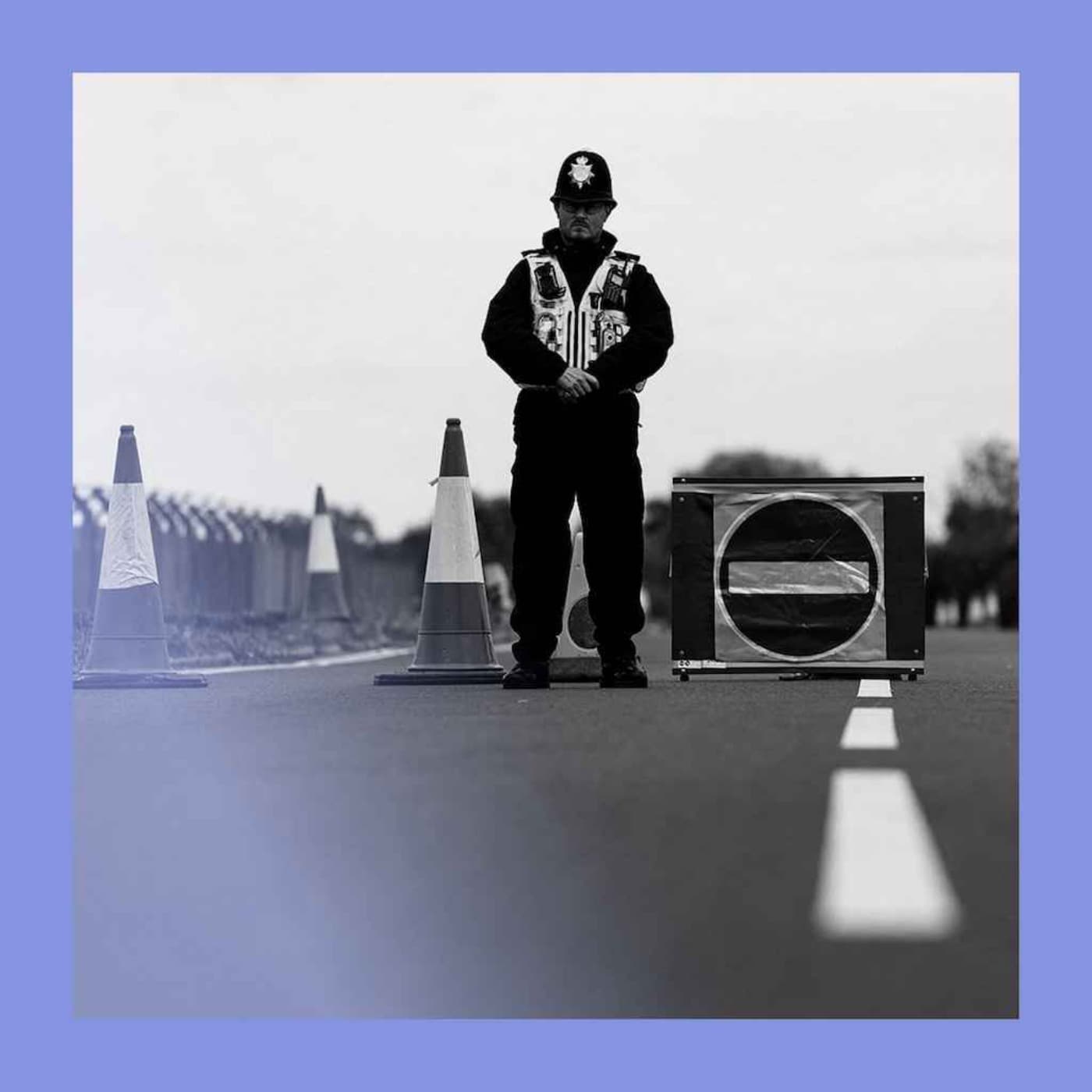
1:09Keeping up with Thai politics can be tricky. It's known for its dysfunction and for coups. So when Thailand's constitutional court suspended Prime Minister Pei Tang Tong Shinawat this month, many wondered what was coming next. She'd been recorded talking about a border dispute to former Cambodian leader Hun Sen, apparently sounding subservient and disparaging Thailand's armed forces. But she was already under pressure before that leaked tape. Her support in parliament had evaporated, and thousands of people had rallied on the streets of Bangkok to demand her dismissal. Now Thailand is in a political bind.
1:52Pei Thang Thang's replacement is likely to be yet another lame duck. And Thailand's history of coups suggests a clear and present danger. There's no question that Pei Thang Thang Chiniwatt has made mistakes as prime minister. And she's really only there because her father, Thaksin Chiniwatt, was prime minister. But anyone who thinks that the reason for her current situation is a phone call is being naive. Aaron Connolly is The Economist's Asia diplomatic editor. Thailand's ruling establishment, including the army, the palace and others, have long felt entitled to sack politicians whenever they believe that their own interests are under threat.
2:29So Aaron, there's a lot of context to fill in here, but just talk me through the involvement of the army in Thailand's politics. So the army has launched a dozen successful coup attempts since the 1930s. More recently, the powers that be have been using judges to do their bidding. And in particular, after the general election in 2023, senators who were appointed by the military prevented a party of young liberals called Move Forward, who had won the most seats in parliament, from forming a government. The group was then dissolved by the order of a judge, and its leaders were banned from politics for 10 years, although the remaining members regrouped under the name the People's Party.
3:09And so instead of the people who Thais had voted for, the country ended up with a failing coalition government under Pétang Tân. And for a while, the Thai generals found this arrangement convenient, but lately it's been causing a lot of problems for them. So the People's Party is the one that a majority of the people voted for. What do they actually stand for and are they an option for the future? Well, I spoke to Narapang Rampanyawit, who is the leader of the People's Party.
3:41He told me that he disagrees with the current constitutional arrangements. which put decisions that should be in the hands of the people into the hands of judges. But the party is remarkable in the sense that it's a party that draws most of its support from Thailand's young people, and yet it is economically and politically liberal in a way that we don't often see in other countries these days. It's called for a crackdown on monopolies. It's called for cuts to the army's budget. And before it became illegal under a constitutional court ruling last year, it called for reforms to rules against criticizing the monarchy.
4:16As I said before, it was really popular before it was dissolved. So how is all this political chaos affecting Thailand in practice? Well, a quarter century of governments, including Thaksins and his sisters and the military governments that followed them, that haven't had a real clear economic plan for the country have left Thailand to stagnate. The economy is only expected to grow 1.8 % this year, down from 2.5 % in 2024. Tourism arrivals fell in the first half of 2025. Tourism is a really big industry for Thailand, but numbers from China sank by a third. Exports to America, one of Thailand's biggest trading partners, risk being whacked with high tariffs, and the government's been very slow to respond to that threat.
4:57It only opened negotiations with the United States last week. And leaders haven't made any progress on the big underlying problems of the economy, including a really anti-competitive environment for business. Most wealth in Thailand is really held by a few big families and the Crown Property Bureau. And of course, this border dispute with Cambodia when a Thai soldier killed a Cambodian sentry that then landed Phaetong Thun in trouble. There are now non-economic issues for the government to contend with as well. Aaron, presumably this also affects Thailand's role in the region and its ability to actually punch even at its weight.
5:34Thailand is really one of the two big important diplomatic voices within Southeast Asia. But because of these authoritarian governments and Thaksins, populist governments, it hasn't really played that diplomatic role in about a quarter century. And so if it were to elect a liberal government, liberal on economics, liberal on politics, it would potentially restore Thailand to that role in Southeast Asian diplomacy and also present an example to the rest of the region. Because at the moment, Thailand is finding it really difficult to resist China's demands. Of course, China wants to be the dominant power in the region, and it wants Thailand to do everything that suits China.
6:14One example of this is a crackdown on scam centers that Thailand was forced to launch in February after China demanded that it do so. It actually struggled to do that at first, and as a way of demonstrating goodwill to China, it sent back around four dozen Uyghur detainees who had been held in Thailand for nearly a decade to circumstances in China where they risked being tortured or detained. And so this is a pivotal moment for Thailand. It has the potential to be the Germany of Southeast Asia, and instead it risks looking like the Hungary of Southeast Asia. So what happens next, Aaron? Are we in the early stages of another coup?
6:52Well, backroom negotiations could still install a new prime minister, and that would be the third prime minister in 12 months.
7:03Nana Pong, the People's Party leader, told me that he will back any prime minister who promises a snap election. But if the wrangling fails, or if the fix proves short-lived, protests are likely to mount, which could be the pretext for another coup. What Thailand really needs are fresh elections, fought freely with the winning party, given an opportunity to form a coalition that can govern. If Thais do return to the ballot box, People's Party is likely to do very well. And that's one reason to be optimistic about Thailand. This youth-led liberal movement has incredible resilience. Aaron, thank you so much for talking to me.
7:39Thank you, Rosie. Nice to see you.
7:54This message comes from Betterment. Dan Egan, VP of Behavioral Finance and Investing, explains the benefits of automated dividend reinvestment. If you've ever invested, you probably have noticed that occasionally you get dividends. Your stock pays it out. You get that as cash in your account, and it usually sits there until you remember that you're supposed to buy something else with it to reinvest it back. Automated dividend reinvestment makes that effortless and seamless. When dividends come into your account, we automatically reinvest available dividends, not necessarily into where they came from, but into whatever would serve your portfolio best.
8:29So automated dividend reinvestment keeps you invested and keeps your portfolio in balance. Learn more about Betterment's dividend reinvestment methodology and other helpful investment tools at Betterment.com. Investing involves risk. Performance not guaranteed.
9:04are wonderful audio offerings. You can download episodes, create audio playlists, and sift through the archive of all our shows. And they're working on a whole new range of features that sadly I'm not supposed to mention yet. The upshot is it's a great listening experience. And when you listen in the app, there are no ads.
9:32We're in the era of the celebrity brand where famous people are peddling products to their fans. Avantika Chilcotti is our global business correspondent. You'll probably have heard of some of them. There's Kim Kardashian's Skims underwear. This fabric is really stretchy but has a lot of hold and that is the most important thing to me. Rihanna, the pop star, has Fenty Beauty. Women of all ages, all size, all skin tones, all religions, all cultures. I wanted women to feel included. And George Clooney actually co-founded a tequila firm, Casa Amigos. Grab a glass, amigo. Our tequila is your tequila.
10:14It's not just that celebrities have been trying to build businesses of late. They've actually done pretty well at them. It's a reflection of how marketing and distribution have really changed the consumer industry. Avantika, haven't celebrities been selling products for years? Yes, absolutely. So you've always seen celebrities helping to sell a product produced by a big consumer group. So you've seen them on billboards, you've seen them in TV ads, you've probably seen them in print magazines. But they used to get a one-off payment for their work. This used to be an endorsement deal, a licensing deal.
10:52Every now and then they got a bit more involved with the product. One of the most famous examples is Jane Birkin, the British French actress. And she happened to bump into one of the senior executives at Hermes on an aeroplane, complained about trying to find a big handbag. And that led to the production of a handbag that was actually to her taste. And so you got them a bit more involved in the product themselves. obviously you also had products named after celebrities but now what's happening is different this is actually entrepreneurship this is where you are having celebrities who one have some sort of equity stake big or small in a business and two who are actually quite often involved in the day to day running of the thing so what kinds of companies are we talking about here when i was doing the reporting on this i did notice there's a couple of sectors that the most successful celebrity brands tend to be in.
11:44So it's beauty, fashion, food, alcoholic drinks. And when I started speaking to academics and analysts and things about this, the sense was these are sectors that people buy because of something to do with identity and symbolism. They're not, say, car tires, which you buy for a pretty functional reason. You can sort of buy your way into a lifestyle. If I like what Rihanna stands for and the way she looks, I might buy her lipstick. And so there's something going on there in terms of sector. And the biggest deals you see of late do come from those sectors. So just last month, Hayley Bieber, she's a model, she's married to Justin Bieber.
12:23She sold her makeup brand for up to a billion dollars to Elf Cosmetics, which is a big makeup firm. And so you see that even the groups that are buying up these celebrity brands, they tend to be in specific consumer industries. And what's the key to building a successful brand then? So right now there are specific things that are letting celebrities build these brands. So the first one is, you know, with the rise of social media, you had celebrities first peddling products on social media. So quite recently I saw David Beckham posting basically an ad for a headphones company, or you had pop stars on the accounts of big makeup brands or fragrance brands.
13:06But gradually over time, as they got used to using social media, there's a sense that celebrities realize they actually have a direct line to their fans. And that's an incentive for them to plug their own products rather than someone else's. Secondly, in the consumer space, distribution has changed a lot. You have a lot of what's called direct to consumer selling. So that means that you can have a Shopify account and have a website and an app and you can sell directly to your consumers, which makes it really easy to launch a new business. You're not relying on starting an expensive, complicated partnership with a retailer.
13:44You're not relying on investing in a big brick and mortar store. You can actually just plug a product online via socials and then you can sell it through this direct-to-consumer channel. So the secret basically is it has become possible for celebrities to do this. And if they're going to make more money, then why not? But it's not quite as simple as that, is it? Because you've got to choose the right product. Yeah, there's lots and lots of examples of celebrity brands that don't do well. Sometimes when you see products flop, it's because they don't seem authentic. I mean, I don't like the word, but it comes up a lot when you speak to marketing people.
14:18Beyonce did a partnership with Adidas producing sportswear, and it just didn't do that well. It It was called Ivy Park. And, you know, Beyonce is pretty glamorous. She's not someone you imagine walking around in leggings and a sports bra. And that just didn't take off. So it's not just that the product has to be right. It has to actually fit with the celebrity who's selling it. And who's investing in these celebrity brands? What you notice is that the celebrity brands that do well, they've got a really smart partnership. Because famous people do realize that they know some stuff and they don't know other stuff.
14:51So Skims, for example, is co-founded with a guy called Jens Greedy, who I spoke to, and he's a serial entrepreneur. I spoke to Idris Elver, the British actor. He's co-founded a wine business, but he's co-founded it with someone who spent over a decade in the wine industry and knows distributors. So you have these personal partnerships. There's also something a bit more interesting happening, which is that you're seeing big Hollywood agents start incubators. They've spotted that the talent that they manage is making quite often more money through these businesses than they are through acting in a film or launching a new song.
15:29And so they are building these little incubators where they basically pair a celebrity with a product and pump some money into it. Avantika, you've talked about starting a lot of brands, but we know that the real challenge in business is building and maintaining them. You can have all of the formula to produce a good brand, but there's an inherent risk in linking a person to a business. And you've seen again and again when celebrities do well and people like them, the brand does well. And when they are cancelled, less so. So I think one of the most famous examples, and this is through a partnership, was when Kanye West, the rapper, started a line of trainers with Adidas.
16:10And then he made a string of anti-Semitic comments, and they had to just cut that partnership. So the lesson sometimes is just be careful how you partner. And the other lesson I think is the product just has to be decent. A lot of people I spoke to quite like Skims t-shirts and Skims underwear. They say it's a decent product. On the other hand, the Honest Company, which was a baby and beauty brand started by Jessica Alba, it went public a few years ago and the stock is completely tanked. And what a lot of reviewers say is the product just isn't that good. So the basics of the celebrity actually being popular and the product actually being good, you do need those.
16:48And Avantika, do you have a favorite celebrity brand? Do you know what? I'm going to actually go and buy a Skims t-shirt. I've done so much reporting on this and I've really been sold it. It'll probably be the most expensive t-shirt in my wardrobe, but I think I'm going to have to get one. Great to talk to you, Avantika. Thank you so much. Thanks for having me.
17:23Some sea slugs are kleptomaniacs. They have the ability to steal superpowers from other organisms and use them for their own. Megan Snaith writes about science for The Economist. There are lots of sneaky sea slugs. One type of super-powered sea slug out there is in the Berger genus. So they eat poisonous sea anemones and they steal their stinging cells. As they travel through their digestive system, they can essentially snatch these stinging cells, mount them on their back and use them as a defence mechanism against predators. Another species glows when they eat fluorescent coral. Scientists have been interested in the capabilities of sea slugs for a long time.
18:08but recently one species in particular, Elysia crispata, found in the West Atlantic and the Caribbean, have been of particular interest. The slugs have a leafy appearance, which has earned them the name Lettuce slug. These sea slugs can steal chloroplasts from the algae they eat and store them on their back. Essentially, it gives them the ability to photosynthesize. Scientists have known for decades that this is something that the species does, but it's only been recently that they've known how and could have implications for our understanding of the evolution of life on Earth as well as informing new medicines.
18:48So you say this behaviour has been known about for a while but nobody knew how. What's the answer to how? The answer to how was recently reported in a study in the journal Cell. They found that the slugs store chloroposts in kleptosomes which are essentially sac-like structures made from the slug cells. So what these do is they stop the slugs from immediately digesting the stolen chloroplasts. But in time to scarcity, the slugs can draw on these as a source of energy. They continue to function in the slug for about a year. And how did the scientists actually go about finding that out? The scientists fed the slugs and recently consumed algae a chemical tag, which was designed to identify new proteins.
19:27Then they extracted the stolen chloroplasts and analyzed the tag proteins within. There was one protein they identified in particular, which is found in processes where cells engulf things. And that made them suspect that the chloroplasts were held inside structures made by the slug. And then when they observed the stolen chloroplasts under a microscope, they confirmed that this was the case. Each stolen chloroplast was wrapped in a membrane, which is known as the kleptosome. So the slugs are definitely stealing these things, but how do we know that they're actually getting energy from the chloroplasts that they're stealing?
19:59So in the second part of the experiment, the scientists compare the starvation resistance of the lettuce slug with another sea slug, Aplegia californica, which doesn't steal the chloroplasts. And they found that while Aplegia californica died after four weeks of starvation, the lettuce slug survived up to four months. And that was because they were drawing on the energy provided from the stolen chloroplasts. And they turned orange in the process, much like autumnal leaves. And you hinted earlier, grandiosely, that this could tell us something about other organisms' abilities, about our own development, new medicines.
20:33Go on. Yeah, so this process known as kleptoplasty could tell us a lot more about our own evolutionary history. Kleptoplasty is thought to be an early form of endosymbiosis, which is a process in which one single-celled organism lives inside another cell. That process has been thought to be important in the evolution of eukaryotic cells, which are the cells that make up all complex life. So for example, mitochondria and chloroplasts roamed free. It's free-floating bacteria until they're engulfed by a host cell. So that process took millions of years. In sea slugs, we're seeing it happen in a single lifetime.
21:08There are also practical implications too. You could give cells new functions which would allow them to then fight diseases. So we could generate new medicines. These quite insignificant marine mollusks can have large implications or understanding of these big evolutionary processes. Megan, thanks very much for joining us. And thank you for having me.
21:48That's all for this episode of The Intelligence. We'll see you back here tomorrow.
22:13Thumbtack presents Tile Trouble. Every single time I use my sink, I make eye contact with the uneven grout on my kitchen backsplash. the crooked corners eye me and i'm haunted by more tiling questions than i thought possible what kind of pro can fix a backsplash can i replace one cracked tile or should i replace them all what what if i just use thumbtack i can hire top rated pros read reviews and compare prices with a tap all on the app thumbtack knows homes download the app today
From the publisher
After Thailand’s constitutional court suspended the country’s prime minister, our correspondent explains the need for fresh elections to avoid economic stagnation – and the possibility of the army stepping in. More celebrities are setting up businesses. And what the sea slug can teach us about evolution.
Listen to what matters most, from global politics and business to science and technology—Subscribe to Economist Podcasts+
For more information about how to access Economist Podcasts+, please visit our FAQs page or watch our video explaining how to link your account.
Hosted on Acast. See acast.com/privacy for more information.