In short
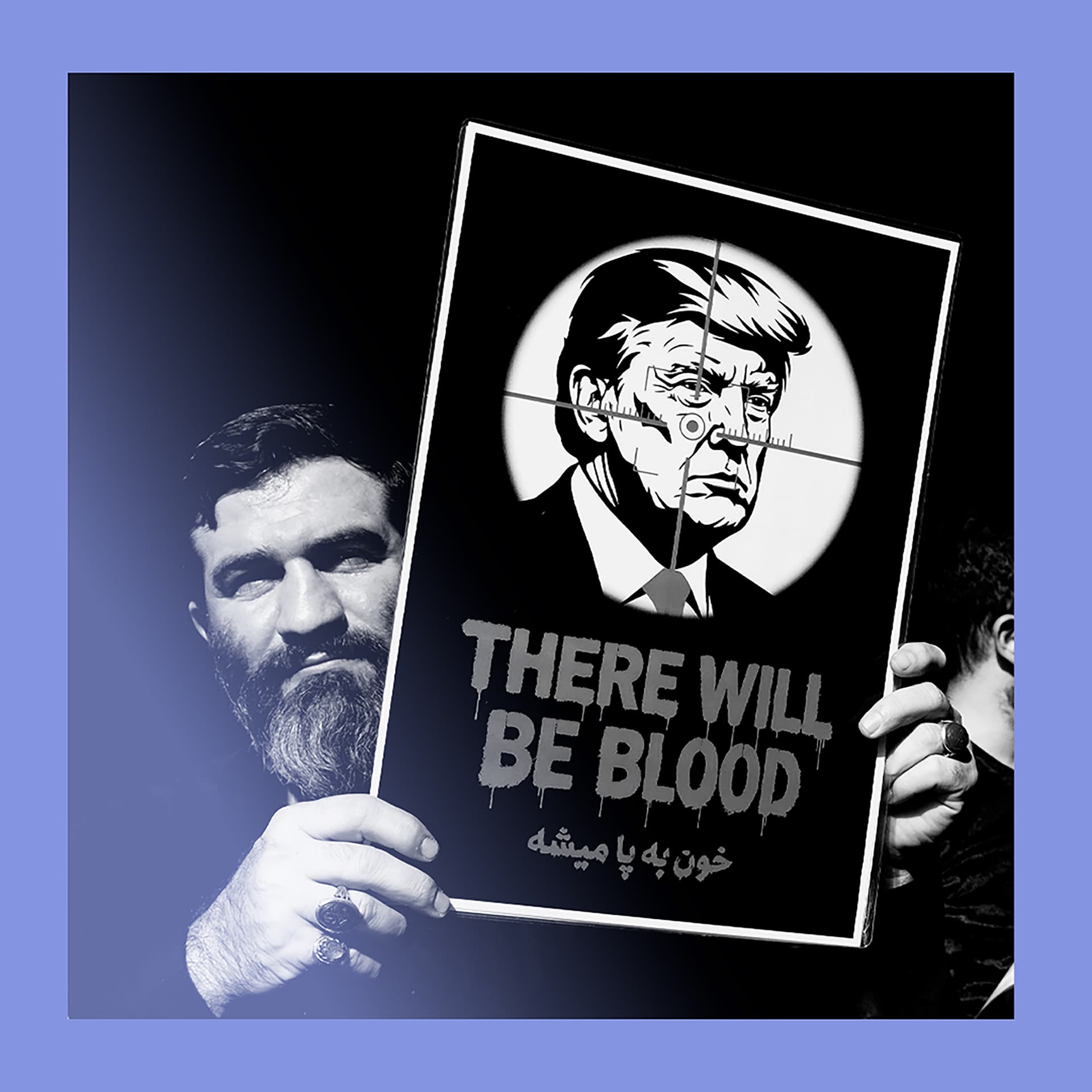
The episode explains how the Iran–war cycle keeps restarting despite a June Memorandum of Understanding, focusing on disputes over reopening the Strait of Hormuz and the lack of substantive, enforceable deal terms. It also covers China exporting AI via driverless-cab and robotics services, and profiles Wally Funk, the 82-year-old who flew on Blue Origin.
Guests/backgrounds
Greg Karlstrom, Middle East correspondent for The Economist. Don Wineland, The Economist’s China Business and Finance Editor. (Wally Funk is profiled via narration; no guest.)
Key claims
Trump’s “deal to make a deal” is too vague; diplomacy fails because neither side has a decisive military option. China’s AI exports profit from higher overseas prices and can set global standards.
Notable examples
Oman-mediated Hormuz proposal (voluntary fees; Iran demands control of inbound traffic). Yemen/Houthi–Saudi escalation affecting Red Sea oil routes; Gaza ceasefire deal lacking substance. Driverless-cab launches in Switzerland (Baidu + local partner). Wally Funk’s Blue Origin flight and record as oldest person/woman in space.
Written by AI. May contain mistakes. Listen to the episode to check what was said.
Chapters
Tap a time to open that second in VOOverview of Iran Conflict
1:44 to 2:26
Discussion on the ongoing conflict between the U.S. and Iran, highlighting recent events.
“But the way Donald Trump's war of choice is going in Iran forces my hand.”
Current Status of the MOU
2:26 to 3:38
Analysis of the Memorandum of Understanding and its implications for U.S.-Iran negotiations.
“Greg Karlstrom is a Middle East correspondent for The Economist.”
Challenges in Diplomacy
3:38 to 4:59
Examination of the challenges faced in U.S.-Iran diplomacy and the cycle of conflict.
“One, Iran could say it's imposed a new arrangement on the strait, but America could also say it's rejected this plan for charging tolls.”
Prospects for Resolution
4:59 to 7:22
Exploration of possible outcomes and the lack of military options for both sides.
“That lasted all of three weeks before they went back to fighting.”
Issues with Trump's Diplomacy
7:22 to 10:33
Critique of Trump's diplomatic approach in the Middle East and its implications.
“They're quite willing to stomach long periods of economic pain, as we've seen in the past.”
China's AI Expansion and Economic Strategy
14:03 to 19:33
Explore why China is aggressively exporting AI technology and its economic implications.
“And there are dozens of Chinese companies that are moving overseas and trying to find a market for their technology.”
Wally Funk's Journey to Space
19:34 to 27:45
Discover the inspiring story of Wally Funk, her aviation career, and her dream of space travel.
“do car mechanics rather than home economics, and you told her to do home economics, she wouldn't do that either.”
Transcript
Automatic transcript. May contain errors.0:00With no fees or minimums on checking accounts, it's no wonder the Capital One bank guy is so passionate about banking with Capital One. If he were here, he wouldn't just tell you about no fees or minimums. He'd also talk about how most Capital One cafes are open seven days a week to assist with your banking needs. Yep, even on weekends, it's pretty much all he talks about. In a good way. What's in your wallet? Terms apply. See CapitalOne.com slash bank. Capital One N.A. Member FDIC.
0:32This intelligence podcast is sponsored by Backmarket, the leading global marketplace for refurbished tech. When the kids need phones, laptops, or tablets for school, buying refurbished tech makes sense for families trying to save money without sacrificing quality. At Backmarket, tech costs up to 50 % less compared to new. All devices have been professionally refurbished and come with a one-year warranty and 30-day return policy. Start saving money. Visit Backmarket.com or the Backmarket app to shop now.
1:05The Economist
1:12Hello and welcome to The Intelligence from The Economist. I'm Jason Palmer.
1:22Today on the show, how China is finding ways to put its AI all over the world and remembering the woman who made it to 82 before fulfilling her astronaut dreams.
1:36First up, though.
1:44I hate to sound like a broken record. Remember those? But the way Donald Trump's war of choice is going in Iran forces my hand. The Strait of Hormuz is open, then it's closed. At the moment, Gulf states are trying to broker a temporary reopening. America launches strikes on Iran. Iran fires on regional American bases. Then they stop and start again. Mr. Trump says he's working up a deal. Iran says no, he's not, or rejects the advance. It's time to look at that Memorandum of Understanding, or MOU, from June, and how it's emblematic of a wider shortcoming of Trumpian dealmaking right across the region.
2:25Under the terms of the MOU, America and Iran should be just about finished with negotiating a comprehensive deal that is going to end decades of conflict between their countries. Greg Karlstrom is a Middle East correspondent for The Economist. Instead, they've barely started talking about that deal and they're still haggling over the Strait of Hormuz. And even if they can manage to find a solution around the strait, which looks unlikely at the moment, there are still large parts of this MOU which look all but defunct at this point. You say barely started talking, but they are talking? They are talking indirectly at the moment.
3:04Oman is passing messages between the two countries to try and find some arrangements related to the strait. So about a week ago, you had an Omani delegation that visited Tehran for talks, and they're trying to propose a compromise in which there would be a formal truce between America and Iran, maybe lasting about 10 days, and then a plan to reopen the strait. Now, the Armani proposal is that all of the regional countries, Iran and Gulf states, would jointly manage Hormuz in a consortium. They wouldn't charge tolls on vessels using the strait, but they could charge voluntary fees for things like environmental services, similar to what happens in the Strait of Malacca in Southeast Asia, which in theory should be a face-saving compromise for everyone.
3:53One, Iran could say it's imposed a new arrangement on the strait, but America could also say it's rejected this plan for charging tolls. The problem is Iran has refused this proposal in the past, and sure enough, they've refused it again. On Tuesday, the deputy foreign minister of Iran said that any deal around Hormuz would have to give the Iranians complete control over all inbound traffic going through the strait into the Persian Gulf, which obviously is a non-starter for both the U.S. and its Gulf allies. So diplomacy does not seem to be bearing any fruit. And we've had now renewed conflict after some days of an informal truce.
4:34Iran fired missiles at this American base in Jordan, and the U.S. carried out a round of air strikes in Iran. And all of this was just sort of prelude to the meat of the MOU, the biggest, grandest, longest term plans. What does that look like now? Most of the deal is in bad shape at this point. I mean, you start with the first paragraph, which stated that America and Iran were permanently ending their war. That lasted all of three weeks before they went back to fighting. They are still arguing over another clause which relates to the Iranian funds that are frozen in banks overseas due to American sanctions.
5:13The Iranians had expected at least some of that money would be released immediately upon the deal signing. The Americans said, no, this money will not be released until we see that you're complying with the deal and then it will be unlocked in phases. So the Iranians are frustrated. They feel as if America isn't living up to its end of the bargain there. And then, as you say, there's this longer term, bigger picture stuff that was meant to be negotiated. The deal spelled out a 60-day period for a comprehensive agreement to address Iran's nuclear program, its demand for further reaching sanctions relief, all of these longstanding issues between the two countries.
5:53That 60-day period of talks is meant to end on August 16th. It's barely even begun. There haven't been any face-to-face talks at a high level this month, and there's certainly no way that America and Iran are going to get to a broader agreement in the next 16 days. Greg, it feels like we've talked about this in pretty much the same terms for months now, and there's this cycle back and forth between fighting and kind of a bit of diplomacy, and then back to fighting, and then informal truces and what have you. How does that cycle break? It's very hard to see how we get out at this point. The diplomacy clearly is not working.
6:27If they can't find a compromise agreement around the narrow issue of the strait, there's no way they're going to resolve their bigger issues. But beyond diplomacy, neither America nor Iran has a way to decisively end this conflict. For the Americans, Donald Trump could decide to escalate. There are people pushing that in Washington. Admiral Brad Cooper, for example, the head of Central Command, pushing a plan for another few weeks of airstrikes, which he claims will degrade Iran's ballistic missile capability. But even if that's the case, Iran can still fire drones at ships. It can still attack Gulf states with short-range missiles.
7:03You can't strike a decisive military blow that will force the Iranians to capitulate. The other option for the Americans is not to escalate the war, but to maintain their blockade of Iranian ports, to maintain economic pressure on the regime. And that is having a real impact on Iran. But I think it's going to be months before economic pressure really starts to change decision making in Tehran. They're quite willing to stomach long periods of economic pain, as we've seen in the past. And of course, the Iranians get a vote here as well. And so one of their options is if America wants to maintain a blockade, Iran can escalate the war.
7:43They can resume attacks on both states in a bigger way than we've seen. They can escalate the war to other theaters as well. They can try to impose further costs on the global economy. And they can do that to some extent. But will that force the Americans to surrender, to accept the deal that Donald Trump has resisted for months that might leave Hormuz in Iran's control? I don't think that's the case either. So we've gone down a cul-de-sac here where neither side has a decisive military option. The only way out of it is to make compromises and reach an agreement, but neither side seems to be in the mood to do that.
8:18In some sense, it seemed from the start that diplomacy was the way out of this, but the deal to make a deal was in really sort of sketch form. Is that the sort of fundamental problem here? There wasn't enough bones to hang a deal on? It's the fundamental problem here. This MOU was 14 points over a page and a half. There was no substance to it. And it's also the problem with so many of the diplomatic agreements that we're seeing across the region over the past few years. You have Saudi Arabia and the Houthis in Yemen, which four years ago struck a truce, have been trying to negotiate a more comprehensive deal, but have not been able to reach one.
8:57And now what we've seen over the past week is the Houthis announcing a blockade of Saudi shipping in the Red Sea, carrying out attacks on Saudi airports and energy infrastructure. And so that war, which was never decisively resolved, has now flared up and connected to America's war with Iran, because obviously shutting Saudi oil tankers off from the Red Sea will put even further pressure on energy markets. You have the deals that Donald Trump struck in Gaza to end Israel's war there, which almost a year later, there's very little substance on that agreement. We did hear this week that Hamas had finally agreed to disarm, but there's a lot that's unclear.
9:41They say they're not going to hand over their weapons until Israel withdraws from Gaza. Israel will say the opposite. I'm sure they will say that they're not withdrawing until Hamas disarms. And it's not clear to whom they're going to hand over their weapons. They've rejected the idea of giving them to Israel. They've suggested in the past they would only hand them over to another Palestinian entity in Gaza. But there isn't a credible Palestinian governing entity there that could take possession of Hamas's arsenal. So again, there's a lot of substance missing when it comes to Gaza and Lebanon as well.
10:14We've seen Israeli troops begin to withdraw from a couple of positions in South Lebanon. But how exactly is the Lebanese government going to disarm Hezbollah, exert its authority in the south? When is Israel going to withdraw? All of this has been left unclear in the most recent diplomatic agreement between those two countries. So this has been a hallmark of the way Donald Trump does diplomacy in the Middle East. You come out with a vague term sheet and then you try to put some substance on that agreement later on. But what we're seeing is that if you don't actually spell out what the two sides are committing to do, you leave a lot of room for uncertainty and you don't, in fact, resolve the underlying conflict.
10:56Greg, thanks very much for joining us. Thank you, Jason.
11:15Congratulations to the Big Mac Index. You look great for your age. 40 years ago, our economics editor had the bright idea to demonstrate the tricky concept of purchasing power parity by simply comparing a widely available commodity across markets, McDonald's burgers. By now, it's in economics textbooks the world over, and it's still as useful as it is simple. On Insider this week, our editor-in-chief, Zannie Menton-Bettos, and our big economics brains, peer through that greasy lens to see just how out of whack some of the world's currencies really are. If you're a digital subscriber, Insider is already included with your subscription.
11:53And if you're listening for free, you can watch extended clips by clicking the link in the show notes.
12:06This is pretty crazy. Everything about climbing into a driverless cab feels strange. It's an awkward experience, and when the car starts moving, it really does feel almost frightening the first time you do it. Is it running the red light? What? No. I'll basically run the red light. Seriously? Kind of. Don Wineland is The Economist's China Business and Finance Editor. When you eventually climb into a driverless cab, in a country that's not China and not the U.S., it probably is going to be driven by Chinese technology. Why are you sure of that? That's because Chinese companies that do this type of service, driverless cabs, are moving overseas very, very quickly.
12:54There's a project that's going to be launching in Switzerland early next year. It's a tie-up between a local company and a tech company called Baidu. This is China's main search engine and now AI giant. And they are providing the technology that will be driving these cabs around the cantons of Switzerland. And if you're not in Switzerland, you can also catch one of these cabs relatively soon in Singapore, Slovakia, Saudi Arabia. And yeah, you won't have a driver in the car, but essentially it is China driving the car or at least Chinese technology behind the wheel. Well, talk me through it. How far and how fast is this spreading?
13:38We're at a really early stage in this, but there's a lot of companies that want to get into this and fast. So if we're talking about AI exports, that's the export of AI technology as a service. The driverless cabs are the main place you see this, but there are a lot of other ways that this is coming. So robots that make coffee, robots that cook. These are some examples of AI services. And there are dozens of Chinese companies that are moving overseas and trying to find a market for their technology. And one fascinating thing about this trend is that Chinese companies are really leading the overseas push into foreign markets.
14:23You don't see many American rivals overseas. You may see some Waymo cars in London now, but Waymo is not really looking to expand globally. It's really focused on mastering the American market. So China's way ahead when it comes to expanding these AI services outside of China. And why is that? Why is China so bent on exporting its AI? A lot of this has to do with what's happening within China and the Chinese economy. So one thing that's pretty clear within China is that there's too many cab drivers. So if you have too many cab drivers, why would you want cabs that don't have drivers? Cabs are a good form of employment.
15:09And really, for these Chinese companies within China, it's really hard for them to turn a profit. So just think about how much it costs for a 10-kilometer cab ride in a city such as Wuhan. It's about 23 yuan. That's$3.40. If you go to Switzerland, in the area where they are about to launch these driverless cabs, the same ride is$54. So it's not hard to see that these companies can make a lot more money overseas where there's fewer cab drivers compared to China where fares are very low and there is a ton of cab drivers. So the essential calculation here is that Chinese AI is worth more abroad than it is at home.
15:58In many ways, yes. So if you take all of this technology that China is developing within China and deploy that overseas to markets that are not deflationary and where people pay a lot more for stuff, such as cabs, it suddenly becomes a very, very good value proposition. That's certainly the calculation for Chinese businesses. How does China's government feel about this big foreign push? The Chinese government's very happy to see more exports. China's services exports are pretty small, and AI services exports are tiny at this point. But if the Communist Party is thinking 10, 20 years down the line, this is a very promising trend, if it can continue to export things that are not just made in factories here.
16:50But there's another way of looking at this, too. AI is a very disruptive technology. We don't fully understand the impact it's going to have on jobs over the next year, let alone the next five years. So to see more of this moving overseas could be a good thing. In the sense that any disruption that comes, essentially, China is farming out abroad. That could be part of what's happening right now. We're in the very early stages of this. But imagine if China could reap many of the benefits of a rapidly developing AI sector, but not suffer all of the social and economic disruption that is caused by the technology being deployed across the economy.
17:34There's a very important first mover advantage in this type of technology. Most countries around the world don't have driverless taxis at this point. And that means they don't have the technical standards around driverless taxis. And when a new technology is deployed and the standards don't exist for it, usually the first mover's technology is adopted as the standard. So if China is able to deploy a lot of these driverless cabs around the world and other AI services, their standards might be the first to be adopted. That means when American companies finally get around to moving overseas and trying to sell their own AI services, they might have to conform to Chinese standards.
18:26And this would be a big change for the way that things have worked for decades. America is used to defining the technologies that will be used. And if that switches and China takes the lead in that area, it's a very concerning thing for how technology works around the world. Don, thanks as ever for your time. Thanks, Jason.
19:05With no fees or minimums on checking accounts, it's no wonder the Capital One bank guy is so passionate about banking with Capital One. If he were here, he wouldn't just tell you about no fees or minimums. He'd also talk about how most Capital One cafes are open seven days a week to assist with your banking needs. Yep, even on weekends, it's pretty much all he talks about. In a good way. What's in your wallet? Terms apply. See CapitalOne.com slash bank. Capital One N.A. Member FDIC.
20:02Ann Wroe:do car mechanics rather than home economics, and you told her to do home economics, she wouldn't do that either. What she wanted to do, she did, and what she wanted to do most was fly. At the age of five, she put on her Superman cape and jumped off the roof of the barn. After that, she had her first flight at nine. She had a pilot's license by the age of 17. and at college she was just as good as all the guys doing rolls and turns and spins and going in races. So she was ready and when astronauts appeared on the scene, she wanted to go into space.
20:47Ann Wroe:The men said no, it was their field, but there was someone called Dr William Randolph Lovelace who set up his own programme to test women to see if they were suitable for spaceflight. And Wally decided she would sign on to this at the age of 21. Technically, she was underage, but she was accepted. And all the women who signed on expected that they would have as good a chance of going into space as the men. The tests were pretty hard. Well, they were the same as the men's tests exactly, which was fine. So she had needles put in all over her. Okay. she had ice cold water squirted into her ears. The strangest test of all was that she had to go into a soundproofed dark room and lie in a tank of water which would mimic the time in space when you cannot feel any of your senses so she couldn't feel, see, hear anything.
21:50Ann Wroe:but she floated there and was very happy to stay there apart from the fact that they yanked her out after a while and she had been in there for 10 hours 35 minutes which was hugely breaking the record most people did two hours and then they started hallucinating so she did incredibly well and overall on all the tests she did better than the guys did but he still didn't become an astronaut and nor did any of the other women. The various men who were involved in the program and in the official space program just got cold feet about girls. The women all complained but there was nothing to be done.
22:32Ann Wroe:She just had to get over it.
22:41Ann Wroe:It wasn't difficult for her to get other jobs because she had such good credentials in aviation. So she worked first for the Federal Aviation Administration and instructed pilots and inspected aeroplanes. Then she joined the National Transportation Safety Board, which investigated air crashes, and that was quite arduous. work she had to get to the crash site which might mean riding on a mule or up sailing off cliffs and then at the site she had to search for evidence which might be a bit gruesome at times. In both these jobs she was the first woman to do them. She set up a flight school as well at Taos in New Mexico which was her hometown.
23:32Ann Wroe:so all these things kept her very busy but she hadn't forgotten about going into space she went to california to go into a centrifuge and she did the same in moscow she went to the yuri gagarin training center in the 2000s and when she was 61 she was photographed floating around in zero gravity in a crowd of Russian men, looking absolutely in rapture as she was. They weren't so happy and were throwing up. Still, as she got older and older, there wasn't much hope that she would ever fly there. And then an invitation came from Jeff Bezos, the founder of Amazon, who sent her an invitation to be his guest on the Blue Origin rocket.
24:23Ann Wroe:She was 82 by then. We land gently on the desert surface. We open the hatch and you step outside. What's the first thing you say? I want to say, honey, that was the best thing that ever happened to me. The trip only lasted 10 minutes, but they went 62 miles away from Earth, straight up into space. she looked on that blackness and she was the oldest person to go into space by a long way although that didn't last very long she's still the oldest woman to go into space and she came back absolutely raving about the whole experience thinking wow wow I've done it at last I've actually succeeded I wish it could have lasted longer
Read the full transcript
25:14Ann Wroe:but deep down she never doubted that she would one day go into space as she was growing up in Taos she would look at the Taos mountain and her mother told her there was a spirit in the mountain and that spirit would tell you what you were supposed to achieve what you would do in the day and what you'd do more generally in your life. She really believed this, and if she was not actually in towers herself, she would look at a picture of the mountain on her wall and see what it told her to do. And if the mountain directed her to go and fly among the stars, that was exactly what she would do.
25:58Anne Rowe on Wally Funk, who's died aged 87.
26:13The Intelligence
26:32Our senior creative producer is William Warren, and our senior development producer is Rory Galloway. Our producer is Anne Hanna and assistant producer Kunal Patel, with extra production help this week from Emily Elias, Eleanor Sly, Sarah Traynor, and Lily Meckle. We'll all see you back here tomorrow for the Weekend Intelligence. This week, we look at animal testing in America, long a lefty cause that has become a focus for one very effective activist on the right. Can animal testing really be stopped? Should it? These questions hit right at the heart of America's innovation economy and have put many of the country's scientists under fire from both sides of the political spectrum.
27:41We'll see you next time.
From the publisher
From impasse in Iran to still-unresolved conflicts in Gaza and Lebanon, a trend is clear: President Donald Trump’s scant, early plans for peace do not actually forge a path to it. Our correspondent says that in the driverless-car future, it will often be Chinese AI behind the wheel. And remembering Wally Funk, who never relinquished her ambition to become an astronaut.
Watch extended clips from Insider, plus our full Elon Musk interview, here
Guests and host:
- Gregg Carlstrom, Middle East correspondent
- Don Weinland, China business and finance editor
- Ann Wroe, obituaries editor
- Jason Palmer, co-host of “The Intelligence”
Topics covered:
- Iran war, Strait of Hormuz, diplomacy
- China, AI, driverless cars
- Wally Funk, astronauts
Listen to what matters most, from global politics and business to science and technology—subscribe to The Economist.
Hosted on Acast. See acast.com/privacy for more information.