
In short
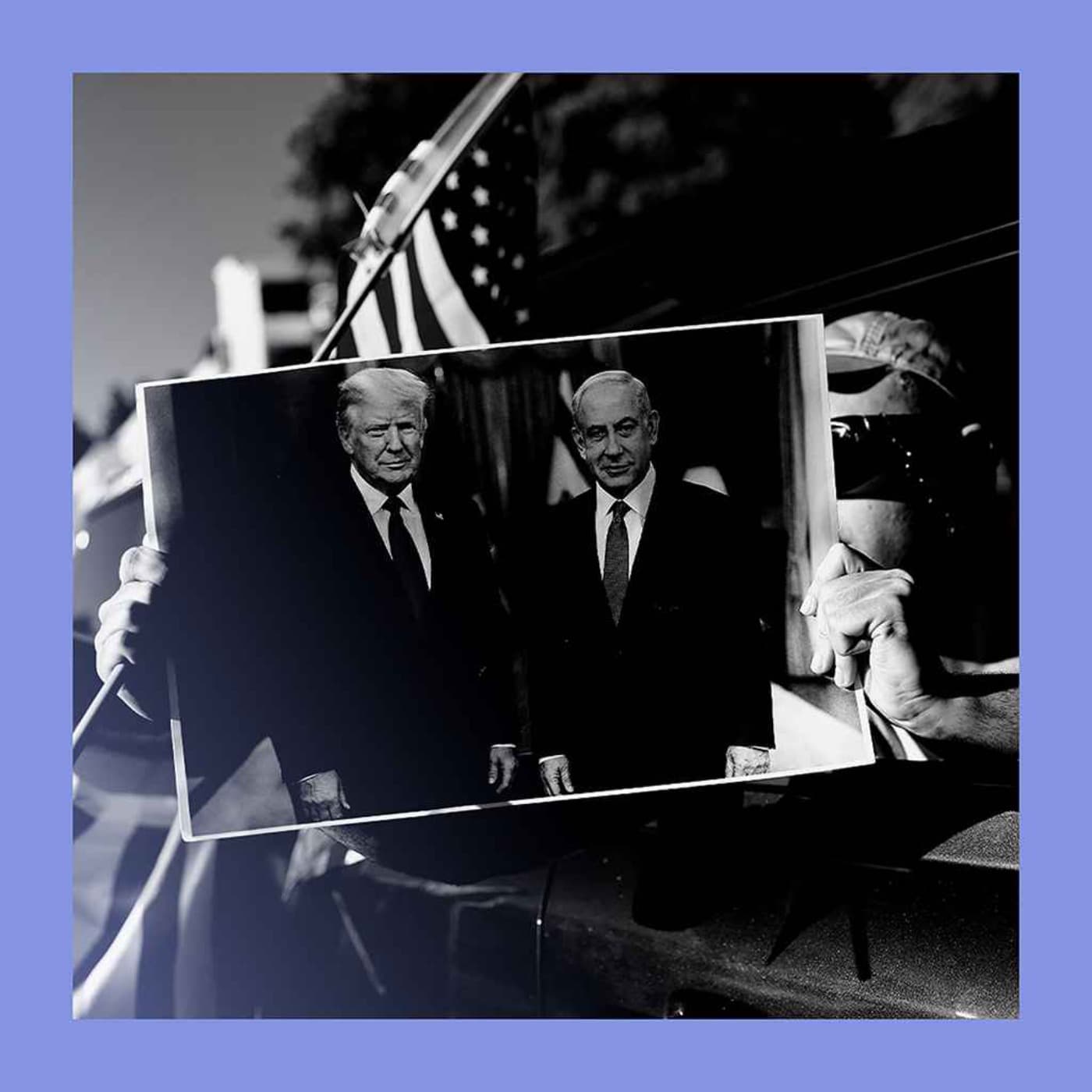
The episode compares US and Israel approaches to Iran during the war and alleged talks.
Key claims
Trump frames “regime change” as already achieved and hints at a deal, while Iran denies talks and warns against calling defeat an agreement. Israel’s concern is Trump ending the war without protecting Israel’s interests. Israel and the US are still conducting airstrikes and building forces; Israel aims to end the war with a much weakened Iranian regime to enable renewed protests. Estimates cited: about 75% of Iran’s ballistic-missile launches destroyed, yet 10–15 missiles are still launched daily.
Notable examples
strikes on missile capabilities; Persian-language satellite narrative operations; potential ground operations.
Guests
Anshul Pfeffer (Economist Israel correspondent). Other segments: crypto in Asia with Su Lin (Economist/host of Scam Inc) and mafia history with John Fassman (Economist culture correspondent) and author Ryan Gingeras.
Written by AI. May contain mistakes. Listen to the episode to check what was said.
Chapters
Tap a time to open that second in VOThe Rise of Crypto in Asia
0:45 to 1:03
Discussion on the prolific use of cryptocurrency in Asia and its implications.
“Real mafiosi like seeing themselves reflected on screen.”
The Mafia in Media
1:03 to 3:05
Exploration of how real-life mafia influences film and TV portrayals.
“When it comes to talking up military and diplomatic successes, President Donald Trump unfailingly says that things are going just great.”
U.S.-Israel Relations and Iran
3:05 to 6:13
Analysis of the diverging goals of the U.S. and Israel regarding Iran.
“While we're talking about talks, there is a constant stream of Israeli and American fighter jets bombing various targets in Iran.”
Israeli Public Sentiment and Leadership
6:13 to 11:47
Discussion on Israeli public opinion regarding the war and Netanyahu’s leadership.
“But what about the stricter sort of military aims of the mission, the degree to which, in terms of military hardware, the mission is succeeding?”
Exploring Crypto's Practical Uses
12:21 to 14:02
Detailed insights into how cryptocurrency is used for remittances and everyday transactions in Asia.
“advice on how ordinary people can turn crypto into profit.”
Crypto Adoption in Asia: A Growing Trend
14:02 to 15:10
Learn how remittances drive crypto adoption in Asian countries.
“And actually, if you delve into this index, nine of the top 20 countries on it are Asian, including Pakistan, Vietnam, Indonesia, the Philippines, Bangladesh, South Korea, Thailand, and Japan.”
Stablecoins: The Backbone of Crypto Transactions
15:10 to 16:40
Understand the role of stablecoins in facilitating transactions.
“But what she's probably using instead are stable coins.”
Financial Risks and Opportunities of Stablecoins
16:40 to 18:20
Explore the risks involved with stablecoins and their potential impact.
“And many in Southeast Asia would work on online platforms like Grab and Gojek, which are kind of super apps like Uber and DoorDash.”
The Evolution of the Mafia in Culture
18:38 to 22:42
Delve into how fictional portrayals reflect real-life mafia evolution.
“John Fassman is a senior culture correspondent for The Economist.”
Legacy of the Mafia: From Crime to Culture
22:42 to 23:49
Investigate how the mafia's influence persists in modern culture.
“after seeing Francis Ford Coppola's films.”
Transcript
Automatic transcript. May contain errors.0:03The Economist.
0:10Rosie Blau:Hello and welcome to The Intelligence from The Economist. I'm Rosie Blau. And I'm Jason Palmer. Every weekday we provide a fresh perspective on the events shaping your world.
0:25Rosie Blau:I was astonished to find out that Asia accounts for many of the most prolific users of crypto. We dive into who's using it, what for, and how that's reshaping how people and companies operate. And film and TV audiences might feel like they know what mafia baddies get up to. Real mafiosi like seeing themselves reflected on screen. It wasn't always this way. From Rome to Vegas via Naples, we dive into a new global history of crime families.
1:03But first...
1:09When it comes to talking up military and diplomatic successes, President Donald Trump unfailingly says that things are going just great. He claims to be in talks with the right people in Iran. He says the country is talking sense, that they want to make a deal with him so badly that to top it off, somehow there's a mysterious gift involved.
1:30Rosie Blau:They did something yesterday that was amazing, actually. They gave us a present, and the present arrived today. It was a very big present worth a tremendous amount of money. Okay, sure, but wind back a tiny bit and listen to this framing. We have really regime change. You know, this is a change in the regime because the leaders are all very different than the ones that we started off with. That regime change has already happened. Iran's rhetorical habit is to deny that any talks are happening, even if chatter is going on in back channels.
2:11A strident Iranian military spokesman asked, Has the level of your internal discord reached the point where you are negotiating with yourselves?
2:23Do not call your defeat an agreement, he said. The era of your promises is over. What in all this is Israel thinking?
2:33Anshel Pfeffer:I think the talks between America and Iran could drag on for a while. Anshul Pfeffer is our Israel correspondent. But the main concern here in Israel is that Donald Trump will call time on this war without taking Israel's interests into consideration. So you presume there, first of all, that those talks really are going on and they may be productive, but you also don't mention the sort of continued military buildup. Not just continued military buildup, continued military operations. While we're talking about talks, there is a constant stream of Israeli and American fighter jets bombing various targets in Iran.
3:15Anshel Pfeffer:Trump has ruled out, for now, bombing energy-related targets, but there are plenty of other places that the Americans and the Israelis are bombing. And as you say, there's also a build-up. There's a Marine Expeditionary Unit en route to the Gulf. There's elements of the 82nd Airborne Division arriving in the region as well. So if the talks fail, or perhaps the talks are just a bluff, there's also this new option of some form of ground operations in Iran. But you hinted at the start there that Israeli and American goals might not be mutually met when all of this does, in one way or another, come to a close.
3:54Anshel Pfeffer:Well, we saw at the beginning of the war that, So when Israel and America launched their first airstrikes, there did seem to be a consensus that they're trying to topple or change the Iranian regime. The very first airstrikes were decapitation of the Iranian leadership, including the Supreme Leader Ali Khamenei. But over the past three weeks or so, we've seen Donald Trump, I think, drifting more and more to a focus on the energy issue, on the Strait of El Muz, on being able to control the flow of oil out of the region. whereas the Israelis both in public statements and also what I'm hearing off the record from security officials are very clear that their aim is to end this war with a much weakened regime especially weak in the eyes of its own people in the hope that that will create the conditions for protesters to take to the streets once again as they did back in December and January and this time take it all the way to toppling the regime.
5:01Well, I mean, how much closer to that goal do you think this operation is? How weakened is the regime? How likely is a popular uprising? Well, unlike when military targets are hit
5:13Anshel Pfeffer:and you have some kind of quantifiable element of how many missile launchers have been destroyed, how many Iranian warships have been sunk, This is something where you can't measure how weak the regime seems in the eyes of the Iranian people. Now, beyond the airstrikes, there's a lot of narrative-creating operations being carried out. A lot of them are being carried out through Persian language satellite channels, which are Iranian essentially, but the anti-regime there beaming into Iran pictures of besieged militia fleeing drones, of police headquarters in flames, and with a very clear intention of showing to the Iranian people that the oppressors are now on the run.
6:02Anshel Pfeffer:If they decide to take to the streets, this time they can do it. But to measure how much that's working, I think, is impossible even for the best intelligence services in the world. But what about the stricter sort of military aims of the mission, the degree to which, in terms of military hardware, the mission is succeeding? Well, one of the main objectives of this war was to destroy Iran's ballistic missile capabilities. And we've seen over the last three weeks what an impact those missiles have had, both here in Israel and in other countries in the region. And even though the numbers seem to indicate a pretty successful operation, that we're hearing something like 75 % of Iran's missile launches have been destroyed and that the assembly lines of the missiles have also been flattened.
6:51Anshel Pfeffer:At the same time, we're seeing every day around 10 to 15 Iranian missiles being launched towards Israel and more being launched towards countries in the Gulf. And this is after over three weeks of constant airstrikes against those missile launches. So if these talks that Trump is talking about are successful, then it would leave Iran with some of that capability, which is what Israel and other countries in the region are worried about. So from either America's or Israel's point of view, this is an unfinished war. But what about that notion that the ultimate goals might be diverging here? We're seeing that diversion play out.
7:33Anshel Pfeffer:We're seeing it in the way that Trump is talking about successful talks with the Iranians. Now, obviously, that's an exaggeration. The Iranians themselves are denying it. But Trump is basically talking to the regime that he and Netanyahu set out to remove at the beginning of this war. So he's now saying, well, we've done many things to this regime. We've killed so many of its needs. He's saying that actually that was regime change. He's changing the definition of regime change. But for those in the region who still will have to confront Iran when this is over, for them the regime is still here.
8:09Anshel Pfeffer:And even though it's been weakened militarily, in other senses, it's more entrenched. But that raises the question that if indeed Mr. Trump is more interested in getting oil moving than finishing the earlier defined job, is Israel hung out to dry? Would it continue on alone in any way? I don't think Israel has the option of continuing along. First of all, whatever agreement Trump reaches with the Iranians, should he reach an agreement, that will almost certainly obligate Israel as well. There won't be half a ceasefire while the other partner in this war continues firing. And these are joint operations.
8:45Anshel Pfeffer:Israeli jets are flying to Tehran on the way. They're being refueled by American tankers. Israel can go on its own. Technically, it did so back last year in the 12-day war in June. But this war is very much a joint war of two countries against Iran, and I don't see one of them continuing on. So certainly not if it's Donald Trump who calls time, because he, I think, will insist that Israel abide by any ceasefire he reaches. So Mr. Trump has all of the leverage. There's not an indication from what you've seen that Israel could convince him to carry on, that anyone else in the region could convince him to carry on.
9:23Anshel Pfeffer:Benjamin Netanyahu certainly has influence with Donald Trump. We've seen that in the run-up to this war. We've seen that over the past years. And there are people around Trump who do think that this war should be continued and agree with Netanyahu. But ultimately, Donald Trump has his own set of considerations, his own optics. He wants to be the one to define what victory looks like and is going to be on his terms. Now, obviously, the Iranians also have what to say about that. But Beny Netanyahu can't risk being seen, certainly by the Israeli public where he's now facing re-election, can't be seen as being at loggerheads with Trump.
10:07Anshel Pfeffer:He thinks one of his most important political assets is the perception that he and Trump are working closely together, and he can't risk that. But if part of what Mr Netanyahu wants to show to Israelis is that he and Mr. Trump are working together well, but he also wants to show that he's finishing the job and making Israelis more safe by destroying the regime and all that kind of thing. Those things are now in tension. Well, there's an intriguing phenomenon now in the polling that we've seen in Israel over the last three weeks since the war began, and that is that Israelis are overwhelmingly in favor of this war.
10:44Anshel Pfeffer:They see Iran as an existential risk to Israel, and therefore they support the war. But that doesn't translate into support for Netanyahu. And we haven't seen in the past three weeks the numbers of Netanyahu's coalition improving in the polls. So they're supporting the war. They're not supporting the leader who's taking them to war. And that may change, obviously, in the coming months before the Israeli election. But it does seem that the lines in Israel between Netanyahu's bloc and the opposition are still very firm, and this war hasn't changed them, at least not yet. So in that sense, for the moment, unless something substantial comes out of these alleged talks, it will all continue.
11:30Anshel Pfeffer:Israel's leaders are looking very anxiously at these talks. They want the war to end on their terms, that their terms should be also America's terms, not only Iran's terms, and for now they're prepared to continue fighting. Anshul, thanks very much for joining us. Thanks for having me, Jason.
12:17Rosie Blau:videos that you'll ever watch because this year is going to be the one. The internet is awash with advice on how ordinary people can turn crypto into profit. Scroll through social media and it sometimes seems like everyone is trading and investing. But in Asia, the numbers are truly staggering and the region's dominance is changing how crypto may be used in the future. So there's a perception in the developed world that crypto is this wildly speculative play thing. But in the developing world, it's actually perceived quite differently. And Asia is a great case study of why. So for many ordinary people across the region, their smartphones have now become their bank branches.
13:04And crypto is being used to solve real world problems, whether that's sending money home to paying freelancers and reimbursing suppliers. And so all of this suggests that Asia is leading crypto's shift from being just a financial curiosity and speculative thing to an actually useful everyday tool.
13:28Rosie Blau:Sulin, we know that crypto is used everywhere now. So how important is Asia's role in it? Asia's very important. If you take India, for example, it was ranked first for the third consecutive year on a global cryptocurrency adoption index that is run by Chainalysis, a data firm. And it saw an estimated$338 billion in crypto flows between mid-2024 and mid-2025. And so when incomes are adjusted for local price differences, India's crypto activity relative to GDP per person far exceeds that of richer countries. And actually, if you delve into this index, nine of the top 20 countries on it are Asian, including Pakistan, Vietnam, Indonesia, the Philippines, Bangladesh, South Korea, Thailand, and Japan.
14:23Rosie Blau:And why is that? Why have people in Asia been such prolific adopters of crypto? So a really big part of this story is remittances. And remittances traditionally are very expensive to send home. Around 24 million people from Southeast Asia work abroad. So think of, for example, a Filipino nurse who's working here in Singapore where I'm based, and she wants to send money home to Manila. So if she sent US$500 through a traditional bank transfer, that might cost her$20 to$30. But if she uses crypto instead, it might only cost her$5 to$10. And the key thing to understand here is that she's probably not using Bitcoin, the most famous cryptocurrency.
15:11But what she's probably using instead are stable coins. And these are digital tokens that are generally pegs to the US dollar. Unlike Bitcoin, their price barely ever fluctuates. And the most common ones in circulation are Tether or USDT and Circle USDC. And so these are really becoming the backbone of crypto activity.
15:36Rosie Blau:Remittances mainly applies to migrant workers. Are others using crypto too? Yeah. So actually, what I have noticed in my reporting is that lots of people who live in countries where the banking system isn't very good, or the local currency is really volatile, or inflation is rampant, they're turning to stable coins. Then there are other use cases. So for example, businesses are using them for cross-border payments. A Vietnamese firm paying a Thai supplier would typically need to use correspondent banks for currency conversion, but stablecoin payments will often settle faster with fewer intermediaries.
16:18And so we're seeing more and more transactions between businesses happening in stablecoins. And then another use case I came across were freelancers who might rely on them to get paid more quickly. So according to the World Bank, Asia has more than 210 million gig economy workers, which would be roughly half of the global total. And many in Southeast Asia would work on online platforms like Grab and Gojek, which are kind of super apps like Uber and DoorDash. And traditional payment systems will often delay payouts to drivers and delivery workers, but stable coins enable instant settlement.
16:58Rosie Blau:Sue Lynn, you know a lot about crypto from your podcast series Scam Inc. How risky is this? I do think there's a bit of a perception that some of the ways that stablecoins are being used are quite dodgy. And so it's the same features that appeal to, say, a Filipino nurse who wants to send money home using stablecoins. So the speed, the low fees, the fact she doesn't need a bank account. Those features also appeal to criminal syndicates operating in Myanmar and Cambodia and conducting large-scale fraud operations. So whether stablecoins fulfill their promise will depend largely on what happens here in Asia.
17:40And the region really has the scale, the need, the regulatory ambition to resolve this tension between legitimate use cases in the real world for stablecoins and the fact that the same networks are being used by criminals to launder money. The big question is now whether they will become financial infrastructure or tools for fraud. So if the experiment succeeds, stablecoins could really reshape global finance and show that crypto technology can solve real problems for millions of people. But if they fail, I think crypto will remain what skeptics have long claimed, a speculative asset in search of a legitimate use case.
18:21Su Lin, thank you very much. Thanks so much, Rosie.
18:37Only a fool would associate or go into business with Tommy Shelby. John Fassman is a senior culture correspondent for The Economist. He is a gangster, he's a murderer, he's a big fan of opium. But he is also eminently watchable, thanks to Cillian Murphy and his captivating, dead-eyed betrayal. Tommy, as you probably know, is the dark heart of Peaky Blinders, which was a terrific series that ran for six years on BBC. And there's a new film, Peaky Blinders, The Immortal Man, now out on Netflix. Shelby is a riveting antihero, which he has in common with other prominent mafiosi. Think of Al Pacino as Michael Corleone, or James Gandolfini's terrific performance as Tony Soprano in The Sopranos.
19:23All this from a slice of gabagool? There's a new book out by Ryan Gingeras called Mafia, A Global History, that explains how actual gangsters talk, act, and see themselves, and how they may be influenced by what they've seen on screen. The real-life versions obviously don't have screenwriters, so they're a lot less charming and eloquent. But like fictional mafiosi, they reveal a great deal about the societies in which they operate. Professor Gingeras argues that mafiosis have helped define the making of the modern world, and I think that's true. He takes readers from classical Rome to modern Las Vegas.
19:59Across all these times and places, there are similarities that emerge among different mafia groups, such as clannishness, a ruthless enforcement of rules, and devotion to arcane initiation rituals. The word mafia started being used in the early 1800s, but really they have a rich prehistory.
20:24For centuries before that, there were bands of brigands and bandits, and these were simple thieves who preyed on travelers when they got outside the reach of the state. There were some brigands who controlled small armies. I'm thinking here of a delightfully named thug, Bula Felix, who terrorized third-century Rome. But as he discovered, going brawn for brawn against even a moderately functional state is usually a losing proposition. There were a few lucky bandits who got co-opted by young states that needed the muscle. But as states grew richer, they developed police forces that extended their authority and helped wipe out these roving bandit groups.
21:00What's true about mafias is they generally tended to emerge in places where the government's influence didn't fully reach I'm thinking here of southern Italy, where the Camorra thrived in Naples and the mafia in Sicily Japan's Yakuza drew members from the lower ranks of society and gave them a job at a sense of purpose
21:24Some of these gangs started out as simple kidnappers and extortionists But really, it was prohibition of alcohol in 20th century America, of opium in China, of gambling in Japan, for instance, that created modern mafias. Prohibition in America also created the first globally famous mafioso, a guy who you've heard of named Al Capone, who spied an opportunity in Chicago in the 1920s and founded the feared Chicago outfit. In America, the mafias' power started to wane in the late 20th century. Congress passed something called the Racketeer Influenced and Corrupt Organizations Act in 1970, known better as RICO.
21:58And this left prosecutors charge crime family heads for underlings' misdeeds as long as they could prove that these misdeeds were part of a continuing criminal enterprise.
22:11The other thing that happened is that bosses got used to seeing versions of themselves on screen, and they came to love the limelight as opposed to their predecessors who tended to operate in the shadows. John Gotti, who was the flashy head of the Gambino crime family in the 1980s, loved seeing himself in the paper. One old-timer complained to him, it took a hundred years to put this together and you're ruining it in six months. And even if the mafia is not what it was in America, mafiosi's hold over popular culture remains entrenched. In Turkey, people started calling gangsters baba, which means godfather, after seeing Francis Ford Coppola's films.
Read the full transcript
22:45Recruits to one Mexican cartel are still required to watch the trilogy as a necessary tutorial in the meaning of family and values. And the sites of violent showdowns have become tourist destinations. In Las Vegas, which was partly built with mob money, visitors can now go to the Mob Museum, which features a bullet-ridded wall against which seven of Capone's rivals were machine-gunned to death in 1929. The Mob Museum even offers discounted admission to law enforcement, which is an offer, surely, they can't refuse.
23:28That's all for this episode of The Intelligence. We'll see you back here tomorrow.
23:48Have a great day.
From the publisher
In the daily tea leaves one might read that President Donald Trump would prefer a deal with Iran to a continuing military campaign. Where would that leave Israel and its goals? Cryptocurrencies have gained a particular foothold in Asian economies; will they become real financial infrastructure or just tools of fraud? And tracing the history of mafias through the ages.
Guests and host:
- Anshel Pfeffer, Israel correspondent
- Sue-Lin Wong, Asia correspondent
- Jon Fasman, senior culture correspondent
- Rosie Blau, co-host of “The Intelligence”
- Jason Palmer, co-host of “The Intelligence”
Topics covered:
- Iran war, Israel, America
- cryptocurrency, Asia
- mafias, crime families, history
Get a world of insights by subscribing to Economist Podcasts+. For more information about how to access Economist Podcasts+, please visit our FAQs page or watch our video explaining how to link your account.
Hosted on Acast. See acast.com/privacy for more information.