
In short
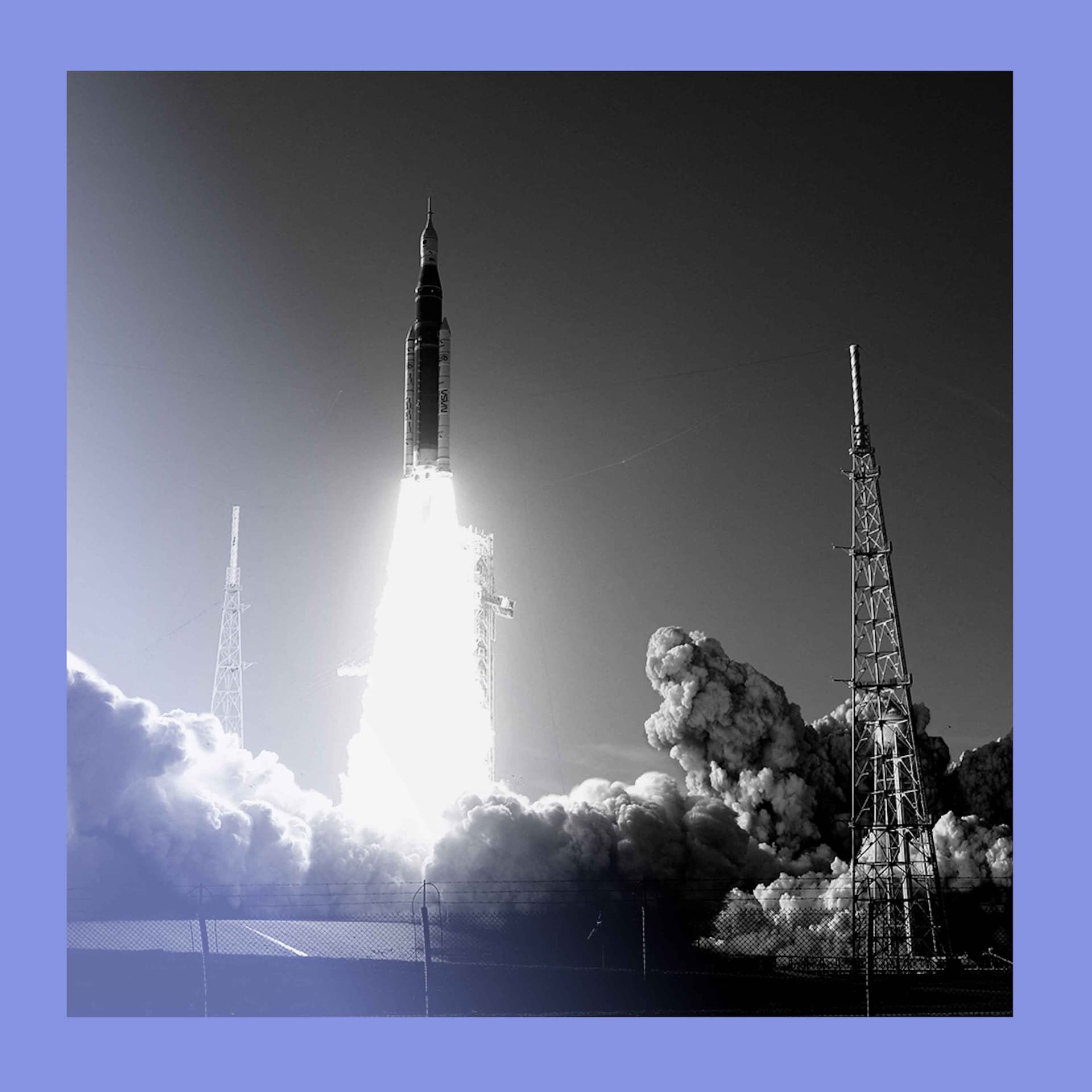
The episode covers three things: Artemis II’s moon launch, how language affects AI accuracy, and China’s “influencer officials.” Artemis II: NASA’s first crewed mission in over 50 years; Orion/Integrity carries four astronauts into Earth orbit, then about a day later into a looping “figure of eight” lunar trajectory, returning to splash down near San Diego around mission day 10. Key claim: Artemis II is a stepping stone toward Artemis III/IV lunar landings and a “moon base” strategy, partly driven by urgency versus China’s structured lunar program.
Guests
Oliver Morton (Economist planetary affairs editor; wrote a book about the moon). Dina Moussa (science writer; explains multilingual LLM gaps). Gabriel Crossley (China correspondent; reports on Chinese social media officials like Wu Shaoyu, Pang Futiang, and Lin Yang Du).
Notable examples
max Q stress point; AI medical triage in African clinics; officials promoting noodles, traffic control, and persimmon “biceps” stunts.
Written by AI. May contain mistakes. Listen to the episode to check what was said.
Chapters
Tap a time to open that second in VOAI Models and Their Limitations
0:43 to 1:34
Discussion on the performance of AI models in different languages.
“Every weekday, we provide a fresh perspective on the events shaping your world.”
Launch of Artemis II Mission
1:34 to 2:51
Details about the Artemis II launch and its significance.
“Four brave explorers ready to ride the most powerful rocket.”
Mission Objectives and Challenges
2:51 to 7:17
Exploration of the goals of Artemis II and future missions.
“So what you will need to watch out for is a bit after a minute in, it goes through what's called max Q, which is when the pressure on the spacecraft is greatest.”
Space Race Dynamics and Ideologies
7:17 to 11:21
Discussion on the implications of the space race and national pride.
“lacklustre in their performance in trying to get there.”
Current Status of Artemis II
11:21 to 11:44
Update on the Artemis II mission's progress and technical details.
“Integrity, 75 miles in altitude, 330 miles downrange, approaching 10 ,000 miles per hour.”
Language Disparities in AI Models
12:31 to 14:00
Exploration of the disparities in AI performance across languages.
“And in some cases, that can be dangerous.”
Language Model Limitations in AI
14:00 to 18:25
Explore the challenges language models face in processing non-English text and the implications of these limitations.
“And the first and the most obvious one is training data.”
Social Media's Role in Chinese Governance
18:25 to 18:51
Learn how Chinese officials use social media to improve their public image and meet performance pressures.
“And until that changes, some of the deployments we're seeing in health settings, like in African health clinics, can carry real risk.”
Rise of Influencer Officials in China
18:51 to 23:21
Discover how young officials in China are leveraging social media to engage citizens and the potential risks involved.
“And recently, they've been doing so with the help of social media.”
Transcript
Automatic transcript. May contain errors.0:00Hi, this is Dave Musil, owner of Four Seasons Heating, Air Conditioning, Plumbing and Electric. When emergencies happen, who do you call? Broken pipe? Power outage? Furnace failure? No hot water? The answer is always the same. Call Four Seasons. We guarantee same-day service and installation on all heating, cooling, plumbing and electrical needs. With no extra charge for nights, weekends or holidays. That's why over 30 ,000 customers have given us a 5-star Google review. For all the right reasons, call 866-FOUR-SEASONS.
0:35The Economist
0:42Hello and welcome to The Intelligence from The Economist. I'm your host, Rosie Bloor. Every weekday, we provide a fresh perspective on the events shaping your world.
0:58We keep being told that AI models are getting better and better, and they are, up to a point. But their use and accuracy may depend on what language you ask for help in. And most Chinese officials try to avoid publicity. But now there's a surprising trend. Social media is turning civil servants into video stars. We consider the influencer official.
1:34First up, though.
1:40GLS is go for your left. Great call out. The rocket is on its own. Four brave explorers ready to ride the most powerful rocket. NASA has ever launched. 10, 9, 8, 7. RS-25 engines lit. 4, 3, 2, 1. Booster ignition. And lift off. The crew of Artemis II now bound for the moon. Humanity's next great voyage begins. On Wednesday evening, at around half past six local time, the wildlife and the observing people at Cape Canaveral heard sounds that they have not heard for decades. Oliver Morton, our planetary affairs editor, has also written a book about the moon. It was a heavy lift launcher built by NASA that was taking people back to the moon for the first time in over 50 years.
2:43The name of the mission, as everyone now knows, is Artemis II.
2:50So it's taking off. I mean, that just looks amazing. That is quite cool. Yeah. So what you will need to watch out for is a bit after a minute in, it goes through what's called max Q, which is when the pressure on the spacecraft is greatest. It's going faster and faster, so that's building up pressure, but the air is getting thinner and thinner so that's taking pressure down so max Q is the bit where those two things balance out. And presumably that's a dangerous moment? It is the point at which the system's under the greatest stress. Mission elapsed time. Passing one minute. Approaching max Q.
3:30On. Positively on. Gotta say though, SpaceX has higher production values. They do their video better. Have you the same? communication signal transfer confirmed as integrity and it's Krugo supersonic this is the bit that one really reads a sigh of relief over standing by for main engine throttle down to 85 % ahead of solid rocket booster separation expected at the two minute nine second mark it's the solid rocket boosters that took out Challenger right it's always nice to get rid of them and there they go. Oh, those are the rocket boosters. Those are the solid rocket boosters and you can just see the two rocket boosters left behind it.
4:29Integrity is the name of the spacecraft. Oh, wow. That's a beautiful shot of the Earth. Mm-hmm. And then there's a lovely shot of the stage separation after Miko, which is main engine cutoff. So we're seeing amazing shots of the Earth. Mm-hmm. Outstanding, Stan, we see the same, and we have a beautiful moon rise. We're headed right at it. It's nice that they've come around to see the moon, because, you know, they launched in late afternoon and now they've come round the Earth into the night because they're going east. It's nice that one of the coincidences of the way that you have to launch to get to the moon favours, certainly for a mission like this, launching at full moon.
5:22And so you can see where you're going. I always think a moonrise is a beautiful term. It is, it is. Oli, that was super cool. Tell me what we've just watched. Well, that was the launch of the first crewed mission in the Artemis program. And so the first time that that large rocket has actually taken a crew into orbit, and it will take them into orbit around the Earth, and then about a day and a bit into the mission, they'll go from this high looping orbit around the Earth into a much longer loop that will form a sort of like figure of eight around the Moon. And so they'll be taken around the moon and back to the Earth.
6:04And then they're about on mission day 10. They'll re-enter the Earth's atmosphere and splash down somewhere in the vicinity of San Diego. People have flown this trajectory before, but they haven't done it for more than 50 years. This is the first time that a mission has gone beyond the low Earth orbit where the space station and other things like the Hubble Space Telescope that needs servicing. they all live really in the shallows of space. This is going a bit out into the ocean. Our colleague Tim said that it's the difference between going 40 metres off the beach at Dover and swimming the Channel.
6:42Olly, don't get me wrong, I loved watching that. I think it's amazing. It's fantastic to have a good news story. But what's the point of the Artemis 2 mission? Yeah, that does bring one, as it were, down to Earth a bit. The point of the Artemis 2 mission is effectively the Artemis 3 mission. The point of the Artemis 3 mission is the Artemis 4 mission. Artemis 4 will have a crew that will go up, as we've just seen the crew of Artemis 2 do. They will then dock with a separate spacecraft that's designed to land on the moon, and they will then land on the moon. This was a goal that was reset to NASA in 2017 by President Trump, and they've been, frankly, lacklustre in their performance in trying to get there.
7:26The original idea was that we'd be at this stage of the programme from like five years ago. They're hobbled by having equipment that was, to some extent, foisted on them by Congress that really doesn't allow you to do the job particularly well. But they are getting there and they have the advantage that in a new administrator, Jared Isaacman, they actually have someone who seems to really want to make this thing effective to try and increase the tempo at which missions to the moon are launched. And as he was announcing last week at an event rather potentously called Ignition, he wants to build a moon base for Americans to make missions to the moon part of an enduring process that will lead to something sort of analogous to one of the research stations on Antarctica, I guess.
8:15It's all very impressive, but NASA's done this before. So what's the difference and why are they doing it again? You've got to remember that the moon missions of the 1960s were effectively a sort of like superpower flex. Russia had got into space first. It had put a man into space before America had been able to. America felt itself behind in the space race. So it said, double or quits, we'll do something more dramatic, we'll go to the moon. And they did. And it was very impressive. They didn't really have any rationale or any particular pensions or the money to keep doing that or go on any further.
8:52And so that became, as it were, the high watermark of the space program. After that, NASA concentrated on doing things in low Earth orbit, having a space shuttle. And then once it had a space shuttle, it used the space shuttle to build a space station. That space station, which it built with international partners, including Russia, is now coming to the end of its life. So NASA needs something else to do because no one wants to just say, oh, yes, space, we've done that. That's over. So they have a new objective. So the objective is either Mars, which is really difficult, or the moon, which is less difficult.
9:26And in 2017, President Trump chose the moon. And they were sort of like dawdling along, as I said, rather ineffectually getting towards a moon mission. And then they realized that the Chinese, who are increasingly serious space power, had a structured moon program that was landing little lunar robots, bringing back samples. And the Chinese said that they were going to put people on the moon by 2030. And suddenly it all became a little bit more urgent. And NASA's rather complicated plan started looking a little bit raggedy. And so in the last year or so, you've seen more urgency. Mr. Isaacman, Administrator for NASA, who's himself an astronaut, he's actually paid for two space missions of his own, is a serious man about trying to get these things done and trying to get back to the moon and, as he puts it, this time to stay.
10:17Whether they can actually beat China back is still fairly up in the air because although things seem a lot more ship-shape, there's an awful lot of engineering to get done before you can actually land people safely on the moon and, indeed, bring them back. So is this really just old-fashioned space race stuff again then? I do think that the main thing is it's a hedge against the loss of prestige of not being on the moon when the Chinese are there. But you've got to remember that space race stuff is kind of layered. Part of it is just, yeah, we can do that and you can't. But there are also ideas about what sort of civilization you want to be and whether you want to embody some sort of outbound urge.
11:00And there's a lot of ideological weight in America that says, yeah, we want to be people who go forth and do stuff that no one else has done before. And so that's sort of like superpower prestige, but it's also sort of like national self-assertion, trying to be an America that many Americans would want America to be, I think. And a moon base sort of speaks to that because it can be seen as this like reopening of the frontier. Oli, thank you very much. Great to talk to you. Really nice to talk to you, Rosie. Mission Control, Houston. Integrity, 75 miles in altitude, 330 miles downrange, approaching 10 ,000 miles per hour.
11:40Integrity, looking good at six minutes. Same on board, Stan.
11:50Hi, this is Dave Musial, owner of Four Seasons Heating, Air Conditioning, Plumbing, and Electric, and I want to guarantee you a breakdown-free winner. Did you know that a dirty furnace costs more to operate and can lead to higher utility bills? and untimely breakdowns. Now is the time to schedule your Four Seasons Furnace Tune-Up and save$50. A Four Seasons Furnace Tune-Up includes a 35-point inspection, complete cleaning, and we calibrate every component of your furnace. So call today. For all the right reasons, call 866-FOUR-SEASONS.
12:30If you ask an LLM the same question in two different languages, you might get two different answers. And in some cases, that can be dangerous. Dina Moussa is a science writer. So imagine a pregnant woman asking a leading model what to do about swollen legs. If she asks in English, she'll probably be warned about preeclampsia, which is a complication that is responsible for over 70 ,000 maternal deaths every year. But if she asks that same question in Swahili, she might just be told not to worry. And that kind of disparity is plausible given the research and potentially dangerous. The stakes of this difference are only getting higher by the day.
13:16So why are the stakes getting higher by the day? Yeah, increasingly, these tools are moving beyond personal use. They're being deployed professionally in settings like medical care in developing countries. For example, in January, the Gates Foundation and OpenAI announced a$50 million plan to roll out AI tools across a thousand primary health clinics in Africa for patient triage and medical advice in local languages. And that's a situation where getting the answer wrong is more than an inconvenience. With the current language gap, those patients would be getting an inferior product to the one that we use in the U.S.
13:53today. So why is there such a disparity? There are really two aspects to this. And the first and the most obvious one is training data. So these models are predominantly trained on English language text, and so they simply know more in English. The second problem has to do with how LLMs parse language. So before a model does anything with text, it breaks it into small chunks called tokens. And because tokenization is designed based on English, non-English text gets broken up into inefficient fragments. So that means it takes more tokens to convey the same amount of meaning or to say the same thing.
14:33And that matters both because it indicates that the model is less efficient at understanding the language. It takes more energy to do so, but also practically because developers pay per token. And so the same query can cost significantly more in another language other than English. Dina, you gave us an example at the top about the difference in advice we might get in two different languages. Just how big is that gap more generally? I would say it's larger than most people assume. So researchers recently tested some frontier models on reasoning and medical knowledge across 11 African languages and found that even the top scoring models performed between 12 and 20 percentage points worse than they did in English.
15:16One of the authors said that they saw performance as at the level of an English language model from five years ago in terms of accuracy. And I think all of us who have been tracking AI models over the past five years know what an enormous difference that is. In the worst cases, it can be even more dramatic. One model that correctly answered about 75 % of questions in English dropped to about 23 % in other languages. And that gap gets wider, the more dissimilar a language is to English. So with the exact same data per language, a model would handle Spanish or French better than it would Igbo or Yoruba, for example.
15:52As you say, we know that AI models are getting better. Does that mean the gap is closing? Yeah, so the authors of that same study that I mentioned released a formal benchmark, essentially a standardized test for how well LLMs handle other languages to be able to track this for future models. And researchers at Stanford have since used it to evaluate some models as they've been released. And those newer systems do perform better than the ones in the original study. So there is progress. But and I think this is a pretty important caveat, they still don't perform nearly as well as they do in English.
16:26So based on OpenAI's own benchmarks in the model cards, for example, progress has stalled on multilingual accuracy in the last few iterations. So GPT 5.2 is roughly on par with models like O3, which was released about eight months earlier. So I would say the improvement is real, but the gap has not closed and has not been significant in the last eight months or so. And what about models that are designed to be multilingual? Yeah, you would think that they might be immune, but unfortunately they're not. There's a study that focused on Meta's LAMA model, which was built for multilingual use, and found that even when asked a question in another language, it often retrieves the answer internally in English first and then translates at the last step.
17:12And every extra step just adds opportunity for error. So the failures were most pronounced in languages like Mandarin and Korean, where the model got fewer than a quarter of factual questions right, even when the internal representation showed that it actually found the right English answer. So it had the knowledge, it just got lost in translation. So what's the answer? What can be done about this? There are a few different lovers here. I would say the most tractable in the near term is data. So even adding small amounts of high-quality non-English data can make a meaningful difference. And interestingly, adding a language that is related also helps.
17:49So you don't need perfect coverage of every language. As long as you have something that is at least quite similar, you can get positive spillover effects. The more intensive fix would be rethinking tokenization, so deliberately training models on more linguistically diverse data so that non-English text is represented more efficiently from the ground up. That's harder, but it would address the structural problem. But I think both of these would require labs to see this as a priority. And right now, it isn't clear that it is. Currently, I would say the people with the most to gain from these tools who are in developing economies are the least able to use them.
18:25And until that changes, some of the deployments we're seeing in health settings, like in African health clinics, can carry real risk. Dina, thank you very much. Thank you.
18:50Young Communist Party officials are always under pressure to show they're working hard. And recently, they've been doing so with the help of social media. Gabriel Crossley, our China correspondent, is based in Beijing.
19:08This is Wu Shaoyu, a 36-year-old village official from Hainan province in China's south. She's standing in Tiananmen Square during a recent session of China's parliament and making a video for her 240 ,000 followers. She looks straight into the camera and says,
19:31I will devote my heart and soul to being a good representative of the people. Videos like these are becoming more and more common and turning officials like Wu Shaoyu into social media stars. Gabriel, this sounds quite unusual. Chinese officials tend to stay under the radar. So why are they now turning to social media? Party officials are facing a lot of extra pressure to perform these days. So this is from ordinary Chinese people complaining that they're a little lazy and out of touch. And also Xi Jinping, the country's leader, often rails against bureaucratic laziness. And his anti-graft watchdog, the Central Commission for Discipline Inspection, has in the last few years widened its focus to investigate laziness too.
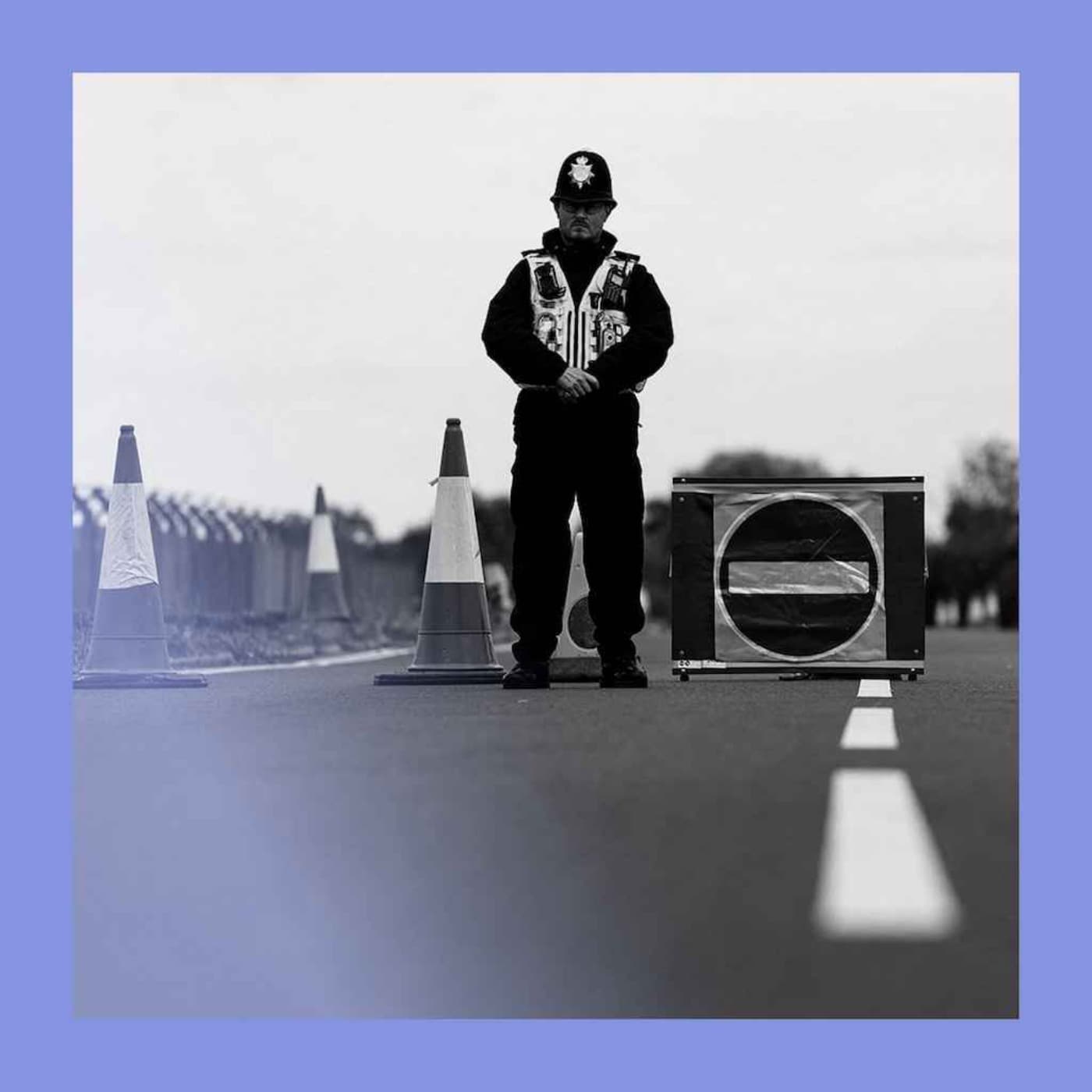
20:24So these days, it's not just enough for officials to do the usual parts of their job, but they must be seen being busy doing it. And social media really helps here. So what kinds of videos are these influencer officials making? It varies a lot. One fairly popular official called Pang Futiang, he's an official from the inland province of Shanxi. He's become famous by posting videos of himself going around his village offering steaming bowls of noodles to grateful elderly residents. Other officials make videos about seemingly quite humdrum topics like traffic control and they respond to all the comments underneath and make sure the local residents feel happy with how they're dealing with it.
21:13A lot of these social media stars, officials, live in the countryside. So there's a lot of content about local fruit and vegetables. So traffic control and local produce doesn't exactly sound like material for hit content. Yeah, let me show you something. Take a look at this. Wow, that was pretty unexpected. A very fit man holding a persimmon between his biceps and then tasting it. What is going on here? Yeah, this is a guy called Lin Yang Du. He's one of the more popular official influencers. He's in China's eastern province of Zhejiang. Sometimes he wears a tight-fitting top, as you saw. Sometimes he wears a Mao suit.
21:56He calls his follower Babe. And he became famous by posting videos like this of him squashing parsimmons, which are a local specialty, on his biceps. Fans have called him China's hottest village cadre. And he has about half a million followers on Douyin, China's version of TikTok. This isn't typical Communist Party fare. How is the party responding to this type of content? They seem to like it, the higher ups. One study showed social media famous officials seemed more likely to get promotions and they also got more state investment flowing into their jurisdictions. The party likes it when party officials really show the masses that they're up to stuff.
22:40On the other hand, the trend does bring some risks. Some officials have been doing more and more extreme stunts to get views. One official in Xinjiang made dramatic horse riding clips intended to attract tourists and she sadly died earlier this year following an accident. And there are some critics within the party too. They say that this sort of thing is distracting officials from real work. So certainly young influencer officials should be careful how to tread that line. For now, the party does seem supportive, but what's popular today can quickly fall out of favour. Gabriel, thank you very much for talking to me.
23:17Thank you for having me.
23:21And you can hear more about social media and what you can see on the Chinese internet on this week's episode of Drum Tower, our China podcast. You'll need to be a subscriber.
Read the full transcript
23:44that's all for this episode of the intelligence we'll see you back here tomorrow
From the publisher
NASA has successfully launched its first manned space mission in over a decade. Our correspondent explains why America wants to build a moonbase. AI models underperform in languages other than English. And meet China’s social-media stars: influencer-officials.
Guests and host:
- Oliver Morton, senior editor
- Deena Mousa, science writer
- Gabriel Crossley, China correspondent
- Rosie Blau, host of “The Intelligence”
Topics covered:
- Artemis II, moon, NASA
- AI, LLMs, language
- China, Chinese Communist Party, influencers, social media
Listen to what matters most, from global politics and business to science and technology—Subscribe to Economist Podcasts+
For more information about how to access Economist Podcasts+, please visit our FAQs page or watch our video explaining how to link your account.
Hosted on Acast. See acast.com/privacy for more information.