In short
The episode of The Intelligence from The Economist is mainly about Cuba in crisis, plus two additional segments: Britain’s quantum technology prospects and a dispute over endangered Pernambuco (Brazil wood) used for violin bows.
Guest
Zan Smiley, The Economist editor-at-large, who visited Cuba in 2021 and earlier; he discusses life in Havana, emigration, and politics.
Key claims
Cuba’s Havana is “decrepit” and survival depends heavily on remittances; nearly a quarter of the population may have left in the last five to six years; no reform movement is visible inside the Communist Party; 2021 protests were crushed and leaders jailed.
Notable examples
legalization of small businesses (up to 100 employees) and private firms paying 8–10x state wages; Miami’s Cuban lobby pushing “maximum pressure” and Trump focusing more on Venezuela.
Written by AI. May contain mistakes. Listen to the episode to check what was said.
Chapters
Tap a time to open that second in VOCuba's Historical Context
1:47 to 2:49
Explore Cuba's political history from the late 1950s to present day.
“Quantum technology involves something called qubits that should help us solve problems exponentially faster than today's computers.”
Current State of Cuba
2:55 to 4:50
Understand the economic struggles and hardships faced by Cubans today.
“Then it was run by Raul Castro, fellow revolutionary brother of Fidel, whose popular revolt has defined the country for six decades.”
Reform and Opposition in Cuba
4:56 to 9:01
Discuss the lack of reform and the state of opposition in Cuba's government.
“The big political and as you say, overall economic mess.”
Cuba and U.S. Relations
9:07 to 10:53
Examine the impact of U.S. politics on Cuba, particularly under Trump.
“Both Fidel and his brother Raoul used to revile private business, but now they're at least accepted.”
Future Prospects for Cuba
11:02 to 11:31
Speculate on Cuba's potential future if political changes occur.
Future Prospects for Cuba
12:50 to 13:00
Speculate on Cuba's potential future if political changes occur.
“with your first AG1 subscription, an$82 value.”
Quantum Technology Overview
13:13 to 14:00
Learn the basics of quantum technology and its potential applications.
“to invent machines that could do calculations in seconds, which take current classical computers decades.”
The Promise of Quantum Computing
14:00 to 19:25
Learn about the potential impact and challenges of quantum computing in the UK.
“into machines that can solve problems way, way quicker than today's computers.”
The Pernambuco Wood Dilemma
19:25 to 26:07
Explore the conflict between conservation efforts and the needs of musicians regarding Pernambuco wood.
“In 2017, a French auction house sold a 200-year-old violin bow made by Francois Xavier Tort for 576 ,000 euros.”
Transcript
Automatic transcript. May contain errors.0:00With no fees or minimums on checking accounts, it's no wonder the Capital One Bank Guy is so passionate about banking with Capital One. If he were here, he wouldn't just tell you about no fees or minimums. He'd also talk about how most Capital One cafes are open seven days a week to assist with your banking needs. Yep, even on weekends, it's pretty much all he talks about. In a good way. What's in your wallet? Terms apply. See CapitalOne.com slash bank. Capital One N.A. member FDIC. Hey, Yetis. This is Nick and Jack from the Best One Yet podcast. Now, the last company we worked at, they used Paylocity and everything just worked.
0:37It wasn't until launching our own media business, this show, that we realized how rare that is. Because Paylocity is one delicious burrito of operational needs. They roll up HR, finance, and IT seamlessly into one delicious bite. When everything wraps together like that all at once, your workforce, your tech stack, your business, you don't need more tools, you don't even need cilantro. You need one solution. And that is why Paylocity built a single platform to connect HR, finance, and IT with AI-driven insights and automated workflows that simplify the complex and power of what's next. Or as we call it, a delicious operational burrito.
1:10Yes, we do. Experience a one place for all your HCM needs, besties. So start now at paylocity.com slash one. Paylocity.com slash O-N-E.
1:26The Economist.
1:33Hello and welcome to The Intelligence from The Economist. I'm Rosie Bloor. And I'm Jason Palmer. Every weekday we provide a fresh perspective on the events shaping your world. Quantum technology involves something called qubits that should help us solve problems exponentially faster than today's computers. Britain is surprisingly good at this qubit thing. Question is, can it turn early promise into a lasting advantage? And picture an orchestra, all those bows scraping across strings. Odds are they're all made from the same wood. A wood that this week conservationists are fighting to protect more strongly in international law.
2:18But it's not clear that they really need to.
2:24First up, though.
2:32The island of Cuba has been one of the world's last resolute bastions of pure textbook communism going back to the late 1950s. Batista had buckled and fled, and Castro entered Havana in triumph without the last battle. Longtime listeners to The Intelligence will remember that back in Donald Trump's first term, we visited a lot. Then it was run by Raul Castro, fellow revolutionary brother of Fidel, whose popular revolt has defined the country for six decades. We kept hearing about Cubans' struggles, long lines to get into stores with nothing on the shelves, the market distortions of parallel currencies, one that sported Castro's beret-topped face and another pegged to the U.S.
3:18dollar, The pains of a country whose diplomatic relations with its neighbor just 90 miles to the north had still never quite normalized. President Barack Obama had extended something of an open hand. In 2017, Donald Trump withdrew it. I am canceling the last administration's completely one-sided deal with Cuba. We haven't heard much about Cuba in Mr. Trump's second term, except for even more tightening on sanctions, tourism, the bones of an economic embargo that goes back to John F. Kennedy. But our editor-at-large, Zan Smiley, has been keeping his ear to the ground. He's heard how the people have suffered under a leadership that clings to communist ideals, and he wanted to go back.
4:08I think I had about four very basic questions which I wanted to answer. The first one was, is Cuba in such a big political and above all economic mess, as I'd read in other publications? The second thing was, surely there must be some kind of reformer, a sort of Gorbachev figure within the ruling Communist Party. Was there any sign of that? Thirdly, because the island was in such a terrible state, why weren't the Cubans rising up as they did? in 2021. And then fourthly and finally, I stopped off in Miami on the way to find out if there was any sign of Donald Trump changing his policy towards Cuba.
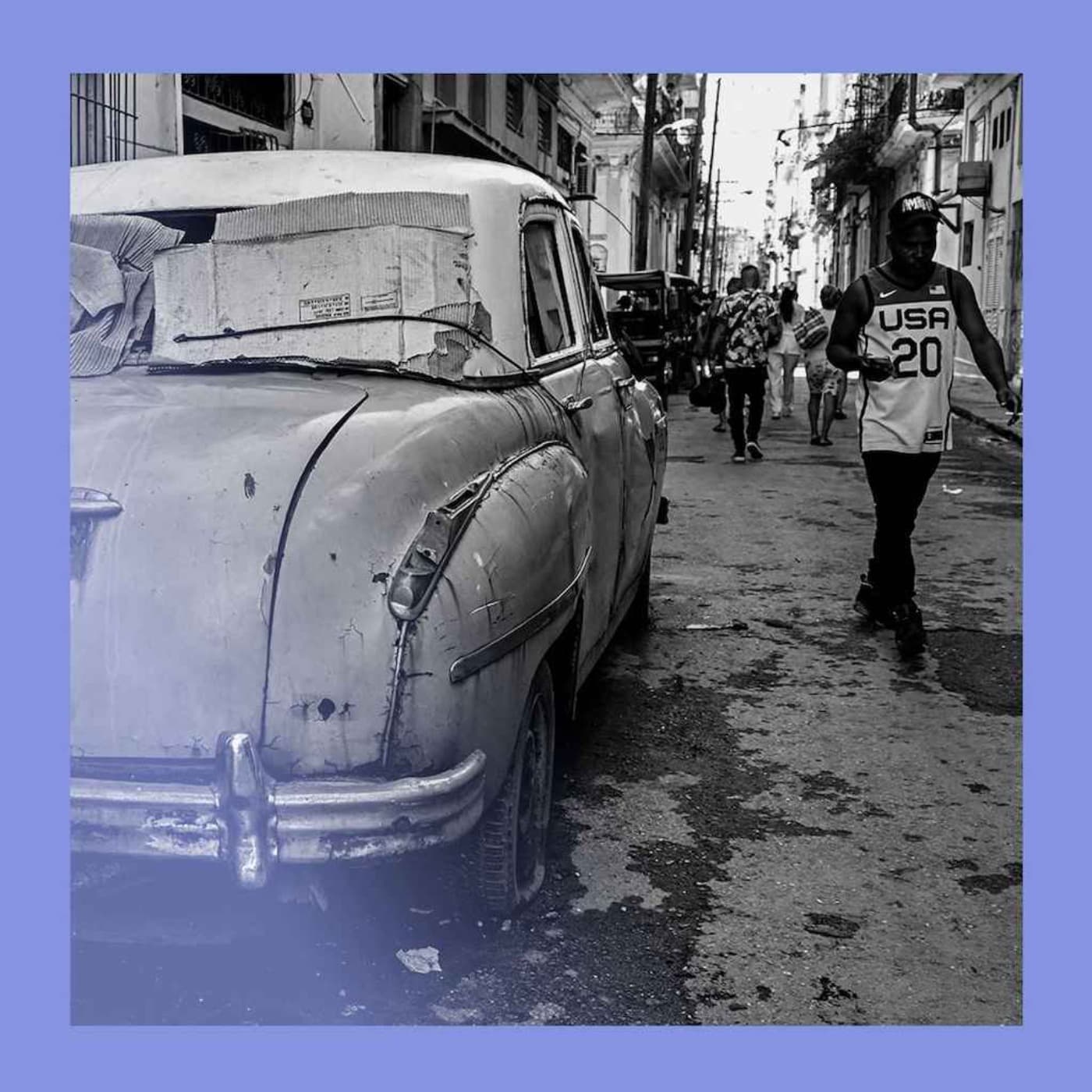
4:55So I had those four very basic questions. Well, let's go through them then. The big political and as you say, overall economic mess. What did you see? What was life on the ground like when you were there? Overwhelmingly, particularly in Havana, which is where I spent most of my time, the old city, which 150, 200 years ago was absolutely beautiful, was decrepit, squalid, refuse everywhere, potholes, an overwhelming sense of desolation and really misery. And then when you started to analyze the basic salaries, it was very hard to work out how people actually survive. A lot of them survive on remittances.
5:41There are two or three million Cubans abroad. The other thing which was particularly shocking is the rate of emigration. And one of the demographers that I spoke to, a leading demographer, reckoned that nearly a quarter of the entire population have left in the last five or six years. And so what about the question then of a reformer, someone who is trying to address these very things? Well, the trouble is that big decisions are taken behind closed doors, and the official press, the permitted press, is supine and very obedient. So it's very, very difficult to get a feeling of what might be going on under the surface.
6:21But superficially, at any rate, there's absolutely no sign of a reform movement within the Communist Party. Fidel Castro's younger brother, Raul, who was the leader that succeeded Fidel, he's still alive, age 94. He doesn't have any official position, but he's said to pull quite a few strings behind the scenes. And he is still absolutely wedded, by all accounts, to Marxism, Leninism, which is enshrined in the Constitution. So one hoped that there must be somebody popping up, as Gorbachev did in the Soviet Union, but from what one could make out, there's very little sign of it. There might have been if there was a compelling popular uprising of sorts, but you say that the most recent attempt at such a thing ended unhappily.
7:12It certainly did. In 2021, there were mass protests all across the country in several scores of towns and cities, and they were calling for power and dignity and food, all of those things very much lacking. but the local leaders of those protests were slapped down very hard, very ruthlessly, many of them still in prison. So there's no real sign of an active opposition and there's no real sign of an active reform movement within the ruling party. But there has been some change here. What about the loosening of the grip on private business in Cuba? Yes, it was back in 2021 that the Cuban regime did loosen up a bit to the extent that it legalized small and medium sized businesses with a maximum permitted number of employees of 100.
8:06And that has now become hugely important. Indeed, it really is vital in keeping people actually alive. Private businesses are reckoned on average to pay people eight or even 10 times as well as people are paid in the state sector. About a third of the workforce is now in the private sector and they have become absolutely crucial. However, the Communist Party can't make up its mind whether to simply tolerate it or whether actually to encourage it. And a lot of the young entrepreneurs told me that they have to use all sorts of workarounds to stay in business and that there is a tremendous lack of clarity as to what the law actually allows them to do.
8:52But my conclusion, having been there, is everything that actually works is almost entirely run as private businesses. And I think even the ruling party realizes that they can't stop it now. Both Fidel and his brother Raoul used to revile private business, but now they're at least accepted. But they haven't yet got to the degree where the regime has actually encouraged them. What about your fourth question, the one you addressed in Miami? Well, talking to the, as it were, the Cuban lobby in Miami, they are absolutely dogged in wanting to continue to exert maximum pressure, as they call it, turn the screw, which of course hasn't worked for the last 62 years.
9:37So there's a smaller number of people who want to engage both in politics and economics. And as mentioned, the diaspora is pretty crucial in sending remittances to help the people get by. Everything's in dollars. So once you have dollars, you can survive. But as for Donald Trump himself, the general feeling was that he's now focusing on Venezuela much more than he is on Cuba. The Cuban lobby in Florida is basically seen by the Trump administration as a sort of vote bank. And as somebody put it to me, they're much more interested in politics than in policy, so that there's nothing much changing there.
10:19And The Economist, for what it's worth, has long argued that the better policy would be active economic and political engagement, which did start towards the end of Barack Obama's presidency. But then it didn't get much of a welcome from the Cuban regime, and so it fizzled away, and now we're back to sort of isolation. So there's no sign at all at the moment of a loosening or of an opening. If there were, my guess is that it would have a tremendous effect. So, Zen, you've been to Cuba several times over the decades. What's your kind of upshot here, your reflections about the island's future based on this most recent trip?
11:01The thing which did strike me in the end is that so many of the talented people have left. But if there was a radical change within the regime, and above all, for example, if there were multi-party elections, my guess is that the regime would be swept away and a lot of the money would come back from America and particularly Florida. And within a very short time, certainly within five or 10 years, Cuba could be a vital, vibrant, and extremely successful country. Zan, thanks very much for joining us. Glad to be here. Thank you very much.
11:48This Economist podcast is sponsored by Bill, the intelligent finance platform that helps businesses, and accounting firms scale with proven results. With AI-powered automation, Bill isn't just moving money. They're simplifying financial operations for nearly half a million customers. Bill has securely processed over a trillion dollars in transactions. That's proven infrastructure. Ready to talk with an expert? Visit bill.com slash proven and get a$150 gift card as a thank you. That's bill.com slash proven. Terms and conditions apply. See offer page for details. Summer can throw off even the best routines, but AG1 makes it easy to keep one healthy habit consistent.
12:28AG1 is a daily health drink that combines a multivitamin, pre - and probiotics, superfoods, and antioxidants in one scoop mixed with eight ounces of water. From late nights to long weekends and everything in between, AG1 offers a simple way to add consistent nutritional support to your day, wherever the morning begins. Visit drinkag1.com slash The Intelligence to get a free morning person hat and a free AG1 sampler in your welcome kit with your first AG1 subscription, an$82 value. That's drinkag1.com slash theintelligence.
13:12There's been a dream for a long time now among scientists and researchers to invent machines that could do calculations in seconds, which take current classical computers decades. Georgia Banjo is a Britain correspondent. And Britain has a bold ambition, which is to crack this tech, to be a world leader. And so far, excitingly, it's got an edge. Georgia, I need you to take me back to basics. What is quantum technology? It's a great question, Rosie. It's one I think we're all asking. So most people will be familiar with bits. These are tiny units of data that are harnessed by normal computers for storage and for processing.
13:59What quantum computing does is to combine qubits, so that's bits that can be both zero and one at the same time, into machines that can solve problems way, way quicker than today's computers. So for years, this has seemed really exciting in theory, but not much good in practice. They make a lot of mistakes, for example, there's lots of errors. But now the technology looks finally to be within reach. So researchers are really excited that quantum computing may help us to discover new drugs or new materials much, much faster. And we're actually seeing practical applications as well. So researchers are also using quantum sensing to develop navigation systems for the London underground.
14:46So how much could quantum computing be worth? So obviously at the moment, we're all obsessed with AI. That's where so much of the money is going and the investment is going in deep tech. But lots of people are now starting to say that the next industrial revolution could actually be in quantum. So it has the potential to transform multiple big and important industries. To give you an example, McKinsey now reckons that quantum computing could create between$620 billion and$1.3 trillion, a value across four big industries, which include finance, chemicals and life sciences by 2035. So we're talking about huge amounts of potential impact.
15:29And who's going to be generating that value? Which firms or countries are contending? If you look around the world, there's over 500 firms now which are specializing solely in quantum. And of those, 64 are British. So that's second to America with 148. But, you know, that's not surprising given it's America. But Britain is really uniquely placed here. And it has a really strong research base in this area. It's got a strong science base. and unlike AI you do not need masses of money and spending to stay competitive. So this is really exciting for Britain which doesn't have the money bags of America and is already developing promising firms across the quantum stack as the experts call it.
16:15So you have firms like Riverlane which is developing error correction systems for quantum, you have Phasecraft which is leading on quantum algorithms. And you also have different firms pursuing different approaches to build full quantum computers. Georgia, it feels a little bit like we've been here before with Silicon Roundabout. Can Britain turn these early shoots, these exciting firms into a lasting advantage in quantum technology? I think we're always hoping for Britain to finally turn its scientific knowledge into successful firms. I guess what's exciting about quantum is that for once Britain has had a strategy in this for a long time.
16:58So it's had a national quantum technologies program to help commercialize research since 2014. It's also getting better at picking niches. It knows it can't do everything. And around it the government is really trying to focus on supporting talent to stay in the UK, becoming more friendly when it comes to regulation, and attracting investors who are willing to invest in these companies. So if you look at venture funding for quantum startups, Britain actually attracts the second highest amount, again, behind America, but it's doing well in this area. But as we've said, it doesn't always live up to the promise of that lasting advantage.
17:38Are there pitfalls it should now try and avoid? Yeah, it's definitely true that Britain still loses its firms way too early. So we've seen this again this year, where in September, INQ, which is an American hardware company, bought Oxford Ionics, a British rival, for$1.1 billion. But there are also signs that it is trying to avoid those pitfalls of losing all of its hardware, losing all of its research and its IP. So in this instance, the British government intervened and specified that these sorts of things should stay in Britain. So we're seeing progress in that even though it's not ideal but there are also of course other gaps that need to be addressed.
18:18Gaps such as? Mainly around infrastructure so there's lots of fiddly kind of supply chains which need to be leveraged to enable Britain to build quantum computers so that's things like lasers, photonics, cryogenics. With cryogenics, for example, Britain's still far too reliant on foreign providers of ultra-cold refrigerators. And we don't have enough domestic capacity for other things too, like quantum chip packaging. So all of these things are important. And there also needs to be more of a focus on the threats from quantum. So a lot of experts talk about a thing called Q-Day, which is the day, maybe as soon as the 2030s, when quantum machines might be able to crack today's cryptography.
19:05So that would mean suddenly lots of systems could be exposed to quantum attacks. So all of these areas are things that the government and also the private sector need to move more quickly on and really make a key focus. The worst thing in all of this would be if Britain falls behind. Georgia, thank you so much for talking to me. Thanks so much, Rosie.
19:45In 2017, a French auction house sold a 200-year-old violin bow made by Francois Xavier Tort for 576 ,000 euros. That's more than$600 ,000. Brooke Unger is a senior digital editor for The Economist. He's a lot less famous than Stradivarius, but he is kind of regarded as the Stradivari of bow making. He invented some features that you still see on a modern violin bow, like the screw that adjusts the tension of the horse hairs that actually scrape the strings. But he also was one of the first bow makers really consistently to use a material called pernambuco, or Brazil wood, a material that only grows in Brazil, and it's still used to make violin bows today.
20:31Basically, almost any good professional bow is now made of Pernambuco wood. And so when you're listening to an orchestra, what you're seeing basically is a dancing thicket of Pernambuco sticks. But that has now become a problem. How do you mean? What's the problem? This Pernambuco wood, or Brazil wood, is an endangered species. It's only found in Brazil, in the Atlantic forest of Brazil. That forest has been reduced in size by something like an eighth of what it used to be. The population of wild trees has declined by something like four-fifths within a century. And Brazil wants to increase the protection of the species.
21:13There's an important international meeting that started earlier this week in Samarkand in Uzbekistan to discuss possibly raising the level of protection that Perinambuco would get. And that sounds like an excellent idea, except that musicians are very worried about this proposal because the sort of increase in protection that Brazil wants to give the wood would make it very difficult both to make and to trade bows of Pernambuco wood. And this has begun a furious row between conservationists who want to preserve the tree and musicians who, for the most part, are very much in favor of conserving nature, but in this case have strong reservations about Brazil's proposal to increase protection.
21:55But why is this wood in particular so particular for musicians? Well, bowmakers and musicians say there's basically no substitute for Pernambuco wood. It's very strong. It's very springy. It projects sound very well. It projects overtones.
22:19They've tried using other materials to make violin bows, cello bows, but they've really found nothing that compares. There are cheaper bows on the market. Some bows are made of carbon fiber. They've experimented with other woods, but if you're a professional violinist or professional cellist, you're going to be using a Pernambuco wood bow. And the other thing is that they're not asking to chop down wild Pernambuco wood trees. The industry uses a very small amount of Pernambuco wood. There are something like 400 artisanal bow makers in the world and a couple of larger companies that make bows. It's estimated that one bow maker will use maybe the equivalent of one tree's worth of wood over an entire career.
22:55Much of the stock that they're using to make this wood was imported from Brazil years ago. So they're not chopping down new trees to make these bows. They're using stocks of wood that are already in places like Britain or Germany or the United States. And as for the change that's being pushed forward this week, what would that look like if that goes through? Well, what that would do is very sharply restrict trade in bows made from Pernambuco wood so that you wouldn't be able to sell Pernambuco wood bows across borders. A musician wouldn't be able to carry a bow across the border without a special certificate, which is very bureaucratic to get one of those.
23:35There are ports of entry, there are border crossings that don't accept them. For example, the St. Pancras Station where the Eurostar terminus doesn't accept these kinds of certificates. So traveling for musicians would be very difficult and that really is their life. And there are fears that the restrictions would be so tight that it would bring this 200, 250-year-old craft of bow making to a halt. It sounds from what you're saying that what Brazil is trying to do doesn't really directly address the problem and really just creates perhaps some hassle or some incentive for a black market in this stuff.
24:09Well, my sense of things is that this is very much a solvable problem. I mean, the amount of wood used is very small. A lot of wood, as I say, was harvested quite a long time ago and still hasn't been turned into bows. So there's a supply of raw material to be getting on with. And bow makers have been aware of this problem for a very long time. And there are efforts to plant new Pernambuco trees that, after 30, 40 years, can be harvested and made into new bows. And there's a fear that if the wood is reclassified the way Brazil wants to do it, that even this sustainable trade will stop. One of the things that needs to be done is stocks of existing Pernambuco wood need to be registered.
24:52You need systems to trace the origin of these bows. That's something that not only Brazil has to work on, but also countries and musicians' groups. But it does seem to me, given the fact that new trees are growing, given the fact that the trade doesn't use very much of this wood, it ought to be possible to solve this problem without crushing bow-making and without destroying the tree. Brooke, thanks very much for joining us. Thanks, Jason.
25:34That's all for this episode of The Intelligence. We'll see you back here tomorrow.
Read the full transcript
25:56This message comes from Jackson. Taxes aren't something you can only think about once a year. With investments, planning for tax days year-round. Fortunately, Jackson offers tax-efficient products. Visit jackson.com for more information on how our products can make your tax bill a little bit less painful. Jackson is short for Jackson Financial Incorporated, Jackson National Life Insurance Company, Lansing, Michigan, and Jackson National Life Insurance Company of New York. Purchase New York. With no fees or minimums on checking accounts, It's no wonder the Capital One bank guy is so passionate about banking with Capital One.
26:29If he were here, he wouldn't just tell you about no fees or minimums. He'd also talk about how most Capital One cafes are open seven days a week to assist with your banking needs. Yep, even on weekends, it's pretty much all he talks about. In a good way. What's in your wallet? Terms apply. See CapitalOne.com slash bank. Capital One N.A. Member FDIC.
From the publisher
The country’s Communist Party leadership continues to cling to old ideals amid on-again, off-again diplomacy with America—and the people’s suffering only deepens. Britain is making the most of its advantages in the burgeoning industry of quantum technology. And why conservationists’ concern about a wood beloved of classical musicians may be misplaced.
Get a world of insights by subscribing to Economist Podcasts+. For more information about how to access Economist Podcasts+, please visit our FAQs page or watch our video explaining how to link your account.
Hosted on Acast. See acast.com/privacy for more information.