In short
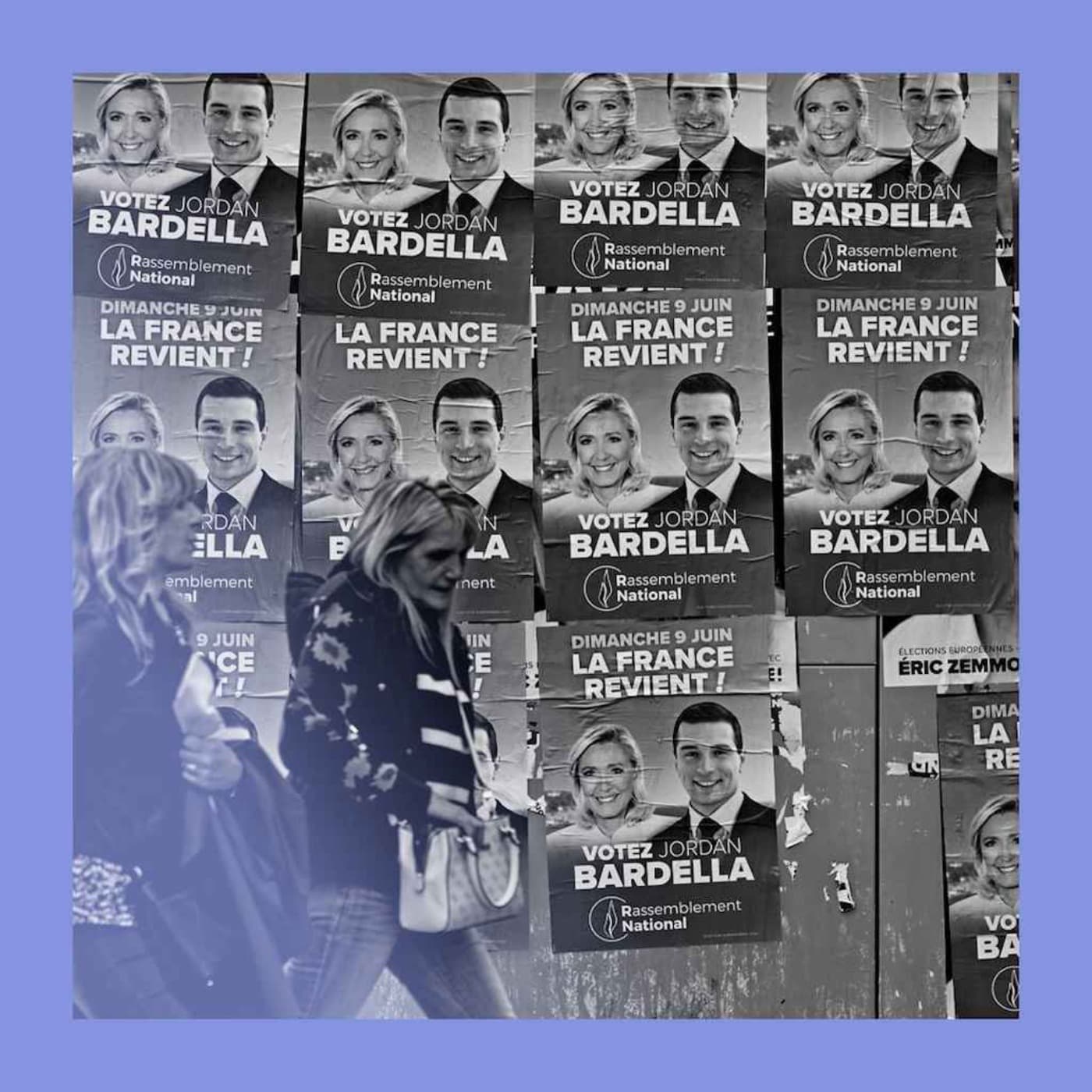
The Intelligence from The Economist episode “Right, here, waiting: Europe’s populists on the rise” argues Europe’s centrist parties are losing ground to the populist right and that these parties are positioned to win upcoming elections.
Guests
Tom Nuttall (Economist Berlin bureau chief) covers Germany; Sophie Petter (Economist Paris bureau chief) covers France; Matthew Holhaus (Economist Britain political correspondent) covers the UK.
Key claims
Anti-immigration/xenophobia, elite-skepticism, and “country-first” nationalism unite Reform UK, Alternative for Germany (AfD), and France’s National Rally. Examples: AfD’s February Bundestag result (~21%) and polling near CDU (~26%); National Rally’s potential to take power and Jordan Bardella as 2027 favorite; Reform UK rising to ~29% and possible Commons majority. Notable contrasts: Germany’s “firewall” against AfD vs UK/France dynamics; AfD growing more radical with Identitarian links and being labeled right-wing extremist by Germany’s domestic intelligence. MAGA influence is discussed as indirect—Trump is unpopular in France, but campaign-style inspiration is noted.
Written by AI. May contain mistakes. Listen to the episode to check what was said.
Chapters
Tap a time to open that second in VOPopulist Parties on the Rise
1:30 to 2:02
Exploration of the growing influence of populist right parties in Europe.
“perhaps the world's most innovative architect.”
Successes of Populist Parties
2:02 to 4:15
Discussion on the electoral successes of populist parties in Germany, France, and the UK.
“Europe's centrists are losing ground, in particular to parties of the populist right.”
Common Themes Among Populist Parties
4:15 to 6:11
Analysis of the common ideologies shared by various populist movements.
“And we have a presidential election coming up in 2027.”
Differences in Populist Approaches
6:11 to 8:07
Exploring the differing trajectories of populist parties in Germany, France, and the UK.
“He's one of the people who really made Euroscepticism a tier one political issue in the UK.”
Mainstream Political Responses
8:07 to 13:05
Examining how traditional parties in Germany and the UK are reacting to the rise of populism.
“So that, I think, is an important difference in style and approach, even if on a lot of the policy topics, they're very much in line with what we see in Britain and France.”
Mainstream Political Responses
13:08 to 13:36
Examining how traditional parties in Germany and the UK are reacting to the rise of populism.
The Rise of Populism in Europe
14:00 to 21:51
Explore the dynamics of Europe’s right-wing populist parties and their electoral strategies.
“There are people in the Conservative Party who would really strongly oppose a deal, an electoral pact with Reform UK, amongst them Kemi Badenov.”
Remembering Frank Gehry
22:43 to 28:00
Discover the architectural legacy of Frank Gehry following his passing at age 96.
“There wasn't much mistaking a Frank Gehry building.”
Reflections on Frank Gehry
28:00 to 28:38
Learn about the legacy of architect Frank Gehry as discussed by Anne Rowe.
“or sometimes when he was driving or when he was on a plane.”
Reflections on Frank Gehry
30:08 to 30:44
Learn about the legacy of architect Frank Gehry as discussed by Anne Rowe.
“Review the disclosures and disclaimers at SIBO.com slash US underscore disclaimers.”
Transcript
Automatic transcript. May contain errors.0:00Did you know the SIBO VIX Index at its core is a measure of market uncertainty? The VIX Index could be rising because of bullish positioning in the underlying SIBO SBX Index Options market due to fear of missing out rather than fear of downside. Download our white paper at SIBO.com slash VIX Insight. There are risks associated with SIBO Company products. Review the disclosures and disclaimers at SIBO.com slash US underscore disclaimers. A BetterHelp ad. Hold on. One second. I just need to...
1:06The Economist
1:13Hello and welcome to The Intelligence from The Economist. I'm your host, Jason Palmer. Every weekday, we provide a fresh perspective on the events shaping your world.
1:28Later, our obituaries editor will look back on the career of Frank Gehry, perhaps the world's most innovative architect.
1:54But first...
2:03The pattern is by now clear. Europe's centrists are losing ground, in particular to parties of the populist right. Reform UK, Alternative for Germany, France's national rally, all are having a bumper year. We are all ships rising on a turquoise tide, headed ever closer towards winning the next general election. We fight for secure borders and law and order. Prepare for the change. Live France and the Republic. Yesterday, we talked about America's new national security strategy, which pledges specifically to help those populist right parties, to help Europe escape what it calls civilizational erasure.
2:51The continent's centrists, in turn, claim those parties present actual existential risks. Britain's Prime Minister, Keir Starmer, told us that Britain as we know it would cease to exist if reform were to win the next election. In Germany, Chancellor Friedrich Merz has said that his time in office is the last chance for the center. After bruising elections last year, France's Prime Minister, Emmanuel Macron, warned of brewing civil war. It's dramatic visions all round. And to pick through it all, I'm joined by three colleagues from three countries today. From Germany, our Berlin bureau chief, Tom Nuttall.
3:28Hi, Jason. From France, Sophie Petter, our Paris bureau chief. Hi, Jason. And in London, our Britain political correspondent, Matthew Holhaus. Hello. Thanks very much for joining us, everyone. Just give us a broad outline, if you would, of how the populist right is doing on your respective patches. The Alternative for Germany had its best ever election result in the February election to the Bundestag, got about 21%. It's now roughly neck and neck with the governing Christian Democrats on around 26 % in the polls, by far its biggest ever score. Well, I think in France, for the first time in the national rally, that's the populist right party run by both Marine Le Pen and Jordan Bardella, is on the cusp of possibly taking power.
4:12And that is a big moment for France. It worries a lot of people, but it also delights others. And we have a presidential election coming up in 2027. Jordan Bardella is the favourite to win it at the moment. And that is quite a remarkable turnaround for a party that, you know, in the 1970s was founded and became an extremist, anti-Semitic, pariah movement. And it's now the most popular party in France. And Matthew, coming back to Britain, what's going on here? It's a pretty similar story of a party moving from the fringes to the centre stage. So here we've got Reform UK, which is the latest vehicle of Nigel Farage, formerly of UKIP, formerly of the Brexit campaign.
4:50He's taken it really in the space of two years from being on single digit polling. Now Britain's most popular party, it's on 29%, according to our poll tracker. We think if there was an election tomorrow, Reform UK would have a three in five chance of winning a governing majority in the Commons, in concert with a rump conservative party. Now, it is very easy to imagine that very similar things are going on, at least from an ideology point of view across all of these three different populist parties. That's not entirely true, but let's start with where the similarities actually do lie. Sophie, what do you think draws these three movements together?
5:27Well, I think the most fundamental thing is anti-immigration policy. And this is sort of infused with a xenophobic vision of what Europe or the country concerned, whether it's France, the UK or Germany, ought to be or is. There are other things as well. There's often a skepticism about environmentalism. There's often trying to blame the elites for things that the people, in quote marks, are suffering from. And there's also, I think, it's a MAGA-like, in France, at least France-first feeling. We've had enough of being bossed about by Brussels or by other institutions, and it's time to put the country first.
6:01You can see a lot of parallels in the ideas of reforming UK with those of other parties of the European populist right. And that's a bit of a paradox, actually, of reform, because in many ways, Nigel Farage is the godfather of Brexit. He's one of the people who really made Euroscepticism a tier one political issue in the UK. And yet he really owes his political apprenticeship to being a member of the European Parliament, where he spent a lot of time with people in his sort of political family on the radical right in France and the Netherlands and elsewhere. His calling cards really are above all immigration, which he argues has been too high to the UK.
6:40that reform have a policy of mass deportations, as they would put it, combined with a scepticism of elites, a scepticism of globalisation. They're very hostile to foreign aid and fundamentally sort of believe that Britain's greatness, Britain's sort of military prowess, Britain's constitution have all been subverted and they need restoring. So it's very much a sort of restorationist agenda. I agree with all of that. And it's funny, I've been speaking to some AFD MPs here, many of whom also began their career in the European Parliament. And many of them have very fond memories of working with Nigel Farage back in the pre-Brexit days.
7:18And they've told me that they look forward to working with him as British Prime Minister. So the AFD obviously shares a lot of these views on immigration, on wokery, on the EU, on MAGA. There is an important difference, I would point out, which is that while both reform and the national rally, as they have approached power have begun to moderate in certain respects in terms of both policies and personnel. With the AFD, if anything, you're seeing the opposite happening. The party's actually growing more radical. Its links to far-right extremist groups, such as the ethno-nationalist identitarian movement, are growing ever stronger.
7:57This is one reason why earlier this year the Domestic Intelligence Agency declared it a formal case of right-wing extremism, which enables them to put the party under a greater degree of supervision. So that, I think, is an important difference in style and approach, even if on a lot of the policy topics, they're very much in line with what we see in Britain and France. And Tom, how are the more centrist, the more traditional parties of Germany dealing with that shift? Well, one of the interesting things about Germany is it's one of the few countries remaining in Europe where you have what they call here a firewall and other countries a Cordon Sanitaire against the far right.
8:34And what that means in practice is that no mainstream party will work with the AFD in government, either at state or federal levels, completely ruled out. And this is a controversial view. Many Germans think that one of the risks of a policy like this is that you end up getting endless coalitions of the kind of mushy centre that can't reform because the conservatives, the most popular mainstream party, are forced into coalitions with social democrats or greens or whoever, and nothing ever happens. And the only way that something would happen would be to tear down that firewall and get a government of the conservatives with the AFD.
9:14That is a view that a lot of people also disagree with. And that's kind of where the rubber hits the road with this discussion in Germany at the moment. And Sophie, you mentioned that the national rally won a pariah party. What are the dynamics of it in the political sphere now in today's France. It's quite interesting listening to Tom describing Germany because I think that the dilemma that mainstream parties face there, France has moved even further than that in the sense that the traditional centre-right party now known as the Republicans has been crushed by the national rally, by the populist right.
9:46It is a much, much smaller party. There are only about 49 MPs. National rally has 123. And the question now isn't whether the Republicans will decide to join up with them and break down what Tom called the firewall. It's about whether or not it's the populist right that is now the biggest opposition party that will absorb all others in that space. And that is something that has, in effect, put an end to any sense of there being a kind of cordon sanitaire around them. It's not that there aren't still attempts to get tactical voting to take place and to block them at elections, especially France's two-round elections, which enables you to do that.
10:25But it does mean that line is completely blurred in France. So Britain is very interesting because of the way there's a bit of a pivot in strategy taking place. Hitherto, we've not really had a tradition at all of a quorum sanitaire with regards to reform. What you saw more than a firewall between reform or Farage's former party and the rest of the political system was actually the political system, his political rivals trying to outbid him. That's famously what happened with Brexit. We have seen a new strategy from Keir Starmer in the past four months, whereby instead of trying to continually outbid Nigel Farage or just say to his voters, I can deliver what you want really more effectively than he can, turn instead to the left and try and mobilise progressive opinion in a sort of a grand coalition against Nigel Farage.
11:10And he's really been talking up the civilizational sort of threat, as he sees it, that Farage poses, saying he would tear apart our culture, he'd tear apart our identity, what it means to be British, our place in Europe, our national security. And we all need to rally around someone moderate like Keir Starmer to stop it. As a change in strategy, it's kind of head spinning, both in terms of the short-term way in which Labour's been positioning itself, but also just in the broader way in which mainstream politicians have been thinking about Nigel Farage for the past 15 years. What Sophie was saying about the kind of destruction, basically, of the Republicans by the Rassemblement National, I think is serving in Germany as a kind of cautionary tale.
11:47There are other European examples as well. To Friedrich Merz, the CDU-Conservative Chancellor here, who is very, very tough on maintaining this firewall with the AFD. He says whenever there's an outstretched hand from the AFD towards the CDU, this is actually an iron fist that will seek to destroy us. This is not a way of us securing a right-wing majority in Germany. This is a way for the radical right to destroy the center right. And I think the reason that he says that is because he has seen comparable things happen in several other European countries, including France.
12:34Review important risk disclosures and disclaimers at SIBO.com slash US underscore disclaimers. When I found out I was going to be a parent, I immediately felt a lot of anxiety and worry. So I went on to BetterHelp to try to look for a therapist to help me with that. My relationship with my family and with my boyfriend and with myself were suffering. I really needed help. I was ruminating a lot. Really getting those thoughts out to a therapist and getting feedback was just life-changing. Discover what BetterHelp Online Therapy can do for you. Visit BetterHelp.com today.
13:32are not taking many of the issues those parties are backing on their face and instead just saying, well, these guys are beyond the pale. It's not working in Germany in the straightforward sense that they continue to climb in the polls. It's also not working in the sense that it encourages their radicalization. They have no viable path to power, and therefore the radicals gain the upper hand. On the other hand, it also keeps them from power. They could do a lot of damage if they were in government at state level or at federal level. and the real dilemma confronting the mainstream parties is that if you start to open up to the afd you will inspire a huge backlash you will lose millions of your voters particularly in west germany and in some cases it could even split your party and that's why for the conservators to cede you in particular this is a really really rough dilemma right now and it's not clear how it's going to shake out yeah i think you see a very very different dynamic with the conservative party in the UK who face, you know, really pretty existential threat from Reform UK because it is taking so many of their votes.
14:34There are people in the Conservative Party who would really strongly oppose a deal, an electoral pact with Reform UK, amongst them Kemi Badenov. But that opposition is really couched in sort of party-centric terms. So they say, I joined the Conservative Party, we're not in the business of doing deals, we're in the business of winning. That sort of language. Very few people in the Conservative Party now would say, I don't think we should do a deal with Reform UK because I think they're immoral. Because the legacy of 15 years of trying to contain Farage has made the Conservative Party more Faragist.
15:11So a lot of the things that he has believed have become their core ideology, whether that is Brexit, it, whether that is their commitment now to leave the European Convention on Human Rights, their views on culture wars and work. And so for that reason, any sort of ideological objection to doing a deal with reform, were it to be in the Conservative Party's interests as they face a real electoral Armageddon, is much paler than it would have been a decade or more ago. I think some of the dilemmas that Matthew's just described for Conservative Party members are very similar to the Republicans in France.
15:46I mean, you talk to some MPs and they wouldn't touch anything to do with the national rally. Others, I think, might privately say that after an election, everything is on the table. But the point I wanted to add is in response to Tom's comments about how if you treat these parties as beyond the pale and the vote still goes up, while the problem in France would say if you treat these parties as more respectable, the vote also goes up. So you're in a situation where, you almost can't win from this. For the centrist, it's really very difficult. And in thinking of another place where a populist right movement is certainly riding high, Trump's America, MAGA figures have also stuck their nose into lots of European politics.
16:25How much in your countries do you think the MAGA movement is getting a foothold, is sharing advice, is providing lessons? Well, it was very interesting to see in the national security strategy, there was this line suggesting that, quote, the growing influence of patriotic parties gives cause for great optimism. Clearly, the national rally in France is one of the parties that falls into that category. Having said that, it was interesting when we went to interview Jordan Bardello in November, I tried to draw him on Donald Trump and on whether he'd consider him a role model. And he was quite cautious.
16:56He did not say that he did. He was, I think, probably responding to the fact that Donald Trump is not popular in France. He's not popular in Europe, but he's even less popular in France than he is in Britain. And therefore, it is quite complicated in a country with a very independent-minded tradition, which doesn't see itself as a sort of outpost of the US and hasn't for a long time, I think means that he has to tread very carefully whenever there is a suggestion that he might invoke Donald Trump or Maga more generally. So there's clearly an interest and a desire in Washington to see the national rally do well, but I think the national rally itself is going to be a little bit more careful about modelling itself on Trump, at least explicitly.
17:39Farage tries to have it both ways on this. On the one hand, much as Sophie says, he is quite conscious that Donald Trump is unpopular with the British public at large, and he has dialed it down a little bit. However, you know, Farage has spent the past decade or so really playing up his links with the Trump movement. He has long sort of inflated his role as a potential interlocutor. And you've seen Farage's campaigning style, his rallies, his speeches, really are a bit of a fusion of something that he's been doing for 30 years or more, which is talking to town halls, talking to pubs and villages, you know, really speaking without notes, which Farage is very fluent at, but recently has been really infused with a lot of inspiration from the Trump campaign trail.
18:22So, you know, there's a lot more loud music, there's lights, there's big stadium arena rallies, he will fire t-shirts into the crowd from an air gun. He draws a lot of inspiration from Trump. Yeah, so the AFD has dialed this stuff up to 10. They see the arrival of an administration in America that is friendly to so-called patriotic parties as a huge Philip. And one of the things that I think the AFD is very focused on with the American administration is bolstering support against the genuine concern that they have and not ungrounded concern that there could be a genuine movement to impose a ban on the party.
19:01This is something that a reasonably large number of MPs think should happen. There are provisions for it in the German constitution. Were it to happen, then I think it's a fairly safe bet that the AFD could rely on strong support from the American administration against this. So you've now got regular delegations of AFD, senior figures, MPs going over to Washington to meet figures in Congress or members of the administration. And a final point, Russia, Ukraine, AFD's strong opponent of German and European support for Ukraine. Some figures, you hear messages that may have been just as well written in the Kremlin.
19:37What they will say is that we have a pro-peace administration in Washington and that it's a scandal that Europe is standing in the way of peace by not siding with Trump. So as 2025 winds up then, I'd like a view from each of you about what you think is going to happen in 2026. So in 2026, you have elections to the Welsh Parliament, to the Scottish Parliament, and to local government across much of England. Those elections are important in two respects. Number one, just as a barometer of how popular reform is right now. But secondly, if reform do well, the question is, do people who are still loyal to the Conservative Party conclude that reform is a stronger, more viable party of the right, that the Conservative Party is a lost horse and therefore switch their support.
20:27If that happens, then you're looking at a remaking of the British political landscape of the sort that hasn't happened for a century. In 2026, five of Germany's 16 states will hold elections. It's a big election year, and each one of them will be scrutinized carefully. The two of them really matter. And these are two states in Germany's east. And in both of them, current polling would suggest that it is not impossible that the AFD could win an outright majority. And of course, if that were to happen, you can forget about firewalls and cordon sanitaire because they would have burnt it down. They will be able to govern on their own.
21:02And one other thing that I'll be watching is the irregular migration numbers in Germany and in Europe in general have fallen substantially in the last year or so. Does that mean that the AFD will need to pivot its message? Will the migration message feel somewhat less resonant next year than it has done in the past? And if so, what will they want to talk about? Look, in France, the centre ground has broadly got 18 months to get its act together, find a way to talk to voters that is meaningful, that is inspirational, and get over their internal personal rivalries to find a candidate that can beat the populist right.
21:40because if they can't do it in 2026, we are looking at a situation the following year when there's a presidential election and cannot be excluded at this point that the populist right will take power. So that is a big challenge, a lot of ifs in there, but that is what the centre ground has to do. Sophie and Tom and Matthew, thank you all very much for your time today. Thanks, Jason. Thanks, Jason. Cheers. Thank you. I think it's fair to say that all that is the central political fight for the soul of the European project, in much the same way as it reflects the tussle for the soul of the American experiment.
22:15Let me draw your attention to last week's edition of The Insider, our new video show for subscribers. Our senior editors considered whether centrist politics is doomed, focusing in particular on Britain and including an interview with Prime Minister Keir Starmer. Find it in our app or on our website.
22:43There wasn't much mistaking a Frank Gehry building. Anne Rowe is The Economist's obituaries editor. You would suddenly see a blaze of silvery light coming over the rooftops. Or you'd notice a building that looked like a punched paper bag. Or a whole group of buildings that seemed to have fallen down on each other. Or another one that writhed along a riverbank like a snake. These creations hadn't come from some whiz kid architecture student, but a bespectacled man in late middle age who loved making odd shapes and forms and seeing if they could be translated into huge, exciting buildings. If you went to his office, it was clear that he liked any sort of chance juxtaposition.
23:31So he loved the shapes that paper made when he crumpled it up.
23:40But where had these most extraordinary buildings come from? The Guggenheim Museum in Bilbao in Spain, for example. A whole cluster of titanium roofs along the river. Or the Walt Disney Concert Hall in Los Angeles, which was a waterfall, really, of stainless steel on Bunker Hill. All sorts of most extraordinary things. and they surprised him sometimes too. When he first saw the Guggenheim in Bilbao, he thought it was a disaster. He really hadn't quite clocked what he had done and it was only when he saw later that it made rather a nice collage, if you like, with the river and it did another interesting thing if you looked at it from another angle.
24:31He gradually explored it and found in the end that it was perhaps rather good. He didn't mind taking credit for it. But generally, he was a man who didn't like to take too much credit. He was so aware of his precursors and antecedents.
Read the full transcript
24:52He liked to work with paper and pencil. He was old-fashioned that way. But his task was transformed by the fact that a very clever application was invented, which allowed him to transfer his sketches digitally to the screen, which could be scaled up to huge size. It was quite extraordinary. And the only thing wrong with it from his point of view is that it would immediately tell him whether what he wanted to build was possible or not. And he found it very hard to recognise there are any limits to what could be done.
25:35In his childhood in Toronto, quite a poor childhood, he'd played a lot on the floor of the kitchen with offcuts wooden blocks that his grandmother had brought back from the market. And he'd made the most fantastical cities with her, not recognising any limits to what wood blocks could do. He'd also helped out in a hardware store and found an infinite magic cave of objects there, tools, screws, nails, clocks, toasters, anything that could be taken apart and reassembled in a rather magical and inventive way. Perhaps most exciting though was the live carp that his grandmother would bring back to make a filter fish and she would leave it in the bath for a day and he would be transfixed by this fish watching it move and turn and that influence came through in so many of his buildings.
26:34Even some of his hugest projects were covered in myriad scales that looked like fish scales. He made some lamps called Gary lamps, which were shaped like a swimming fish with a warm incandescent light inside. He loved the action of fish swimming through water, so that led on naturally to rippling water and to billowing sails. He also liked to use everyday industrial materials, the sort that most people had around them in their housing.
27:15He drew a lot of criticism with his work, quite understandably. Critics found that after some years, he'd become a bit of a cliché. The reason you could tell a Gary building when you spotted one was that they were beginning to look rather the same. So he was becoming a brand. And also he was so much in demand that he was spreading himself rather thin. He objected to that because he was always willing to stop the big projects and do personal commissions for friends. And also the ideas kept coming. Why should he stop working if his ideas were still coming? So thick and fast. And they were. He found that shapes came to him in dreams, or sometimes when he was driving or when he was on a plane.
28:05He'd quickly sketch it out, as usual. He'd make a cardboard model of it. Then he'd take it into the office, and there, of course, the famous computer would either tell him, no, it's impossible, or it would somehow dry all his ideas out so that he was no longer quite so keen on them. But he had put his finger in the fire of living imaginations far too often for too long to possibly stop now. Anne Rowe on Frank Gehry, who's died aged 96.
29:17The Intelligence We'll all see you back here tomorrow for the Weekend Intelligence. You probably remember last week when we gave you a little taster of my colleague's revealing trip to Iran. Tomorrow's episode takes a far deeper and more intimate look as they reflect on what it's like to work as foreign journalists in Tehran.
29:48Did you know the SIBO VIX Index at its core is a measure of market uncertainty? The VIX Index could be rising because of bullish positioning in the underlying SIBO SBX Index Options market due to fear of missing out rather than fear of downside. Download our white paper at SIBO.com slash VIX Insight. There are risks associated with SIBO company products. Review the disclosures and disclaimers at SIBO.com slash US underscore disclaimers. When I found out I was going to be a parent, I immediately felt a lot of anxiety and worry. So I went on to BetterHelp to try to look for a therapist to help me with that.
30:27My relationship with my family and with my boyfriend and with myself were suffering. I really needed help. I was ruminating a lot. Really getting those thoughts out to a therapist and getting feedback was just life-changing. Discover what BetterHelp Online Therapy can do for you. Visit BetterHelp.com today. Thank you.
From the publisher
In Britain, Germany and France, populist-right leaders and parties are making hay. What unites their movements, and how do their respective political environments shape their future prospects? And our obituaries editor reflects on the life of Frank Gehry, perhaps the world’s most innovative architect.
Get a world of insights by subscribing to Economist Podcasts+. For more information about how to access Economist Podcasts+, please visit our FAQs page or watch our video explaining how to link your account.
Hosted on Acast. See acast.com/privacy for more information.