 Ask ChatGPT

The episode of The Intelligence from The Economist covers three segments. First, “Saudi under siege: Houthis attack airport”: Greg Karlstrom (Middle East correspondent, reporting from Riyadh) explains that the Houthis are an Iranian-backed Yemeni militia that seized control in 2014 and fought a Saudi-led coalition from 2015; a 2022 ceasefire froze front lines but has become unstable since wider Iran-related conflict since February.
Houthi drone and ballistic missile capabilities have improved; attacks on Riyadh’s airport (including fuel-tank hits and a deadly Saturday attack) are an escalation and a bid to disrupt Saudi events like the World Petroleum Congress and Davos-in-the-Desert.
Saudia plane destroyed; hundreds of flights cancelled; Dhammam airport also targeted. Second, Europe’s industry: Guy Scriven (global business writer) argues damage is concentrated (energy costs, China competition) but some sectors adapt; examples include EU car production down ~20% and Chinese brands like BYD expanding. Third, cursive handwriting: culture correspondent Caitlin Talbot discusses cursive’s return in schools, citing brain/learning claims and cultural concerns about reading historical documents.
Written by AI. May contain mistakes.
Discussing the recent attacks on Riyadh's airport and their implications.
“At Optum, we're working every day to connect primary, specialty, and pharmacy care, and help lower prescription costs.”
Discussing the recent attacks on Riyadh's airport and their implications.
“The conflict between Saudi Arabia and Yemeni rebels has been dragging on for years.”
Examining how the ongoing war has devastated Yemen and affected Saudi Arabia's future.
“There were parts of it that they had to scale back because they weren't going well.”
Exploring Saudi Arabia's tough choices in response to the Houthi conflict.
“Either continue a war that may be unsuccessful or try to negotiate a deal that will be very unpalatable.”
Explore how energy prices and Chinese exports are challenging European industries.
“Parts of the industry are really doing just fine.”
Learn about the resurgence of cursive writing and its cultural significance.
“Beware of a man whose writing sways like a reed in the wind, Confucius supposedly warned.”

Get the gist, explore an idea or ask about something said.
 Claude
On Economist Podcasts, what are the key points of this episode?
Searching your listeningAutomatic transcript. May contain errors.
0:00Therapy's biggest impact doesn't show up in some dramatic breakthrough. It shows up in the smallest moments. You bite your tongue instead of escalating. You put your phone down instead of firing off that text. You say what you actually mean instead of what would hurt someone else the most. Nobody applauds those moments, but they quietly change your life. That's what growing feels like. And that's exactly what Grow Therapy is here for. Grow is therapy that works, covered by insurance. Sessions average$21 with insurance, and some pay as little as$0, depending on their plan. There are no subscriptions, no long-term commitments.
0:37You just pay per session. Grow connects you with thousands of high-quality, licensed therapists across the U.S., offering both virtual and in-person sessions, nights and weekends. You can search by what matters, like insurance, specialty, identity, or availability. And you can book a therapy session in minutes and begin in as little as two days, not the national 48-day average. See if you could pay as little as$0 for therapy in seconds at growtherapy.com slash ACAST. That's growtherapy.com slash ACAST. growtherapy.com slash ACAST. Availability and coverage vary by state and insurance plan. Pessimism.
1:19It's never going to improve a disconnected healthcare system. Next. So what will? At Optum, we're working every day to connect primary, specialty, and pharmacy care, and help lower prescription costs. Will we fix it all overnight? No. But we'll wake up trying again and again until healthcare works as one for everyone. That's healthy optimism. Learn more at Optum.com. Optum.
1:53The Economist
2:00Hello and welcome to The Intelligence from The Economist. I'm Rosie Bloor.
2:09Today on the show, how adaptable is Europe's industry? And joined up handwriting makes a comeback.
2:24But first...
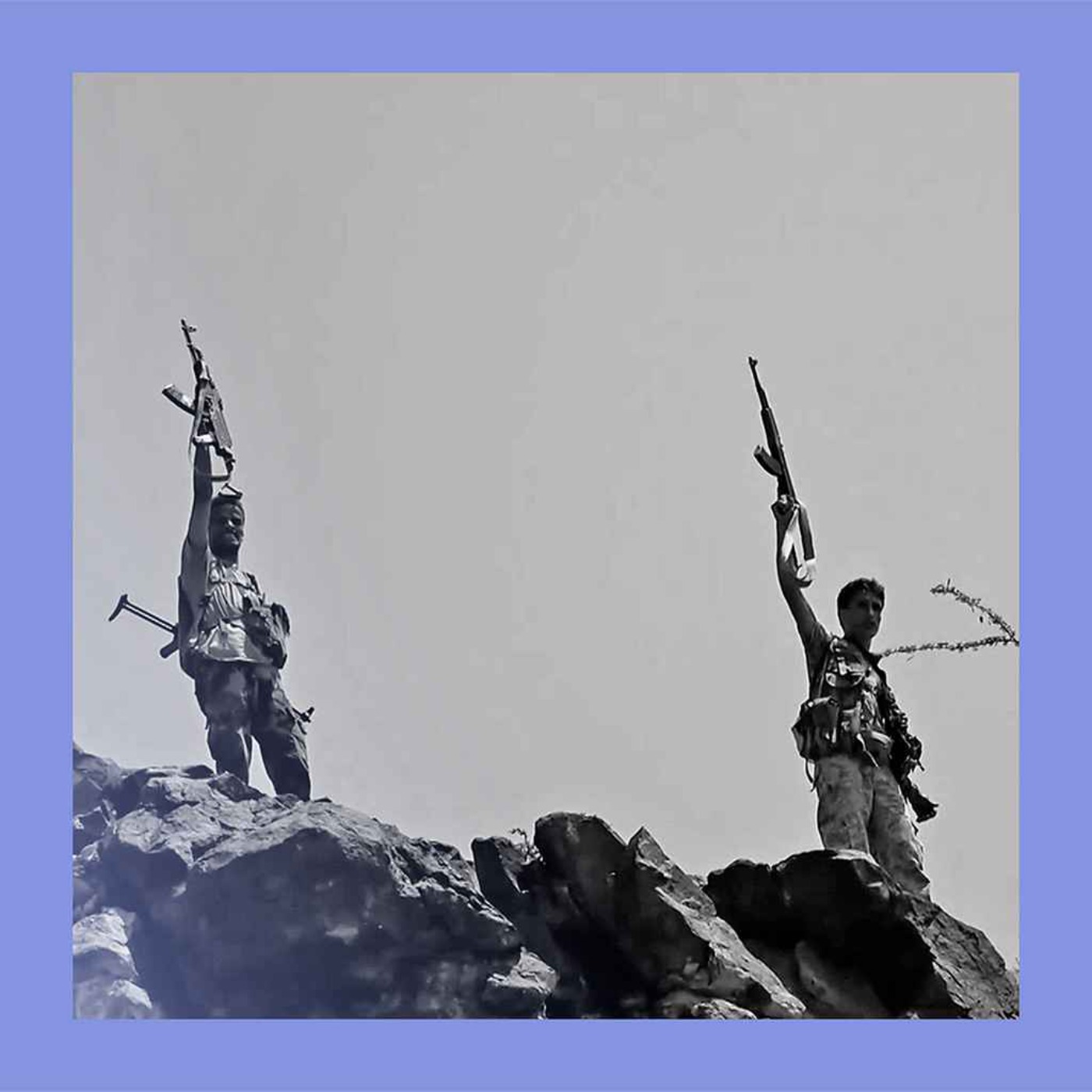
2:32The conflict between Saudi Arabia and Yemeni rebels has been dragging on for years. This weekend, that war came home, as an emblem and hub of Saudi international ambition came under attack. There have been at least four attacks on Riyadh's airport in the past week. The one on Saturday was the deadliest attack in more than a decade in Saudi Arabia, and then another one followed on Sunday. Greg Karlstrom, our Middle East correspondent, is currently in Riyadh. It comes at a bad time for the Saudis, right as they are preparing to host a number of big events, including their flagship investment conference.
3:12And it raises questions both about their ability to defend the country and also the future of the long-running Saudi war in Yemen. Greg, just remind us of the context here. Who are the Houthis and what is the state of this conflict? The Houthis are an Iranian-backed militia in Yemen. They seized control of a big part of that country back in 2014. And the following year, the Saudis led a coalition that invaded Yemen. The goal was to push the Houthis back to reclaim the territory that they had seized. And that effort was largely unsuccessful. The war dragged on for about seven years until the ceasefire in 2022.
3:56That froze the front lines and they've remained more or less as they were. But since February, when America and Israel went to war with Iran, that wider war has made the ceasefire in Yemen start to look unsustainable by the summer. it was clear that both the Houthis, with Iranian support, and the Saudi-backed forces were preparing for another round of fighting. The Houthis in September launched an offensive. They seized a large chunk of territory along Yemen's southwestern coast, and the Saudis began a counter-offensive earlier this month. But progress has been slow, and so it seems as if, for all the talk on both sides about preparing for a major offensive, things have quickly bogged down in a stalemate on the ground.
4:37These attacks on Riyadh's airport then are a significant escalation of that stalemate. They are. The Houthis regularly attacked Saudi Arabia during the previous round of fighting from 2015 to 2022. It's clear their capabilities have improved. They have a larger drone arsenal, they have bigger and more accurate ballistic missiles, and they've acquired many of these weapons with Iranian support. And so we've seen those weapons used over the past couple of months. There have been attacks on energy infrastructure. They've fired at oil refineries and other facilities owned by Saudi Aramco, the state-run oil company.
5:13And then they have also made a particular target of airports. For three weeks now, they have been shooting at the airport in Riyadh. There was an attack on September 20th where they hit a fuel tank. An attack on Thursday killed three people, including a pilot, and destroyed a plane belonging to Saudia, which is one of the state-owned carriers, they promised more attacks to come on the airport. So because of that, foreign airlines cancelled hundreds of flights, and yet Saudi authorities kept the airport open, which is a decision that's come in for some criticism now. It looks reckless to many people here in Riyadh, where I am at the moment.
5:47And so that's what led to this mass casualty attack on Saturday. And why the focus on the airports? I think partly because the Houthis realise this is a very sensitive time for the Saudis. On On Sunday, the kingdom began hosting the World Petroleum Congress, which is a major event for the oil industry. It was supposed to draw executives from big energy companies, several of whom either cancelled or were unable to get here to Riyadh because there are simply no flights. And then in about two weeks, they're meant to go forward with the Future Investment Initiative, which is more commonly known as Davos in the Desert.
6:23It's a flashy annual investment conference sponsored by the crown prince. It draws a who's who of global finance. And so the Saudis obviously are keen to go ahead with it. They want to make a show of our economic plans are going ahead and we're attracting foreign investment and canceling that event because the airport is under missile fire would be an embarrassment. But if they do go forward, it's unclear how many executives and ministers are actually going to show up or even how they might get here if they want to come. They can't fly into Riyadh at the moment. The airport in Dhammam, which is about a four-hour drive to the east, has also been targeted by the Houthis.
6:59So it's just very, very difficult. Forget safety. It's very, very difficult to get to Riyadh at the moment. War obviously takes a toll on the populations on both sides. How is it affecting each of them? The war for Yemen has been absolutely devastating. It's been more than a decade now. It has pushed the vast majority of the population into poverty. Something like two-thirds of Yemenis depend on international aid to survive because the economy has been wrecked. The country cannot produce enough food to feed itself. There were cholera outbreaks earlier in the war. It's an absolutely horrific situation in Yemen, none of which really seems to bother the Houthis.
7:37This is a group that is not terribly interested in governance. They're a militia that really is just interested in taking control of the country. And so what we've seen is in areas that they do control, they impose enormous taxes and fees and essentially extort money from a desperate population to keep funding their war machine. So the Saudis can continue bombing, they can continue immiserating Yemen, but I don't think it's actually going to deter the Houthis from continuing the war. Whereas for Saudi Arabia, the government feels it has a lot more to lose. They are in the middle of Vision 2030, this effort to diversify their economy away from oil.
8:13It was already struggling prior to this war, prior to the war in Iran. There were parts of it that they had to scale back because they weren't going well. And so there's a real worry in the kingdom now that if this war with the Houthis becomes a prolonged conflict, if their airports and their energy facilities are attacked regularly, it's going to completely derail what they are trying to do with economic diversification. And so even though you hear some very hawkish talk from some politicians in Saudi Arabia, certainly from state-backed commentators about how they're going to go all the way in Yemen and evict the Houthis from power, when I've spoken to people who've met recently with the Saudi crown prince and other top Saudi leaders, they're hearing a very different message that the kingdom recognizes that a long war may not be in its interests.
8:57So what happens next for Saudi Arabia? How might it respond? I think in the short term, they have two choices, neither of which from their perspective are good ones. The first is you continue fighting and you try to round up international support to help you with that war. They've invoked a mutual defense pact that they have with Turkey and Pakistan. Pakistan has sent a limited number of troops to Saudi Arabia, but they've been clear that those troops are not going to be involved in Yemen itself. They're meant to defend Saudi only. Britain has sent a bit of aerial refueling help. France has promised to help secure the key oil port on the Red Sea.
9:34And they're also talking still with the Americans about the possibility of American strikes in Yemen, although Donald Trump has several times now refused to go along with that request. But I don't think any of this help they're getting from abroad is really going to prove decisive in the war with the Houthis. ultimately what they need is better allies in Yemen. And their partners, the militias that work with them in Yemen are disorganized. They work at cross purposes. They're not very well trained in many cases. And so I think the war will be a struggle this time as it was the last time around for Saudi Arabia, which leaves them with another option, which is try to make a deal with the Houthis, try to go back to the ceasefire that was in effect for much of the past four years.
10:16The problem is twofold. First, the Houthis are going to have high demands. They want economic benefits. They will want the Saudis to stop blockading Yemeni airspace. And then it's also a question for some Yemenis about whether the Houthis even want to negotiate right now or whether they think they have the upper hand and they're just going to keep pressing their military advantage because they know the longer this goes on, the more they can get out of the Saudis. And so that's where the kingdom finds itself. Either continue a war that may be unsuccessful or try to negotiate a deal that will be very unpalatable.
10:47There's no good option here for Saudi Arabia. Greg, thank you very much. Thank you, Rosie.
11:20Thank you. million more mortgage-eligible people. So all the banks win, but so do all the franks. The lenders and the borrowers, the Lindas and the Olivers. When you build credit scores the right way, everybody wins. That's the power of VantageScore. Get started at VantageScore.com. Therapy's biggest impact doesn't show up in some dramatic breakthrough. It shows up in the smallest moments. You bite your tongue instead of escalating. You put your phone down instead of firing off that text. You say what you actually mean instead of what would hurt someone else the most. Nobody applauds those moments, but they quietly change your life.
12:02That's what growing feels like, and that's exactly what Grow Therapy is here for. Grow is therapy that works, covered by insurance. Sessions average$21 with insurance, and some pay as little as$0 depending on their plan. There are no subscriptions, no long-term commitments. You just pay per session. Grow connects you with thousands of high-quality licensed therapists across the U.S., offering both virtual and in-person sessions, nights and weekends. You can search by what matters, like insurance, specialty, identity, or availability. And you can book a therapy session in minutes and begin in as little as two days, not the national 48-day average.
12:41See if you could pay as little as$0 for therapy in seconds at growtherapy.com slash ACAST. That's growtherapy.com slash ACAST. growtherapy.com slash ACAST. Availability and coverage vary by state and insurance plan.
13:06Some say the second China shock is looming, but it's already here. European Commission President Ursula von der Leyen issued a warning recently in her annual State of the Union address. Our trade deficit with China is now 1 billion euros a day. It has reached a tipping point. The European Union's industrial complex is under strain, from high energy costs, cheap imports, and geopolitical turmoil. This is unsustainable. Five European carmakers have already issued profit warnings this year. All of that sounds pretty alarming. But is this anxiety really warranted? If you look across the landscape of European industry, I think there are some reasons to be hopeful.
13:56Guy Scriven is our global business writer. There's plenty of damage, but I think that's confined to a handful of sectors. Parts of the industry are really doing just fine. And those which are under threat are kind of adapting to their new reality. OK, so let's make this more concrete. What is it that European producers are really worrying about? So there are two big issues. The first is energy prices. Energy prices in Europe have for a long time been structurally higher than those that you get in America and in China. And that's partly because America and China have more natural resources or increasingly in China's case, more renewable energy as well.
14:39That price difference has been kind of exacerbated in the last five years or so by wars in Ukraine and more recently war in Iran as well. And that's pushed European energy prices even higher. And this is a pain for European businesses because it makes things more expensive to produce. So that's one of the big worries. And the other one is China. Explain exactly the China threat. Well, so for a long time, China's had a very well-developed industrial policy which encourages Chinese companies to make lots of things that the government sees as strategically important. And so that's everything from kind of electric vehicles to pieces of robotic arms which get put into factories or even kind of rolls of steel.
15:26And this enormous kind of supply of various goods has recently met a falling domestic demand in China. And that has left the Chinese companies with their only option, which is really to export this stuff to the rest of the world. An added complication here is that Donald Trump's tariffs against importing goods from China to America mean that Europe is really the only big consumer market for Chinese businesses to export to. And that has meant that a kind of a flow of goods from China have ended up in Europe. And that is part of the reason why you see the trade surplus between the EU and China has almost doubled since 2019 and is now at record highs of around$420 billion.
16:19Give me an example of the sorts of industry this is affecting. The big one is the car industry. And so, for instance, you will see a lot more Chinese brands turn up in European cities. BYD is a big one. You'll probably see a lot of that. At the same time, you're actually seeing probably fewer and fewer European brands, such as Volkswagen or Citroën, turn up in Chinese cities, partly because of demand there, partly because Chinese cars are cheaper. And particularly with electric vehicles, the technology is more advanced than what the Europeans can do. So this is a big headache for European car producers.
17:01China used to be a kind of a big profit pool for them, but now it's a big source of competition. Production of cars in the EU has fallen by almost 20 % against its pre-COVID levels. And this is a massive concern because the auto industry in Europe directly and indirectly through its supply chain provides about 6 % of the jobs in the EU. And so policymakers are fretting about this and wondering what to do. Taken in aggregate then, how big an impact is this actually having on Europe's economy? So there is pain, but the pain is highly concentrated. If you look at the fall in manufacturing employment in the last few years, there's been a slight decline over the EU as a whole, but about four-fifths of that has occurred just in Germany.
17:48And if you think of this at a sector level, you see the same thing. So the car industry, the chemicals industries are being hard hit. But other industries such as pharmaceuticals, electronics, aerospace are doing really well. Another factor of this is that a lot of the imports from China are actually intermediate goods. So think of a robotic arm that goes into a factory. And because they're getting cheaper and more plentiful, that is actually helping some European producers lower their costs. And the artificial intelligence boom is helping demand too. Lots of European producers make things which go into data centres, and so they're benefiting from that tailwind as well.
18:32Presumably, companies are trying to adapt to this new circumstance. Yeah, you're seeing companies across Europe adapt in all sorts of ways. You're seeing many more companies putting in energy efficiency measures or installing local renewable power to try to cut their energy costs. And so, for instance, you're seeing a surge in the last kind of four years in European companies investing in Spain, where energy prices are much lower than the rest of the continent because they have plenty of renewable energy there. At the same time, you're also seeing companies doing more financial hedging so that the risk of a spike in energy prices is lowered as well.
19:10And the other big strategy companies are pursuing is that they're trying to sell more services along with the pieces of equipment or machinery that they make. And that means that there's another revenue stream for the company and often quite a high margin one because it's much cheaper to make software than to make physical things. Guy, you also mentioned AI. What effect might that have? AI is obviously a huge talking point on the continent at the moment. There is kind of an idea of that Europe's industrial base will be able to really boost production and make itself more efficient using huge amounts of AI.
19:48So this would be things like putting AI in factories to make them work better or make the robots on production lines talk to each other in a more efficient way. And that helps make the factory produce more stuff. This is one of the big hopes for Europe when it comes to AI. And Ursula von der Leyen has asked the chairman of Siemens, which is a big German industrial firm, to write a report on how factories can make the best use of this technology. So there's certainly potential there for Europe. I feel like we've been heralding the potential demise of European industry for a really long time. Where do you think this is all going to land?
20:27Yes, I think that Europe is still in the process of two transitions. One is towards a kind of more service-led economy. So if you look at countries like Germany, there's a high level of manufacturing than you'd expect for a country that is that rich. So I think some of this is a slow de-industrialisation, which is a kind of natural process which all rich countries go through, and that will slowly play out in Europe. And then there's another transition happening where the old energy base of fossil fuels is being replaced by renewable energy. And that's happening in Europe as well, I think. And so I think this is just another phase of European industry reinventing itself.
21:09And probably the industry in Europe in five or 10 years will look quite different from the one of today and the one we knew a decade ago. Guy, thank you very much. Thanks, Rosie.
21:40Beware of a man whose writing sways like a reed in the wind, Confucius supposedly warned. The ancient philosopher would have been rather suspicious of many literary giants. Caitlin Talbot is a culture correspondent.
22:00Leo Tolstoy's handwriting was messy with a severe slant. Ernest Hemingway's script sloped drunkenly down the page, no matter how little he'd actually drunk. This autumn, as pupils return to classrooms, the question of whether and in which style they should learn to write by hand is being debated. You'd think such questions were obsolete in an age of iPads. But of all things, cursive is Mejia Comeback.
22:40This school year, Pennsylvania and New Jersey joined Texas, California, Florida and others in mandating the teaching of cursive in schools. Canadian and Argentine provinces have reinstated it or started teaching it at younger grades. Britain is also looking to improve its handwriting instruction. Italy and Sweden are moving away from tablets and screens to using books and handwritten notes. In France, educators often teach ornate cursive script. And in Vietnam, handwriting and calligraphy classes are surging in popularity. But why is cursive back in vogue? Many advocates cite science. One study from the Norwegian University of Science and Technology compared the brain activity of children and young adults when they were writing in cursive, drawing and typing.
23:28It found that handwriting and drawing light up areas of the brain associated with learning and memory. Other studies have shown that cursive has other benefits, including boosting reading skills and spelling. Inviscate. I-N-V-I-S. Yet few have compared cursive or joint handwriting and print or unjoined. Some scholars are sceptical that cursive is much better. But it's not all about studies and statistics. Cursive's comeback is also about culture.
24:06People fret about the young being unable to decipher their ancestors' writing or historical documents written in cursive. Indeed, through handwriting you can trace history.
24:20Cursives suited the writing tools of the past. Scribes perfected pleasing penmanship so that documents were easy to read. Their quills lasted longer and they got fewer ink blots if they didn't raise them from the page between letters. Later, when metal tips and ballpoint pens became popular, simpler handwriting styles proliferated. Most scripts taught in schools today evolved from cursive styles in Italy, Germany, France and Britain. With colonialism, sloping English round hands spread to America and India, France's decorative Ecouture Ronde went to parts of South America and Asia.
25:03The Nazis even meddled with note-taking. In 1941, Hitler banned Gothic-looking German cursive and instead ordered schoolchildren to write in simpler Latin script. The reason for the ban, scholars reckon, was to make communication uniform and more legible across occupied Europe.
25:25Today's educators have more modern concerns.
25:33Many are keen to ensure that children don't outsource their writing to AI. Writing and thinking are inseparable. The act of grasping a pen helps us organise information and come up with ideas. To cursive or not may be a question of taste, but handwriting wholesale should not be written off.
26:06That's all for this episode of The Intelligence. We'll see you back here tomorrow.
26:13Thank you.
26:42those moments is a professional who needed to get it right and did. Thompson Reuters builds the technology that sharpens insights, speeds up decision-making, and powers the outcomes that matter. So when professionals act, the impact is felt by everyone. Be a changemaker. Visit tr.com forward slash changemakers. This message comes from Betterment. Dan Egan, VP of Behavioral Finance and Investing, explains the benefits of automated dividend reinvestment. If you've ever invested, you probably have noticed that occasionally you get dividends. Your stock pays it out. You get that as cash in your account, and it usually sits there until you remember that you're supposed to buy something else with it to reinvest it back.
27:23Automated dividend reinvestment makes that effortless and seamless. When dividends come into your account, we automatically reinvest available dividends, not necessarily into where they came from, but into whatever would serve your portfolio best. So automated dividend reinvestment keeps you invested and keeps your portfolio in balance. Learn more about Betterment's dividend reinvestment methodology and other helpful investment tools at Betterment.com. Investing involves risk, performance not guaranteed.
This weekend, Yemeni rebels struck Saudi Arabia’s international airport in the deadliest attack on a Gulf Arab country since the Iran war began in February. Our correspondent reports from Riyadh. How European manufacturers are adjusting to high energy prices and war. And the revival of writing by hand.
Guests and host:
Topics covered:
Listen to what matters most, from global politics and business to science and technology—subscribe to The Economist.
Hosted on Acast. See acast.com/privacy for more information.