Ask ChatGPT


 Economist Podcasts
16 Oct 2026 · 28m · 11 chapters
The episode of The Intelligence (Economist) asks whether AI and scientists can coexist as AI accelerates discovery. It argues that AI is already advancing science (e.g., DNA/genome prediction and design, protein/drug design, fusion plasma control, and better weather forecasting) and that the “mathpocalypse” shows rapid scaling in math via reinforcement learning plus large language models.
AI proofs can be verified through formalization, but mathematicians worry about “unelegant” solutions, counterexamples, and a shift from human-like proof “journeys” to machine outputs. Notable examples include AlphaFold and the “mathpocalypse” flood of proofs (Scott Aronson’s term). The episode also covers snack science: brands are chasing novel texture/mouthfeel, driven by “peak flavour,” GLP-1 appetite changes, and social-media “crunch”/ASMR trends.
Alok Jha (science editor; host of Babbage) and Alex Hearn (AI writer).
Written by AI. May contain mistakes.
Discussion on how AI is revolutionizing various scientific fields.
“stuff that makes mathematicians just snap their pencils.”
Exploration of AI's capabilities in biology, drug design, and weather forecasting.
“Alec, I'd like to start with you just to kind of give us a snapshot of where things stand today, how good AI is at various kinds of science already, and maybe how good it could get.”
Understanding the term 'mathpocalypse' and its implications for mathematicians.
“And that seems to have been the key to unlock massive gains in areas like maths, computer science, and potentially theoretical physics and other numbery heavy domains.”
Mathematicians' fears regarding AI's unconventional solutions and their implications.
“And they demonstrated that this is a change that is going to scale.”
Discussion on the verification of AI-generated proofs and its importance.
“I don't think anyone is seriously alleging that anything other than perhaps a small handful of these might be misformalized.”
How AI is reshaping the scientific process and the role of human researchers.
“I mean, theoretical physicists have wondered which string theory is right for a long time.”
Exploring the potential future where AI drives scientific discoveries.
“I think it would be bad if the pace at which we can develop new cures for cancer is held back by the need for humans to come up with every single part of the research development pipeline for that.”
Final thoughts on AI's advancements and upcoming discussions on related topics.
Discussion on the evolution of snack textures and consumer preferences.
“Okay, Avantika, what have you got for me this morning?”
Narrative exploring the intricacies of nature and philosophical reflections.
“When it hatched, its wings, which were meant to be wonderfully brown and velvety with a blue eye spot, had a varnish on them which was to dry and then would enable the wings to spread and the moth to fly.”
Explore the profound observations of Annie Dillard and her unique insights into nature.
“letting go and just looking generally around.”

Get the gist, explore an idea or ask about something said.
 Claude
On Economist Podcasts, what are the key points of this episode?
Searching your listeningAutomatic transcript. May contain errors.
0:00With the Spark Cash Plus card from Capital One, you earn unlimited 2 % cash back on every purchase and you get big purchasing power so your business can spend more and earn more. Stephen, Brandon and Bruno, the business owners of SandCloud, reinvested their 2 % cash back to help build the company's retail presence. Capital One, what's in your wallet? Find out more at CapitalOne.com slash Spark Cash Plus. Terms apply. If you felt stuck trying to lose weight, you're not alone. Enter Weight Loss by HERS. It's designed to support you in reaching your goals. And HERS now offers access to an affordable range of FDA-approved GLP-1 medications, including the WeGovi pill and the WeGovi pen.
0:40Even better, with a range of affordable GLP-1 options, HERS makes it simple to find an approach that fits your needs and your budget. If eligible, you'll get a treatment plan personalized to you and unlimited dosage changes as needed. It's weight loss designed to work with your life. Ready to reach your goals? Visit 4hers.com slash eligible to get personalized, affordable care that gets you. That's F-O-R-H-E-R-S dot com slash eligible. 4hers.com slash eligible. Weight loss by HERS is not available in all 50 states. Wegovi is the registered trademark of Novo Nordisk AS. To get started and learn more, including important safety information, Wegovi clinical study information and restrictions.
1:21Visit ForHers.com.
1:28The Economist.
1:35Rosie Blau: Hello and welcome to The Intelligence from The Economist. I'm Rosie Braw. And I'm Jason Palmer.
1:44Rosie Blau: Today on the show, why snacks are getting crunchier, and a warning that this item includes some disgusting sounds, and celebrating the life of writer Annie Dillard.
1:59Rosie Blau: First up, though.
2:30stuff that makes mathematicians just snap their pencils. But it's more than that. It seems like the beginning of a far wider story about what happens when massively improving AI crashes into the scientific enterprise as a whole.
2:50Who better to look at that than Alok Jha, our science editor and host of our sister show Babbage, and Alex Hearn, our AI writer. Alex, Alec, hello. Hello. Hi, Jason. Alec, I'd like to start with you just to kind of give us a snapshot of where things stand today, how good AI is at various kinds of science already, and maybe how good it could get.
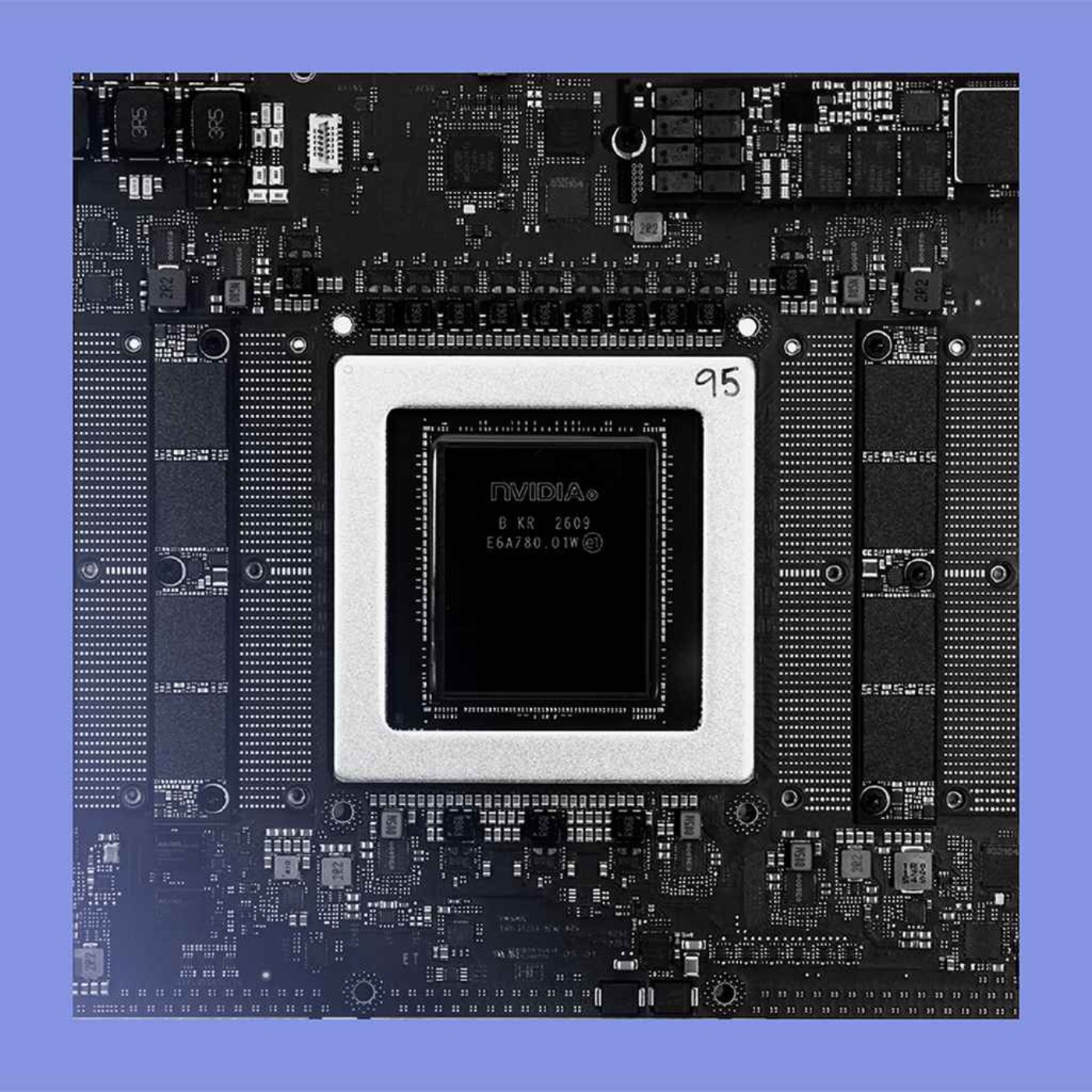
3:12Alok Jha: Well, Jason, how long have you got? I mean, the applications are many. In biology, all sorts of things are possible. I mean, AI models can read DNA in the way that the chat whilst you and I use read text so they can predict genomes, they can build genomes from scratch, but also just understand how genetics works. We'll be able to design proteins using specialised models in academic labs. You can design better drugs. There's also things like controlling how the plasma of a fusion experiment works, so potentially bringing that power closer. One very practical application of AI in science has been to make weather forecasting much, much, much better.
3:53Alex Hern: And of course, it's also been advancing the speed of AI science. AI scientists are what underpins this whole fear of recursive self-improvement, the idea that AI will get better at making AI ad infinitum until it takes over everything.
4:08Alok Jha: And it's happened quite quickly because there's just lots of good data in science. And so you can apply these models to them.
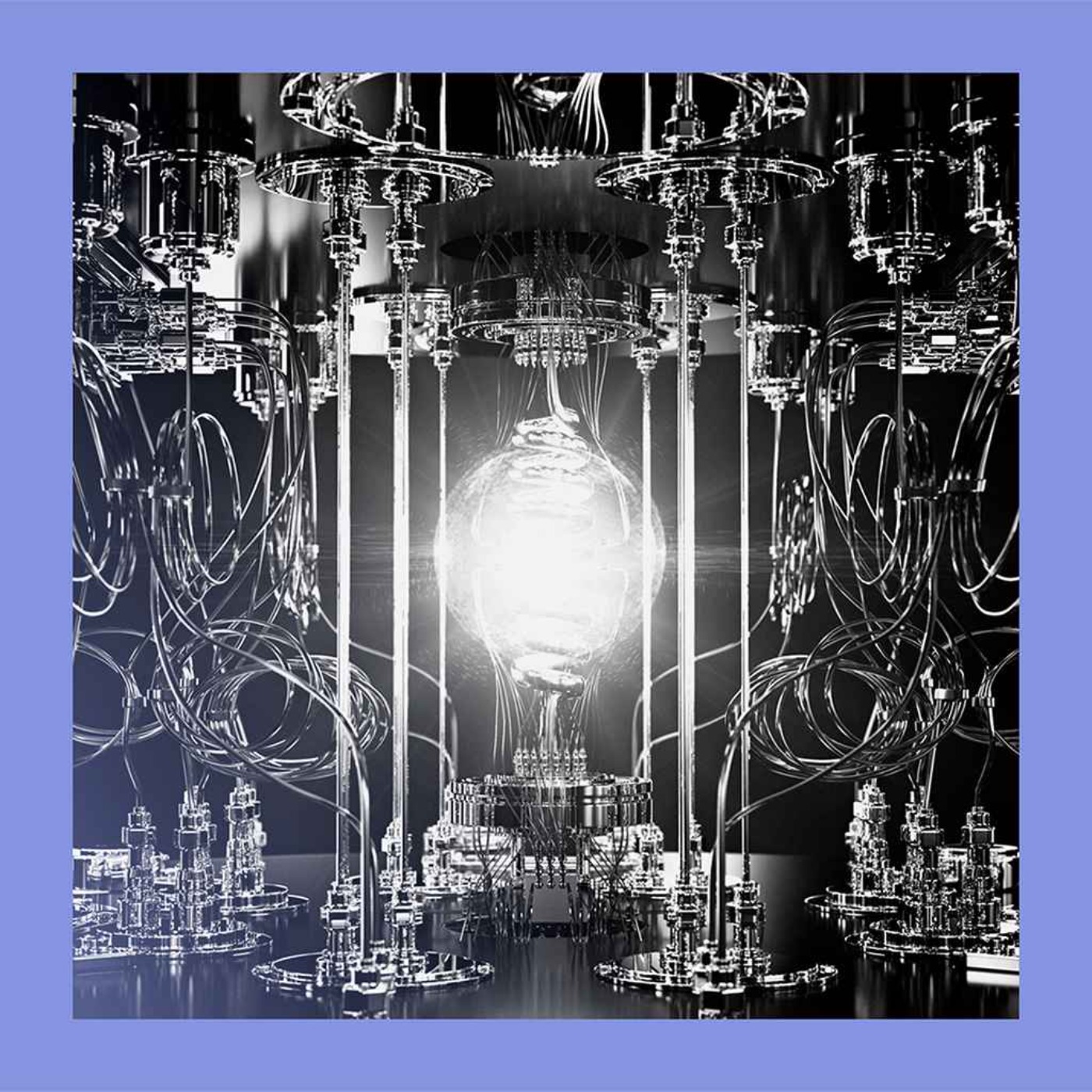
4:15Alex Hern: One of the things that's quite dizzying about the speed of progress over the last few months is that the approach that is behind a lot of these improvements is barely a year old. The frontier of AI science right now relies on marrying two AI techniques, reinforcement learning, which is what won Demis Hassabis' Nobel Prize. That's how AlphaFold, this protein database, was born. And then you have large language models. And then what you've had recently is the merger of both of them, training large language models to get better and better through the same reinforcement learning approach. And that seems to have been the key to unlock massive gains in areas like maths, computer science, and potentially theoretical physics and other numbery heavy domains.
5:01Yeah, I mean, it sounds like the applications are pretty much all of the boundaries of science, but let's focus on the mathematics, what's happened and what mathematicians are saying about it.
5:12Alex Hern: What happened has been called the mathpocalypse by computer scientist Scott Aronson anyway. I am drowning in apocalypses.
5:21Alok Jha: Or mathocalypse, if you read his word. We call it the mathpocalypse. I'm not sure if it's an American English thing.
5:26Alex Hern: The mathpocalypse was this dump of hundreds of proofs across hundreds of papers to a huge array of unsolved problems in mathematics, and it freaked out mathematicians, probably more than OpenAI's previous big success, solving one of the millennium problems, one of the hardest unsolved problems in maths, because the sheer quantity of this showed not only that AI was capable of doing work that no human had previously been able to do, but that it could do that in a blink of an eye. And they demonstrated that this is a change that is going to scale. And the thing about maths is there's a solid chance that it's just the bellwether here.
6:06Alex Hern: Lots and lots of other areas of science have the same fundamental principles and appear amenable to the same AI-powered speed-ups. But a cynical view on why the mathematicians are freaking out is simply that they recognize they're now kind of out of a job.
6:21Alok Jha: Yeah, it's a familiar sounding complaint, isn't it? But also, you've got to understand why mathematicians are so annoyed. It's not about the answers. It's about the journey to the answers. Mathematics is this subject where you're sort of exploring a landscape or climbing a mountain, and the journey up the mountain is as important as getting to the peak. The OpenAI release was like someone taking a helicopter and just landing you on the mountaintop.
6:44Alex Hern: One of the other things that seems particularly unsettling to a lot of mathematicians I've heard from is that as the AI reaches superhuman ability, its answers stop resembling those of human mathematicians. The results that OpenAI has put out in this mathpocalypse appear overwhelmingly focused on unelegant solutions and counterexamples rather than proofs, right? So where a mathematician will often talk about finding the harmony inherent in maths, a lot of what OpenAI has found are places where the actual answer is ugly as sin. It's not elegant. It's not beautiful.
7:22Alok Jha: A lot of the papers published in the Mathpocalypse, obviously mathematicians are trying to read them now to understand what's going on inside them. And they're struggling. A lot of it doesn't make any sense. Well, wait a minute. Perhaps the question here is, are these proofs good proofs? Are they true? Is it real? I mean, aren't hallucinations an issue in this as in everything else? Well, so in mathematics, what you can do is, as well as having your paper that publishes the proof that you've got, you can formalise it. And what that means is you get a certificate and it means that it's true. It's a particular subject, mathematics, in which way you can do that.
7:55Alok Jha: It's built around this verification.
7:57Alex Hern: I don't think anyone is seriously alleging that anything other than perhaps a small handful of these might be misformalized. That formalization, that verification, is inherent to why maths is the domino to fall here as well. The reason why we're seeing so much progress in maths and comparatively little progress in, let's say, cellular biology, is because it doesn't have access to oodles of cells.
8:22Alok Jha: Not yet it doesn't anyway.
8:23Alex Hern: Yeah, exactly. That requires a wet lab and physical space. Robotic scientists, these are all things that people are experimenting with, and everyone wants to be the AI lab to have the first sort of end-to-end physical science pipeline. So explain the earlier suggestion then that this is the first domino to fall. If mathematics is such a particular case, one that is so amenable to this kind of computation, why should the rest of science be quaking in its boots?
8:50Alok Jha: Well, a lot of science uses mathematics, right? So physics especially, computational biology, all the sciences that have lots of information in them. Math is the sort of root of all of that. So there is a way in for AI to sort of tackle all of those problems too. And in many respects, that's quite useful. I mean, if you can really solve lots of mathematical problems, you'll be able to understand lots more science. I mean, theoretical physicists have wondered which string theory is right for a long time. And that's essentially, in large part, a mathematical problem. There's a world you could imagine now that scientific output first comes from the machines and then humans scramble around to try to understand it and derive some value for it.
9:30That is like completely turning upside down the way science is done. But maybe we get to the same to really work the analogy peaks.
9:38Alok Jha: Yeah, I think that just because science has been done in the way it's been done so far, doesn't mean that that's the way that it's going to have to be done forever. So yes, it does sound like a slightly less glamorous thing to just be checking results and understanding rather than discovering. But for humanity, you're still getting, hopefully, the same good outputs. I mean, that's perhaps just the way that things have to change. But that kind of rethinking, being so different from how things are done, really has long range effects, right? That is how every academic university science department works and what the incentives look like.
10:13That is a lot to unpick.
10:15Alex Hern: Yeah. And I mean, you can start to see some of the shapes of this thinking, even in the work coming out from the big labs, right? Google put out a paper in mid-October looking at how you would have to reshape sort of the entire scientific economy to deal with a world of AI-focused science. What you want is you want the smartest scientists in the world to be able to direct the smartest machines in the world and then get the credit for having done so. And that's a really thorny problem, not really of science, right, but of, in classic economist style, of market design and allocation of scarce resources.
10:50Alok Jha: In this AI-driven science economy, the discoveries will just come thick and fast. The value will be in the checking. The value and the kudos will move to which one of these discoveries actually is useful to us. Look, I want a more prominent role for humans in all this as this happens. And I'm thinking about, for example, Gen.A.I. writing and how it can do very plausible writing, but it's not going to come up with the idea for and beautifully execute the great American novel. Is there an analogy with science in the sense that there's still room for the sort of spark of creativity, the moment that Einstein had the critical thought about relativity, that kind of thing, if the computers are really just crunching through what they've been told and just being very good at numbers?
11:35One optimistic take is no, that the machines
11:40Alex Hern: are not held back by the speed of human input and that we do get proper unrelenting acceleration in the capacity of Earth, maybe not humankind, but at least Earth, to discover and improve our lot. I think it would be bad if the pace at which we can develop new cures for cancer is held back by the need for humans to come up with every single part of the research development pipeline for that. I would like some of that to be automated faster, thank you. It would be really nice. And I think that's an optimistic vision of the future.
12:20Alok Jha: So some of it though, Alex, not all of it. I think that as soon as you let machines do everything end to end, it might be attractive. But then the ability of an LLM to be able to do that means it could probably do all sorts of other things without you asking or being involved to the point where we're just very used to LLMs solving all sorts of problems that we haven't even thought of. I think that's dangerous.
12:42Alex Hern: Everything comes back to AI safety in the end. the world that I think we should be preparing for as a possibility is one where the pace of discoveries just persistently outpaces the pace of understanding. That doesn't seem implausible to me. And I think there is a somewhat difficult assumption underlying it all, right? Which is that all of maths, science and reality is comprehensible to humans. It may be that there are some problems that humans will never be able to understand, will never be able to get their heads around. and are we really saying we do not want solutions that are based on something else understanding that
13:17Alok Jha: we're going to get to a point where we're alexander the great as a species you know we look upon the world and there's a tear falling down the eyes because there are no more worlds left to conquer that's we solved everything there is a lot to chew through there gentlemen but i know that there's a lot more to come in particular on babbage our sister science show yeah we're going to have several episodes starting off with the mathpocalypse but also going into exactly where ai will be useful in biology and physics and all sorts of other places and and what this all means so yeah look out for that well for now alex alok thank you both very much for your time and for making my head spin thanks jason you're welcome thank you for having us
14:05Thank you.
14:35Rosie Blau: Insider, the Economist's editor-in-chief, Zannie Minton-Bedos, sat down with Alice Weidel at the Bundestag in Berlin to ask how she would govern if she became chancellor. Weidel has called for remigration, as she terms it, and criticizes Germany's support for Ukraine. So, as you can imagine, that made for a tough conversation. If you're a digital subscriber, Insider is already included in your subscription. And if you're listening free, you can watch extended clips via the link I've put in the show notes.
15:32bringing more people into the credit economy, like 5 million more mortgage-eligible people. So all the banks win, but so do all the francs, the lenders and the borrowers, the Lindas and the Olivers. When you build credit scores the right way, everybody wins. That's the power of VantageScore. Get started at VantageScore.com. Okay, real talk. Every time I open up my inbox, I've got this vision of the day I'm going to have. Deep work, big ideas, the project I keep meaning to start. Three hours vanish into replying to threads and hunting down a file someone sent last week. I've tried AI tools that promised to fix this.
16:09They didn't. They were just another tab I had to open, explain myself to, and abandon by Thursday. Superhuman is different. It's at your service, not after your job. It's already where you work, so I'm never starting from a blank tab. It's from the makers of Grammarly, living right inside of the tools I already use, like Gmail and Slack. When I'm drafting a message or making sense of a messy thread, it just helps. Like a thought partner that's already caught up. So we get to the hard part together. The problem was never too little time. It's that busy work crowds out the work that actually matters.
16:44Start streamlining your workflows with Superhuman. Try today at superhuman.com.
16:55Rosie Blau: Okay, Avantika, what have you got for me this morning? Right, I've got baked Wotsits Giants. They promise to be really cheesy. Oh, big bag. I actually love these. Mm-mm-mm. Very crunchy. Mm-hmm. What a nice breakfast. Now I've got what are called Wotsits. Crunchy. So this is like the amped up version.
17:27Rosie Blau: avantika chilcotti our global business writer tell me why we're talking about crisps this morning i've been going around big food firms getting into the really nerdy science of how they make their snacks more moreish and at the moment all of the focus is on texture okay so we've gone from crunch to texture? What are we really talking about here? So texture is how the food scientists at these firms talk about it. I've been to Mars, Mondelez. So texture, it comes out in the sound. So as I eat those Watsits, it's a pretty full on sensorial experience hearing myself eat. Plus there's a bit that they call mouthfeel and they spend a lot of time thinking about mouthfeel.
18:11How does this feel in my mouth? And in the case of both those Watsits, afterwards I've got this coating of cheese is still there actually it stays with you so there's different elements of texture and that's a good thing well so right now what we're finding is that consumers really want to try things with novel textures in part that is the fact that as much as we could play with taste we've played with it so even these crisps you've got really cheesy written all over them you've already had amped up spicy snacks you've had amped up sweet snacks they've done as much as they could One analyst put it to me, you've reached peak flavour.
18:49And so texture is the next way to give people a bit of novelty.
18:52Rosie Blau: And are we just talking about crisps here or is it other snacks as well? It's really anything you can inject texture to, so including chocolate bars. When I went to Mondelez, one thing that I got to try, which was also very Moorish, is the dairy milk biscoff. It's part of this line they've got called the And More line. They've shoved bits of biscuit, bits of biscuit cream into a regular milk chocolate bar. And what I find really interesting about this is that it's not easy to do. I mean, there's so much to think about. So if you put biscuit next to anything that's basically got lots of water in it, it will go soggy.
19:29So you've got to engineer this bar to have a layer of something fatty, which in the case of the Biscoff is this Biscoff spread. That almost is sort of a protection for that biscuit layer. because what would be worse than cracking open a dairy milk Biscoff and it being a bit soggy in the middle?
19:46Rosie Blau: Avantika, forgive me for being a cynic. I obviously admire your pursuit of the science of snacking, but is this really new? I mean, Wotsits, Maltesers, Crunchies, there are lots of crunchy, textured snacks that we've been eating for a long time. Yeah, I had the same scepticism. And actually, you look at the survey data, I often look at a group called Mintel, and they say in the last two years demand for texture indulgent snacks has gone up 28 % in America. So in part this is people seeking out snacks for their texture characteristics. As you're saying this might just be a marketing thing. To be honest those first Watsits, the traditional ones, they were pretty crunchy but if you just pop the name crunchy on it people are more likely to grab it.
20:33So in part this is a marketing effort but in part it really is an R &D effort.
20:38Rosie Blau: And why that demand for texture? So this is super interesting. It tells you so much about consumers and how they're changing. So as with everything in food, the first thing is the rise in GLP-1s. We're starting to get some research on these slimming drugs, the effects they have. Obviously, they suppress your appetite. But I've been looking at Reddit forums and people say it changes how things taste as well. People, when they reach for a snack, all the analysts I speak who say they're asking, is it worth it? So they're looking for more of a sensorial experience. If something very sweet or very filling can be very overwhelming, perhaps texture is another way to draw them in.
21:16I mean, the other big factor is social media. Yum, yum. Finally trying the chili lime chips from Chipotle. I was joking earlier, you can hear me eat. It's not very pleasant for most people, but especially amongst Gen Z, there's a trend for these videos. and it's down to basically these influencers showing you snacks and they're amping up the sound. And some people, it's called ASMR, they find very satisfying and calming sound. And, you know, ASMR is so popular, there's this tag called Crunch Talk. And across social media, the data is that that racked up 1.5 billion views last year. And honestly, in these videos, they will amp up the volume on, you know, this, the sound of the packaging.
22:02They'll do this for a bit. They will spend ages cracking open that crisps packet or that chocolate bar so you can hear the wrapper. So there's a whole social media trend around it which basically is free advertising for these firms.
22:15Rosie Blau: Get the chili lime chips. I think, to be honest, the biggest thing is that we've reached peak taste. If people want to try something new, there's not that many more flavours of crisps to be had. Here's another thing you can add to the mix. Avantika, thank you very much for breakfast. Good to talk to you. Thanks for having me, Rosie.
22:59Ann Wroe: it hatched. When it hatched, its wings, which were meant to be wonderfully brown and velvety with a blue eye spot, had a varnish on them which was to dry and then would enable the wings to spread and the moth to fly. But the mason jar was too small, so when the moth tried to open its wings, it couldn't do so.
23:28Ann Wroe: When they released it in the street, it could only walk, and she was the only one who still watched it as it staggered down the pavement. In her mind, for the rest of her life, it was still going on. She was often the sole observer of things. At her kitchen window, once she saw a goldfinch shaking a thistle head, until down, bright tassels of it floated all over the landscape. She noticed a leaf curled inside a bud, ready to unloose itself. She watched frogs leaping up through filaments of blue-green algae, croaking with joy as they surfaced, surfacing into awareness, as she put it. but she also watched another frog stocked still by the side of a pond in Tinker Creek while a giant water bug liquidised its insides and sipped its life away.
24:38Ann Wroe: Tinker Creek was the place where her best-selling book was written. It caused a sensation when it was published in 1974 and in 1975 it won a Pulitzer Prize.
24:57Tinker Creek itself was just half a mile or so from her house in Roanoke, Virginia.
25:04Ann Wroe: She would walk down there in the mornings and just observe every possible thing. But she didn't want fame for doing this. She was terrified of all the fussing. and when the press started descending on her because they found her very attractive as she was as well as a good writer, she fled away with her writer husband to the other side of the country, to Washington State and the islands off the coast. And from these exiles she produced an extraordinary body of work. Essays, newspaper articles, journalism, two novels, an autobiography, books of philosophy. She liked to work in very small spaces, usually cabins or shacks, and she deliberately put her desk facing away from the view.
26:06Ann Wroe: All this intricate observation of nature, though, was not just for nature's sake. It was also because she was trying to answer a huge overall question. Why does there have to be destruction after creation? Why is creation so prodigal at the same time, so wasteful? Why all this abundance and all this care if what you have created, the larvae or the nymphs or the leaves, everything just falls to pieces or is eaten afterwards. What was the creator thinking, if there was a creator? Maybe, if she could believe in one, he was just so powerful that he exalted in his own power and created freely and wildly, and you couldn't find a rational reason for it.
27:05Ann Wroe: There was a very strange incident she recorded in the middle of her book The Writing Life, which was a spontaneous combustion, it seemed, of an old Smith Corona typewriter. It wasn't connected to power, so there was no explanation for it. She just felt the house shake, and when she went upstairs, the whole device was exploding in fire and ash. It might have been a cigarette that she had carelessly put out, but she didn't say so. In her telling, there was just suddenly fire. And all through her writing and observing life, too, there was fire. She would see it if she tried to witness things, not in a completely devoted way, just looking at the object for hours, but letting go and just looking generally around.
28:06Ann Wroe: and then it was that she began to see fire. She saw at sunset light rolling along the ridges of the mountains like a fireball. She saw the grass as holy fire and she also saw the backyard cedar tree suddenly become a tree of lights. When that happened, she felt she was lifted like a resounding bell. But again, she was the only one who noticed these strange eruptions and occasions of fire. It was only her witnessing all these beauties, just as she had been the only one, to witness the moth trying to walk down the street or the frog being attacked by the giant water bug. All this observation was necessary to understand what the creator was doing.
29:12Ann Wroe: That was what she was for.
29:18Rosie Blau: Anne Rowe on Annie Dillard, who has died aged 81.
29:35Rosie Blau: Can you design a town to make everyone happy? That's the question in tomorrow's episode of The Weekend Intelligence, when we visit Celebration, a city dreamed up by Walt Disney. The idea was to combine the traditional charm of old town life with progressive schooling and cutting edge technology. Tomorrow, we visit Celebration on its 30th anniversary to find out whether Disney's utopia really spread delight. You'll need to be a subscriber. And that's all for this episode of The Intelligence. The show's editors are Chris Impey and Jack Gill. Our deputy editor is Sarah Larniuk. And our sound designer is Will Rowe.
30:14Rosie Blau: With additional help this week from Mark Burrows. Our senior producers are Henrietta McFarlane, Emily Elias and Alizé Jean-Baptiste. Our senior development producer is Rory Galloway. And our senior creative producer is William Warren. Our producer is Anne Hanna. And our assistant producer is Kunal Patel. with extra production help this week from Katie Peterson. We'll all see you back here for the Weekend Intelligence tomorrow. All right.
31:08can spend more and earn more. Steven, Brandon, and Bruno, the business owners of SandCloud, reinvested their 2 % cash back to help build the company's retail presence. Capital One, what's in your wallet? Find out more at capitalone.com slash spark cash plus. Terms apply. State fair food is getting smaller and pricier. We'll have room for fried cookies. Okay, you never overspend on food. What's your deal? What's his deal? He went to Metro and got$450 in value on the new Samsung Galaxy A37 And no activation fees. Free phone? Oh, sign me up. Get that more for your money feeling. Only on Metro by T-Mobile.
31:46Bring your number and activate a$40 period plan. 450 based on device discount waived activation fee. Not available if with Metro or T-Mobile in the past 180 days.
In recent weeks, AI has solved hundreds of previously unanswered maths problems. Our correspondents ask if machines can do the same in other areas of science and what role human researchers may play. Why crisps are getting chunkier and chocolate chewier. And celebrating the life and work of author Annie Dillard.
Watch extended clips from Insider here.
Guests and host:
Topics covered:
Listen to what matters most, from global politics and business to science and technology—subscribe to The Economist.
Hosted on Acast. See acast.com/privacy for more information.