 Economist Podcasts
30 Oct 2026 · 28m

 Add vo to ChatGPT or Claude to ask about everything you hear
vo listened to this episode to put together the overview and transcript, so there may be the odd mistake.
The episode is a multi-part “Intelligence” roundup. First, it revisits Narendra Modi’s 25-year rise (“silver jubilee”), arguing his dominance began in Gujarat after the 2001 earthquake, when he tightened control over police/judiciary and allied with major industrialists (notably Gautam Adani), projecting both Hindu hardline and “development” leadership.
Modi fused religious nationalism with politics, made life worse for Muslims, and pushed major reforms like the Ram Temple consecration; he modernized via digitisation, tax reforms, and fiscal stability (about 6% average growth) but failed to deliver enough manufacturing/high-skilled jobs, contributing to youth protests. A central flashpoint is India’s voter-roll verification (SIR), criticized as opaque and centralized, with people removed without proper appeal—seen as an authoritarian streak. Next, it covers US midterms: Daniela Raz discusses surprising races (New Hampshire Senate: Chris Pappas vs John Sununu; Minnesota Senate: Peggy Flanagan amid a pandemic child-feeding fraud scandal; Virginia 2nd rematch: Elaine Luria vs Jen Kiggans; Idaho abortion Proposition 1; California Insurance Commissioner: Jane Kim vs Ben Allen).
Tom Sasse (Economist South Asia bureau chief) and Daniela Raz (US correspondent). Also referenced: Anne Rowe (Economist obituaries editor) on Cicely Gemmel/“Chips,” Churchill’s last personal secretary.
0:00Looking for a new way to take control of your health? If diet, exercise, and willpower alone haven't gotten you where you want to be, visit orderlymeds.com to learn about GLP-1 treatment options. With a convenient virtual process, you can connect with licensed medical providers from home and see if treatment may be appropriate for you. Visit orderlymeds.com today. That's orderlymeds.com. Compounded medications are not FDA approved. Eligibility determined by a licensed provider. Individual results may vary. See website for details. This Economist podcast is sponsored by Apollo.io. In a fast-moving business environment, finding the right people to connect with takes time.
0:40For sales teams, prospecting, outreach, and follow-up can mean juggling multiple tools and workflows. Apollo.io brings these activities together in one platform, helping sales teams find the right buyers and spend less time on scattered, manual tasks and more time building relationships. Apollo.io. Sign up for free at Apollo.io.
1:03The Economist.
1:10Ọrẹ Ogunbiyi: Hello, and welcome to The Intelligence from The Economist. I'm Ore Ogumbi. And I'm Jason Palmer.
1:20Ọrẹ Ogunbiyi: Today on the show, a whistle-stop tour through some of the most surprising midterms races. And who was Churchill's last personal secretary?
1:34But first...
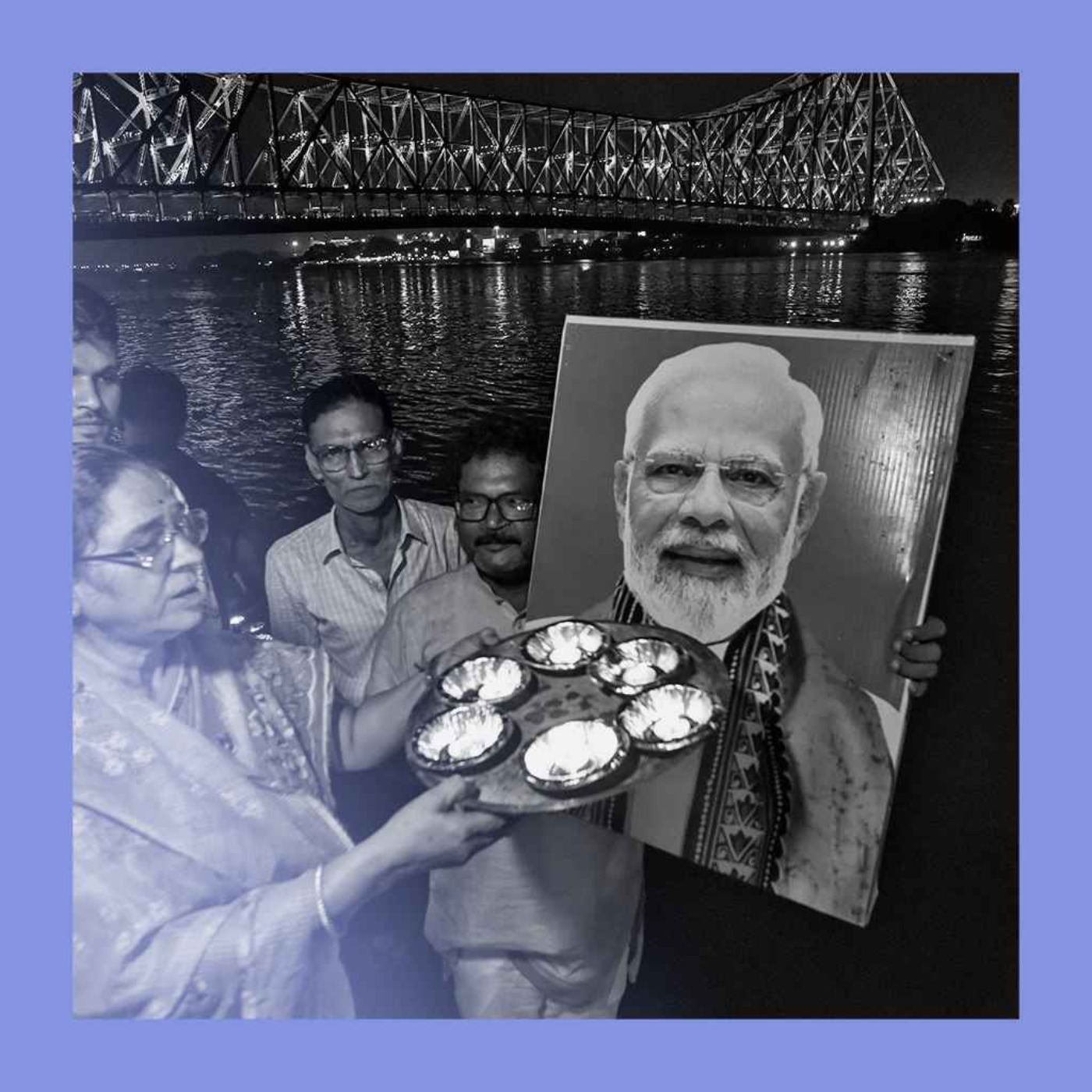
1:43Ọrẹ Ogunbiyi: Earlier this month, Narendra Modi celebrated his silver jubilee, marking 25 years since he arrived on the political stage, first as Chief Minister of Gujarat State and then as India's Prime Minister. The anniversary was meant to be a moment of celebration with exhibitions and tree planting events across the country. But things didn't quite go to plan. The month has also brought him much less auspicious gatherings. Narendra Modi finds himself facing his most difficult crisis yet. Tom Sasse is our South Asia bureau chief. We've seen these huge protests led by the youth, and it's really challenging Modi in two ways.
2:29One is to challenge his governing model, and lots of people are saying that he's no longer meeting their aspirations. And then secondly, it's also challenging his strong-arm tactics. So these protesters are saying he's not fairly supervising the electoral commission and taking away the rights of people to vote.
2:50Ọrẹ Ogunbiyi: Tom, before we get into what's happening today, let's go back to the beginning. How did Modi become such a dominant leader? So to understand Modi, you do really need to go back to Gujarat in 2001.
3:09So in 2001, just after Gujarat has experienced this terrible earthquake, Modi is installed as the chief minister to try and respond to this earthquake and to try and get the BJP back on track. So in Gujarat, he really seized control of the state. He wielded a tight grip over the police, the judiciary, over party cadre. He forged this very tight alliance with big industrialists, most of all Gautam Adani. and he projected this image of himself both as a Hindu hardliner, and that was partly in response to these really awful religious riots that happened early on his watch, but he also projected himself as a development man who could help and lift up the ordinary Indian.
3:55And that was the model that he then would go on to apply as prime minister.
3:59Ọrẹ Ogunbiyi: Now, Modi isn't the first strong dominant leader that India's seen. What makes his style of leadership different? Yes, I think we've seen two other leaders before India's history who you could compare in the level of dominance they had. The first was Jawaharlal Nehru, India's first prime minister. He led the country for 17 years. He established it as this secular democracy with a socialist economic vision, but he had a very clear sort of liberal agenda. The second was his daughter, Indira Gandhi, who led the country between the 60s and the 1980s. She was more of a populist figure and was a little bit of an authoritarian, notably in the 70s when she cancelled democracy.
4:43Now Modi is more in the Indira Gandhi mold in the sense that he's had a very tight grip on his party over institutions. And he's built this very powerful personality cult. But actually, fundamentally, he's taken India in a very different direction to these two figures. He's taken it away from this sort of liberal, secular idea and towards a much more majoritarian, much more Hindu kind of country.
5:11Ọrẹ Ogunbiyi: Tell me a bit more about that, the ways in which Modi has impacted Indian society. So I think this will be one of his most profound legacies, really. So he's fused his version of religious nationalism with politics. He wants to make India a more avowedly Hindu country. and bluntly he's made it a worse country to be a Muslim and India has 200 million Muslims. They make up almost a seventh of the population. So he's pushed through some really big important reforms that Hindu nationalist ideologues have wanted for many decades, most notably consecrating the new Ram Temple on the site where a mosque was torn down.
5:55But under Modi, the other change is that you have this sort of permissiveness around anti-Muslim rhetoric, attacks by vigilante groups, which are often met with impunity. The thing is, this part of his agenda is really still pretty popular. Opposition parties haven't succeeded in pushing back against it. In fact, they've tried to adopt the sort of soft version of parts of it. But it's not clear, while it's been electorally powerful, it's not clear that if voters still don't feel as good about the economy, whether it will continue to have the same results for him.
6:31Ọrẹ Ogunbiyi: And on the economy, what has Modi done to transform India? So on some things, he's been pretty successful. I think you could call him a moderniser more than a reformer. I think his biggest success is pushing through a massive digitisation. So India has huge use of a digital payment system. It's become a much more online country under Modi. He's pushed through the big tax reforms that have knitted the country together into a single market. He's also led a pretty stable government. So they've kept inflation under control. He's been pretty fiscally prudent. And that's not always been the case in India.
7:10And with all of that, he's managed to achieve a growth rate of around 6 % a year, if you average it out over his tenure. So that's solid. Where he's been less successful is bringing about a kind of economic transformation in India. So he wanted to push it to be much more of a manufacturing place, to have much more high-skilled and formal jobs. That's not really happened. The share of workers who are in agriculture has stayed pretty much the same. Wage growth has stalled. And there's a real lack of good jobs that are available to graduates. And that's why so many of them are frustrated and out on the streets.
7:47Ọrẹ Ogunbiyi: And you mentioned these widespread youth-led protests. We've covered this uprising of the so-called cockroach Janta Party movement before. How healthy is India's democracy under Modi? So this is really where the current battle is. And the controversy is all over this voter verification process called the Special Intensive Revision, or SIR. are. It's a fairly normal and routine process to clean up the voter rolls to deal with duplications or where people have died or they've moved to a different state. The problem is the way the Modi government has approached it. It's been opaque. It's been highly centralized.
8:26And all of that has meant you've had lots of people who have been removed and they haven't had a proper chance to appeal. And this has led to a lot of mistrust, actually, among the opposition parties and the young people. I don't think it's right to say, as some of the protests do, that Modi has sort of stolen elections. But what I think this is a good example of, it's actually a very extreme example of Modi's sort of authoritarian streak. So we've seen it with the media, with the judiciary, with a bunch of other independent institutions. And now we've seen it with the Electoral Commission. And he's been able to do all of that partly because he is this popular strongman.
9:04He can bend these institutions to his will. What's really interesting about this moment in India is if his popularity is starting to fade a bit, maybe those institutions are going to be able to push back.
9:16Ọrẹ Ogunbiyi: And Tom, after these protests, what is Modi likely to do next? In the short run, I would expect more of the same. He will continue to try and wield his power in a very top-down way, divide and weaken the opposition. He's been arresting some of the protest leaders. He'll try and stall the momentum of this movement. But all of these underlying grievances, education, jobs, wages, the ways handling electoral institutions, all of those are going to remain. So what I think we're going to see is next spring, there will be a big set of elections, most importantly in Uttar Pradesh, which is the biggest state of India.
9:54That will be a good indicator of how powerful Modi is and how popular he is. And then I think we'll see this battle really playing out between this quite disparate but unified opposition movement and Modi over the next few years, right up until a national election in 2029.
10:13Ọrẹ Ogunbiyi: Thanks, Tom. Thanks, Ari.
10:18Ọrẹ Ogunbiyi: To hear the full story of how Narendra Modi rose through the ranks of the BJP and came to remake India, listen to our series, The Modi Raj. You'll find it in the podcast section of The Economist app.
10:57copying, pasting, and trying to write the perfect prompt, and too little time doing the work I actually needed to get done. Then I found Superhuman Go from the makers of Grammarly. It works where you already work, reading a dense thread, highlight it, ask Go for the key points, and you're already up to speed. Not sure what you owe after those meetings, ask what was decided, and get clear action items. Before you hit send, Go flags a number or name that doesn't add up. It's right there when you need it, on the side of your browser, without switching apps or losing your place. And you're always the one in control.
11:31Try Superhuman Go from the makers of Grammarly. Find out more at superhuman.com. Looking for a new way to take control of your health? If diet, exercise, and willpower alone haven't gotten you where you want to be, visit orderlymeds.com to learn about GLP-1 treatment options. With a convenient virtual process, you can connect with licensed medical providers from home and see if treatment may be appropriate for you. Visit orderlymeds.com today. That's orderlymeds.com. Compounded medications are not FDA approved. Eligibility determined by a licensed provider. Individual results may vary. See website for details.
12:17All week long, we've been taking you around America, looking at some of the most interesting and telling campaigns for the upcoming midterm elections. Texas, Alaska, Georgia, Kansas. It's been an epic road trip of political tensions. Seriously, if you haven't heard them yet, wind back in the feed and treat yourself. Today, we want to focus on a few of the races and ballot measures getting a bit less attention. Some contests and questions that our U.S. correspondent, Daniela Raz, reckons are revealing about America after these elections.
12:58Fall is in full swing here. It is decorative gourd season. There are pumpkins piled high on every single porch. I recently drove to Exeter, New Hampshire to attend a rally for Chris Pappas, who is the Democratic candidate for Senate in the state. New Hampshire is a state that Kamala Harris won in 2024 by a little under three points. And Pappas is ahead of his Republican opponent, John Sununu, by about six to seven points. So that is a much closer race than Democrats might have hoped for, given how favorable the national climate has been for Democrats. Instead, Democrats are still treating this race as one they have to compete and work hard to win.
13:44They've brought in a lot of big names to campaign alongside him. Kamala Harris was in New Hampshire. And then when I visited, so was Gavin Newsom, who is California's famously combative governor. Thank you. By the way, we should have just ended the whole thing right there with Chris. That was a hell of a speech, Chris. New Hampshire is not the only place where Democrats are having to work harder than expected. There's a similar story that's unfolding in Minnesota. So in a year when the political winds are in the Democrats' favor in general, these are two races that kind of buck that trend. Well, why is that?
14:26What's going on in those two states? So in both states, you basically have a Republican candidate who is kind of a familiar face to local voters. So you've got John Sununu, who is a part of this political dynasty. His dad was governor. His brother was governor, too. And he himself has already won this Senate race previously. He served one term. So where does the—so they live one ton over, the Sununu House? Yeah. Well, well, wait a minute.
14:56Ann Wroe: Daddy Sununu lives there. I can show you his house if you want to see it. And then Chris Sununu, who was the governor, lives in Newfield, which is the next town over. And I can show you his house if you want to get into a kayak because he lives on the on the river. Minnesota, I would say, is an even more surprising case than New Hampshire. And that is because the race is also much closer than you'd expect. But that state was at the center of some of the biggest, loudest protests against ICE during Donald Trump's second term. The Democratic candidate is Peggy Flanagan, who's the state's lieutenant governor.
15:37And the thing she's confronting is that she's having to deal with a pretty big fraud scandal that unfolded while she was part of the state's governing Democratic administration. There are instances where prosecutors allege that people stole hundreds of millions of dollars from a program that was meant to feed children during the pandemic. That doesn't mean that Flanagan personally ran the program or was responsible for the fraud, but Republicans are really using it to argue that the state's Democratic government failed to catch that scheme, and it's becoming a major issue in the campaign. Okay, understood.
16:17We've come to you to get some insight into the races that we have not yet been watching, but probably should be. So give me some more. Yeah, so these are not headline Senate races, but they are ones that me and my colleagues are watching closely. You've got Virginia's 2nd Congressional District. There's an abortion ballot measure in Idaho. And then you also have the California Insurance Commissioner's race. Okay, let's start with the Virginia 2nd Congressional District. What's going on there? So Virginia's 2nd District is a swing seat. It has a lot of military families, a lot of veterans. And by virtue of being in Virginia, it also has a lot of federal workers.
16:57It is an interesting race, I think, because the voters there have felt personally and directly two big parts of the story of Trump's second term. The first year of his second term was really defined by doge cuts and disruptions to the federal workforce. And the second year was really defined by the war in Iran. Then a district that has a lot of federal workers and military families can give you a pretty strong read on how those parts of the Trump agenda might be playing out. Another reason that this race is really interesting is because it's essentially an exact rematch of 2024. The Republican incumbent Jen Kiggins beat the Democrat Elaine Luria in 2024.
17:41And now Luria is vying for that seat again, but with this very, very different political backdrop. And you mentioned an abortion measure, something we haven't heard a whole lot about this cycle. But why have you chosen Idaho to focus on that? Basically because abortion is actually on the ballot there, even if it hasn't been getting much attention across the country. So Idaho has one of the strictest abortion bans in the country. The law is so strict that doctors have needed to facilitate patients getting airlifted to neighboring states for what is routine medical care during pregnancy emergencies.
18:16and voters are basically going to decide whether to change the law through Proposition 1, which is a ballot measure that aims to establish a right to reproductive freedom, including abortion access up to fetal viability and in certain medical emergencies. So it's a question of do people in a deeply conservative state think that things have gone too far on abortion? And more broadly, does abortion still move voters at all in a way that it did four years ago? And lastly, and I got to say, this sounds like quite a narrow focus here, but what's up with the California Insurance Commissioner? So this is a perfect example of an under-the-radar race that actually has very, very big consequences for a whole lot of people.
19:08California is a massive state, and its home insurance market is in a lot of trouble. Insurers have pulled back from really big parts of the state, especially places that are exposed to wildfires. They have an insurance commissioner who is elected, and the two candidates that we have have very, very different ideas about what to do next and how to move forward. So you've got Jane Kim, who's proposing a state-run single-payer disaster insurance program. The idea here being that you could pool the risk across the state, use the program to cover people who can't get insurance elsewhere. Obviously, there's some very big unanswered questions from this plan, like how much would it cost?
19:52How would it be funded? And would the state even be able to pay out when a major disaster hits it? The other candidate is Ben Allen, a state senator who represents the area around the Pacific Palisades. And you'll recall that was a neighborhood that was really devastated by the fires in 2025. His approach is more to try to get private insurers writing policies again while improving fire prevention and all sorts of details in claims handling. What we can say for sure is that there's no easy option here. Ensuring in a fire-prone area is probably going to need to cost more. And if you are interested in reading more about this big conundrum, my colleague Aaron Braun, who's our West Coast correspondent, has written some really interesting articles about it.
20:38Okay, and before we let you go, as someone who's clearly looked at a lot of these down-ballot questions, initiatives, votes, tell me a couple that maybe surprised you along the way. Yeah, so I think that is one of the entertaining things about American elections. People are not obviously just voting for Congress, governor. Depending on where you live, you could also be voting for school boards, all sorts of ballot measures, sometimes even the coroner. We vote for that in many counties across the country. And then in Idaho, voters will be giving their view on what the state gun should be. State gun, I got to say, never heard of that one before.
21:16For now, Daniela, thank you very much for your time. We'll come back perhaps and talk about the outcomes of all of these, guns included. Yeah, definitely. Thank you for having me. Our midterms fever is far from breaking. When the vote happens next Tuesday, The Economist will be bringing you the latest online, in the app, and of course, right here as the picture becomes clear. It's not just Americans who will feel it when, in one way or another, the balance of power shifts. These elections have implications for the wider world, something that my most senior-ish colleagues over on Economist Insider talked about in this week's episode.
21:52If you're a subscriber, find Insider on our website or in the app. If you're not yet a subscriber, you naughty thing, you can find extended clips via the link we'll put in the show notes.
22:21Ann Wroe: Cicely Gemmel, usually known as Chips, wondered why on earth Winston Churchill had painted her portrait.
22:30Ọrẹ Ogunbiyi: Anne Rowe is The Economist's obituaries editor.
22:34Ann Wroe: It was quite a strange portrait. She was sitting looking quite melancholy and with her hands sort of smudgy in her lap. and she wondered whether it was a present. One of the tasks he gave her to do as his personal secretary was to clean his paintbrushes, which were covered in oil paint. This was a dreadful task, and her hands would end up so rough and red that it was no wonder she was looking rather melancholy in the portrait. Still, she liked it, and she kept it for the rest of her life.
23:14Ann Wroe: She must have been sitting round rather idly when Churchill decided to paint her, she thought, but it was very difficult to be idle when you were working for him. There was always a huge amount to do. She joined his household at Chartwell in 1947, and she stayed there for four years until, in 1951, he won the election and became prime minister again. In 1947, he was leader of the opposition. But nonetheless, she found herself plunged at once into a very big job, which was to try to sort out his archive. And for months, most of the time alone, she worked and worked.
24:06Ann Wroe: he did do some extraordinary things for a start he often thought that he would get an idea and have to get his secretary to take it down when he was in the bath so she would be buzzed again and up she would go to the bathroom and of course stay outside the door she would just knock to say she was there, and she would hear all these bathroom noises going on the other side. And sometimes when she'd waited quite a long time, he would come out and not need her after all, because he'd forgotten what he'd meant to say. He was all in all a great procrastinator. He would take his time. She often thought back that she had never had such a time of laughter as when she'd worked at Chartwell.
24:57Ann Wroe: She and the other secretaries used to get quite a laugh out of Churchill himself and all his mannerisms and his strange little ways. For example, he liked to wear a striped siren suit, which they called his rumpers.
25:15Ann Wroe: She often thought she was the toughest of all the secretaries who might have applied for this job. She'd been born in Bangalore, where her father was a surveyor for the Indian Army. She'd gone to school at something called the New School, which was also known as Harrow-on-the-Hooly. Well, it was in Calcutta. When she came to London, when she was a teenager, she enrolled at Mrs. Hoster's Secretarial School, which was in Chelsea, and was there for the education of already well-educated young women. And they were taught shorthand and typing and all kinds of general good manners. Her nickname, Chips, came from an uncle who'd been killed in the Great War.
26:08And she thought all this background of hers would probably amuse Churchill and impress him
26:15Ann Wroe: so that when she came for her first interview, she was actually quite emboldened to take his hand, but she was quickly told by her superior there that this really wasn't the right thing to do and she must leave Mr Churchill in peace.
26:34Ann Wroe: So she was very careful after that, but she did wonder quite often what he made of her, whether he really knew her. He didn't call any of the secretaries by their names. Everyone was Miss. So he chatted out Miss if he wanted someone to come and help him. And she was also reduced often to doing rather menial jobs. One was the washing of the paintbrushes. Another was taking Churchill's poodle Rufus out for his last little piddle late at night because he slept in his master's bedroom and couldn't disturb him. So she would find herself walking the dog and having to stay out there until he really did do it.
27:19Ann Wroe: She felt she ought to. On other occasions, Churchill would get into bed, but he would lie there with his feet sticking out, and she realized that he wanted her to take his socks off. And she thought she would be very glad to do that. she left his employ in 1951 because he had again become prime minister and she really didn't think she could cope with all that responsibility but she went to Downing Street and there she became personal secretary to Clementine Churchill's wife that was a job that consisted mostly of going shopping for her and chasing people up about lunch dates. So fairly soon, in 1953, she decamped to New York and found she absolutely adored it, so she never bothered to come back for any length of time to England.
28:13Ann Wroe: Instead, she stayed in New York having a wonderful partying time at the jazz clubs, where she eventually met her partner who became her husband. She did secretarial work still for Life magazine and for Time Inc. And on one return to England, she had lunch at Chartwell again with Churchill, and that was his last meeting with her. He was by then really quite ancient and immersed in his own thoughts. But she sat beside him at the lunch and, after ignoring her for quite some time, he turned and looked at her very intently and said after a bit, Do I know you? Yes, she said, I used to work for you. How long for?
29:03Ann Wroe: Four years. Oh, he said, what a long time.
29:13Ọrẹ Ogunbiyi: Anne Rowe on Cicely Gemmell, who has died aged 97.
29:27Ọrẹ Ogunbiyi: That's all for this episode of The Intelligence. The show's editors are Chris Impey and Jack Gill. Our deputy editor is Sarah Larnia, and our sound designer is Will Rowe. Our senior producers are Henrietta McFarlane, Emily Elias and Alizé Jean-Baptiste. Our senior creative producer is William Warren and our senior development producer is Rory Galloway. Our producer is Anne Hanna and our assistant producer is Kunal Patel, with extra production help this week from Eleanor Sly. We'll all see you back here tomorrow for the Weekend Intelligence. This week, we hear the story of the last hospital in the besieged Sudanese city of El Fasha and the medics who refused to abandon it.
We examine the record of the man at the helm of India’s government. As protests pose a fresh threat, where will he take the country next? From New Hampshire to Virginia, our American-midterms series takes you to the races you might be missing. And the life of Winston Churchill’s last personal secretary.
Guests and host:
Topics covered:
Listen to what matters most, from global politics and business to science and technology—subscribe to The Economist.
Hosted on Acast. See acast.com/privacy for more information.
Scan the code with your iPhone camera
Listen in the app.