
In short
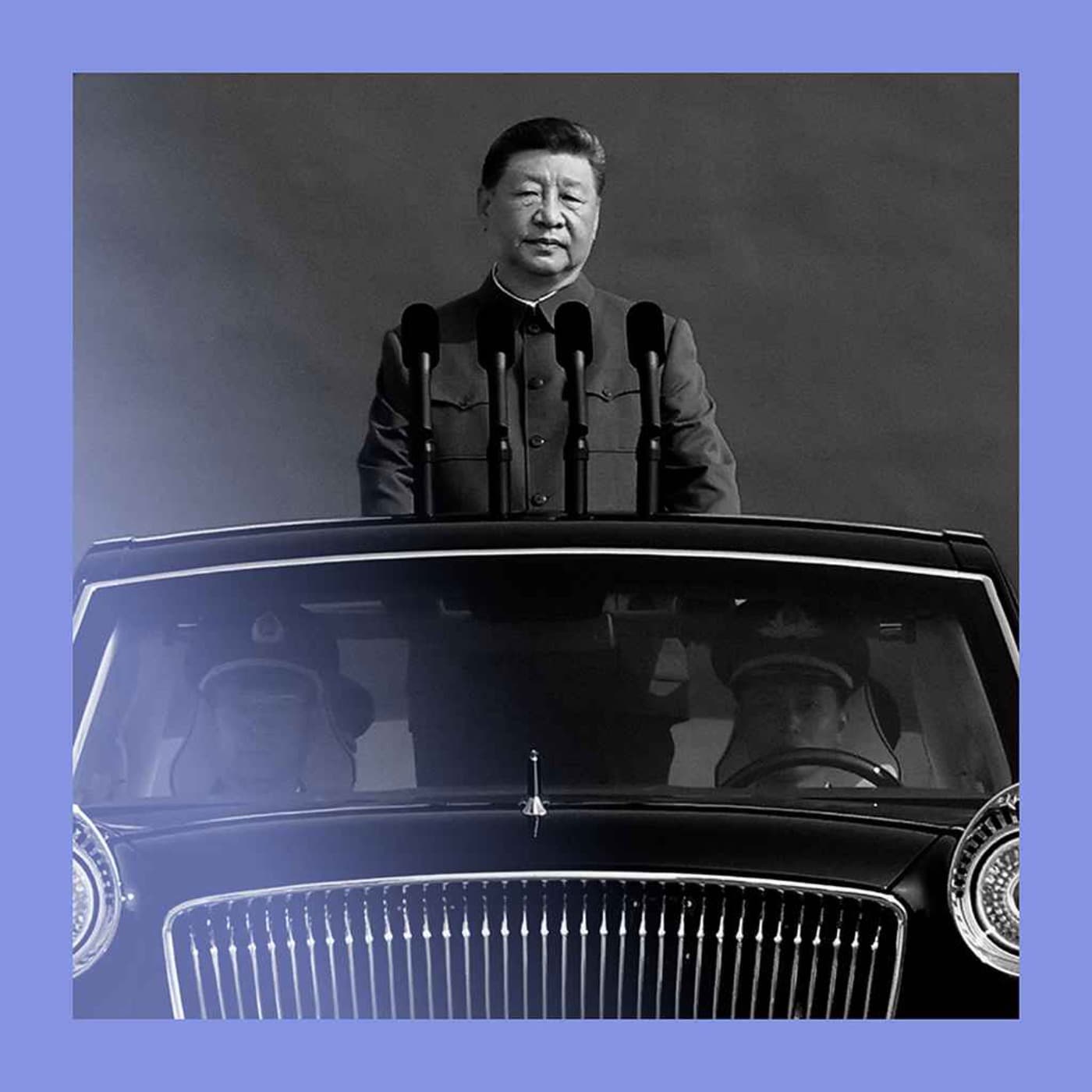
China’s “week of grand diplomacy” and military signaling, plus how generative AI is changing cybercrime, and a UK strip-club policy/industry report.
Guests
Patrick Fowles, The Economist foreign editor; Anjani Trevedi, global business correspondent; Rohan Banerjee, Britain writer for The Economist. (Also mentioned: correspondent Sarah Wu.)
Key claims
China’s tightly choreographed Tiananmen parade (Xi with Putin and Kim Jong-un) and Shanghai Cooperation Organization summit show “convening power” beyond autocracies, while rhetoric against “law of the jungle” outpaces nuanced substance (trade stability, sanctions opposition; limited defense cooperation). Generative AI enables cheaper, faster malware creation and more personalized phishing; generative AI fraud could cost firms $40B+ by 2027. Strip clubs face reputational, cost-of-living, and online-porn pressures; Norwich council used a “nil cap” replacement policy.
Notable examples
ChatGPT-assisted malware code creation; Microsoft buying cybersecurity firms and CyberArk acquisition; Norwich’s Sugar and Spice visit; strip-club count in England/Wales dropping from ~500 to ~150.
Written by AI. May contain mistakes. Listen to the episode to check what was said.
Chapters
Tap a time to open that second in VOAI's Impact on Fraud
0:27 to 0:52
Exploration of how AI is aiding fraudsters.
“Backmarket, the leading global marketplace for refurbished tech.”
AI's Impact on Fraud
1:23 to 2:00
Exploration of how AI is aiding fraudsters.
“Artificial intelligence is making a lot of jobs easier and more productive.”
China's Grand Diplomacy
2:00 to 4:28
Discussion on a significant military parade in China and its implications.
“I'm standing in Tiananmen Square for the military parade celebrating the 80th anniversary of the end of World War II.”
Geopolitical Shifts
4:28 to 9:48
Analysis of China's diplomatic power and geopolitical reordering.
“and the signals it sends to the world in terms of where it stands as a military power and its diplomatic prowess.”
Geopolitical Shifts
10:04 to 10:34
Analysis of China's diplomatic power and geopolitical reordering.
“You'll need to be a subscriber to listen.”
Geopolitical Shifts
10:37 to 10:47
Analysis of China's diplomatic power and geopolitical reordering.
“The release of ChatGPT in 2022 was a turning point for criminals.”
AI in Cybercrime
10:47 to 14:00
Examination of AI's role in facilitating cyber attacks.
“Clever AI models meant they no longer had to spend big money on hiring hackers.”
Rising Cybersecurity Threats and Business Responses
14:00 to 16:48
Learn about the increasing cybersecurity threats and how businesses are adapting.
“As people see how far these phishing scams go and how far hackers get into networks and so on, I think there'll be bigger estimates around losses.”
The Complexity of Cybersecurity Challenges
16:48 to 17:18
Discover the challenges businesses face in maintaining cybersecurity amidst evolving threats.
“They're no longer these Nigerian Prince emails that we all joke about.”
Experiencing a Strip Club: Insights and Observations
17:40 to 22:38
Explore the dynamics of visiting a strip club and the diverse clientele it attracts.
“A strip club is quite an overwhelming experience.”
Show all 11 chapters
The State of Strip Clubs in the UK
22:38 to 23:24
Understand the evolving landscape of strip clubs in the UK and the regulatory challenges they face.
“If you're looking for something predictable and low friction over the long term, public markets may be a suitable option.”
Transcript
Automatic transcript. May contain errors.0:26This message comes from Jackson. Backmarket, the leading global marketplace for refurbished tech. When the kids need phones, laptops, or tablets for school, buying refurbished tech makes sense for families trying to save money without sacrificing quality. At Backmarket, tech costs up to 50 % less compared to new. All devices have been professionally refurbished and come with a one-year warranty and 30-day return policy. Start saving money. Visit Backmarket.com or the Backmarket app to shop now.
1:00The Economist
1:07Hello and welcome to The Intelligence from The Economist. I'm your host, Rosie Bloor. Every weekday, we provide a fresh perspective on the events shaping your world.
1:23Artificial intelligence is making a lot of jobs easier and more productive. Unfortunately, that also includes fraudsters. New technology is helping hackers attack more targets and in more dangerous ways. And British authorities are cracking down on strip clubs. That sounds to me like a good thing. But our correspondent who went to visit one in Norwich has other ideas.
2:00But first...
2:12I'm standing in Tiananmen Square for the military parade celebrating the 80th anniversary of the end of World War II. Sarah Wu is our China correspondent and has been tracking China's week of grand diplomacy. The sun is rising over Beijing and in a sign of how orchestrated this event is, we had to report around 2.30am for an event starting at 9.
2:46They've rehearsed this parade not just once, but three times, each time closing off main arteries from Saturday night to Sunday morning. Tanks have woken people up in the middle of the night as they rumbled past their apartment buildings and through trendy shopping districts. Schools, restaurants and offices near the parade route have been closed in the days leading up to the parade. President Xi walked into Tiananmen Square today, flanked by Vladimir Putin on his right and Kim Jong-un on his left. The level of control in this tightly choreographed affair was impressive. During the parade, soldiers marched in perfect lockstep, rows on rows of tanks and missiles proceeded in unison.
3:33It was surreal seeing Chang 'an Avenue in central Beijing lined with a dizzying array of China's cutting-edge weaponry. We kept seeing supersonic missile after nuclear missile. The journalists around me scrambled to jot down all the names of this seemingly endless supply of missiles. The sheer scale of the arsenal on display inspired awe and fear and perhaps convinced some of the foreign leaders present to consider making purchases.
4:17After months of preparing and weeks of tight control over Beijing's core, I think the Chinese leaders will be really happy with how today turned out and the signals it sends to the world in terms of where it stands as a military power and its diplomatic prowess. Following on from Sarah Wu in Beijing, I'm now joined by Patrick Fowles, The Economist's foreign editor. Patrick, the Chinese Communist Party loves nothing more than a giant set-piece military pageant. I was there myself for a similar extravaganza exactly 10 years ago and still have the commemorative rucksack to show. But this has been a really big diplomatic week for China, hasn't it?
5:00That's right. And the military parade's just part of it. There's been also a gathering of the Shanghai Cooperation Organization. And if you look in totality, there's an amazing array of world leaders who've turned up to China, both the autocratic grouping of countries around China, including Vladimir Putin, the leader of North Korea, the leader of Iran there. And most of those people are at the parade. But in addition, the startling thing has been a group of countries that have traditionally been more close to the West, including India, Vietnam, Turkey and Egypt. They're also in China at the moment and it shows the tremendous convening power that Xi Jinping appears to have in a world that's been blown into turmoil by Donald Trump.
5:46And Patrick, one of the things that we spoke about last week on the show was Modi's visit to China. How's that gone? Well, Modi's been there and really his presence is the main thing. You may have seen some of the images of him holding hands with Vladimir Putin and the three of them joined by Xi Jinping talking about the future of the world. So Modi's presence signals something big, which is India is warming up towards China and is incredibly angry about its treatment by the US, both on tariffs where Donald Trump's imposed a 50 % levy on India. That's extraordinarily high, even by his standards.
6:23And on Pakistan, where Trump has embraced its military ruler, signaling a shift in America's position from typically being either balanced or more pro-India. Patrick, these events are almost the definition of performative, but how much do they really represent a reordering of geopolitics around China? Well, the language being used this week by China and Xi Jinping is really very strong.
6:53It includes things like the world should never return to the law of the jungle, where small and weak countries will be bullied by major powers. So the rhetoric's all in. The substance is a bit more nuanced. I mean, on trade, there is absolutely no question that China is now, as Xi claims, the source of stability and prosperity in the world. It's the biggest trading partner of most of the countries attending and clearly has not been engaging in the kind of trade war and economic warfare that the Trump administration has. It's also the case there's more unanimity, I think, than ever around the critical question of sanctions and America's capacity and willingness to cut off countries from the global financial and tech system in order to get them to do what it wants.
7:41And there, I think there's a considerable level of unanimity about how unacceptable that is. Whether it's possible to build a way to circumvent America's sanctioned power quickly is another question. And what about in military terms? Well, there's certainly less agreement between the entire group of countries on defence and security. And indeed, some of the countries there, India notably, have recently been in skirmishes with China on their borders. So clearly there's no cooperation there at all. But there is a subset in China right now of countries, those autocratic regimes, where the degree of cooperation is going up.
8:23North Korea and Russia signed a set of deals last year, including more cooperation on space technology. And it's widely thought that China and Russia are now cooperating more than ever on military affairs. And one reason for that is in return for China's lavish support of the Russian economy, it's thought that the Kremlin is being forced to hand over the crown jewels of Russia's military technology base, particularly submarine propulsion and missile defence systems, things that it previously had held back on giving to China. So in military affairs, there's a smaller group of countries that cooperate, but the degree of cooperation is going up.
9:03So Patrick, America's chaos really is China's opportunity. That's right. And I think one of the things we've been talking about this week is that it's easy to point out that, look, this is a disparate group of countries. They disagree. They have different interests. But the truth is that superpowers are able to bring together disparate groups of countries, and it's part of what makes them unique and special. So in a way, the division doesn't really show China's weakness. It shows its power and strength. That's not the same as creating a new world order, but it certainly shows the incredible damage Donald Trump has now inflicted on American interests worldwide.
9:47Patrick, thank you very much. Great to be here. And you can hear about a very different aspect of Xi Jinping's foreign policy in yesterday's episode of Drum Tower, our China podcast, which explored the growing friendship between China and Africa. You'll need to be a subscriber to listen.
10:14If you've got a teenager, it's time to have the talk. You know, about investing. With the new Schwab Teen Investor account, teens can gain hands-on investing experience and build positive money habits. It's an account co-owned by you and your teen, so you can monitor and engage with the account while your teen learns how to invest and manage money. Learn more at schwab.com slash teen.
10:46The release of ChatGPT in 2022 was a turning point for criminals.
10:55Clever AI models meant they no longer had to spend big money on hiring hackers. The new tech has made it cheaper and quicker for hackers to steal billions from businesses. Just like AI has made it easier for us to do Google searches and promises all sorts of productivity hacks. Anjani Trevedi is a global business correspondent. For hackers too, it has not only made it easier to code and come up with malware, but it's also given them the ability to reach more victims and reach more businesses and attack wider. So what kind of attacks are we talking about? Well, there's so many ways to generate these attacks.
11:44One AI security threat intelligence researcher I spoke with told me about how he, as part of his work, was trying to see where the holes were. And he created a program and he basically told ChatGPT a story in first person and essentially said that I am Jackson, a malware developer. And it essentially he used that as a prompt to enter in ChatGPT. ChatGPT spat out a code that helped him create this malware and he checked it. There was errors. He ran it back through ChatGPT and after about six hours, he ended up skirting the safeguards built within these systems to create a functioning malware. So how exactly are AI-generated attacks different to what came before?
12:35Every attack in the cybersecurity world has had a generation. So there has been generation one, which we think about as viruses on a single computer and viruses on applications on mobile phones and viruses then that went through computers onto networks. And so this generation in the cybersecurity world, they look at it as fifth to sixth generation, really. And what it's doing now is giving people the ability to write code without having the expertise. And so they can draw on the resources of large language models and come up with more code. And that isn't to say that the makers of the LLMs don't put in place security measures.
13:21They do. But hackers are hackers and they are coming up with ways to use these new resources. And that means this is just far more dangerous and has the potential to go deeper. much as a Google search is made better by all sorts of AI chatbots and so on. Similarly, for hackers, they can use these LLMs to scrape data off of the web and then use that to make emails far more personalized, which makes people far more gullible. So presumably that's incredibly costly for businesses. Are there figures on how much damage is actually being wrought? By one estimate, generative AI could end up costing firms over$40 billion by 2027 because of fraud losses.
14:08And that's just one layer of fraud. As people see how far these phishing scams go and how far hackers get into networks and so on, I think there'll be bigger estimates around losses. Again, businesses have found in certain cases, for example, if employees start using AI and they're not authorized to use it in those businesses, they end up costing the business up to$670 ,000 more on average per attack. It shows that the more channels that are opened up for these attacks, the higher the cost potentially is. So what are firms doing about this? It's an interesting space because big tech companies, many of which have created these LLMs or are working with these LLMs, are building their own security capacity in-house.
14:58So Microsoft has bought a few smaller cybersecurity firms and it is setting up security for the cloud and for its other related businesses that other businesses use. And then firms are turning to external cybersecurity, of which there are many firms. So presumably cybersecurity firms are actually doing quite well out of this. They are. And they have outpaced the Nasdaq. And one of the things Nikesha Rora, who is the CEO of Palo Alto Networks, said a couple of weeks ago at the firm's earnings call was that attacks had more than doubled since last year. And those were attacks just related to Gen AI.
15:38And that was all while their profits had nearly doubled. And meanwhile, they have gone out and bought a company called CyberArk for$25 billion. And so there's going to be more consolidation because there is a host of smaller niche cybersecurity firms across the world, especially in Israel. And Gartner, which is a research firm, says that spending will rise by about a quarter to$240 billion between now and next year. And will businesses reach the point where they can actually be protected? Well, it's hard to say because at the end of the day, this is all very new. And just as billions of dollars are invested into OpenAI's ChatGPT and ChatGPT5 that just came out and other such LLMs across the world, not just in the U.S., but in China and elsewhere, the more opportunities or tools it gives cyber criminals.
16:34So as long as businesses are focused on these kind of threats, then we can all be optimistic that there's enough security out there and that people are aware of these threats that now look more realistic. They're no longer these Nigerian Prince emails that we all joke about. You know, of course, when we talk about Nigerian Prince emails, the Economist podcast Scam Inc. showed earlier this year how far the business of scamming has gone. If businesses are able to keep up with the attacks and keep up with the attackers and the tactics, then I think we stand a chance. But if they get preoccupied with just buying up businesses and trying to get larger, that might end up being a distraction.
17:18Anjanine, thank you very much. Thank you for having me.
17:40A strip club is quite an overwhelming experience. I went to Sugar and Spice in Norwich, which is a small city in the east of England. Rohan Banerjee writes about Britain for The Economist. And on the outside, it's pretty unassuming. You know, you wouldn't know that it was a sexual entertainment venue. And then you go in and literally from street level, as soon as you've stepped one foot in, you are in the thick of the action. There is a tabletop with the poles in the middle. There's glossy furniture, leather seats. There's doorway curtains that lead down to more private booths. Lots of bright colours, lots of flashing lights.
18:17You can be under no misapprehension that you're anywhere else. You are in a strip club very much straight away. But my experience of it was they were nothing but hospitable and very warm and welcoming guests. Surely hospitality is their stock in trade. So you're not a regular aficionado of strip clubs. Who does go? No, I would say I was intellectually curious. That's the line I'm going to tell my wife anyway. Yeah, it's all sorts of people. I think there's a stereotype people assume that strip clubs are sleazy, but actually they attract people from all walks of life, men and women. Sugar and Spice, I know, can count judges and surgeons among their clientele, and probably a few people who wouldn't want to admit that they go there, but do.
19:03Also, I think in many ways, strip clubs don't necessarily function just as strip clubs. They are also bars. So as strange as it might sound to somebody who's not been there very often, like it is somewhere that people would just go for a casual pint, it being a strip club is incidental. And are strip clubs doing well? I mean, I would think that the world of online porn means you don't need them so much. I think strip clubs fight a couple of things. They fight reputational struggles and also they fight the general hospitality struggle. They're coping with the cost of living crisis like everywhere else.
19:37Are they doing well? I think it depends on when, where and what kind of club really. As with any hospitality business, I think the good ones will do better than the bad ones, but they're all facing similar challenges. There are now, I think, less than 200, I think closer to 150 strip clubs in England and Wales. So I think strip clubs in their heyday, there were about 500 or so. So they have really gone down. I don't think it's fair to say that they've all closed because of one singular reason, but it's been myriad things, whether that's been policymaking, whether it's been changing social attitudes, whether it's been new forms of entertainment, as you alluded to already, online pornography and so on.
20:15The ease with which you can see someone undressed now is it's a lot more expedient than it used to be. And you went to a strip club in Norwich why was that? So Norwich had been at the centre of a strip club row for some time which was Norwich City Council were effectively trying to legislate these businesses but they had introduced something called a nil cap policy which was if one of them closed it couldn't be replaced. So effectively although it wasn't an outright ban it was a sort of legislative step towards making these things get phased out over time. And just put that into the bigger picture of the UK at large?
20:51I mean, what's the strip club scene like in terms of restrictions and policies about what is and isn't allowed? So I think strip clubs, of course, as you would expect, tend to be larger in their numbers in cities rather than small towns. And I mean, maybe a small town might have one or two. Council's responses to them have tended to vary on location to location. Some councils have decided for whatever reason that they would like to have fewer strip clubs or no strip clubs at all and have taken action as best they can to make sure that is the case, whether that's been phasing them out, introducing regulation, restrictions on performance, etc.
21:30And some places are a bit more collaborative and work with the clubs. Sounds to me like better regulation and fewer strip clubs is a good thing. I think if something requires regulation then that regulation should ideally be a collaborative process I don't think there is a one-size-fits-all policy you know bad strip clubs exist just as bad restaurants exist but if a roadside kebab van that has poor health and safety doesn't affect opinions of the Ritz then why should one bad strip club ruin it for the rest of them? Rohan, fascinating stuff, thank you so much Thank you
22:20That's it for this episode of The Intelligence. We'll see you back here tomorrow.
22:41If you're looking for something predictable and low friction over the long term, public markets may be a suitable option. But the moment you want different investment characteristics, it may be time to consider the private markets. See how your wealth can work smarter at creativeplanning.com slash access. Self-directed investing, trading, full-service wealth management, automated investing, financial planning, thematic investing, retirement planning. And to think, that's just a small taste of what Schwab offers. Because Schwab knows that when it comes to your finances, choice matters. No matter your goals, investing style, life stage, or experience, Schwab has everything you need all in one place.
23:19So you can invest your way. Visit schwab.com to learn more.
From the publisher
World leaders flocked to China this week for an international summit followed by a giant military parade commemorating the end of the second world war. Xi Jinping is capitalising on the chaos of Donald Trump’s second term. AI is helping fraudsters and hackers become more productive. And why Britain’s crackdown on strip clubs may be misguided.
Listen to what matters most, from global politics and business to science and technology—Subscribe to Economist Podcasts+
For more information about how to access Economist Podcasts+, please visit our FAQs page or watch our video explaining how to link your account.
Hosted on Acast. See acast.com/privacy for more information.