
In short
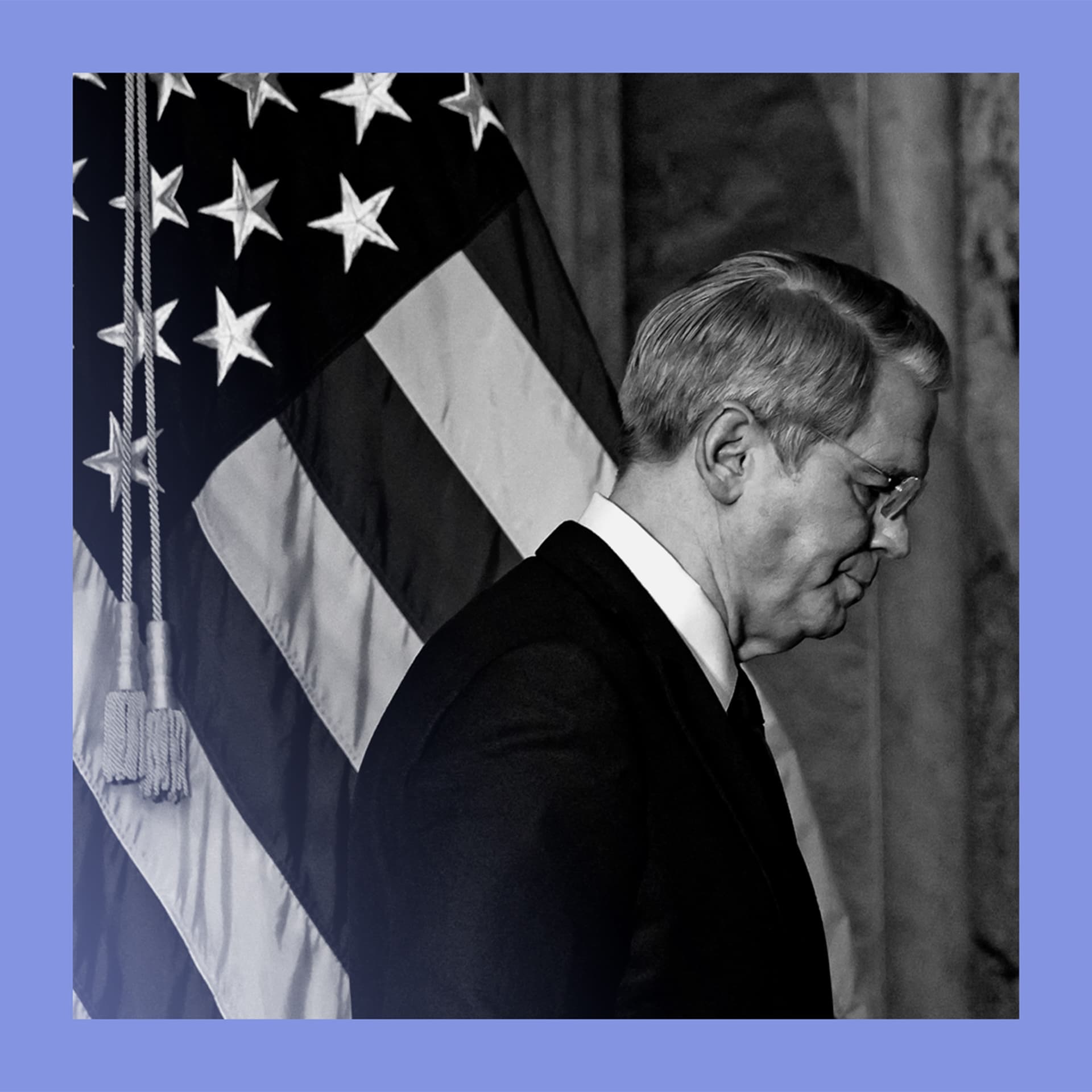
Two-part episode of The Intelligence from The Economist. First, a “yield trip” story: US long-term Treasury yields have surged; Treasury Secretary Scott Bessent announced small-scale buybacks of long-term bonds, aiming to push prices up and yields down, but analysts say the intervention is too tiny and mainly signals politicization and uncertainty. Second, grave hacking threats to US water supplies: Iranian-linked intrusions targeted water plants’ operational technology, causing pressure drops and “boil water” advisories without making water unsafe. Third, UK politics of accents: language expert discusses how Prime Minister Andy Burnham’s northern accent challenges Westminster norms.
Guests/backgrounds
Josh Roberts (Capital Markets correspondent); Shashank Joshi (Washington bureau chief); Lane Green (language expert).
Key claims/examples
US borrowing projected >$2T; inflation and uncertainty drive yields. Bessent’s buybacks are symbolic; “financial repression” is the extreme alternative. Water: attacks exploited public-internet-connected systems; prior examples include 2013 New York dam and 2023 Pennsylvania pump seizure; politics blocked EPA cyber-reporting via lawsuits. Accent: Manchester/Liverpool roots; research finds Essex accents rated ~11% less intelligent than received pronunciation.
Written by AI. May contain mistakes. Listen to the episode to check what was said.
Chapters
Tap a time to open that second in VOTreasury Bonds and Government Borrowing
0:29 to 1:01
Analysis of rising yields on Treasury bonds and government borrowing costs.
“If you felt stuck trying to lose weight, you're not alone.”
Treasury Bonds and Government Borrowing
2:17 to 8:30
Analysis of rising yields on Treasury bonds and government borrowing costs.
“The End means paying buyers back more and more when the bonds come due.”
Scott Bessant's Intervention
8:30 to 10:42
Exploring Scott Bessant's unusual intervention in the bond market.
“Nobody has said the government is going to do this.”
Vulnerabilities in American Water Security
10:42 to 14:02
Discussion on recent cyber attacks on American water facilities.
“The more you listen to your kids, the closer you'll be.”
Cybersecurity Challenges in Water Infrastructure
14:02 to 19:56
Explore the cybersecurity vulnerabilities of American water facilities and the political challenges behind addressing them.
“operational technology through various means, they were not able to make the water unsafe to drink, but they did various other things.”
The Evolution of Accents in British Politics
20:22 to 25:02
Delve into the history of accents among British Prime Ministers and their societal implications.
“None of his predecessors, at least not in the age of recording, have pronounced Buckingham quite that way.”
Transcript
Automatic transcript. May contain errors.0:00When everything is moving all at once, your workforce, your tech stack, your business, you don't need more tools. You need one solution. That's why Paylocity built a single platform to connect HR, finance, and IT with AI-driven insights and automated workflows that simplify the complex and power what's next. Because when everything comes together in one place, growth comes easy. Experience one place for all your HCM needs. Start now at paylocity.com slash one. If you felt stuck trying to lose weight, you're not alone. Enter Weight Loss by HERS. It's designed to support you in reaching your goals.
0:36And HERS now offers access to an affordable range of FDA-approved GLP-1 medications, including the WeGovi pill and the WeGovi pen. Even better, with a range of affordable GLP-1 options, HERS makes it simple to find an approach that fits your needs and your budget. If eligible, you'll get a treatment plan personalized to you and unlimited dosage changes as needed. It's weight loss designed to work with your life. Ready to reach your goals? Visit 4hers.com slash eligible to get personalized, affordable care that gets you. That's F-O-R-H-E-R-S dot com slash eligible. 4hers.com slash eligible. Weight loss by HERS is not available in all 50 states.
1:17Wegovi is the registered trademark of Novo Nordisk AS. To get started and learn more, including important safety information, Wegovi clinical study information and restrictions. Visit ForHers.com.
1:33The Economist.
1:40Hello and welcome to The Intelligence from The Economist. I'm Jason Palmer.
1:49Today on the show, the grave hacking threat to America's water supplies and the politics of accents in Britain.
2:05But first...
2:17The End
2:36means paying buyers back more and more when the bonds come due. Last week, America's 10-year Treasury bonds hit their highest yield since January 2025. Longer-dated 30-year bonds, the highest since 2007. Mr. Besant doesn't seem to like the look of government borrowing being that costly. So he said that the Treasury would buy up Treasury bonds. Demand goes up, price goes up, yield goes down, problem solved, right? Which is a little like a shop owner buying her own stock to bump up the sales numbers. Government borrowing costs have been climbing across most of the rich world for quite a long time.
3:18But in recent weeks, they've flirted with or exceeded their highest levels since the financial crisis 20 years ago. Josh Roberts is our Capital Markets correspondent. Now, the American bond market in particular is perhaps the most important market in the world. So when there are jitters there, and rising yields mean there are jitters, everybody else starts to worry. Well, let's start with why the yields are so high in the first place. Yeah, so there's a few different effects going on here at once. Probably the biggest one is the sheer amount that America's government is borrowing every year. This fiscal year, it's set to top$2 trillion.
4:01That doesn't make America unique. That's also one of the reasons that other rich world governments borrowing costs are rising. But another reason you have is that inflation is rising as a result in part of the war in Iran that's shot up oil prices and fertilizer prices. It's feeding through to higher consumer prices. When inflation goes up, bonds become worthless. So this is another factor that's driven up government borrowing costs. And just generally uncertainty about what the government's next move is going to be. Now, in a way, Scott Besant, the US Treasury Secretary, has now added to that uncertainty by this quite weird intervention seemingly designed to bring government borrowing costs down.
4:44So explain to me then what it is Mr. Besant is trying to do with what he's done. It's a bit of a mystery what he's trying to do, because on the one hand, he's gone in and said, I, the US Treasury Secretary, am going to buy back a few billion dollars worth of long-term US government debt. And that seems like it's an attempt to bring down borrowing costs. When somebody buys a bond, the price goes up. Something to know about bonds, prices and yields move inversely. So when the price goes up, the borrowing cost comes down. So you can see that is what he's attempting to do. The reason it's weird is because the size of intervention he's made is tiny compared with the bond market.
5:28He said on each of a few dates, I'm going to buy back$2 billion more worth of long-term bonds. But over the course of a year, the US Treasury issues$2 trillion worth of bonds. So it's quite hard to see this intervention actually kind of really putting a thumb on the scale and moving government borrowing costs. What indeed we saw the day after he announced this was long-term yields fell a little bit the next day, but then they came right back up and recovered to where they were. So if you can't quite believe that his intervention is going to have much of an impact on its own, it's more about the symbolism, the signal that the US Treasury Secretary is now willing to step into the bond market and try to force yields down.
6:12And that itself is unusual, right? If messing with buying and selling bonds, that's normally the central bank's job, no? Yeah, and it's particularly unusual from a secretary like Scott Besant, who formerly was a hedge fund manager, who made his career from betting against governments that tried to unsuccessfully intervene in their own markets. So, for example, Scott Besant was one of the people who broke the Bank of England in 1992, when it was trying to sustain an unsustainable exchange rate peg. What he's now doing looks a little bit like those failed interventions of the past that he, above all people, should know don't work.
6:54The government can't really step in and fix the price of its borrowing. As you say, this is also something that more usually is the preserve of central bankers. And when the Fed steps in to lower long-term government borrowing costs by things like quantitative easing, they're not really aiming to keep the government borrowing cost under control. They're aiming to use that as a tool to stimulate markets in other ways. When you have the Treasury Secretary stepping in and explicitly trying to bring government borrowing costs down, that's actually the sort of thing that makes investors panic a little bit rather than feeling better about lending money to the government.
7:30So if he's a smart guy who has seen this story before and that's what he has chosen to do anyway, What does that tell you, that he doesn't have other tools at his disposal? Well, I would say speaking to bond traders and bond investors over the past few days, maybe the dominant feeling is one of kind of puzzlement. Nobody's quite sure what he's doing. As I say, the intervention is too small to really move things on its own. So you have to take this as a symbol. So he does have tools to bring down government borrowing costs by more than this, if he wants to use them. But they're pretty extreme. They're known as financial repression.
8:06They're measures like forcing banks to hold more government debt, forcing domestic savers to hold more government debt, putting on capital controls so that savers can't invest overseas. They have to invest in US assets, which tends to mean government debt. Now, these are pretty extreme measures. We have seen them before in the second half of the 20th century to bring down America's war debt. But at the moment, I should stress that these measures are fanciful. Nobody has said the government is going to do this. But if you can't believe that the intervention he's made on his own is going to make much of a difference, you have to start thinking, what kind of signal is he sending?
8:42Is there more that he might do in the future? Now, there's actually also a more cynical way to view this, which is Donald Trump, Scott Besant's boss, has repeatedly said that he wants government borrowing costs to come down. Besant has now gone into the market and done something that is guaranteed to generate headlines and has been generating headlines for the past week. So whether it works or not, he can now tell his boss, look, I've been doing something to bring down government borrowing costs. That's what you wanted. So again, we're in a story where pleasing Trump is what's deciding policy now in the Treasury as it has been for so long in the Fed.
9:18Yeah, we are really getting the politicization of these really important institutions. And the struggle here is that they're being tugged in different directions. Inflation has gone up. More likely than not, as a result, the Fed is going to need to tighten monetary conditions, is going to need to raise rates, maybe not a lot, but it's certainly not going to want to lower them at the moment. On the other hand, we've got the Treasury acting to try and bring down long-term yields, which is the same, basically, or similar to lowering interest rates. So you've got pressure on these two institutions pulling in different directions.
9:56Now, I should say, the Fed has an awful lot more firepower than the Treasury does. If the Fed wants to go out and buy government bonds to bring yields down, it can spend hundreds of billions of dollars because after all, it's the Fed that issues the currency in the first place. The Treasury only really has the balance sheet at the moment to spend two, four billion dollars buying bonds back. So in a true tussle, it would be probably the Fed that wins. The thing that changes that is if they're both acting under the influence of the president and doing what he wants rather than what would actually fulfill their mandates, in the Fed's case, keeping inflation under control, then who knows what happens next.
10:35And all of that tension is really going to be under focus at Jackson Hole, the central banking conference that begins on Thursday. Josh, thanks very much for your time. Thanks for having me, Jason.
10:57The more you listen to your kids, the closer you'll be. So we asked kids, what do you want your parents to hear? I feel sometimes that I'm not listened to. I would just want you to listen to me more often and evaluate situations with me and lead me towards success. Listening is a form of love. Find resources to help you support your kids and their emotional well-being at SoundItOutTogether.org. That's SoundItOutTogether.org. Brought to you by the Ad Council and Pivotal. If you felt stuck trying to lose weight, you're not alone. Enter Weight Loss by HERS. It's designed to support you in reaching your goals.
11:35And HERS now offers access to an affordable range of FDA-approved GLP-1 medications, including the WeGovi pill and the WeGovi pen. Even better, with a range of affordable GLP-1 options, HERS makes it simple to find an approach that fits your needs and your budget, if eligible. You'll get a treatment plan personalized to you and unlimited dosage changes as needed. It's weight loss designed to work with your life. Ready to reach your goals? Visit ForHers.com slash eligible to get personalized, affordable care that gets you. That's F-O-R-H-E-R-S dot com slash eligible. ForHers.com slash eligible.
12:12Weight loss by HERS is not available in all 50 states. Wegovi is the registered trademark of Novo Nordisk AS. To get started and learn more, including important safety information, Wegovi clinical study information, and restrictions, visit ForHers.com.
12:49Or a bit more recently, America threatening to take out Iran's seawater desalination plants. Water will always be a vulnerability. More vulnerable in some places than in others. American water facilities have come under attack in recent weeks. Shashank Joshi is our Washington bureau chief. We know that hackers got their way into facilities in at least seven states, maybe a dozen or so, and American officials believe that Iran is responsible. This is a really serious reminder of just how vulnerable American critical infrastructure still is, despite years and years of warning that something like this could happen.
13:38well let's first talk about what you mean when you say water facilities under attack what's what's happened so water plants jason have something called operational technology which is kind of like the interface between the computer systems and the machinery that makes stuff happen you know like a water pump for example and hackers have been able to get access to that operational technology through various means, they were not able to make the water unsafe to drink, but they did various other things. So for example, in some counties, including one in Georgia, customers were asked to boil their water because a drop in pressure caused disruption to the water supply.
14:19So these are things like the way the water is brought into the facility, the way that it's treated, the chemicals that are added, all of that stuff can be affected. And if you look at these intrusions, these were not really fancy cyber attacks. These were not the kind of AI enabled, whizzy, really sophisticated intrusions that you may be reading about in recent weeks. These were basically quite simple attacks on infrastructure that was connected up to the public internet that in many cases should not have been and should have been secured with much, much better passwords and things like that. Well, why is water security so low then?
14:57Why was this comparatively easy to do? We've known this is a problem for a long while. And I think it's useful to compare American water facilities with the electricity grid, for example. The electricity grid has to meet cybersecurity standards that are overseen by a federal commission. There's no equivalent requirements for water. Electricity is generally run by big, well-funded, tightly regulated operators. Now, water is very different, right? It's heavy, it's expensive to move, and it's much more localized as a result. Around 90 % of utilities, which are mostly owned by local governments, serve fewer than 10 ,000 people each.
15:37So if you think about the funding necessary to harden your computer systems and get the latest technology, to get the IT talent that you need to secure these systems, these operators just tend not to have it. And so the computer systems tend to be obsolete. And we have seen this time and time again. Iranian hackers broke into the control systems of a New York dam back in 2013. In 2023, they seized a pump at a water plant in Pennsylvania. And I could give you countless other stories of breaches at water utilities. So alarm bells have been ringing for a long, long time. So why hasn't anything been done in that interim?
16:13So Jason, part of this is the structural problem of the nature of these water plants, as I just described. These are small, fragmented. It's difficult for them to kind of get the resources they need. But I think the other problem is politics. So, for example, during the Biden administration, the EPA, the Environmental Protection Agency, which is the federal agency that oversees lots of these things, sought to compel states to review and report cyber threats to water systems. And what happened was the Republican state attorneys general in Missouri, Arkansas, and Iowa, joined by various industry groups, the American Water Works Association, the National Rural Water Association, they sued the EPA, citing federal overreach and saying, you know, this is burdensome.
16:56You can't put all these federal regulations on us. And the agency pulled back. So there has been this sense that the federal government has struggled to impose its will on states. And states, backed by many Republicans, have said, we don't want this regulation suffocating us. So we are only now beginning to see some legislative efforts sponsored by various people, Republicans and Democrats alike, that are attempting to bring some of this oversight into the industry in a more aggressive way. Well, you would expect so, given the recent attacks in particular. That's right. So, for example, on August 5th, we saw the American Waterworks Association, which did oppose that Biden-era proposal.
17:33They endorsed this act that was sponsored by Rick Crawford, who's a Republican congressman from Arkansas, that would create an independent body that would draft minimum cybersecurity standards under the EPA's oversight, kind of in the way that's done for electric utilities. But the same day, we saw Tom Cotton, who's a Republican senator. He wrote to Scott Besant, the Treasury Secretary, and he said, look, you know, we need changes to the tax code and other regulatory tweaks to encourage water plants to invest in better security. So I think the politics of this is changing because it's become so abundantly clear that this stuff is not secure and that what Iran is able to do today, well, you know, maybe China could do tomorrow.
18:12And before any of this legislation really bites and this fragmented system you described gets sort of locked down, Iran or China could still do whatever they like. Well, we've already seen years of what cyber experts would call reconnaissance in American systems. That means not hacking them to disrupt them now, but understanding what the networks are like, preparing to lay the groundwork for future sabotage. There's been a huge Chinese campaign called Vault Typhoon that was not just utilities, but also ports, airports, transport nodes, loads of different things. almost the Chinese preparing for a future conflict.
18:45The Russians have been poking around American water plants for longer than I can remember. They've been doing it for years. And so this is, I would say, the most recent wake-up call. It's by no means the only one. But to some degree, it's difficult to act when there's a sense that the president doesn't see this as a major threat, right? When all of this unfolded and Donald Trump was asked about this, he said this probably wasn't Iran. He said he didn't think there had been an Iranian attack, which is definitely not what his own intelligence agencies think. And he said, Iran's got bigger problems than worrying about Minnesota.
19:21This reminds me of 2016, when Donald Trump was playing down Russian cyber attacks on America's elections that year and said, yeah, it's probably someone sitting on their bed in their parents' basement. And once again, he's playing down these state-sponsored attacks, which are almost certainly coming from Iran. He has done serious and lasting damage to the Cybersecurity and Infrastructure Security Agency, CISA, which is the main federal body that does cyber defense. It's got low morale. It's got heavy staff turnover. Its leadership is turning over. And in that environment, it's very, very difficult to fix these gating holes in America's cyber defenses.
19:56Shashank, thanks very much for your time. Thanks so much, Jason.
20:12On the first day that Andy Burnham became Prime Minister, things were going to sound a bit different. I have just come from Buckingham Palace. Take Buckingham Palace. None of his predecessors, at least not in the age of recording, have pronounced Buckingham quite that way. Lane Green is our language expert. And through his social media channels, you can also hear the difference. Your go-to chippy order. I like a babby's head. That's a babby's head. He never... steak pudding. Oh, we call him a baby's head. That's what I said. Or a rag pudding. That's what I said. He's the first English Prime Minister to rhyme words like class with gas.
20:54In other words, he sounds like a northerner. Much more so than anyone who's ever taken office at number 10 Downing Street. Three things you probably already know about me. I go to a lot of gigs, I do like a pint, and I have been known to give a DJ set from time to time. Andy Burnham calls his own accent generic northern. The millions of Britons talk something like he does. Raised near Liverpool and later moving to Manchester, he's often seen as a bit of a pleaser. But it's impossible to please everyone, and especially in those two rival cities. What does Everton Football Club mean to you? Everything.
21:30I can't remember anything other than Everton Football Club. bits from my earliest memories, it's seeped in. Now, in recent history, not every British prime minister has sounded exactly the same, but for the most part, they've sounded, dare I say it, a bit posh. In the late 1970s, Jim Callaghan's R's in words like worst and work and party and rewarding were a giveaway. I think it's a basic feeling that you You want to do what's best for the country whilst you lead your party. Callahan came from Portsmouth, near the southwestern part of England, where ours are still sometimes pronounced after vowels.
22:10I've had a very enjoyable life in politics, and I hope in some senses rewarding. In the 1960s and 70s, Harold Wilson's Yorkshire roots were also reflected in his accent, though he was less easy to instantly peg as a northerner than Andy Burnham is. President Kennedy said once that if you stand still at home, you stand still around the world. We believe that we can't go on standing still, and this program is a way to get us on the move. Two more recent prime ministers, Sir Tony Blair and Liz Truss, grew up in the North themselves, but they never sounded like it. And we've had some superb results in the country.
Read the full transcript
22:45Results like Pendlin, Hindburn, Nuneetum, Walthamstow, Darlington here, in the Northeast, where there was a very, very strong... Things were different in the 19th century. Robert Peel, who was prime minister in the 1830s and 1840s, was known for a Lancashire accent, and William Gladstone, who was born in Liverpool to Scottish parents, was said to have a Northwestern accent as well.
23:11Though it's hardly apparent in his formal greeting to Thomas Edison, which is the first recording of a British Prime Minister ever, from 1888.
23:27But by the mid-20th century, a cut-glass, so-called received pronunciation held sway from Oxbridge to the BBC to, of course, Westminster. That particular mid-century accent now sounds almost a bit comical. It disappeared swiftly as the 1960s made working class and regional accents cooler in the wider culture. But a kind of southeastern posh voice still acted as a sort of standard. Think of the accents of Margaret Thatcher or David Cameron or Boris Johnson. Her Majesty the Queen has asked me to form a new administration and I have accepted. Her Majesty the Queen has asked me to form a new government, and I have accepted.
24:13I have just been to see Her Majesty the Queen, who has invited me to form a government, and I have accepted.
24:25Right now, there is talk in Westminster about how people talk, with some MPs wanting the Commons to sound more like the common people. Researchers at Manchester Metropolitan University and at Cambridge are now looking into accents used in Westminster. One of them has already found in her earlier research that the British public is probably not ready for a working class East London or Essex accent at No. 10 Downing Street. People said that they rated an Essex-accented speaker as about 11 % less intelligent than one who spoke with received pronunciation. So while Andy Burnham has knocked down one barrier, for many other people across Britain, there are still many to go.
25:19That's all for this episode of The Intelligence. We'll see you back here tomorrow.
25:42The more you listen to your kids, the closer you'll be. So we asked kids, what do you want your parents to hear? I feel sometimes that I'm not listened to. I would just want you to listen to me more often and evaluate situations with me and lead me towards success. Listening is a form of love. Find resources to help you support your kids and their emotional well-being at SoundItOutTogether.org. That's SoundItOutTogether.org. Brought to you by the Ad Council and Pivotal.
From the publisher
Amid record-tickling yields, the bond markets are now trying to make sense of what Scott Bessent, America’s Treasury secretary, has announced—a move that might put him on a collision course with the Federal Reserve. We ask why it is so easy for hackers to infiltrate America’s water infrastructure. And understanding a political lineage through the new British prime minister’s accent.
Guests and host:
- Joshua Roberts, capital markets correspondent
- Shashank Joshi, Washington bureau chief
- Lane Greene, language correspondent
- Jason Palmer, co-host of “The Intelligence”
Topics covered:
- bond markets, Treasury, yields, Scott Bessent
- America, cyber-attacks, water, critical infrastructure
- British politics, Andy Burnham, accents, class angst
Listen to what matters most, from global politics and business to science and technology—subscribe to The Economist.
Hosted on Acast. See acast.com/privacy for more information.