
In short
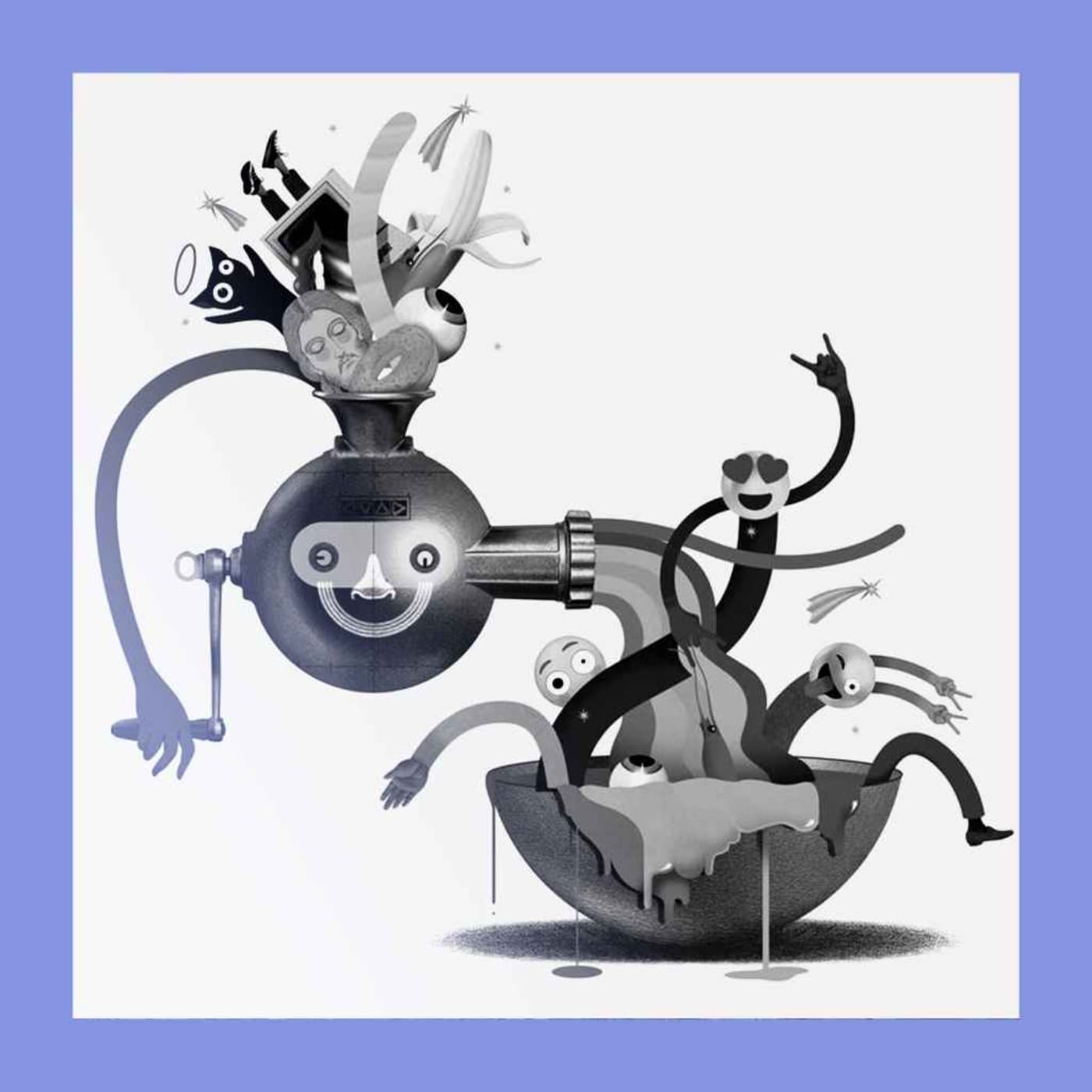
The episode of The Intelligence from The Economist covers two main topics. First, “slop” AI content: Tom Wainwright (The Economist media editor) explains how OpenAI’s Sora and earlier chatbot/image/audio tools have flooded platforms with uncanny videos (e.g., skateboarding kittens, wrestling grannies, cage-fighting Albert Einstein). He argues “slop” can still democratize creation, letting non-experts make professional content and earn via YouTube/social media, while platforms may benefit from more user posting and reduced bargaining power for mainstream rights-holders. He cites industry backlash and lawsuits (Disney/Universal vs Midjourney; Sony/Warner/Universal Music vs AI audio makers) and Spotify removing 75 million AI-related tracks. Second, guests discuss cross-sex friendships: Robert Guest (Economist deputy editor) uses Facebook friendship data (1.8B users, 1T connections) plus studies to claim societies with more opposite-sex friendships tend to be more socially liberal and less sexist; he highlights predictors like female labor-force participation and a German school study where boys with more female friends became less sexist.
Written by AI. May contain mistakes. Listen to the episode to check what was said.
Chapters
Tap a time to open that second in VOThe Rise of AI-Generated Content
0:39 to 1:02
Discussion on AI technology and its impact on content creation across formats.
“At Brookfield, we believe you can own wealth that's measured in generations.”
The Rise of AI-Generated Content
1:41 to 4:40
Discussion on AI technology and its impact on content creation across formats.
“It's an age-old debate, and now the data bods have weighed in.”
Winners and Losers in the AI Content Game
4:40 to 7:38
Examination of who benefits and who suffers from AI-generated content.
“I think it's unfair to call all AI content slop.”
The Impact of AI on Creative Industries
7:38 to 10:05
Exploration of how AI trends are reshaping the creative landscape and industry dynamics.
“Over the last decade or two, we've seen the internet fill up with more content than ever before.”
Cultural Perspectives on Friendships Across Genders
10:05 to 11:01
Insights into gender friendships and cultural attitudes from a social perspective.
“In Yorkshire, people say where there's muck, there's brass.”
Friendship Preferences and Gender Dynamics
11:01 to 14:00
Analysis of research findings on friendships between genders and societal implications.
“Past performance is not indicative nor a guarantee of future results.”
Friendship Dynamics and Gender Perspectives
14:00 to 18:29
Explore how same-sex and opposite-sex friendships relate to societal attitudes and gender roles.
“You see that the average person has 10 same-sex friends for every one opposite-sex one just on Facebook.”
The Resurgence of Yellow Gold Engagement Rings
18:30 to 22:42
Discover the reasons behind the renewed popularity of yellow gold in engagement rings.
“Robert, thank you very much for joining me in the studio.”
The Resurgence of Yellow Gold Engagement Rings
24:01 to 24:32
Discover the reasons behind the renewed popularity of yellow gold in engagement rings.
“That's why Optum uses technology to connect the people and processes that make healthcare easier, more affordable, and more effective.”
Transcript
Automatic transcript. May contain errors.0:28Hey, Pablo Torre here. the FIFA World Cup meal only at McDonald's. At participating McDonald's, only for a limited time, while supplies last. All rights reserved. Copyright 2026. McDonald's at the FIFA World Cup 2026. At Brookfield, we believe you can own wealth that's measured in generations. For 125 years, we've built long-term wealth through expertise, discipline, and a clear vision for the future, providing investors access to alternative strategies built for what's next. Brookfield. Own what's next. Learn more at brookfield.com. This is not an offer to sell or investment advice. Investing involves risks, including loss of capital.
1:08Past performance is not indicative nor a guarantee of future results. Please review performance and offering materials before investing.
1:18The Economist.
1:26Hello and welcome to The Intelligence from The Economist. I'm your host, Rosie Bloor. Every weekday, we provide a fresh perspective on the events shaping your world.
1:40Can men and women truly be friends? It's an age-old debate, and now the data bods have weighed in. Not with the answer, but what it says about societies where those relationships are common, or discouraged. And after something of a hiatus, apparently what the young want these days is five gold rings. And no, it is not just the season. After a boom in silver and other glittery things, the metals are turning once again.
2:17First up, though.
2:24AI is the defining technology of our time, and how we empower people to use it will shape our country's future. Real sustainable improvements in quality of life come from scientific and technological progress, and I think we're going to have a lot more of that. Advances in technology have freed much of humanity to focus less on subsistence and more on the pursuits that we choose.
3:04AI is seen by a lot of people as this miracle technology, but its latest feat seems to be to bring forth videos of things like skateboarding kittens, wrestling grannies, and a cage fighting Albert Einstein. Tom Wainwright is The Economist's media editor. OpenAI recently launched this video creation app called Sora, and since then everybody's social media feeds have been flooded with these surreal, weird AI-generated videos. So the internet is quickly becoming clogged up with these uncanny AI videos, which some people have pejoratively labelled slop. The Economist is a British news and current affairs journal published in a weekly print magazine format and daily on digital platform.
3:48Video is just the latest kind of slop. Really, slop has been around for quite a while. It began with literary slop when people used chatbots to make AI-generated books. If you go on Amazon these days and look for a new book, you're pretty likely to encounter AI-generated imitations. A photo of a fluffy black cat sitting on a window sill looking out at the rain in the garden. Then came Image Slop and people used AI image generators to make images of things like Pope Francis wearing a puffer jacket. And then there was Audio Slop, which has been invading playlists on platforms like Spotify. In the last year, Spotify has removed 75 million tracks from its platform, complaining that AI has made it easier for people to push Slop into the audio ecosystem.
4:37So Slop is everywhere. I think it's unfair to call all AI content slop. Some of it's funny, some of it arguably has artistic merit. But whatever you call it, this kind of AI-produced content's rapid infiltration of seemingly every media format poses some quite big questions about the future of creative industries. The question is really, in a world of infinite content, who are the winners and who are the losers? The clearest winners from all of this are the people who can now make pretty professional-looking content who perhaps couldn't before. People who maybe aren't great writers or aren't great illustrators but have good ideas and can now bring those ideas to life.
5:19And this kind of democratisation of content creation doesn't just give people a creative outlet who previously didn't have one. It provides a large minority of them with a living. A lot of people now make money on YouTube, and as AI gives people the tools to make more professional videos, I think we're going to see more of that. Social media platforms may also be winners. For one thing, I think it could reverse this trend that we've seen in which people have been posting less and less of their own content over the last few years. As people get the capacity to create professional-looking pictures, videos, audio, they may post that stuff more often.
5:57The other thing is that as more people get the capability to produce their own content, it could reduce the bargaining power that mainstream creators have over platforms. In a world where the most popular content is created by a small number of creators, that could be Hollywood studios, it could be music record labels, those content creators have pretty serious bargaining clout. In a world where millions of amateur creators are creating and uploading their own stuff, the bargaining power of those mainstream creators is diluted, and that is to the benefit of the big platforms. We've seen this in the audio world.
6:35In the last few years, the share of total listening that is accounted for by the main record labels has slowly been falling as more and more people upload their own independently made tracks. And we're going to see more and more of this as AI enables more people to produce their own content. The people who are most worried about the AI trend are the mainstream content creators and the people who hold the rights to that content. This new AI content is competing for their audience, and it's arguably infringing their copyright as well. Recently, we've seen Disney and Universal suing Midjourney, which makes AI images and videos.
7:13And at the same time, Sony, Warner and Universal Music are suing a pair of AI audio makers. The AI companies have taken a pretty relaxed approach to copyright, and the whole thing is quite neatly summed up by one Sora video doing the rounds on social media in which Sam Altman, the head of OpenAI, is standing in a field filled with frolicking Pokemon characters saying, I hope Nintendo doesn't sue us. There's not much evidence that more content is bad for the top creators. Over the last decade or two, we've seen the internet fill up with more content than ever before. look at Spotify, look at YouTube, there's just more and more stuff out there.
7:51And what we tend to see is that in this kind of sea of infinite content, users need the help of algorithms to point them towards the best stuff. And what we see is that those algorithms seem to point a lot of them to the same place. We've seen the biggest stars get bigger than ever, despite all this extra content. If you look at Spotify, for example, in the last few years, we've seen the smallest artists grow in number, so the number of artists making a thousand dollars or more per year in royalties has tripled. But the number making 10 million a year or more, the biggest stars of all, that number has risen sevenfold.
8:25So the biggest stars are getting bigger and bigger. We see this in the video world too, the share of the box office taken up by the biggest films has been increasing. And in the book world, even though people are churning out books as never before, the biggest hits are just as big as ever. The other opportunity that Slott presents concerns what creative types call discovery. This is basically introducing new audiences to your content. We saw a great example of this earlier this year when there was this trend for people to transform their profile pictures into the style of Studio Ghibli, this anime style.
8:58And suddenly the internet was filling up with Ghibli style images. And if you look at Google trend analysis, we saw that in the month when this took off, Google searches for Ghibli were about 50 times higher than they had been the month before. So millions of people all over the world were introduced to this Japanese studio that many of them perhaps before had never heard of. I think there's potential for more and more of this kind of thing to happen. A lot of creative people still feel very bruised from an earlier era of the internet when the music industry was nearly killed off by piracy and when YouTube aired clips that had been ripped from television without permission.
9:34But other people have drawn the opposite lesson. The thing was, in the previous era, it took years and years for the music and TV industries to accept that streaming was inevitable and to find a way to make money out of it. And I think a lot of people now in the music industry, in the TV industry, feel that they shouldn't make the same mistake again with AI. It's time to cut deals with these platforms, to take advantage of them and to monetize them, rather than fight them in the courts and waste time and money trying to stop the rise of something that looks inevitable. In Yorkshire, people say where there's muck, there's brass.
10:08And I think when it comes to AI, it seems as if where there's slop, there's cash.
10:22Hey, Pablo Torre here. As a sports journalist, I've covered global sports for many years now. And there is one thing that I can promise you. Nothing compares to the World Cup. And this time, it is even better thanks to McDonald's. You have the chance to take home one of nine legendary cups when you order the FIFA World Cup meal. The cups feature some of the biggest legends in football, like David Beckham, Thierry Henry, and Ronaldinho, Christian Pulisic, Lamin Yamal, and Alphonso Davies. Right now, get one of nine legendary cups when you order the FIFA World Cup meal only at McDonald's. At participating McDonald's, only for a limited time, while supplies last, all rights reserved, Copyright 2026.
11:01McDonald's at the FIFA World Cup 2026.
11:29including loss of capital. Past performance is not indicative nor a guarantee of future results. Please review performance and offering materials before investing.
11:44I've known Adam for 17 years. We met when Adam joined our sixth form college at high school. I've never thought of it as unusual to have a friend of the opposite sex, but I guess the context is that I have two older sisters so that might play into it. Countless films and works of literature have asked the question, can men and women truly just be friends? But Adam and Alice are a real-life example of exactly that. I have lots of friends who have kind of mixed-sex friendships. I don't think it's odd at all. I think you can really tell the difference with people that have grown up with the opposite sex around them and, yeah, it really helps sort of form them all.
12:28rounded person. Which raises an interesting question. If being around the opposite sex does make you more well-rounded, could society benefit if there were more such friendships? For centuries, people have been asking, can men and women just be friends? Robert Guest is a deputy editor at The Economist. We've looked into it and decided the answer is not just yes, but yes, and it would really help if they were. So where's your data for this fascinating subject coming from? We have a massive heap of data about Facebook friendships. 1.8 billion people and more than a trillion connections between them.
13:11Now, you may object that digital friendships are not the same as real world ones. And there are significant drawbacks to the data. It doesn't tell you anything about what's going on in China where Facebook is banned. It doesn't take into account the real world differences. But the volume of data that we're looking at is so big that we think it's pretty suggestive. Okay, so you've got a huge mass of data. What does it actually show? To begin with, you can see very large differences between countries. In some cultures, there's this idea that male honour depends on female seclusion, that you can't be sure that the women in your family aren't meeting men in an inappropriate way unless you completely keep them shut off from society.
13:55So in those kinds of societies, even digital friendships are quite rare. You see that the average person has 10 same-sex friends for every one opposite-sex one just on Facebook. That's a very big difference. Rich countries, rich European countries, there's still a degree of difference. Roughly speaking, people in rich Western countries will have twice as many same-sex friends as opposite sex ones. But that's within the realm of normal. So how does this affect the opinions people have? Some rich countries have different attitudes from other ones. If you take a question like, do you think that women make good leaders?
14:32Do you think women make good bosses in companies? Most rich countries, people just say yes. In South Korea, they're not so sure. They're pretty ambivalent on that question. And you see in South Korea that people have far fewer opposite sex friends than they do in other rich advanced countries. And you also have much worse outcomes for women in the labour force. I was in South Korea and asked the question to a number of people, do you think men and women can be just friends? And a lot of them just said no. So you're essentially using male-female friendship as a proxy for how integrated and socially liberal a society is.
15:13Yeah, but we dig a bit deeper into the data. Ainsley Johnston, one of our data whizzes, looked at the best predictors of what the original paper called the cross-gender friendship index, but we think ought to be called the When Harry Met Sally Index. She found the best predictor of it was the ratio of female labour force participation. So what proportion of women are working relative to the proportion of men who are working? Now, is that because workplaces are a good place to meet opposite-sex friends? or is it because liberal societies where men and women can talk to each other and make friends are also pretty good places for women to work?
15:52We think it's both. Another good predictor she discovered, and this is looking from demographic and health surveys of 55 mainly developing countries, was that cross-sex friendships were much more common in countries where sexual mores are a bit more liberal. So is this, Robert, just about having more exposure, excuse the word, to more people of the opposite sex in the workplace, in education? We think the causation works both ways. So it's both that people who are more open to cross-sex friendships are more likely to have them, but also exposure makes it easier for people to have them. And there's a very interesting study done in German schools by a scientist at Oxford called David Kretschmer, who looked at 3 ,000 adolescents, mostly from immigrant backgrounds, often from societies that are quite conservative.
16:45And they looked at them at one point in time when they're about 14 or 15, and they found out how many opposite sex friends they had. And then they waited and looked at them later in time and found out how their attitudes to things like the division of labor within a family had changed. And they found that with the girls, the number of friends they had who were male had no effect on their views on this. but with the boys having more female friends made them less sexist made them more egalitarian in their outlook dr kretschmer suggests that possibly this is because for women they've got a lot more at stake in this and they're not going to give up their lifetime aspirations just over a bit of peer pressure but for the boys just talking to girls and listening to them makes them appreciate them as people more realize that there's certain things that they want and because quite a large proportion of boys would actually like to get together with a girl at some point in the future to actually pay heed to what they think.
17:42Which slightly gets us back to the question at the beginning, can boys and girls, can men and women actually be friends? There is compelling evidence that in platonic relationships, the men are much more likely to fancy the women than vice versa. And they're also much more likely to think that the women fancy them. In fact, their view on that tallies pretty much exactly with how they feel about the woman and not at all with how she feels about them. Men are prone to wishful thinking in this area, but people can get over that. People can have urges and not act on them. People can behave in a civilised fashion to each other.
18:19And the upshot of all the research that we've been looking at is that they really should, because greater exposure breeds greater respect. And that leads to a less sexist society. Robert, thank you very much for joining me in the studio. Thank you, Rosie.
19:02question, will you actually say I do at the critical moment? But here's another choice that now apparently faces couples today, the ring and exactly what colour the wedding band should be. So December is by far and away the most popular time for people to decide to pop the question and actually almost a third of British men think that Christmas Eve is the very best time to do that. Emma Irving is a news editor based in Hong Kong. And actually this year, probably a lot of them are going to do so with a ring that has a yellow gold band. And that's because yellow gold is firmly back in fashion. One jeweler I spoke to even described it as a kind of yellow gold renaissance.
19:49So Emma, let's just get our term straight quickly. By yellow gold, you mean gold, right? Yeah, so yellow gold is sort of what you think of when you think of gold. So rather than white gold or rose gold, which have different colours, yellow gold is the sort of archetypal gold. Okay, so what's going on? Well, this year we've seen a lot of celebrities get engaged with yellow gold engagement rings. So people like Taylor Swift and Dua Lipa and even Zendaya. and so that has really driven this sort of interest in yellow gold bands particularly on social media but it's also because there seems to be a real interest in rings that have a vintage look and actually for centuries yellow gold bands were the most popular option for engagement rings but then they kind of fell out of fashion and so now they're having a resurgence because everyone's interested in this vintage look.
20:44So Emma, I have to say, I did not know that yellow gold had fallen out of fashion. So tell me about this. Yeah, so that was actually because gold started to be displaced by interest in white metals in the 1990s. And that's partly because at the time, there was a really big interest in this sort of sleek, minimalist look, which suited things like platinum and white gold. And it was also because Tiffany's and co really made the platinum and white gold engagement ring very desirable and that was America's leading luxury jeweler and so that had a really big impact on how many people started to go for that kind of aesthetic whereas now we're seeing a bigger increase in interest in sort of more vintage styles, heirloom jewelry pieces, a lot of which tend to be yellow gold.
21:32We actually had a segment on the show recently about a new gold rush in California because gold prices are really high. Is that playing a factor in this? Yeah, so it seems to be playing a huge part of what's happening. So gold is obviously becoming much more desirable as an investment. Its price has roughly doubled since March 2024 and hit a record in October. And actually, when people are thinking about what kind of engagement ring they might want. They do tend to want something that's going to hold or accrue value over many decades. And so lots of people are deciding that actually gold is potentially quite a sensible choice for an investment, because for a long time, speculators and investors had considered it a sort of safe haven asset.
22:19And Emma, I'm aware that you actually yourself got married recently. Do you have a gold ring? I actually don't have a yellow gold ring. So I obviously am bucking the trend and hopefully not going to miss out on the investment opportunities that could have come if my betrothed had gone for a different option. Obviously, the real investment is the marriage. Exactly. Emma, thank you very much for talking to me. Thank you so much for having me.
22:59That's it for this episode of The Intelligence We'll see you back here tomorrow
23:23Hey, Pablo Torre here. As a sports journalist, I've covered global sports for many years now. And there is one thing that I can promise you. Nothing compares to the World Cup. And this time it is even better thanks to McDonald's. You have the chance to take home one of nine legendary cups when you order the FIFA World Cup meal. The cups feature some of the biggest legends in football, like David Beckham, Thierry Henry, and Ronaldinho. Christian Pulisic, Lamine Yamal, and Alfonso Davies. Right now, get one of nine legendary cups when you order the FIFA World Cup meal only at McDonald's. At participating McDonald's, only for a limited time, while supplies last, all rights reserved, copyright 2026, McDonald's at the FIFA World Cup 2026.
24:06Healthcare can feel complicated. That's why Optum uses technology to connect the people and processes that make healthcare easier, more affordable, and more effective. We're making it clearer for you to know exactly what your benefits cover. And to help you better manage your health, we're coordinating care between your doctors and your technology. We believe better, simpler healthcare is always possible. That's healthy optimism. That's Optum. Visit Optum.com to learn more.
From the publisher
In a world of infinite content, who wins and who loses? Our correspondent explains what the proliferation of AI-generated art means for human artists. What the prevalence of male-female friendships tell us about a society. And why you should propose with a yellow-gold ring.
Listen to what matters most, from global politics and business to science and technology—Subscribe to Economist Podcasts+
For more information about how to access Economist Podcasts+, please visit our FAQs page or watch our video explaining how to link your account.
Hosted on Acast. See acast.com/privacy for more information.