 Economist Podcasts
23 Oct 2026 · 25m

 Add vo to ChatGPT or Claude to ask about everything you hear
vo listened to this episode to put together the overview and transcript, so there may be the odd mistake.
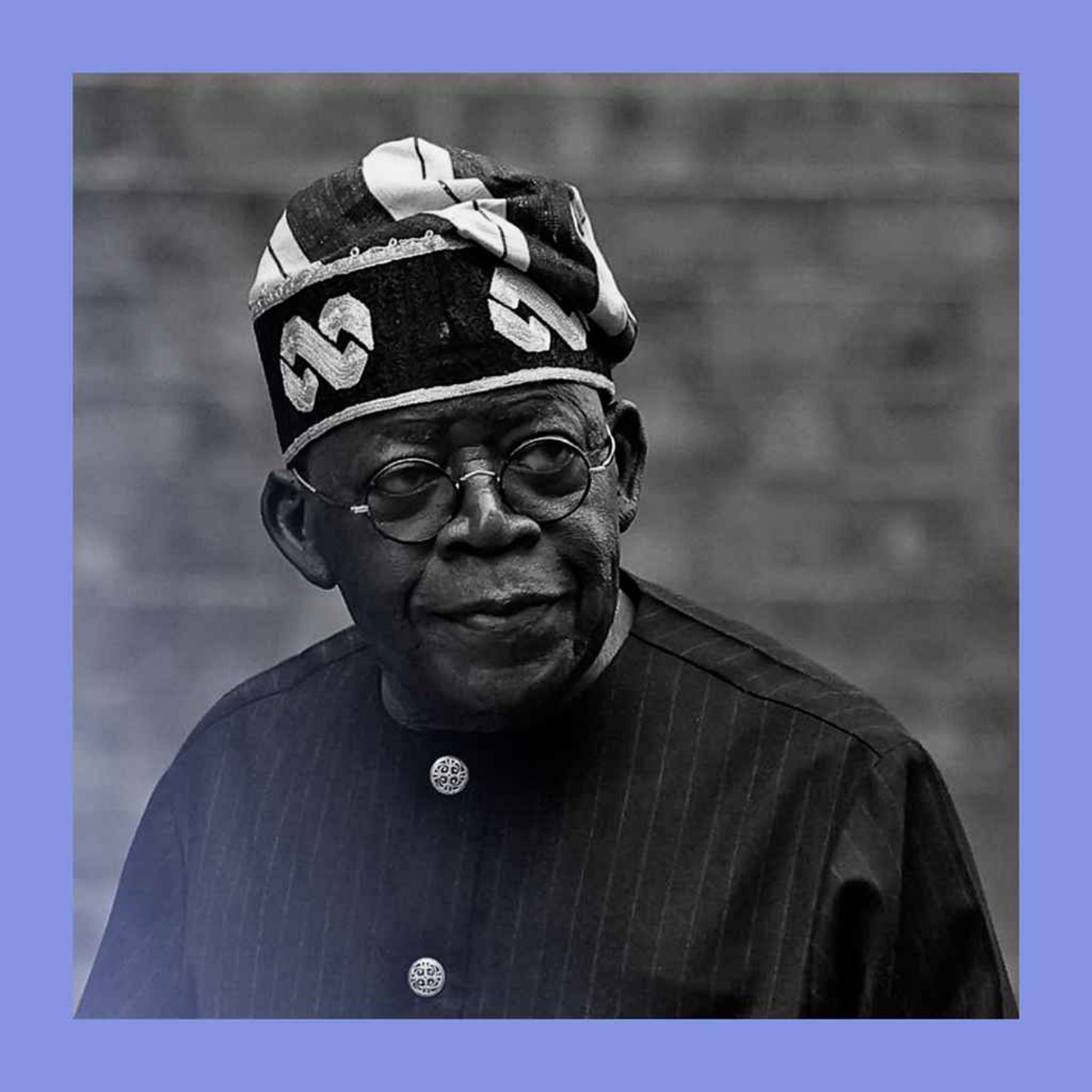
“Songs of disenchantment: the sorrow of Nigeria” focuses on Nigeria’s worsening security crisis and hunger in Borno State, and how President Bola Tinubu’s economic reforms and election dynamics may still carry him to victory despite hardship.
No regular guests appear. Host Rosie Bloor interviews Economist Africa correspondent Ori Ogunbi (reporting from Gwangiwan Primary School in Maiduguri and meeting parents/clinicians). A separate segment includes Economist editors/hosts Rosie Bloor and Jason Palmer, plus later correspondent Jonathan Rosenthal (Europe/Starlink discussion) and a narrated obituary segment on Jeffrey Archer.
Global aid cuts and insecurity are collapsing school funding; macroeconomic stability hasn’t improved daily life; low turnout and ruling-party machinery help incumbents win.
Gwangiwan Primary School’s chalkboard “abacus” lesson; parents reporting food insecurity; Dr. Noura Tukur’s clinic treating a woman with triplet babies amid inaccessible, terrorist-controlled villages; Borno turnout below 20% in 2023.
0:00Pessimism. It's never going to improve a disconnected healthcare system. Next! So what will? At Optum, we're working every day to connect primary, specialty, and pharmacy care, and help lower prescription costs. Will we fix it all overnight? No. But we'll wake up trying, again and again, until healthcare works as one for everyone. That's healthy optimism. Learn more at Optum.com. Optum. I'm pro quarterback, Drake May, and I got to call an audible. People say building long-term wealth is complicated, but Betterment is the trusted automated investing and savings app that makes it simple. Like me, they're focused on performance and make the long game look easy.
0:43Are you still spending time researching stocks and reinvesting your dividends? Audible. Betterment's tech and expert built portfolios handle that for you automatically. Worried about surprise tax bills? Audible. Keep your cool and more of your potential returns with Betterment's tax saving tech, like tax loss harvesting or a tax impact preview before you trade. Think you need three different platforms for your money? Audible. No one has time for all that. Betterment is one easy and simple app where you can see your total net worth, all your accounts, and your returns. Over a million people trust Betterment to help build their wealth with confidence.
1:14And if you're not one of them, it's time you call an audible too. Get started at Betterment.com or download the app. Investing involves risk. Performance not guaranteed. Betterment does not provide tax advice. TLH may not be suitable for all investors. Learn more at Betterment.com slash TLH dash terms. Paid client ad. Views may not be representative. See App Store and Google Play reviews. Learn more at betterment.com slash ambassadors.
1:35The Economist.
1:41Rosie Blau: Hello and welcome to The Intelligence from The Economist. I'm Rosie Bloor. And I'm Jason Palmer.
1:51Rosie Blau: Today on the show, can Europe develop a rival to Starlink? and remembering novelist, politician and conman Jeffrey Archer.
2:08But first...
2:12Ann Wroe: One, two, three, four. And this is zero. So we are not putting anything here. So we have what? Twelve thousand three hundred and forty.
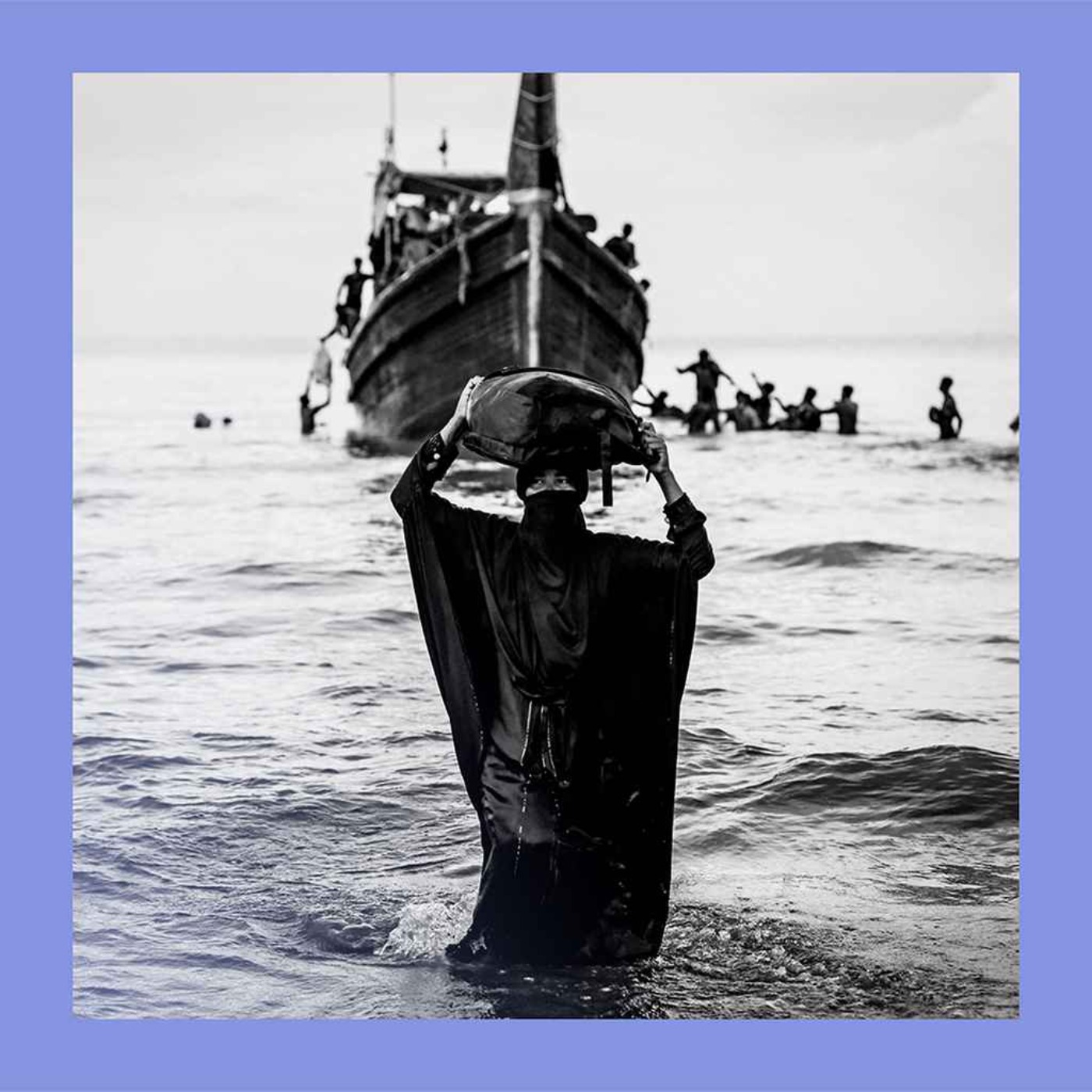
2:23Ọrẹ Ogunbiyi: I recently travelled to Gwangiwan Primary School in Miduguri, Nigeria. Ora Ogunbi is an Africa correspondent for The Economist. I got to listen into a maths class on how to use abacuses.
2:45Ọrẹ Ogunbiyi: Except that there weren't actually any abacuses. The kids made do with a drawing of one on the chalkboard.
2:56Ọrẹ Ogunbiyi: There are almost 5 ,000 children in this entire school from nursery all the way until the end of primary. That's about 100 students in each class. And all of these kids, this whole school is going to lose its funding within a year. And that's partly because of global funding cuts that have forced save the children to reprioritise some of its spending.
3:22Ọrẹ Ogunbiyi: At break time, I sat down with some of the students' parents and I spoke with them through a translator because they mostly speak Kanuri. She is not having availability of food at the moment and then that disrupts the children from coming to school because her herself is not well fed. How can she feed the children that are coming to school?
3:44Ọrẹ Ogunbiyi: Medjugorje is the capital of Bono in northeast Nigeria. It's a poor state, and it's been run by the ruling All Progressives Congress for a few cycles now. It's also been a hotspot in the nation's fight against jihadism, which has devastated the city for all of two decades now. Terrorist groups fight both the security forces and each other for territory and resources. Kids are kidnapped for ransom. Farmers, who are already struggling enough, are looted and taxed by these terrorists. All of this has hit the state's economy especially hard. Young people can't find work, traders can't find customers, and this grim state of affairs has become the norm here.
4:26Ọrẹ Ogunbiyi: There are many such corners of the country that seem to have been left behind by the centre. And yet, the president, Bola Tinobu, appears remarkably calm. He went on a month-long summer holiday to France, bang in the middle of campaign season, and when he finally returned, he said, in quite a break from custom, that he won't even be campaigning in every state. That sounds to me like a man pretty confident that he's headed for victory in the January elections. And Ori, why do you think the president is so confident that he can do all this? Well, it's definitely surprising on paper. Nigeria is suffering a worsening security crisis.
5:05Ọrẹ Ogunbiyi: The killing and kidnapping of people by bandits and insurgents happens so frequently now that it's almost lost its shock factor. His economic reforms have yet to make life better for most of the country's 240 million people. So unsurprisingly, there are political challenges who are more popular than him, both in the northern states, which have been affected the most by this violence and economic deprivation, but also in some southeastern ones as well. The president should be worried. That he isn't is because elections in Nigeria are a bit more complicated than who's popular. And I think that's where his seeming confidence comes from.
5:40Okay, well, let's start with this then. What is his pitch?
5:43Ọrẹ Ogunbiyi: Mr. Tinobu's entire campaign has been centered on these economic reforms. Three years ago, he finally got rid of a pricey fuel subsidy. He resolved uncertainty around exchange rates. And all of these policies have brought a degree of macroeconomic stability to the country. Inflation has fallen. Government revenues are rising. Investors have commended him. And so have we. But much of the country hasn't felt any uplift. In fact, the shocks of that subsidy removal and devalued currency have been especially painful for the poorest, like many who I met in Borno State. To make matters worse, there's also been a lean harvest, global aid cuts and rising energy prices following the wars in Ukraine and Iran, which have all made life harder for everyone.
6:25Ọrẹ Ogunbiyi: This means that people are struggling to eat. And Borno and its neighboring states, which were already in the grips of a hunger crisis, have been hit even further by rising food prices. the annual inflation rate is still in the double digits and food inflation is closer to 20%. The UN's World Food Programme reckons malnutrition in the state is at its worst level for a decade. Hey, Sanu. Sanu. I'm from Nigeria. I am. I'm Yoruba. My house is no good. Don't worry, I'm working on it. When I was in Bono, I met Dr. Noura Tukur, who runs a clinic for children with life-threatening malnutrition. When she delivered, they called me after some days.
7:03I think they did. Later, she was almost unconscious. They called me from her community that they identified one woman as she was severely sick, and she delivered triplet babies. I asked them to quickly transport the woman, and she came here. We assessed the woman, we transfused her, I think, with three fines of blood, gave her drugs, saved her lives with the triplet babies, discharged them. When she came back down there for the third time, they were under four cages. I think two point something cages.
7:42Ọrẹ Ogunbiyi: Dr. Tukuru can't discharge her for her own safety. The village where she lives is completely inaccessible, so she may not be able to get any more food. It's also completely run by terrorists. And so why aren't the conditions there elsewhere in Nigeria affecting Mr. Tinebu's prospects for re-election? Jason, it's complicated. Borno State is considered a ruling party stronghold, even though the president's currently not polling too well in Borno or much of the Northeast or what we call the North Central. Some residents that I spoke to said that they're prepared to fight back at the ballot box. But being unpopular doesn't guarantee that you'll lose an election, especially in Nigeria, where there are many other factors that hold a bit more sway on election day.
8:27Ọrẹ Ogunbiyi: One of them is that Mr. Tinobu is the incumbent, So he has the ruling party machinery and cash on his side, which has made a difference in recent Nigerian elections. It also allows Mr. Tinobu's side to dominate the campaign. His face is plastered all over Madriguri. And some people I spoke to said they had no idea who else was even in the running. Then there's religion. Both him and the vice presidential candidate are Muslim, as are most people in the Populous North. So you've got clerics coming out and encouraging Muslims to vote for the ruling party simply because of that. There's also the ethnicity factor as well.
9:01Ọrẹ Ogunbiyi: So even Yoruba voters in the Southwest are prepared to overlook a lot of the hardship just to show up for one of their own. And probably most significantly, especially in really undergoverned places like Borno, people have just come to expect very little from their governments and are often willing to re-elect them simply for doing the bare minimum, like getting medicines into public hospitals. I mean, that is a pretty cynical view of one's politics. Yeah, and I think that this cynicism is one that you can see across the country, unfortunately. Nigeria's security crisis remains unresolved. Economic growth, which is expected to hit about 4%, is still not high enough to actually feel like concrete improvements for people's lives.
9:41Ọrẹ Ogunbiyi: Lots of voters are disappointed, but that rarely shows up at the ballot box on election day. In Borno, where a journey to the polling station might mean running into militants and terrorists, most people might not even bother voting at all. In 2023, in the last elections, turnout in the state was below 20%. Nationwide, turnout was a dismal 27%. So unpopular candidates like Mr. Tinobu sail through all the time because the people who are disgruntled stay home. It's no wonder that Mr. Tinobu feels relaxed enough to take a month-long vacation to Paris. Hore, thanks very much for your time. And also, I believe you have a bit of news for the listeners.
10:21Ọrẹ Ogunbiyi: Well, yes, I do have a bit of news. I'm going to be coming back to co-host the show for a little bit, so you'll be hearing a lot more from me. Thanks so much for having me, Jason.
10:52at creativeplanning.com slash new.
11:22Rosie Blau: increasingly distances itself. You might think the Gulf's two richest states would seize the chance to forge new alliances. Instead, they're tussling for influence and inflaming conflicts in the Middle East and the Horn of Africa. Join Edward Carr, the Economist deputy editor, and a crack team of our regional specialists to understand this tricky and important power struggle. If you're a digital subscriber, Insider is already part of your subscription. If you're listening free, you can watch extended clips via the link I've put in the show notes.
12:05Rosie Blau: For weeks, Kiev has been under repeated bombardment. Ukraine is usually alerted to incoming air attacks, with information from U.S. space satellites or Starlink, which is run by Elon Musk. The ability to guide drones at high speeds relies on the same sources.
12:28Rosie Blau: But last weekend, President Volodymyr Zelensky told NBC News that Ukraine's access to that data was curtailed, after he didn't immediately sign up to Donald Trump's proposed energy ceasefire. Only United States has this unique intelligence to tell our side when Russia uses ballistic missiles. And we didn't get it during ballistic attacks during three days. That capability has now been restored. But the crisis is a reminder that American technology is hard to beat. Europe is panicked and running really hard in trying to develop its own versions of Starlink and other space-based capabilities, but frankly, it's a long way behind.
13:17Rosie Blau: Jonathan Rosenthal is our international correspondent. Europe is absolutely dependent in three broad areas, and the one is all of the spy stuff. It's intelligence reconnaissance, surveillance, early missile warning if ballistic missiles are getting fired by Russia. The other is satellite internet, Starlink. Everyone knows what that is. And the third is rocket launch. How do you get all of those satellites up that you need in the air if you don't have enough rockets? So Europe is very dependent on the US then. Does it have any chance of competing? If we take these piece by piece, there are some areas where it's doing fairly well and others where it's really got a long way to go.
13:57So I suppose the somewhat good news is that in competing with Starlink, there is a European competitor. Utelsat owns a company called OneWedge, which does provide internet satellite services. Its shares shot up immediately after Ukraine said that it had lost access to some of Starlink's services. And everyone thinks that might be the basis for a buildout. But there's some real technical differences between the two. OneWeb has got only 600 satellites in orbit. but it's just a much smaller constellation. Starlink has got more than 10 ,000. The Starlink satellites are much lower Earth orbit, which means the internet they provide is faster.
14:37The terminals you need to get that internet are much smaller and cheaper. OneWeb provides some of it, but it's way behind.
14:44Rosie Blau: What about the other areas of space intelligence you referred to? So again, this is a partly good news, partly bad news story. The good news is that almost surprisingly for a continent that everyone has written off as old and stayed, it's got some really interesting space startups. And one of them is a Finnish company called ISAI that provides tiny spy satellites that use radar to look down at the Earth. And it's now got 80 of them up, many being bought by European companies. Some have gone to the US. So that's a real success story. It also shows how innovation can really allow Europe to catch up.
15:20The head of the Swedish Space Force said to me when they first wanted to get some satellites, They thought 2030 would be the very earliest. Turns out they were able to just buy some from ISAI and other providers, and they've already got their first one up.
15:34Rosie Blau: So even with those promising developments, it does sound as though Ukraine and Europe are still heavily dependent on America, as we've already talked about this week. You're absolutely right. There are still heavy dependencies. So one of them is this ballistic missile warning system. For years, America encouraged its allies not to duplicate it, said, use ours, we'll plug you in. Trying to replace that's not going to happen before the early 2030s. France and Germany are beginning to plan to put up their own satellites to do it. But that's really quite some way off. And then the other area where Europe is really constrained is launch capacity.
16:12In the past, Europe did these mega European projects that came up with the Ariane launches, you know, sort of all very well and good. But because it was a European project, work had to be shared out among each of the countries that paid for it. That led to massive delays. It came in four years late and much more expensive than it should have. And in the meantime, SpaceX, which has the Falcon 9 rocket, has just shot ahead. So if one looks at last year, Harry-Anne put up just four rockets into space and SpaceX put 165 of its heavy lift Falcons up.
16:48Rosie Blau: So where in the end do you think that leaves Europe in terms of trying to deal with the Trump administration and support and develop products that will be useful in Ukraine and perhaps elsewhere? Yeah, so this has been a real wake up call for Europe because a lot of European leaders are looking around and saying, if we're at war with Russia in a few years time, will those American systems we rely on today be available? So there is a real panic and a real drive. There are some things that Europe needs to do a lot better if it wants to get there. So again, it needs to deal with some of these issues of duplication and fragmentation.
17:22It really needs to have a much more commercial mindset. It's a bit like what the Americans did when they went from NASA as the big government-run space agency to allowing in people like Elon Musk. So Europe needs to do that. And actually, it needs to be looking to other like-minded allies, Japan, Canada, South Korea, and really saying, how can we start pooling our resources, putting things up into space in ways that are interoperable? So we may not individually have this all singing, all dancing constellation, but together we can build one.
17:57Rosie Blau: Jonathan, thank you very much. Thank you.
18:19Ann Wroe: Could it work? Archer asked himself. Why on earth not, his alter ego replied. Anne Rowe is the economist to Bittrees editor. He stood in the penthouse living room where for years dinners of shepherd's pie and crook had been served up to London's finest. From the floor to ceiling windows, he stared down at the Shard, the Eye, the Cheese Grater and the Palace of Westminster, all embraced by the gleaming River Thames. Behind him, in the vast lounge, a Picasso and a Monet adorned the walls. Settling into the overstuffed cream sofa, he felt almost insanely satisfied with his life. Yes, it would be well worth writing up.
19:06Ann Wroe: Rags to riches stories were his stock in trade, and the riches had come from his own efforts. More than 330 million of his 31 page-turner novels had been sold in 114 countries.
19:25Ann Wroe: Not long ago in India, a beggar boy at a traffic light had tried to sell him the latest Geoffrey Archer. I am the latest Geoffrey Archer, he had joyfully cried. Besides all that, he had climbed to the heights of British politics, sprinting there as he'd done to set an Oxford record in 1966, 100 yards in under 10 seconds, earning him an athletics blue. Up and up, from Tory councillor for Havering, to MP for Louth in Lincolnshire, to Deputy Chairman of the Conservative Party, to the House of Lords as Lord Archer of Western Super Mayor. He served humble fare at his parties to remind himself and his influential guests how far and fast he had come.
20:16Ann Wroe: Yet it could have been even faster and farther if not for all those trip-ups on the way. The summer sun beat down with unusual heat on the lawns of the old vicarage at Grantchester, former residence of the poet Rupert Brooke. There was honey, his own, for tea. Archer was in the thatched summer house, within sound of a fountain, trying to write. A rollerball and lined A4 paper were ranged in front of him. However, words were not flowing. He very rarely suffered from writer's block, but this side of his career was painful. It had ended in the hell of Belmarsh, a Category A prison, where, after exchanging his hill ditch and key shirt, his aqua scutum jacket and his House of Commons cufflinks for prison garb, he was conducted to a filthy cell with a hard mattress and an open lavatory with no flush.
21:22Ann Wroe: Yet prestige had been his keynote. He implied he had been to Wellington, the public school, rather than Wellington School in Somerset. He had left with three O-levels, but had slid into a dip-ed at Oxford and emerged after three sporting years as an alumnus of Brasenhouse. Then he had set up a fake bodybuilding course. Like father, like son. After indulging in mortgage frauds, Archer Pear had fled the country, ending up as a chewing gum salesman in New York. Archer Fees followed by fiddling his expenses in one short-lived job and then in 1974 almost bankrupting himself by buying 105 ,000 shares in a fraudulent scheme.
22:13Ann Wroe: He lost almost 500 ,000 pounds.
22:20Ann Wroe: On the terrace of his villa in Mallorca once the property of Yves Saint Laurent Archer pondered. Before him stretched a favourite view, the Bay of Palma and the rugged Mediterranean coast. His wife of many years, Mary, once accurately described as fragrant, had brought him a cup of coffee and a plate of assorted biscuits. To steal himself, he took a chocolate one. He had always been a charmer. Mrs. T had visibly kindled in his presence, and there were not a few affairs. However, in 1986, he insisted that pure philanthropy led him to pay£2 ,000 to a prostitute, Monica Coughlin, to persuade her to go abroad.
23:10Ann Wroe: The story led the News of the World and, with more sex, the Daily Star. He sued and won damages of£500 ,000. But the star kept on his case and in 2002 Archer went down for four years for perjury and obstruction of justice, besides returning the damages. The Tory party expelled him for five years and the MCC suspended him for seven. He never could fathom what perjury had to do with cricket. Evening had arrived and his A4 was still blank. Perhaps this really was too tall a tale, even for a master storyteller, for after all that he was still rich, his charity work was still admired, and prison had softened him.
24:04Ann Wroe: He even remained a member of the House of Lords, and people would undoubtedly go on reading him. Fine literature was not his element, but he liked Puck. His version, performed at college in his twenties, had been a wicked elf, kicking people and generally causing trouble to Shakespeare's Midsummer lovers. Yet he was also kindly Robin Goodfellow. It was as Puck that on October the 4th at London's Leicester Square Theatre, he bade farewell to his public. eager fans, rude critics jealous writers, offended politicians the whole lot we will make amends ere long else the puck a liar call so goodnight unto you all and then he was gone
25:02Rosie Blau: Anne Rowe on Geoffrey Archer who has died aged 86
25:18Rosie Blau: Tomorrow on The Weekend Intelligence, Benjamin Netanyahu is a political survivor. A corruption trial against him has dragged on for years, and he's accused of war crimes by the International Criminal Court. On Tuesday, he faces a third trial, one that could finally fell him, as Israeli voters go to the polls in the country's pivotal election. Listen to BB's Trials tomorrow. You'll need to be a subscriber. And that's all for this episode of The Intelligence. The show's editors are Chris Impe and Jack Gill. Our deputy editor is Sarah Larniuk. And our sound designer is Will Rowe, with help this week from Mark Burrows.
25:58Rosie Blau: Our senior producers are Henrietta McFarlane, Emily Elias and Alizé-Jean-Baptiste. Our senior development producer is Rory Galloway, and our senior creative producer is William Warren. Our producer is Anne Hanna and our assistant producer is Kunal Patel with extra production help this week from Katie Peterson and Eleanor Sly. We'll all see you back here for the Weekend Intelligence tomorrow. All right.
26:51No, but we'll wake up trying again and again until healthcare works as one for everyone. That's healthy optimism. Learn more at Optum.com. Optum. This message comes from Betterment. Dan Egan, VP of Behavioral Finance and Investing, explains how Betterment takes the time-consuming work out of smart investing. I grew up learning about finance and investing myself and realizing that I needed to reinvest dividends and rebalance my portfolio. And if there was an opportunity to tax loss over time. And then I realized that I was doing all of these things that were pretty straightforward to implement.
27:31I just needed to spend my time doing them. Betterment automates the same good practices so that I know I'm doing portfolio management and goal-based planning in a way that makes sense and is responsible without me having to spend hours of my life doing it. Learn more at Betterment.com. investing involves risk performance not guaranteed betterment does not offer tax advice tlh may not be suitable for all customers learn more at betterment.com slash tlh dash terms
Nigeria is suffering a worsening security crisis, compounded by a lean harvest, global aid cuts and rising energy prices. So why is President Bola Tinubu likely to win January’s election? Europe is struggling to develop a rival to Starlink and reduce reliance on American satellites. And our obituaries editor recalls the improbable career of author and conman Jeffrey Archer.
Watch extended clips from Insider here.
Guests and host:
Topics covered:
Listen to what matters most, from global politics and business to science and technology—subscribe to The Economist.
Hosted on Acast. See acast.com/privacy for more information.
Scan the code with your iPhone camera
Listen in the app.