In short
Podcast Episode Summary: Spars and Strikes: Who Backs Iran War?
Podcast Overview Podcast Title: Economist Podcasts Description: Daily insights and analysis on global affairs, business, finance, science, and technology from a network of correspondents.
---
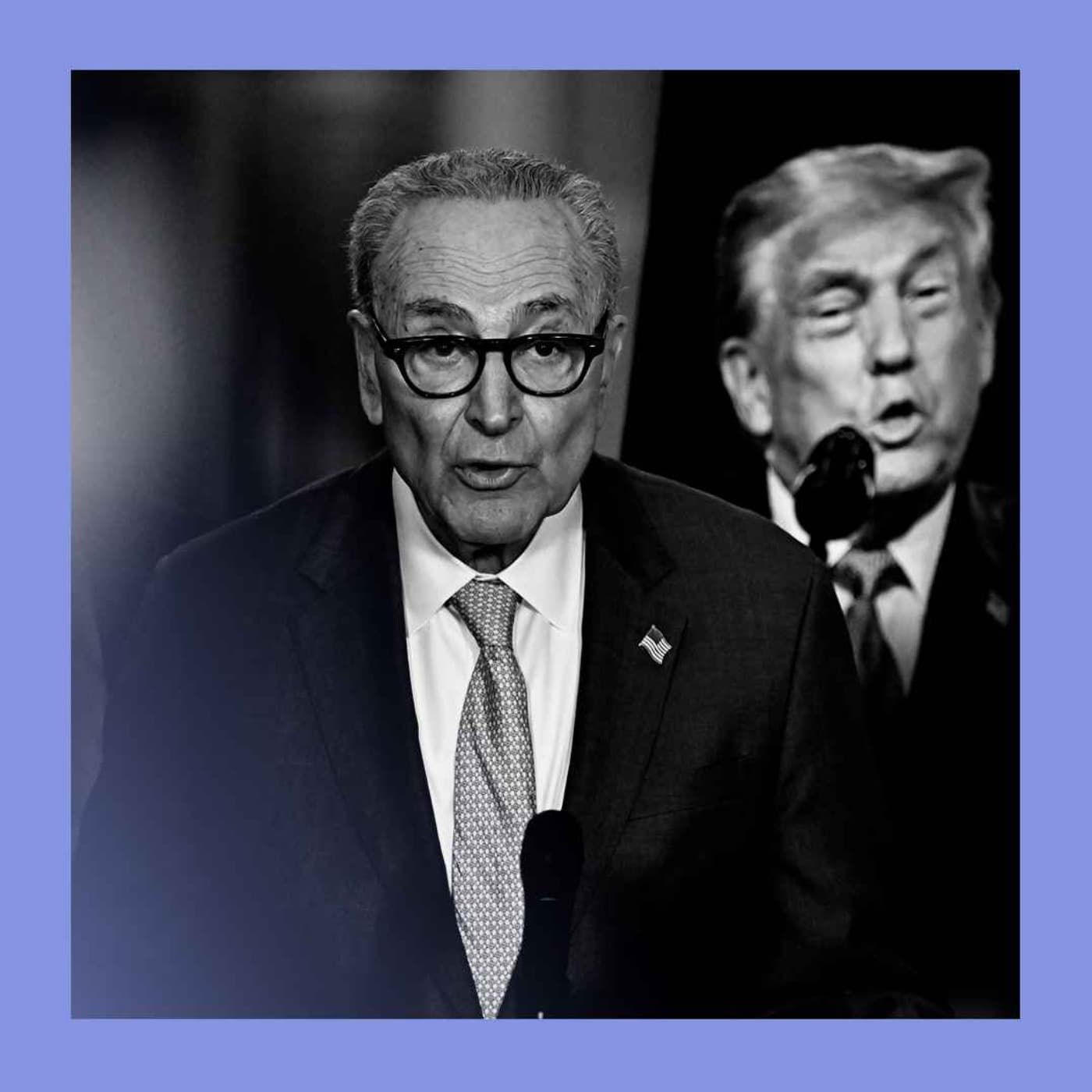
Episode Details Episode Title: Spars and Strikes: Who Backs Iran War? Description: This episode examines the ongoing conflict involving Iran, the domestic implications for Donald Trump, shifts in European defense policies, and the dynamics of MAGA-branded consumer products.
Guests and Hosts:
- Rosie Blau (Co-host)
- Jason Palmer (Co-host)
- Adam Roberts (Foreign Editor)
- Sophie Pedder (Paris Bureau Chief)
- Shera Avi-Yonah (Business Writer)
---
Key Topics Covered
- Iran Conflict
- Operation Epic Fury: Ongoing U.S. military actions against Iran.
- Political Implications for Trump: Shift from a peace president to a war president, with potential impacts on his support.
- War Powers Act Vote: Democrats attempt to limit Trump's military actions through Senate votes, highlighting party divisions.
- Public Sentiment and Support
- Poll Results: Initial public support for the war remains low (30-40%), contrasting sharply with historical examples like the 2001 Afghanistan invasion.
- Rallying Around the Flag: Some increase in support among Republicans despite low overall approval.
- International Alliances
- European Countries' Caution: Limited initial support for U.S. actions, with key allies hesitant to engage militarily.
- Military Deployments: France’s decision to send an aircraft carrier to the Mediterranean as a defensive posture.
- France's Defense Policy
- Nuclear Arsenal Announcement: Macron's declaration to bolster nuclear capabilities, reflecting broader security concerns in Europe.
- European Military Cooperation: France seeks to enhance collaboration with other European nations regarding nuclear deterrence.
- The MAGA Consumer Market
- Right-Wing Consumer Brands: Discussion of brands targeting MAGA supporters, including products that are marketed as anti-woke.
- Struggles of MAGA Brands: Despite political successes, many MAGA-aligned brands fail to gain traction in the market.
- Impact of Boycotts: Examples of consumer backlash against major brands like Bud Light, showing the complexities of consumer politics.
---
Key Takeaways
- The Iran conflict is reshaping political landscapes in the U.S. and Europe, with significant implications for Trump's presidency and his support base.
- Public support for the war is tepid, with historical comparisons suggesting a decline in approval as military engagement continues.
- International dynamics are shifting, with countries like France adapting their military strategies in response to emerging threats.
- The MAGA consumer market illustrates the intersection of politics and business, highlighting challenges faced by brands in a polarized environment.
---
Conclusion This episode of *The Intelligence* delves into the multifaceted implications of the Iran war, both domestically within the U.S. and internationally, while also exploring the emerging trends in consumer politics amidst a divided marketplace. The discussions reflect the complexity of contemporary geopolitical and cultural landscapes.
Written by AI. May contain mistakes. Listen to the episode to check what was said.
Chapters
Tap a time to open that second in VOOperation Epic Fury: Updates
0:46 to 1:53
Discussing the ongoing military actions in Iran and political implications.
“But turns out, not too many people are so inclined.”
Domestic Political Reactions
1:54 to 3:49
Exploring how Trump's shift to a war president impacts domestic politics.
“And this is an effort by the Democrats to force senators to come out and say whether or not they would support Donald Trump's war in Iran.”
Public Support and Historical Comparisons
3:50 to 4:50
Analyzing the American public's reaction to the war compared to past conflicts.
“Have we seen a rallying around the flag?”
International Alliances and Reactions
4:51 to 6:52
Discussing the response from international allies and their military support.
“We've already seen some shifts there, right?”
Escalation and Uncertainty Ahead
6:53 to 8:53
Evaluating potential future military escalations and the lack of clear objectives.
“There was a very notable attempt by Iran this week to try to provoke an even wider conflagration.”
France's Military Response
8:54 to 9:06
France's deployment of military assets in response to the Iran crisis.
Shifts in French Defense Policy
9:07 to 14:00
Explaining France's new nuclear capabilities and military alliances.
“has deployed the country's flagship aircraft carrier to the Mediterranean, along with a naval escort.”
European Security and NATO's Fragility
14:00 to 16:15
Discussing Europe's evolving security landscape in light of U.S. commitments.
“of America, or at least the uncertainty about America's commitment to the security of Europe, means that Europeans have to think again about their own security.”
The Struggles of MAGA Aligned Brands
16:51 to 20:58
Examining the challenges faced by brands catering to the MAGA demographic.
“In fact, they're marketed at MAGA consumers.”
Transcript
Automatic transcript. May contain errors.0:02Shera Avi-Yonah:The Economist.
0:10Rosie Blau:Hello and welcome to The Intelligence from The Economist. I'm Rosie Blau.
0:15Shera Avi-Yonah:And I'm Jason Palmer. Every weekday we provide a fresh perspective on the events shaping your world.
0:24Rosie Blau:So much has happened in the past week. You may not have noticed that France announced a major shift, both in the size of its nuclear stockpile and the shape of its military alliances.
0:39Shera Avi-Yonah:And if you're politically aligned with America's MAGA movement and inclined to manifest that in your choice of beer or pillows or razors or telecoms provider, there are brands out there for you. But turns out, not too many people are so inclined.
1:01Rosie Blau:First up, though.
1:11Rosie Blau:Day six of Operation Epic Fury and the assault on Iran continues. They are toast and they know it.
1:19Jason Palmer:Or at least, soon enough, they will know it. America is winning. Decisively, devastatingly, and without mercy.
1:28Rosie Blau:But while Pete Hegseth, America's Secretary of War, touted the military and intelligence successes, Democrats in the Senate tried to constrain Donald Trump's ability to wage war until Congress had approved the action. A win would have halted hostilities temporarily. Though this conflict is far from American turf, For Trump, the political implications could strike far closer to home.
1:53Jason Palmer:So yesterday, the Senate had a vote on what's called the War Powers Act. And this is an effort by the Democrats to force senators to come out and say whether or not they would support Donald Trump's war in Iran.
2:07Rosie Blau:Adam Roberts is The Economist's foreign editor.
2:09Jason Palmer:The failure of the vote is not at all surprising. We saw the split basically along party lines. Democrats wanted to go against the war. Republicans have gone for it, by and large. But what that does is it puts on record whether or not you supported it from the start. And that could become tricky for senators later on, depending how this war unfolds.
2:29Rosie Blau:Adam, this war is a huge political gamble and a change in style of Trump from a peace president, which he came to power saying he was going to be, to a war president. How's that playing domestically?
2:42Jason Palmer:So yeah, you're completely right to say that the old Donald Trump, the Donald Trump of 2016, if you remember, the one who campaigned against forever wars, who attacked the neocons for dragging Americans into conflicts in distant parts of the world. That old Donald Trump would be horrified by what he's seeing right now. The new Donald Trump is ready to send special forces to Venezuela, to bomb Iran, and now to launch what looks like a full-scale, really big regional war in the Middle East, which it's very hard to see will be anything shorter than at least several weeks long. Pete Hegseth yesterday talked about this being an eight-week-long war.
3:19Jason Palmer:Who's to say at this stage that it won't be even longer? So for Americans, for the core group of people who oppose these long entanglements overseas, Donald Trump's old supporters, this is a really disturbing turn. This is a sense that America is yet again being dragged into a war in the Middle East, that is a war of choice. It's not essential, despite what Donald Trump says. It's not that America was being threatened by Iran, at least not imminently. And so they will find it quite hard, I think, to understand what this war is all about.
3:48Rosie Blau:Before strikes started, the idea of bombing Iran wasn't popular with the US public. Now we're in it. Have we seen a rallying around the flag?
3:57Jason Palmer:A little bit of rallying around the flag is happening. So if you're a Republican, if you're a Trump supporter, as we've seen in other occasions, they tend to swing behind the president, whatever he does. And so there's been a small increase in support in recent days, according to pollsters. But it's still historically a very low level of support for this stage of a war. So if you think back to 2001, when America invaded Afghanistan, at that time, 90 % of Americans thought that was a good idea. The most recent polling we've got for what's going on in Iran suggests that maybe 30, possibly 40 % of Americans think this is a good idea.
4:33Jason Palmer:That's a very low basis for when you're beginning the war. And remember, this is before many American soldiers have died, before we've really felt the consequences of what's happening. So if this war carries on more than a few days, that popularity level is very likely to drop.
4:49Rosie Blau:What about the American alliances abroad? We've already seen some shifts there, right?
4:56Jason Palmer:Yeah, it's very striking how few countries wanted to get in and to support America at the very beginning of this. Israel, of course, is very enthusiastic, and some have suggested that Israel was quite influential in encouraging Trump to go ahead and do this attack at all. But you go beyond Israel, and the Europeans, for example, have been quite cagey. They didn't want to lend their military bases to support the initial attacks on Iran. The Gulf allies were certainly in two minds about whether to go ahead with this. They're scared, for good reason, that the war in Iran will have big blowback on their economies, on the stability of that area.
5:31Jason Palmer:So allies such as Sakhir Starmer here in Britain were rather slow in giving Trump the support he wanted. And that, of course, provoked Trump's now fairly infamous attack on Mr. Starmer.
5:42Shera Avi-Yonah:This is not Winston Churchill that we're dealing with.
5:46Jason Palmer:I think that's not going to really bother Sakhir Starmer very much. He knows that for his domestic voters, being attacked by Donald Trump is usually not a bad thing. But it does point to some caution in this old alliance between Britain and America.
6:00Rosie Blau:What about the countries that might be drawn in, whether they want to be or not?
6:05Jason Palmer:As much as those European countries, for example, were wary of getting involved at the start, they know because they have so many of their people who live or work or visit the Gulf, that they will get drawn into this war in some way, whether they like it or not. So we've seen that the French, for example, are going to deploy an aircraft carrier to the Mediterranean to be closer to this region. The British are sending a naval ship HMS Dragon to Cyprus. Cyprus has already been the target of an Iranian attempted strike in recent days. So we will increasingly see naval assets, but also military bases, those ones that they were reluctant to lend at the beginning, are now going to be used by the Americans, initially for so-called defensive purposes.
6:49Jason Palmer:But I think increasingly we'll see many of the NATO allies and other allies of the Americans getting drawn into this too. There was a very notable attempt by Iran this week to try to provoke an even wider conflagration. So it sent a missile towards Turkey, something it had been very wary of doing in the past. Turkey is a NATO ally, and if that missile had caused damage at an American base which hosts nuclear weapons, that could have really caused a very grave escalation of this crisis. The missile was actually shot down. But you can see a very clear effort by the Iranian regime to say, well, you've started this war and we're going to make it as big and as damaging as we possibly can.
7:29Jason Palmer:And we're going to drag in as many others as we can. If we're going to go down, we're going to bring a lot of people down with us.
7:35Rosie Blau:Adam, we're on day six of Operation Epic Fury. What happens next?
7:40Jason Palmer:I think we'll continue to see a lot of bombing in the coming days. The Americans and the Israelis tell us that it's going extremely well operationally. They say that they're taking out a lot of missile launchers. They're degrading the military capabilities of Iran very successfully. That's what they say. We saw the most remarkable thing happen yesterday in the Indian Ocean, where an American submarine torpedoed an Iranian frigate, killed around 80 people, sank the ship. So I think we will continue to see very intense military escalation, but increasingly dominance from the Americans and the Israelis.
8:16Jason Palmer:But what we don't think we will see is clarity about what this is all for. Beyond the operational success, there has been very poor articulation of what the Americans and the Israelis are actually trying to achieve in Iran. We've been hearing from Pete Hegseth, from Donald Trump, from Bibi Netanyahu, a whole range of contradictory suggestions of what this overwhelmingly devastating operational attack is actually trying to achieve. And as successful as you might be on the battlefield, if you don't know why you're fighting, it's very hard to know where this war will go. And it's even harder to know when it will end.
8:54Rosie Blau:Adam, thank you very much.
8:55Jason Palmer:Thank you, Rosie.
9:06Rosie Blau:And talking of the war widening, in recent days, France's president Emmanuel Macron has deployed the country's flagship aircraft carrier to the Mediterranean, along with a naval escort.
9:27Rosie Blau:But reacting to the conflict in Iran is not the only shift in French defence policy announced this week. As our Paris bureau chief Sophie Pedder explains, much bigger changes are afoot to France's nuclear capabilities and its European military alliances.
9:44Sophie Pedder:On Tuesday evening this week, President Macron announced that he had ordered the Charles de Gaulle aircraft carrier to head for the Eastern Mediterranean. It had been in Sweden, and the decision to send it to the Eastern Mediterranean was taken in response to the worsening crisis and the need for France to have that asset in place in case of need.
10:07Rosie Blau:And what is France's stance on the Middle East and Iran specifically?
10:12Sophie Pedder:Well, France, along with the UK and Germany, has long been involved in diplomatic negotiations with Iran. And one of President Macron's first moves was to try and stress the diplomatic side of things. But as the crisis worsened over the first few days, it became clear that France, and he had always left the option open to do this, and France needed to act in order to be able to protect its own national interests. It has a naval base in the UAE, for example, but also the interests of Cyprus, which is an EU member, and of countries like Kuwait or Qatar or the UAE, with which France has a direct defence relationship and agreement.
10:49Sophie Pedder:So this is a defensive posture. France is putting the aircraft carrier there to enable it to carry out defensive actions in response to attacks on any of those interests.
10:59Rosie Blau:Sophie, it's been an interesting week for France's defence in other ways too. Macron announced that France is going to bolster its nuclear capabilities. He announced that on Monday. It's not the kind of decision you take just because Iran's just been struck. But the timing is very striking. What is that about?
11:19Sophie Pedder:Well, it's important to know that this was a speech that Macron made at the French submarine base where I went on Monday, a high security unit in the west of Brittany. It's important to know that this was something that has been prepared for 18 months. So this is not something that was drawn up in response to the Iran crisis at all. Having said that, it is a reminder of how dangerous the world is at the moment. And France's decision announced by President Macron to increase, for example, the number of nuclear warheads it will possess is very interesting, partly because of the timing, but also because of the fact that France has always had this doctrine whereby it has argued you don't need to increase your number of warheads because if you can inflict unacceptable massive damage through nuclear strike, then you don't need X number in order to achieve that.
Read the full transcript
12:08Sophie Pedder:So the deterrence effect, it has always in the past argued, is the same. I think that therefore this is quite a shift for French nuclear posture. And it was a surprise, I think, to a lot of people who are watching it, even those who follow these things quite closely.
12:24Rosie Blau:He wasn't just talking about the number of warheads, though, was he? He was also talking about his alliances.
12:30Sophie Pedder:Exactly. And that was the other really important shift in this speech, was that over the years, over the decades, in fact, since the 1970s, successive French presidents have said that there is some sort of a European dimension to the French nuclear deterrent, but they've never spelt out what that is. They've never really given any sort of concrete sense to it. What does it really mean in practice? It's never been a guarantee of any sort whatsoever. And in any case, all the other allied countries have been under the US security umbrella. What President Macron announced on Monday, what was so interesting was that he has said very explicitly that France now wants to work, and he listed seven other countries from Poland to Germany to the Netherlands, work with those countries to make it real to this sort of European dimension to the French deterrent.
13:15Sophie Pedder:That doesn't mean that it's very important to remember this, that any other country would have their finger on the French nuclear button. That remains a completely sovereign French decision. But what it does mean is that there could be all manner of exercises that involve other countries contributing conventional weapons, conventional assets, a sense of bringing in other countries, not quite under a French umbrella, because it's not a guarantee in an explicit sense, but in a way that sends a very strong message to adversaries that European countries are in this together.
13:46Rosie Blau:It's a huge shift in strategy. Why is he doing it?
13:50Sophie Pedder:There are two elements to this. One is obviously the Russian threat remains very real to Europe. Europe feels vulnerable. And the second is that the disengagement or the potential disengagement of America, or at least the uncertainty about America's commitment to the security of Europe, means that Europeans have to think again about their own security. Now, partly that is done under NATO and Macron has made it very clear that this new arrangement isn't in any way in conflict with NATO. But what it is, is something that can be in parallel as a sort of extra a compliment or even a hedge against that sort of disengagement.
14:25Rosie Blau:So why are the other European countries wanting to be part of this?
14:29Sophie Pedder:Well, I think this is what's so interesting. There is now a really positive response, and you've seen it in the list of countries, from Germany, from Poland, Donald Tusk, the Polish prime minister, welcomed this announcement immediately, so did Friedrich Metz, the German chancellor. There is a sense, I think, of a realisation among France's allies in Europe that they have to stick together now and they have to take seriously these discussions with France. It's a very complicated subject when it comes to nuclear deterrence. These talks usually take a long time. And it's a measure, I think, of the moment that you have such a positive reaction from those countries.
15:05Sophie Pedder:This alliance is not exclusive. It's been made very clear by France that other countries are welcome to join these conversations if they want to. And Norway has suggested it might do so. So the list could grow.
15:17Rosie Blau:Sophie, it was in an interview with you that Macron said that NATO was brain dead. Is it?
15:25Sophie Pedder:I don't think that in his speech anywhere he was suggesting that NATO is brain dead in any way. I think that what he's trying to do is to suggest that the alliance is more fragile than it's been because of the doubts about the American guarantee. and that's what this is all about. He is not trying to undermine NATO. He's not trying to suggest that France wants to do something that is a rival to NATO. He's simply taking stock of a situation which is worrying for everybody in Europe. France remains a NATO member. It continues to take part in operations in places like Romania or in the Baltic states.
16:05Sophie Pedder:So it is very much committed to NATO but it's worried whether America is committed to NATO at the same time and that's what this is all about.
16:13Rosie Blau:Sophie, thank you very much.
16:15Sophie Pedder:Thanks, Rosie.
16:32Shera Avi-Yonah:Hey, Conservative Dad here. Jump in. We're going to go for a little drive. I got a woke beer smoky on my tail.
16:38Adam Roberts:So if you spend any time listening to right-wing talk radio or watching Fox News, you might hear ads like that for businesses that are not mainstream and they're not marketed at all consumers. In fact, they're marketed at MAGA consumers.
16:54Shera Avi-Yonah:Shira Aviona writes about business for The Economist.
16:58Adam Roberts:But even as Donald Trump has been remarkably successful politically, these brands have been less so.
17:04Shera Avi-Yonah:And the brands are created in sort of a direct response to the notion that, I don't know, regular beer is not MAGA enough, is too woke?
17:13Adam Roberts:So it depends. Some of them advocate for specific conservative-aligned causes. So Every Life is a pro-life diaper brand that donates some of its proceeds to pro-life causes. Other times, the selling point is that it's beer but MAGA.
17:29Shera Avi-Yonah:And you say there is an entire parallel universe of them. This goes far beyond just the beer.
17:34Adam Roberts:Yes, it goes to beer, cigars, obviously T-shirts, pillows. Some people around January 6th became familiar with Mike Lindell, the MyPillow guy who is one of the biggest advertisers on talk radio and right-wing podcasts as well.
17:49Shera Avi-Yonah:I can't bear it when MyPillow is too woke. So business is booming for all of these different things.
17:54Adam Roberts:Not exactly. While Trump has done well politically and has been winning elections, these brands have done less well. Very few are publicly listed, but the ones that are have seen their share prices tank, even though they had a brief period of euphoria after Trump won the 2024 election. Since then, not doing as well. Even the small private ones, few report success that is commensurate with, in theory, addressing at least half of the American public.
18:20Shera Avi-Yonah:Well, exactly. The business case should be good. Why are they doing poorly?
18:23Adam Roberts:So very few people want their consumer choices to reflect their political predilections. Say you take the largest possible group, which is maybe everyone that voted for Trump and even possibly Trump-curious Democrats. Even within that, it's a much, much, much smaller group that wants politics to be part of their public-facing consumer choices. So if you go out to the beach, say, and you take some beers, people can see the label. And few people want to broadcast their political opinions through that kind of choice. Actually, where you see MAGA show up more in terms of consumer markets is not in supporting new brands, but in trying to press existing ones who diverged from their political opinions.
19:11Shera Avi-Yonah:How do you mean? How does that work?
19:13Adam Roberts:So a kind of classic case is a boycott. So for example, Bud Light really has taken a multi-year hit after a MAGA-led boycott in 2023 when it sponsored a post with a transgender influencer. This drew MAGA's ire and Bud Light lost its spot as America's best-selling beer. And in fact, even though it's been years since that, has continued to tumble in terms of its consumer share. And sometimes the backlash has just achieved its goal very quickly. So, for example, Cracker Barrel last summer rebranded in a way that MAGA consumers interpreted as abandoning its traditional Southern-themed positioning, and they felt that the new logo was woke in their parlance.
19:58Adam Roberts:And so there was a big uproar and the company essentially walked it back and said, listen, we realize that this is a mistake. Clearly a large section of our consumer base is not happy with this. So we're going back to the original.
20:11Shera Avi-Yonah:And so with that kind of example, people who would otherwise be buying less woke pillows are pressing those existing big brands into changing?
20:19Adam Roberts:Yes. So I think Bud Light was particularly vulnerable for a few reasons. One is that, as I was saying earlier, beer is kind of a visible consumer choice. So people may not want to signal I'm a MAGA voter with their beer. But if they're in, say, a conservative crowd, they don't want to signal that they supported what Bud Light did. So they might choose a beer that signals nothing rather than choosing Bud Light.
20:42Shera Avi-Yonah:I mean, it seems clear then for many brands the best idea is to not enter the war at all. But the war is kind of coming to their door in a lot of cases.
20:50Adam Roberts:Exactly. You can say, you know, bosses stay out of politics. But in a lot of these cases, politics didn't stay away from them.
20:58Shera Avi-Yonah:Shira, thanks very much for joining us.
20:59Adam Roberts:Thanks so much.
21:14Rosie Blau:That's all for this episode of The Intelligence. We'll see you back here tomorrow.
21:23Thank you.
From the publisher
As America continues to batter Iran, what are the domestic implications of the war for Donald Trump? The widening conflict has prompted some European countries to deploy defensive forces. France has also announced a bigger shift in policy: to bolster its nuclear arsenal. And the politics of beer and nappies.
Guests and host:
- Adam Roberts, foreign editor
- Sophie Pedder, Paris bureau chief
- Shera Avi-Yonah, business writer
- Rosie Blau, co-host of “The Intelligence”
- Jason Palmer, co-host of “The intelligence”
Topics covered:
- Iran, Donald Trump, senate, Turkey
- France, Macron, nuclear warheads, NATO
- MAGA, marketing
Listen to what matters most, from global politics and business to science and technology—Subscribe to Economist Podcasts+
For more information about how to access Economist Podcasts+, please visit our FAQs page or watch our video explaining how to link your account.
Hosted on Acast. See acast.com/privacy for more information.