In short
War’s economics and the rise of “neoprimes” in US defense tech, plus how AI is being used and debated.
Guests/backgrounds
Henry Trix, The Economist US technology editor, interviews Rosie Blore (host). No other guests named.
Key claims
Cheap drones and AI-driven systems are changing battlefield economics, pushing investors toward newer defense-tech firms. The “neoprimes” are Palantir (intelligence software), SpaceX (Starshield satellite reconnaissance/communications), and Anduril (air/sea drones and anti-drone systems). Trump-era Pentagon leadership and Silicon Valley ties are accelerating contracts, potentially risking bipartisan support.
Notable examples
Pete Hegseth’s AI strategy visit to SpaceX; Palantir’s Maven command-and-control becoming a “program of record”; Anduril’s consolidated Army contract up to $20B/10 years; Palantir using Anthropic models for classified Iran-related activity; Hegseth blacklisting Anthropic over autonomous weapons/mass surveillance; SpaceX acquiring XAI for classified Pentagon work.
Written by AI. May contain mistakes. Listen to the episode to check what was said.
Chapters
Tap a time to open that second in VOThe Changing Economics of War
2:19 to 3:20
Explore how modern warfare is evolving and the rise of tech companies in defense.
“Think of all those cheap drones that have proliferated in Ukraine.”
Meet the Neoprimes in Defense
3:20 to 4:49
Learn about the new entrants in the defense market and their innovations.
“There's many of them, but they're led by a trio of what are now being known as neoprimes.”
Government Endorsements and Market Influence
4:49 to 7:11
Understand the impact of government contracts and endorsements on defense tech.
“So Henry, what you're talking about here is not so much new companies as a new entrance into the defence market.”
AI's Role in Modern Warfare
7:11 to 10:44
Discuss the controversial use of AI in military applications among neoprimes.
“There's a huge valuation premium put on these upstarts.”
America's History and War
12:59 to 14:01
Delve into the historical context of America's emergence as a superpower through war.
“In the run-up to the anniversary, we're charting important moments in the country's history, using extracts from The Economist's archive.”
The Rise of Modern America and the New Deal
14:01 to 19:46
Explore how America transformed during the 1920s and the impact of the Great Depression.
“Meanwhile, suffragettes argued that Wilson's idealistic rhetoric, his commitment to democracy abroad, did not seem to extend to half the population at home, women.”
Transition to Civil Rights and New World Order
19:46 to 20:14
Learn about the Bretton Woods Conference and the establishment of a new economic system.
“We'll see you next time for our fifth chapter, Civil Rights and the Great Society.”
Transcript
Automatic transcript. May contain errors.0:00The to-do list doesn't stop and neither does the pressure to keep up with it. If you've been running on fumes, Grow Therapy makes it easier to find care that's covered by insurance and actually built around you. Whether it's your first time in therapy or your 50th, Grow makes it easier to find a therapist who fits you, not the other way around. You can search by what matters, like insurance, specialty, identity, or availability, and get started in as little as two days. And if something comes up, you can cancel up to 24 hours in advance at no cost. Grow helps you find therapy on your time. Whatever challenges you're facing, Grow Therapy is here to help.
0:38Grow accepts over 100 insurance plans. Sessions average about$21 with insurance, and some pay as little as$0, depending on their plan. Visit growtherapy.com slash ACAST today to get started. That's growtherapy.com slash ACAST. growtherapy.com slash ACAST. Availability and coverage vary by state and insurance plan. Atlanta, imagine trading traffic for turquoise waters and turning your next long weekend into an unforgettable adventure. In Belize, you can soar through lush rainforests, explore ancient Maya temples, or just unwind on a Caribbean beach that feels like your own secret escape. And getting there is easier than ever.
1:19Delta offers nonstop flights from Atlanta straight to Belize City with a quick journey of just about three hours. Start planning your getaway now at TravelBelize.org. That's TravelBelize.org, your closest faraway paradise.
1:38The Economist.
1:44Rosie Blau:Hello and welcome to The Intelligence from The Economist. I'm Rosie Blore.
1:52Rosie Blau:Today on the show, a chapter in our series on America's history, how war created a superpower. And should you ever use emojis at work?
2:08Rosie Blau:But first...
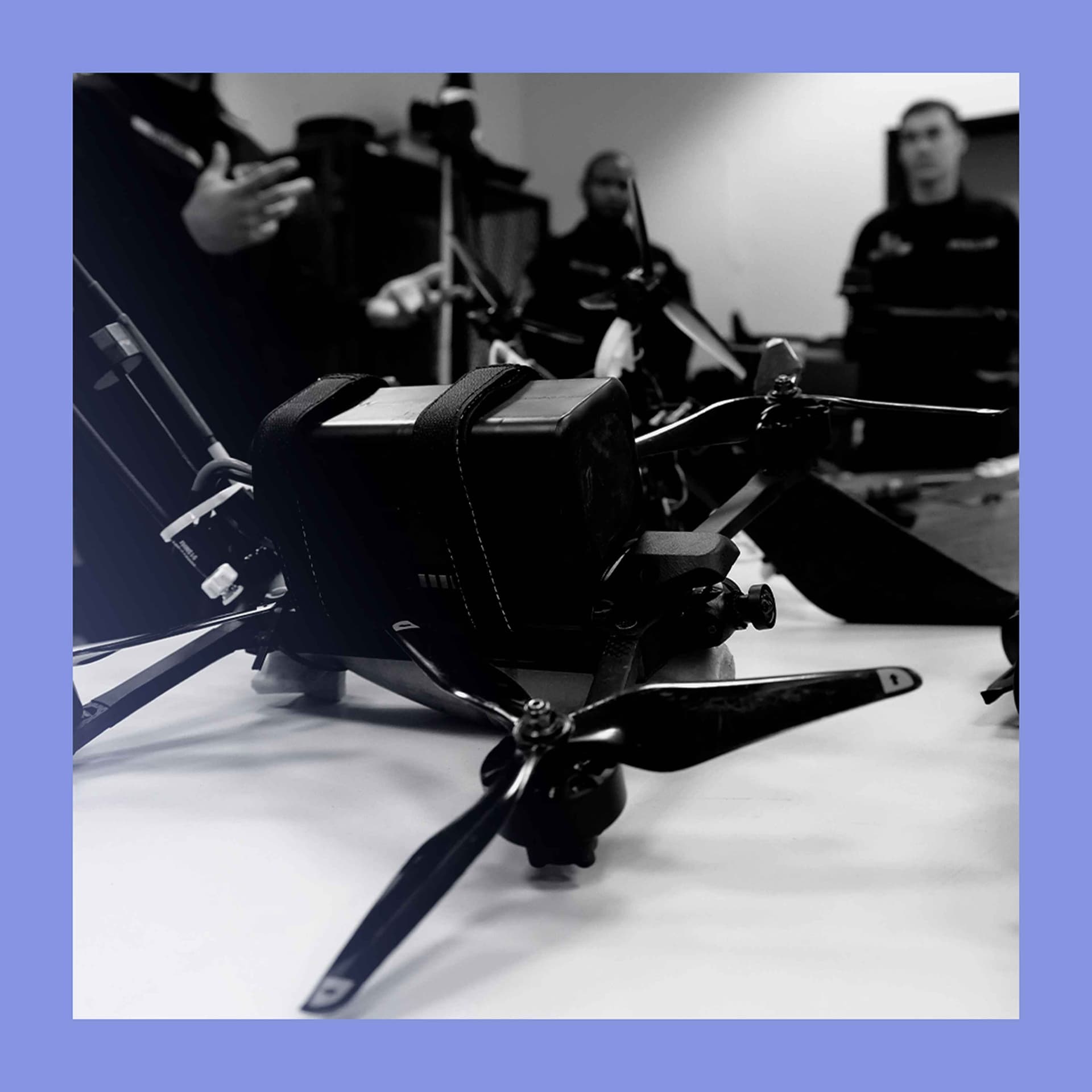
2:18Rosie Blau:War has changed. So have the economics of war. Think of all those cheap drones that have proliferated in Ukraine. They're now an established feature of the battlefield. You don't really want to spend a million dollars on a missile if it's going to be taken out by a drone that costs much less. Tech companies in America spy an opportunity. They're now grabbing government defense contracts. We're seeing the rise of a plethora of tech companies that are offering cheap, nimble, timely delivery of weapons. And it's making the old guard of big military contractors in America nervous. Henry Trix is our U.S.
3:06technology editor. Just as the country is coming to grips with the lessons that it's learning from the war in Iran and the ongoing war between Russia and Ukraine.
3:19Rosie Blau:And how is this shaping the nature of war? Who are these companies? There's many of them, but they're led by a trio of what are now being known as neoprimes. Now, the primes refer to established giants within America's military industrial complex. And the neoprimes are kind of like the new kids on the block. They are led by Palantir. It's probably the oldest of them. And Palantir is a software giant that provides intelligence systems. and then there's SpaceX, the Elon Musk space company, which provides a Star Shield satellite network that offers reconnaissance communications on the battlefield and then there's an up-and-coming one from the west coast of California which is Anderil and that makes air and sea drones alongside anti-drone weaponry, software systems, etc.
4:21Now, they have beneath them a number of smaller defence firms who are either making weapons or they're changing the way that weapons are made. They're changing the kind of defence manufacturing industry. And all of these have found a very receptive audience in the Trump administration, which actually has quite a few Silicon Valley types, call them tech bros, in the Pentagon.
4:49Rosie Blau:So Henry, what you're talking about here is not so much new companies as a new entrance into the defence market. What sort of projects are they actually getting? Yes, this has been a year with some particularly strong endorsements. So back in January, America's Secretary of War, Pete Hegseth, traveled to SpaceX in Texas in order to release a new artificial intelligence strategy for the defense industry. And he drew inspiration from Elon Musk, saying that the defense industry needed to accelerate like hell in the way that they make weapons. And then a couple of months later, you saw that Palantir, which runs a program called Maven that does command and control, this was designated a program of record, which means that it gets funding locked in for years ahead.
5:45And that's very much something that prime contractors rely on. And then you also saw Anderil, which has a number of contracts with the army, seeing those contracts consolidated into one big one that is supposedly worth up to 20 billion over 10 years. So these were a sign that really there is more importance and weight being put on these three in particular.
6:13Rosie Blau:And how is all of that actually changing the defence industry? It's been interesting to look at the way that the battle has been waged in Iran. there's been lots of use of expensive fighter jets and expensive missiles and whatever and actually it's the Iranians that have been using the cheaper tech the drones etc so at the moment I think it's fair to say that the defense primes still win the lion's share of contracts their contracts are much bigger. I mean, the F-35 stealth fighter program led by Lockheed Martin is worth something like$2 trillion over decades, which is substantially more than a$20 billion program for Anderil.
7:04But that said, investors at least, they are sensing a changing of the guard, which is why venture capital money is pouring in to defence tech at record levels. There's a huge valuation premium put on these upstarts. And part of that is also because there's a sense that a bigger share of the defence budget is going to go to them over the years ahead as the US tries to upgrade and really modernise its military.
7:37Rosie Blau:And Henry, there have been some questions about the relationship between these new entrants into the defence market and members of the Trump administration, haven't there? Yes, there have been some quite striking supportive statements made recently for the neo-primes. President Trump himself rushed to the defence of Palantir recently when it was suffering from a short sellers attack and its stock was falling in the market, emphasising what a great warfighting firm it was. And then his son, Donald Trump Jr., is also a partner at 1789 Capital, a VC firm that is invested in Anderil. So the risk here is that it jeopardises the bipartisan support that there is for defence tech.
8:29To date, both Democrats and Republicans have supported this modernisation of the military. And it would be unfortunate if a sense of favouritism jeopardised that bipartisanship.
8:42Rosie Blau:And Henry, you mentioned the use of AI in weapons, which of course we've spoken about on the show before. Where do these neoprimes stand in regards to that? All the neoprimes are advocates of using AI for military purposes, though they say that for now, most of the stuff that's being used on the battlefield is more like machine learning than generative AI. But that said, Palantir has been using clawed models by Anthropic, the AI lab, for classified military activity in the war against Iran. Anduril proudly uses AI within its autonomous weapons and SpaceX has just acquired XAI, Elon Musk's AI lab, which will also do classified work for the Pentagon.
9:34So AI is being used for target identification on the battlefield. It's being used increasingly widely and it's incredibly controversial. Amongst the neoprimes, when I spoke to them, they played down the risks. They say that it's rather like self-driving cars, which are supposedly safer than human drivers. So it should minimise casualties on the battlefield. And they also insist that for the foreseeable future there will always be humans making the lethal decisions. However, they acknowledge that experiments are already underway to see how AI can handle one step after another in the kill chain.
10:15And you can tell that the Trump administration is rushing to make progress on this front. So when Anthropic recently stipulated that none of its models could be used for autonomous weapons or for mass surveillance, Hegseth's Department of War blacklisted it as a supply chain risk, nearly bringing the company down in the process. And it's just a reminder of how fraught this whole new era of defence tech and AI remains.
10:51Rosie Blau:Henry, thank you very much for talking to me. Great talking to you, Rosie. And you can hear more on the upstart shaking up our defense industry on a recent episode of Money Talks, our weekly business and finance show. The link is in the show notes.
11:29your first time in therapy or your 50th, Grow makes it easier to find a therapist who fits you, not the other way around. You can search by what matters, like insurance, specialty, identity, or availability, and get started in as little as two days. And if something comes up, you can cancel up to 24 hours in advance at no cost. Grow helps you find therapy on your time. Whatever challenges you're facing, Grow Therapy is here to help. Grow accepts over 100 insurance plans. Sessions average about$21 with insurance and some pay as little as$0 depending on their plan. Visit growtherapy.com slash ACAST today to get started.
12:08That's growtherapy.com slash ACAST. growtherapy.com slash ACAST. Availability and coverage vary by state and insurance plan. Atlanta, imagine trading traffic for turquoise waters and turning your next long weekend into an unforgettable adventure. In Belize, you can soar through lush rainforests, explore ancient Maya temples, or just unwind on a Caribbean beach that feels like your own secret escape. And getting there is easier than ever. Delta offers nonstop flights from Atlanta straight to Belize City with a quick journey of just about three hours. Start planning your getaway now at TravelBelize.org.
12:45That's TravelBelize.org, your closest faraway paradise.
12:58Rosie Blau:In July, America will be celebrating its 250th birthday. In the run-up to the anniversary, we're charting important moments in the country's history, using extracts from The Economist's archive. This month, war and the making of a superpower.
13:21The world must be made safe for democracy. Its peace must be planted upon the tested foundations of political liberty. On April 2nd, 1917, President Woodrow Wilson called for America to enter the First World War. We have no selfish ends to serve. We desire no conquest, no dominion. We seek no indemnities for ourselves, no material compensation for the sacrifices we shall freely make. We are not one of the champions of the rights of mankind. America's intervention proved decisive in the war. The Allies won. Meanwhile, suffragettes argued that Wilson's idealistic rhetoric, his commitment to democracy abroad, did not seem to extend to half the population at home, women.
14:17Women were powering the industrial war effort, And so Wilson buckled. By 1920, the 19th Amendment was added to the Constitution, legally guaranteeing the right for women to vote.
14:39In the 1920s, America roared into modernity. Henry Ford introduced assembly line production, cutting the cost of cars. Modern consumer culture was born. Flappers, jazz musicians, black market liquor. This was a time of alcohol prohibition, which The Economist was not a fan of. There is an old story of a youthful British prince who said, when I am king, I shall make a law prohibiting all sin. No one could be visionary enough not to laugh at this boyish, unsophisticated idea. Yet some highly educated countries have allowed their elected representatives to pass laws almost as impossible a fulfillment as the mental project of the infant prince.
15:23For a while, it seemed like the good times might roll on forever. They didn't. In October 1929, Wall Street crashed, tipping the world into the Great Depression. America's response made matters worse. By 1933, one in four American adults were jobless. I pledge myself to a new deal for the American people.
15:57In 1933, a newly elected Franklin Delano Roosevelt presented his remedy for the Depression, the New Deal. The government insured bank deposits, provided relief for the jobless, strengthened labor protections and gave millions of Americans jobs building roads and dams. The deal had its doubters, but it was mostly a welcome change to the excesses of laissez-faire capitalism. We must be the great arsenal of democracy. For us, this is an emergency. With words so similar to those of Wilson, his predecessor, In December 1940, Roosevelt explained why Americans must do more to help the British fight the Nazis.
16:51He insisted that aiding Britain offered the best hope of keeping America out of the war. More plausibly, he was buying Winston Churchill time until America could join it. Then, on December 7th, 1941, Japan attacked Pearl Harbor, and America entered another world war in the name of democracy Ironically, America trampled on the liberties of those it claimed to defend Roosevelt's administration interned roughly 120 ,000 people of Japanese descent, two-thirds of them American citizens, on the grounds that they might engage in sabotage or espionage. Black soldiers were segregated during the war and returned home to more inequality.
17:42On the battlefield, America relied on overwhelming firepower and complex logistics, hallmarks of the most advanced army the world had ever seen. And it emerged as the world's unquestioned superpower.
18:07On August 6th, 1945, America unleashed its greatest weapon and a new horror upon the world. the bomb had been created by a team of American, British, and émigré scientists led by J. Robert Oppenheimer. They all rightly feared that Germany might build such a weapon. But when they saw the results, several scientists petitioned the new president, Harry Truman, not to use the bomb. But America dropped two. One in Nagasaki and one in Hiroshima, killing around 200 ,000 people by the end of 1945. The Economist described the atomic bomb as The largest and most terrible of the horrors of war. One more weapon of destruction to which there is no answer.
19:03One more terror, which is better to have on our side, but best not to have at all. Japan surrendered on August 15th. bringing an end to the war.
19:20In July 1944, in Bretton Woods, New Hampshire, negotiators designed a new economic system with America at the heart. More multilateralism followed. The next spring, delegates ratified the Charter for the United Nations, with both America and the Soviet Union agreeing to take part. A new world order was born.
19:52We'll see you next time for our fifth chapter, Civil Rights and the Great Society.
20:13Rosie Blau:If you haven't already listened to The Weekend Intelligence, you definitely should. It's a personal story, but one that's universal too. Nearly one in five births in Britain that follow IVF involve a donor. What happens to the children who are created? Should they know their donor's identity? Or find out how many siblings they have? We already knew that the modern family could be a complicated place, Now we hear just how complicated from some who are trying to approach it with more openness. 17 siblings and counting is in your feed already. You'll need to be a subscriber.
21:01Hello and welcome to our emoji training webinar. This session is aimed primarily at older workers who still don't have a clear grasp of what emojis to use and when. But it is open to people of all ages. I can see that most of you have done your preparatory assignment on what exactly the monocle emoji means. We'll discuss that later in the session and also do some emoji tests. First, though, let's just dive in and open it up to questions. I don't know whether it's appropriate to use the heart emoji at work. Am I implying that I'm in love with the person? Great question. It depends on whether you're using a reaction emoji, that's the small one that attaches to a specific message, which is clearly a response to what has just been said.
21:51If you send a heart emoji as a reply on its own, you're basically proposing. I told my boss that I wouldn't be at work one week because I was suffering from amoebic dysentery. Then I got a notification that she liked my message. I've lost half my body weight and she's apparently taking pleasure in my misfortune. If you do a thumbs up reaction emoji on some platforms, it tells the other person that you liked their message. Your boss should have written back, but she was probably acknowledging your message rather than rejoicing in it. Some Gen Zers regard thumbs up emojis as a bit frosty, by the way.
22:31This is why. When someone makes a weak joke on a group channel, I feel under tremendous pressure to put that silly face with tears rolling down his cheeks. I haven't laughed out loud since 1997, so this feels completely insincere. Is there a thin smile emoji that I could use instead? There is, but it wouldn't be wise. The tears of joy emoji is the equivalent of that small snorting sound people make in real life when they want to acknowledge a failed attempt at humour. If you ever do find something genuinely funny again, use the tears emoji tilted to the side. This implies actual amusement.
Read the full transcript
23:14Rosie Blau:I frequently make weak jokes and everyone responds with these faces with tears running down their cheeks. I think they might be mocking me. How can I tell? Are any of them tilted? The emojis are all too small for me to see properly. And then when I do zoom in on them, I still don't know what they mean. I hope this session will help, but also try not to worry. A sense of perpetual confusion is part and parcel of working in any office environment. This is just a variation on that feeling. I work at an eggplant farm. You'll see I've muted this person. Someone makes a variation on this tired joke at every session I run.
23:59Rosie Blau:I still find the whole emoji thing totally infantilising. I'm supposed to let off a virtual party popper every time we publish an episode. Why? I'm not three. It's part of joining in. People used to celebrate things by getting drunk at lunchtime. Emojis are cheaper, faster and generally preferred by HR departments. Now, I'm going to need you all to come back next week. Emoji use is changing all the time. What I've told you is already out of date. Andrew Palmer is host of Boss Class, our podcast series on work and management.
24:49Rosie Blau:That's all for this episode of The Intelligence. See you back here tomorrow.
25:36We'll be right back. TravelBelize.org. That's TravelBelize.org, your closest faraway paradise.
From the publisher
In Iran, America is using expensive weaponry against cheap local drones. Can upstart tech companies change the economics – and nature — of conflict? As part of our ongoing series on the US at 250, we examine the impact of the two world wars. And should you ever use an emoji at work?
Listen to “Money Talks” on defence tech upstarts.
Guests and host:
- Henry Tricks, US technology editor
- Annie Crabill, a senior digital editor
- Andrew Palmer, host of “Boss Class” podcast
- Rosie Blau, host of “The intelligence”
Topics covered:
- Pentagon, Palantir, SpaceX, Anduril
- America 250, Woodrow Wilson, FDR
- Emojis, aubergines
Listen to what matters most, from global politics and business to science and technology—Subscribe to Economist Podcasts+
For more information about how to access Economist Podcasts+, please visit our FAQs page or watch our video explaining how to link your account.
Hosted on Acast. See acast.com/privacy for more information.