In short
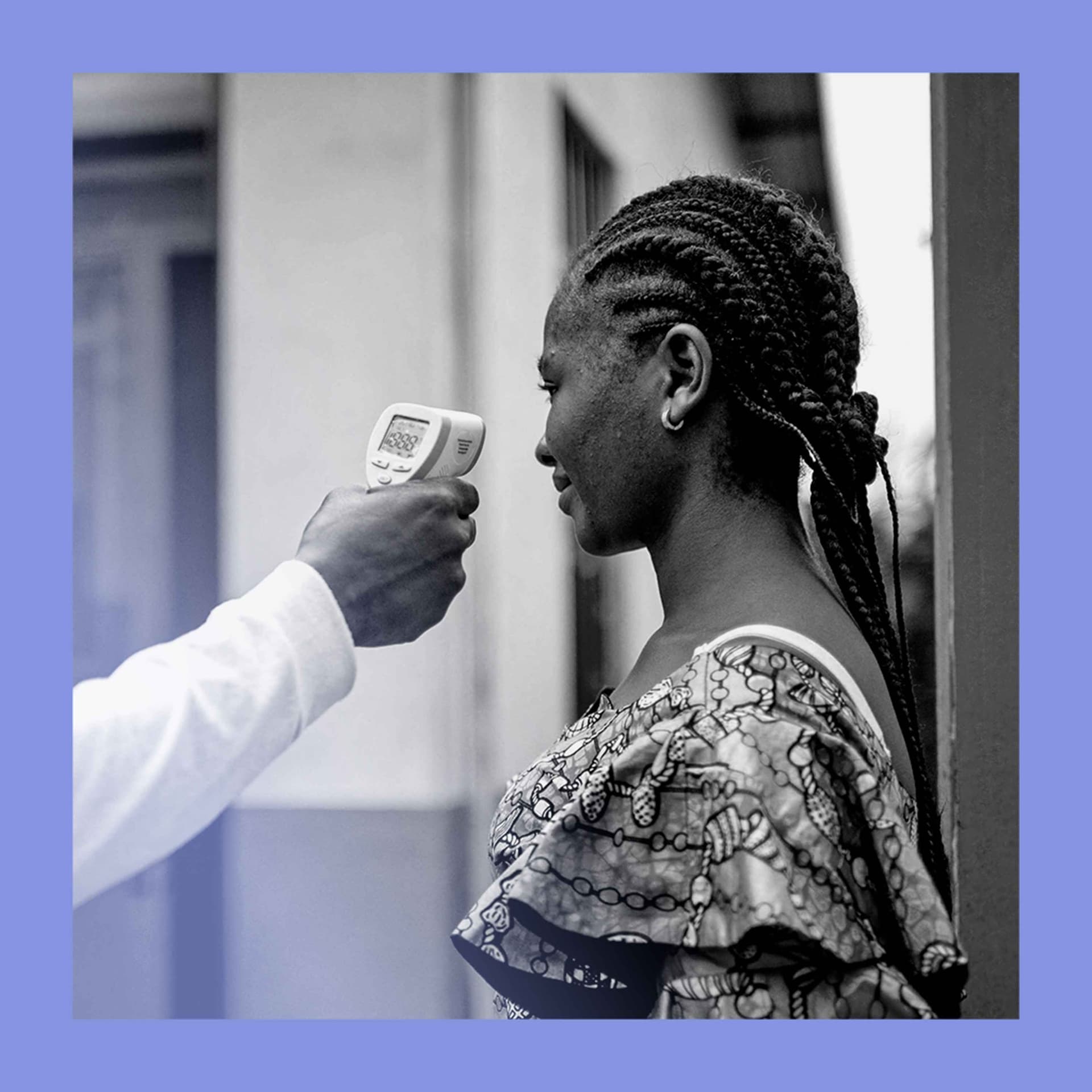
WHO declares a public health emergency over an Ebola outbreak in eastern Democratic Republic of the Congo (DRC) that has spread to Uganda, raising fears it could become the worst since 2014–16.
Guests
John McDermott, The Economist chief Africa correspondent (interviewed).
Key claims
response capacity is weaker because the Bundibugyo strain has no known vaccine, COVID-era testing disruptions limit rapid genetic testing, and there are fewer healthcare workers.
Notable examples
McDermott reports from Goma, where an NGO-led clinic was handling a measles outbreak alongside the first Ebola case; he cites the east DRC’s limited state presence, armed groups, and US public health aid cuts as part of a “perfect storm.”
Written by AI. May contain mistakes. Listen to the episode to check what was said.
Chapters
Tap a time to open that second in VOWHO Declares Ebola Emergency
1:45 to 2:29
The WHO has declared a public health emergency regarding the Ebola outbreak.
“On Sunday, the World Health Organization made official what had been brewing in headlines for days.”
Current Ebola Outbreak Overview
2:29 to 3:38
Details on the ongoing Ebola outbreak, its severity, and spread.
“Africa had been getting better at that kind of response.”
Improvements in Ebola Response
3:38 to 4:25
Discussing advancements in Ebola response strategies on the continent.
“And there are basically two reasons for that.”
Challenges Faced in Eastern DRC
4:25 to 4:58
Exploring the specific challenges presented by the current outbreak in DRC.
“over the past few weeks, the Bundigujo strain, there is no known vaccine against it, although there may be some experiments done in the next few weeks.”
Impact of US Funding Cuts
4:58 to 6:27
Analyzing the effects of US funding cuts on the Ebola response efforts.
“And the community-based response will just be more problematic than it has been in recent outbreaks.”
Preparedness for Future Outbreaks
6:27 to 7:59
Discussing the preparedness of African nations for future health crises.
“So in terms of what remains of international aid, what do you think will happen now?”
Andy Burnham's Political Journey
9:45 to 17:48
Exploring Andy Burnham's rise in politics and public perception.
“You know, in the history of the intelligence, we have seen five different prime ministers of the United Kingdom.”
Celebrity Book Clubs: Influence and Critique
17:48 to 23:25
Delve into the rise of celebrity book clubs and their impact on literature and culture.
“He is trying to do something that is extremely brave and extremely difficult.”
Transcript
Automatic transcript. May contain errors.0:00SIBO DataVantage delivers real-time market data to help firms make informed trading decisions. That same data supports the development of indices and tradable products across global markets. Learn more at SIBO.com slash DataVantage. Dell PCs, with Intel inside, are built for the moments that matter. For the moments you plan and the ones you don't. Built for the busy days that turn into all-night study sessions. The moment you're working from a cafe and realize every outlet's taken, the times you're deep in your flow and the absolute last thing you need is an auto-update throwing off your momentum.
0:39That's why Dell builds tech that adapts to the way you actually work. Built with long-lasting battery, so you're not scrambling for the closest outlet. And built-in intelligence that makes updates around your schedule, not in the middle of it. They don't build tech for tech's sake. They build it for you. Find technology built for the way you work at dell.com slash dellpcs. That's dell.com slash dellpcs. Built for you.
1:12The Economist.
1:20Hello and welcome to The Intelligence from The Economist. I'm Jason Palmer.
1:28Today on the show, profiling the polling favourite for Britain's next Prime Minister and the warm, cosy, useless world of celebrity book clubs.
1:45But first...
1:53On Sunday, the World Health Organization made official what had been brewing in headlines for days. I declared a public health emergency of the international concern over the Ebola outbreak in the Democratic Republic of the Congo that has already spread to Uganda. Ebola is, to put it mildly, a horrible pathogen, spread only by contact with bodily fluids that causes a hemorrhagic fever that can have a huge fatality rate. That WHO designation signals a more complicated outbreak that demands a more coordinated response. Africa had been getting better at that kind of response. But this time, things are different.
2:35What we know so far is that this Ebola outbreak seems to be shaping up to be the worst since 2014-16, when more than 10 ,000 people died in West Africa. John McDermott is our chief Africa correspondent.
2:54Initial data suggests that more than 100 people have died in the east of the Democratic Republic of Congo, perhaps around 400 cases. But these are almost certainly underestimates, and it's safe to assume that the virus has probably been spreading for a few weeks in eastern DRC and could well be in Burundi, Rwanda, South Sudan, in addition to other parts of the region. And I'm sure many listeners will remember that big outbreak from around a decade ago. How has response changed in the interim? Africa has gotten a lot better at dealing with Ebola. I mean, this is the 17th outbreak on the continent over the past 50 years.
3:38And there are basically two reasons for that. The first is thanks to scientific brilliance, there are now vaccines for some of the Ebola strains, which allows you to create a kind of proverbial ring fence around outbreaks. And then the second is that on the ground teams of community health workers have gotten a lot better at building trust with local communities, explaining how the virus spreads, and then ultimately quarantining and dealing with outbreaks like this. And so in that sense, Africa is very ready for this outbreak? Not quite, because those two positive developments that we've seen over the past decade or so are not as apparent in this particular instance.
4:24So the strain that has emerged in Eastern DRC over the past few weeks, the Bundigujo strain, there is no known vaccine against it, although there may be some experiments done in the next few weeks. And then the second issue is that the kind of on the ground response will also be more problematic, partly because testing is more difficult. You can't do the rapid genetic testing that we are all familiar with because of the COVID pandemic here. That strain is not amenable to it. But also because there are just fewer healthcare workers to throw at the problem. And the community-based response will just be more problematic than it has been in recent outbreaks.
5:07And how much of that shortfall of health workers on the ground has to do with the withdrawal of US funding that we've talked about on the show so many times? Look, I think it's something of a perfect storm. So the outbreak's in the east of the DRC, where I actually was a few weeks ago reporting another story. And in the East, there is very little state presence. The capital of Congo is 2 ,000 kilometers away. And there's this constellation of armed groups which make providing medical care difficult at the best of times. At the same time, you've had these well-documented cuts to public health aid, which America was always in the lead of amongst Western countries.
5:49So as it happens, I was at an NGO-led clinic in Goma, where there's just been a case announced of Ebola. And I was there to see how they were dealing with a measles outbreak. And similar factors were at play there. Vaccines weren't getting to people who needed them. And also the types of community health workers that you would need to actually do the response weren't as numerous as they had been in the past. So if you think about what might be the case for an even more deadly virus, then that's what we're seeing today. So it's not just the aid cuts, but because they're coming on top of an already difficult situation, they certainly don't help.
6:28So in terms of what remains of international aid, what do you think will happen now? What do you think should happen now? Overnight, the US has announced an extra$13 million of funding, which sounds fine, but it is a fraction relative to what the U.S. was spending a decade ago on that West African outbreak. It's also suspended travel for people who've recently been in DRC, South Sudan, and Uganda. So it seems like the message from Washington is that Africa, you're on your own. And that means the response will be led by a combination of international organizations, the World Health Organization, international NGOs, and African institutions, both African governments, but also the Africa CDC, which is a kind of child of the American version.
7:18And it grew in sophistication during the COVID outbreak. So it's much better place than it has ever been to respond to something like this. It has the knowledge. The question is whether it has the resources, given that this outbreak is already further along than some of the ones we've seen in recent years. And so to your mind, do you think the response that's being mounted now will be enough to contain this outbreak? The good news is that African governments broadly know what they're doing. And that's because they've had the experience of COVID and they've had the experience of dealing with several Ebola outbreaks in the past.
7:54The knowledge is there. The bad news is that if you like the institutional immune system that was built up over time, the mix of science and community health work is weaker than at any point in the past decade. And while I do think that ultimately international and African expertise will get this outbreak under control, there is a warning about what we can expect in the future when this institutional immune system is sadly weakened. John, thanks very much for your time. Thank you, Jason. There's a lot more to be said about the science of Ebola and of hantavirus, another pathogen that's been spreading in headlines.
8:39We've got you covered. My colleagues on Babbage, our sister show on science and technology, have been looking into both outbreaks and will have the latest analysis when the next episode drops tomorrow. Have a listen. Get informed.
9:17This episode is brought to you by Capital One. Capital One's tech team isn't just talking about multi-agentic AI. They already deployed one. It's called Chat Concierge, and it's simplifying car shopping. Using self-reflection and layered reasoning with live API checks, it doesn't just help buyers find a car they love. It helps schedule a test drive, get pre-approved for financing, and estimate trade-in value. Advanced, intuitive, and deployed. That's how they stack. That's technology at Capital One.
9:54You know, in the history of the intelligence, we have seen five different prime ministers of the United Kingdom. Looks like we're soon going to have a sixth. Less than two years after the Labour Party won a thumping general election victory, Prime Minister Keir Starmer is on the ropes. In local elections a couple of weeks ago, it was Labour that got the thumping. Nearly a quarter of MPs called for Sir Keir to stand down. Several ministers headed for the door themselves. Stand down he has not, but talk has turned to potential challengers. There's Wes Streeting, until his resignation, the health secretary.
10:31Angela Rayner, former deputy prime minister. Dark horse and familiar name, Ed Miliband, energy secretary. But today we're going to meet someone else. People are losing faith in politics. They deserve a bigger response than politicians have given them before. And that's what I intend to provide in this by-election like no other. Andy Burnham is the mayor of Greater Manchester and a polling favourite. At the moment, Andy Burnham looks like the most plausible successor to Keir Starmer as Prime Minister of Britain. Joel Budd is our social affairs editor. But there are many hurdles in front of him.
11:13First of all, he needs to become an MP, and then he needs to win the leadership contest. Okay, before we get into the nuts and bolts of that, introduce us a bit to Andy Burnham. He's a funny character. He has been around since 2001 when he became an MP. He was an MP for 16 years, under the tail end, really, of the new Labour government. He had a somewhat distinguished career as an MP, but I think, truthfully, he's emerged as a much more important figure since he's become mayor of the Greater Manchester Combined Authority. Why do you say that? What has he done in that role that has changed his standing, if you like?
11:58Well, he's enormously raised his profile. He's always been a charming figure. He's a very good retail politician. He has the strange quality of being very approachable. I've been with Andy Burnham a few times and a very striking thing is that people will come up to him and say, hey Andy, you won't remember me but I met you at a music festival or you campaigned for some cause that I was involved in or something like that. He has a character, I think, of sort of making people feel that they can talk to him. It's quite a sort of unusual thing in a politician. So that's kind of him, the man. What about him, the politician?
12:42He became mayor of Greater Manchester in 2017. And that's a funny sort of job. It's not like being the mayor of New York. The way Manchester is organized is it's a metropolis of three million people, but it's divided into 10 cities and boroughs. So the city of Manchester is just one of them. And what Andy Burnham does is he sits in a convening role, trying to get everybody to get on one page and agree what kind of master plan they want for the entire metropolis. And he controls a lot of money. So he's sort of like a manager and a conduit. And his charm has served him quite well in that role. Greater Manchester was functioning pretty well before Andy Burnham arrived, but I think it's to his great credit that he hasn't messed it up.
13:38So you're painting a picture of a very likable guy who just simply gets stuff done and everybody likes what he does. Yes, and that is the way he has been in internal Manchester politics for the most part. But Andy Burnham has another side to him, which tends to come out when he's dealing with Britain's central government. And that is that he can be pretty confrontational and pretty good at mobilizing the media. And he's shown that several times, but the time he really showed it was during the worst of the COVID pandemic. He went on television repeatedly arguing that if central government was going to shut Manchester down and impose very strict lockdown conditions on the metropolis.
14:26Central government needed to provide Manchester with more money, otherwise businesses were going to collapse. Central government did not agree and did not supply Greater Manchester with as much money as Andy Burnham thought it deserved. And he really revolted. It's brutal, to be honest, isn't it? This isn't a way, this is no way to run the country in a national crisis. It isn't. This is not right. They should not be doing this, grinding people down. And the people of Greater Manchester loved him for it. It really boosted his profile. And so if he does manage to get himself into the prime ministership, how do you think those two facets of himself would manifest as leader of the country?
15:07The truth is nobody knows. There's no real preparation for being prime minister. Keir Starmer, after all, looked like an extremely competent, decent person, and he's been pretty underwhelming. I think Andy Burnham has some quite clear advantages over Keir Starmer. He has the great knack of just repeating himself. So he repeats things like, Greater Manchester needs a London-style transport system. He's also very good at coming up with a big vision for Greater Manchester and then connecting individual policy announcements to that big vision. And as I say, he is charming. I mean, Keir Starmer has not got on particularly well with his own backbench MPs.
15:59Andy Burnham might do better. But he just hasn't been tested. I mean, he runs a tiny staff. As Prime Minister of Britain, you're running a pretty big machine. So let's talk about the path then to that job. You said, first of all, he's not even an MP, which means he cannot stand as it goes right now. Andy Burnham has to do three things. before he becomes Prime Minister of the United Kingdom. The first thing is that he needs to be nominated as the Labour candidate in a by-election that's going to take place in a constituency called Makerfield. He then needs to win that by-election if he's going to become an MP.
16:40That is very tricky because although Andy Burnham did well in this constituency called Makerfield when he was running for mayor. More recently, Reform UK, which is a populist right-wing political party, has done incredibly well in that area. In local elections on May the 7th, it did far, far better than Labour. And Reform is going to fight this by-election very hard. Andy Burnham is going to have to see off not only Reform on the right, but also the Green Party on the left. and then having become an MP if he manages it he will then have to win a leadership contest against whoever else is in the race so it's going to be tough for him he's often been quite a cautious politician not doing things that are really difficult and really unpopular and in trying to get back to the House of Commons and to become prime minister.
17:48He is trying to do something that is extremely brave and extremely difficult. Joel, thanks very much for joining us. Thank you.
18:14is a culture correspondent for The Economist. For centuries, writers were in agreement. The critic, Wordsworth noted, was a scornful sort who frowned on things. A critic knows, said the American writer Dorothy Parker, when a book is not to be tossed aside lightly, but instead thrown with great force. A critic should, as Graham Greene said of all writers, have a splinter of ice in the heart. But then Graham Greene had never met Dua Lipa. For those who don't know who Dua Lipa is, a confession I didn't before starting writing this, she is a British pop star. She is also an increasingly popular literary critic, thanks to her book club podcast, in which she interviews authors.
19:01But Dua Lipa does not have a splinter of ice in her heart. She has something much lovelier. She loves books. She loves storytelling. She loves the Australian novelist Helen Garner. and she loves Margaret Atwood's biography. I loved it. I love it. I love it so much. A hobby that was once dull, domestic and faintly from me has had a glow up. Now, anyone who is anyone and given the nature of modern celebrity, plenty of people who are almost no one has a book club. Whether it's on a podcast, a website, YouTube channel or newsletter. Reese Witherspoon has a book club. She is its book lover in chief.
19:43Gwyneth Paltrow had a book club. Crime and Punishment is one of her all-time favourite novels. Paltrow's lifestyle brand, Goop, at one time promoted a product called Vaginal Eggs, which are tricky to explain, but rarely, it is safe to say, trouble the pages of Dostoevsky.
20:03Celebrity book clubs have been popular for over a century, and with good reason. They solve so many literary problems. Publishers love them because they help flog books George Orwell's 1984 shot up the bestseller lists when it was picked by the American Book of the Month Club Books picked by Oprah Winfrey experience the Oprah effect and are grabbed from the shelves Those picked by Witherspoon similarly experience the Reese effect And readers love book clubs because they help them to know which books are actually any good Last year, over 4 million books were published in America alone And it's an open secret in publishing that most of them are either bad or dull or, more likely, both.
20:52Modern critics question celebrities' motivation, their qualifications and their dedication to the literary cause. Winfrey's podcast, for example, intersperses programs on books with programs with titles like Do Dogs Really Love Us? and Building a Billion Dollar Brand. These celebrities, critics say, are not interested in books. They are just building that brand. They are less reading books than accessorising with them on Instagram. In one shot, Lipa licks her teeth while holding a copy of Margaret Atwood's biography. A typical quote reads, Male fantasies, male fantasies, is everything run by male fantasies.
21:35Some of this criticism is bunk. Books do not demand a monkish devotion from those who work with them. T.S. Eliot worked in a bank. Anthony Trollope worked for the post office. Some of it is good old-fashioned intellectual snobbery, as if celebrities are incapable of taxing intellectual endeavour. In 1955, when Marilyn Monroe posed reading James Joyce's Ulysses, the image spawned astonishment articles and a decades-long debate as one article put it was she actually reading it? having said that some criticisms seem justified some of the celebrities like Leeper seem to be promoting books that they genuinely read and love even if they show that love a little oddly on Instagram Witherspoon similarly is witty and clever in her choices but others are effortfully worthy in her thankfully erstwhile book club.
22:31Emma Watson of Harry Potter fame offered drivel about journeys and tips on empowering books about feminism. Book clubs, it's true, can be irritating. They are also a little paradoxical. Reading rates are declining rapidly everywhere. Yet there are podcasts about reading, campaigns about reading and hand-wringing books about reading. The public seems simultaneously unable to start reading or to stop banging on about it. Perhaps, instead of listening to people talk about books, you should enjoy books the old-fashioned way. Sit down, open a book, and silently enjoy it.
23:25That's all for this episode of The Intelligence. We'll see you back here tomorrow.
23:47With no fees or minimums on checking accounts, it's no wonder the Capital One bank guy is so passionate about banking with Capital One. If he were here, he wouldn't just tell you about no fees or minimums. He'd also talk about how most Capital One cafes are open seven days a week to assist with your banking needs. Yep, even on weekends, it's pretty much all he talks about. In a good way. What's in your wallet? Terms apply. See CapitalOne.com slash bank. Capital One N.A. Member FDIC. 48 million people in the United States are adolescents between the ages of 14 and 24. They're working, parenting, leading, sometimes all at once.
24:30I'm balancing work and being a mom at the same time. And I'm still on track to graduate with my bachelor's next year. So what do today's young people need to truly thrive? Tune in to good things from Lemonada Media to hear the six-part Thrive series.
From the publisher
The latest Ebola emergency is different from previous ones: there is no vaccine, and the kind of community-level work that stops the spread has been thinned by aid cuts. Britain is likely to get a new prime minister soon; we profile Andy Burnham, the Labour party’s polling favourite. And celebrity book clubs abound—but useful criticism in them does not.
Guests and host:
- John McDermott, chief Africa correspondent
- Joel Budd, social affairs editor
- Catherine Nixey, culture correspondent
- Jason Palmer, co-host of “The Intelligence”
Topics covered:
- Ebola outbreak, West Africa
- Andy Burnham, British politics
- celebrities, book clubs, book industry
Get a world of insights by subscribing to Economist Podcasts+. For more information about how to access Economist Podcasts+, please visit our FAQs page or watch our video explaining how to link your account.
Hosted on Acast. See acast.com/privacy for more information.