In short
The episode has three parts. 1) Muslim Brotherhood: After the Arab Spring, the Brotherhood gained power (Tunisia parliamentary wins; Egypt’s first democratically elected president). A decade later it’s weaker and more divided across Egypt, Tunisia, Syria, Jordan.
Key claims
an autocratic backlash—especially Egypt’s Sisi coup—killed, imprisoned, or exiled leadership; remaining leadership is split (Turkey vs London) and infighting disrupts coherence. External pressure hardened in the US: Trump-era moves designated chapters as terrorist groups; a counterterrorism strategy placed it alongside ISIS/Al-Qaeda. Notable example: the Brotherhood was “weirdly absent” from Syria’s post-Assad system. 2) Europe vs US crime: data-comparison is hard due to definitions, reporting, and city boundaries. Key example: Chicago’s homicide rate far exceeds European cities; NYC homicide has fallen 90% since 1989. 3) Paddle: fast-growing sport; easier to learn due to smaller courts and underarm serve; London’s elite Qatar-funded circuit.
Guests
Gareth Brown (Economist Middle East correspondent, in Beirut); James Fransham (Economist data correspondent); Hamish Clayton (Economist writer on paddle).
Written by AI. May contain mistakes. Listen to the episode to check what was said.
Chapters
Tap a time to open that second in VOThe Rise of the Muslim Brotherhood
1:21 to 1:54
Explore how the Muslim Brotherhood gained power during the Arab Spring.
“Today on the show, Elon Musk says Europe is overrun with crime.”
Challenges Faced by the Brotherhood
1:54 to 2:26
Understand the current struggles of the Muslim Brotherhood across the region.
“The Muslim Brotherhood, the world's oldest Islamist organization.”
The Historical Importance of the Brotherhood
2:26 to 2:56
Learn about the historical significance of the Muslim Brotherhood in the Middle East.
“is probably weaker and more divided than it's ever been.”
Autocratic Backlash and Its Effects
2:56 to 4:24
Delve into the reactionary measures against the Brotherhood in various countries.
“and it's really facing a set of challenges that it's never had to deal with before.”
Global Perception of the Brotherhood
4:24 to 5:19
Investigate how international views of the Brotherhood have evolved over time.
“and made gains in places like Jordan and in Tunisia.”
The Brotherhood's Internal Struggles
5:19 to 8:07
Assess the internal divisions and challenges faced by the Brotherhood today.
“And people look at the case of how the Brotherhood acted in Egypt and they see evidence of that.”
Future of the Muslim Brotherhood
8:07 to 8:39
Speculate on potential recovery and relevance of the Brotherhood in politics.
“So can the organisation recover from this?”
Crime Perceptions: Europe vs. America
8:56 to 10:12
Explore contrasting perceptions of crime and safety in Europe and America.
“of a continent overrun with violence, knife crime and grooming gangs, and ordinary people terrified to walk down the streets.”
Crime Data Analysis
10:12 to 11:55
Learn about the difficulties in comparing crime rates between continents.
“And in practice, that's a really tricky question to comprehensively answer from a statistical standpoint.”
Comparative Crime Rates
11:55 to 13:20
Examine the findings regarding homicide and other crime rates in cities.
“The kind of average keyboard warrior, Elon Musk, for example, might expect.”
Show all 15 chapters
Understanding Crime Statistics
13:20 to 14:00
Discuss the complexities and nuances of interpreting crime statistics.
“Domestic burglaries, another category of crime, they seem to be more common in Europe.”
Crime Trends and Safety Comparisons
14:00 to 16:15
Explore the complexities of crime data and emerging trends in urban safety.
“Having said that, you know, the extensive efforts to standardise the data, numerous problems remain.”
The Rise of Paddle: A New Sport in Britain
16:15 to 18:53
Learn about the growth of paddle as a sport and its cultural impact in Britain.
“Around the world, 35 million players from 150 countries are picking up rackets.”
Challenges and Economic Aspects of Paddle in Britain
18:53 to 21:45
Discuss the economic challenges and elitism surrounding paddle courts in Britain.
“but I would say even going to those, all of the ladies are so inclusive and friendly.”
Paddle vs. Tennis: The Future of Sports
21:45 to 22:41
Examine the relationship between paddle and traditional tennis in Britain.
“So at last count in 2023, there are about 5.6 million tennis players.”
Transcript
Automatic transcript. May contain errors.0:02That sound could mean a lot of things. And when something's going wrong at home, the hardest part can be figuring out what the problem actually is. At Thumbtack, you can upload a voice message or a photo, and our AI-powered search will help diagnose your project. Plus, the pros we know have over 14 million five-star reviews, so you can hire with confidence. Thumbtack. We know homes. Hire the right pro today.
0:32This intelligence podcast is sponsored by Backmarket, the leading global marketplace for refurbished tech. When the kids need phones, laptops, or tablets for school, buying refurbished tech makes sense for families trying to save money without sacrificing quality. At Backmarket, tech costs up to 50 % less compared to new. All devices have been professionally refurbished and come with a one-year warranty and 30-day return policy. Start saving money. Visit Backmarket.com or the Backmarket app to shop now.
1:12Rosie Blau:Hello and welcome to The Intelligence from The Economist. I'm Rosie Bloor.
1:21Rosie Blau:Today on the show, Elon Musk says Europe is overrun with crime. Is it really? And the power, potential and puzzling popularity of paddle.
1:36Rosie Blau:First up though.
1:49Rosie Blau:In the aftermath of the Arab Spring, one group seemed to come out ahead. The Muslim Brotherhood, the world's oldest Islamist organization. Its members were instrumental in the uprisings of Syria, Libya and Yemen. Its affiliates won numerous parliamentary seats in Tunisia. And in Egypt, its candidate became the country's first democratically elected president. But that upsurge in power didn't last. In the past decade, autocrats in the region have reasserted their grip. The Muslim Brotherhood, if you look across the region from Egypt to Tunisia, Syria to Jordan, is probably weaker and more divided than it's ever been.
2:37Rosie Blau:Gareth Brown, our Middle East correspondent, is currently in Beirut. Throughout the Middle East, it's facing a raft of challenges and problems. Some of these are internal party politics. Some are external, coming from Washington, D.C., coming from Europe. And this is an organisation that's been around nearly 100 years and it's really facing a set of challenges that it's never had to deal with before. Gareth, before we come to the current challenges, just remind us who the Muslim Brotherhood are and why they've been so important in the region. I think it's best to look at the Muslim Brotherhood as a political, social movement that has a foundation based on Islamic values in society.
3:22And it was born out of Egypt, a cleric called Syed Qutb, who travelled to the US in the late 1940s and was basically disgusted by what he saw in Western civilisation and culture. and he came back, wrote about the need for the Arab and Muslim world to rekindle Arab and Islamic dignity in the Middle East and indeed beyond the Middle East. And I think since then it's been quite an important political force throughout the region. And that's not just in terms of winning power and playing politics, but as a social movement, running social welfare programs, businesses, supporting communities, which really have been neglected by many of the autocratic governments in the region.
4:03So even when it's not been in power, it's been very organised and very disciplined. And I think it was really after the Arab Spring where it became a political movement that was to be reckoned with. You know, that's what barely 15 years ago, but things are very different for them now.
4:18Rosie Blau:So what's going on now? Why the challenges and why the apparent weakness? Well, I think there was a very severe autocratic backlash to the brotherhood after they gained power in Egypt and made gains in places like Jordan and in Tunisia. We had this autocratic sledgehammer from Abdel Fattah al-Sisi who launched a coup in Egypt. And so what you have left of the Brotherhood's coherent political and ideological leadership is either dead, in prison, or exiled. And this is in almost every country in the Middle East. So you have the Brotherhood on a Sharia or ideological level essentially being run out of Turkey, London, parts of Europe.
5:01so it's splintered, it's discombobulated, there's a lot of infighting and really it's hard to believe that just 15 years ago it was seen by many Arabs across the region as the answer to this fundamental question of Arab dignity and governance.
5:18Rosie Blau:So what really is it about the Muslim Brotherhood that governments find so threatening? My sense is that, and this is true in the West as well as in the Middle East that there's this feeling of subversiveness about the Brotherhood and that they're only interested in democracy or playing politics until they get power and then they can impose some sort of Islamist governance model. And people look at the case of how the Brotherhood acted in Egypt and they see evidence of that. There's this general feeling that the Brotherhood can't be trusted by non-Brotherhood governments, actors, officials, both in the Middle East but across the region.
5:57Rosie Blau:And Gareth, outside the region, the Muslim Brotherhood was actually often viewed with suspicion. How has that perception changed? That suspicion has undoubtedly hardened as time has gone on. And I think President Trump is the best case of that. Now, in the last year or so, he's directed the White House to really go after the Brotherhood. So we've seen several chapters of the Brotherhood being designated as terrorist organizations. The last US counterterrorism strategy actually placed the Muslim Brotherhood alongside ISIS and Al-Qaeda as this wellspring for terrorism, for jihadism. So there's a sharpening of rhetoric and then Washington actually going after various chapters of the Brotherhood very, very severely and that giving encouragement to regional governments to also go after them.
6:46And I think even more interestingly in Syria where we saw the fall of the Assad regime in December 2024, the Brotherhood was weirdly absent from that victory and remains to be strangely absent from the new system, which undoubtedly has its roots in a sort of Islamist jihadist worldview. And yet the Brotherhood is really nowhere to be seen.
7:08Rosie Blau:How has the Brotherhood actually responded to all those external pressures? It's struggled to, to be honest. There's been bickering, particularly in response to the Trump administration's moves. We've seen Muslim Brotherhood leadership in Turkey saying one thing and the leadership in London saying contradictory things. So it's not clear that there's this coherent leadership structure to the Brotherhood anymore. It is under such relentless assault in the Middle East on so many levels, not just at a top tier leadership level, but all the way down to the grassroots. I don't think it really has any space to breathe unless its members go into exile in various countries.
7:46And what we're seeing is when they do go into exile, they end up spending most of their time playing internal politics and bickering rather than trying to answer these big questions that the Brotherhood often pitched itself as the answer to.
7:57Rosie Blau:And yet the founding ideals of the Brotherhood, the idea of connecting with Arabness, seems to be as strong and as necessary as ever. So can the organisation recover from this? I think you can never rule the Muslim Brotherhood out. The fundamental reasons that have led to their success and popularity at various points in recent decades exist. There is economic stagnation and regression in many states, Egypt, Tunisia. And I think there is also bigger questions about Arab dignity when it comes to Israel's war in Gaza over the last few years. So you absolutely cannot rule them out as a political movement.
8:36Rosie Blau:Gareth, thank you very much. Thank you, Rosie.
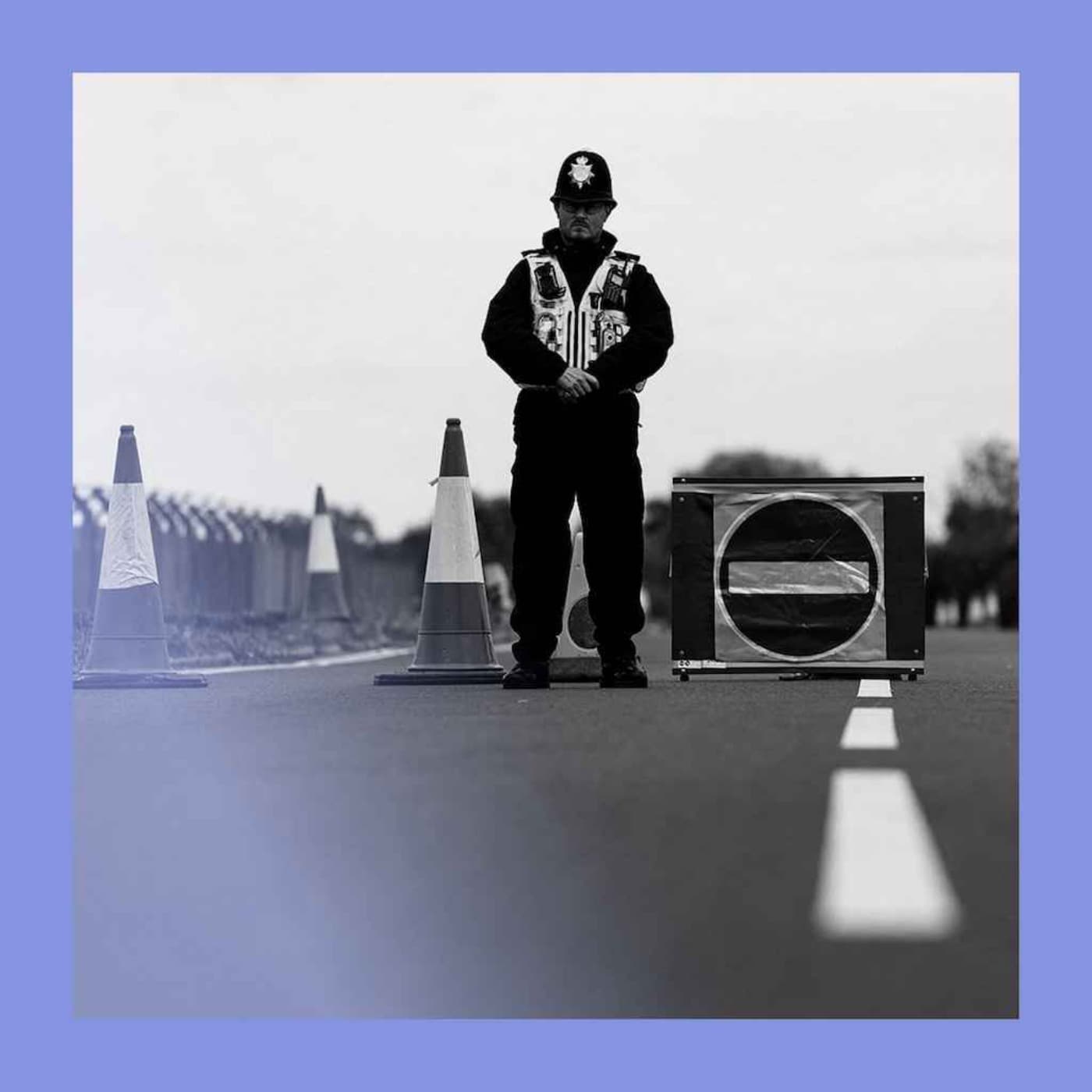
8:55Rosie Blau:In America, a dark vision of Europe is building on social media, of a continent overrun with violence, knife crime and grooming gangs, and ordinary people terrified to walk down the streets. Yet in Europe, you can see equivalent depictions online of an America teeming with guns, gangsters, rogue immigration agents. Last month, when The Economist's editor-in-chief, Zannie Minton-Bedos, interviewed Elon Musk for our video show, The Insider, they had a robust exchange on the subject. There are many parts of Britain and Europe which are not safe. You can't just walk around. But there are far more in this country.
9:42Far more. No, I don't think so.
9:44Rosie Blau:All right, let's go and get my fact checkers to check then. Yeah, I don't think that's true. So, who's right? Elon Musk likes to paint a grim picture of Europe as a kind of lawless place. James Fransham is a data correspondent. Similarly, the stereotype of America is that of a country where rogue ICE agents will gleefully shoot you dead. And so it does beg the question, you know, which continent, Europe or America, is safer? And in practice, that's a really tricky question to comprehensively answer from a statistical standpoint. Why is it so hard to answer that? I think for three reasons, really.
10:24First, because the definitions of reported crime vary from country to country. Secondly, the propensity of people to report those crimes also varies massively from place to place. And then thirdly, cities across the world are not kind of all born equal size. So those with large hinterlands, for example, Staten Island and New York City, they will tend to appear to have lower crime rates than cities that don't have those hinterlands.
10:49Rosie Blau:But surely you must be able to measure crime and say which one is safer? There are criminologists that have attempted to do this. And there's a novel data set from a chap called Matt Ashby. He's based at the University College London. And along with colleagues, he has attempted to smount some of those issues that I've outlined. So their process was this. Basically, first, they selected 20 global cities with a population of at least 2.5 million people, importantly, that publish annual crime statistics because not all cities do. And next, they adjusted those city boundaries so they all had similar population densities.
11:24So you kind of overcome the New York City comparison problem. So Paris, for example, its city is actually quite small. And so they've included the areas on the outskirts of Paris. And then finally, what they did was basically harmonize definitions. So the categories of crime were broadly similar because, you know, robbery in one city is not the same robbery in another city, for example. And so they're basically all on the same comparable basis to Britain. So that was kind of their benchmark.
11:50Rosie Blau:And so what is the answer? Europe or the US? Which is more dangerous? The findings, I think, are kind of more nuanced than you might expect. The kind of average keyboard warrior, Elon Musk, for example, might expect. And so homicide, which includes, for example, manslaughter or other comparable crimes. That's the most comparable crime statistic across international borders because, you know, basically a dead body is a dead body. And so on this basis, Chicago appears to be by far the most dangerous city in the 20 cities in the data. So in 2024, it had 587 homicides, 22 per 100 ,000 of its city's residents.
12:26And that's over twice the next worst offender, which is Los Angeles. And so if you contrast that to European cities in the data set, so the average rate among the 10 European cities was 1.7 per 100 ,000 populations. So Chicago, yes, far, far higher murder rate. But on the other side of the ledger, New York City paints a much better picture of America. So the number of homicides in the city has fallen by 90 % over the past 35 years. And in 2024, its murder rate was just a little above Barcelona's.
12:55Rosie Blau:But on average, what you're saying is that you're more likely to be murdered in the US than in Europe. What about other crimes? So this study looked at eight different crimes. And for the other crimes, actually, the rosy narrative for European cities is somewhat muddied. Personal robberies with use of force happen about as often in both regions. But in London and Paris, they do seem especially bad. Domestic burglaries, another category of crime, they seem to be more common in Europe. And robberies of businesses, particularly like shoplifting with force, for example, that's really shot up in London too.
13:31Rosie Blau:I'm still surprised that it's not simpler just to be able to look at official statistics and say crime is greater in one place than another. Matt Ashby, who spent a long time compiling this data, he said these stats are basically the least worst attempt to make the data comparable. And, you know, very aware of looking at something and go, well, surely this is apples for apples. And it rarely is with crime data. And these numbers were developed with funding from the Met Police. So policymakers, he said, could answer more detailed questions about crime trends between countries. And the important thing is the trends.
14:03Having said that, you know, the extensive efforts to standardise the data, numerous problems remain. So if we look at rape, for example, so reported case of rape in England and Wales have doubled in the past 10 years. But we have a crime survey of England and Wales. And actually, when it's reported in that crime survey, confidentially, cases of rape look like they've held steady. So that appears to be caused by better reporting effectively. And then second, if you look at instances of personal robbery, it's unclear whether the differences are owed to actual levels of crime increasing or simply artefacts of citizens preemptively to call the police, for example.
14:38And that may be true of phone snatching or snatching where you're threatened, for example. You could adjust some of these figures further, for example, like if you look at vehicle crime. So a better apples to apples comparison wouldn't just contrast it with population, but it would control for the number of vehicles in that city. And if you look at Rome, for example, in the data, so Rome has very high vehicle theft rates. And that's probably explained by Italians' preferences for scooters, which are easy to steal.
15:05Rosie Blau:So James, let's start with what we talked about at the beginning. Elon Musk gave the impression that Britain and Europe are getting more and more dangerous. Is that true? Well, no. So, I mean, comparison between cities, as we've established now, is really, really, really difficult. But actually, what I would say is that time gives you the best comparison of all within a city. And actually, that provides a really stable base in which to be optimistic about what's going on on both sides of the Atlantic. If you look at murder rates, so in London and New York, they're lower now than they've been at any time since record keeping began.
15:44Clearly, getting safer. Personal robbery in Paris, yes, it looks high comparatively to other cities, but it's almost halved over the past decade. So I think what we can establish is that, yes, comparison is difficult between cities, but the broad trend across almost every city we look at is that they're becoming safer, friendlier, and I would say more fun than they were a generation ago. So I think that's something that we can celebrate on both sides of the Atlantic.
16:12Rosie Blau:James, thank you very much. My pleasure.
16:37Around the world, 35 million players from 150 countries are picking up rackets. It's called paddle or padel depending on where you come from. It has a cult following and is one of the fastest growing sports in the world.
16:53Rosie Blau:Hamish Clayton writes for The Economist. I've come out to West London, pretty close to Wimbledon, which is the home of British tennis, to see the London leg of the premier paddle tournament. I'm loving the atmosphere in here. It doesn't feel like tennis, that's for sure. So this is the professional circuit funded by Qatar. And London was just one of 26 elite tournaments in the calendar this year. And it's the first elite professional tournament to be held in Britain. Padalistas from 15 different countries, the leading players are all Spanish and Argentine, are competing for a share of the$550 ,000 prize pot.
17:32That's pretty good, but when you compare it to somewhere like Wimbledon, Wimbledon this year had a prize pot of£64 million. pounds so paddle's got some way to go before it catches up to those levels of tennis
17:47paddles under arm serve forgiving rackets and small courts make it a much easier sport to learn than something like tennis or badminton or squash so it means you can get rallies easier and it's easier to pick up as a new player uh oh yeah my name's adam i'm a paddle man uh wearing a t-shirt of why I lose at paddle. And the top one I got on here is me paddle mate, and that's it right there. Well, it's just friendly, isn't it? You meet so many people. It's really good for confidence, I think, and quite a nice social game. I've had too many beers today. I'm currently having a coffee, striving myself around.
18:26But I am leading the agility test in the Premier Paddle London P1. So get yourself down and try to beat it. Got a picture if you want.
18:36About five years ago in Britain, there were only 87 courts and about 15 ,000 players. But fast forward to today and the Lawn Tennis Association, which governs paddle in Britain, estimates there are about 1 million players and over 2 ,000 courts in the country. Well, I actually compete in some LTA tournaments and I'm not the best, but I would say even going to those, all of the ladies are so inclusive and friendly. I think just the vibe the game gives off. I mean, the fast-paced game and the enjoyment. And I think the social side. Definitely the social side. So, yeah. Paddle started in Mexico in 1969.
19:17And pretty shortly after, a few courts were developed in Spain and then in Argentina. So Spain and Argentina became the two centres of paddle. From there, it spread throughout Europe and spread throughout South America. but now the International Paddle Federation are looking to grow the game in Asia and in North America. They're also hoping it will become an Olympic sport, potentially in time for the 2032 Games in Brisbane. And they see as that a great opportunity to help the visibility of the sport internationally and help establish it as a leading global professional sport. There's always been a big debate who make the better paddle players, tennis or squash players.
Read the full transcript
19:56squash players don't have a net to deal with. Tennis players don't have walls to deal with. So it's, yeah. Red Bull Out the court. Matches from this London tournament have been streaming on YouTube and Red Bull TV and organisers say that the 4 ,000 or so tickets for the final sold out very quickly. So here's the big question. Sure, the sport's fun to play, but is it fun to watch? Would people choose to watch paddle over tennis or football perhaps not i don't know in the uk because obviously football is such a huge thing i'm not massively into football so for me yes um but to rival football in the uk i think is probably quite a big thing to say i watch it pretty much every weekend all weekend yeah i watch a lot of it so seeing these guys for the first time watching professional paddle in the uk it's definitely an experience it's amazing i think it'd be one day maybe bigger than tennis And there's clearly money to be made in paddle.
20:56Roughly three paddle courts can fit into the footprint of a single tennis court, creating more cash for clubs. But the explosion in demand has meant Britain's courts are amongst the busiest and the priciest in the world. The median fee of an indoor court is£44 per booking, though some in London can cost£100 an hour. Amir Amin runs a paddle business and opened some courts in Birmingham three months ago. I think the more courts that pop up, the better. but there's still an elitist element around the sport. So, you know, court prices are really high in central London because they're scarce. And I guess the lowest hanging fruit for those guys are the people that travel and have the disposable income.
21:35So, like other sports, it needs to become a bit more democratised, I think. So that's how we think about our clubs.
21:45But in Britain, tennis still dominates. So at last count in 2023, there are about 5.6 million tennis players. and the Lawn Tennis Association is optimistic that the rise of paddle is complementing, not cannibalising tennis. But remember, fashions change. Wimbledon itself began life as a croquet club.
22:08Thank you. Thank you.
22:21Rosie Blau:That's all for this episode of The Intelligence. We'll see you back here tomorrow.
22:40Thank you.
From the publisher
The Muslim Brotherhood won power and influence in the Arab Spring of 2011. Now autocrats are resurgent and its leaders are in jail or exile. Elon Musk says Europe is more dangerous than America. Is he right? And the puzzling popularity of padel.
Guests and host:
- Gareth Browne, Middle East correspondent
- James Fransham, data journalist
- Hamish Clayton, Britain writer
- Rosie Blau, co-host of “The Intelligence”
Topics covered:
- Muslim Brotherhood, Islamism, Arab Spring
- Elon Musk, Insider, Europe, crime,
- Padel, tennis, racket sports
Listen to what matters most, from global politics and business to science and technology—subscribe to The Economist.
Hosted on Acast. See acast.com/privacy for more information.