 Ask ChatGPT


The episode is a mix of segments, led by “Stayed in China: a domestic-brand boom,” explaining why Chinese consumer brands are gaining share despite weak overall consumption, and what this means for foreign retailers. It also includes separate discussions on Africa’s Christian right and anti-LGBT legislation, plus a Formula One/“Motorsport Valley” industrial-cluster segment.
Don Wineland (Economist China business and finance editor) and Tom Gardner (Economist Africa correspondent). Also featured: Kate Parker (Economist Intelligence Unit; Motorsport Valley cluster discussion). No other named guests appear.
Domestic brands are winning due to price sensitivity plus improved quality, premium positioning (not only budget), and reach into smaller cities. It’s not mainly geopolitical backlash. Foreign brands face retail headwinds after the pandemic and must localize.
Popmart “blind boxes” (LaBubu; one sold for $150,000). Cha Ji tea (premium pricing). Mishuia ice cream/cold drinks expanding in Southeast Asia. Laopu Gold Chinese luxury jewelry. Lavazza experimenting with edible bird nest coffee.
Written by AI. May contain mistakes.
Exploration of the rising influence of the Christian right in Africa.
“Every weekday, we provide a fresh perspective on the event shaping your world.”
A look into Popmart's flagship store and the appeal of domestic brands.
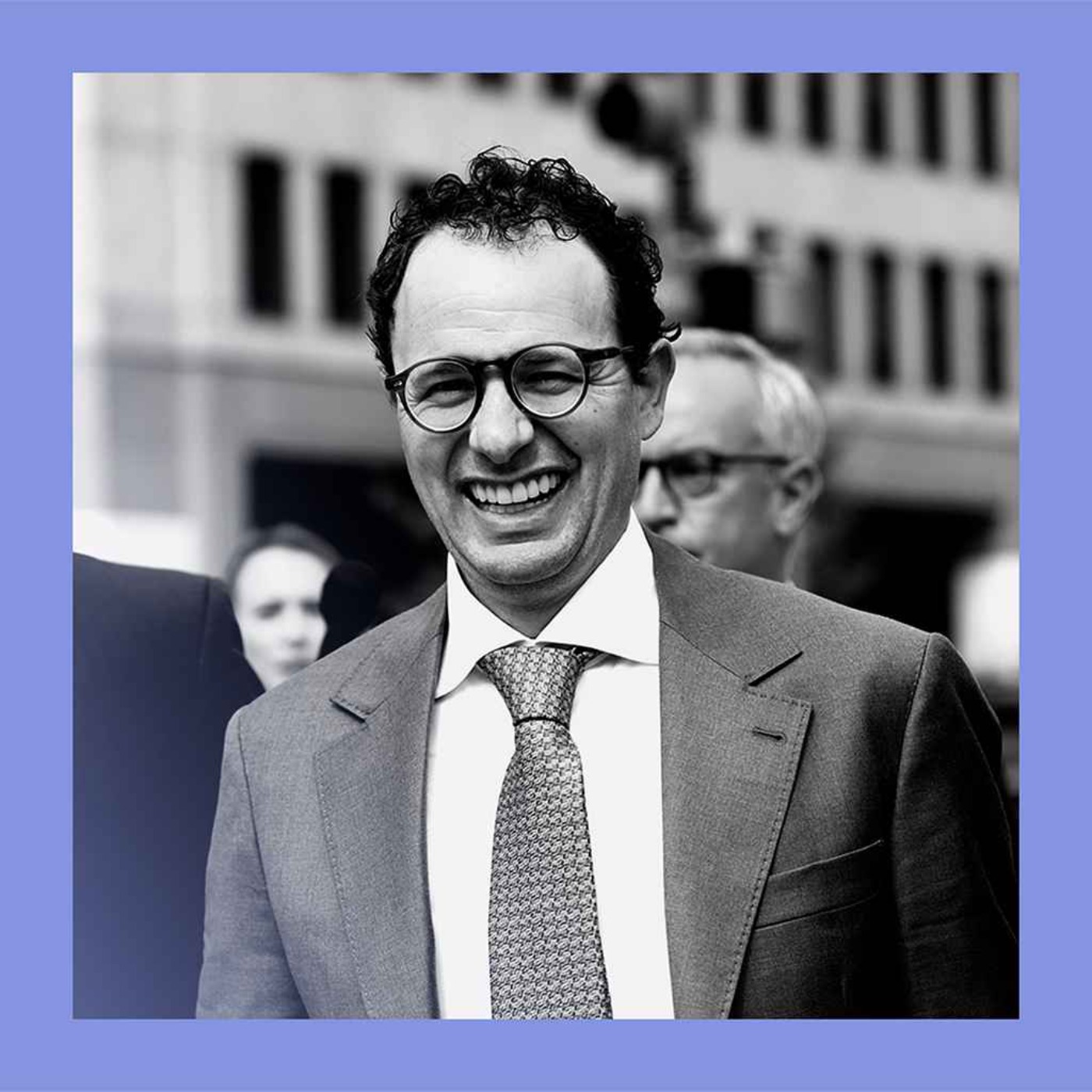
“Don Wineland is our China business and finance editor.”
Examining the shift of Chinese consumers towards local brands amid economic challenges.
“changing beyond just what PopMart is doing.”
Discussing the difficulties faced by foreign companies in the Chinese market.
“People not wanting to spend that much on a cup of coffee might go to Coty or to another one called Luckin.”
How foreign brands are adapting to local tastes and preferences in China.
“But when it comes to retail brands, the pandemic really hurt consumption all over the world, but also in China.”
Explore how American Christian groups influence conservative agendas in Africa.
“So they started to look outwards and Africa increasingly in the 2010s became seen as the last man standing in defense of biblical values.”
Discover the reasons behind the success of Britain's Formula One teams and their economic impact.
“When drivers line up for the British Grand Prix at Silverstone next month, they'll be marking 75 years since Formula One racing began in 1950.”

Get the gist, explore an idea or ask about something said.
 Claude
On Economist Podcasts, what are the key points of this episode?
Searching your listeningAutomatic transcript. May contain errors.
0:00Sibo offers solutions across the entire trade lifecycle. We offer pre-trade analytics for our clients to help them with idea generation during trading with platforms such as Silex to execute their orders on the exchanges globally, as well as post-trade analytics to really help them with their risk management and portfolio management. And often the biggest barrier to entry is integrating with their own technology. Learn more about DataVantage at SIBO.com slash DataVantage. Review important risk disclosures and disclaimers at SIBO.com slash US underscore disclaimers. Nine in ten of us are confident in our day-to-day travel, reassured by the mobility systems in place.
0:36But only 45 % of the engineers, policymakers and operators behind those systems feel the same way. Economist Enterprises' new research, supported by Brembo, provides a practical roadmap for making our systems safer and more trustworthy. Read the report to learn more about this trust gap and the crucial actions needed to close it. Search Safety in Motion to explore the research.
1:05The Economist
1:12Hello and welcome to The Intelligence from The Economist. I'm Jason Palmer. And I'm Rosie Bloor. Every weekday, we provide a fresh perspective on the event shaping your world.
1:27Across Africa, the influence of the Christian right is growing. Part of that is down to support from Brethren in America. And you can already see the effects in the form of intolerant national legislation. And these days, Britain doesn't have a good reputation for efficiency, innovation or glitz. But one industry that embodies brilliance in all three is Formula One, where the country has long been dominant. The question is whether other sectors can copy the success of the races.
2:04First up, though.
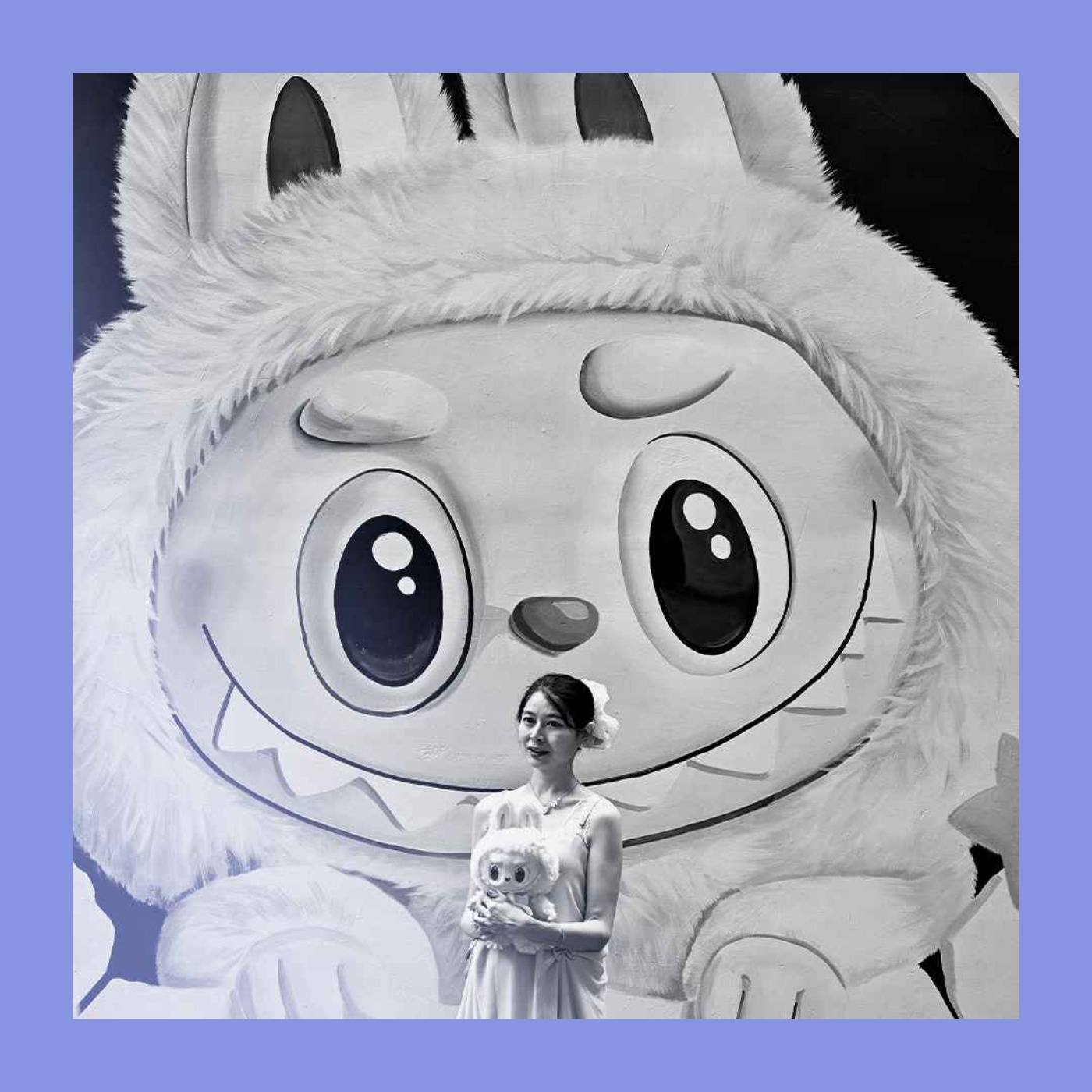
2:13Last week I dropped in on the flagship store of Popmart. Don Wineland is our China business and finance editor. It's in this really central location in downtown Shanghai. When you get inside, it's like the interior of a cartoon spaceship, and it's packed with people. Everyone is there trying to get their hands on a La Boo Boo doll. These weird, smiling, elvish-looking creatures that come in what's called blind boxes. So when you buy one, you don't really know what you're going to get when you buy it. They're as cheap as$20, but they can also sell for crazy amounts. One was just sold for$150 ,000 in an auction.
2:59I tried to get one.
3:07And of course the answer was no. I was told to scan a QR code and get into like a digital line. Maybe in a week or so, I'd be notified that a LaBubu had arrived and I could pick it up. PopMart is really interesting because it's a company like Disney or Sanrio, the creator of Hello Kitty. And we don't really see a lot of these types of creative companies coming out of China. They normally come out of Europe, the US, Japan, Korea. For decades, Chinese consumers have been mainly looking overseas for the latest trends in fashion and entertainment. Now, that's really changing. changing beyond just what PopMart is doing.
3:47Well, there's a lot going on in the Chinese consumer brand space right now. It's not just PopMart. There's a lot of companies that are grabbing Chinese shoppers' attention. Cha Ji is an example of another one of these companies. They brew freshly made tea, so it's kind of like the Chinese equivalent of Starbucks if you're in the market for tea instead of coffee. There's a company called Mishuia, which sells ice cream and cold drinks. It's moving overseas quite rapidly, so you can find its shops all over Southeast Asia. And one thing that really grabbed my attention was this company called Laopu Gold, which is selling Chinese gold luxury jewelry.
4:30And it's an interesting company because for the most part, Chinese people have purchased foreign luxury brands for the past couple decades. There really hasn't been a local luxury brand that has done well in this market. And Laopu is kind of the first of these companies. So what's going on here if this is the reversal of a decades-long trend for Chinese people to look closer to home rather than to foreign brands? So it is a strange time to see all of these Chinese consumer brands doing so well. And that's because consumption in China is quite weak. This is caused by a number of factors. The economy has been growing slowly.
5:08The property sector is not doing very well. But yeah, Chinese people just aren't spending that much money these days. So it's strange to see all of these consumer brands emerging at this time. Part of what's going on is actually linked to that consumer downturn. So a lot of these Chinese brands have actually positioned themselves to find Chinese people that don't want to spend that much money. People not wanting to spend that much on a cup of coffee might go to Coty or to another one called Luckin. Laopu Gold sells their jewelry at a cheaper price than, say, Tiffany's, the American company. So in some ways, the slowing consumer demand might be helping some of these Chinese companies pick up new customers.
5:55So really, this is just about price sensitivity for domestic consumers in China. It's often interpreted that way, but there's a lot more going on. And in some cases, consumers are spending just as much or more on superior Chinese products. So if you look at electric vehicles, a lot of people for the first time are buying entry-level luxury cars. So they're not just going for the cheapest EV out there. Chaji, the Chinese tea company, is actually positioning itself not as a budget brand, but as a premium brand in China. So a lot of their products cost the same as a Starbucks, and Chaji is doing very, very well these days.
6:38I think a lot of Chinese consumers over the years have gotten tired of Western brands. In the past, just being a Western company could allow you to sell at a much higher price. And I think Chinese consumers over the years have caught on to that. They're looking for quality, not necessarily something that's just foreign. Another thing to note is that China is a big place, and foreign companies tend to concentrate in the biggest cities. These new Chinese brands know how to get out into smaller cities, where a lot of spending is actually taking place now. So do you get the sense that some of this is not nationalistic, but perhaps patriotic purchasing?
7:21We've seen waves of patriotic purchasing in China in the past. A lot of brands tried to attach themselves to that. But I don't get the sense that that's what's happening now. I don't feel a strong geopolitical backlash against American brands, let's say. I do feel like Chinese consumers are just becoming more discerning, and there are a lot of really good local products on the market now for the first time at a reasonable price. What does that mean for all of the foreign brands that have some connection to China, that may have set up shop in China, that have joint ventures with China? Things haven't been great for foreign brands in China for a while.
8:01I mean, some do very well. But when it comes to retail brands, the pandemic really hurt consumption all over the world, but also in China. And they haven't really recovered from that. So I think when it comes to foreign brands trying to make it in China, that these new, cool retail brands that are homegrown are a bit of a concern. So what are foreign companies doing to hang on to the customers that they do have in China? So we do see a lot of foreign brands trying to adapt to local tastes. A coffee shop that I go to occasionally, an Italian coffee chain called Lavazza, was experimenting with edible bird nest coffee recently.
8:43Really not to my liking. I don't think that it's as easy as just taking a Chinese ingredient such as bird nest or salted duck egg and tossing it into a Western product. These are difficult times for foreign companies. Some of them may seek out local investors that come in, take an equity stake, and then try to revitalize the brand. Companies like Starbucks and Haagen-Dazs are said to be looking for local investors, although Starbucks has very recently denied this. Years ago, when foreign brands were coming into China, they would find local partners to help them navigate the market. China has been and continues to be difficult in many respects.
9:25Local officials can be a problem. Navigating regulation can be a problem. Now, foreign companies need more than just someone to navigate the difficulties of China. They really need local ideas to drive their brands forward. Don, thanks very much for your time. My pleasure.
10:13and alternative data than legacy models, bringing more people into the credit economy, like 5 million more mortgage-eligible people. So all the banks win, but so do all the francs, the lenders and the borrowers, the Lindas and the Olivers. When you build credit scores the right way, everybody wins. That's the power of VantageScore. Get started at VantageScore.com. Nine in 10 of us are confident in our day-to-day travel, reassured by the mobility systems in place. But only 45 % of the engineers, policymakers and operators behind those systems feel the same way. Economist Enterprises' new research supported by Brembo provides a practical roadmap for making our systems safer and more trustworthy.
10:59Read the report to learn more about this trust gap and the crucial actions needed to close it. Search Safety in Motion to explore the research.
11:13Family has to be protected because it is what raises all of us. Thank you very much.
11:24This is the Pan-African Conference on Family Values, which was held recently in Nairobi in a rather anonymous conference hall. Tom Gardner is an Africa correspondent for The Economist. It's one of a string of conferences organized by Africa's Christian right and some of their international allies scheduled for various cities across the continent in the coming months. This is a matter of national security. When you have outside entities like the United Nations coming in, infiltrating your out-of-school programs, and talking to children about sexual sensitive things. Next slide. Delegates came from across the continent, and they also came, some of them, from the West.
12:15They painted a picture of a continent on the cusp of social collapse. The decline of the Christian influence inversely parallels the rise of abortion. Attendees were told, for instance, that, quote-unquote, foreign ideologies were producing an epidemic of abortion, homosexuality, and gender confusion. So what's being talked about here? Would you describe it as a sort of fringe view in Africa or increasingly a mainstream view? I would say that delegates and members of Africa's Christian right more broadly see themselves as somewhat fringe in the sense of being a plucky, righteous David struggling against this godless, liberal Goliath.
13:03I mean, Africa's Christian right is really well connected. Its ascendant has a MAGA wind in its sail as well. I think it's really more powerful than it has been for many, many years for two reasons. One, because of their ties to powerful Christian conservatives in America. And secondly, because of Donald Trump's re-election, which has emboldened them. You just need to look at the number of anti-LGBTQ bills before parliaments in Africa in the last couple of years, for instance. So talk me through the connection then between American conservatives and this growing portion of Africa. Well, it's not new.
13:41It goes back several decades. But two key developments help explain the strength of their alliance today. First, the AIDS epidemic. These American church groups who started paying greater attention to the continent brought a new militancy to the continent's gay rights debate. The second, I think, was the election of Barack Obama, who convinced some Christian conservatives in America that the ground they'd lost to liberals might be irreversible there. So they started to look outwards and Africa increasingly in the 2010s became seen as the last man standing in defense of biblical values. Don't forget, Africa really does matter for the future of Christianity because of its fast growing population and because it increasingly makes up a ever larger share of the global Christian population.
14:29But this is a sort of renewed, a strengthened alliance that we see in the second Trump administration that we didn't see in the first? Well, something big happened this time around, which is the dismantling of USAID, America's aid agency. Those cuts, I think, have given a big new window of opportunity for right-wing Christian groups in America and in Africa, those that are opposed to abortion, those that are opposed to gay rights, for example. What's the connection there? Well, as global donor funds have been slashed, there are groups that are hoping to fill that gap and to be able to reshape the future of aid and development in Africa in a more rightward direction.
15:10So, for example, I was speaking to one of the leaders of the Kenyan Christian Professionals Forum recently who said that aid money now should come without strings attached and without shoving the LGBT agenda down our throats. That is something which the Trump administration, including the likes of J.D. Vance, have made clear is something that they agree with. So, for instance, PEPFAR, which is America's program for combating the AIDS epidemic, that's essentially been defunded. But there is a possibility, indeed, some within the Trump administration's orbit are hoping that some of the funds might be restored, but this time with the proviso that the money goes to Christian groups opposed to abortion.
15:50And in America, the Christian conservative movement is fairly well tied up with politics. Is that the same also in Africa or more so now? I think so, yes. I mean, you can look at several of the most populous countries in East Africa, Ethiopia, Kenya, but also West Africa, Ghana, for instance, where Christian conservatives and evangelical conservatives in particular with ties to influential groups in America are increasingly powerful in politics. I can just cite, for example, William Ruto, the president of Kenya, Abiy Ahmed, the prime minister of Ethiopia. These are two devout evangelicals and they are pursuing Christian conservative agendas in office.
16:33And I think that's something we are likely to see more of, particularly now that any government in Africa that wants stronger, warmer relations with America is likely to see a political or a diplomatic advantage to tacking in the same direction as the Trump administration on many social conservative issues. But what about the downstream stuff? I mean, do we already see in legislation in those countries and elsewhere that reflects the Christian conservative sort of agenda? Yeah, so the most obvious one recently has been the 2023 anti-homosexuality bill in Uganda, which was basically one of the harshest anti-LGBT bills anywhere in the world.
17:11It's sometimes called the kill the gays bill, because it imposes death penalty for some same-sex acts. That was then followed by copycat bills in countries like Kenya, Ghana, Nigeria and elsewhere, where you have lawmakers demanding similar sweeping anti-LGBT measures. So that's just on that front. You also see increasingly attempts to dismantle or row back reproductive health policies in several countries in the continent, Sierra Leone being a country which is on the cusp of passing a comprehensive abortion bill, where that progress is likely to go into reverse at the moment because of the advocacy of these groups.
17:50How much of this is down to that American, that external influence generally, and how much of it is just simply fanning flames that were already there? It's very hard to know exactly how much money has been funneled into the continent from outside. There are some studies, and it clearly does seem to have grown in recent years, but churches in America are not obliged to disclose their funding of conservative causes overseas. Liberals have long complained that Western religious conservatives are simply manufacturing intolerance in Africa. I think that's true up to a point. Their African counterparts don't necessarily need much support.
18:26If you look at the broader trends, the growth of evangelical Christianity, particularly among young Africans, I think that really does herald a more socially conservative future. So as much as right-wingers in Africa, as elsewhere, tend to rely on a sense of peril to drum up support, something I saw at this conference. I think ultimately it's their liberal rivals who have the greater reason to worry.
18:53Tom, thanks very much for joining us. Thank you, Jason.
19:10When drivers line up for the British Grand Prix at Silverstone next month, they'll be marking 75 years since Formula One racing began in 1950.
19:28Those early cars were pretty basic And the safety precautions virtually non-existent Though much has changed since then One thing has stayed the same Britain's continued domination of Formula One Out of the 10 teams in this year's Formula One Championship Seven are based in an area that lots of people call Motorsport Valley, which is essentially surrounding Silverstone. Kate Parker works for our sister organisation, the Economist Intelligence Unit. That's a number that's growing. So next year we'll have Cadillac also competing. It's a US company, but it already has a base in Silverstone. And another firm, Audi, are also looking for premises.
20:14I have to say I've never heard of Motorsport Valley. Why are so many teams based there? Part of it boils down to the roots of Formula One. So essentially after the Second World War, I think teams originally chose to be based in Britain because we had lots of disused airfields. In fact, Silverstone used to be an air force base originally. And we also had lots of aeronautic engineers that were essentially looking for a job post-war. But I think when we think about why those teams have stayed and why new teams choose to locate here now. I think it's really because this cluster that we have in Motorsport Valley is a cluster that really works.
20:50There are thousands of companies that have sprouted up around the area to support the teams and these supply relationships work really well. A lot of the sections and the pieces of the cars themselves are designed, manufactured, fitted there. There's an abundance of engineering talents and it's all really help the industry to grow. So just to put some numbers on it, it generates over£10 billion for the British economy. And what's really interesting is that other governments have seen this and they've tried to tempt some of these teams away, offer them financial incentives. But I think if you have a formula that works, your investment really does tend to stay put.
21:27Kate, successive British governments have talked about how great industrial clusters are. This one sounds like one that works. So what can the Labour government learn from Formula One? The government, I think, are trying to encourage the same kind of industrial clusters in other sectors. They've talked about life sciences, advanced manufacturing, clean energy. I think one of the most obvious lessons is that you really need investors. And I think Formula One is lucky in many ways because it tends to attract rich investors with deep pockets. And that's meant that the teams can really buy the best cutting edge equipment.
22:02Aston Martin were kind enough to show me around their brand new factory at Silverstone. And the investment is obvious. It's a hugely impressive facility with state-of-the-art machinery. And also, I think getting people interested in what you're doing is also really important. We've seen this with Formula One, with efforts to increase its popularity through things like the Netflix series Drive to Survive. Any team needs total unity. Our biggest rival is ourself. There's a Brad Pitt film that's out. When was the last time you won a race? Sunday, Daytona. Oh, I'm sorry. I meant Formula One. Oh, I'm sorry.
22:40Then same as you. I don't think it's just about the money. The Aston Martin CEO, Andy Cowell, mentioned a phrase a few times that really resonated. He talked about the motorsport mindset. And by that, he meant the overall approach. What you have essentially is a set of really highly skilled engineers with innovative ideas that design solutions at incredible pace. So glitz aside, can that model be applied to other industries? I think the broad approach of engineering services can be applied to other industries. At the heart of what they do is rethinking ideas, testing ideas, figuring out which ones work, and then taking that innovation into other areas.
23:24I suppose there's the big example of Formula One teams in the pandemic that designed and produced breathing equipment. And essentially, this is something that these engineers can do in other areas, design a quicker, more efficient way of doing something or a lighter, more compact way of producing something. Interestingly, we're seeing this happen already. There's the Motorsport Industry Association, and that's really leading efforts to use motorsport expertise to provide solutions. And they're looking at things like defence, aerospace. So I think it does make you wonder, you know, obviously, there's scope to try and develop clusters in other sectors.
24:00but arguably I think the government could be looking to do more with one of the ones that it already has that works really well. And Kate, the really important question, did you get to drive a racing car at Silverstone? No, in fact I couldn't even take a photo of one because unfortunately when you go into this brand new Aston Martin facility, they put stickers over my phone cameras. So I think it's obviously all top secret. There's a car in the reception which is very impressive, as is their VIP car park. It's not somewhere to park an old, filthy, family vehicle. Great to talk to you, Kate. Thank you so much.
24:34Thank you, Rosie.
24:47That's all for this episode of The Intelligence. We'll see you back here tomorrow. Thank you.
25:24to really help them with their risk management and portfolio management. And often the biggest barrier to entry is integrating with their own technology. Learn more about DataVantage at SIBO.com slash DataVantage. Review important risk disclosures and disclaimers at SIBO.com slash US underscore disclaimers. Nine in ten of us are confident in our day-to-day travel, reassured by the mobility systems in place. But only 45 % of the engineers, policymakers, and operators behind those systems feel the same way. Economist Enterprises' new research supported by Brembo provides a practical roadmap for making our systems safer and more trustworthy.
26:03Read the report to learn more about this trust gap and the crucial actions needed to close it. Search safety in motion to explore the research.
Western brands used to define cool and luxurious in China. No longer. Now consumers are turning to homegrown brands, some of which are becoming global tastemakers. Across Africa the Christian conservative movement is gaining ground fast—with a little help from American brethren. And why Britain is such a locus for the nuts and bolts of Formula 1.
Get a world of insights by subscribing to Economist Podcasts+. For more information about how to access Economist Podcasts+, please visit our FAQs page or watch our video explaining how to link your account.
Hosted on Acast. See acast.com/privacy for more information.