In short
The Intelligence (Economist) episode covers three main topics. First, Yemen: Iran-backed Houthi forces have captured Mocha on Yemen’s western coast and Parham Island in the Bab al-Mandab choke point, alongside drone/pipeline attacks affecting Saudi oil infrastructure. The episode argues this is a major shift after years of stalemate, driven less by Houthi strength than by Saudi/UAE-backed anti-Houthi forces’ disorganization and infighting. It cites reduced Red Sea exports (about 4 million bpd in June to 200,000 bpd by August) and oil-price pressure from potential recurring pipeline attacks. Second, US politics: a statistical model using YouGov data and 22 million voter profiles suggests Trump’s 2024 coalition is fragmenting, with young and ethnic-minority voters most likely to move toward Democrats; Senate control is portrayed as a near coin toss. Third, Hollywood: research claims 28% of young actors (under 35) have entertainment-industry parents, and 70% of big films have “nepo” key creative roles; reasons offered include lower digital audition barriers and marketing buzz, with debate over whether talent still matters.
Guests
Greg Karlstrom (Economist Middle East correspondent); Owen Winter (Economist political data journalist); Georgia Banjo (Economist Britain correspondent, referenced for a related “Shire Folk” series); Rachel Lloyd (Economist deputy culture editor).
Written by AI. May contain mistakes. Listen to the episode to check what was said.
Chapters
Tap a time to open that second in VOThe Houthi Advance in Yemen
1:03 to 1:26
Exploring the recent military advances of the Houthis in Yemen.
“Hotels.com makes booking work trips easy and rewarding.”
The Houthi Advance in Yemen
2:11 to 3:21
Exploring the recent military advances of the Houthis in Yemen.
“The Houthis, an Iran-backed Shia militia group, has made striking advances along Yemen's western coast.”
Historical Context of the Yemen Conflict
3:21 to 6:31
A look back at the history of the Yemen civil war and its current state.
“We haven't heard from or about the Houthis in some time.”
Challenges Facing Saudi Arabia
6:31 to 10:02
Examining the difficulties Saudi Arabia faces in countering the Houthi threat.
“If you listen to the Saudis over the past few days, they are making it clear that they want foreign support, but it's not clear really where they expect that to come from.”
Implications for Oil Prices and Global Politics
10:02 to 11:04
Discussing the impact of the conflict on oil prices and international relations.
“Time will tell whether they can be rolled back or not.”
Implications for Oil Prices and Global Politics
14:03 to 14:23
Discussing the impact of the conflict on oil prices and international relations.
“They combine GLP-1s to quiet the food noise with healthy habits that help you keep it quiet, even if you get off the meds.”
Analyzing Midterm Elections
14:44 to 21:20
Explore factors influencing the upcoming midterm elections and Trump's voter base.
“I know, I know, it's kind of always election season in America.”
The Rise of Nepo Babies in Hollywood
21:38 to 25:24
Discover the trend of nepotism in Hollywood and its implications on talent and opportunities.
“Back in 1667, the Italian satirist Gregorio Letti had a bone to pick with the Catholic leadership.”
Transcript
Automatic transcript. May contain errors.0:28This episode is sponsored by ZocDoc. much of the stress out of the already stressful situation, ZocDoc makes it easy to search and compare over 250 ,000 local in-network providers across more than 200 specialties. So you can find the right doctor or dentist and book instantly. Ready to be seen? Download the ZocDoc app today and book that appointment on your to-do list. That's Z-O-C-D-O-C, ZocDoc.
0:58This intelligence podcast is sponsored by business travel on hotels.com. Does booking business travel feel like another job? Hotels.com makes booking work trips easy and rewarding. It's easy because you can set your preferences once and get results tailored to your business travel needs every time. It's rewarding because with hotels.com's free rewards program, you can save instantly on your next work trip and earn rewards for future travel. Book faster with confidence at Hotels.com. Loyalty members 18+.
1:37Hello and welcome to The Intelligence from The Economist. I'm Jason Palmer.
1:47Today on the show, how the swing voters from America's presidential election are now swinging away from Donald Trump, and how much nepotism matters in Hollywood.
2:03But first...
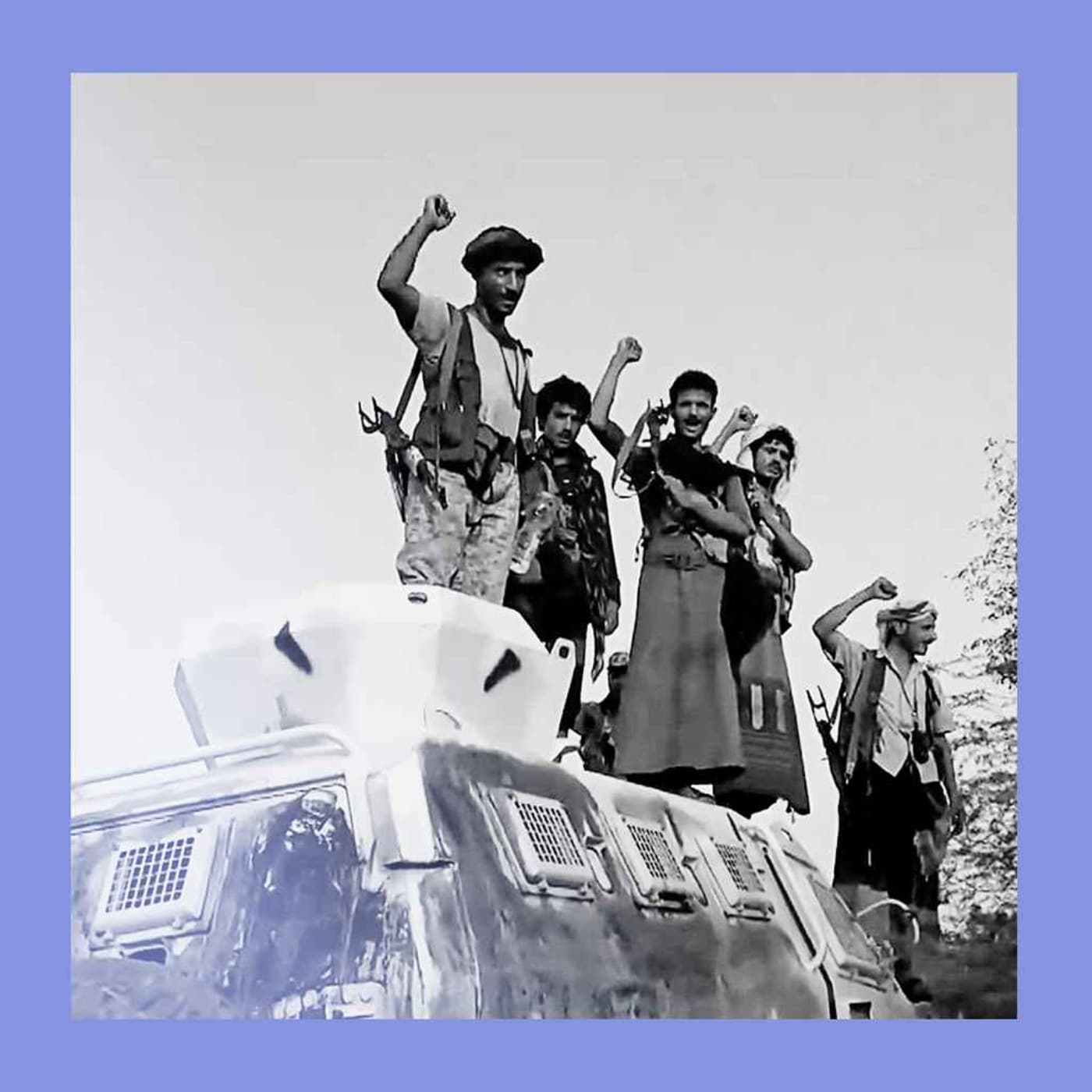
2:10In recent days, another flashpoint has emerged, or re-emerged, in the Middle East. The Houthis, an Iran-backed Shia militia group, has made striking advances along Yemen's western coast. On Thursday, they captured the port city of Mocha, then Parham Island in the middle of Bab al-Mandab, A choke point into the Red Sea that's become an alternate oil route since the blocking of the Strait of Hormuz. And drones hit a major oil pipeline in Saudi Arabia. The details are fuzzy, but what's clear is that for the Houthis, the regional calculus has changed. This is the biggest shift in Yemen's war for a number of years.
2:54Greg Karlstrom is a Middle East correspondent for The Economist. It's an embarrassment for Saudi Arabia, which has spent months talking up a new offensive against the Houthis. It's a source of new leverage for Iran in its war with America. It adds pressure on oil prices. The Saudis won't want to accept Houthi control of Yemen's coast, but pushing them back will be difficult. Well, let's wind back a little bit. How did we get here? We haven't heard from or about the Houthis in some time. We haven't, even though the civil war in Yemen has been going on since 2014. That's when the Houthis first made a push out of their strongholds in the north and seized a large part of the country, including the capital.
3:41The following year, a Saudi-led coalition invaded Yemen to try and push the Houthis back. But the war devolved into a stalemate. And since 2022, the front lines have been largely frozen. That's when a ceasefire took effect. The Saudis and the Houthis have spent the past few years trying to negotiate a deal that would end the war for good. That effort was also unsuccessful, and so it all seemed to have devolved into a stalemate. That started to change, though, earlier this year, once America and Israel went to war with Iran, which has backed the Houthis for many years. Iran started pressuring its allies in Yemen to join the fray, to close Bebal Mandab, which is the waterway that connects the Red Sea to the Indian Ocean.
4:26In July, they sent a delegation of military advisors to Yemen to work with the Houthis. The Saudis went so far as bombing the airport in Sana 'a, the capital of Yemen, to prevent that plane with Iranian advisors from landing. After the Saudis did that, it seemed like war was back on. The Houthis announced the blockade on Saudi shipping through the Red Sea. They resumed missile attacks on Saudi cities. And so it's been clear for months that we were heading towards some sort of significant escalation in the fighting. But from the sound of things, all this has taken the Saudis somewhat by surprise.
5:01It did, which I think tells you just how disorganized and ineffective their allies are in Yemen. There's a broad anti-Houthi coalition. You have a lot of groups that dislike the Houthis, but they are a very diverse lot. There are religious fundamentalists. There are separatists who want South Yemen to be an independent state. There are tribal groupings. And these different militias often don't trust one another, don't like one another. And those divisions have become even wider over the past year because Saudi Arabia and the United Arab Emirates, the UAE, have had their own falling out. They were the main external backers of anti-Houthi factions in Yemen, but they are at odds.
5:45And the UAE was forced to withdraw its troops from Yemen late last year. And so that has deepened the split on the anti-Houthi side. And so what we saw as this offensive started was forces in disarray. Many of the factions that should have been defending the coast simply turned around and retreated. You had fighters who were selling their weapons by the side of the road and running away. and there's been a blame game for the past few days where rival commanders have been accusing one another of betrayal, of abandoning the fight. So the Houthis, yes, they are a stronger force than they were when the war started.
6:19They have received significant support from Iran. That has helped them. But I think what's more important here is not the strength of the Houthis, it's the weakness and disorganization of their opponents. So what would it take for those opponents to push back against this advance. If you listen to the Saudis over the past few days, they are making it clear that they want foreign support, but it's not clear really where they expect that to come from. This ought to be the first test of the so-called Mecca agreement, which was a mutual defense pact between Saudi Arabia, Turkey, and Pakistan that was announced in August.
6:54But so far, the Turks and the Pakistanis have not sent any support to the Saudis, and they don't look eager to do so. Mohammed bin Salman, the Saudi crown prince, has also asked Donald Trump to conduct airstrikes against the Houthis. So far, Trump has refused to do that. There are American military personnel in Saudi Arabia helping the Saudis pick targets of their own in Yemen, but the U.S. doesn't seem interested in conducting its own airstrikes. And even if Donald Trump wanted to, America's capabilities in the region are very stretched right now. You position near the Strait of Hormuz, closer to the Red Sea, to carry out sustained airstrikes against the Houthis.
7:35And obviously, that would have consequences for America's war with Iran. So I don't think this outside help is forthcoming. The question now is whether the Saudis can wrangle all of their different allies in Yemen and organize some sort of counteroffensive, particularly because it seems as if the Houthis aren't done here. They're not content just to seize the western coast, they also want to make a push for Marib province, for example, which is the home of Yemen's oil industry. So the Saudis and their allies will find themselves fighting on multiple fronts going forward. And at the mention of oil there, this puts even more pressure on the oil market right now, doesn't it?
8:13It does. There are two things that happened last week that put a lot of pressure on oil prices. One is the Houthis reinforcing their control over Bebal Mandab. even before they launched this offensive over the summer when they were threatening to attack Saudi ships going through the Red Sea, that was enough to scare away many commercial vessels. So whereas in June, the Saudis were exporting about 4 million barrels a day through the Red Sea, by August, that was down to 200 ,000 barrels a day. And again, that was before the Houthis reached this island in the center of the waterway and really cemented their control over Bebal Mandab.
8:51So that's one problem. The other is this attack on the east-west pipeline in Saudi Arabia. It can probably be fixed in relatively short order. We saw Saudi Aramco do that earlier this year when an Iranian drone hit the pipeline. It was fixed within a few days. Might take a bit longer this time, but it's repairable. The issue is what if it gets attacked again? There's now a risk of recurring attacks on the pipeline, and I think that's going to put further upward pressure on oil prices as well. So where do you see this ending? This is yet another part of the conflict that looks like escalation is the way to go.
9:26For Yemen itself, I think this will be another chapter in a very, very long war that is still far from over. I think we should be careful not to over-index on one battle because we have seen before Houthis have made big advances in parts of Yemen, only to find themselves overextended, trying to maintain their supply lines, fight on difficult terrain, and they end up getting rolled back. And that could very well happen here. So what took place last week was certainly an embarrassment for the Saudis and their allies, but I don't think it means that the Houthis will permanently now have control over this part of the coastline.
10:07Time will tell whether they can be rolled back or not. For the wider conflict, it just adds yet another complication to the war between America and Iran. There were supposed to be negotiations on Monday between Iran and Gulf states to talk about new arrangements in the Strait of Hormuz. That meeting was canceled in part because the Saudis didn't want to attend because they're angry at Iran for what's happening in Yemen right now. So it's complicated diplomacy. It's given Iran a bit of leverage in terms of being able to push up the oil price. That's bad for Donald Trump, but can they push it up so far that oil prices might compel Trump to make some sort of a deal to end the war?
10:47It's not clear if they can. So it's a significant escalation of the war in Yemen. It's a concern for Saudi Arabia. But like everything else that we've seen in recent months, I don't think it definitively tips the balance of power in the wider conflict one way or the other. Greg, thanks very much for joining us. Thank you, Jason.
11:20On the Face On the Face Tommy, Tommy, Tommy, Tommy Robinson! Oh, Tommy, Tommy! Tommy, Tommy, Tommy, Tommy Robinson! Few activists in Britain get their own football-style chant. But Tommy Robinson, a far-right anti-Islam agitator whose real name is Stephen Yaxley-Lennon, has his fans. For 15 years, he's been rousing a rabble by depicting Britain as a failing country. overrun by Islamic invaders and migrants, its natives silenced by a woke elite. He's pretty well blacklisted in the British media. But you know who's eating it up? Some of America's most powerful people. He's been invited to the State Department.
12:08His visa waived. When he was imprisoned for contempt of court, Donald Trump Jr. signed a petition for his release. Elon Musk has paid his legal fees. For the past six months, our Britain correspondent, Georgia Banjo, has been investigating Mr. Robinson's background, his rise to prominence, trying to figure out how a fringe football hooligan has shaped how America sees Britain and Islam. The result is a three-part series for our subscribers called Shire Folk. The first episode is out now. Search for it in the Economist app or wherever you're hearing this.
12:52Annie Pellegrino from Everything Iconic. Have you been putting off that annual doctor's appointment because you don't want to make the call? Or maybe you've been meaning to find a new dentist, but you have no idea where to start. I find that's especially true when you move. It's hard to find your people. I've been there, which is why I use ZocDoc. Now, as a busy podcaster, parent, and someone who's always juggling a million things, I love anything that makes life easier. And ZocDoc lets you search and compare local in-network doctors with over 250 ,000 providers across more than 200 specialties.
13:22You can read reviews from real patients, find a provider who feels like the right fit, see actual appointment openings, and book instantly. I recently had a last-minute health issue pop up and needed to see someone fast. Instead of calling around or sitting on hold, I found a doctor on ZocDoc and booked an appointment in just a few minutes. It made the whole process so much less stressful. Ready to be seen? Download the ZocDoc app today. That's ZocDoc, Z-O-C-D-O-C, and book that appointment on your to-do list. Losing weight can feel like a roller coaster, full of ups, downs, and being thrown for loops, like when someone brings donuts into the office, or your kids' dino nuggets start giving you that look again.
14:03That's why there's Noom. They combine GLP-1s to quiet the food noise with healthy habits that help you keep it quiet, even if you get off the meds. Their program is designed to make weight loss a smooth ride, helping you understand what drives you, so you can build better habits to not just lose weight, but keep it off. Noom. Lose for keeps. Get started at Noom.com. Not all customers will clinically qualify for medications. Individual results may vary.
14:44I know, I know, it's kind of always election season in America. This time, it's the midterms, when voters will decide control of both chambers of Congress, and therefore the trajectory of Donald Trump's presidency. He got his second term owing in part to surprising gains from swing voters, particularly among the young and minorities. So how are they feeling this time around? To analyze how the midterms might play out, we built a statistical model using our polling with YouGov. Owen Winter is our political data journalist. And we created this database of 22 million voter profiles based on people's demographics and their voting history.
15:27And we used that to see how voters were switching between the 2024 presidential election and the upcoming midterm elections. And what we found was that Donald Trump's coalition, the voters who elected him in 2024, are fragmenting and many of them are considering leaving the Republicans. And let's go into the coalition that you're talking about there. Who's in it? Donald Trump was elected in 2024 by quite a narrow margin, by around 1.5 percentage points over Kamala Harris. It was a relatively narrow election victory, which was driven by a fragile coalition of voters who were dissatisfied with the Democrats and particularly Joe Biden as president.
16:11And so Donald Trump made inroads with voters who the Republicans have traditionally struggled with. They did particularly well with young voters and voters from ethnic minorities, and they put him over the line to win elections his second term. And at the time, some Republicans said this is a total realignment. Democrats can no longer rely on young and ethnic minority voters to elect them. But already we're kind of seeing a bit of a reversal in those trends. Well, why is that? So I think there are a few reasons, but it comes back to inflation. Donald Trump, when he came to power, as happens to most presidents, his approval rating began to fall.
16:51But early on in his second term, he embraced tariffs. And we had in April 2025, Liberation Day, reciprocal tariffs on almost all of America's trading partners. There was a stock market crash in response and voters hated it. They hated the chaos of the tariffs. And they also believed, rightly, that tariffs would increase prices, which is their number one issue. So our polling shows that around 72 % of Americans believe that tariffs have increased prices, and 64 % of them disapprove of Donald Trump's handling of tariffs in general. And those numbers are even higher amongst young voters and ethnic minorities who put Donald Trump over the line in 2024.
17:34And thinking about more recent events, where does the Iran war figure into all this? Yes. So if in the first year of Donald Trump's presidency, he lost many of his new voters over inflation and the cost of living, in the second year of his presidency, it was the Iran war that really angered a lot of his voters from 2024. Not only did he break his promise that there would be no new wars, America has obviously been drawn into a protracted conflict in the Middle East, which has had a knock-on effect on prices. So Americans see their war in Iran as increasing prices, which again is their number one issue.
18:11In our polling with YouGov, 57 % of voters think that the war in Iran was a mistake. Only 25 % think it was the right decision. And in the months after the strikes on Iran began, Donald Trump's overall approval rating sank to its lowest level ever. He was already doing quite poorly in polls around net negative 20. But after the war and Iran began, he fell to around net negative 26. And those are the lowest numbers that we've recorded with YouGov ever since our poll began in 2009. And where in 2025 he was losing his newest voters, the most unreliable voters, now dissatisfaction with Donald Trump is reaching into some of the most traditionally Republican parts of the electorate.
18:58So particularly middle-aged white voters who stuck with Trump through his first term, through the first year of his second term, they are now leaving him en masse. But what about other demographic groups? Who else might be slipping to the other side? When we look forward to the elections in November, the groups that are most likely among Trump voters to now say they'll vote for Democrats are young and ethnic minority voters. So we estimate in our analysis that around 10 % of Donald Trump's black voters now say they'll vote for a Democrat, 7 % of his Hispanic voters and 5 % of his white voters under the age of 30.
19:37So those voters who maybe voted for Donald Trump for the first time in 2024, many of them are now considering voting for Democrats. Then thinking about more traditional Republican voters who are dissatisfied white middle-aged voters, they're less likely to say they'll switch directly to Democrats. But lots of them say they might not vote at all or that they're undecided. So we think these voters could decide control of the Senate. And so to the big question then, with your polling hat on and your crystal ball in hand, do you think the Democrats can retake the Senate, the more knife edge of the two?
20:13I'm looking at The Economist's congressional forecast in front of me now, and our estimate for the Senate couldn't be closer. It is a coin toss, essentially. That partly reflects the makeup of the Senate. There are fewer states up for election. We have around 12 that are our key races, and they tend to be in more Republican-leaning parts of the country. So whether Democrats can win the Senate will really come down to the quality of their candidates in those states, in places like Alaska or Iowa or Ohio, which voted for Donald Trump by quite substantial margins. Democrats are trying to persuade his voters that they are preferable to a Republican-controlled Senate.
20:52Voters in those places don't particularly like the Democratic Party. They see it as ideologically extreme or weak on issues like immigration and crime, but they're also dissatisfied with Donald Trump's presidency. So control of the Senate will really come down to whether these Democratic candidates can persuade those wavering Trump voters that they're not so bad after all and they're better than Donald Trump having control of the Senate. Thanks very much for joining us, Owen. Thank you.
21:38Back in 1667, the Italian satirist Gregorio Letti had a bone to pick with the Catholic leadership. What was it that riled him into writing hundreds of vitriolic pages? Was it the persecution of Protestants? The condemning of Galileo? Nope, it was, in today's words, Nepo babies. In a pamphlet that was swiftly banned, he railed against Nepotismo, popes giving their nephews, Nepoti, powerful roles in the church. He had a point. It happened a lot. And there's a modern industry just as rife with Nepo babies as the Holy See was back then. It is a real trend in Hollywood, the rise of the Nepo baby, and there's a couple of bits of recent research that prove this.
22:25Rachel Lloyd is The Economist's deputy culture editor. One looked at young actors in American films of the past 25 years, and they were defining young as anyone under the age of 35, which I'm sure a lot of listeners will be pleased with. And they found that 28 % of those young actors had a parent who already worked in entertainment. And the share of roles that went to Napa babies doubled in that time, more than doubled, in fact. And another piece of research found that it's not even just acting, it's writing and directing as well. of the kind of big films of the past 25 years, 70 % of them have had an Epi Baby in a key creative role.
23:00I guess my question for you, Rachel, is why? Why is Hollywood doing this, keeping it in the family? There are a couple of reasons why Hollywood might be doing this. One is that in the digital age, there are much lower barriers to entry. People can submit audition videos from anywhere in the world. And therefore, it's harder for gatekeepers to work out who's worth taking a chance on. And therefore, they're probably relying on pre-existing networks. There's also a kind of marketing aspect to this. It's buzzy if you cast someone who's the son or daughter of someone famous in a major role. So, for example, James Gandolfini, after he died, they decided to make a Sopranos prequel.
23:34Who better to play a young James Gandolfini than Michael Gandolfini, his son? But in a more general sense, is the son or daughter of a famous actor going to be a good actor? Not by virtue of being the son or daughter of a good actor. there's obviously some who are very good and there are some who are very bad there is a lot of derision and criticism of nepo babies i spoke to one producer who felt that this was the symptom of an industry that's run out of new ideas and completely lacks originality he called it amusingly the habsberg's chin of entertainment i mean anyone who's had to sit through the third fourth fifth or sixth installation in a sequel will have some sympathy with that argument but people within the industry disagree they think that kids that have grown up on set or around the industry understand it better than others.
24:20They know what they're getting into. And they say that connections might help open the door, but to kind of barge your way in, you have to be talented. So you can kind of see why people might be annoyed by this, but then again, you can kind of see why they shouldn't be. Nobody cares if a mechanic's son becomes a mechanic. Yeah, I think Hollywood's different for a few reasons. One is that celebrities play such an outsized role in popular culture. And the rewards in Hollywood are huge, but the opportunities are scarce. And I've spoken to other people who feel that in an environment where auditions and callbacks are so hard to come by, someone who's getting a helping hand from a family member, that can feel like a slap to the face.
24:59Nevertheless, though, you suggest there are real advantages, real preferences going on in Hollywood. So we're only going to see more and more of this. Multiple generations of the Gandolfinis. Absolutely. I mean, Hollywood dynasties are not anything new. They've been going on since the beginning. And I think in a business like Hollywood, access is always going to matter. The thing is, for a lucky few, part of their inheritance is a little black book of contacts. Rachel, thanks very much for joining us. Thanks for having me.
Read the full transcript
25:40That's all for this episode of The Intelligence. We'll see you back here tomorrow. Thank you.
26:16driven insights and automated workflows that simplify the complex and power what's next. Because when everything comes together in one place, growth comes easy. Experience one place for all your HCM needs. Start now at paylossity.com slash one. Think of a toilet as just an everyday object. Your entire perspective shifts the moment you experience a Kohler smart toilet. Design changes everything, transforming a basic routine into something extraordinary. With standout aesthetics and intuitive controls, these are functional works of art. Stunning design that never sacrifices performance. Enjoy customizable features for elevated comfort and convenience.
26:57It's more than a fixture. It's a cleaner routine and a more refined space. Experience the difference of Kohler Smart Toilets. Find more at Kohler.com.
From the publisher
After years of stalemate, Yemen’s Iran-backed Houthis are taking territory, including on a Red Sea strait. We ask what has changed, and how the shift fits into the wider regional conflict. As America’s midterm elections approach, we examine the fragmentation of the coalition that put Donald Trump back in office. And we ask how much nepotism matters in Hollywood today.
Listen to what matters most, from global politics and business to science and technology—subscribe to The Economist.
Hosted on Acast. See acast.com/privacy for more information.