In short
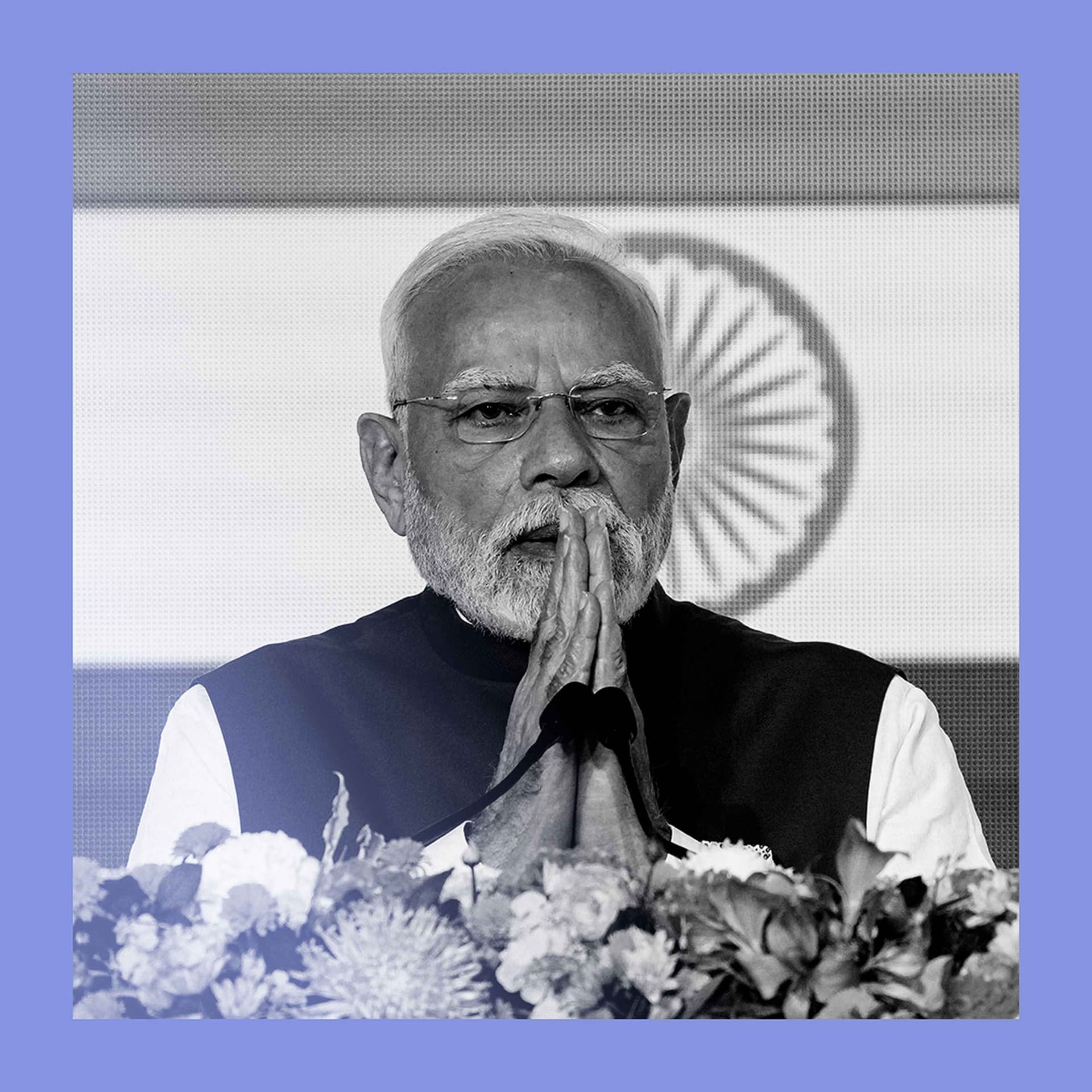
Podcast Summary: Economist Podcasts - "Survival Modi: Indian PM’s fortunes revive"
Podcast Overview
- Podcast Title: Economist Podcasts
- Description: A global network of correspondents provides insights into headline stories, trends, and current affairs spanning various domains including business, finance, science, and technology.
Episode Details
- Episode Title: Survival Modi: Indian PM’s fortunes revive
- Episode Description: The episode discusses the unexpected resurgence of Indian Prime Minister Narendra Modi's popularity following setbacks in the 2024 elections. It also explores childhood specialization in nurturing genius, and the implications of panda departures from Japan on Sino-Japanese relations.
Key Topics Covered
- Modi's Political Resurgence
- Background:
- Modi's government faced challenges after losing majority in the 2024 elections.
- Initial assumptions indicated a decline in Modi's political power.
- Current Status:
- Modi's popularity has rebounded, with recent state elections indicating strong support for his party (BJP).
- The BJP's vote share only slightly decreased in the 2024 elections, maintaining its status as the dominant party.
- Government Actions:
- Focus on economic issues and responding to voter dissatisfaction, particularly regarding inflation.
- Implementation of significant reforms including:
- Tax simplification.
- Overhauling labor laws.
- Signing a prominent trade deal with the EU.
- Cultural Agenda:
- Continued emphasis on Hindu nationalism, but a strategic shift towards economic issues due to international pressures.
- Coalition Dynamics:
- Modi's coalition government has remained stable despite earlier predictions.
- Alliance with regional parties has helped sustain support and implement reforms.
- Rethinking Child Specialization
- Study Insights:
- New research suggests that pushing children into early specialization may not lead to elite performance.
- Elite performers often have diverse interests before settling on a specialization.
- Theories Presented:
- Search and Match: A broad range of interests may help find the best-suited field.
- Enhanced Learning: Diverse experiences can improve learning skills, leading to better specialization outcomes later.
- Limited Risk Hypothesis: Early specialization may lead to burnout; keeping options open can maintain interest and motivation.
- Panda Diplomacy and Sino-Japanese Relations
- Context:
- Japan recently saw the departure of the last two pandas, marking a significant diplomatic shift.
- Panda Significance:
- Pandas symbolize a friendly relationship between China and Japan, rooted in historical exchanges linked to diplomatic ties.
- Geopolitical Implications:
- The departure of pandas reflects deteriorating Japan-China relations, exacerbated by recent political tensions.
- South Korea's recent acquisition of pandas highlights changing diplomatic alignments in East Asia.
- Public Sentiment:
- The emotional response in Japan underscores the strong cultural attachment to pandas, despite broader negative perceptions of China among the Japanese populace.
Conclusion This episode of the Economist Podcasts provides an in-depth look at the evolving political landscape in India under Modi, challenges conventional wisdom regarding child development and specialization, and illustrates how cultural symbols like pandas can reflect and impact international relations. The discussions highlight the interconnectedness of domestic policies, cultural sentiment, and international diplomacy.
Written by AI. May contain mistakes. Listen to the episode to check what was said.
Chapters
Tap a time to open that second in VOParents & Nurturing Genius
1:28 to 2:16
Explore how parents think about nurturing their child's genius.
“Until now, the assumption was that after you push them out at birth, you just keep pushing.”
Modi and India's Free Trade Deal
2:16 to 3:08
Discuss the implications of India's largest-ever free trade deal.
“Minister Narendra Modi called it his country's largest ever.”
Political Resurgence of Modi
3:08 to 4:19
Analyze the political comeback of Modi after the 2024 elections.
“Tom Sasse is our South Asia bureau chief.”
Economic Reforms Under Modi
4:19 to 5:09
Examine Modi's government reforms and their impact on the economy.
“So it's been a busy time politically and Modi's coalition has won a string of state elections.”
Hindu Nationalism's Role
5:09 to 6:00
Investigate the role of Hindu nationalism in Modi's governance.
“But what we've seen is as he's come under more pressure from abroad, he's started to focus more on strengthening India's economy.”
Coalition Politics in India
6:00 to 7:28
Understand how Modi's coalition government functions and its stability.
“And in this, I think we can see a little bit of the hand of Donald Trump helping, because what Donald Trump's tariffs on India have done is convince certain people within Mr.”
Modi's Popularity and Challenges Ahead
7:28 to 8:10
Consider the challenges Modi faces despite his current popularity.
“to India from the UK where some of our prime ministers don't even last 50 days.”
Understanding Hothousing in Talent Development
14:05 to 16:18
Explore theories on why early specialization may not yield elite talent.
“before he eventually decided to go for tennis.”
Panda Diplomacy: The Symbolism Behind Japan's Loss
16:18 to 21:59
Learn about the geopolitical implications of Japan's loss of pandas and its history.
“So the ultimate point is don't push your children.”
Exploring Cultural Reflections in International Relations
21:59 to 22:45
Discover how cultural elements like Go reflect regional tensions in Asia.
“It's not just panda counts that are a window into international relations in Asia.”
Transcript
Automatic transcript. May contain errors.0:00With no fees or minimums on checking accounts, it's no wonder the Capital One Bank Guy is so passionate about banking with Capital One. If he were here, he wouldn't just tell you about no fees or minimums. He'd also talk about how most Capital One cafes are open seven days a week to assist with your banking needs. Yep, even on weekends, it's pretty much all he talks about. In a good way. What's in your wallet? Terms apply. See CapitalOne.com slash bank. Capital One N.A. member FDIC. There's one place for the newest drops in wellness and performance and the biggest sale of the year. It's The Drop by GNC, curating the best of what's new, handpicked by the pros who know what works.
0:41And right now, get it all, buy one, get one 50 % off during the semi-annual LiveWell sale. From crushing workouts to leveling up your nutrition and everything in between, get the best deals on the latest innovations. All the newness is all on sale right now during the LiveWell sale on The Drop by GNC.
1:05The Economist.
1:12Hello and welcome to The Intelligence from The Economist. I'm Rosie Bloor. And I'm Jason Palmer. Every weekday we provide a fresh perspective on the events shaping your world.
1:27How to nurture your child's genius appears to be a preoccupation of at least some parents. Until now, the assumption was that after you push them out at birth, you just keep pushing. A new study begs to differ. And when the last two pandas on loan from China left Japan, there was a great outpouring of emotion. Pandemonium, you might call it. But this is the arithmetic of panda diplomacy. Ever fewer as Sino-Japanese relations have become more tense.
2:04First up though…
2:15When the EU and India recently announced a long-awaited free trade deal, India's Prime Minister Narendra Modi called it his country's largest ever. The European Commission's President Ursula von der Leyen reached Trumpian levels of bombast. We did it. We delivered the mother of all deals. We are creating a market of two billion people. This was a big win for Mr Modi, and one that reflects just how much he's back at the top of Indian politics. Narendra Modi took office in the era of Barack Obama, David Cameron and Angela Merkel. And now he's expected to run again in the next Indian national election in 2029, age 78.
3:01And he's actually got his eye on being the longest serving Indian prime minister of all time. Tom Sasse is our South Asia bureau chief. If you wind back just to 2024, things looked really a bit different. Modi lost his majority in the national election then, and many thought his dominance of Indian politics was coming to an end. But it's clearly not. What has changed in that year and a half? So after that disappointing 2024 election result, a lot of people thought that peak Modi had been reached, that his powers over the Indian voter were on the way. And there was even some talk in India about succession.
3:43And now all of that looks a bit premature. And Modi is actually as dominant as he's ever been. And if you look at that election result, actually the BJP's vote share only fell by less than a percentage point. It was still by far the dominant party and Congress, the main opposition party, was a long way behind. And what we've seen since then is the government respond to some of the things that voters were unhappy about at that election, particularly bringing inflation down, whereas the opposition hasn't really centred around a strong critique. So tell me some of the things that Mr. Modi's government has managed to do since that election.
4:21So it's been a busy time politically and Modi's coalition has won a string of state elections. And really the opposition in India is in disarray. And since his latest victory in the state elections, that was in Bihar, he's been pushing through some much needed reforms at the central level. So he's been simplifying taxes. He's been overhauling India's pretty complex labour laws, as well as striking trade deals. Just recently, we've seen India sign a big trade deal with the EU and push more deregulation in a budget. Modi's government still pushes this pretty brash cultural agenda that's centred on restoring Indian and more specifically Hindu pride.
5:09But what we've seen is as he's come under more pressure from abroad, he's started to focus more on strengthening India's economy. So something you alluded to there, the brash cultural agenda, by which I presume you mean Mr. Modi's Hindu nationalism, where does that feeling sit in this ride for him? So the nature of that Hindu nationalist agenda hasn't really changed. Modi and his colleagues still resort to pretty divisive, shrill language on the campaign trail. But unlike in his second term, the government hasn't put lots of energy into big new initiatives that would stoke tension between India's different communities.
5:50There are, for example, fears of more plans to replace mosques with temples. Instead, he's been putting much more energy on the economic reform. And in this, I think we can see a little bit of the hand of Donald Trump helping, because what Donald Trump's tariffs on India have done is convince certain people within Mr. Modi's movement that this kind of economic liberalization that some of them might not have been so keen on is actually necessary to make India stronger in a more hostile world. But having lost his majority, he's had to do what he's done in coalition. How has that sort of change the character of how he's been governing?
6:28So his coalition has actually been surprisingly stable. And what he's done is he's brought in two regional parties and they've been pretty happy to offer their loyalty in exchange for patronage. They've done pretty well. They've got lots of money for their regions. And in some areas, they've actually curbed some of the BJP's instincts. So for example, the BJP hasn't gone down the path of implementing a uniform civil code, which is a controversial idea to change India's family laws. And actually in India now, it's the opposition that looks more divided than the government. So many of the other parties that are opposed to the BJP at a regional level question the role of India's Congress Party and its leader, Rahul Gandhi.
7:14And they really ask whether he's the right person to lead the challenge to Narendra Modi. Taken together then, Mr. Modi's plan to desire to be India's longest serving leader, it's sort of on track. I think it is. It's striking to me, Jason, I've just recently moved to India from the UK where some of our prime ministers don't even last 50 days. And with Narendra Modi, India's got a leader who's been in office almost 12 years actually, and still 70 % of Indians approve of him. And if you go out on the street in Delhi, you'll hear people describe him as a saint. So he's got this incredible public image, almost like a personality cult.
7:53things could still go wrong for him. There's a lot of anger in the country about the lack of jobs still. His government could very easily get overconfident and complacent. And there's still an awful lot of things that need doing. But right now, you definitely wouldn't bet against him. Tom, thanks very much for your time. Thanks, Jason.
8:28with no fees or minimums on checking accounts it's no wonder the capital one bank guy is so passionate about banking with capital one if he were here he wouldn't just tell you about no fees or minimums he'd also talk about how most capital one cafes are open seven days a week to assist with your banking needs yep even on weekends it's pretty much all he talks about in a good way what's in your wallet terms apply see capital one.com slash bank capital one na member fdic there's one place for the newest drops in wellness and performance and the biggest sale of the year it's the drop by gnc curating the best of what's new handpicked by the pros who know what works and right now get it all buy one get one 50 off during the semi-annual live well sale From crushing workouts to leveling up your nutrition and everything in between, get the best deals on the latest innovations.
9:22All the newness is all on sale right now during the Livewell Sale on The Drop by GNC.
9:35Novak Djokovic took up tennis aged four when his ski coach dad gave him a mini racket and a ball. By the age of 12, he'd moved to a tennis academy in Germany. and at 20 he won his first major title at the Australian Open. It was unbelievable today. Under the circumstances, maybe one of the best matches that I've played this year. These days he has another 23 majors under his belt and has spent more time ranked at number one in the world than any other player. Tim Cross is a senior science writer at The Economist. One interesting detail about Djokovic's life is that he was a child prodigy And that's maybe what most people think of when they think of people who are outstanding in their particular fields.
10:19But a new paper just published in Science suggests that that kind of success, taking a child, schooling them intensively early on, and then they go on to conquer their chosen field, might actually be more of an exception than the rule. And it concludes that the very best performers, and this is in all sorts of fields, not just tennis, tend to follow quite a different path. Tim, does this mean that we shouldn't be forcing kids to specialise at a young age in anything, really? Well, I think it depends on what you mean by success. So this study was run by a sports scientist named Arne Gulich at the RPT University Kaiserslautern Landau in Germany.
11:01And he and his colleagues crunched data on more than 34 ,000 elite performers. and what's interesting is that there'd already been rumblings in the sports science world that suggested that maybe this sort of hop house model didn't necessarily work when it came to producing the absolute tip-top performers but what this paper does that's interesting is it extends the analysis so it looks at lots of other areas like chess or classical music and even academia and what it concludes is that if the kids who are sort of most intensely schooled and go into that hothouse model. They do tend to do well, but they seem not to be quite as likely to become real standout superstars.
11:43And in fact, they show that the very best young people and teenagers and the very best adults are actually two almost entirely different sets of people. So if you look at sport or if you look at chess, even if you look at salaries at the age of 30 or 40. 90 % of the people who do really well as teenagers are not in the top flight when they're adults. And 90 % of the top flight adults were not in the top flight when they were teenagers. And similarly, if you look at those people who do achieve superstardom, the very, very tip top of their field, if you look at them, interestingly, they tend not really to stand out quite as much at an early age.
12:23They seem to take longer to reach their peaks, and they seem to keep their interests wider for longer rather than specialising at a very, very young age. So what's wrong with a hothouse? Well, if all you care about is producing high performance, nothing's necessarily wrong with it. It seems that hothousing will reliably do that. The thing it might not reliably do is put someone at the very, very top of their field. So we're talking here about the difference between, say, someone who's ranked in the top 10 in the world at chess and someone who isn't, or an academic who won a Nobel Prize as opposed to academics that were only nominated for Nobel Prizes.
13:03These are highly competent people, but they're not quite the absolute cream of the crop. So we're not exactly talking about crashing and burning then, but why is it good to keep your interests broader for longer? Well, that's a bit harder to know when you're looking at a kind of retrospective study like this, but the researchers had a sort of stab at it anyway. they looked through a scientific literature for theories on how excellence arises and then compared them against what the data they'd collected told them and none of them really seemed compatible so they offer kind of three of their own instead the first is called search and match which is an idea apparently derived from labor market economics and this is the idea that if you have a sort of broad range of interests and you wait a while before choosing which of them exactly to specialize in, that might give you a better chance of finding the field that really is best suited to your talents.
13:56One example, to go back to tennis, Rafael Nadal, who was another all-time great tennis player, he flirted quite seriously with a career in professional football before he eventually decided to go for tennis. Okay, so that's one theory. What are the others? The second one is called enhanced learning. And this is the idea that learning is kind of itself a learnable skill. You can learn to be good at learning. And that a good way to do that is to pursue lots of different things when you're young. The idea being that when the time comes to focus on just one, if you're better at learning, that makes your training more effective and it means you improve faster.
14:32And this fits with the data in that from sort of academia to top level sports players, you see a pattern where the very, very best, they start out sort of not as good as their hothouse contemporaries when they're young. But when they do decide to specialise, they end up quite rapidly overtaking them. There's a concept in sports science called training efficiency. And the idea is basically, if you don't specialise early, maybe your training efficiency is better in the rest of your life. And the final theory on why we see fewer child prodigies cross over to become elite adults? So that one's called the limited risk hypothesis.
15:09And it's another fancy name for a quite straightforward idea, which is that the risk of a sort of hothouse approach is that youngsters might burn out or just become disenchanted with endless violin practice. Or maybe they simply get bored with an activity after they've spent years and years pursuing it to the exclusion of all else, and their heart's not really in it anymore. Tim, in recent years, we've seen a proliferation of sports academies, of specialist schools, all of them about hothousing and specialising. What does it mean for those? Well, it's interesting. I mean, Dr. Gulich, when I spoke to him, he was sort of at pains to say that they're not arguing that the hothouse model doesn't work.
15:48It does work. He thinks it's a reliable way to produce highly competent people. It's just maybe not a reliable way to produce the really, really world class ones. So I suppose what you have to do if you're running one of those institutions is decide, you know, what exactly is your institution for? Are you happy to just churn out people in the top 1 % of achievement? Or are you really going for the top sort of 0.01 %? And depending on your answer to that question, maybe you want to run things differently. So the ultimate point is don't push your children. I think if you're really aiming for the stars, maybe go a bit more gentle.
16:25Thanks, Tim. Great to talk to you. Thanks, Rosie.
16:47I recently visited Uenozoo in Tokyo and found myself surrounded by people in tears. Moeka Iida is a reporter and researcher for The Economist and is based in Tokyo. That day, thousands of people had come to say goodbye to Xiaoxiao and Leilei, the twin giant pandas. They were sent to China a few days later. There were so many people and the zoo had to run a lottery to control the crowds. People were visibly upset and they were expressing their love for the pandas, people wearing panda outfits and waving flags that read, Thank you, Xiaoxiao and Leilei.
17:28In the crowd, I met a woman called Iwabuchi Manaka. She was holding on to a handful of panda plushies. She told me she's a super fan. She's loved pandas her entire life. And she can't believe this is really happening, that the pandas are really leaving. And her shock was shared by a lot of people. For the first time in 54 years, Japan is left without any pandas. And this is making a lot of people upset in Japan. Pandas are very popular. but there's also a bigger geopolitical story here. So the fact that Japan has zero pandas is very symbolic of the cooling relations between Japan and China. Tell me why that is, why the panda number should be tied to relations with China.
18:14Well, China often gives pandas to countries where it has a strategic relationship or are friendly with. So the history of panda diplomacy in Japan dates back to 1972. That was the year China gifted its first pair of pandas to Japan. And it was the year the two countries normalized their diplomatic ties. And since then, the animals have become wildly popular in Japan. And there has been a steady stream of pandas being sent to the country. And it's worth noting that effectively all pandas in the world technically belong to China. So for instance, Xiao Xiao and Lele were born in Ueno in Tokyo a few years back.
18:52But it was set from the get-go that they have to return to China at some point. So the departure of the last two pandas then is a fairly direct diplomatic snub, you think? Well, the Chinese side is not explicitly saying they're withdrawing pandas because the relationship is not looking good. On the surface, again, the official reason is just because of the contract. Their loan periods are expiring. But one geopolitical expert told me that if Japan-China relations were good, China would be sending replacements straight away. It wouldn't be leaving Japan without any pandas. So I mentioned that Japan-China relations aren't looking so good at the moment.
19:30And this is because at the end of last year, Japan's Prime Minister, Takaiichi Sanae, who's rather hawkish in China, said that Japan might intervene militarily in the wake of a Taiwan contingency. And that deviated from Japan's official stance, which had long respected the one China policy. And the response from China was furious. So they did things like advising Chinese citizens to refrain from traveling to Japan. They suspended seafood imports. And most recently, they also imposed restrictions on dual use goods. And interestingly, South Korea is set to receive new pandas. So recently there was a pretty friendly meeting between Lee Jae-myung and Xi Jinping, and the two leaders even took selfies together on a Xiaomi phone that was gifted to the Korean president.
20:18Lee Jae-myung made a direct request to Xi Jinping to get more pandas. So I would say the fact that the pandas are leaving Japan but heading to South Korea is quite telling of the diplomatic winds in the region. And so what's your take on pandas in Japan, though? Is this the end of the story for them? Well, the panda fans are hopeful that the pandas will return eventually. And the geopolitical experts I spoke to also do think the pandas will return at some point. So some people draw parallels with what happened to America. America also did go without pandas for a while. And at the time, people called it punitive panda diplomacy, that China's withdrawing pandas to punish America.
20:56But they did get the pandas back in 2024. So a lot of people in Japan also hope the same thing will happen at some point. But in terms of when the pandas might return, that's really hard to tell. Currently, Takahichi is prime minister. She is rather hawkish when it comes to foreign affairs. And it seems like her hawkish stance on China has also helped boost her approval ratings. So I don't think she's going to soften her stance just because of pandas. And also, if you look at the grassroots level, even though Japanese people love pandas, their love for pandas doesn't always extend to China. So there was a poll recently that showed that nearly 90 % of Japanese people hold negative views of China.
21:42But the most devoted fans remain undeterred, so I spoke to a man called Watanabe Haruki. He told me he's already planning a trip to China to see the twins again, and he told me he would follow the pandas wherever they go. Moeka, thanks very much for joining us. Thank you so much for having me, Jason. It's not just panda counts that are a window into international relations in Asia. Over on Drum Tower, our sister show on Chinese affairs, my colleagues look at the game of Go, one of the world's oldest board games, beloved in China, Japan, and South Korea. What should be a patient and genteel game at the pro level has led to an almighty scrap about rules, one that curiously reflects the tensions in the region.
22:28Subscribers should look for Drum Tower wherever fine podcasts are sold and traded.
22:45That's all for this episode of The Intelligence. See you back here tomorrow.
23:07With no fees or minimums on checking accounts, it's no wonder the Capital One bank guy is so passionate about banking with Capital One. If he were here, he wouldn't just tell you about no fees or minimums. He'd also talk about how most Capital One cafes are open seven days a week to assist with your banking needs. Yep, even on weekends, it's pretty much all he talks about. In a good way. What's in your wallet? Terms apply. See CapitalOne.com slash bank. Capital One N.A. member FDIC. There's one place for the newest drops in wellness and performance and the biggest sale of the year. It's The Drop by GNC, curating the best of what's new, handpicked by the pros who know what works.
23:50And right now, get it all, buy one, get one 50 % off during the semi-annual LiveWell sale. From crushing workouts to leveling up to nutrition and everything in between, get the best deals on the latest innovations. All the newness is all on sale right now during the Livewell sale on The Drop by GNC.
From the publisher
After Narendra Modi’s setback in the 2024 Indian elections, many thought his star was falling. Our correspondent explains the surprising resurgence of popular support. Why pushing your child to specialise may not be the best way to nurture their genius. And what the departure of pandas from Japan says about the country’s relationship with China.
Listen to what matters most, from global politics and business to science and technology—Subscribe to Economist Podcasts+
For more information about how to access Economist Podcasts+, please visit our FAQs page or watch our video explaining how to link your account.
Hosted on Acast. See acast.com/privacy for more information.