
In short
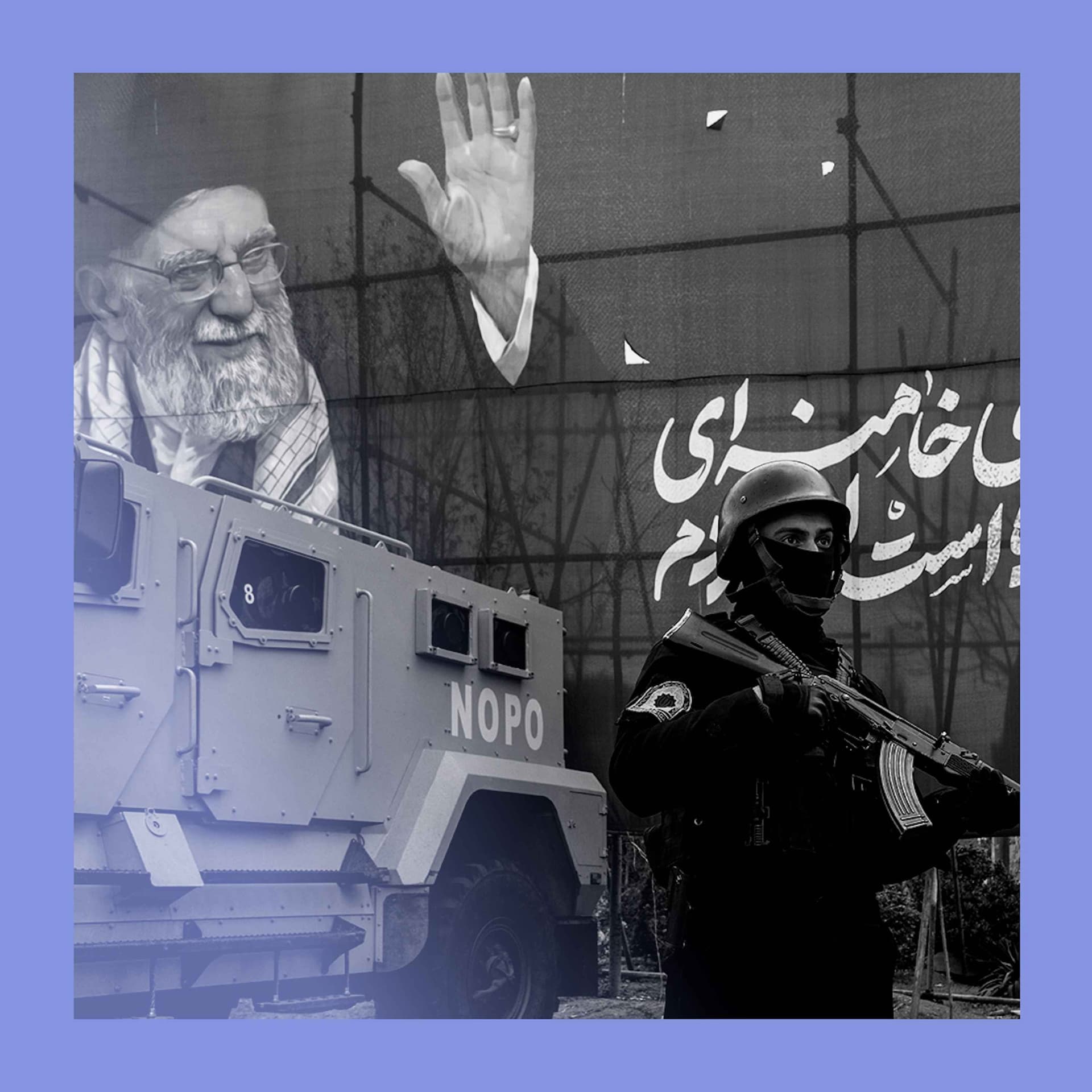
Week five of the Iran–Israel war, possible US escalation (including ground troops and island/Strait of Hormuz actions), and how the conflict could expand via Yemen’s Houthis; plus a culture segment on sci-fi’s box-office surge, led by Project Hail Mary.
Guests
Greg Karlstrom (Economist Middle East correspondent) and Soterios Johnson (discussing Iran’s aims); Alexandra Sewitch-Bass (Economist culture editor) with Rosie Blore and Jason Palmer.
Key claims
Houthis fired ballistic missiles at southern Israel; if they resume Red Sea attacks, oil exports could drop from ~10 to ~20 million barrels/day. Iran believes it has the upper hand and still exports oil, but Israeli strikes on Iranian infrastructure (e.g., steel plants) could worsen Iran’s economy. Iran’s core demands include guarantees against future attacks, plus ceasefire terms, reparations, base closures, and Strait of Hormuz control/fees—unlikely for Trump. US may deploy more troops (7,000 already; talk of 10,000 more) and could seize islands near the Strait, but this may not end the war.
Notable examples
Houthis missile attacks; Saudi oil rerouted via Red Sea; Israeli bombing of Iran’s largest steel plants; Project Hail Mary’s $80M opening weekend and Rotten Tomatoes success; Ryan Gosling’s performance; sci-fi releases in 2026 (e.g., Spielberg’s UFOs, Dune, Star Wars).
Written by AI. May contain mistakes. Listen to the episode to check what was said.
Chapters
Tap a time to open that second in VOAmerica's Immigration Policy Shift
0:45 to 1:40
Explore how America's industrial growth led to a tightening immigration policy.
“Every weekday we provide a fresh perspective on the events shaping your world.”
Escalation of War with Iran
1:40 to 2:55
Discuss the current state of the Iran conflict and its regional impacts.
“Few think that any kind of talks will lead to a deal.”
Houthi Involvement and Regional Dynamics
2:55 to 4:22
Understand the role of Houthis in the Iran-Israel conflict and its implications.
“So this is, of course, the Iranian-backed Shia militia in Yemen that controls a large part of Yemen.”
Iran's Position and Demands in the Conflict
4:22 to 5:50
What does Iran want to end the war and how are they positioned?
“The view in Tehran right now, I think, is that they have the upper hand in this war.”
US Military Options and Trump’s Strategy
5:50 to 8:00
Examine the potential military actions the US might take in Iran.
“Soterios Johnson Ideally, what they want is to know that not just this war is ending, but that there won't be a future war.”
Consequences of Ground Invasion
8:00 to 10:20
Assess the risks and political consequences of a possible ground invasion in Iran.
“And how likely is it that we'll see troops on the ground in Iran?”
America at 250: Labor and Immigration History
11:12 to 14:02
Delve into America's labor history and the rise of anti-immigrant sentiment.
“Orderly Meds.com was built to be different.”
The Rise of Anti-Immigrant Sentiment and Segregation
14:02 to 19:01
Explore the historical context of immigration restrictions and racial segregation in America.
“There, someone threw a bomb at police, who then fired on protesters.”
Cinematic Trends and the Future of Sci-Fi
19:01 to 27:18
Discuss the resurgence of sci-fi films and their societal reflections.
“During COVID, we saw a drift away from cinema and people started to watch everything on their phones or on their televisions at home.”
Transcript
Automatic transcript. May contain errors.0:00You know what's wild? Most people are still overpaying for car insurance just because it's a pain to switch. That's why there's Jerry. Jerry's the only app that compares rates from over 50 insurers in minutes and helps you switch fast with no spam calls or hidden fees. Drivers who save with Jerry could save over$1 ,300 a year. Before you renew your car insurance policy, do yourself a favor. Download the Jerry app or head to jerry.ai.acast.
0:32Gregg Carlstrom:The Economist
0:39Hello and welcome to The Intelligence from The Economist. I'm Rosie Blore.
0:44Gregg Carlstrom:And I'm Jason Palmer. Every weekday we provide a fresh perspective on the events shaping your world.
0:53As part of our history series on America at 250, we move on to the next chapter in its growth as a nation. Despite being the world's leading industrial power, America started closing its borders to migrants and looking overseas for new opportunities.
1:10Gregg Carlstrom:And as more and more cinema seats stay empty, many people think the genre that might fill them back up is science fiction. We take a look at Project Hail Mary as one film that's rightly leading the charge in what some are calling the year of sci-fi.
1:31But first...
1:40The war with Iran has entered its fifth week, with little prospect of an end. Few think that any kind of talks will lead to a deal. There are suggestions that America might deploy thousands of troops on the ground. And in a further sign of escalation over the weekend, the Houthis, Yemen's Shia militia that's aligned with Iran, launched missiles at southern Israel. The longer the war drags on, the greater the consequences for all sides.
2:11Jason Palmer:We're getting to a point where each party to this war might start to overplay its hand. Greg Karlstrom is our Middle East correspondent. Iran has an opportunity now to end the war on somewhat favorable terms, but it doesn't seem interested in doing that. Donald Trump, looking for a sort of victory image, might deploy ground troops to Iran, which is going to plunge him into this sort of prolonged conflict that he once railed against as a candidate. And Israel, while it's happy to keep fighting for now, may end up causing deep damage to its most important relationship, the one with the United States.
2:50And Greg, we've heard a lot over the weekend about the involvement of Houthis. Just tell us what's going on there.
2:57Jason Palmer:So this is, of course, the Iranian-backed Shia militia in Yemen that controls a large part of Yemen. They've sat on the sidelines for a month, but over the weekend, they did fire ballistic missiles at Israel. The question now for everyone in the region is, are they going to go further than that? Firing missiles at Israel, yes, it puts some pressure on Israel's interceptor stocks, But it doesn't change the course of the war in any great way. If the Houthis go back to carrying out attacks on commercial shipping in the Red Sea, as they did two years ago during the Gaza war, the impact of that would be much more serious.
3:36Jason Palmer:Saudi Arabia right now, instead of exporting from the Persian Gulf, which is blocked, is exporting this oil from the Red Sea. If the Houthis start attacking ships again, tankers are not going to be able to collect that Saudi oil. And so what is now a 10 million barrel a day shortfall in oil markets will end up being closer to 20 million. That would have a huge impact, obviously, on the oil price. But we just don't know yet if Houthis are going to do that if they are waiting for the conflict to escalate, to escalate their own actions, or if this is as far as they're willing to go because they don't want to antagonize the Saudis too much.
4:16So leaving the Houthis aside then, let's take the other actors in this conflict. Iran, how is the regime holding up? How is the country holding up?
4:26Jason Palmer:The view in Tehran right now, I think, is that they have the upper hand in this war. That is their assessment. They've been able to keep up missile and drone attacks on Israel and the Gulf States for more than a month now. They have this de facto control of the Strait of Hormuz. They've driven up the oil price. They've choked off commercial shipping. And at the same time, the damage that they have suffered inside of Iran is still largely limited to military and nuclear targets. We haven't seen, I think, catastrophic damage to their economy or to their infrastructure. and in fact they're still exporting oil and making more money now from oil exports than they were before the war.
5:08Jason Palmer:And so all of this is feeding into their calculus but I think a few caveats there. One is that there's a lot that we don't know about the scale of the damage in Iran and we've also seen occasional attacks on things that are very very important to its economy. On Friday Israel bombed the largest steel plants in the country at least one of which subsequently shut down And if we see more of these sorts of attacks, if Israel and perhaps America start striking more at Iranian infrastructure, at Iran's economy, they're going to cause damage that is going to be very hard for Iran to repair and is going to have very serious consequences for its economy.
5:46So what do you think would bring Iran to the table? How would they want the war to end?
5:52Jason Palmer:Soterios Johnson Ideally, what they want is to know that not just this war is ending, but that there won't be a future war. They want guarantees that both America and Israel are not going to attack them again. I think that's their core demand here. Now, they've issued a list of other demands, which they want to see in a ceasefire. They want reparations for the war. They want the closure of American military bases in the region. They want to formalize their control over the Strait of Hormuz, which is an international waterway, but they want to start charging fees for ships that use the strait. It's very hard to imagine Trump agreeing to these things.
6:31Jason Palmer:America's allies in the Gulf would be very strongly opposed. And so Iran has an opportunity here where I think they could sell a deal to the Americans, a much pared down version of that deal. They would reopen the Strait of Hormuz. They would get some sanctions relief in return. They might make a few other concessions. And they could say, you know, we'll have talks in the future about the rest of America's demands, knowing that those talks may never happen. But that's not where Iran is right now. And where is Washington in all of this as the war enters its fifth week? I mean, you hear very mixed messages coming from people in the Trump administration.
7:08Jason Palmer:On the one hand, they continue to talk up these diplomatic contacts they've had with Iran, I don't even want to call them indirect talks, but messages they have passed back and forth via Pakistan, which is serving as an intermediary. I don't think they've made much progress towards a deal, but there seems to be a desire to find a deal and to extricate America from this war because of the damage it has already done to the global economy. The war is deeply unpopular in America. I think Trump would like to find an off-ramp here. But if he can't find one soon, I think it's going to be politically difficult for him to sell this sort of half-done agreement as a victory.
7:51Jason Palmer:So the longer this goes on, the more Trump is going to be pushed towards escalatory measures up to and including possible ground invasion of Iran. And how likely is it that we'll see troops on the ground in Iran? I think it's becoming quite likely. The Pentagon has already deployed 7 ,000 marines and paratroopers to the region. There's talk that another 10 ,000 troops might be sent. There are amphibious warfare ships making their way west from California right now. I think there's a strong possibility that the US tries to capture some of the islands at the mouth of the Strait of Hormuz and use them as a base to defend ships coming in and out of the strait.
8:33Jason Palmer:The riskier things that Trump could do would be trying to seize Khark Island, which is the site of Iran's main oil export terminal, trying to carry out a very complicated, very protracted raid inside of Iran to seize its stockpiles of highly enriched uranium. The administration has talked about these things, but they are much riskier and much more complicated. We don't know if he's going to order those sorts of operations. But again, I do think it's likely that there will be some sort of ground invasion coming in the days and weeks to come. Which doesn't really sound like an end to the war. No, none of these will end the war.
9:11Jason Palmer:The administration is hoping that somehow this will be a knockout blow to Iran. If you seize some islands, then they won't be able to blockade the Straits anymore or they'll make a deal and the war will be over. If they don't make a deal, first, whatever territory you seize, you either have to hold it or you have to give it back to Iran, which is very embarrassing. So you're sort of stuck occupying this territory for a prolonged period of time. Even if you take these islands at the mouth of the strait, it's still difficult to convince commercial shippers that it's safe to go through because Iran can continue firing drones and missiles at ships from the mainland.
9:48Jason Palmer:And so America may have to hold this territory for a protracted period of time. If there are significant American casualties in any of these ground operations, that might add further political pressure on Trump to escalate, to send more troops, to pull himself even further in. So a president who once said he's against forever wars in the Middle East, he's against large deployments of American troops in the Middle East, he's starting something that may end with exactly that sort of scenario. Greg, thank you very much for talking to me. Thank you, Rosie.
10:38Are you noticing your car insurance rate creep up even without tickets or claims? You're not alone. That's why there's Jerry, your proactive insurance assistant. Jerry handles the legwork by comparing quotes side by side from over 50 top insurers. So you can confidently hit buy. No spam calls. No hidden fees. Jerry even tracks rates and alerts you when it's best to shop. Drivers who save with Jerry could save over$1 ,300 a year. Don't settle for higher rates. Download the Jerry app or visit jerry.ai slash ACAST today. Less support through telehealth, but it feels overwhelming and rushed. Check out orderlymeds.com now.
11:17Orderly Meds.com was built to be different. Here, you connect with real doctors who take the time to understand your goals, review your eligibility, and guide you through a plan that's right for you. Orderly Meds provides access to proven GLP-1 medications like semaglutide and terzepatide, including both name brand options and personalized compound versions when appropriate. So you have choices backed by clinical oversight, not guesswork. It's a simpler, more supportive telehealth experience designed around people who want clarity, care, and confidence in a weight loss journey. And your medication is delivered directly to your home in discreet packaging.
11:53So your experience stays private from start to finish. Do your research. Ask the right questions. Then visit orderlymeds.com slash podcast for an exclusive offer. Again, that's orderlymeds.com slash podcast. Individual results may vary. Not medical advice. Eligibility required. See site for details.
12:22Gregg Carlstrom:In July, America will be celebrating its 250th birthday. So, in the run-up to the anniversary, we're charting the big moments in the country's history, taking extracts from our own archive to recount the history as it happened.
12:47By the 1890s, the United States had overtaken Britain as the world's leading industrial power.
12:53Gregg Carlstrom:Annie Cravel is a senior digital editor. All this growth was financed by Wall Street. But most of the prosperity was concentrated with a few successful businessmen, including John Rockefeller and Andrew Carnegie. It was also a key time for investigative journalists. Ida Tarbell revealed Rockefeller's corruption in a series of articles, writing, Very often people who admit the facts, who are willing to see that Mr. Rockefeller has employed force and fraud to secure his ends, justify him by declaring its business. That is, its business has come to be a legitimate excuse for hard dealing, sly tricks, special privileges.
13:37American workers labored for long hours in unsafe conditions to make those at the top rich. They began to organize. On May 1st, 1886, there was a turning point. Thousands of angry workers organized a strike for an eight-hour workday. A few days later, at a protest rally in Chicago's Haymarket Square, There, someone threw a bomb at police, who then fired on protesters. At least 11 people were killed. These events set off anti-labor and anti-immigrant hysteria, but they eventually became a symbol of labor's struggle, with May Day acquiring global meaning. Anti-immigrant sentiment had been on the rise for a while before the first May Day.
14:32During the Civil War, Congress had opened America's doors wide to immigrants. There were Irish and Germans, and later Eastern and Southern Europeans, as well as East Asians. Every economic shock inspired a backlash against them. They were accused of taking American jobs. And by 1924, Congress had virtually barred migrants from outside the Americas. Ironically, the Statue of Liberty, which is meant to welcome all comers, was erected around the time America began closing its borders.
15:16Black people continued to be poorly treated, too. The problem after the end of slavery became segregation. In 1892, Homer Plessy, from New Orleans, was arrested after he sat down in a train car reserved for white passengers. He appealed his case all the way up to the Supreme Court, where the justices ruled against him. Justice John Marshall Harlan, the only dissenter, wrote,
15:55But his words did not resonate. The court's decision only served to reinforce the regime of segregation that had been imposed by white Southerners after Reconstruction. We consider the underlying fallacy of the plaintiff's argument to consist in the assumption that the enforced separation of the two races stamps the colored race with a badge of inferiority. If this be so, it is not by reason of anything found in the act, but solely because the colored race chooses to put that construction upon it. At the same time, America was making new strides abroad. In the 1890s, America's armies had run out of parts of the continent to conquer.
16:40Instead, in 1898, America drove Spain out of Cuba and Puerto Rico. And on the other side of the world, America's navy took the Philippines and Guam from Spain. That, ironically, made America a colonial power with 10 million subjects.
17:01Gregg Carlstrom:The great fundamental issue now before our people in the state history, It is, are the American people fit to govern themselves, to rule themselves, to control them? I believe they are. My opponents do not. I believe in the right of the people to it. In 1901, Teddy Roosevelt came to power after the assassination of the previous president, William McKinley. Under the new president, a rotund and mustachioed man, expansionism grew. The Economist, at the time, wrote... The record of Mr. Theodore Roosevelt, who under the Constitution becomes president until March 1905, as politician, as soldier in the Spanish War, and as governor of New York, is acknowledged to be most excellent.
17:53But there is an impression that he is unusually masterful, that he is inclined to jingoism, that he holds to the policy known as that of the Monroe Doctrine with extreme tenacity, and that he is especially antagonistic to Great Britain. Roosevelt also flexed his muscles at home, clashing with big business. The press called him the trust buster. But he proved weak in the face of a financial crisis in 1907 when a group of bankers, led by J.P. Morgan, agreed to provide emergency liquidity. President Roosevelt fell silent in his criticism. These events would eventually lead to the creation of a central bank, modernizing America's financial system.
18:46For all the change, modernization only went so far. Under Roosevelt, immigration restrictions became tighter, and segregation more entrenched. We'll see you back next time for our next chapter, Liberalism Under Siege.
19:21During COVID, we saw a drift away from cinema and people started to watch everything on their phones or on their televisions at home. but it's the film lineup that will bring people back. And we're seeing that happen now in spades.
19:36Gregg Carlstrom:Alexandra Sewitch-Bass is our culture editor. 2026 is expected to be a really exciting year. And it's not just for the reasons you'd expect of big franchises with characters people are familiar with. In fact, we're seeing a lot of original films come out in the sci-fi genre. Some people have even called 2026 the year of sci-fi with more than 20 big titles releasing. If you found out we weren't alone. One from Steven Spielberg with UFOs. Would that frighten you? Good morning. The more I fight. We have a new Dune and, of course, a Star Wars.
20:22And so it's a very exciting time if you're a sci-fi fan. And even if you don't consider yourself one, you might be drawn to the cinema. And that's perhaps why Project Hail Mary is sweeping the box office.
Read the full transcript
20:36Gregg Carlstrom:So I met an alien. He's kind of growing on me. At least he's not growing in me, you know? And actually the bestseller list for fiction as well.
20:47Gregg Carlstrom:Now, I have to tell you, Alexander, I have just seen this movie and I would put it in this sort of sci-fi grades and so on, but you're saying that's tapping into something bigger than itself. Yes, I think the theme balancing nihilism and end-of-the-world doomsday scenario with hope is very appealing to people. But it's the leading film in a broader trend of people being attracted to these original stories, the mind-stretching quality of good sci-fi. I'd compare Project Hail Mary with Ted, that film with a foul-talking teddy bear that was a bromance, combined with E.T. set in space. So it's bringing some pop-cultural references and familiar types of films together.
21:34Gregg Carlstrom:So I guess we should say what it's about before we go any further, trying to avoid any spoilers. Basically about a guy sent on a Save the Universe mission and ends up making an alien buddy along the way. Amazing, amazing.
21:49Gregg Carlstrom:How is that sort of landing with audiences? I don't think anyone necessarily anticipated it to be such a hit, but it's opening weekend in North America alone. It was the top grossing film. It fetched$80 million at the box office. I saw it midweek to a packed theater in Paris. And so it's really attracting audiences and critics seem to love it. It has a very high Rotten Tomatoes score. It's helped by Ryan Gosling, who's really good in this role. I'd always thought of him as a pretty boy from Barbie. He is actually quite a serious actor and really pulls this off. It has to be said that putting aside his absolute good looks, he's not an actual standard superhero character in this film.
22:33He wasn't as brave as you would expect a hero of a film to be. And I think it was a really interesting choice on the part of Andy Weir and also the filmmakers to emphasize his own doubts about his qualification for the mission. I found him to be a very relatable character. My only hesitation with it is it's really long, about two and a half hours.
22:55Gregg Carlstrom:I did feel it got a little bit long, but I couldn't put a finger on where exactly it should have been cut, I suppose. Well, I looked at my watch at one hour and 15 minutes and had kind of an oh no view, realizing that I was only halfway through. But maybe you were a bit more enthusiastic than I. That does not sound like a recommendation, Alexandra. No, I think it's an interesting movie and clearly the world disagrees with me and is more in the camp of you because you really liked it, right? I really did, yeah. What appealed to you about it? I think what you were saying earlier about the balancing complete nihilism, It's all going to hell in a handbasket with, ah, but maybe we shall be saved is part of it.
23:35Gregg Carlstrom:And then it kind of becomes, I wouldn't say a trope of a buddy movie, but very much a buddy movie that was emotionally affecting. Yes. Yeah. And I think some of the themes, you know, a climate crisis, we're about to enter an ice age. How much can you befriend someone who's completely different from you where you think that there aren't links? It resonated with some of our considerations as a society right now. And it has to be said that on balance, films are getting longer. This isn't way out of whack with what we're seeing. No, we've done some data analysis at The Economist to that effect. Some of this is auteur-driven films where you have Christopher Nolan who wants to tell us about Oppenheimer, and it's impossible to cut from his perspective, and audiences are willing to go through the journey.
24:21I do think it allows for character development, and we really feel like we're there with Grace, the main character, as he's trying to contemplate whether he has any exit. And so length there, to a certain extent, helps. I think it's a pacing question. I think it asks a lot of audiences to stay there for so many moments. And then I felt like the intense parts where you see the plot shift, that really rushed. And so you had to really suspend your disbelief. I understand we're in sci-fi, so there's a certain amount. that you have to be willing to accept. But I didn't feel like everything was fully explained that needed explanation.
25:02Gregg Carlstrom:I wonder though, if it's the year of sci-fi and this is another film that's come out of a book, is that a furrow that will be plowed now? Lots of sci-fi books being turned into films on this kind of grand scale? I think that's a great question. And of course, I mentioned how well Project Hail Mary, the book is now doing because the film is such a hit. So there's a virtuous circle that comes about with film releases. We've also seen people attracted to dystopian fiction. I think there is something about people wanting to see some thematic parallels with our world, but searching for an escape. And what is going to the cinema but a two or three hour long escape?
25:42So I think there's a few factors that are driving people to both themes like this and then experiences like this out of the home. But I think there's definitely going to be more of them in 2026.
25:53Gregg Carlstrom:Well, see you in the cinema then, Alexandra for now. Thanks very much for your time. Looking forward to it, Jason. Thank you.
26:22That's it for this episode of The Intelligence. See you back here tomorrow.
26:49This is Dr. Joyce Esther, President of Governor State University. At GovState, we believe education should open doors, no matter where your journey began. That's why our top-ranked programs, dedicated faculty, and flexible pathways are built for students who work hard, dream big, and never stop moving forward. If you're ready to take that next step, we're ready to help you rise. Visit govst.edu to get started. GovState. Your future begins here.
From the publisher
The Iran conflict is escalating with little prospect of an end in sight. Our correspondent explains why a US ground invasion is likely. In an ongoing history series, we look at how America’s attitude to migrants changed as it got richer. And “Project Hail Mary” is a sci-fi film drawing wide audiences.
Guests and host:
- Gregg Carlstrom, Middle East correspondent
- Annie Crabill, a news editor in New York
- Alexandra Suich Bass, Culture editor
- Rosie Blau, co-host of “The Intelligence”
- Jason Palmer, co-host of “The intelligence”
Topics covered:
- Iran, Houthis, geopolitics, oil
- America, migration, colonialism
- “Project Hail Mary”, sci-fi
Listen to what matters most, from global politics and business to science and technology—Subscribe to Economist Podcasts+
For more information about how to access Economist Podcasts+, please visit our FAQs page or watch our video explaining how to link your account.
Hosted on Acast. See acast.com/privacy for more information.