In short
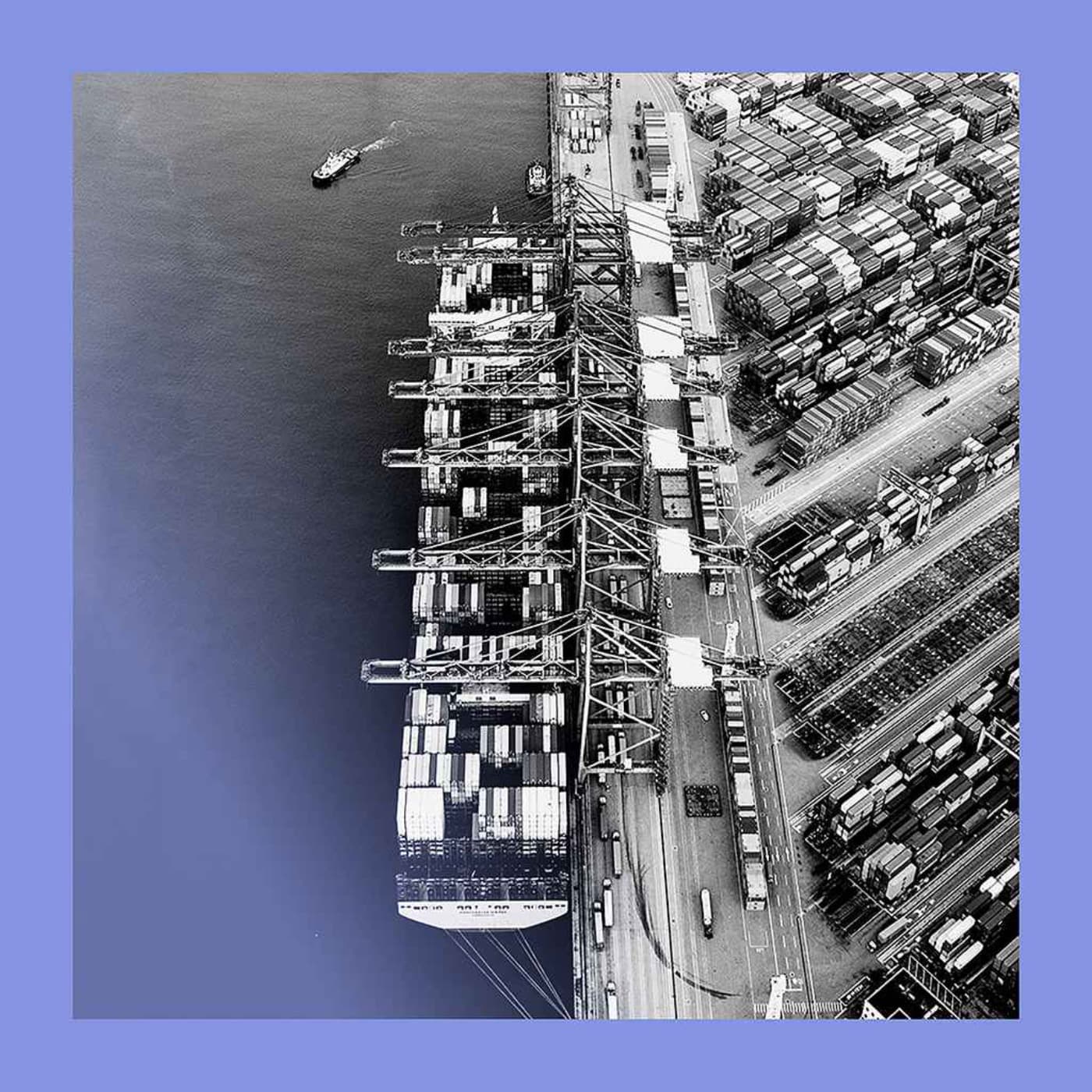
The episode of The Intelligence (Economist) has three parts. Main topic: the US–China trade war and why China may be “winning,” focusing on China’s new export controls on seven rare earth elements (April) and then all rare earths plus rare-earth magnets (early October).
Guests
Simon Rabinovitch, Economist Chaguan columnist and Beijing bureau chief; Jameson Greer, US Trade Representative (quoted, not interviewed).
Key claims
China has prepared for retaliation, invested to reduce US semiconductor chokeholds, and used rare-earth dominance (about 90% processing) as leverage. America responded by negotiating, including tariff reductions (about 145% to 30%) and a 90-day truce, and by funding alternatives (a $3bn Australia partnership).
Notable examples
China’s “global licensing system” requiring proof of non-dual-use, slow approvals for European automakers, and potential global industrial disruption if enforced.
Written by AI. May contain mistakes. Listen to the episode to check what was said.
Chapters
Tap a time to open that second in VOUS-China Trade Tensions
2:05 to 4:00
Overview of the escalating trade tensions between the US and China.
“American and Chinese officials are meeting this weekend at the ASEAN summit in Kuala Lumpur.”
China's Strategy and Leverage
4:03 to 5:54
China's strategic investments in semiconductors and rare earths.
“So lots of investment domestically in the semiconductor sector, lots of looking at what it can actually purchase from other countries, where it can invest, basically trying to limit the impact of what America is doing.”
America's Response to China's Actions
5:58 to 7:03
How the US is responding to China's export controls and trade strategies.
“And ultimately, that produced a reduction of tariffs on both sides.”
Global Implications of Rare Earths Control
7:08 to 8:43
The impact of China's rare earth export controls on global markets.
“How about other countries getting involved in this?”
The Future of Trade Negotiations
9:05 to 12:00
Analysis of the evolving nature of US-China trade negotiations.
“And so I think it's important to note that we've been talking all this time about rare earths.”
Screen Addiction and the Elderly
14:16 to 19:11
Exploring screen use trends and implications for older adults.
“Schools are banning phones, parents putting controls on devices at night, and yes, kids are still glued to them.”
Celebrating Strauss and the Waltz
19:11 to 20:02
Discussing Johann Strauss II and the enduring appeal of the waltz.
“The main theme of the Blue Danube may be simple, but it's also one of the best-known tunes in the world.”
The Global Influence of the Waltz
20:02 to 24:15
Examining the waltz's cultural significance and modern adaptations.
“with the ceremony and performances of his compositions.”
The Global Influence of the Waltz
24:50 to 25:30
Examining the waltz's cultural significance and modern adaptations.
“That's it for this episode of The Intelligence.”
The Global Influence of the Waltz
25:34 to 26:28
Examining the waltz's cultural significance and modern adaptations.
“It's called Chat Concierge and it's simplifying car shopping.”
Transcript
Automatic transcript. May contain errors.0:00With no fees or minimums on checking accounts, it's no wonder the Capital One Bank Guy is so passionate about banking with Capital One. If he were here, he wouldn't just tell you about no fees or minimums. He'd also talk about how most Capital One cafes are open seven days a week to assist with your banking needs. Yep, even on weekends, it's pretty much all he talks about. In a good way. What's in your wallet? Terms apply. See CapitalOne.com slash bank. Capital One N.A. member FDIC. You want to get your backyard summer ready, but you don't want to break the bank? Wayfair gets it. Planning on dining al fresco or relaxing poolside?
0:37Wayfair has everything you need to prep your space. Shop now and save up to 70 % off during Wayfair's 4th of July clearance. Score huge deals on outdoor furniture, area rugs, and more. We're talking thousands of products for every style and budget. Plus, surprise flash deals July 6th. Don't wait. Shop Wayfair's 4th of July clearance now through July 6th at Wayfair.com. Wayfair, every style, every home.
1:05The Economist
1:12Hello and welcome to The Intelligence from The Economist. I'm your host, Rosie Blore. Every weekday, we provide a fresh perspective on the events shaping your world.
1:26Many of us worry about what screen time is doing to our young. What effect will it have? How much is too much? And how best to moderate it? But there's another group that seems addicted to their devices. Senior citizens. And this weekend, Johann Strauss turns 200. But all these years later, the waltzes he created are as youthful as ever. From Vienna to Strictly Come Dancing, our correspondent really had a ball reporting this one.
2:05But first...
2:13American and Chinese officials are meeting this weekend at the ASEAN summit in Kuala Lumpur. The talks are a desperate attempt to ease tensions. Earlier this month, China unveiled its most aggressive set yet of export controls. It announced restrictions on seven rare earth elements used to power everything from phones and electric cars to weapons. Unsurprisingly, America is pushing back. Jameson Greer, the U.S. trade representative, called it a global supply chain power grab. Well, China has taken a number of retaliatory trade actions against the United States, Europe, Canada, Australia and others in recent years.
2:52This move is not proportional retaliation. It is an exercise in economic coercion on every country in the world. This is yet another chapter in a long-running trade war. But it signals that the balance of power could now be shifting. I think if you look at Donald Trump's first presidency, China was really on the back foot. It was thrown off balance by Donald Trump and everything that he was doing on the tariff side especially. Simon Rabinovich is our Chaguan columnist and Beijing bureau chief. This time around, China has had years to prepare, to adjust, to think about how to hit back against America, and how also to defend its own vulnerabilities.
3:35And the result is that this time around, China actually is gaining the upper hand in the fight. And how has it managed that? Well, number one, it saw that America was going after its high-tech sectors, especially trying to limit its developments of semiconductors. And it has poured a lot of money into trying to break through that kind of chokehold that America held on it. So lots of investment domestically in the semiconductor sector, lots of looking at what it can actually purchase from other countries, where it can invest, basically trying to limit the impact of what America is doing. And China is still not at the global frontier of the chip sector, but it's a lot closer today than it was in 2018 at the start of the trade war.
4:26The second point is that China began to look at what America's vulnerabilities were. And it really homed in on one thing in particular, which is America's exposure to China's production of rare earths. China is the dominant producer of these globally. Although rare earths exist around the world, China accounts for something like 90 % of the processing of rare earths, and therefore it has an absolute iron grip on basically the most sophisticated production of especially kind of heavy rare earths, which are essential for high tech, for munitions, for everything that really America needs. And what China has done over the last half year is that it's begun to choke off America's access to make it more difficult for America to get its hands on rare earths.
5:12This began in April with export controls on seven rare earth elements in particular. And then in early October, China widened that to all rare earths, beyond rare earths, also to magnets made with rare earths. And were it to actually enforce these export controls rigidly, it could effectively bring industrial processes to a halt in America. So dependent is America on China's rare earth production. And how has America responded to all that? Well, America has responded, number one, very angrily. It's not used to being in this position of having any country being able to basically hold it to ransom, which is what China has done with its rare earth export controls.
5:54But number two, I mean, look, China's leverage has been effective. And we saw after the Liberation Day tariffs, followed by China's initial rare earth export controls, that America rather quickly came to the negotiating table. And ultimately, that produced a reduction of tariffs on both sides. America going from tariffs of roughly 145 % on China down to 30 % agreeing to a 90-day truce. And then beginning this process of negotiations that continues to this day. With the increase in export controls announced by China early in October, again, America is angry but is proceeding with negotiations because they realize that China really does have leverage over them on this point.
6:43They're trying to break China's leverage. They've, for example, just recently announced a$3 billion partnership with Australia to begin to build up alternatives to China's production of rare earths. But that is going to be years and years away. So for the time being, there's really nothing to do but to get back to negotiations. Simon, the US and China are obviously the giants of the global trading system. You've already mentioned Australia. How about other countries getting involved in this? Well, so this is one of the interesting and quite worrying things about the way that China is wielding its rare earth leverage is that although very clearly, this is a reaction to what America has done.
7:24The way that China is applying its controls is by creating what they term a global licensing system. So any company in any country in the world that wants to use China's rare earths is going to have to prove that it's not for dual use. It does not have a military application. And so the result is that every country has effectively been caught in the crossfire. And getting access to Chinese rare earths has become increasingly difficult. And given the centrality of rare earths to production of all manner of high-tech products, this is something that is really going to bite globally. And there's a lot of concern, not just in America, but also in Europe, which has found that license requests by European automakers and other European companies to obtain Chinese rare earths have been handled very, very slowly by China.
8:10It's not entirely clear whether that's because China simply has created this licensing regime and it doesn't yet have the ability to fully manage it. And so therefore, it's just taking kind of time to build it up. Or is China actually using this to send a warning shot to other countries to tell them not to work as closely with America as they have done in the past? If China does continue taking quite a hard line against not just America, but against other countries around the world, it could well be in a position of facing something like a global backlash. But the reality is that for the time being, China has such a grip on the rare earth industry that it will take years for other countries and other producers to be able to work around it.
8:57And this speaks not just to the global trading system, but China's growing dominance more generally, doesn't it? It does. And so I think it's important to note that we've been talking all this time about rare earths. But China is really the sole manufacturing superpower of our time. If you look at gross manufacturing production, China accounts for about 35 % of the global total. That's three times America. You know, economists estimate that if you add up the next nine countries, including America, only then are you equivalent to China's share. So it's not just rare earth. It's virtually every single industrial sector that you can think of, from electric vehicles to renewable energy production to chemicals.
9:43China is the world's dominant player. And so it has, theoretically, an ability to wield that industrial leverage to use something like the kind of global licensing regime that it's creating for rare earths to put pressure on other countries and other domains. And so this is really a sign of China finding ways to translate its economic power, especially its industrial power, into geopolitical, geoeconomic leverage. And that's a big change. And Simon, where do we go from here? Well, I think it's useful to start by just looking at how this is playing domestically in China. And there are the cases that Xi Jinping is popular.
10:21Pushing back against America's bullying is playing very, very well domestically. And so I think both because this is popular and also because China believes, rightly to a point, that it does have leverage over America. It's not just going to be a pushover. It's not just going to compromise for a deal that pleases America, but that looks bad for China. It's not desperate for a deal the way that it was in the first Trump administration. So, you know, we've had multiple rounds of trade negotiations. This weekend in Kuala Lumpur, negotiations are continuing. And then in the coming days, it's expected that we will have Xi Jinping meeting Donald Trump in South Korea, which will be their first meeting since President Trump returned to office.
11:05So there are still negotiations taking place. And therefore, some do hold out hope that eventually there will be a detente, possibly even an ambitious deal, something that will resolve these tensions, not once and for all, but will at least lower the temperature. But China's not rushing to make any kind of massive compromise. It wants to extract concessions from America. So I think China would be willing to soften its new export control regime. But equally, it wants to see America reduce tariffs. It wants to see America walk down some of its export controls as well to make it easier for China to obtain semiconductors and semiconductor-related equipment.
11:45So I think this is where we're headed. The trade negotiations have already been contentious. but they're now in a very different shape than they were six or seven years ago. This time China has more leverage, China has really the upper hand and that's leading to a different contour to the negotiations and ultimately I think it's going to lead to a deal which is not one-sided but actually does look a lot more balanced. Simon, great to talk to you. Thank you so much. Thank you, Rosie.
12:47Transcription by CastingWords discoveries, a melting pot of ideas that all of us across the world benefit from. Now that could be under threat. Listen tomorrow to Science Under Siege. You'll need to be a subscriber.
13:49We'll see you next time. percent off during Wayfair's 4th of July clearance. Score huge deals on outdoor furniture, area rugs, and more. We're talking thousands of products for every style and budget. Plus, surprise flash deals July 6th. Don't wait. Shop Wayfair's 4th of July clearance now through July 6th at Wayfair.com. Wayfair, every style, every home.
14:15Many of us have spent time worrying about what screen addiction could be doing to our young. Schools are banning phones, parents putting controls on devices at night, and yes, kids are still glued to them. But it may not just be young people we need to worry about. Screen use among the elderly has been shooting up. Tom Wainwright is The Economist's media editor. It's leading to some of the same concerns that people have had for a long time about teenagers' overuse of screens, phone addiction, anxiety, all that kind of stuff. But there may be benefits to the elderly spending more time in front of their screens.
14:54So before we get to the benefits, how do we actually know that older people are spending more time on their phones and other screens? Well, it comes from survey data, and that's shown for a very long time that old people have been big watchers of television. They've always clocked up longer hours and printed the TV than younger people. What's happening now, though, is interesting. We've got a new generation of retirees who are also familiar with digital technology, so smartphones, iPads, even games consoles. And what we're seeing is that they are still watching as much television as they always did, but now on top of that, they are stacking screen use on these new types of screens, the phones, the iPads, and so on.
15:30And the result is some very epic screen sessions here in the UK for example, retired people spend on average an hour and a half longer each day on screens than young people do. Even though we worry a lot more about young people and screens, actually they're spending less time than their grandparents. Right. So we talk a lot about this anxiety about younger people and screen time. Does it matter if older people are spending a lot of time on devices? I think it's possible for anybody to overdo it. And what's interesting is that there are now more and more surveys focused on older people's use of screens.
16:03There's long been worry about children and these habits, but now in some parts of the world, the focus is really moving to the other end of the age spectrum. So in South Korea, for example, where they have very high rates of mobile phone use, there was a survey recently which showed that 15 % of 60-something-year-olds were at risk of phone addiction. There have been studies in China linking phone use to worse sleep in the over 60s. There was a study in Japan showing that screen time was associated with less physical activity among the elderly. All of these studies come with their caveats. So there's always a chicken and egg question.
16:37Is it the case that people who spend more time on screens are doing less physical activity because of the screens? Or is it that they're spending more time on those screens precisely because they're now less able to do that physical activity? So there's a difficult thing to unpick there. But I think there is more focus than ever before on what the effect of the screen time is on older people. And you said there were some benefits. Yeah, very much so. I think this is important. I often think that the internet could have been invented for older people. You know, it's the perfect way to help people stay in touch with friends and family if it's harder for them to get out.
17:10They can do their shopping online. They can attend everything from book clubs to church services using Zoom. So there are enormous benefits. There's also been some worry about so-called digital dementia, share the idea that if people spend too long on screens, then they lose their mental faculties. But if anything, actually, there's been some research that seems to show the opposite, that people over 50 who regularly use digital devices had lower rates of cognitive decline than others. Again, there's a chicken and egg question there. Is it the case that people who are sharper spend more time on screens because they're sharper?
17:42Or is it that spending that time on screens makes them sharper? People are still trying to disentangle that. But so far, that evidence seems to be that there's not too much need to worry about losing your marbles if you spend too long on screens. And presumably they've just got a lot more time to spend online. Well, I think that's right. One of the biggest problems of screen use is that it's a waste of time. You know, there's opportunity cost there. And if you're a teenager who is trying to revise for exams, then the opportunity cost of spending five hours a day on TikTok is probably quite high.
18:15if you're a retired person, then time is the one thing that you have in abundance. So that's one big worry that people have about teenagers that probably doesn't apply so much to older people. So Tom, I'm interested, is this something that companies have clocked and are actually aiming devices and apps and services and games at older people? Or is this a sort of untapped market so far? I think companies are taking note. And it's interesting to see Apple, for example, is clearly aiming some of its gadgets at older people. The AirPod earphones that it makes now double up as hearing aids. Wristwatches made by Apple have been quite popular with older people and they've got features in like fall detection and automatic calling of emergency services, that kind of stuff.
18:58So I think as more people get online and spend more time on their phones, I think we are going to see more and more companies aiming their products and their apps at these older customers. Tom, thank you so much for talking to me. Thank you.
19:25The main theme of the Blue Danube may be simple, but it's also one of the best-known tunes in the world. Henrietta McFarlane is a producer on The Intelligence. It opens with just three notes, a D major triad, which then gives way to a series of triads, forming balanced four-bar phrases. Just hearing the theme evokes images of grand ballrooms, dancers arm-in-arm twisting and turning across shiny wooden floors. It is, of course, composed by Johann Strauss II, the Waltz King.
20:01Tomorrow, Vienna will celebrate Strauss' 200th anniversary with the ceremony and performances of his compositions. All these years later, the waltz genre is still flourishing, and the waltz is among Vienna's most prized cultural exports.
20:27Strauss was probably the closest thing to a pop star in the 19th century. He composed over 500 dance pieces, as well as operas, ballets and symphonic works. But he is best remembered for his waltzes. He composed 150 of them. Strauss transformed the waltz from its origins as a simple peasant dance into a musical emblem of the aristocracy, a connotation it still carries today. If his father, Strauss Sr., also a composer, had lived to see his success, perhaps he would have regretted discouraging his son from pursuing music. He wanted him to become a banker instead.
21:16One reason for the waltzer's longevity is the simplicity of its musical form. Easy to follow, repetitive melodies, and a strong emphasis on the first beat of each three-beat bar makes them easy to dance to, though the Viennese version is fast and requires continuous turns. No matter what is flashy and what is big in dance, when you see the simplicity of a beautiful waltz, it takes your breath away. For Jason Gilkisson, Strictly Come Dancing's creative director, the waltz is the mother of all dances. I've just started with 15 new celebrities on Strictly and I had a class with them a few weeks ago and they come in the door, they're all nervous, they're so terrified about what they're about to do.
22:03and then you sort of teach them three steps, forward on the left foot, side on the right foot, left foot closes to right foot and all of a sudden, within two minutes, they've learnt the waltz. Vienna has played a key role in keeping the waltz tradition alive. I went to visit a few weeks ago. There were signs of Strauss' legacy everywhere.
22:28The Blue Danube was even playing in the background as I boarded my Austrian Airlines flight. Children learn to waltz at studios across the city. The Vienna Philharmonic performs Strauss' waltzes at their iconic New Year's concert, tickets for which can cost up to€1 ,200. There are also more than 400 balls held every year, attracting visitors and locals alike.
22:55Vienna is also making space for modern interpretations of the genre. When I was there, I went to a waltz event held on a rooftop in the centre. There were lots of young people drinking cocktails and chatting. Some wore jeans, others wore dresses. And in the centre of the balcony, people could sway to Strauss's waltzes, played by a string quartet.
23:19It was really about a crisis in the 90s, 80s, 90s. It was considered a thing for old people. And now the youngsters are crazy for it. Norbert Kettner, CEO of Vienna Tourism, says there has been a renaissance of the Viennese bull tradition. It's the glamorous alternative to dating apps.
23:48Beyond Vienna, the waltz has infiltrated global culture. The Blue Danube accompanies the space station docking and lunar landing from 2001, A Space Odyssey. Modern pop stars such as Alicia Keys have written songs influenced by the genre. And waltzing has gained further popularity through shows like Dancing with the Stars and Strictly Come Dancing. 200 years after Strauss' birth, the world is still waltzing. And probably will be for centuries more.
Read the full transcript
24:23And to listen to some more wonderful music and get an insight into the world musicians inhabit, do listen to Henrietta's terrific episode of The Weekend Intelligence from last weekend on Musicians' Me Too Moment. You'll need to be a subscriber.
24:50That's it for this episode of The Intelligence. The show's editors are Chris Impey and Jack Gill. Our deputy editor is John-Joe Devlin, and our sound designer is Will Rowe. Our audio correspondent is Sarah Larniuk. Our senior creative producer is William Warren, and our senior producer is Alizé Jean-Baptiste. Our producers are Henrietta McFarlane, Benji Guy and Jonathan Day and our assistant producer is Anne Hanna. We'll all see you back here for the Weekend Intelligence tomorrow.
25:30This episode is brought to you by Capital One. Capital One's tech team isn't just talking about multi-agentic AI. They already deployed one. It's called Chat Concierge and it's simplifying car shopping. Using self-reflection and layered reasoning with live API checks, it doesn't just help buyers find a car they love. It helps schedule a test drive, get pre-approved for financing, and estimate trade-in value. Advanced, intuitive, and deployed. That's how they stack. That's technology at Capital One. You want to get your backyard summer ready, but you don't want to break the bank? Wayfair gets it.
26:04Planning on dining al fresco or relaxing poolside? Wayfair has everything you need to prep your space. Shop now and save up to 70 % off during Wayfair's 4th of July clearance. Score huge deals on outdoor furniture, area rugs, and more. We're talking thousands of products for every style and budget. Plus, surprise flash deals July 6th. Don't wait. Shop Wayfair's 4th of July clearance now through July 6th at Wayfair.com. Wayfair, every style, every home.
From the publisher
This weekend American and Chinese officials are meeting to try and ease tensions over trade after China’s recent decision to restrict rare-earth exports. How has China gained the upper hand? Anxiety about screen time is focused on young people, but the elderly are addicted to devices too. And the wonder of waltzes, from Strauss to “Strictly Come Dancing”.
Listen to what matters most, from global politics and business to science and technology—Subscribe to Economist Podcasts+
For more information about how to access Economist Podcasts+, please visit our FAQs page or watch our video explaining how to link your account.
Hosted on Acast. See acast.com/privacy for more information.