In short
Podcast Episode Notes: The Robin Hood State: Taxes are Getting More Progressive
Podcast Overview Title: Economist Podcasts Description: A daily analysis of global events, exploring trends in current affairs, business, finance, science, and technology.
Episode Details
- Episode Title: The Robin Hood State: Taxes are Getting More Progressive
- Description: This episode discusses income inequality and the apparent increasing progressiveness of tax regimes worldwide. It also explores the phenomenon of Colombian mercenaries in foreign conflicts and the potential decline of the Spanish language in America.
- Hosts/Guests:
- Rosie Blau (Co-host of “The Intelligence”)
- Jason Palmer (Co-host of “The Intelligence”)
- Callum Williams (Senior Economics Writer)
- Carla Subirana (News Editor)
- Lane Greene (Senior Digital Editor)
Key Topics Discussed
- Progressive Taxation and Income Inequality
- Main Argument: Contrary to popular belief, tax systems in many countries are becoming more progressive, redistributing wealth from the rich to the poor.
- Data Insights:
- Average redistribution from rich to poor has increased, especially in the US (twice as much as in the 1960s).
- 70% of countries today have more progressive welfare states than in 1990.
- Historical Context:
- Despite high marginal tax rates in the mid-20th century, wealthy individuals found ways to avoid taxes (e.g., using expense accounts).
- Currently, tighter regulations have made it harder for the wealthy to evade taxes.
- Concerns:
- The trade-off between equality and economic efficiency is scrutinized; excessive taxation may drive wealthy individuals to relocate or evade taxes.
- Colombian Mercenaries
- Overview: A significant number of Colombian nationals are engaging in mercenary work abroad, particularly in conflict zones such as Ukraine.
- Reasons for Recruitment:
- Colombia's expanding military has produced many trained soldiers.
- Poor economic conditions and lack of support for veterans contribute to this trend.
- Types of Work:
- Security roles (low-risk, low-paid)
- High-risk roles (criminal organizations)
- Combat roles in foreign conflicts
- Government Response:
- Colombian government is concerned about the diplomatic implications and the safety of its citizens abroad, as well as the recruitment practices targeting veterans.
- The Fate of the Spanish Language in America
- Current Trends:
- While there appears to be a rise in interest and appreciation for the Spanish language (e.g., cultural events, media), projections indicate that the number of Spanish speakers in the U.S. may plateau or decline.
- Key Points:
- Immigration policies have shifted, reducing the influx of new speakers.
- Second-generation Latinos show a significant decrease in Spanish proficiency compared to their parents.
- Americanization influences have led to changes in language use and proficiency among Latino communities.
- Cultural Dynamics:
- Assimilation patterns suggest that Latino communities may not be an exception to the historical trend of language decay among immigrant groups.
- Rising sentiments among some Latino individuals favoring English as an official language highlight the complexities of identity and language.
Conclusion The episode provides a nuanced analysis of taxation and wealth distribution, particularly in the context of rising inequality. It also highlights the socio-economic challenges faced by Colombian veterans that lead to mercenary work abroad and examines the changing landscape of the Spanish language in the United States, suggesting a potential reversal of the trend toward bilingualism.
Key Takeaways
- Taxation: Many governments are increasingly redistributing wealth through progressive taxation despite perceptions of tax breaks for the wealthy.
- Mercenaries: Colombian soldiers are increasingly sought after for mercenary roles due to economic precarity and lack of veteran support.
- Spanish Language: The growth of Spanish in America may be reaching its peak, with factors such as immigration and assimilation playing crucial roles in its future.
Future Considerations
- The balance between effective tax policy and economic growth needs further examination.
- The Colombian government might need to implement better veteran support systems to mitigate the trend of mercenaries.
- The potential decline of Spanish in America is a critical area for cultural preservation efforts and should be monitored closely.
---
This structured markdown file allows for easy navigation of the podcast episode's main themes and discussions, offering insights and reflections on the topics covered.
Written by AI. May contain mistakes. Listen to the episode to check what was said.
Chapters
Tap a time to open that second in VOThe Inequality Dilemma
1:28 to 2:44
Discussing income inequality and the complexities of taxation.
“Many of them come from a single country in Latin America.”
The Robin Hood State Explained
2:44 to 4:31
Analyzing how welfare states are becoming more progressive in tax redistribution.
“In an era when the richest of the rich have an even greater share of wealth than back in the robber baron days, you might think the Welfare Balancing Act is out of balance.”
Tax Policy Changes
4:31 to 6:50
Examining the shift in tax policies and tightening loopholes for the wealthy.
“so post-welfare state inequality, is actually no higher than it was in the 1990s.”
Redistribution and Its Effects
6:50 to 9:25
Exploring the impacts of welfare policies on inequality and tax burdens.
“What you were saying there seems to run counter to a lot of the stories we have heard as certain billionaires are revealed to pay very little or zero tax at all.”
Future of Progressive Taxation
9:25 to 10:19
Discussion on sustainability and efficiency of current tax systems.
“On the whole, though, I think it's fair to say that the sort of behavioural impacts that a few economists might have predicted from putting super high taxes on the rich have not really come to pass.”
Colombian Mercenaries in Conflict
11:57 to 14:01
Examining the rise of Colombian mercenaries and their roles in global conflicts.
“recruiting other Colombians to fight in the war in Ukraine.”
The Challenges Facing Colombian Veterans
14:01 to 18:06
Learn about the issues Colombian soldiers face after leaving the military and the labor market dynamics.
“So the result is sort of a steady stream of soldiers leaving the forces at a relatively young age and those people are in high demand.”
Colombian Government's Response to Mercenarism
18:06 to 19:05
Discover how the Colombian government is addressing the issue of mercenarism and supporting veterans.
“So last year they ratified the UN's Anti-Mercenary Convention, which aligns Colombia with norms that criminalize those who recruit and hire mercenaries.”
Spanish Language Dynamics in America
19:05 to 24:06
Explore the current state and future of the Spanish language in the United States.
“Carla, thank you so much for talking to me.”
Transcript
Automatic transcript. May contain errors.0:00Callum Williams:If your eyes are the windows to your soul and your glasses are the windows to your eyes, then it's pretty important to find your perfect frames. That's why at Warby Parker, we've made shopping for eyewear as easy and fun as can be. Peruse endless styles in our stores or use our app to virtually try on frames and get personalized recommendations. To find your next favorite pair of glasses, sunglasses or contact lenses or to locate your nearest Warby Parker store, head over to Warby Parker dot com. That's Warby Parker dot com. Youth mental health is a complex challenge that requires comprehensive solutions.
0:35Callum Williams:We must strengthen after-school programs. We must make digital literacy tools available in our schools. We must work with mental health professionals to support children. And we must empower mentors, educators, and parents to keep kids happy. Learn more about our commitment to finding lasting solutions at empowerourfuturecoalition.com slash solutions. Paid for by the Coalition to Empower Our Future.
1:05Lane Greene:The Economist
1:12Callum Williams:Hello and welcome to The Intelligence from The Economist. I'm your host, Rosie Blore.
1:18Lane Greene:And I'm Jason Palmer. Every weekday, we provide a fresh perspective on the events shaping your world.
1:27Callum Williams:You've probably heard about the armies of mercenaries fighting in conflict zones around the world. Many of them come from a single country in Latin America.
1:39Lane Greene:And there are nearly as many people who speak Spanish in America as there are in Spain. Spanish language podcasts and books and Oscar nominees all point to a boom. But in fact, Spanish may be reaching its peak in the country.
2:04Lane Greene:First up, though.
2:12Lane Greene:Pretty much everybody agrees that income inequality is bad, and nobody is a particularly big fan of paying taxes. Governments have to do a lesser of the evils balancing act here with progressive tax systems, taking a bit more from the rich than from the poor, or a lot more from the rich. You might call that wealth redistribution or chalk it up to means-tested entitlements, or you could just call it the welfare state, even if in lots of places that phrase comes with lots of stigma. In an era when the richest of the rich have an even greater share of wealth than back in the robber baron days, you might think the Welfare Balancing Act is out of balance.
2:53Lane Greene:But if you dig into the numbers, it seems that on average, tax systems are getting more progressive, not less.
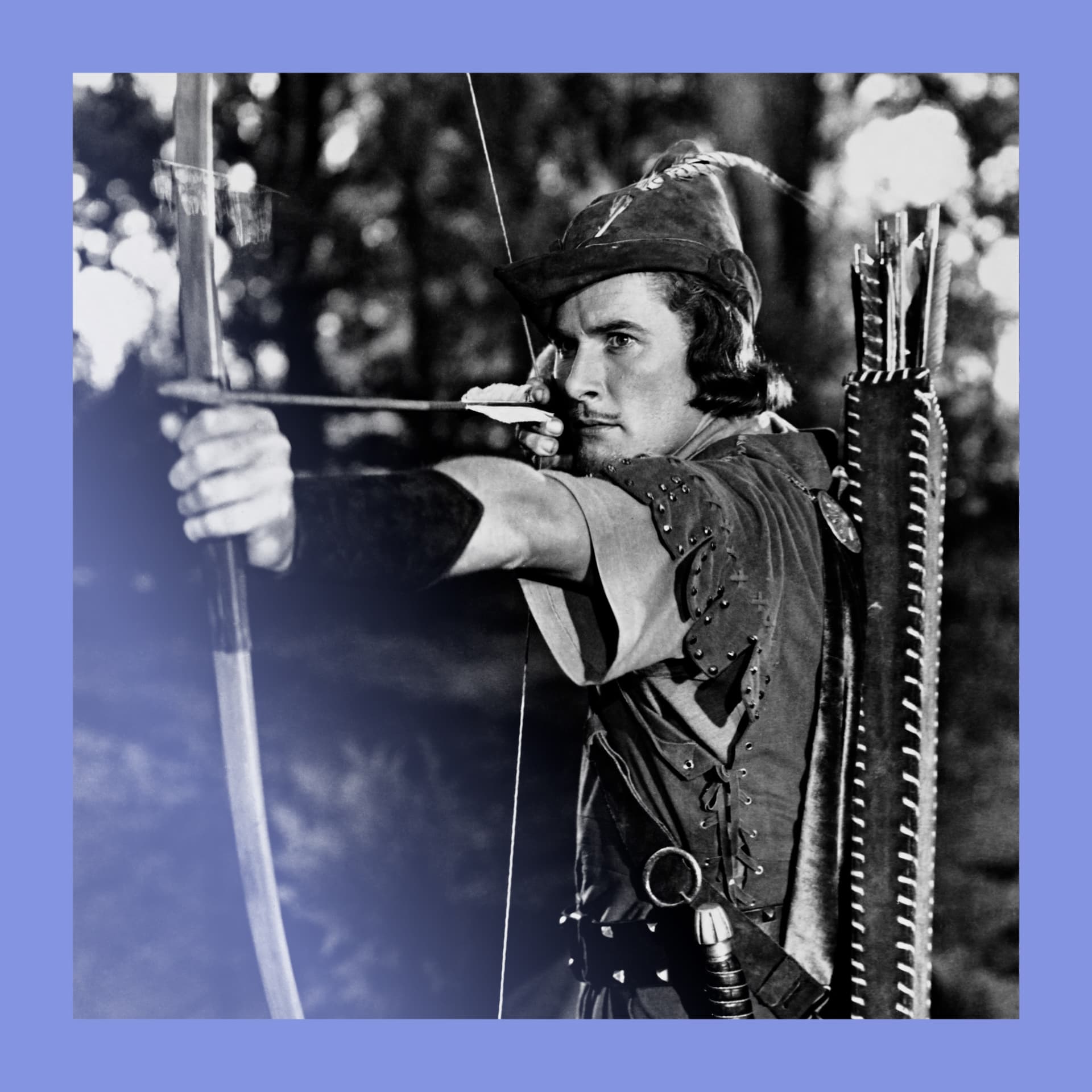
3:00Rosie Blau:Across the world, the welfare state has turned into what you might call a Robin Hood state. Callum Williams is our senior economics writer. There is more redistribution than ever from the rich to the poor. And the scale of redistribution, in fact, is such that it has managed to outweigh, in many cases, the increase in inequality that we've seen in recent decades.
3:25Lane Greene:So what do you mean about this Robin Hood state, the redistribution? What are you seeing in the data?
3:30Rosie Blau:Okay, so you can analyze this in a number of ways. One simple measure involves comparing the income distribution of a country, both before the welfare state and after the welfare state. And what typically happens is that the pre-welfare state inequality goes down when you get the welfare state involved. And so by this measure, America redistributes from rich to poor about twice as much as it used to in the 1960s. Germany, Japan, Canada, Britain, they all redistribute much more than they used to. And in fact, if you look globally, roughly 7 out of 10 countries today have more progressive welfare states than they did in 1990.
4:06Rosie Blau:And of the minority that have become less progressive, they tend to be very dysfunctional countries or they were extraordinarily progressive to start with. The upshot is quite simple, really. There was a big rise in pre-tax inequality across the rich world that began in the 1980s. But what you've actually seen since then is that governments have become much more interested in alleviating these inequalities through the welfare state. And what that means is that in many countries, post-tax inequality, so post-welfare state inequality, is actually no higher than it was in the 1990s.
4:40Lane Greene:So that's the sort of aggregate picture, but surely in different jurisdictions, the degree of that redistribution has been changing differently through the years.
4:50Rosie Blau:Absolutely. So if you start, say, with the US, yes, the welfare state has become a lot more progressive. So inequality of post-tax incomes in the US is probably about flat slash going up a little bit relative to the 1970s, 1980s. The picture elsewhere is much clearer. So say, for example, if you look at Britain, you look at France, you look at Japan, and you compare the very rich with the bottom 50%, so the median person and below, the 1 % in recent decades, so say, for example, since the 2000s have actually done pretty badly in all three of those countries. At the same time, the bottom 50 % have seen pretty strong real income growth in Britain, France, and Japan.
5:32Rosie Blau:When you dig into the history of this, what becomes very clear is that, yes, you had very high marginal tax rates in the 1950s, 1960s, and 1970s. But if you were rich, in practice, it was very, very easy to get around those rates. And there were all these schemes that people took advantage of if you were rich. So if you were Don Draper or Roger Sterling in Mad Men, you would just put as much as you possibly could on your expense account. So you'd put your food on the expense account, you'd put your car on the expense account, you might even put your house on the expense account. And so that wouldn't count as income, so you wouldn't be taxed on it.
6:09Rosie Blau:So what you find actually is that back then the rich paid a lot less tax than they do today and the poor paid a lot more tax back then than they do today.
6:20Lane Greene:So how much of this story then is a change in tax policy at the government level and how much of it is just simply tightening up really leaky tax systems?
6:30Rosie Blau:I think probably the biggest effect has been to tighten up the loopholes. It's now much more difficult if you're very rich to avoid paying tax than it was. But on the other hand, there have been more recent moves, particularly in Europe, to increase the headline rates that the rich pay. So it's a bit of both, but I think the clamping down on tax avoidance is definitely a big part of the story.
6:51Lane Greene:What you were saying there seems to run counter to a lot of the stories we have heard as certain billionaires are revealed to pay very little or zero tax at all. Like the very, very rich are still getting away with it, aren't they?
7:04Rosie Blau:Very, very wealthy people have a lot of potential ways of getting around paying high income taxes. One is that they might take income as profits rather than labor income. And that means you might pay corporation tax instead of income tax and corporation tax tends to be lower. Some rich people borrow against their assets to fund their consumption, this buy, borrow, die, wheeze. So there's lots of belief that people do this. The evidence, I would say, is mixed. It's actually really hard to know exactly how the super, super rich are doing.
7:35Lane Greene:But what about the other end of the spectrum? If the idea here is to reduce inequality, what's going on at the far lower end of the income scale?
7:43Rosie Blau:Here, the story, I would say, is much simpler. Two big things have happened. One is that people who are sort of middle income and below pay a lot less tax now than they did in the past. That is very clear. That's clear in the UK. That's very, very clear in the US. And the second thing is that the amount of redistribution of benefits or transfers, or whatever you want to call it, welfare, is a lot higher than it was.
8:12Lane Greene:What about a sort of assessment on whether all of this amounts to good policy, the degree to which it's sustainable and sensible and efficient and a good way to run things so that the greatest number of people are happy and participating in the system, following the rules?
8:27Rosie Blau:Yes. So there's a trade-off, I guess, between equality and efficiency. It doesn't seem unreasonable that as pre-tax inequality went up, governments decided that they wanted to redistribute more from rich to poor. The question then becomes, at what point do efforts to redistribute compromise efficiency? Now, you are starting to see some evidence that governments are perhaps pushing things a little bit too far. So you look at the billionaires tax that is proposed currently in California. The bottom line is that you have already seen some very wealthy people move business out of the state. That probably is not great.
9:09Rosie Blau:You are also starting to see some evidence in the UK that extra taxes on the rich are encouraging people to move. Now, some people will say good riddance to those people, but I think there are potential costs to getting people like that to leave. On the whole, though, I think it's fair to say that the sort of behavioural impacts that a few economists might have predicted from putting super high taxes on the rich have not really come to pass. And so what you're seeing now, actually, is a lot of politicians basically saying, we can push this a lot further than we thought we could in the past. So I would say the direction of travel on balance is towards even higher taxes on the rich rather than lighter ones.
9:53Lane Greene:So that then speaks to broadly, on average, a reduction in inequality, which was the point of all of these progressive tax systems in the first place.
10:02Rosie Blau:Absolutely. And if pre-tax inequality rises or continues to rise, depending on where you are, then yes, I suspect that the welfare state will become ever more Robin Hoodie and the rich will face ever higher marginal tax rates.
10:18Lane Greene:Thanks very much for joining us, Callum. Thanks, Jason.
10:38Jason Palmer:That new thing? Yeah, we've got it. The Drop by GNC, bringing you all the newness that matters, handpicked by the pros who actually know what's up and what's proven to work. We keep you on top of the trends and dialed into what's next. Whether you're crushing it at the gym, leveling up your game, or thriving every day, The Drop by GNC is where the latest solutions in health and wellness land first. Non-stop innovation and fresh finds daily. Explore what's new and what's next on The Drop by GNC. Most all-in-one HR systems are a patchwork of disconnected and manual tools. Rippling is totally automated.
11:14Jason Palmer:If you promote an employee, Rippling can automatically handle necessary updates, from payroll taxes and provisioning new app permissions to assigning required manager training. That's why Rippling is the number one rated human capital management suite on G2, TrustRadius, and Gartner. If you're ready to run the backbone of your business on one unified platform, head to Rippling.com slash ACASTBiz and sign up today. That's R-I-P-P-L-I-N-G dot com slash ACASTBiz to sign up.
11:56Carla Subirana:TikTok is filled with videos of Colombian soldiers recruiting other Colombians to fight in the war in Ukraine.
12:04Callum Williams:Carla Zuburana works on The Economist Newsdesk.
12:08Carla Subirana:And in them you can see men dressed in military uniform who talk about the huge amount of money they're making, the sense of camaraderie, and the sense of purpose they get fighting for freedom and justice. The market for mercenaries is booming, and Colombias are one of the nationalities that are most in demand. Some academics estimate that as many as 10 ,000 are fighting in foreign conflicts, and this is becoming a huge problem for the Colombian government.
12:42Callum Williams:Carla, I find this mind-blowing to hear about Colombian mercenaries going all over the world. What kind of work are they doing?
12:48Carla Subirana:Yeah, I was very surprised when I found that too. So their work falls into three categories. So the first would be security work, which would be guarding compounds abroad or oil rigs. This is quite low-paid, low-risk security work. Then there's another category, which is higher-paid, higher-risk, which would be joining criminal organizations. And then the third category would be fighting in foreign conflicts, like in the war in Ukraine. And it's really hard to know how many of those men are out there because the Colombian government doesn't have an official tally. But around 3 ,000 are thought to have fought in the war in Ukraine since it started.
13:29Carla Subirana:There have also been accounts of Colombian soldiers fighting in Sudan's civil war and also in Mexico's cartel violence.
13:37Callum Williams:So there's a growing body of international mercenaries. Why are so many from Colombia?
13:43Carla Subirana:So part of it is because supply is growing. Colombia has one of Latin America's biggest army. And the armed forces expanded a lot during the worst parts of the campaign against guerrilla groups during the early 2000s. And that cohort is cycling out of uniform now. and the military's rules are sort of accelerating the exit because soldiers are typically forced to retire when they turn 45 years old or when they've been in service for 20 years and those who are passed over for promotion are required to leave altogether. So the result is sort of a steady stream of soldiers leaving the forces at a relatively young age and those people are in high demand.
Read the full transcript
14:29Carla Subirana:Colombia has a long tradition of cooperating with the United States Armed Forces. And so they're very familiar with NATO standard weapons. They have a lot of experience on the field because they've actually fought a war, which a lot of NATO trained soldiers haven't. I spoke to Elizabeth Dickinson from the International Crisis Group, and she told me that those soldiers are in really big demand.
14:54Callum Williams:Wow, Colombians are actually really cheap and really qualified. Let's, you know, let's activate this market ourselves.
15:01Carla Subirana:That makes them very easy to deploy.
15:03Callum Williams:It's dangerous work, though, going to fight in conflict zones around the world. Why do these former soldiers want to keep on with it?
15:11Carla Subirana:Well, the main reason is that Colombia doesn't have a comprehensive veterans policy to support soldiers that leave the armed forces. So when you exit the armed forces, you normally lose all of your institutional support. You lose health care, insurance, housing, and there are few jobs that reward military skill. And there isn't really a policy of retraining. And of course, the Colombian economy is not doing great. So even if they get a job, salaries are very, very low. So basically, you have a lot of young former soldiers who are unemployed and who have very, very low pensions. And Elizabeth was telling me about the modest pensions that those soldiers receive.
15:52Callum Williams:I was recently with a friend who was retired military and he showed me an advertisement that was circulating. He said, look, my pension as a retired colonel is about$450 a month. But in Ukraine, for an entry level fighter, they're offering$10 ,000 a month. So, you know, you just can't compete with sort of...
16:13Carla Subirana:There are some other factors that are pushing them abroad as well. One of them would be politics. So relationships between the military and Gustavo Petro, the president, have been shaky since he came to power because he was a former guerrilla. So the military has always been very worried of his intention. Early in his term, he implemented the so-called total peace policy. He decided to negotiate with all armed groups simultaneously and scale back operations on the field. And these really frustrated commanders. Around 13 ,000 soldiers are thought to have left the armed forces voluntarily since he took power.
16:50Callum Williams:So how does the Colombian government respond to all of this?
16:54Carla Subirana:Well, this is a really big problem for the government, not least because a lot of its citizens are dying in foreign wars and a lot of them are being deceived. A lot of the recruitment is done through social media. So claims about pay and insurance are often exaggerated. Then another problem for the government is the diplomatic fallout. So Colombian citizens have been implicated in very serious crimes abroad. So, for example, in 2021, some Colombians were linked to the assassination of Haiti's president. And also Colombians are thought to be fighting with the RSF in Sudan's civil war. So the Colombian government was forced to apologize to Sudan's government last year.
17:34Carla Subirana:And allegedly Colombian networks have been training child soldiers in the conflict. So this is a really big problem diplomatically. And a final concern is that some Colombians are sent to Ukraine to pick up skills such as drone warfare, which are already emerging in the country's gang violence.
17:53Callum Williams:But private armies aren't going away, are they? So there's going to continue to be this flow of mercenaries around the world.
17:59Carla Subirana:Yes, mercenarism is expected to continue to increase, which is why the government is very worried about this. And they've actually started to adopt some measures to try to stem the flow of their own citizens abroad. So last year they ratified the UN's Anti-Mercenary Convention, which aligns Colombia with norms that criminalize those who recruit and hire mercenaries. But this will probably have little impact because most countries that hire mercenaries have not ratified the convention, which means that Colombia can do little beyond its own borders. And then a lot of the international groups that hire mercenaries, they actually hide it by labeling the work as training or security.
18:44Carla Subirana:The single biggest thing that the government could do should be to support its veterans better, to avoid them continue to be pulled abroad. Because without it, the incentives will continue to be there and foreign conflicts will continue to offer what Colombia doesn't offer them, which is work, pay, and a sense of purpose.
19:05Callum Williams:Carla, thank you so much for talking to me.
19:07Carla Subirana:Thank you, Rosie.
19:26Jason Palmer:It's easy to think that the Spanish language is rising unstoppably in America. Or, I should say, es fácil pensar que el idioma español está creciendo de forma imparable en Estados Unidos.
19:38Lane Greene:Lane Green is a senior digital editor at The Economist and is our local language guru.
19:44Jason Palmer:Bad Bunny has seemingly helped the language's cause, winning at the Grammys for an album entirely in Spanish, and then performing primarily in Spanish at the Super Bowl halftime show. It sounds like good times for the language in the United States, but we could be seeing the peak of the language in America, not its rise.
20:08Jason Palmer:More than 40 million Spanish speakers live in the United States, which makes it the world's fifth biggest Spanish-speaking country. Interest in learning Spanish is up a lot among non-native speakers, according to Babbel, which makes language learning software. Spanish podcasts are gaining listeners, Spanish-speaking artists are getting more Oscar and Grammy nominations, and Spanish-speaking books are being checked out more from libraries. This all sharpens a decades-old fear of America becoming a bilingual country, fundamentally one different from one most Americans knew. That fear, though, is unlikely to be realized.
20:50Jason Palmer:The number of Spanish speakers in America will probably plateau and then eventually go into reverse. One reason is obvious. Immigration policy. The flow of immigrants across the southern border from Latin America under Donald Trump has become a trickle. Another trend is less visible in the headlines, but just as important. The longer that Latino families stay in America, the less Spanish they speak. Polls suggest that around two-thirds of second-generation Latino immigrants, that is to say the first generation born in America, speak Spanish. And that drops to just over one-third for the generation after that.
21:31Jason Palmer:That means that overall, about 57 % of American-born Latinos speak Spanish. This shouldn't be too surprising. After all, the decay of languages in America across the generations has happened to other immigrant groups before.
21:48Jason Palmer:Spanish speakers fret about the fate of their language in America. So-called no-sabo kids are those who speak Spanish badly if they speak it at all. No-sabo is a sort of Spanglish mangling of the phrase for I don't know, the irregular phrase, which is supposed to be no sé in proper Spanish. A majority of non-Spanish-speaking Latinos in America admit that they've been shamed by other Latinos for not speaking Spanish. But nearly nine-tenths of American-born Latinos say that speaking Spanish is not necessary for them to be considered Latino. Meanwhile, America is changing Spanish as much as Spanish is changing America.
22:32Jason Palmer:Borrowings from English are extremely common in Spanish-spoken in the United States. Words like building and high school for building and high school pop up all over the place. American Latinos are even borrowing grammatical structures from English when they speak Spanish, saying things like, meaning, that's the girl I was talking with. This is bad traditional Spanish, which would require something more like, that's the girl with whom I was talking.
23:03Jason Palmer:I started learning Spanish myself in high school when a growing number of Mexican immigrants in my hometown of Atlanta seemed to make it the language of the future in a certain way. America's assimilation machine has turned waves of Germans and Italians and Poles and Greeks into monoglot Americans. Once upon a time, thanks to bilingual schools, Spanish television and radio, it looked for a while that Latinos might be the exception to that old pattern of assimilation. It turns out they're not. Donald Trump won nearly half of the Latino vote in 2024. More than one third of Latinos support making English America's official language.
23:44Jason Palmer:In fact, it seems that Spanish is the language under threat now in America and certainly not English.
24:06Lane Greene:That's all for this episode of The Intelligence. We'll see you back here tomorrow.
24:49Jason Palmer:We'll see you next time. wellness land first. Non-stop innovation and fresh finds daily. Explore what's new and what's next on The Drop by GNC. There's a saying that in business, how you enter a room really matters. Did you enter like someone who just spent six hours on the plane, wedged into a middle seat in economy next to the restrooms? Or did you sleep like a baby in your reclining window seat with extra legroom? That's why Amex Global Business Travel remembers how you like to travel. It'll also automatically rebook your flight if it's canceled, because being there is everything. Amex GBT.
25:27Jason Palmer:Great ideas travel.
From the publisher
Income inequality abounds and today’s rich are staggeringly rich, implying that tax regimes are giving the wealthy more and more of a pass. Our dig into the numbers suggests the opposite. We ask why so many of the world’s international mercenaries hail from Colombia. And despite the signs, Spanish may be reaching its peak in America.
Guests and hosts:
- Callum Williams, senior economics writer
- Carla Subirana, news editor
- Lane Greene, senior digital editor
- Rosie Blau, co-host of “The Intelligence”
- Jason Palmer, co-host of “The Intelligence”
Topics covered:
- Taxation, welfare state, inequality
- Colombia, international mercenaries
- Spanish
Get a world of insights by subscribing to Economist Podcasts+. For more information about how to access Economist Podcasts+, please visit our FAQs page or watch our video explaining how to link your account.
Hosted on Acast. See acast.com/privacy for more information.