In short
The episode of The Intelligence from The Economist focuses on two main stories: renewed Houthi attacks on Red Sea container ships and Australia’s “climate visa” plan for Tuvalu as sea levels rise.
Guests and backgrounds
Greg Karlstrom, The Economist Middle East correspondent; Rosie Bloor is host. Later segments include Rachel Dobbs (The Economist environment editor) and Oliver Morton (senior editor). Obituary segment features Anne Rowe (obituaries editor).
Key claims
Trump previously said Houthi attacks were over, but attacks resumed after ceasefires and regrouping. Fewer US forces and reduced interest make retaliation less likely. Houthis are hard to uproot because they control coastal/populated areas and keep smuggling weapons.
Notable examples
July 6 attack on Magic Seas (Liberia-flagged, Greek-operated) with boarding and sinking; July 7 attack on Eternity Sea with nine sailors dead/missing. Tuvalu climate visa: 280 citizens/year via ballot; 1,500+ applications; aims for gradual migration.
Written by AI. May contain mistakes. Listen to the episode to check what was said.
Chapters
Tap a time to open that second in VOTuvalu's Climate Crisis
1:32 to 1:51
Exploring the implications of rising sea levels on Tuvalu's future.
“All the islands of Tuvalu in the South Pacific are extremely low-lying, and within decades, much of the country will be underwater.”
Houthi Attacks Resumed
1:51 to 2:10
Discussion on the recent return of Houthi attacks on shipping.
“And Simon Groot was a Dutch agronomist who spent his life developing disease-resistant seeds to improve crop yields, particularly in Asia and Africa.”
Details of Houthi Attacks
2:10 to 3:39
Analysis of the tactics and implications of the Houthi attacks.
“Back in May, Donald Trump said that Houthi attacks on container ships in the Red Sea were over.”
Threat Assessment of the Houthis
3:39 to 5:30
Evaluating the Houthis' impact on commercial shipping safety.
“But the world has not taken very much notice.”
Challenges of Uprooting Houthis
5:30 to 8:01
Understanding the complexities of confronting the Houthi group.
“but that the world hasn't taken much notice.”
Future of Shipping in the Red Sea
8:01 to 11:04
Predictions on shipping trends in response to the Houthi threat.
“very difficult group to uproot, especially if all you're doing is bombing them from the air.”
Climate Crisis and Tuvalu's Future
14:01 to 20:16
Learn about Tuvalu's vulnerability to climate change and adaptation measures.
“There have been at least 1 ,500 applications so far.”
Climate Crisis and Tuvalu's Future
21:01 to 21:27
Learn about Tuvalu's vulnerability to climate change and adaptation measures.
“That's why Optum uses technology to connect the people and processes that make healthcare easier, more affordable and more effective.”
The Legacy of Simon Groot
21:38 to 27:27
Explore the life and impact of seedsman Simon Groot on farming.
“When he was walking in 1965 in the highlands of Java, Simon Groot had a sudden shock.”
Transcript
Automatic transcript. May contain errors.0:00Economist Correspondent:This is Will Friedle from Podmeets World. Let's be honest, the 90s gave us some great things. The music? Totally rad. The fashion? So fly. Home decor? Eh, it's a different story. In HGTV's new competitive series Totally 90s House, two teams of iconic TV stars take on two homes frozen in time. Paired with HGTV experts, they'll turn dated spaces into fresh modern homes and compete for the ultimate bragging rights. Goodbye, honey oak cabinets. Hello, 21st century. Totally 90s House, special series premiere starts August 26th at 9, 8 central on HGTV. Meet Amazon Ads rising star Daryl Spencer, who set out to redefine men's self-care with his brand Crown Skin.
0:42Economist Correspondent:Amazon Ads helped him grow. I walked away from big tech to build a luxury brand in a category that no one was paying attention to. With the help of Amazon Ads, I'm reaching relevant audiences and competing with the biggest names in men's grooming. We've scaled to over$500 ,000 in monthly revenue. Watch Crown Skin's story at advertising.amazon.com slash rising-stars.
1:18Hello, and welcome to The Intelligence from The Economist. I'm your host, Rosie Bloor. Every weekday, we provide a fresh perspective on the events shaping your world.
1:32All the islands of Tuvalu in the South Pacific are extremely low-lying, and within decades, much of the country will be underwater. Now Australia has offered its residents the world's first climate visas. Our correspondents consider what you do when a country is sinking. And Simon Groot was a Dutch agronomist who spent his life developing disease-resistant seeds to improve crop yields, particularly in Asia and Africa. Our obituaries editor remembers him.
2:10But first…
2:18Back in May, Donald Trump said that Houthi attacks on container ships in the Red Sea were over.
2:23Economist Correspondent:They just don't want to fight. And they have capitulated. They say they will not be blowing up ships anymore. But the Houthis don't seem to have got Trump's memo. Earlier this month, they did just that, sinking two vessels in the space of a week. Greg Karlstrom is a Middle East correspondent for The Economist.
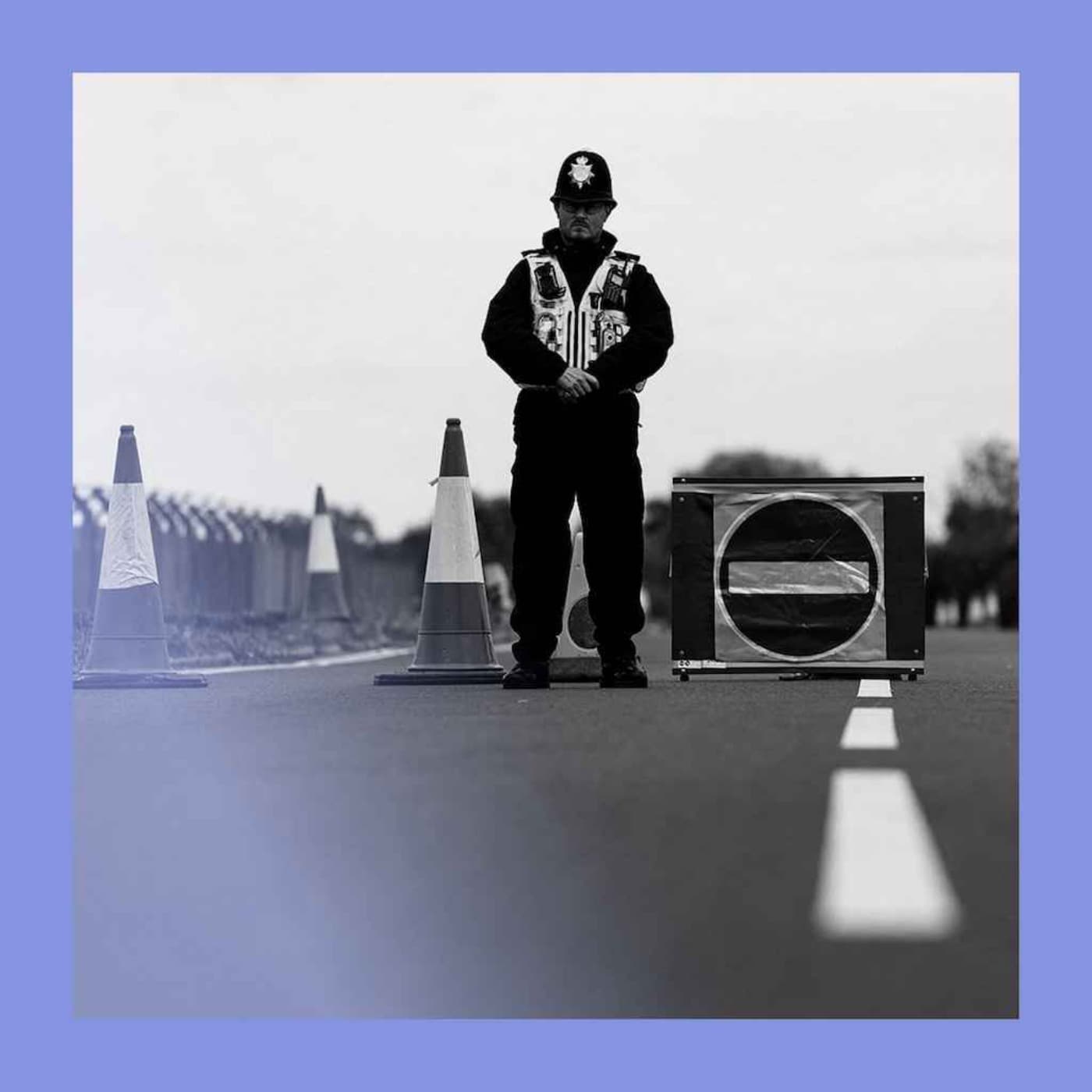
2:47On July 6th, Houthi rebels in Yemen confronted and then attacked a Liberia-flagged, Greek-operated bulk carrier, the Magic Seas, off southwest Yemen.
3:01In a slick propaganda video released by the Houthis, you can hear them demanding that the ship stops.
3:08Economist Correspondent:to stop the ship immediately. Otherwise, you will bear other responsibilities. The Magic Seas replies that it had legal passage. The Hothis repeat their demands, after which you see them boarding. You see an explosion on the ship, gunfire, and then footage of what appear to be controlled explosions close to the waterline that sank the vessel. The next day, another ship, the Eternity Sea, was attacked. Nine of its 25 sailors are dead or missing, six possibly taken hostage. But the world has not taken very much notice. Greg, after that brief pause in attacks on shipping, why have the Houthis started attacking ships again?
3:55I think it's no coincidence that they started when they did. there was actually a long stretch of time between November of last year and this month when there were no attacks on ships in the Red Sea at all. Of course, for part of that time, there was a ceasefire in Gaza. Houthis said they were stopping their attacks on shipping as long as Israel was stopping its attacks in Gaza. And then for another two months or so, the Houthis were fighting against the United States, which was carrying out a bombing campaign in Yemen. That conflict ended in May when Trump announced the ceasefire. After that, I think the Houthis were glad to have a period of time to regroup.
4:35Some of their military capabilities were damaged by American airstrikes. And then, of course, you had the war between Israel and Iran last month, and the Houthis largely sat on the sidelines. During that conflict, I think they didn't want to risk bringing America back into the war, back into strikes in Yemen. So I think now, in the past few weeks, the group saw that the timing was right to remind everyone that there's still a threat in the Red Sea. America has withdrawn some of its forces from the region, some of its guided missile destroyers, which helped to protect commercial ships. One of its aircraft carrier groups earlier in July left the Middle East.
5:13So there are fewer American forces. Donald Trump, I think, has lost interest somewhat and moved on to other things. And so this was a good moment for the Hothis to rev up this campaign and remind, I think, both their supporters in Iran and their enemies in America that they're still a menace. You've said they want to remind people that they're still a threat, but that the world hasn't taken much notice. So how much of a threat are they really? I think they certainly are a threat to commercial shipping, as we saw them demonstrate earlier this month. You had many Western firms that a long time ago decided to stop sending ships through the Red Sea because they were worried about exactly this sort of thing happening.
5:55They had been talking in recent weeks. There had been some discussions about whether the threat had passed after the ceasefire between the United States and the Hothis. Maybe the threat to shipping was no longer there. And so some firms were debating whether to resume passage through the waterway. Obviously, those talks are now once again suspended indefinitely. So they're not going to come back, which means that traffic through the Red Sea is going to remain well below where it normally was. Now, it hasn't dropped much since these latest Houthi attacks. There were 244 commercial ships that sailed through the Red Sea between July 7th and July 13th, so the week after the Houthi attacks.
6:36That's basically the same number as the week before, but it's 50 % lower than a typical week two summers ago before the Houthi attacks started. So I think the reason people are not taking so much notice is because these attacks have already reshaped global shipping in many ways. And the companies that don't have a high appetite for risk weren't sailing through the waterway to begin with. And can we expect any American retaliation now, as we saw before? I'll start with my usual caveat that no one knows what Trump may or may not do. But I think the sense that I have speaking to officials in the region over the past few days is that America is unlikely to do much right now.
7:16We've heard a few mildly critical statements from the U.S. mission to Yemen, from America's ambassador at the United Nations. But we haven't heard any talk about military action. I think the view, certainly in the Middle East, is that unless the Houthis start attacking American vessels, Trump is not going to see this necessarily as a violation of the ceasefire. And he's not thus going to want to resume the war. And I think partly that's because, again, he's lost interest, he's moved on. But I think it also reflects that for some people at the Pentagon and elsewhere, they learned earlier this year what their allies in the Gulf, Saudi Arabia and the United Arab Emirates, learned 10 years ago when they went to war with the Houthis, which is that they are a very difficult group to uproot, especially if all you're doing is bombing them from the air.
8:06And Greg, why are the Houthis such a difficult group to uproot? Because they have extensive control on the ground in large parts of Yemen, particularly the populated areas of Yemen and the coastal areas of Yemen, which is what makes them such a threat. They have routes to bring in new weapons. They do extensive smuggling of arms, mostly from Iran. Some of that comes by sea. It's brought to Yemen in small boats. Some of it is smuggled over land through Oman. They really haven't had trouble resupplying, despite what has been essentially a 10-year naval embargo imposed by first Arab states and then Western states trying to interdict weapons bound for Yemen.
8:48There's a coalition of anti-Houthi militias in Yemen called the National Resistance Forces, which announced earlier this month that they had intercepted a shipment of 750 tons of weapons that were bound for the Houthis from Iran. Missiles, drones, radar systems, anti-aircraft, artillery, all sorts of very heavy weaponry. It was a big haul. It was an impressive interception, but it also tells you just how much is getting through undetected if this one shipment was so big and included so many different kinds of weapons. So as long as they are able to smuggle these things in. And as long as they don't have a very powerful force on the ground that is trying to remove them from power in Yemen's capital and other populated areas, it's just very hard to stop them.
9:35So presumably that means we can just expect more attacks on commercial vessels. We certainly can expect more attacks and shippers are expecting more, which is going to have a real impact on their tolerance for risk and their willingness to sail through the Red Sea. You have a couple of countries, China and Russia in particular, that are still sending lots of vessels through the waterway. The Houthis have been more reluctant to attack Russian and Chinese vessels than they have Western vessels. And so you've seen this very bizarre thing happen in recent weeks where ships are outfitted with a transponder.
10:11It's called an automatic identification system. It normally broadcasts your position, your course, basic information like that. A lot of ships now have started using that system to try and send messages to the Houthis. Looking the other day at one of these websites that lets you monitor marine traffic, there was a Chinese ship that was literally broadcasting on its AIS system, Chinese owner and ship. There were three oil tankers which were broadcasting that they had Russian crews. All of those tankers are under Western sanctions. So presumably, they just have a much higher appetite for risk than your average shipping firm in Western Europe would have.
10:48So those kinds of vessels will keep going through the Red Sea. Some other smaller companies might keep chancing at running the gauntlet and hoping that they make it through unscathed. But I think unfortunately, it's more likely than not that some of them will continue to be attacked. Greg, thank you very much. Thank you, Rosie.
11:18On the Weekend Intelligence tomorrow, you can hear the second episode in our three-part series, The Hunt for Austin Tice, an American journalist missing in Syria since 2012. The search takes us deep into the inner workings of Syria's regime under Bashar al-Assad and the decade of darkness under which the country lived. Only now the regime has fallen is such reporting possible. If you didn't catch the first episode, do go and listen to that too. It's an astonishing story.
11:57I love Sundays in Tuvalu. Everyone dresses in their best clothes, usually white for shirts, and they're always hymns, sung in harmony. Families return home to share meals together. It may be one of the smallest nations on Earth, but it has a big heart. Lamese Samu grew up in Tuvalu, a country made up of nine tiny islands in the South Pacific, about halfway between Australia and Hawaii. Henrietta McFarlane is one of our producers on The Intelligence. Its population is 11 ,000. In Tuvalu, the ocean is never more than a few meters away. The ocean is more than a backdrop. It gives us fish sales for handicrafts and plays a central role in our tradition.
12:48Though the ocean is very important in Tuvalu, it's also the very thing that threatens life there. A country that's being swallowed by the ocean. Climate change is an existential concern here. The highest point of Tuvalu is just under five metres above sea level. Funa Futi, the capital where half the country's population live, is particularly low-lying. The government estimates that by 2050, half of Funa Futi will be flooded at high tide. Coastal erosion is accelerating. Shorelines are retreating. Saltwater intrusion is affecting our fresh water and traditional crops like taro. Growing up in Tuvalu, Lamese felt he had to do something to help.
13:32His PhD is focused on the impacts of climate change in Tuvalu. He told me about various climate adaptation projects on the islands. People are raising their houses and also the governments are trying to build sea walls. But the reality is that many will have to leave. In response, Australia is offering the first ever climate visa to Tuvaluans. It will allow 280 citizens each year to permanently migrate to Australia, allocated by ballot. Today is the final day for applications. There have been at least 1 ,500 applications so far. That includes family members and so represents around 5 ,000 Tuvaluans, nearly half the country's population.
14:13It should ensure that Tuvalu migrate by choice, not desperation. And it must protect our cultural heritage and sovereignty. La Messe says the climate visa is an important safety net, but that it can't be a replacement for working out how to protect the country's culture and what it means to be Tuvaluan.
14:37What do you do when a country is sinking and might even disappear? To discuss that with me, I'm joined in the studio by Rachel Dobbs, our environment editor, and Oliver Morton, one of our senior editors. Rachel, why is Tuvalu so vulnerable to climate change? So as we heard, Tuvalu is made up of nine tiny islands and these are very thin strips of land, which means that they're very susceptible to high seas and to storm surges. And extreme high tides, which are known locally as king tides, this is when a tide is at three metres or above, which means that you're getting these islands completely inundated and flooded.
15:12And those tides themselves are getting higher because of the higher sea levels and heavier rainfall and also because water expands as it gets warmer. The increased severity of weather patterns like La Nina are going to add to that risk. Ollie, can anything be done to prevent this or slow it down? Not very much, no. It's a fundamental fact of planetary life that a warmer world has bigger seas, warmer seas expand, glaciers melt, so sea levels go up. You can do some things at the margins, but most of the sea level rise for the coming century is already baked in. It's worth noting that there are some adaptation projects that people on these islands can do and are doing, which normally involves taking sand and building up the banks or building up bigger seawalls so that the island itself is higher.
16:02And Tivoli's been doing this since 2017. And as part of a recent treaty that we're going to be discussing, got$11 million from Australia to do that more. But that is only going to help so much. And it has to be remembered that sandbanks and things will protect you against, as it were, normal high tides. But Tuvalu also gets hit by cyclones and they can be extremely powerful. And banks of sand are the sort of things cyclones chew through for breakfast. So we've heard that Australia's response is to issue the first climate visa, a response to the fact that Tuvalu isn't going to be able to do enough to adapt.
16:38Tell me about this, Rachel. So starting this year, they are going to offer 280 spots for Duvalu to move to Australia. So that would represent about 2.5 % of the population every year. That's a permanent residency visa, although they are allowed to move back and from Australia and Duvalu freely. And it's irregardless of job status or disability status or any of the other things that visas are typically done on. And they will be doing it every year from now on. And I think the thinking behind this is that it allows for gradual, voluntary movement rather than the rushed or panicked movement that would happen if there was suddenly a catastrophic disaster that meant people could not stay there.
17:22This is the first such visa, is that right? I believe so, yes. And it's worth noting that this is not purely a demonstration of Australian good-heartedness. There are other aspects of the treaty which assure Australia a security role in Tuvalu's waters, which is important for the struggle for hearts and minds between the West and China throughout the Western Pacific. And also, Australia does not have a particularly good climate image since it's a big fossil fuel user and an even bigger fossil fuel exporter. And compared to the Australian population, it's quite small. Yes, it is a relatively small gesture.
17:59And as Rachel was saying, I think properly and deliberately small because you don't want everyone in Tuvalu suddenly to be able to move to Australia. The idea of trying to manage this gradually is quite an important one. The agreement under which this is all happening also recognises that even if everyone leaves, Tuvalu in some sense remains a state, a sovereign state. But this is important because there are other countries as well that face similar problems, right? Yeah, there are. Tuvalu is a particularly dramatic case, but you've got the Maldives, which is an island nation with an average ground elevation of about 1.5 metres.
18:35Kiribati and the Marshall Islands are, like Tuvalu, a collection of low-lying atolls. But you've also got vast swathes of Bangladesh are very, very, very low-lying, as is parts of Vietnam and Fiji. So the threat to coastal communities are very high just because of rising oceans and then we're not getting into all of the other climate threats. So this is obviously a very important model. Part of the importance of that model is the thing that Oli mentioned, which is that this treaty comes with a recognition that Tuvalu as a state will not stop existing even if the country faces an existential threat.
19:09And I think the fact that we are there and that's something that we are having to consider, how does our country persist in those circumstances, is very notable. It's a tough one, though, isn't it? I mean, obviously, a country isn't just about its land. It's about its culture. It's about its identity. It's about its sense of nationhood. So how do you retain that? I think it's very hard. I mean, there are famously many emigrant communities that maintain a sense of themselves for a very long time while in exile. if you see the country that your grandparents came from permanently beneath the waves.
19:43I don't know what that does to a sense of national belonging. There are attempts to try and maintain that sense of nationhood. And one of them is that the government of Tuvalu has announced they will be making a digital twin of the country, sort of metaverse version of the country that will also include archiving all the language and music and culture. And that is obviously important. But even with all that happening, critics have said that they are worried that this will end up more like a museum. And I would imagine it is pretty cold comfort compared to the living, breathing country that you remember.
20:16Rachel, Ollie, thank you very much. Thanks so much, Rosie. Thank you, Rosie.
20:38Economist Correspondent:I walked away from big tech to build a luxury brand in a category that no one was paying attention to. With the help of Amazon ads, I'm reaching relevant audiences and competing with the biggest names in men's grooming. We've scaled to over$500 ,000 in monthly revenue. Watch Crown Skin's story at advertising.amazon.com slash rising-stars. Healthcare can feel complicated. That's why Optum uses technology to connect the people and processes that make healthcare easier, more affordable and more effective. We're making it clearer for you to know exactly what your benefits cover. And to help you better manage your health, we're coordinating care between your doctors and your technology.
21:20Economist Correspondent:We believe better, simpler healthcare is always possible. That's healthy optimism. That's Optum. Visit Optum.com to learn more.
21:38When he was walking in 1965 in the highlands of Java, Simon Groot had a sudden shock. Anne Rowe is The Economist's obituaries editor. He came upon a field of cabbages. Now, as a Dutch seedsman, he knew all about cabbages, and he also knew that this particular variety called the glory of Enkhuysen had been developed by his own family. In fact, it had been introduced in 1899. It was a really ancient cabbage, but he'd never seen specimens looking so forlorn before. They were a wonderful cabbage, and he was upset to see them looking like that. And for 16 years, he brooded on this. What had been wrong with those cabbages?
22:32Obviously because they had been developed to grow in a temperate climate and they grew all over Europe very well. But here in Java, which was semi-tropical, they couldn't put up with the diseases and the pests. And also he suspected that the seed they'd been planted from was not good in itself, that it had been somehow adulterated, put in different packets and so on. All this made him, as a seedsman, pretty angry, but he brooded on it for a long time. Until in 1981, the family company, Slösengrüt, which had been going since 1867, was sold to Sandoz, and he found he had a bit of money to branch out on his own, and set out on a mission, which was to improve the seeds for a tropical climate.
Read the full transcript
23:28So he would make them resistant to tropical diseases, and he would ensure that the farmers in the poorer parts of the world who planted these seeds were going to get a better income from their crops. The image he had was farmers prospering, more vegetables for traders to sell, and more nutritious vegetables for consumers to eat. Everyone should benefit. his plan did extremely well so that by the 2020s he had helped 20 million small farmers mostly in southeast asia but also in india and guatemala and beginning in africa to improve their plantings of crops to get much better harvests and to prosper some of the farmers he helped doubled or tripled their incomes
24:24So his first priority when he got to Southeast Asia was to produce the best seed he could.
24:34And it took him four years to produce the first, which was a bitter good seed, and this he took to the farmers. It was always his chief concern after the good seed to talk to the farmers, to learn to think like them, to enter into another culture and another mindset. He found that the small farmers in the Philippines were mostly farming only one or two hectare plots, really small. Vegetables were a good crop for them. But the problem was that to save money, they would try to rotate their seed and use the seed from their crop to grow another crop in the next year. This meant that gradually the strain was weakened and the harvets got less.
25:21They didn't really understand this. What they wanted to avoid was spending any money. So when he introduced the bitter good seed to them, they were very reluctant to take it up. and the farmers would cluster around him and gradually learn to trust him. And in 2019, he received the accolade of winning the World Food Prize. He felt, however, that he had an awful lot still to do. At home in Holland, he also had a little campaign to get school gardens growing again. Every school in the Netherlands used to have a garden attached to it, which the children cultivated, and this had died out, but he got it going again.
26:09It's extremely important, he thought, to commune with vegetables. He was immensely fond of them, and he grew his own in his garden. And he would appear sometimes for interviews with the vegetables spread out before him. They were not as fascinating as the Asian vegetables he'd focused on. They were not like amaranth or pak choy or water spinach or all these vitamin-packed vegetables that he'd managed to persuade more and more consumers in Southeast Asia to make more of and persuaded the farmers to grow. These were very ordinary Dutch vegetables. but whenever he had to choose a vegetable to particularly pose with he didn't choose his famous cabbage Gloria van Huyzen instead he liked to choose his bitter good which he had named star jade was a warty fat looking thing like a fat cucumber and very bitter to eat but full of goodness.
27:15And he would hold that up as a marvellous example of how a humble vegetable could start to transform the lives of the poor. Anne Rowe on Simon Groot, who has died aged 90.
27:58www.theintelligence.com Henrietta McFarlane and Benji Guy. And our assistant producer is Anne Hanna with extra production help this week from Emily Elias, Eleanor Sly and Bella King. We'll all see you back here for the Weekend Intelligence tomorrow.
28:32Economist Correspondent:Back to school is busy enough. The last thing you need is shopping that makes it harder. Whether you're moving into a dorm, your first apartment, or just getting organized for the semester, Wayfair makes it easy to get everything you need in one place. Furniture, bedding, storage, decor, study essentials, all at prices you'll love with fast shipping before move-in day. Get everything you need for back-to-school season. Shop Wayfair.com today. Wayfair, every style, every home. Self-directed investing, trading, full-service wealth management, automated investing, financial planning, thematic investing, retirement planning.
29:08Economist Correspondent:And to think, that's just a small taste of what Schwab offers. Because Schwab knows that when it comes to your finances, choice matters. No matter your goals, investing style, life stage, or experience, Schwab has everything you need all in one place. So you can invest your way. Visit schwab.com to learn more.
From the publisher
Once again, commercial vessels sailing in the Red Sea are being attacked. Our correspondent explains why Houthi rebels, an Iranian-backed militia in Yemen, have regrouped. The islands of Tuvalu are sinking. Now Australia is offering residents the world’s first “climate visas”. And remembering Dutch agronomist Simon Groot.
Listen to what matters most, from global politics and business to science and technology—Subscribe to Economist Podcasts+
For more information about how to access Economist Podcasts+, please visit our FAQs page or watch our video explaining how to link your account.
Hosted on Acast. See acast.com/privacy for more information.