
In short
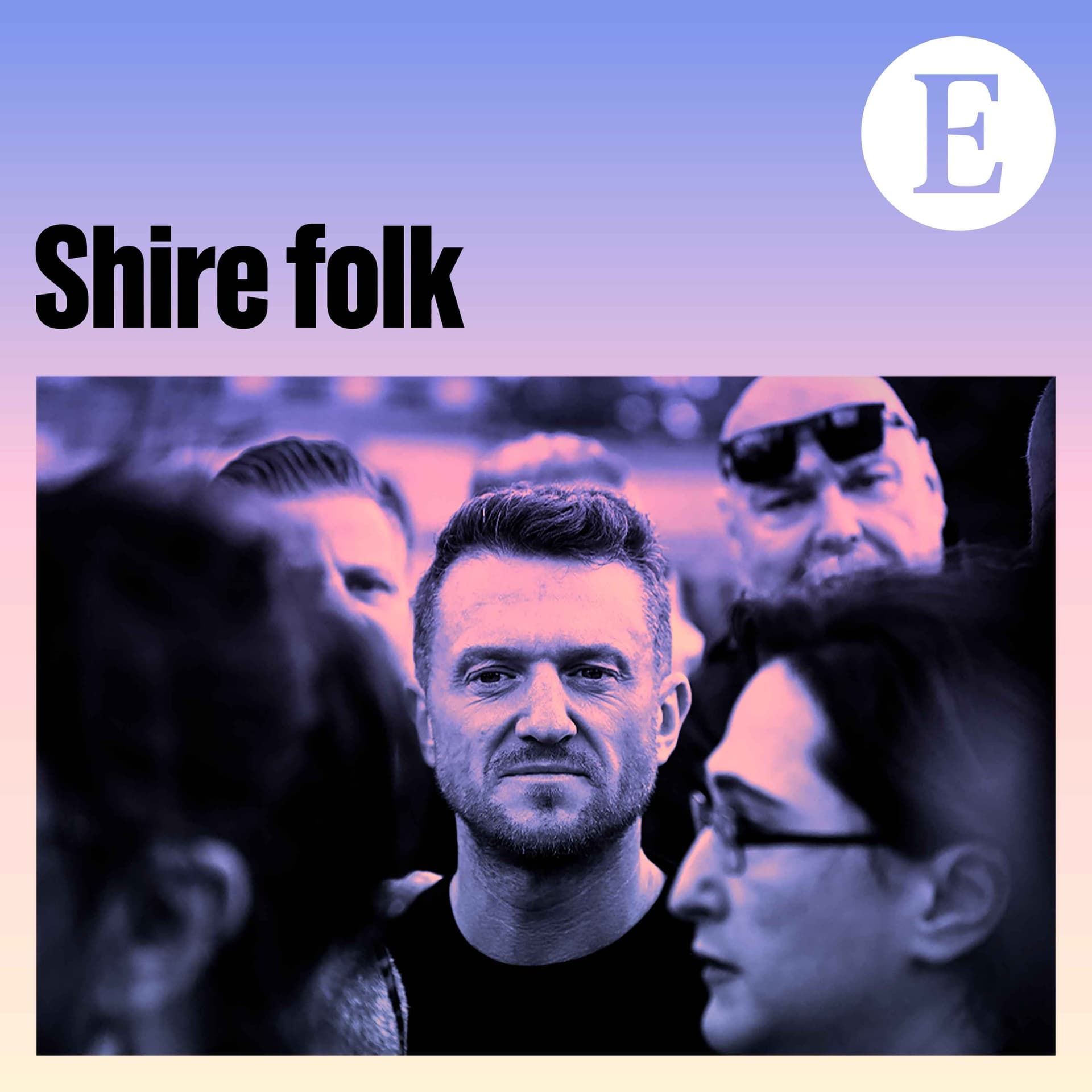
Episode topic: The Weekend Intelligence: Shire Folk (Episode 1) explores how a fringe British far-right figure, Tommy Robinson, grew from local protests in Luton into an international symbol shaping some Americans’ views of Britain and Islam.
Guests/backgrounds
Rosie Bloor hosts. Georgia Banjo (The Economist) reports. In the story, Texas Rep. Brent Money (real estate title lawyer; husband/father of five; church member; Dallas sports fan) discusses why he sees Britain as a cautionary tale and says he has spoken at an event where Robinson appeared. Other featured interviewees include Peter Adams (interfaith worker; trustee of Hope Not Hate), Councillor Aslam Khan (Luton council; immigrant family history), Catherine Holloway (Bedfordshire Police and Crime Commissioner), and Nick Lowes (Hope Not Hate leader). The episode also profiles Tommy Robinson (Stephen Yaxley-Lennon) and local figures like Ashraf Hock and Anjum Chowdhury.
Key claims
Robinson’s “two stories” of Britain—tolerance vs “civilizational jihad”—is gaining traction via powerful US and Silicon Valley figures; he “edited” Luton by focusing on gangs and radical Islam; the English Defence League (EDL) began as anti-Islam protest but became violent and linked to terrorism networks.
Notable examples
March 10, 2009 Luton homecoming protests; EDL’s early videos (including burning a Nazi flag); Robinson’s 2011 Newsnight appearance; his 2013 break with the movement; later mass rally in London with Elon Musk as speaker (150,000 claimed).
Written by AI. May contain mistakes. Listen to the episode to check what was said.
Chapters
Tap a time to open that second in VOHydrojug's Journey
0:00 to 0:33
Learn how Hydrojug pivoted to survive during tough times.
“When demand slowed for Hydrojug, Amazon Ads rising star Hayden Wadsworth pivoted.”
Hydrojug's Journey
0:38 to 1:01
Learn how Hydrojug pivoted to survive during tough times.
“Hotels.com makes booking work trips easy and rewarding.”
Exploring Greenville, Texas
1:15 to 3:40
Join the host on a journey to meet Brent Money in Texas.
“They've been charting the rise of Tommy Robinson, a British far-right figure who's changing how Britons see their own country, and who's now shaping how many Americans do too.”
Brent's Connection to Britain
3:40 to 6:13
Understand Brent's ancestry and his concerns about Britain.
“Downton Abbey, Father Brown, All Creatures, Great and Small, any of the, like, Poldark.”
Perceptions of Britain and Tommy Robinson
6:13 to 10:10
Explore how perceptions of Britain have shifted and the role of Tommy Robinson.
“But it is a, it's a dangerous place to be.”
The Cultural Revolution Spark
10:10 to 11:28
Discuss the growing voices against established narratives in Britain.
“Because hundreds of thousands of people are now listening to Tommy Robinson.”
Protests Erupt in Luton
14:03 to 16:10
Learn about the chaotic protests following the return of soldiers in Luton.
“200 soldiers from the 2nd Battalion, the Royal Anglian Regiment, marched through the centre of Luton, welcomed home by thousands, but also along the route of protest.”
Tommy Robinson's Origins in Luton
16:10 to 17:46
Discover Tommy Robinson's background and its relation to Luton.
“You can't understand Tommy Robinson without first understanding Luton.”
A Tale of Two Lutons
17:46 to 21:29
Explore contrasting narratives about diversity and community in Luton.
“We're walking down what would have been the old hat-making centre of the town, the Hatters being the name of the football club, but coming from the hat-making trade which was here.”
The Economic Decline of Luton
21:29 to 24:24
Understand the economic challenges faced by Luton and its impact on residents.
“But not everyone thinks of Luton or of Bedfordshire that way.”
Show all 17 chapters
Criminality and Immigration in Bedfordshire
24:24 to 27:25
Learn about the issues of organized crime and immigration in the region.
“Perhaps they were confused by Shire in the title, but it was absolutely anything but.”
Changing Demographics and Identity
27:25 to 28:00
Examine the changing demographics of Luton and the narratives that emerge.
“Videos with titles like, I spent 24 hours in Britain's worst town.”
Luton: A Cultural Mosaic and Its Challenges
28:00 to 33:00
Explore Luton’s diverse cultural landscape and the challenges it faces, including gang violence and shifting demographics.
“a street at a time, an estate at a time.”
Luton: A Cultural Mosaic and Its Challenges
33:33 to 34:01
Explore Luton’s diverse cultural landscape and the challenges it faces, including gang violence and shifting demographics.
“At Lexus, every detail is intentionally designed.”
The Rise of Extremism in Luton
34:01 to 42:00
Understand the dynamics of radicalization and community tensions in Luton amid global conflicts.
“Experience amazing at your Lexus dealer.”
The Rise of Tommy Robinson and the EDL
42:00 to 46:32
Explore the emergence of Tommy Robinson and the English Defence League, revealing their impact on British society and media.
“they'd be smashing police vans and that was the sort of people he attracted.”
The Shift in Tommy Robinson's Influence
46:32 to 49:36
Discuss the transformation of Tommy Robinson's influence and his resurgence in public demonstrations.
“His 15 minutes of fame seemed to be over.”
Transcript
Automatic transcript. May contain errors.0:00When demand slowed for Hydrojug, Amazon Ads rising star Hayden Wadsworth pivoted. When our bank account hit near zero, my brother Jake and I had one last shot to save HydroJug. So we engineered the Traveler, a leak-proof, couple-to-friendly Tumblr. Amazon Ads enables a business to be able to expand their product shelf because of the visibility and the reach you can get. Each week, our new-to-brand customers make up about 95 % of all of our sales. Watch HydroJug's story at advertising.amazon.com slash rising-stars.
0:33This intelligence podcast is sponsored by Business Travel on Hotels.com. Does booking business travel feel like another job? Hotels.com makes booking work trips easy and rewarding. It's easy because you can set your preferences once and get results tailored to your business travel needs every time. It's rewarding because with Hotels.com's free rewards program, you can save instantly on your next work trip and earn rewards for future travel. Book faster with confidence at Hotels.com. Loyalty members 18+.
1:10I'm Rosie Bloor, and today on The Weekend Intelligence, we're bringing you the first in a three-part series that my colleague Georgia Banjo and Sam Westron have spent months reporting. They've been charting the rise of Tommy Robinson, a British far-right figure who's changing how Britons see their own country, and who's now shaping how many Americans do too. If you've ever wondered why a fringe football hooligan from Luton has the support of the world's richest man, well, here's Georgia.
1:45It's a little before 9am when I reach Greenville, a town around 50 miles east of Dallas. It's already been a long morning. The drive, from the suburbs of Austin, takes almost five hours. Driving along the highway, the state begins to change. The roadside billboards tell the story. Churches, fishing tackle, cheap fireworks and pickup trucks.
2:21This is rural Texas. Greenville's an old frontier town that made its fortune during the era of cotton, cattle and railroads. It's the kind of place you can imagine a sheriff having a pistol fight way back when.
2:42But I'm not here for local history. I'm here for money. So, yeah, my name is Brent Money. I am a lawyer. I own a real estate title company. I'm a husband and a father of five children. I'm an active member of my church, a big Dallas sports fan, and I'm happy to be here talking with you today. I'm in the offices of House Representative Brent Money. It's nice. I represent Hunt, Hopkins and Van Zandt County, which is about 200 ,000 people here in the state of Texas. Representative Manny's in his late 40s. He's in jeans and a smart shirt, and he's smiling a big smile that makes his eyes squint. He's about to head off to Florida on holiday, but we've convinced him to give us an hour of his time to talk about the UK.
3:40He loves it. Downton Abbey, Father Brown, All Creatures, Great and Small, any of the, like, Poldark. We like stuff from back then. I mean, for my wife, it's the costumes and the architecture and the rolling hills and all of that. I mean, she loves all of that. My wife and I are like, when the kids are gone, we need to go take like a three-week just tour through the countryside. Because that's what, I mean, where the real people live. If you're American, perhaps you can relate to Brent. Perhaps you also have a soft spot for England, the old country. I just recently got on Ancestry.com, and within, like, I probably worked six, seven, eight hours, but I traced the money family all the way back to 1480 in England.
4:42Yes, there was a revolution in all that. But there's a kinship that ties Britain and America. A messy, tangled history. You can feel it in the way Brent talks. There's an old church, and I looked it up on Google Maps, it's right there. It's a little church, but an old little church where one of my direct paternal, great-great-great-great-grandfather on my dad's side all the way back, his family kind of built the church, and there's an engraving of him and his wife and their 18 kids or whatever it was. And it's like, I want to go there. I want to see that.
5:23And I don't want there to be a call to prayer coming out of it when I arrive, you know.
5:37This is what's led me to Texas. Because recently, I've started to notice a darker side to how many Americans perceive Britain. A sense that it isn't just a land of nostalgia, but of dangers. Warnings about Sharia law, no-go zones, grooming gangs. That the country is being lost, specifically to Islamic invaders. We're seeing violence instigated by, you know, mostly young Islamic men throughout Europe. But it is a, it's a dangerous place to be. They call it a civilizational jihad. And it's to wipe out the non-believers. You see, Brent doesn't just care about Britain because of his ancestry. He cares, because like a growing number of others, he sees my country, this continent, as a cautionary tale.
6:44A tale that a few people have been telling for a very long time, but is only now gaining ground. When you look to Europe, are there any specific, I don't know, leaders, activists, or people that you've looked to, that either as a kind of source of information or maybe even a source of inspiration about how you can try and deal with the issues you see it? I've talked with some people over there and I'm not like a geopolitical, you know, expert of any kind. And I have spoken at an event that Tommy Robinson was at. Tommy Robinson.
7:30Depending on where you live and who you are, that name may either draw a blank or a very strong reaction. In mainstream Britain, in the world of newspapers, the six o 'clock news and Parliament, Tommy Robinson's a loser. A football hooligan turned agitator, marginal, toxic and still very much taboo. The majority of British people don't like him. The majority of British people do not want our country to burn. Yet, in another Britain, and the places that look to it, the same man is a hero. A prophet, punished and censored by the establishment for speaking hidden truths. I follow Tommy Robinson because no one else seems to have the courage to say the things that I'm thinking.
8:26All of this information has been hidden behind a wall and we finally have it out. And we're realising that the villains, such as Tommy Robinson, were actually the heroes. Listen to Tommy Robinson.
8:43Same man, same island. Two completely different stories about what's happened to Britain. Don't get me wrong. The first Britain is still the dominant one. Britain remains one of the most open and tolerant countries on earth. A place whose official story is of a country made better by a rival. In 2024, The Economist put the Statue of Liberty on the cliffs of Dover on our cover. With the title, Britain is the best place in Europe to be an immigrant. Chicken tikka masala is still our national dish. Yet the other story about Britain that immigration is destroying the green and pleasant land of churches, tea shops and tradition is growing That's Brent Money's view It also happens to be the view of Elon Musk the world's richest man He likens Brits to the hobbits in the story by J.R.R.
9:44Tolkien Simple, well-meaning folk whose idyllic homeland, the Shire, is under threat J.R.R. Tolkien based the Hobbits on people he knew in small-town England. The reason they've been able to enjoy the Shire is because hard men have protected them from the dangers of the world.
10:09hard men like Tommy Robinson whose account of this country in this parallel world is now believed by powerful people in Washington and Silicon Valley I've spent months trying to understand how a perception of this country that seemed to be so fringe is now going global I'm wondering what happens when those parallel visions start to collide. Because hundreds of thousands of people are now listening to Tommy Robinson. Today is the spark of a cultural revolution in Great Britain. They managed to silence us for 20 years with labels. Racist. Islamophobe. far right. They don't work anymore. The dam has well and truly burst.
11:19The silent majority will be silent no longer.
11:28I'm Georgia Banjo and from The Economist This is Shire Folk. The story of how some of the most powerful people in America came to see Britain and Islam through the eyes of a fringe football hooligan.
11:50Episode 1. Tommy's Town.
12:13Tommy's story begins in the spring of 2009 in the English town of Luton, some 40 miles north of London. It's the crucible of our story too. I mean, we are coming into this place where the opening part of the story is that in March 2009, it's in the height of sending troops to Iraq and to Afghanistan. There are YouTube and Facebook videos from that time. Both platforms would only have been a few years old, and the videos are as you'd expect, crunchy sound, pixelated images. But you can clearly make out protesters clashing with other protesters. People spitting, calling each other scum. Some of them fighting the police.
13:12These were the ugly scenes that erupted in Luton. Families and friends of soldiers marching through the town reacted in anger to a Muslim protest against the Iraq war. The British public could get any bit fed up with it all, the number of people dying. So they start instituting homecoming parades, whereby local regiments could march through their towns from which they recruit. Peter Adams is an interfaith worker in the town. He's walking me through the protests that day, helping me understand what happened, where and why. And our 2nd Anglian Regiment were back from Iraq, from a really bloody placement there.
13:58And there had been some people from Luton injured and killed out there. 200 soldiers from the 2nd Battalion, the Royal Anglian Regiment, marched through the centre of Luton, welcomed home by thousands, but also along the route of protest. and they came March 10th down the street and just up there they encountered a group of Muslim men. Muslim demonstrators with placards and anti-war slogans. One chant, British soldiers go to hell. The parade continued but after the soldiers had passed there were more angry scenes as the demonstrators were shouted down. And just up the street, side street here, where the band went up there and down another one, they encountered about 20 of these guys with their banners and the crowd went to attack them.
15:02But actually certain people in the crowd. And the angry protests erupting around them? Tommy Robinson is among the organisers, along with his cousin, Kevin Carroll. Soon, there will be more protests. At first, they'll be chaotic, amorphous. But they will soon coalesce into a movement called the English Defence League, or EDL. We're not fascists and we're not Marxists, and we actually stand up against the fascists. There's no extreme, there's the most fascist, racist people with anyone who's ever come to us. In one of their first videos, a group of masked men burn a Nazi flag. And that voice? That's Tommy.
15:49But at this stage, no one in the UK really knows who he is, what the EDL is, or what they stand for. They soon will.
16:10You can't understand Tommy Robinson without first understanding Luton. When asked to tell his story, which has happened a lot since he first appeared in 2009, he always begins there. I'm going to talk to you about Luton. I was born in 1982. When I was born in 1982, we had one mosque. I just want you to understand the demographic of the town. Luton is 30 miles north of London. It's a working-class town. It's labelled as probably one of the roughest towns in Britain. The town informs almost everything he believes about Britain. Now, increasingly, even directly, it sits at the heart of what Americans like Brent Money think about Britain too.
16:55But there is another side of Luton, completely different to Tommy's. A parallel reality. So over here is our tree of hope, from which you will see ribbons hanging. Yellow ribbons on this occasion, hung by members of different faith groups. Peter isn't just an objective local historian. I'm speaking to him because he's also a participant in the battle over who gets to tell this town's more recent story. He was there on the day of the protest and in the aftermath. He's also a trustee of Hope Not Hate, an organisation which has been one of Robinson's fiercest critics since 2009. If Tommy Robinson is the protagonist in his story of Luton, then Peter likes to think of himself as the antagonist.
17:50In Peter's Luton, anyone is welcome. We're walking down what would have been the old hat-making centre of the town, the Hatters being the name of the football club, but coming from the hat-making trade which was here. Every English town has a thing it was once the best in the world at. Luton's was hats. For the better part of two centuries, it was one of the hat-making capitals of the world. Boaters and bonnets, woven from straw from the surrounding shire. Luton is the biggest town in Bedfordshire, a typical English county. Really from the age of the train, when you could transport your hats elsewhere rather than make hats locally.
18:35And our straw was the longest, so they made their hats here. And the town was very wealthy. Right through until the 60s. It didn't just have hat-making. It had car-making too. Across the town square, a stone's throw from the old hat-making district, and right by where the protests erupted in 2009, I meet Councillor Aslam Khan. I arrived in Luton in 1981 and my father has lived in this country since 1960. And his uncles came in 55. So me and my mother, we came and joined our father in 1981. So we started from renting a room, all three of us living in one room. My father used to work for Vauxhall Motors.
19:24Together, these two industries were the engine of Luton's transformation. because long before Robinson was born, the tectonic plates of this town were already shifting. After the Second World War, Britain went looking for workers across its former empire. Britain had partitioned India in 1947. The new border cut straight through the rivers, and to replace the water it lost, Pakistan built a dam that put entire towns underwater and 100 ,000 people out of their homes. Many were given work vouchers, a fast track to Britain. Many went to Luton, with its factories, steady wages and overtime. Like most of the migrants, there was a view that you would come and work here and go back to your native country.
20:18But over the years, you know, most of us have settled down. Over the decades, families arrived Children were born Relatives joined relatives Whole communities took root in Luton Living peacefully alongside each other And it sounds great, doesn't it? Diverse, multicultural, harmonious People come and celebrate Begifta here Where people come from different communities And come and fast and eat together We have people celebrating the festival colours for those people who are celebrating Diwali. And I was the first Father Christmas, the Muslim Santa, who dressed up and I did that for 10 years, celebrating Christmas.
21:02And that's what Luton is about.
21:09In a lot of ways, this version of Luton is a version of Britain in miniature. It's a story people like to tell themselves. Luton is a wonderfully diverse and special place to live. Britain is a beacon of tolerance. A success story for multiculturalism and integration. Councillor Khan is the poster child for it. But not everyone thinks of Luton or of Bedfordshire that way. The process of saying we're a multicultural town becomes very deceptive to yourself. We're all at ease with each other. Well, actually, there's a lot of people who weren't at ease.
22:01We both have been marred by Islam. He lost his town, his home, his culture, his heritage, his family, his friends and neighbours to Islam. Luton's gone. and my city was attacked on September 11th. So we both have that axe to grind. Gavin McInnes, the founder of 90s Maverick Media, Vice News, is a friend of Tommy Robinson's. I was born in Hitchin. My mom would go get groceries in Luton and it was a quaint little town back then. So we share that history and I can identify with that. You can tell by the accent that he grew up in Canada. Gavin and Tommy don't know each other at this point. Their paths will cross more than two decades later, when they're both recruited for a right-wing media platform called Rebel Media.
22:57But in the 1980s, Gavin was the son of Irish-Scottish immigrants, living in Hertfordshire, the Shire next door. I'm British. I went to Scotland every summer as a kid. I went to England my whole life regularly. I've watched it change. I've watched it go from diverse, which is cool and interesting, to a hostile takeover.
23:24From the 1970s onwards, like much of industrial England, Luton entered a period of slow and steady decline. The fallout in part inspired Aslan Khan to get into local politics. Once we started reducing our industrial base, unfortunately, like most industrial towns, are deprived without any jobs and not enough housing. The hat-making disappeared. And Vauxhall, the car factory, it massively cut back production in 2002, and thousands of jobs were lost.
24:04This is the other story of Luton about a town that sits at the intersection of major transport routes poverty, for the south of England anyway and a growing web of organised crime a place where immigrants were marooned when the economic tide went out leaving many stranded and jobless The Home Office was under the impression that it was a sleepy shire Perhaps they were confused by Shire in the title, but it was absolutely anything but. Catherine Holloway was Bedfordshire's Police and Crime Commissioner in the mid-2010s and lived in the area while all of this was happening. She shares Peter's positive view of multicultural Luton, but she also saw it through the lens of criminality.
24:50She had direct contact with Robinson's Luton. Bedfordshire is a place where if you were an organised crime group and wanted to set up business, it might look like an ideal choice. It's traversed by the M1 and the A1 and the major rail lines so that you can move goods, people, weapons, cash, drugs around very easily. It has an airport which is linked to some of the most fragile states in Eastern Europe, which means that it's easier to encourage people to come to work in the expectation that they're coming here into admin jobs or as nannies only to find themselves forced into work in brothels or with gangmasters working illegally on farms or building projects or whatever.
25:34So it has a huge number of existing issues, all of the issues of London, but being considerably less well-funded.
25:53Um, up there on the hillside is Farley Hill, where Lennon grew up. Robinson was born in 1982 to an Irish immigrant mother. His real name's Stephen Yaxley Lennon, and he grew up with his mum and his stepdad, a Scottish pipe fitter who worked at the Vauxhall car plant for a time, on the Farley Hill estate. Then, the town's biggest working-class area. It's where Peter first lived when he moved to Leuton in 2007. How would you describe the area? Poor 1956s housing estate. Lots of Irish. God bless the Irish, brought in to build the M1 and everything. But very marginal and a lot of multi-generational unemployment.
26:48up there.
Read the full transcript
26:53Luton is also where the Tate brothers are from. Their estate, think brutalist concrete high-risers, was the scene of ugly riots in the 90s. They're influencers in the manosphere world, currently under arrest for sex trafficking and sexual assault. And they both talk about Luton too, and make YouTube videos about it. Luton is a failed city, completely failed in every way. It plays into an image of Luton that exists online, a type of town influencers depict as a dangerous hellhole, a no-go zone. Videos with titles like, I spent 24 hours in Britain's worst town. In the comments, users trying to help Americans understand Luton usually compare it to Detroit.
27:42In his autobiography, Robinson recalls growing up following waves of immigration in the 60s and 70s. He describes how certain parts of town would be taken over in what he calls ethnic cleansing. Elderly non-Muslim people being forced out of their homes as one community takes a district over, a street at a time, an estate at a time.
28:12Bury Park was always the immigrant part of town. First, it was the Irish. There's a Polish contingent too. It's a place where you can eat authentic Caribbean, Afghan, even go to church in Chona. But the area has an unmistakable character. There are about ten mosques, each a short walk from the other. Walking around, I notice the rows of red-bricked Victorian terraced houses, Gardens full of wheelie bins, testament to the multiple generations living under the same roof. Young men speeding around narrow lanes in their sports cars. It's also where you can find the home ground of Luton Town Football Club, Kenilwith Road, right in the heart of Bury Park.
29:00The interesting thing about Tommy is the Yabo hooligan background. Hooliganism is a sport. It is a mutual combat activity with no knives allowed and everyone voluntarily spars. It's a boxing gym. In the late 90s and early 2000s, Robinson was one of those hard men Elon Musk referred to. The ones he thinks were protecting the shires. Gavin McInnes' take on it is that his mate Tommy's toughness was forged in the very British culture of football hooliganism. And I think that gave him the background to organise and get people together. Back in the 80s and 90s, when Tommy was growing up, every club had its firm, organised groups of supporters whose rivalries weren't far beyond the 90 minutes on the pitch.
29:54They would fight each other in organised brawls. It was its own form of sport. It was violent and often criminal. But for the men involved, it also created powerful bonds built on loyalty and reputation. A common cause to defend your turf. Luton's firm was called the Men in Gear. There was a particular gang that Tommy Robinson references and claims to have friends in called Men in Gear, the MIGs. In 2008, the year before the EDL poured onto the streets of Luton, Ashraf Hock, an anthropologist, embedded himself in Bury Park. There were black members, white members, Asian members. Eventually there were turf wars and some Muslim gangs took over the drug trade.
30:43Or had real pretensions of being the top dogs, you know, the kingpins of the area. Ashraf sees Luton very differently than Tommy does. So it's interesting to hear him describe a key turning point in the town's criminal underworld in a similar way. In the 1990s, a Kashmiri Pakistani gang took over Luton's crime world. Drugs, prostitution, fraud, robbing. Robinson claims that one group of Muslim boys stole his Nokia phone. A good one at that. Ashraf worked with people who were involved at the time. Muslim gangs really did take over the drug trade. Dealers used their family networks to pull in their cousins as runners.
31:28So there's definitely a drug problem in Luton, for sure. And there's definitely the participation of a lot of Muslims, but not exclusively, in that drug trade. And Tommy Robinson definitely knew a lot of these people and was aware of these gangs and the turf wars that happened.
31:58Stand where Robinson stood, and you'd see another Britain in miniature. Not one of tolerance and understanding, but rivalry, power struggles, and winner-takes-all battles for territory. And crucially, a hometown fast-changing beyond recognition. Illustrated perfectly for Gavin McInnes at a Hatter's game in 2019. At the Luton game, it was all expats from Luton. No one in the stands lived in Luton. They'd all moved from Luton. They were mostly white. And no one from Luton, the Muslims, were at the game. I mean, does that tell you everything about the evolution of Luton in Britain?
32:56When everything is moving all at once, your workforce, your tech stack, your business, you don't need more tools. You need one solution. That's why Paylocity built a single platform to connect HR, finance, and IT with AI-driven insights and automated workflows that simplify the complex and power what's next. Because when everything comes together in one place, growth comes easy. Experience one place for all your HCM needs. Start now at paylossity.com slash one. Hi, this is Debbie Millman from the Design Matters podcast, and today's episode is sponsored by Lexus. Design isn't just about function.
33:36It is about feeling. At Lexus, every detail is intentionally designed. Master artisans don't just focus on what you can see, they obsess over what you can feel, the way the door closes, the precise click of a switch, the acoustic feedback of every control. Because a car that doesn't make you feel something is a car that's stopped short of amazing. Experience amazing at your Lexus dealer.
34:10For all the changes happening in Luton, it's easy to forget that another force was reshaping the world. The War on Terror. In Luton, the War on Terror wasn't just abstract media and foreign policy talk. Local lads were doing the fighting. At the same time, a radical Islamist fringe group called Al-Mahajarun were claiming territory of their own, setting out stalls in the middle of Bury Park, Luton's main Muslim area, and the home of the Hatties, the centre of Robinson's world. Their leader was a man named Anjum Chowdhury. So you had the Al-Muhajirun and their leader, Anjum Chowdhury. They had a daily stall on Dunstable Road where all their paraphernalia, their pamphlets and books and literature would be displayed, horrible things, anti-Semitic things, really, you know, anti-women, you know, really unsavoury thoughts and concepts and ideas.
35:13And there would be a bunch of them speaking, debating, like Speaker's Corner in Hyde Park. As Ashraf Hock explained to me, many of the people involved in this group weren't actually from Luton. For pretty much all of Luton's Muslim communities, El-Mahajarin were an embarrassment. Most of them have criminal records. Most of them were drug pushers who became reformed and didn't go down the quietest route, rather became more politicised, militant jihadists. They believe in an Islamic state. And some of these people that I came across in Luton actually ended up in ISIS, ended up in Syria and Iraq and ended up dying.
35:58On one side of town, families were mourning soldiers killed fighting Islamist extremists overseas. On another, a small group of Islamist activists spread hate from a stall in Bury Park. Throw in a global financial crisis, the demographic change, the turf wars, and the tension. It was an explosive combination. and on the 10th of March 2009, it finally ignited. The town's two stories, the idea of a tolerant multicultural existence and the gangs, the wars, the years of economic pressure, they all collided in this moment. A message to Anjan children. We English Defence League who will test your climate as our forefathers did.
36:48We're ledously pursuing you in our quest to see all the Shariah palates from our great democratic country. Long live the free.
36:59In the early days, the EDL would wear black balaclavas to hide their identities, a matching black polo shirt with St George's crosses stitched onto them. Right from the start, they tried to distance themselves from the far-right movements of the past. Oswald Mosley's fascist party in the 1930s, the white supremacist National Front decades later. In the EDL's first video, that one where they bent a Nazi flag, they claimed to be anti-Islam, not racist. Their spokesperson, Stephen Yaxley-Lennon, initially anonymous, began to go by various aliases. For a while, he was Tyrone after, in his words, the short fat geezer from the soap opera Coronation Street.
37:47But he soon became Tommy Robinson, an alter ego stolen from a fellow football hooligan.
37:59You can say Luton is in harmony. You can write Luton is in harmony. You can keep on telling everyone Luton is in harmony. It is not in harmony.
38:16The EDL marches are organised on Facebook, which, back in 2009, like the EDL, is pretty much brand new. Twitter is only a couple of years old. Instagram doesn't exist yet.
38:34The EDL never pretended to be a political party and didn't want to be one It was, plain and simple a grassroots protest movement They would do marches in towns and cities up and down the country He would try to dress it up that they were opposing radical Islam but for most of his supporters it was just about Muslims. And, you know, the chants would be about, you know, ban the mosques, a piece of stuff about Allah. They weren't chanting about radical Islam, they were just chanting about Muslims. For the last 22 years, Nick Lowes has run an organisation called Hope Not Hate, the same organisation Peter from Luton is affiliated with.
39:25It runs campaigns and investigations against figures on the far right of British politics. It was probably late 2010. We were in Leicester and I was out on the street taking pictures. We had a couple of teams out. And there'd been quite a lot of violence and there'd been, you know, EDL people had been throwing bricks and bottles at the police and police were in riot gear, etc, etc. And this bus pulled alongside us and they were all jeering in the bus. and then this bloke in a kind of green bomber jacket literally ripped open the doors and led a charge out to try to attack us and that was Tommy Robinson and I remember him kind of leaning through the police lines to me saying I know where you live, I know who you are.
40:14This is Nick's first encounter with Tommy. He'll go on to have several. They'll exchange a flurry of DMs, go out for lunch. Eventually Tommy will stand on Nick's doorstep and hurl a beast at him. Nick will make documentaries about Tommy. Tommy about Nick. But we'll come to that later. For now, he is watching a nemesis emerge. And that was the first time I saw him face to face. He's a small bloke. And yet, I think from that day, and there have been other instances, you can see why he's a leader in that crowd. He's got a charisma and he's got a way that he both goes from the front and, you know, that inspires people.
41:01His background in football hooliganism informed how he ran the EDL with local networks, local rivalries, a coach, a pub, a march. All he had to do was turn up. And even though it was decentralised, it was clear who the figurehead was. There was an incident, I think back in 2010, where Muslim Against Crusades, an offshoot from Al-Majirun, were setting fire to poppies on Armistice Day down in West London. And across the road, there was an EDL protest and the police keeping them apart or whatever. and literally through the park he came on his own running at this al-Majirun crowd, 60, 70 people and literally dived over the fences into the crowd and started fighting all on his own.
41:56Some of those clashes were really violent where literally hundreds and hundreds of people would be fighting the police they'd be smashing police vans and that was the sort of people he attracted. During this period, for anyone following the news, Tommy Robinson became an infamous household name.
42:25Most people heard about English Defence League through documentaries, through the media, through the only way we get our voice out there is from that. Back then, if you wanted to reach the British public, there was still, essentially, only one route. Broadcast news. A handful of channels, commissioning editors, producers, all deciding who gets to speak and under what terms. Robinson knew he needed to invite news crews to speeches and marches and take any opportunity to get his message out. In 2011, Robinson appeared on the BBC's most famous current affairs show, Newsnight. English Defence League, what are you defending England from?
43:10Shiawala law, Islamism, the complete spread of militant Islam, which we're seeing in our towns and cities across the country. Do you believe that this country is in serious danger of being taken over and put under Sharia law? I believe that towns and cities have got the spread of Sharia law. We're seeing people calling for it to be implemented on a daily basis. The programme's presenter, Jeremy Paxman, was dismissive, scathing even, his usual trademark style. Still, watching it back now, it's unsettling, because not everything Robinson was saying should have been dismissed. Call it our first sliding doors moment in the Tommy Robinson story.
43:51Anjum Trowdhury, the man behind the stall, behind the parade protests that started all this, would go on operating in plain sight for years. He never carried out an attack himself, but his followers did. Two men who butchered and beheaded a soldier named Lee Rigby on the London street in 2013. The ringleader of the London Bridge attack in 2017. the Fishmongers Hall attacker in 2019. One of his associates turned up in Syria as an ISIS executioner, hooded, on camera, standing over kneeling prisoners. Police would eventually link hundreds of people from his network to terrorism. Hundreds more went off to Syria.
44:36It wasn't until 15 years after the EDL march in 2009 that a court finally named what he was doing, Directing a terrorist organisation. Robinson wasn't inventing Luton, but he was editing it. The gangs, the stall, the worst behaviour of a small number of men, and nothing else in the frame. But the British media weren't imagining things either. The EDL was violent. Its marches put towns into lockdowns. Its events drew white nationalists, neo-Nazis, ethno-nationalists, men doing stiff-arm salutes photographed at the edges of the crowds. In the end, the strongest confirmation came from Robinson himself.
45:25In 2013, he walked away, saying the movement he'd built had become the very thing its critics always said it was. When some moron lifts up his top and he's got the picture of a mosque saying boom, and it's all over the national newspapers, it's me. It's when I pick up my kids from school, the parents are looking at me, judging me on that. And that's not what I've stood for. And my decision to do is to be true to what I stand for. And whilst I want to lead a revolution against Islamist ideology, I don't want to lead a revolution against Muslims. When it started on these estates in Luton, the EDL tapped into genuine concerns about Islamic extremism.
46:05But since then it has become a violent and almost uncontrollable movement, a movement that now seems to have no leadership at all.
46:27That might have been the end of our story. The movement collapsed. Its leader was disgraced. His 15 minutes of fame seemed to be over. I grew up in Britain during this time. I remember the English Defence League, the protests, the fight. But I have to admit, over the next 12 years that followed, I didn't think about Robinson. Not really. He'd pop up in the news very occasionally, a seemingly endless stream of court cases, a failed attempt to run for European Parliament after Brexit. He always seemed to be something of a joke. Until, that is, fairly recently.
47:15Last September, I was in central London to do some shopping. I'd just got engaged. We were going to buy the ring. It was a lovely sunny day. Perfect picnic weather. Coming out of the tube station, I was suddenly surrounded by families draped in Union Jacks. Marchers, beers in hand, spilling out at the Riverside pubs, holding St George's flags. Signs reading, we want our country back. Tommy Robinson was holding a march. But this wasn't the same old ragtag bunch of hooligans from Luton. This was central London. Whitehall. Parliament Square. Police say 150 ,000 people were there. And the star speaker?
48:04Elon Musk, talking about a pending civil war. Whether you choose violence or not, violence is coming to you. You either fight back or you die. You either fight back or you die. And that's the truth. today Elon I think the British public are telling the world that they're ready to fight back good yes come on Raybrian
48:48On the cheap home, I watched black and brown people shrink into their seats, making themselves smaller to avoid attention from those who would not want them there. Perhaps I was projecting, but I felt then that Britain had changed. and something else was changing too so I wanted to know how was a pariah suddenly summoning a crowd the size of a small city onto the streets with the richest man on earth in his corner and why did he keep popping up everywhere America Russia Israel turning up Forrest Gump style at pivotal moments ready to take advantage. He's going to put hundreds of thousands of people out on the street.
49:40No other person can do that. And, you know, we've got to understand that.
49:50Over the next decade, few issues would do more to transform Robinson's influence than the grooming gang scandal and his claim that Britain's political and media elites had chosen silence over the truth. For Elon Musk, it would become proof that the Shire had been invaded. Since they have almost no exposure to the dangers of the world, they don't realise that they're there. Until one day, you know, a thousand people show up in your village of 500. Out of nowhere. And start raving the kids.
50:33It remains one of the darkest scandals in modern British history. That's next time.
50:48Thank you for listening to the first episode of Shire Folk. If you liked it, please tell lots of people about it. and tell us what you think at podcasts at economist.com. We'll be back next Saturday with the second episode. Shire Folk was reported by Georgia Banjo and Sam Westron. The producer is Sam Westron. Our fact checker is Elizabeth Peet. Sound design is by Nico Rofast and the music was composed by Darren Ung with additional tracks from Epidemic Sound and Blue Dot Sessions. The series editor is Gemma Newby. See you back here on Monday.
51:32I'm Jake Stouck, co-founder and CEO of Serval. We built Serval to automate the IT work that slows companies down. Onboarding, password resets, access to applications, my laptop stopped working. While employees wait for help, their real work is put on hold. IT desperately wants to automate this work, and that's why they need Serval. You just tell Serval what you want to automate in plain English, and it's built. No drag and drop workflows, no expensive consultants. Employees get unblocked and IT teams go from drowning in tickets to building what actually matters. With Serval, IT becomes the AI engine powering the entire company.
52:11This is a new way to run IT. We guarantee you'll automate 50 % of all tickets and we'll prove it to you in a free four-week pilot. Go to serval.com slash tickets. That's S-E-R-V-A-L dot com slash tickets.
52:32Who says Halloween only lasts one day? With Wayfair, one night of Halloween becomes a whole season at home. From larger-than-life yard decor and moody lighting to festive accents for every room in the house, Wayfair has what you need to make Halloween feel like magic all in one place. Because the best Halloween memories aren't made in just one night. They're made all season long. Shop Halloween decor now at Wayfair.com. Thank you.
From the publisher
For 15 years, the British media dismissed Tommy Robinson as a far-right extremist. We kept him off our televisions, and out of our newspapers.
Today his rallies attract tens of thousands of followers and he has the ear of the world’s richest man.
Shire Folk is the story of how some of the most powerful people in America came to see Britain—and Islam—through the eyes of a fringe football hooligan.
Topics covered:
- Radical Islam
- Gangs
- English Defence League
Listen to what matters most, from global politics and business to science and technology—Subscribe to Economist Podcasts+
For more information about how to access Economist Podcasts+, please visit our FAQs page or watch our video explaining how to link your account
This podcast transcript is generated by third-party AI. It has not been reviewed prior to publication. We make no representations or warranties in relation to the transcript, its accuracy or its completeness, and we disclaim all liability regarding its receipt, content and use. If you have any concerns about the transcript, please email us at podcasts@economist.com.
Read more about how we are using AI.
Hosted on Acast. See acast.com/privacy for more information.