
In short
The episode is about three stories: Syria’s first year after Bashar al-Assad’s fall, human trafficking in Colombia linked to sex tourism and drug gangs, and California’s renewed gold rush driven by record gold prices.
Guest
Gareth Brown, Middle East correspondent for The Economist, reports on Syria’s transition.
Key claims
Assad’s secret police and mass jails are gone and free speech has expanded, but economic hardship worsened as government employees were laid off and subsidies cut; reconstruction is minimal; transitional justice is largely absent; and violence is rising, including sectarian attacks in Alawite coastal areas with over 1,500 dead. Brown argues Ahmad al-Shara is centralizing power via loyal shadow bodies like an Office of Political Affairs, risking a new authoritarian structure.
Notable examples
Alawite massacres and alleged Alawite recruitment in Lebanon. Other guests: Carla Suborana, Economist news editor, and Carla interviews Hatmin Santa (anti–sex tourism activist) and NGO director Betty Pedraza (human trafficking support).
Key claims
traffickers deceive sex workers with promises of higher pay, seize passports, invent debts, and force repayment through sex; trafficking also includes forced labor in mining belts. Examples: one victim described being forced to see up to 20 men a night; ILO estimates 3.6 million trapped; gangs profit about $52 billion/year.
Written by AI. May contain mistakes. Listen to the episode to check what was said.
Chapters
Tap a time to open that second in VOIntroduction to Syrian Transition
0:59 to 1:44
Overview of the political changes in Syria after Assad's fall.
“to serve the rising demand for sex tourism.”
Syria's New Leadership and Challenges
1:44 to 2:38
Introduction of Ahmad al-Shara and the mixed results of his leadership.
“Syria's longtime despot Bashar al-Assad was deposed.”
Positive Changes in Syria Post-Assad
2:38 to 4:00
Discussion about the positive societal changes in Syria since Assad's ousting.
“One year after the fall of Assad, things have changed.”
Concerns and Economic Hardships
4:00 to 5:55
Analysis of the economic decline and issues faced by Syrians post-liberation.
“Syria is still enjoying this sort of freedom of speech and expression that really it hasn't known for 50 or 60 years.”
Political Tensions and Authoritarian Control
5:55 to 7:19
Examination of the emerging authoritarian structure under Ahmad al-Shara.
“So what kind of state is being built in Syria?”
Sectarian Tensions in Post-Assad Syria
7:19 to 9:21
Discussion of sectarian issues and potential for violence among communities in Syria.
“What fault lines are those revealing in Syria?”
Future of Syria under Ahmad al-Shara
9:21 to 11:03
Assessment of Ahmad al-Shara's leadership and the future stability of Syria.
“So Gareth, what would your ultimate assessment be?”
Human Trafficking in Latin America
11:03 to 14:01
Discussion on the rise of human trafficking in Latin America and its implications.
“I recently went to Medellin in Colombia, and I walked around El Poblado, which is the main tourist district.”
The Rise of Human Trafficking and Gangs
14:01 to 16:45
Learn about the alarming rise in human trafficking linked to organized crime.
“which mostly affects men who become trapped in places like mines, farms and factories.”
Challenges in Addressing Human Trafficking
16:45 to 18:04
Explore the obstacles faced in combating human trafficking and the role of NGOs.
“So what really struck me during my reporting is how little is actually being done.”
Show all 13 chapters
A Gold Panning Adventure in Jamestown
18:04 to 19:28
Join the journey of learning to pan for gold in California's historic towns.
“Okay, we're going to find a spot to dig, but we're not going to get too wet.”
Current Gold Prices and Tourism
19:28 to 22:39
Discover how rising gold prices are revitalizing interest in gold mining tourism.
“There's hundreds of thousands of people in this little area.”
The Future of Gold Mining and Business Impact
22:39 to 24:42
Examine the implications of skyrocketing gold prices for local businesses and miners.
“So is this current gold rush also benefiting local businesses?”
Transcript
Automatic transcript. May contain errors.0:28A BetterHelp ad. online therapy.
0:43Hello and welcome to The Intelligence from The Economist. I'm Rosie Bloor. Every weekday, we provide a fresh perspective on the events shaping your world.
0:58In Latin America, a growing number of women are being trafficked to serve the rising demand for sex tourism. Our correspondent visited Colombia to meet some of those affected. And the California gold rush brought a massive influx of prospectors to the American West. Now the price of gold is rising again, our correspondent found herself doing her own bit of panning.
1:37But first...
1:43A year ago today, Syria's longtime despot Bashar al-Assad was deposed. After decades of his family's iron rule, euphoria swept through the country.
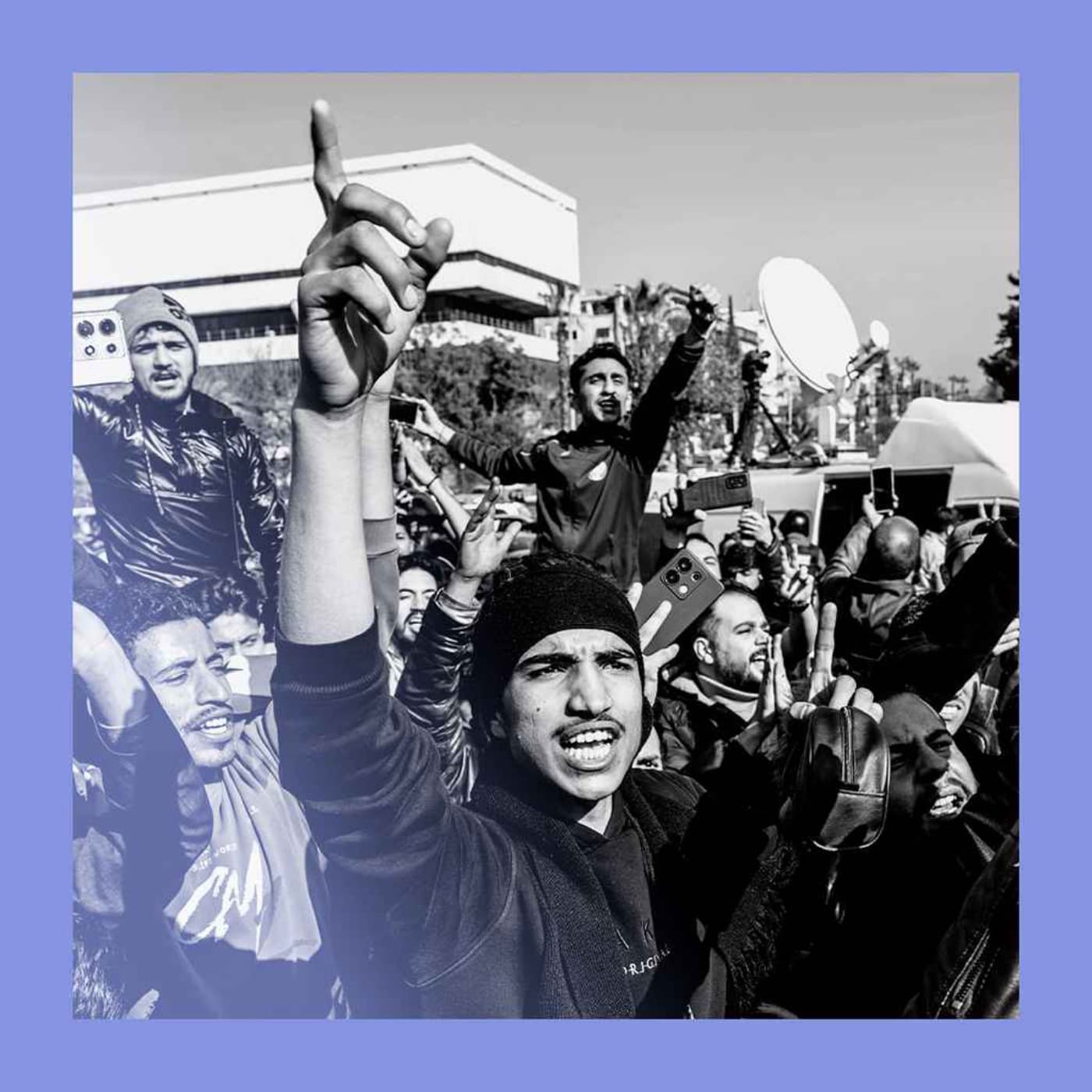
1:58Today in Damascus, billboards plaster the city of the final battle for liberation. Syrians have traveled to the capital from every corner of the country to toast the new beginnings. Internationally, Syria's new leader, Ahmad al-Shara, has moved with remarkable speed to end decades of diplomatic isolation. He now seems to be a pal of Donald Trump's. He comes from a very tough place, and he's a tough guy. I liked him, I get along with him, the president, the new president of Syria. Many of the tough sanctions that were devastating Syria have been lifted, and more are expected to go. Yet despite the new dawn, it's not all sunshine at home.
2:37Assad is gone, but a year on, Syria is facing a gamut of new problems. One year after the fall of Assad, things have changed. dramatically for Ahmad Shahra and Syria. Gareth Brown is a Middle East correspondent. The country has come out of a 50-year diplomatic isolation. The state is being rebranded. Sanctions are being lifted. But if you look closer, I think there are deepening cracks at home. And life for most Syrians has probably in some ways become harder than it was one year ago. Gareth, you've spent a lot of time on the ground in Syria. How is the transition going there? How does it feel?
3:18So on the ground in Syria, I think you see some big successes and some failings. Simply put, Syria hasn't become the Islamic State or, you know, Afghanistan under the Taliban that many had feared when Ahmad Shahar took over. Women are being recruited into the police. You could buy alcohol in the old city. These fears over a caliphate being established in Syria just haven't been realised. and the mere absence of Assad and his regime is a huge change for the country. The secret police who were pulling people off the streets into hundreds of jails, prisons, torture chambers are gone. There's freedom of speech.
3:53You can openly criticise the government from a cafe in Damascus and I think those are all very positive things for your average Syrian. Syria is still enjoying this sort of freedom of speech and expression that really it hasn't known for 50 or 60 years. I can hear a big but coming, Gareth, What's the flip side of that? I think if you look more closely at the domestic situation, there are pretty significant questions about how Ahmed Shara is going about running the country and rebuilding the state. I think for many Syrians, the economic situation has probably got worse since the liberation. Hundreds of thousands of government employees have been let go, soldiers, civil servants.
4:31So those are some of the poorest people in society no longer getting their salaries. Subsidies are being cut. And sanctions relief, though, it's talked about and lauded in the media and in diplomatic circles, it really hasn't produced any material change on the ground. There's next to no reconstruction and life is hard purely from a practical day-to-day perspective for most Syrians. I think on the political level there are pretty big questions too. There hasn't really been any major move to transitional justice. Assad's cronies are enjoying exile in Lebanon, in Russia, in Iran. I think people have been underwhelmed by the government's lack of impetus in going after war criminals associated with Assad.
5:15And some of Assad's key guys have actually even been recruited by the new government to help manage certain sensitive files. I think that amounts to a frustration which is feeding violence. And if you look at areas like Homs, the coastal countryside, Hama, Aleppo countryside, you're seeing near daily acts of violence, revenge killing, sectarian attacks. It's all sort of bubbling away. One activist I spoke to said, look, Syrians didn't take to the streets back in 2011 because of poverty. They carried out this revolution because society was missing certain values, dignity and justice. And those demands aren't just going to go away.
5:53And I think that's been a big failing of the government, not really focusing on transitional justice. So what kind of state is being built in Syria? One year in, this is a heavily centralised state, really with Ahmad Shahra at its centre, at its top. Whatever state institutions he inherited from Bashar al-Assad, he's cannibalising them. And you have these de facto sort of shadow governments. So instead of the ministries being empowered, bodies which have sprung up in the last year or so are taking a lot of powers away from the ministry. And it's not clear, are they temporary? Are they transient?
6:27Are they permanent new fixtures of the state? They're run by people who are absolutely loyal to Shara. And there's basically zero public oversight. A couple of sort of brief examples is a mysterious new Office of Political Affairs, which was announced via decree from the foreign ministry. Now, the foreign ministry doesn't have a constitutional mandate over internal affairs. But this Office of Political Affairs is getting involved in absolutely everything across the country. It has satellite offices in Aleppo, in the coast. It's involved in the vetting of candidates for elections. It's involved in the interfacing of NGOs and civil society.
7:03And it looks like a new body which's primary focus is political control. And I think for a country that's just come out of, you know, 50-year dictatorship, that is worrying because it's the embryo of a new authoritarian structure of control. And you say that frustrations have emerged into some violence already. What fault lines are those revealing in Syria? I think the country is now in a phase of what I call sectarian hangover and sectarian tensions, which had been suppressed through very violent force, particularly over the last 14 years, are now coming to the fore. And nowhere is that more clear than with the Alawite sect.
7:44The Alawites are closely associated with the rule of Bashar al-Assad himself was an Alawite. In March, we saw these massacres in the Alawite coastal areas and attempted insurrection by Alawite militants loyal to the old regime. And pro-government forces and mobs essentially responded with massacres, which left more than 1 ,500 people dead. I spent a lot of time speaking to people from the Alawite community, people in Syria, but also former officers from the regime who have fled the country. And there's certainly efforts to try and stoke an insurgency among the Alawites. They were heavily involved in the security sector in Assad's regime.
8:22In Lebanon, where I am right now you probably have at least 25 ,000 Alawites who have fled Syria in the last year. Four or 5 ,000 of those are senior officers or soldiers who were in Assad's military. I've spoken to people who say there are officers from Assad's regime who are actively trying to recruit for a new insurgency, trying to set up training camps outside of the country. And that fits into a wider political context where really Alawites don't feel part of this new Syrian state. You look at Homs, a third of Homs is Alawites. But if you look at the makeup of the new parliament, there's not a single Alawite MP representing Homs.
9:01Shara is rarely photographed with prominent Alawite figures, members of the community. They've been completely isolated from his new state. And that is feeding a political, economic disenchantment, which, if it goes on, could possibly result in insurgency. So Gareth, what would your ultimate assessment be? You've painted a picture of more stability than we thought, less extreme than we thought, but a lot of anxiety, frustration and some violence. Can Al-Shara make it? Will he stay? I think the bar for what Al-Shara was replacing was so low that frankly anything is better than what he's replacing after the last 14 years.
9:44He's played a blinder internationally. He struck up this bromance with Donald Trump. He's got sanctions lifted at a pace that I think nobody would have expected. But on domestic issues, he's made some huge errors. He's seriously isolated certain minority groups, the Alawites in particular, the Druze in particular. He simply hasn't been able to convince Syria's minorities, which is a third of the country, that he can rule and govern for them. and he simply expects them to lay down their arms and join him, which in many ways is simply tone deaf. He doesn't really trust many people. You've probably got half a dozen to 10 people making all the decisions in the country.
10:24And you can't run a state with that level of centralisation. It's inefficient, it's unrepresentative, and inevitably it becomes autocratic. Now, by the new year, Syria should have a functioning parliament once again. Can this parliament be a proper state-building system, an institution that can check the presidency's power, or is it going to be a rubber-stamping institution, much like previous parliaments in Syria? He really needs to focus on solving all these domestic issues because if he doesn't, then the country is going to start to fragment and all of this success he's made diplomatically, internationally, will be for nothing.
11:02Gareth, thank you very much for talking to me. Thank you, Rosie.
11:26I recently went to Medellin in Colombia, and I walked around El Poblado, which is the main tourist district. Carla Suborana is a news editor at The Economist. Sex work there is impossible to ignore. I was shown around by Hatmin Santa, who's an activist that campaigns against sex tourism.
11:53Hatmin kept steering my attention to things that I may have missed on my own. Outside of all of the cocktail bars, we could see groups of foreign men who were walking around, scanning the streets, and every few minutes, one of them would walk toward a young woman and begin what seemed kind of like a negotiation. And then they would quietly disappear into a nearby hotel. And that same scene played out again and again on every corner. Prostitution is legal in much of Latin America. And for many women struggling to make ends meet, they see it as basically the only rational way out of poverty. But Hadmin told me that traffickers are exploiting this situation.
12:34OK, so Carla, exactly what is it that's going on here? Who are these women? So Hathmin told me that traffickers contact women who are engaging in sex work and tell them that if they work for them, normally in another city, they will make more money or be better protected.
12:57Once they agree to go, the traffickers seize their passports and tell them that they owe money for the trip. Then these women are forced to repay those invented debts through sex. And I spoke to lots of women who described being deceived in this way. I'm not using their voices to protect their anonymity, but they all went through really terrible situations. So for example, one woman described to me how she was forced to see up to 20 men a night. Human trafficking is on the rise across the whole of Latin America. As drug gangs have expanded, it has become a very important part of their portfolios.
13:31What you're describing here is absolutely horrific. Can you just put some context on it for me? Why are humans trafficked? Is it just for sexual exploitation? Yes, so as you say, sexual exploitation is one of the reasons why humans are trafficked. This mostly affects women. And according to the UN, it actually increasingly affects underage girls too, because some of the sex tourists come to those places looking for children. And then another reason is forced labor, which mostly affects men who become trapped in places like mines, farms and factories. So, for example, in the illegal gold belts of Peru and Brazil, there are believed to be hundreds of people there against their will.
14:13And the numbers are rising really fast. Across the Americas, the International Labour Organization estimates that 3.6 million people are trapped in those situations. And of course, this is hugely lucrative for the gangs because it generates around$52 billion a year in illegal profits, which is the same as Bolivia's GDP. And you said that these are directly linked to drug gangs? Yes. So in recent years, the gangs who used to sell cocaine have incorporated other illicit businesses in their portfolio. So they're using the infrastructure that the cocaine economy built, like the corrupt officials or money laundering networks, to expand into other businesses.
14:58Betty Pedraza runs an NGO that helps human trafficking victims. She told me that 15 years ago, migrant smuggling networks, drug trafficking networks, they were all separate. Each had their own clients, their own infrastructure. And now she describes them as best friends. they pass people and resources between them. In this day and age, perhaps it's a naive hope, but I would have thought we knew where people were. Why is human trafficking on the rise? Two of the reasons we've already discussed, which is an increasing demand because of sex tourism and the fact that gangs are more organised. Then another reason is that internet has made it much easier for gangs to run this kind of entrapment.
15:41And as we reported in Scam Inc., our podcast series, earlier this year, this kind of operation is on the rise across the world.
15:54Betty told me that the pandemic forced them to shift recruitments online, and then they realized that it was a lot more effective.
16:08Thanks to social media, you can reach people with a lot less effort. So you can contact victims directly. You can build trust. You can garner personal details. And it also makes it easier to keep people trapped because then they know the victim's personal details and they can threaten them if they try to escape. So, for example, one woman I spoke to told me that they knew everything about her daughter and they threatened to kill her if she tried to escape. And then a final reason for the increase is that traffickers are increasingly taking advantage of the growing numbers of people made vulnerable by economic collapse across the region.
16:44For example, Venezuelans who have escaped the Maduro regime in recent years. So Carla, what can be done about this? So what really struck me during my reporting is how little is actually being done. So things like drugs or illegal mining get a lot of attention and as a result funding, but human trafficking doesn't really seem to be very high on government's priorities. For starters, very few cases are reported because victims are scared to speak out. And once they are identified, it's very rare that justice will be made because judges and police lack the training to identify those cases. They will often demand proof that someone was physically coerced, while there are other methods like debt bondage, which are actually equally effective.
17:30paying little attention to sex work. Other cases like forced labor, like the ones seen in the mining belt, get even less attention. Sadly, it will probably get worse before it gets better because a lot of the NGOs I spoke with said that they had had their funding cut by Donald Trump's cuts to foreign aid. And the gangs are increasingly powerful. They're making record profits from cocaine and their other operations. Although some people managed to escape with the help of NGOs or the local police, there are hundreds more that remain trapped. Carla, thank you very much for talking to me. Thank you, Rosie.
18:21Okay, we're going to find a spot to dig, but we're not going to get too wet. Okay. So let's go. Let's go to that. After you. Last month, I was taught how to pan for gold in Jamestown, which is a tiny little town in the foothills of California's Sierra Nevada mountains. Aaron Braun is our West Coast correspondent. So if all these rocks, big rocks are depositing right here, if that's where the heavy material is going to go, the gold would be bigger out here per se. I was with Nugget Nick Pribolick. Prebolic, he's a second generation gold miner. And normally his business is to show tourists and family is how to pan for gold in this creek.
19:05And he does this for a nice shiny fee. See, there's like some clay in there and stuff. Trying to break that up. It's like glue for gold.
19:18Get all the dirt to go through there. You want to give it a shot? Yeah, I really do.
19:27Jamestown was at the heart of California's gold rush when it kicked off in 1849. There's hundreds of thousands of people in this little area. They're here in Jamestown, and then all of a sudden the word gets out that they found gold in Columbia. So they all pack up and go to Columbia. Ten years ago when he bought his business, Nugget Nick told me that he could bring in about$30 ,000 a year showing tourists, families, retirees how to pan for gold. But as the price has risen, he's now raking in more than$100 ,000 a year. So, Aaron, first things first, did you find any gold? I did, Rosie. It was so exciting.
20:10While we were panning, the process is so slow. But finally, I revealed a tiny little nugget that was about a half or a third of the size of my pinky nail. And Nick told me it was worth about$20. So, very exciting stuff. Worse things to find in a river. Yeah. Aaron, what's behind this gold rush? You're clearly not the only person learning to plan for gold. There's a couple of reasons. The first and the most important one is that the gold price is the highest it's ever been. In late October, it hit a record of about$4 ,300 an ounce. So that's outrageous. It's about 55 % higher than it was this time last year, though it's wobbled a bit at the top.
20:53So as the price of gold has gone up, we've just seen this huge amount of interest in prospecting from a lot of retirees, but also tourists and treasure seekers and prospecting clubs around California, you know, up in the Sierras and in Southern California, where I live, are growing all the time. Sounds a bit naive to ask you this, but I thought the gold had mostly been found. How come there's still some there? So I learned actually while reporting this story that some people reckon that only 15 % of the gold in California has been found. So there's plenty of it still in the rivers and creeks of the Sierras.
21:32Aaron, you mentioned, of course, the gold price, but what else is going on here? The last couple of winters, which is California's wet season, we've gotten these massive storms called atmospheric rivers. And when that happens, the gold deposits high in the mountains, they kind of loosened up a bit. And then they trickle down the rivers and the streams and get lodged in a creek somewhere for prospectors to find. So it's really after these big rainstorms that you'll see lots of people head to the hills. And then finally, this is kind of a fun reason that I figured out. Every gold miner that I spoke with asked me if I had seen these gold rush reality shows.
22:13And so naturally I looked them up and it turns out there's 16 seasons of this show and it's had five or six spinoff series. And you just watch these teams of miners in Alaska do large scale gold mining. But a lot of miners in California will watch it to get tips and tricks of the trade. 16 seasons though. I know. Aaron, last time there was a gold rush, essentially California emerged from it as a state. So is this current gold rush also benefiting local businesses? If you drive around these old gold rush towns, you can see that now they've made a business of gold tourism. There's not enough people flocking to the hills that gold mining itself is big business again, but driving around Columbia, which is a town like Jamestown, I saw a place called the Church of the 49ers and their tagline was where God is the gold.
Read the full transcript
23:08And there's local businesses like Motherlode Dance Academy and Motherlode Septic Services. And there was a Motherlode job training site and fairgrounds. So everything up in this region is about gold. And presumably with the high price, that's just going to continue? Yes, there is though kind of a double-edged sword, which Nick told me about. The high price also means that he's had people sneak onto his land to try to steal it. And given that the price is so high and it could get higher, that's probably not going to end anytime soon. But the prospect of the price getting even higher is something that I wanted to put to Nick as well.
23:49People are talking about it hitting$5 ,000 next year? Yeah, it could go all the way up to$10 ,000. What would that mean for you? Well, it means I better be down here digging. When I was in this creek knee deep in my boots with Nick, I asked him how often he finds gold. and I was surprised to hear that he said he finds something every single day. And one time he and his dad, which is who taught him how to mine, found 127 ounces in a day. And this was back years ago. But you can imagine if you hit that jackpot today, how rich you would be. And Aaron, are you going back? I hope so. It was really fun.
24:28But next time I think I probably won't take my audio recorder with me. I had a mishap and it took a dunk in the creek. And that was worth more than$20, I suspect. Aaron, thank you very much indeed. Thanks, Rosie.
24:59That's it for this episode of The Intelligence. do let us know what you think of the show. You can get in touch at podcasts at economist.com. We'll see you back here tomorrow.
From the publisher
A year after ousting its despot, things are not as bad as many had feared. But old sectarian divides threaten the peace. Forced labour, sex tourism and human-trafficking: ever more sophisticated drug gangs are behind a wave of exploitation across Latin America. And the rocketing price of gold drives a new generation of prospectors to California.
Get a world of insights by subscribing to Economist Podcasts+. For more information about how to access Economist Podcasts+, please visit our FAQs page or watch our video explaining how to link your account.
Hosted on Acast. See acast.com/privacy for more information.