In short
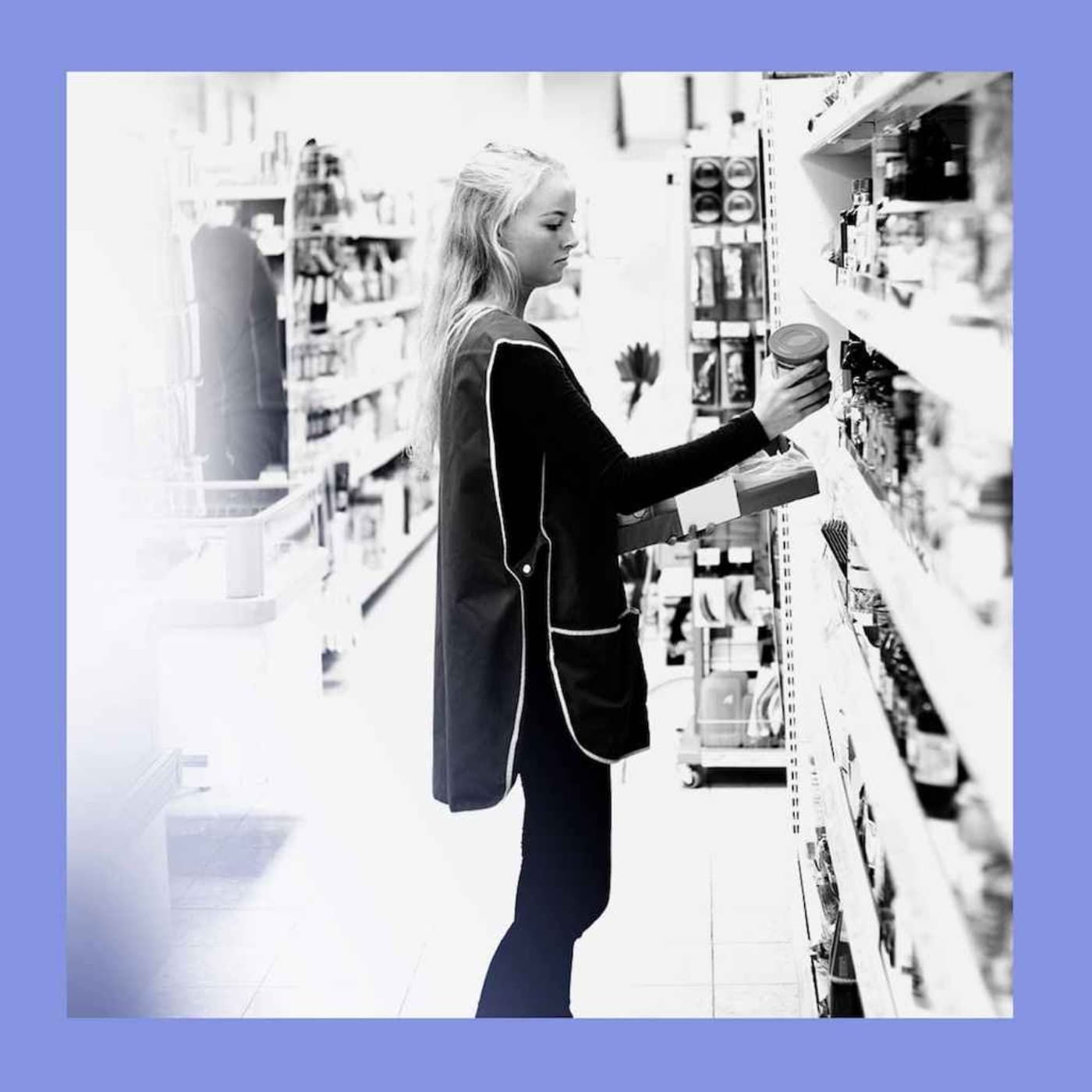
The episode “Wage against the machine: the distortions of minimum pay” argues that while minimum wages are rising worldwide and can clearly lift pay for low earners, the hidden costs are increasingly evident.
Key claims
employment effects are smaller than feared (unemployment low, employment high), but non-employment harms may include less predictable schedules and worse workplace safety. It also challenges the idea that minimum wages reduce inequality, noting many minimum-wage workers are in higher-income households; the poorest may be out of work or have non-working partners, so welfare-state transfers may target poverty better.
Notable examples
UK earnings compression; US state/local minimum wages like Washington at about $21–$22.
Guests
Callum Williams (The Economist senior economics writer) and Alex Hearn (The Economist AI writer). Also featured: Rebecca Jackson (Southern correspondent) reporting from Tampa, Florida on homeschooling micro-schools like Urban Cottage, where 1 in 15 children are homeschooled and public schools lost 7,000 students.
Written by AI. May contain mistakes. Listen to the episode to check what was said.
Chapters
Tap a time to open that second in VODebating Minimum Wage Impacts
0:30 to 8:01
Exploration of the minimum wage's effects on income inequality and employment.
“Small wonder that many of us now use AI to help.”
The Role of AI in Job Applications
9:21 to 14:02
Discussion on how AI impacts the quality and effectiveness of cover letters in hiring.
“The thing about a cover letter is it is one of the perfect examples of what economists call signaling.”
AI and Cover Letters: The New Landscape
14:02 to 17:04
Explore how AI tools are changing job application dynamics, particularly cover letters.
“I mean, correlation does not imply causality.”
Urban Cottage: A Radical Education Experiment
17:04 to 21:01
Learn about Urban Cottage, a unique micro-school in Florida and its impact on education.
“I've just come back from visiting an unusual and interesting place in a rapidly gentrifying neighborhood of Tampa, Florida.”
The Shift in Homeschooling and Educational Outcomes
21:01 to 22:52
Investigate the implications of Florida's homeschooling policies and their effects on student performance.
“have in front of them and curating an education for their kids that looks nothing like what we've seen before in American education.”
Transcript
Automatic transcript. May contain errors.0:28The Economist all the requirements and is also a brilliant person to work with. Small wonder that many of us now use AI to help. But where exactly does this get us? And if you were one of those people who virtually danced in the streets when kids were allowed back into school during the pandemic, this story is utterly confounding. In one county in Florida, one in every 15 children is home schooled. Our correspondent reports.
1:01First up, though...
1:11No matter which side of the political divide you're on... Who raised the minimum wage, putting£1 ,400 in the pockets of the lowest paid Labour? And no matter the political era... The prospects of young people would be blighted by Labour's minimum wage policy. The minimum wage and how best to implement it is a regular topic of debate. There's an argument the minimum wage is too high for younger workers. In recent years, many governments have repeatedly increased the minimum wage. But now people are asking, is this really the best way to improve income inequality? People are talking about the minimum wage now really for two reasons.
1:52Callum Williams is our senior economics writer. One is that governments all over the world are becoming very keen on having a higher minimum wage. And the second reason is there is this growing body of literature from economists which finds that minimum wages have hidden costs. Minimum wages aren't that old. So how have government policies changed towards them? So what we're seeing now, really across the rich world, is a belief by governments that they can push minimum wages very high with no real ill effects. So what you're having in Britain, for example, and this will be confirmed in the upcoming budget, is quite a sharp rise in the minimum wage.
2:35You're seeing it in lots of European countries. Germany didn't have a minimum wage until about 10 years ago. So this is something that's happening at a national level and in a big way in Europe. And then in the US, what's happening is, yes, the federal minimum wage hasn't changed in close to 20 years of$7.25 an hour, which is very low. But what you've had instead is a state and local pushback against that. And a lot of states and cities are implementing very high minimum wages off their own back. There's places in Washington state, for example, where the minimum wage is more like$21 or$22 an hour.
3:07As someone whose first job was pre-minimum wage£2.92 an hour in central London, I would say that's a great thing. Minimum wages are rising. It is a great thing for lots of people, absolutely. It raises the wages of employees at the bottom of the labour market. And that's very clear, say, in the UK, which went through a big experiment over the past decade of having a much higher minimum wage. And you can clearly see a kind of earnings compression. I think what other research shows quite clearly is that the employment effects of minimum wages are quite small. So there was this belief among economists, Milton Friedman being the classic example, who would say, if you have a high minimum wage, it will price the youngest people and the people with the lowest qualifications out of the labour market.
3:54That has not really happened. The unemployment rate across the rich world is pretty low, and the employment rate, so the share of people who are actually in a job across the rich world is actually at an all-time high. So there haven't been these consequences that some economists had foreseen. And yes, I can feel a but coming. There is a but coming. I think there's two buts to think about. The first is, are there other effects of having a higher minimum wage on people's jobs? So a job is not simply a question of how many hours you work or do you work in a job. It comprises a bundle of different things, pay, conditions.
4:31And then the second thing we can talk about is, is it the best way to fight poverty and inequality if that is indeed your goal as a government? And what does the research suggest? So on the question of the non-employment effects of minimum wage, these are actually a lot worse than people had previously thought. And there is now this growing body of research, which essentially says, if you have a high minimum wage, it's right to expect that you won't get a big jump in unemployment so that's good on the other hand it does seem likely that it will reduce the quality of work in other ways so for example there's a very interesting new paper that was published recently which shows that when minimum wages go up workers schedules become a lot less predictable workers are essentially more likely to be told at the last minute oh we don't need you to come in this week we don't need to come in today now that's a bad thing there's also other evidence which suggests that when you have a high minimum wage, workplace safety often gets worse.
5:29And the theory behind that is when employers are being forced to pay more, they basically push their workers harder and they push them to cut corners. And this leads to more accidents and that kind of thing. And more profoundly, is it the best way to fight poverty? This is, I think, the most interesting question. And there's a left-wing critique of the minimum wage, which is you might think that by having a high minimum wage, you're achieving progressive policy goals. But in fact, the evidence really suggests that that is not the case. Often minimum wage workers are in fairly high income families.
6:01So what you're doing when you're increasing the minimum wage is say the rich kid who has a summer job, he or she will get a nice salary boost over the summer, but that family doesn't particularly need the extra income. And it's actually very surprising when you look at the micro data on this, just exactly who benefits from the minimum wage. It's often not the people that you think that will benefit from it. Often people at the very bottom of the income distribution are either not in work at all, so they can't see any benefit from the minimum wage, or they're in jobs which pay above the minimum wage, but they have a partner who doesn't work, say.
6:34The mapping of an individual's salary onto their household income is actually surprisingly indirect. So the way that you would want to reduce inequality, if that's your goal as a government, is basically pay poor households more money. And you can achieve that through the welfare state. And what you've actually seen, particularly in the UK, is a retreat of that kind of policy and a move instead towards a policy of higher minimum wages. And in fact, having a situation where you have a very generous minimum wage, but a much less generous welfare state is actually not that good at reducing inequality or poverty.
7:11So the idea that work pays actually isn't good for overcoming inequality? I guess your conclusion could be that it's no bad thing to have a minimum wage of some level. I think that there are clearly instances where you want to try and level out the imbalance of power that exists between some employers and some employees. So having that wage floor is a good idea. However, beyond that wage floor idea, which I think is what the evidence would suggest is quite low, if your goal as a government is to reduce inequality, then the best thing to do is to have a more generous welfare state. Yes. fascinating thank you so much Callum thanks Rosie
8:01this economist podcast is sponsored by Bill the intelligent finance platform that helps businesses and accounting firms scale with proven results with AI powered automation Bill isn't just moving money they're simplifying financial operations for nearly half a million customers Bill has securely processed over a trillion dollars in transactions. That's proven infrastructure. Ready to talk with an expert? Visit Bill.com slash proven and get a$150 gift card as a thank you. That's Bill.com slash proven. Terms and conditions apply. See offer page for details. Summer can throw off even the best routines, but AG1 makes it easy to keep one healthy habit consistent.
8:41AG1 is a daily health drink that combines a multivitamin, pre - and probiotics, superfoods, and antioxidants in one scoop mixed with 8 ounces of water. From late nights to long weekends, and everything in between, AG1 offers a simple way to add consistent nutritional support to your day, wherever the morning begins. Visit drinkag1.com slash theintelligence to get a free morning person hat and a free AG1 sampler in your welcome kit with your first AG1 subscription. an$82 value. That's drinkag1.com slash theintelligence.
9:21The thing about a cover letter is it is one of the perfect examples of what economists call signaling. Alex Hearn is The Economist's AI writer. The point of the cover letter isn't really the words in the cover letter per se, it's that one of the ways that good candidates can show they are good is by putting effort into a cover letter. If you are a mediocre candidate spamming a thousand applications a day without thinking about whether or not you're suited or suitable to the job, then your cover letter will be bland. It will be generic. It won't address the needs of the particular job, if you're a good candidate who's a really good fit for a particular job, the point of your cover letter isn't just to say, here's all the reasons why I am fit for the job, it's to show that you are giving this job more attention than you would give another job.
10:18And that signals to the employer that they should likely do the same in return. So how is AI changing that? What AI is doing, per a new paper from a pair of American economists, it looked at the impact of AI on a large freelancing platform online. and it found that one of the big, big impacts of AI, both the launch of ChatGPT and a year later, the introduction of an AI cover letter writing tool on the freelancer platform, was to make all cover letters longer, to make them more full of all the sorts of signals that employers look for, and as a result, to make them much, much less useful in hiring.
11:04So Alex, why does any of this matter? It matters because matching good candidates to good employers is the most important part of the recruiting process. Employers will pay people more if they know they're going to be good at the job. Employers will take a punt on an underqualified employee if they know they're getting a discount in return. Things start to break down if in the recruitment process, employers can't work out who is good because, say, they can no longer discard all of the applications written in poor English or notice which applications are actually responding to the specific questions in the job advert.
11:44Once employers lose those signals, they're forced to do a couple of things. Firstly, they hire on the basis of other more observable, less fakeable qualities. That might be your academic credentials, it might be prior work, but from an ethical point of view, that means that generally speaking, the people who are doing well carry on doing well, and it's harder and harder to break in or improve your lot in life. But the other problem is, without the guarantee that they're hiring the best possible candidates, employers just don't pay as much. Wages go down for the good candidates, and counterintuitively, they go up for the bad ones.
12:20But overall, all employees lose out on average, and the employers, although they've got cheaper workers, don't gain by as much as the workers lose. So just break that down for me a bit more, how an AI-generated cover letter and the trends towards them is really affecting salaries. What we have after the AI-generated cover letter is a classic example of a market for lemons. This is the idea in economics that if you can't tell the quality of what you're buying, if you can't tell the difference between, say a car that will drive another 50 ,000 miles or a car that will break down on your journey home, you're forced to offer a price that matches the worst possible thing you could get.
13:05It's good for everyone in a market to be able to truthfully and legitimately prove that you're selling good quality stuff, be that a car with a lot of miles left on the clock or a worker who is actually capable of fulfilling the task. In the freelancer platform that was under investigation in this job market paper, where the average fee for a task is around$100, a good high-signal cover letter in the pre-AI age was worth about$29, more than a quarter of the overall cost of the entire job. And once that signal gets taken away, once your cover letter can no longer prove that you're better than any other candidate, that premium goes away.
13:44The employer isn't willing to pay more for better work because they don't know they're going to get it. And how do we know that that lack of premium is really about AI-generated cover letters and not just a decline in wages overall and a decline in freelance fees? Of course. I mean, correlation does not imply causality. And the bulk of this was a time series analysis. We have a very clear event, which is the launch of ChapGPT. We know almost certainly that anything before then is incredibly unlikely to be AI-generated cover letters. And we can guess that changes, particularly changes that are quite stark around winter 2022-23, are likely to be because of AI.
14:25So you can do that before and after analysis. But also for this specific research article, because the economists had access to the back-end data of freelancer.com, the site they were analysing, they could also specifically look at applications that were written using the site's own AI tool. So from about 2023, you could do an application on this website and hit a button saying generate a cover letter for me. Those applications are definitely AI generated and so you can compare applications generated using the freelancer.com AI tool with applications from before November 2022 and be pretty confident that you're comparing an application written with AI and an application written before AI burst on the scene and the differences are stark.
15:10The length of the cover letters goes up, they get filled with all of the sort of signals that employers are looking for. And employers, as a result, are less responsive to those signals. So where does that leave you, Alex, to GPT or not GPT your cover letter? I think it's still the case, particularly if you're applying for an employee position, right, where more humans will be reading these things. There will be, on average, fewer applications. There's more money on the line. It's still worth avoiding an AI completely writing your cover letter. Generally speaking, if you are a decent writer, if you have a decent grasp of English, you will be able to write maybe not something better than an AI tool, but something that sounds less like an AI tool than an AI tool.
15:58Employers are getting a sense for this. If you read a lot of cover letters, if you read a lot of anything, you are noticing the ticks that make people sound like they are using an AI assistant, and that's not great. But for employers, they're also turning to things that aren't cover letters. For some jobs, that means many, many more skill-based tests. So if you're applying for jobs in the world of finance, for instance, you're almost certainly being asked to do a take-home coding test or math test in the really early stages of the application process solely because that's harder to cheat on. For other employers, they are turning to things like AI-assisted interviews.
16:38So you skip the cover letter stage, you get many, many more people through to the interview stage than you would have previously. But you don't then waste human time on the interviews. You get people to phone up and answer questions asked to them by an AI. It's not, I understand, a pleasant process. It feels faintly dehumanizing, but it is, at least for the time being, harder to get an AI to do your job for you, at least as the applicant. Alex, thank you very much indeed. Thank you for having me, Rosie.
17:21I've just come back from visiting an unusual and interesting place in a rapidly gentrifying neighborhood of Tampa, Florida. Rebecca Jackson is our Southern correspondent. It's a small micro school called Urban Cottage, where children come in and out at different times children of all ages to learn in Montessori-style classes. They sit down labeling maps of South America and sitting groups talking about the significance of the Magna Carta. The micro-school is a renovated house and teachers drift between these small sunlit rooms where they help students who are working on all sorts of different projects in schoolwork.
18:00But as you can probably tell, this isn't a normal or typical school. Urban Cottage is part of a radical experiment in education that's currently underway in Florida. Becca, it's sounding very utopian. Tell me about this radical experiment. Florida has always been on the frontier of education. They were really ahead in terms of the charter school movement back in the 80s, and now they're doing something different. They're creating this educational marketplace that allows parents to do essentially a pick-your-own education for their kids. And a big part of that is homeschooling. The state offers families $8 ,000 per child if they choose to take their kid out of public school and educate them as they see fit.
18:43As a result, tons of parents in Florida are turning to homeschooling, where they send their kids for part of the day to places like Urban Cottage, these micro schools and co-ops, where they can drop in and out of classes and then teach them on their own during the rest of the day. In Hillsborough County, where the city of Tampa sits, one in every 15 children is homeschooled, And parents are not just sitting at their kitchen table with their kids. Instead, they're kind of acting as general contractors, shuttling them between all these different educational suppliers that have popped up around the county.
19:16Right now, there are over 1 ,500 organizations that are serving the homeschooling community in the city. And this is really impacting the school system. This year, the county's public school lost 7 ,000 students. And although some of those kids are going to private schools or charter schools, Many of them are also just simply de-schooling. So for me, this brings back traumatic memories of COVID and my kitchen table, but it's sounding like it's something a bit different in Florida. What does it look like on the ground? Well, Rosie, I think that's an important point, right? Because during the pandemic, lots of frustrated parents dabbled in homeschooling, but most of them sent their children back to classrooms when schools reopened.
19:58But in Florida, they didn't because of this voucher program that gives parents, regardless of their income, this big chunk of money to take with them and educate their kids how they want to. They've been choosing all different kinds of methods. So Urban Cottage is one of them. My sense is that it's a particularly sophisticated version of this micro school. There are many co-ops in the city of Tampa that are run in churches by parents who volunteer to teach all sorts of classes. Outside of the city, there are even more radical options. There are farm schools popping out on farms. Most families mix these courses with home study.
20:32They're also sitting at home and learning from all these different types of curriculum. And the good and the beautiful, which is a Mormon one, is particularly popular. I think one of the most interesting things here, Rosie, is that the school system is being forced to adapt to this. So private schools are now offering homeschooling days and public schools are offering a la carte options, which means that a homeschooling family can choose to pay to enroll, say, just in AP English or statistics or to have their kid play on the football team. So what this is creating is this moment in American education where parents are really choosing from all the options that they have in front of them and curating an education for their kids that looks nothing like what we've seen before in American education.
21:14So you've said that the pandemic was the moment when things shifted, but I'm really surprised that people didn't send their kids back to school. This sounds like an incredibly labour-intensive version of education on the part of the parents. It definitely is. And lots of the parents say, you know, for all those people out there who say that the system is ripe for abuse, nobody who doesn't deeply care about their children wants them at home 24-7. It's much easier to drop your kid off at a public school, right? And so these are parents who are very driven to make a change in their child's schooling.
21:47And I think, importantly, one of the reasons that this stuck around is because of the statewide policy that gives parents this, quite frankly, enormous amount of cash to spend as they see fit. And one of the radical things here that lots of Republican states in America have voucher systems like this, but not all of them give it to parents regardless of their income. And what are the results from this? How do the kids do? That's a really important question. And we don't really know. That's part of the problem. A lot of education researchers that I spoke to were pretty concerned about this shift because it's so experimental.
22:25Many states have subject requirements. They say that if you're homeschooling, you need to make sure that your kid learns basic math, reading, or history. Florida doesn't. But in practice, those rules are often not actually enforced. Perhaps more concerningly, these kids are taking standardized tests, but the results of those exams, their test scores, have not been published. So we really don't have a sense of whether this is improving educational outcomes or hurting them. Becca, fascinating stuff. Thank you so much. Thanks for having me, Rosie.
23:10That's it for this episode of The Intelligence. We'll see you back here tomorrow. Thank you.
From the publisher
For decades governments have found minimum-wage rises a politically expedient means of redistribution. But the onward economic distortions have at last become clear. Of course AI can write a faster cover letter — perhaps even a better one. But there are knock-on costs when everyone is doing it. And a look at Florida’s bold experiment in the free choice of unbundled education.
Get a world of insights by subscribing to Economist Podcasts+. For more information about how to access Economist Podcasts+, please visit our FAQs page or watch our video explaining how to link your account.
Hosted on Acast. See acast.com/privacy for more information.