
In short
Podcast Summary: War with Iran: Middle East in Flames
Podcast Information Title: Economist Podcasts Description: A global perspective on current affairs, business, finance, science, and technology through the lens of surprising trends and stories beneath the headlines.
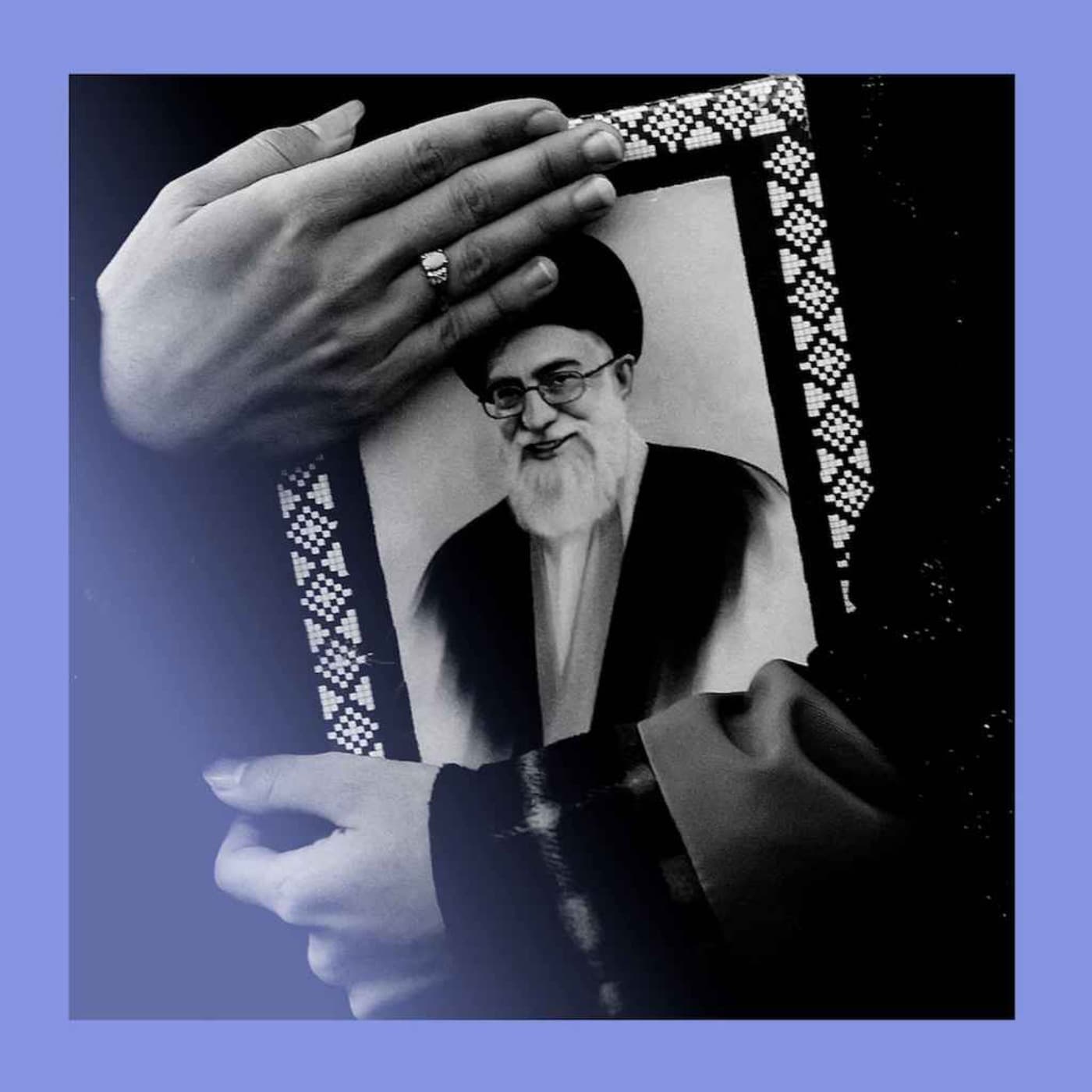
Episode Overview Title: War with Iran: Middle East in Flames Description: This episode discusses the recent military attacks launched by America and Israel on Iran, focusing on the implications of the death of Iran's supreme leader, Ali Khamenei, and the subsequent regional instability.
Key Guests
- Nicolas Pelham - Middle East Correspondent
- Gregg Carlstrom - Middle East Correspondent
- Gareth Browne - Middle East Reporter
- Shashank Joshi - Defence Editor
- Rosie Blau - Co-host of "The Intelligence"
---
Main Topics Covered
- The Attack on Iran
- Details of the Attack:
- The U.S. and Israel carried out a surprise attack on key Iranian targets, including the supreme leader Khamenei.
- The attack has resulted in widespread chaos, with protests and celebrations erupting in Iran.
- Immediate Aftermath:
- The rapid escalation of conflict has transformed from a targeted bombing to a regional war, affecting neighboring Gulf States and drawing Lebanon into the fray.
- Khamenei's Legacy and Succession
- Khamenei's Role:
- Khamenei had been in power since 1989, deeply entrenched in the ideology of the Islamic Republic.
- His death marks a significant shift in Iran's political landscape.
- Succession Plans:
- A leadership council is in charge temporarily until a new supreme leader is appointed.
- Potential successors include influential clerics and military figures, indicating a possible shift in power dynamics.
- Iran's Military Strategy and Retaliation
- Retaliatory Actions:
- Iran has begun retaliating against U.S. and allied targets, including missile strikes on Gulf states and Israel.
- The strategy appears to be one of widespread attacks targeting civilian infrastructure to pressure the U.S. to cease hostilities.
- Military Capabilities:
- Despite the leadership chaos, Iran retains a significant arsenal of missiles and continues to execute attacks, albeit with diminished coordination.
- Regional Responses and Impacts
- Gulf States' Reactions:
- Gulf nations are grappling with direct attacks on their territories, leading to frustration and a reevaluation of their relationships with the U.S.
- There is increasing pressure on local governments to respond militarily, which could alter the security dynamics in the region.
- Economic Implications:
- The conflict has disrupted the stability of Gulf economies, particularly in Dubai, which is traditionally viewed as a safe haven.
- Responses from the U.S. Government
- Trump's Justifications for War:
- The episode discusses President Trump's varied justifications for the war, emphasizing a historical lens rather than immediate threats.
- Public support for the conflict appears to be low among Americans, reflecting a lack of clarity on the war's objectives.
- Future Considerations
- Possibility of De-escalation:
- There are potential paths to de-escalation, including shifting strategies from military aggression to diplomatic negotiations.
- The fear exists that the conflict could spiral out of control, leading to more extensive regional fallout.
---
Key Takeaways
- The death of Khamenei marks a pivotal moment for Iran and the broader Middle East, with uncertain implications for regional security.
- Iran is likely to respond aggressively to maintain its influence amidst chaos, but its military coordination has been compromised.
- Gulf States are faced with unprecedented threats, raising questions about their future stability and alignment with U.S. policies.
- Public sentiment in the U.S. regarding the war is largely negative, complicating the administration's stance and potential strategies moving forward.
---
Conclusion This podcast episode provides an in-depth analysis of the evolving situation in the Middle East following the U.S. and Israeli attacks on Iran. The complexities of military dynamics, political succession, and regional responses illustrate the precarious state of affairs that could lead to further instability and conflict.
Written by AI. May contain mistakes. Listen to the episode to check what was said.
Chapters
Tap a time to open that second in VOThe Assault on Iran: An Overview
0:44 to 2:36
A detailed account of the recent assault on Iran and its implications.
“Hello and welcome to The Intelligence from The Economist.”
Power Dynamics in Iran Post-Khamenei
2:36 to 4:48
Exploration of the power structure in Iran following Khamenei's death.
“There was always a fear that this was going to become a regional war quickly.”
Iran's Escalation Strategy and Regional Impact
4:48 to 6:39
Analysis of Iran's military strategy and regional responses to the conflict.
“But that formulaic process, I think it is questionable the degree to which you're going to see a continuation of a theocracy in the way that we saw it before.”
Public Response and Civil Unrest in Iran
6:39 to 8:34
Understanding the Iranian population's reaction to recent events and unrest.
“How much do we know about how the Iranian population has responded to all of this?”
Reactions from Dubai and Regional Stability
8:34 to 11:16
Insights into the situation in Dubai amidst the regional conflict.
“which, in a troubled region, people normally regard as a haven.”
Iran's Attacks on Gulf States and Their Responses
11:16 to 14:03
Overview of attacks on Gulf states and the unexpected regional reactions.
“And Greg, just fill in for us the bigger picture about what Iran has been doing across the region.”
Gulf States' Response to Iran's Attacks
14:03 to 16:46
Explore the anger and frustration of Gulf states over Iran's targeting.
“across the Middle East with the way that they have responded.”
Trump's Justifications for War
16:46 to 19:20
Understand the shifting justifications Trump has provided for the war.
“And things like the Iranians attacking oil facilities in Saudi Arabia, that's going to be very escalatory for governments in the region.”
Iran's Military and Response Strategies
19:20 to 23:45
Learn about Iran's military capabilities and its retaliatory actions.
“Deputy Editor of The Economist, Edward Carr, will be joined by Greg and a panel of our regional and defence experts to analyse how this war might unfold.”
Escalation and Pathways to De-escalation
23:45 to 28:00
Discuss the potential for further escalation and paths to peace.
“Now, Israel says they took out half of Iran's ballistic missile launchers.”
Show all 11 chapters
Escalating Tensions with Iran
28:00 to 29:46
Explore the increasing military actions and geopolitical implications surrounding Iran.
“And this was a country that was mediating nuclear talks between the United States and Iran just a few days ago in a way that has caused a sense of betrayal and shock in Oman and in other Arab countries as well.”
Transcript
Automatic transcript. May contain errors.0:00Shashank Joshi:Youth mental health is a complex challenge that requires comprehensive solutions. We must strengthen after-school programs. We must make digital literacy tools available in our schools. We must work with mental health professionals to support children. And we must empower mentors, educators, and parents to keep kids happy. Learn more about our commitment to finding lasting solutions at empowerourfuturecoalition.com slash solutions. Paid for by the Coalition to Empower Our Future.
0:35Gareth Browne:The Economist
0:44Rosie Blau:Hello and welcome to The Intelligence from The Economist. I'm your host, Rosie Blore. Every weekday, we provide a fresh perspective on the events shaping your world. And today on the show, and in the world, there is only one story.
1:05Rosie Blau:Over the weekend, America launched its long-anticipated assault on Iran.
1:11Shashank Joshi:Stay sheltered. Don't leave your home. It's very dangerous outside. Bombs will be dropping everywhere. When we are finished, take over your government. It will be yours to take. This will be probably your only chance for generations.
1:28Rosie Blau:In collaboration with Israel, it struck targets across the country. Chief among them, Iran's supreme leader Ayatollah Ali Khamenei. An Iranian TV anchor cried as he announced the news.
1:45Rosie Blau:Thousands of people gathered in Tehran to protest about the destruction raining down on the country. But some Iranians danced in the streets and shouted from balconies at the death of their oppressor. Despite the threats from President Donald Trump, this was a gamble many thought he'd never take. Now he has. Our correspondents Nick Pelham and Greg Karlstrom have been following the events over the weekend.
2:14Nicolas Pelham:It's been a shock, even though we all, I think, knew that this war was coming at some point. I think the speed with which this went from being an American-Israeli bombing campaign in Iran to now a full regional war with attacks on all of the Gulf states, with Lebanon being drawn in overnight. It's shocking how quickly this has escalated, I think.
2:36Gareth Browne:There was always a fear that this was going to become a regional war quickly. It was a fear, it was a premonition, and now it's a reality. And I think the whole region is in a state of shock.
2:48Rosie Blau:Nick, Ayatollah Khamenei has been killed. It's a huge blow. Just remind us who he is and how he got there.
2:56Gareth Browne:This is a man who's been at the helm of state since 1989. He's been running every aspect of Iran since then. He's been in power for 37 years. He's steeped in the ideology of the Islamic Republic. It was an article of faith for him that he would not surrender to the United States. And I think he's shown in his death by his refusal to leave office. He knew what was coming. He has set an example for his millions of followers that they will stand and face the wrath of America rather than surrender.
3:27Rosie Blau:And he's not the only regime figure to have been killed, right?
3:32Gareth Browne:No. Since the summer war, the upper echelons of the military have been taken in the first minutes of this attack, along with Khamenei, went his chief military advisor, Ali Shemkhani, along with him, the minister of defense, the head of the Islamic Revolutionary Guard Corps, which is the regime's praetorian guard, and many senior commanders. So there is a sense now in which power in Iran is much more diffuse, much more decentralized. It looks as if individual commanders are now operating on their own without coordination with the center. Those may have been the orders that came in advance of an attack, but it's a much more sporadic, less coordinated Iran that's operating now than I think we've seen in the past.
4:13Rosie Blau:So Nick, who's in charge now and how will a succession happen?
4:17Gareth Browne:The Islamic Republic, what remains of it, has made a great show of sticking to the constitution. The process for the succession is that you have a leadership council headed by the president who remains alive, along with the chief justice and a cleric. So that leadership council is now officially in charge. It's their task to be the interregnum until a new supreme leader is appointed. It might be that the cleric that's been appointed to the leadership council is a front-runner to succeed Ali Khamenei. He is another ayatollah, Arafi, who was already considered to be a contender. But that formulaic process, I think it is questionable the degree to which you're going to see a continuation of a theocracy in the way that we saw it before.
5:01Gareth Browne:There are many other powerbrokers in the country who have close connections with the Islamic Revolutionary Guard Corps. Mohamed Baruch Ali Ba 'af, the Speaker of Parliament, may be one contender. His predecessor, Ali Larajani, appears already to have been shoehorned into a sort of position as the deputy of Khamenei. He very much remains at the centre of decision-making, and his position at the moment is to not negotiate with America. A successor has been appointed to head the IRGC, Islamic Revolutionary Guard Corps. Vahidi is a former defense minister and interior minister. He's been at the center of Iran's military command since the Iran-Iraq war.
5:39Gareth Browne:He's very much a stalwart of the regime. In many ways, he's a more powerful figure than his predecessor. So it looks at the moment as if the regime has done quite a lot of pre-planning to put in place successors to people in the top job and perhaps successors to their successors. So for the time being, at least, The ship of state remains afloat, although it is struggling, I think, in a way that it hadn't reckoned with.
6:02Rosie Blau:And we've seen an extraordinary array of attacks from Iran. What's the strategy behind them?
6:08Gareth Browne:It was always clear that if the regime felt cornered, it was going to lash out in every way that it had at its disposal. And that's what we're seeing. We're seeing attacks all along Iran's western borders into the Gulf, hitting American bases that were in Gulf states and in Iraq, as well as Israel. Their target base has gone far beyond that. It includes hotels, it includes oil installations. And this is now a region which is aflame. It's, I think, sending the message that if the regime is going down, it's going to bring the region down with it.
6:39Rosie Blau:How much do we know about how the Iranian population has responded to all of this?
6:45Gareth Browne:The Iranian population is not a homogenous blog. The regime does have millions of followers. There were millions who would vote for hardliners in its election. So far, they have come out onto the street when they've been called to mourn for the loss of their supreme leader, Ali Khamenei. That picture of mourning has kind of spread over much of the Shia world as far afield as Kashmir, from Kashmir to Kabbalah in Iraq. That said, I think it's fair to say that the bulk of Iranians are just exhausted and desperate to get out of this vortex into the abbess. They've seen their country hobbled, they've seen their economy hobbled, people for the first time are hungry and famished and desperate.
7:23Gareth Browne:And so when the news broke that Ali Khamenei had been killed, there were cries of jubilation coming from balconies in the high rises of Tehran. There were some scenes of dancing and celebration in the streets. There is ecstasy in exile. So this is a population which is deeply polarized. And I think that poses many causes of concern, particularly if people feel that their only way out is through arms. There are no arms that are being sold, being bootlegged in Tehran and other places. It has become easier to get hold of weapons. And if this polarization turns from a verbal spat to an armed one, I think there are many in Iran that feel that they are on the brink of a civil war.
8:01Gareth Browne:I'm now in Kurdistan. There have been meetings organized by the American consulate here with Iranian opposition groups. It looks as if these calls from Donald Trump for Iran to take matters into their own hands and for the people to rise up could gain some traction with Kurdish opposition groups, with other ethnic groups in Iran, particularly on the peripheries of Iran. And I think there's also a great fear of fragmentation and a collapse of essentially what was a centralised state under Khamenei's helm and that without him, the country may fall apart.
8:33Rosie Blau:Our colleague Gareth Brown has been reporting this weekend from Dubai, which, in a troubled region, people normally regard as a haven. He sent us this dispatch.
8:57Shashank Joshi:So I'm walking through Dubai Marina, which is really the heart of Dubai's tourist industry. And there are people going out on chartered yachts for the evening. You can see the flashing lights of the restaurants along the water. And over the last hour or so, in the air, we've been watching interceptors shoot down iranian missiles i mean i cannot emphasize how unprecedented this is for dubai hundreds of thousands of tourists watching this war between iran and the us and israel unfold
9:50Shashank Joshi:Something happened last year.
10:20Shashank Joshi:as an island of stability has been attacked by more than 150 Iranian missiles.
10:32Shashank Joshi:Dubai airport is closed. Some 250 ,000 people pass through it every day. It's been shut for more than 24 hours. Here and across the Gulf, in Qatar, Saudi Arabia, Bahrain and Oman, countries with economies that cannot sustain this volatility belong without serious damage to their carefully cultivated images of stability and security. Three people have been killed in the strikes on Dubai and Abu Dhabi, dozens injured. But the security paradigm these states once relied upon also appears to have been completely upset.
11:11Rosie Blau:So we heard from Gareth there about what he's seen in Dubai over the weekend. And Greg, just fill in for us the bigger picture about what Iran has been doing across the region.
11:22Nicolas Pelham:As Nick said, Iran has been lashing out at many of its neighbours. It immediately started attacking Israel at the outset of the war, which you would expect. It's been firing ballistic missiles at Israel for several days. A few of them have made it through Israel's air defences. They have killed a number of civilians, destroyed some residential buildings. But I would say notably, the volleys of missiles are smaller than what we saw during the war between Iran and Israel last summer. It doesn't seem as if Iran is able to muster the same volume of fire. Now, maybe that's because they're rationing missiles in anticipation of a long conflict, or maybe it's because they don't have enough launchers that are still intact to fire large volleys.
12:05Nicolas Pelham:We don't know the answer to that, but they have been much smaller. So instead, it has focused the bulk of its fire on Gulf states, on the Arab countries, just on the other side of the Persian Gulf. On the first day alone, on Saturday, it fired more than 130 missiles at the United Arab Emirates, along with scores of drones. There were dozens of missiles aimed at Bahrain and Qatar, a much smaller number aimed at Saudi Arabia. And I think at this point, almost certainly Gulf states have been shot at more than Israel has in the course of this war. Civilians have been killed by both drone impacts and by falling shrapnel from interceptions.
12:43Nicolas Pelham:There's been damage to airports across the region, to oil facilities in Saudi Arabia. Just shortly before we started recording this, there was a drone strike on a major oil facility in eastern Saudi Arabia. So the damage is widespread so far, and Iran seems to be escalating, I think, for two reasons. The logic on their part, first, is that there are American troops in these countries. The American Central Command has its regional headquarters in Qatar. The Navy's Fifth Fleet has a base in Bahrain. And so those have been, at least at the beginning of Iran's campaign, those were targets of its attacks.
13:20Nicolas Pelham:But again, we're seeing it now shift more towards just targeting civilian infrastructure. in those countries. And the idea for Iran is, if it causes enough damage, it thinks that the Gulf countries, which are American allies, will start to pressure Donald Trump and tell him he needs to wrap up the war, he needs to end things, because they simply can't go on living under this level of fire. And so that is why Iran is striking out with these sorts of very brazen attacks against airports, hotels, high-rise residential buildings, regular bits of civilian infrastructure in Gulf countries.
13:54Rosie Blau:And has that happened? How are these Gulf states responding?
13:58Nicolas Pelham:They're not responding in quite the way that Iran hoped they would. And I think they're surprising many observers across the Middle East with the way that they have responded. I think if these attacks had been limited to American bases in those countries, this might have been a different situation. But there's a lot of anger in the region that they are being targeted directly. Again, their hotels, their airports, their energy infrastructure, which is the lifeblood of their economy. And I think it's particularly grating because Gulf states have spent the previous two months working very hard to dissuade Donald Trump from starting this war in the first place.
14:36Nicolas Pelham:Countries in the region urged him in public and in private to strike a deal with Iran. Orman, which is one of the six Gulf countries, played mediator in several rounds of nuclear talks between the Americans and the Iranians. And Iran has thanked them for their efforts by targeting them over the past few days, including Arman, where it struck a port on Sunday. So there's a lot of anger, there's a lot of frustration in the region, and officials are beginning to talk about how do we proceed? Do we try to convince Trump to end the war? Some people are arguing that, but others are beginning to say, you know, we've been targeted already, we've been drawn into this conflict, we need to choose sides here.
15:13Rosie Blau:And do you think they will choose sides? I mean, this has been the sort of defining feature of the Gulf of treading this fine line between the two.
15:21Nicolas Pelham:There's no consensus yet. I mean, speaking to a couple of military officials in the Gulf yesterday, they said, you know, we're waiting on a political decision and there's been no political decision about what to do next. There are these voices, again, urging Gulf governments to get involved. What might that look like? I think a first step would be perhaps allowing American warplanes to use military bases in the Gulf to carry out attacks on Iran. That's something that has not been allowed until now. Both Saudi Arabia and the UAE made it clear in the run-up to the war that they were not going to let bases in their countries be used for offensive strikes against the Iranians.
15:58Nicolas Pelham:So as a first step, perhaps they could lift that prohibition and allow the US to use those facilities. Then there's a big jump from there to getting involved yourselves, using your own warplanes to carry out attacks on Iran. Gulf countries have spent tens of billions of dollars over the years buying fighter jets and other modern kit from the US, from European countries. So they have the equipment to do it. But many of these are not battle-tested armies. They don't have much combat experience, certainly against a state enemy like Iran. And so I think there may be some reluctance, both on their part and on the part of the Americans, to see them get involved in the war in a more direct fashion.
16:38Nicolas Pelham:I think there might be a middle ground where they can play a supporting role behind the scenes without carrying out strikes themselves. But some of that will depend on how far this goes. And things like the Iranians attacking oil facilities in Saudi Arabia, that's going to be very escalatory for governments in the region. They're going to see that as a real threat to their economies and to their livelihoods.
Read the full transcript
17:00Rosie Blau:And Greg, over the course of just three days, we've seen an extraordinary escalation in this conflict, which shows what a gamble it was for Trump to have a go. Why has he taken this kind of gamble?
17:13Nicolas Pelham:It depends on what time of day you speak to him and which media outlet he's speaking to. I mean, he has offered so many different justifications for this war over the past few days. The initial video statement that he released on Saturday morning, shortly after the bombs started falling, was a litany of America's grievances with Iran going all the way back to the hostage crisis in 1979, the administration, or at least Trump himself, not really trying to make a case for why Iran was an imminent threat to America or its interests right now. Rather, he was making the argument that this has been a problem for half a century and someone needs to do something about it.
17:51Nicolas Pelham:And so that's the way the administration framed it. But he's done remarkably little, I think, to try and sell this to the American public. It's polling quite badly. Only about one in four Americans say they support the war. And part of that is because it's not clear what Trump wants to achieve here. He said at times that he wants to overthrow the regime entirely. And he said the war might end in a few days with a deal. He gave a remarkable pair of interviews on Sunday, first to the New York Times, where he said he had three candidates in mind who could take over control in Iran, people who he thought would be willing to work with the United States and assume control.
18:26Nicolas Pelham:And then a few hours later, he called a journalist from ABC News and said, actually, all three of those people were killed in the initial round of strikes. So that plan won't work anymore. We obviously can't rely on them. I mean, what is he trying to achieve? I think really at the end of the day, Donald Trump wants to be able to say, Iran has been a problem that has bedeviled every president going back to Jimmy Carter. I've solved it. Now, what that looks like, solving it, what that looks like from his perspective, it could be any number of things, anything from finding a pliant successor to the Supreme Leader to smashing the place up and leaving and leaving chaos behind.
19:00Nicolas Pelham:And Trump can find a way to claim victory from that, as he always does. But the fear for everyone in this region is that he's going to do that, he's going to leave, and the Middle East is going to be left with an incredibly messy situation in Iran.
19:14Rosie Blau:Nick, Greg, thank you very much for talking to me.
19:17Gareth Browne:Thank you. Thank you.
19:19Rosie Blau:And later today, you can hear more from our colleagues on Iran on a special edition of The Insider, our new video offering. Deputy Editor of The Economist, Edward Carr, will be joined by Greg and a panel of our regional and defence experts to analyse how this war might unfold. You can watch on economist.com from 6pm London time, 1pm in New York.
20:08Shashank Joshi:We'll be right back. About our commitment to finding lasting solutions at empowerourfuturecoalition.com slash solutions. Paid for by the coalition to empower our future.
20:32Rosie Blau:Donald Trump has promised that America and Israel will fight on as long as necessary. For more on what that might mean and evaluating how this war could progress, I'm now joined by our defence editor, Shashank Joshi. So, Shashank, Iran's supreme leader, Khamenei, is dead. What happens now?
20:52Gregg Carlstrom:Well, the war goes on. Central Command, CENTCOM, that's the bit of the Pentagon that runs operations in the Middle East, talked about its war aims the other day. and the aim wasn't to kill Khamenei. The aim was to, quote, dismantle the Iranian regime's security apparatus. And actually, a lot of the strikes we've seen so far have been against Iran's navy. They've been against Iran's missile launchers, which is, of course, a very important target. They've been against the political leadership. They haven't actually dismantled that security apparatus. The Islamic Revolutionary Guard Corps, its local provincial bases, they're all still there.
21:28Gregg Carlstrom:So if the stated aim is to create the conditions to sweep away the regime, And that's what I heard the other day from Donald Trump and from Benjamin Netanyahu. Then we're still a little bit of time away from that. What I will say is, of course, that Donald Trump, as he can do so often, is capable of changing his mind. And he could say, I've done enough. I want to stop. I want to cut a deal with the Iranian regime. But to do that, he would really have to back down on his promise of a prosperous, glorious future for Iranians, the promise of regime change. He would really be stepping back from his aims.
21:59Rosie Blau:So if the aim is regime change, what else will the US and Israel have to hit? How are they going to make that happen?
22:05Gregg Carlstrom:Well, there's always more leaders. We have, for example, a new Islamic Revolutionary Guard Corps commander, as we heard from Nick, General Vahidi, who is a man with a pretty macabre history connected to the bombing of a Jewish cultural site in Buenos Aires in the 90s, responsible for suppressing protests in the 2020s as interior minister. And of course, if the aim really is to destabilise this regime, then I would fully expect that we would see more attempts to kill its senior leadership, including those who are appointed in the line of succession after the death of Khamenei, after the death of the defence minister, after the death of the interior minister, and on and on and on.
22:46Gregg Carlstrom:They've hit the judiciary, which was responsible for sentencing and executing political prisoners. They struck targets associated with the Basij paramilitary force, which is the muscle on the street that's done some of the repression. The intelligence ministry, which obviously was involved in crackdowns and repression. So there have been targets struck in that sense. But these were nationwide protests that we saw earlier this year, nationwide. And whilst there have been targets struck right across Iran, I'm not sure I've seen a substantial weakening, let alone a dissolution, of the Iranian regime's security apparatus.
23:23Gregg Carlstrom:The way I see it, if the war were to stop today and mass protests were to break out tomorrow, the regime would be highly vulnerable. But I don't think there is any guarantee that it would be incapable of shooting another 10 or 20 ,000 people as it did earlier this year. But what I'll also say is we know there are very clearly other target sets here. Israel is predominantly concerned, I would say, about Iran's stockpile of ballistic missiles. Now, Israel says they took out half of Iran's ballistic missile launchers. That's a remarkable number when you think back to the fact that in the first Gulf War in 1991, America struggle to find very many of Saddam Hussein's mobile missile launches, but there are still a lot more to take out.
24:03Gregg Carlstrom:And, you know, I think that we really may see in the coming days a degree of tension between Israel, which will feel it wants to do lasting, durable damage to this regime, even if it cannot topple it, and Trump, who may be getting a little bit more cold feet about the prospect of a campaign lasting weeks or a much longer time.
24:24Rosie Blau:And you mentioned Iran's nuclear capabilities. I mean, originally, this was all about Iran's nuclear capabilities. So where do they stand in all of this? We haven't heard much in recent days.
24:35Gregg Carlstrom:We have seen some nuclear sites attacked. So for instance, the Americans seem to have struck the Atomic Energy Agency of Iran, which obviously has a connection to its longstanding nuclear program. There have also been other facilities. The Israelis are suggesting that they have struck some research sites associated with the Iranian nuclear weapons program. But of course, the highly enriched uranium Iran had, we think was largely buried under rubble in last year's conflict. And I don't think there's been an indication that's been moved. So that hasn't really been addressed by these strikes. To me, at least, it's clear when Israel and to some degree America say Iran was moving ahead on its nuclear program.
25:16Gregg Carlstrom:I just don't really buy that. I think this was largely about opportunity to strike. It was about the Iran regime's weakening in protests in recent months. And it was about Iran's rebuilding of its missile program. But I'm very sceptical that Iran was doing anything serious on the nuclear front that put it in some kind of zone of immunity beyond which it would have been impossible to strike. I'll be honest, I don't believe that.
25:40Rosie Blau:And Shashank, tell me about Iran's military capabilities. We've already seen considerable retaliation. Can that continue?
25:47Gregg Carlstrom:Yes, it can. I mean, Iranian command and control, which is to say the way that orders are passed down to their missile forces, is really badly degraded. And you can understand why, right? If you're killing senior commanders, you may not want to pick up your mobile phone and take it off aeroplane mode to go issue orders to the missile units. And what I've heard from officials I've been talking to is a sense that quite junior commanders in Iran are firing off things really on their own initiative in quite a chaotic fashion. But that doesn't mean that isn't quite a potent capability, right? We're seeing missiles get through, hit the ground in Israel.
26:22Gregg Carlstrom:They're hitting infrastructure across the region, military bases, civilian areas. And this is a decent arsenal of missiles. Some of these have ranges of 2 ,000 kilometers. And if you look at the number that were fired on the first day, Some of the Israeli press reports suggest you may have had over 150 fired, which is basically the same as was fired in the first round of retaliation last year. And there have been a remarkable number of these fired against the UAE. And it's not an easy thing for missile defense to cope with. Now, there's a dual pressure here for the Israelis and the Gulf states.
26:54Gregg Carlstrom:The pressure is, do we have enough interceptor missiles to keep taking out these incoming Iranian missiles if this goes on for days and days? And I think the answer is they probably do for a while. But if this goes beyond a week, you may begin to see gaps opening up. For the Iranians, of course, the challenge is how do we fire these off without the launchers being detected and attacked from the air, this time with the Americans doing it because last year it was just the Israelis doing missile hunting on the ground? And how do we conserve our stockpile of missiles if this goes on for two weeks?
27:26Gregg Carlstrom:So both sides will be really considering their best strategy in this situation.
27:30Rosie Blau:And as you say, we've already seen explosions across the region. How big is the threat that this could expand even further into a bigger conflict?
27:41Gregg Carlstrom:So in military terms, we have a phrase you hear called horizontal escalation, the idea of a crisis not just getting worse within its parameters, but spreading. And what we've seen is very serious horizontal escalation. We have seen not just strikes on Arab countries, Specifically, we've seen Iran strike Oman. And this was a country that was mediating nuclear talks between the United States and Iran just a few days ago in a way that has caused a sense of betrayal and shock in Oman and in other Arab countries as well. We have seen strikes against a French naval base in Abu Dhabi. And you had British troops, I'm told, that were within a couple of hundred meters of a strike in Bahrain.
28:24Gregg Carlstrom:So you're seeing European powers being sucked in. You have three American soldiers, at least, who have been killed. You have Dubai, a place that bills itself as a place of safety and international cosmopolitan finance and business being struck. This shows you that Iran is just not holding back. And it really is only a matter of time, I think, before you see a mass casualty event in which many more people are killed.
28:51Rosie Blau:And is there a path to de-escalation?
28:54Gregg Carlstrom:I think there are paths to de-escalation. One of them is Donald Trump changing his mind and deciding he has weakened the Iranian regime enough to go to them and say, OK, now sign the nuclear deal I wanted you to sign before this, in which you give up your nuclear program and you give up enrichment. Do I think that will happen under the leadership of revolutionary guard generals who are the same people who've been running the show for decades? No, I don't. So short of Trump getting spooked by something, I think that's unlikely. The other path to de-escalation, I think, is that this campaign goes on and the regime begins to crumble.
29:33Gregg Carlstrom:And then you could see really highly unpredictable chain of events. But I have to say, I think we are still some days away from that kind of outcome.
29:44Rosie Blau:Shashank, thank you very much.
29:46Gregg Carlstrom:Thank you, Rosie.
30:02Rosie Blau:that's all for this episode of the intelligence see you back here tomorrow
30:27Shashank Joshi:Youth mental health is a complex challenge that requires comprehensive solutions. We must strengthen after-school programs. We must make digital literacy tools available in our schools. We must work with mental health professionals to support children. And we must empower mentors, educators, and parents to keep kids happy. Learn more about our commitment to finding lasting solutions at empowerourfuturecoalition.com slash solutions. Paid for by the coalition to empower our future.
From the publisher
This weekend, America and Israel launched long-anticipated attacks on Iran, killing Ali Khamenei, the country’s supreme leader. Our correspondents analyse what his death means for the country and the strategy behind Iran’s retaliation. We report how Gulf States are dealing with unprecedented instability within their borders. And we assess Iran’s military capability and what might happen next.
Guests and host:
- Nicolas Pelham, Middle East correspondent
- Gregg Carlstrom, Middle East correspondent
- Gareth Browne, Middle East reporter
- Shashank Joshi, defence editor
- Rosie Blau, co-host of “The Intelligence”
Topics covered:
- Iran attacks, military capability
- Ali Khamenei, succession
- Donald Trump, foreign policy
- Gulf States, Dubai
Listen to what matters most, from global politics and business to science and technology—Subscribe to Economist Podcasts+
For more information about how to access Economist Podcasts+, please visit our FAQs page or watch our video explaining how to link your account.
Hosted on Acast. See acast.com/privacy for more information.