In short
Economist Podcasts: When the Levy Brakes - Trump’s Tariffs Struck Down
Podcast Overview Title: Economist Podcasts Description: A daily podcast providing insights into global stories across various domains including current affairs, business, finance, science, and technology.
---
Episode Details Episode Title: When the levy brakes: Trump’s tariffs struck down Hosts and Guests:
- Jason Palmer - Co-host
- Rachana Shanbhogue - Business Affairs Editor
- Aaron Connelly - Asia Diplomatic Editor
- Jon Fasman - Senior Culture Correspondent
Main Topics Covered:
- Supreme Court ruling on Trump’s tariffs
- Political dynamics in Australia with the rise of the One Nation party
- The enduring popularity of Agatha Christie
---
Key Highlights
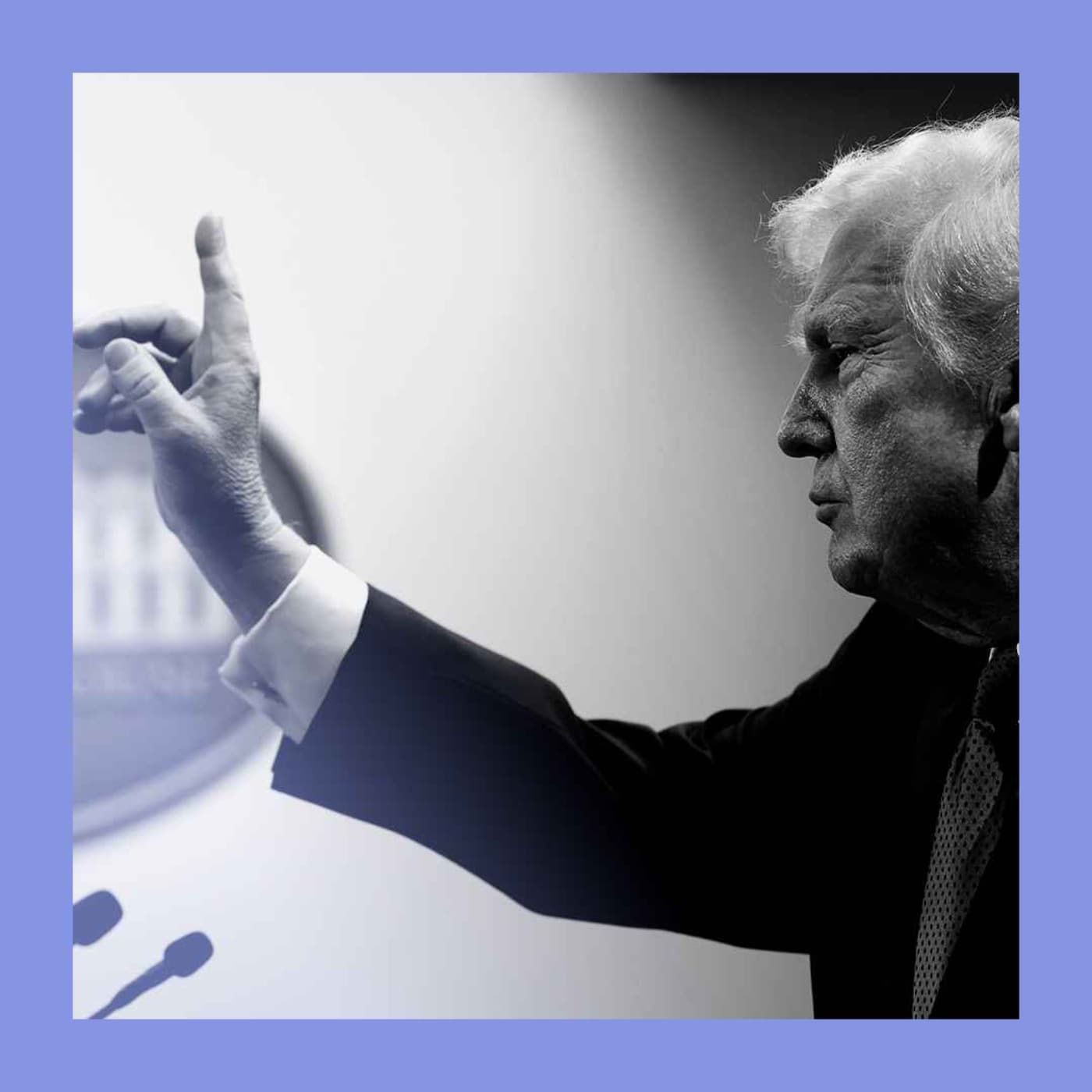
Trump’s Tariffs Struck Down
- Supreme Court Ruling: The majority of Donald Trump's tariffs were deemed illegal under the International Emergency Economic Powers Act (IEEPA).
- Ruling implies Congress holds the authority over taxation, significantly impacting Trump's ability to impose tariffs.
- This ruling is expected to reduce America's effective tariff rate by approximately 50%.
- Trump's Immediate Response:
- Expressed disappointment and criticized certain justices.
- Announced a temporary global tariff of 10%, which was later increased to 15% under a different legal authority (Section 122 of the Trade Act of 1974).
- Legal and Economic Implications:
- Section 122 allows temporary tariffs for up to 150 days, but requires justification of a balance of payments crisis, which may lead to more legal challenges.
- Businesses face uncertainty as the winners and losers in this new tariff regime will differ from the previous one.
- Refund processes for previously collected tariffs (over $100 billion) remain unclear, adding to economic uncertainty.
Political Climate in Australia
- Rising Populism: The One Nation party, led by Pauline Hanson, is gaining traction and challenging the established Liberal-National coalition.
- One Nation targets rural voters, potentially leading to significant losses for the National Party.
- Consequences for the Liberals:
- Recent leadership changes and the loss of traditionally secure urban seats to independent candidates demonstrate the erosion of the Liberal Party's electoral base.
- There is a visible struggle within the party to address these challenges, with some advocating for a shift to the right on issues like immigration.
- Future Prospects:
- The Liberal Party's ability to form a government may be compromised by the rising influence of populist parties and independents, leading to a fragmented political landscape.
The Enduring Appeal of Agatha Christie
- Cultural Significance: Agatha Christie, the best-selling novelist of all time, continues to be popular despite mixed critical reviews.
- Factors contributing to her success include:
- Unique, unlikely protagonists that resonate with readers.
- Isolated settings that create a sense of nostalgia and allow for narrative closure.
- Exceptional plot crafting that keeps readers engaged.
- Legacy: Christie's prolific writing (66 novels, 150 short stories) played a significant role in her lasting popularity, showcasing her dedication to the craft.
---
Conclusion This episode of Economist Podcasts delves into significant developments in U.S. and Australian politics, along with a cultural exploration of Agatha Christie’s legacy. The discussion emphasizes the interplay between judicial rulings, political shifts, and cultural narratives, providing listeners with a comprehensive understanding of current global issues.
Listening Options For more insights, listeners are encouraged to subscribe to Economist Podcasts+ for access to additional content.
Written by AI. May contain mistakes. Listen to the episode to check what was said.
Chapters
Tap a time to open that second in VOPopulist Movements and Cultural Insights
1:28 to 2:07
Explore the rise of Australia's populist right and its impact.
“A surging populist right movement in Australia is now the best polling conservative party in the country, and that is picking away at one of the most persistent coalitions in the Western world.”
Supreme Court Strikes Down Trump's Tariffs
2:07 to 2:50
The Supreme Court's decision on tariffs challenges Trump's presidency.
“On Friday, the Supreme Court kicked hard at one of the legs of Donald Trump's presidency.”
Trump's Response and New Tariff Strategies
2:50 to 5:10
Trump's immediate reaction and new strategies post-Supreme Court ruling.
“Trump, never one to take a court defeat gracefully, has more taxing tricks at the ready.”
Uncertainty in the Tariff Landscape
5:10 to 8:05
Discussing the implications of tariff changes and their effects on businesses.
“They don't want to be open to accusations of raising the cost of goods when voters are already very worried about affordability.”
The Refund Dilemma and Economic Impact
8:05 to 9:06
Exploring the complexities of refunding illegally collected tariffs.
“for 10 % tariff rates and now could face something higher.”
The Broader Implications of the Ruling
9:06 to 10:22
How the Supreme Court's ruling might signal shifts in judicial relations with Trump.
“juice the economy ahead of the midterm elections, and that could actually benefit Donald Trump.”
Evolution of Australian Politics
11:19 to 12:20
A look at the historical context of Australian politics and recent changes.
“For the entire post-war period, the governments in Australia have sloshed gently between two types.”
One Nation's Disruptive Impact
12:20 to 13:19
Examining how One Nation is affecting Australia's political balance.
“On February 13th, they ousted their first female leader.”
Challenges Facing the Liberal Party
13:19 to 14:00
Discussing the current struggles of the Liberal Party in Australia.
“Well, the Liberals have governed in coalition with the National Party since the end of the Second World War.”
The Impact of One Nation on Australian Politics
14:00 to 19:10
Explore how One Nation is reshaping the political landscape in Australia.
“What is it about One Nation that's messing with the equilibrium of Australian politics?”
Show all 11 chapters
Agatha Christie's Enduring Popularity
19:10 to 23:01
Understand why Agatha Christie remains a beloved author decades after her death.
“Agatha Christie is the best-selling novelist of all time, but that doesn't mean everyone likes her.”
Transcript
Automatic transcript. May contain errors.0:00Rachana Shanbhogue:If your eyes are the windows to your soul and your glasses are the windows to your eyes, then it's pretty important to find your perfect frames. That's why at Warby Parker, we've made shopping for eyewear as easy and fun as can be. Peruse endless styles in our stores or use our app to virtually try on frames and get personalized recommendations. To find your next favorite pair of glasses, sunglasses, or contact lenses, or to locate your nearest Warby Parker store, head over to WarbyParker.com. That's WarbyParker.com.
0:30Jon Fasman:We optimize hydration, movement, supplements, and sleep, but most people completely ignore the air they're breathing. And when your air is off, your body feels it first. The Blue Signature Air Purifiers by Blue Air quietly remove airborne pollutants, odors, smoke, and allergens, supporting deeper sleep, better recovery, and clearer focus. It's the most customizable air purifier you can get, with exclusive accessories designed to fit your space and your style. Visit BlueAir.com and use code SIGNATURE30 to elevate your wellness routine.
1:06Jon Fasman:The Economist
1:13Jon Fasman:Hello and welcome to The Intelligence from The Economist. I'm your host, Jason Palmer. Every weekday, we provide a fresh perspective on the events shaping your world.
1:28Jon Fasman:A surging populist right movement in Australia is now the best polling conservative party in the country, and that is picking away at one of the most persistent coalitions in the Western world. And you can't argue that Agatha Christie wasn't prolific, but plenty have argued that she wasn't actually all that good. Our culture correspondent digs into the secrets of her enduring success.
2:06But first...
2:13Jon Fasman:On Friday, the Supreme Court kicked hard at one of the legs of Donald Trump's presidency. Mr. Trump had invoked a 1970s-era law, the International Emergency Economic Powers Act, or AEPA, claiming it allowed him to set tariffs whenever and on whichever country he liked. Six of the nine justices, including three conservatives, said, nope, the peacetime power to set taxes lies with Congress. Instituting and enforcing those tariffs was messy, to say the least. Unwinding them, refunding them will be messier still. And Mr. Trump, never one to take a court defeat gracefully, has more taxing tricks at the ready.
2:56Jon Fasman:Better deals for some, worse deals for others, and headaches for all involved.
3:01Rachana Shanbhogue:So this is a totemic policy of Donald Trump's that's been struck down, and estimates suggest that the ruling would lower America's effective tariff rate by about half.
3:13Jon Fasman:Rachana Shanbog is our business affairs editor.
3:16Rachana Shanbhogue:But the president is already determined and is already rebuilding his tariff barriers brick by brick.
3:25Jon Fasman:Well, let's talk about that. How has he immediately responded to this ruling?
3:29Rachana Shanbhogue:So shortly after the Supreme Court ruling, Donald Trump held a press conference where he said he was deeply disappointed by the decision. And I'm ashamed of certain members of the court, absolutely ashamed for not having the courage to do what's right for our country. He thought that the judges who had voted with the majority were unpatriotic. Well, I think that foreign interests are represented by people that I believe have undue influence, have a lot of influence over the Supreme Court. And he also announced a temporary global tariff of 10 percent on all international trade coming into America, which then the next day he increased to 15 percent.
4:12Jon Fasman:Under what authority, though?
4:14Rachana Shanbhogue:So instead of using the International Economic Emergency Powers Act, which is what the Supreme Court said, the use of that was illegal. Instead, he's using something called Section 122 of the Trade Act of 1974. And that only allows temporary duties for up to 150 days. So this 15 % tariff will be in place for 150 days. And after that, we're not quite sure what's going to come. Now, this authority hasn't been used before and it relies on the administration claiming that America faces fundamental international payment problems, that there's a large and serious balance of payments deficit, which is highly debatable and means that this authority too could be open to legal wrangling.
5:00Rachana Shanbhogue:There is another option here, which is implicit in the Supreme Court decision, which would be to go through Congress and get tariffs approved by Congress. But it's really hard to see that happening. Lots of lawmakers have slim majorities. There are midterms coming up. They don't want to be open to accusations of raising the cost of goods when voters are already very worried about affordability.
5:25Jon Fasman:But essentially, right out of the gate here, President Trump is doing more or less what we thought he'd do, what he said he would do, which is basically replace that system of tariffs with other kinds of tariffs over which he has clearer control.
5:36Rachana Shanbhogue:Yes, that's right. So it was expected that the Supreme Court would strike down these reciprocal tariffs and that the Supreme Court would say that the use of IEPA was illegal to impose tariffs. So the administration has had some time to think about what a plan B might look like. Now, Section 122 is one part of that, but another option is to rely on sector-specific or country-specific tariffs under Sections 232 and 301. And these appeal to national security arguments. They also argue that some trade discriminates against America. These require long-running investigations before tariffs can be put into place, so Donald Trump loses some flexibility.
6:20Rachana Shanbhogue:but it does mean that he can reassemble his tariff wall.
6:25Jon Fasman:But in the meantime, I mean, as from the start with this, this entire tariff effort, it's led to even more uncertainty or renewal of uncertainty.
6:33Rachana Shanbhogue:Yeah, that's right, Jason. Even if America's effective tariff rate ends up pretty close to where it was before the Supreme Court ruling, there's still uncertainty for businesses here because the precise winners and losers after the ruling will change. Some businesses might find that they do slightly better than they did in the old regime. And we know that uncertainty over tariffs has already been a drag for them. It's already made them uncertain about hiring and investing. And that's just going to continue.
7:04Jon Fasman:And as for the countries that had already struck bilateral deals trying to avoid the previous tariff, well, they may feel stiffed again.
7:12Rachana Shanbhogue:Yes, I mean, the result is just complete confusion. For example, the European Parliament has said it's going to delay ratifying the agreement that was struck between the EU and America last summer because it's not quite clear what's happening. Indian officials were meant to travel to Washington this week to talk about implementing their trade agreement. That's on hold now. What seems to be the case is that some countries that had quite high tariff rates are going to benefit in this new temporary regime. Those countries include China, Brazil, India, parts of Southeast Asia, Canada and Mexico, if you remember, had to face an extra tariff because of the so-called fentanyl emergency, and the Supreme Court has said that's illegal.
7:57Rachana Shanbhogue:So those tariffs are coming off. But there are some countries that are going to be losing in this Section 122 world, and that includes Britain, for example, which had struck a deal quite early on for 10 % tariff rates and now could face something higher. So in a sense, there's a disadvantage for those countries that went early to strike a deal.
8:16Jon Fasman:And what about the money that countries have already spent to accommodate the tariffs that were there before, that giant pot of money that was illegally collected?
8:24Rachana Shanbhogue:It's estimated that companies have paid more than$100 billion in these tariffs and that will now need to be refunded. Everyone from Brett Kavanaugh, one of the dissenting judges, the president to Scott Bessent, the treasury secretary, has been talking in the past couple of days about how difficult this refund process is going to be, figuring out what sort of paperwork the beneficiaries would need to file, and so on. So this question of refunds and how they're going to be delivered is still extremely unclear. It's another source of uncertainty for businesses. If they do come quickly, there's a bit of an irony here, because it might actually help juice the economy ahead of the midterm elections, and that could actually benefit Donald Trump.
9:11Jon Fasman:But what about more broadly the tenor of the ruling, the fact that this was such a flagship policy for Mr. Trump? There is a suggestion here that the Supreme Court is being less emollient, let's say, than it has been earlier in Mr. Trump's term.
9:25Rachana Shanbhogue:I think you're right, Jason. Over the first year of Trump's second term, we didn't really see much confrontation between the court and the president. and with this case a case that was on the court's regular docket not the emergency docket justices had a chance for a full briefing and to listen to oral arguments and they decided to strike down the tariffs and the one case to be watching now regards the firing of Lisa Cook now as you might remember the administration wants to sack Ms Cook who is a governor on the Federal Reserve Board and what's at stake here is the very independence of the central bank and so the key case to be watching next is what happens there.
10:06Jon Fasman:Rajna, thanks very much for joining us.
10:08Rachana Shanbhogue:Thanks for having me, Jason.
10:22Rachana Shanbhogue:Taking care of your eyes shouldn't be a hassle. That's why Warby Parker is a one-stop shop for all your vision needs. Our prescription glasses and sunglasses are expertly crafted and unexpectedly affordable. Stop by a nearby store or use our app to virtually try on frames and get personalized recommendations. Did we mention we offer eye exams and take vision insurance too? For everything you need to see, head to your nearest Warby Parker store or visit warbyparker.com today. That's warbyparker.com. Youth mental health is a complex challenge that requires comprehensive solutions. We must strengthen after-school programs.
10:59Rachana Shanbhogue:We must make digital literacy tools available in our schools. We must work with mental health professionals to support children. And we must empower mentors, educators, and parents to keep kids happy. Learn more about our commitment to finding lasting solutions at empowerourfuturecoalition.com slash solutions. Paid for by the Coalition to Empower Our Future.
11:28Jon Fasman:For the entire post-war period, the governments in Australia have sloshed gently between two types. Ones led by the center-left Labour Party, or those led by a perpetual coalition that contains the Liberals, confusingly a conservative party, and the Nationals, a smaller and even more conservative one. Not many independents, not many spoiler parties. Until recently.
11:53Rachana Shanbhogue:Activists would think that I'm divisive. I'm not divisive. No, you're not. I just want to pull people together to be proud who we are and live in peace.
12:04Jon Fasman:Pauline Hanson and her anti-immigration One Nation party are spoiling for a fight. Polls in January suggest that One Nation is now the most popular conservative party in the country. It's upending all of that gentle sloshing. The liberals are in disarray. On February 13th, they ousted their first female leader.
12:25Rachana Shanbhogue:Less than nine months into her tenure, Susan Lee is gone, no longer the liberal leader, and quitting politics.
12:32Jon Fasman:Her successor has his work cut out to right the ship on the political right. And he knows it.
12:39Jason Palmer:Well, after winning the Liberal Party leadership, Angus Taylor issued a warning. It is clear we are running out of time. I won't mince words. The Liberal Party is in the worst position that it has been since it was founded in 1944. And that's no hyperbole. Aaron Connolly is our Asia diplomatic editor. At the last election in May 2025, the Liberals suffered their gravest electoral defeat since it first contested an Australian election in 1946. And surveys suggest it would fall even farther at the next election.
13:14Jon Fasman:So let's wind back here and give me sort of a thumbnail sketch of Australian politics on how we got to this point.
13:21Jason Palmer:Well, the Liberals have governed in coalition with the National Party since the end of the Second World War. And the Liberals primarily contest the cities. And the National Party mostly holds rural Australia. Liberal voters have tended to skew more affluent and tend to be more centrist on social issues. And national voters tend to favor a bigger state and tend to be more culturally conservative. But this has been a really successful arrangement. The two parties have governed together for nearly two-thirds of the period since the Second World War, and they've worked together in opposition for the rest.
Read the full transcript
13:55Jon Fasman:But in some way, they are threatened by the rise of One Nation, a story we've seen play out all over the world where a harder right party surges ahead. What is it about One Nation that's messing with the equilibrium of Australian politics?
14:09Jason Palmer:One nation really vies for the same rural voters that the National Party does. And right now, it's just eating the National Party alive. If voters cast ballots as polls now suggest that they would, the Nationals would be wiped out. And they've twice since the last election dramatically exited the coalition and then rejoined days later to try and put some distance between themselves and the Liberals. But, and this is the key point, the Liberals also have problems. Since 2018, they have been defeated in seven of their one-time urban strongholds by independent candidates. These candidates, they mostly espouse traditional liberal policies on the economy, their free market, but they differ mainly in arguing for stronger action to tackle climate change.
14:53Jason Palmer:While the liberals' color is dark blue, these independents have become known for their shared use of teal.
14:58Jon Fasman:But Aaron, seven seats doesn't sound like such a big deal. This does not sound like a dramatic loss.
15:03Jason Palmer:You're right, Jason, but the Liberal Party used to be one that could win the outer suburbs, but also the cities. And when you think about these seats, which have been held by the Liberal Party, in most cases uninterrupted since it was first formed, these are suburbs overlooking Sydney Harbour. They've produced two of the last four Liberal Prime Ministers. And so losing these seats was not just a shock to their identity, but it was also a real challenge to the electoral math for the Liberals if they're going to try and form another government.
15:32Jon Fasman:And I know you spent some time in Australia speaking with conservative politicians across the board. Did you get a sense that they have a plan here?
15:39Jason Palmer:Depends on who you talk to. Mr. Taylor, the Liberal Party's new leader, is signaling a forthcoming shift to the right on immigration, and his supporters hope that that will ease tensions within the coalition with the nationals and also slow the bleeding of the coalition's supporters to One Nation. I spoke to Senator James Patterson, who's a rising star within the Liberal Party. He argues the teal independent seats can be won back without moving to the center on climate or immigration. And then on the other hand, you have someone like Malcolm Turnbull, who's a recent liberal prime minister. In fact, his constituency was one of those that overlooked Sydney Harbour.
16:16Jason Palmer:How big a challenge is One Nation? Is this a serious thing? I think it is a big challenge. And he warns that you cannot out Hansen, Pauline Hansen, referring to the One Nation leader who's made hostility to immigration or brand for the past 30 years.
16:32Aaron Connelly:You cannot outdo her. And of course, if you then say this is the big issue, this is the big issue, people will say, oh, I'd rather vote for the real deal.
16:44Jason Palmer:But there's another problem, which is Australia, unlike some other democracies that are experiencing this shift to the populist right can't afford economically to shut down skilled immigration to Australia or to dramatically reduce numbers in the ways that some on the populist right are calling for.
17:03Jon Fasman:But nevertheless, the momentum, as you say, is with One Nation at the moment. Do you see its vote share just rising and rising here?
17:10Jason Palmer:Well, senior liberals claim that Pauline Hanson is a liability. She's fallen out with most of her colleagues over the last 30 years. In fact, two-thirds of those who have been elected on a One Nation ticket over the last 30 years have left the party before their parliamentary terms have finished. And so they say she won't be able to win enough defectors and keep enough defectors in the party to win more than a handful of seats. One test of that assumption will be the recruitment of Barnaby Joyce, who is a former Nationals leader and Deputy Prime Minister, who has just joined One Nation. And Mr.
17:41Jason Palmer:Joyce is a good fundraiser, and he's popular in parts of rural Australia, and so could be an asset to One nation if Ms. Hansen can keep him in the party. But Australians of all political colors often say that the country's system of compulsory and preferential voting will drive outcomes to the center. And so they dismiss the challenge that one nation presents. But those systems might also create an opening for the populist right. A forthcoming by-election will give some hint to the truth of that. But in the meantime, the role that a strong center-right opposition party would normally play in Australia and elsewhere, calling for higher defense spending, greater fiscal discipline and lower taxes.
18:22Jason Palmer:The Liberal Party isn't really playing that role. And so the Labour Party is skating by without an effective challenger.
18:30Jon Fasman:Well, that's sort of exactly the point here, isn't it? That one nation is eating the lunch of the nationals and the teals are eating the lunch of the liberals and the coalition in opposition or in government kind of doesn't hang together if that carries on.
18:45Jason Palmer:Exactly, Jason. You know, one possibility is that after the election, the right in parliament will be divided between one nation, the Liberals, and the Teals. And the Liberals will not be able to form a government if they need to rely on both the Teals and one nation who cannot work together. So the prospect of a center-right government coming to power in Australia over the next several elections is looking increasingly dim.
19:08Jon Fasman:Aaron, thanks very much for joining us.
19:10Jason Palmer:Thanks, Jason. It's always nice to talk to you.
19:34Aaron Connelly:Agatha Christie is the best-selling novelist of all time, but that doesn't mean everyone likes her. John Fassman is a senior culture correspondent. for The Economist. Take Edmund Wilson, for instance. Her writing is of a mawkishness and banality, which seems to me literally impossible to read. Or the similarly minded Julian Simons. The colonel's doctors, lawyers, and others who inhabit this world are no more real than Cluedo figures. The object of their scorn, meanwhile, is as famous as ever. Agatha Christie's books still sell, and her works continue to be adopted for film and TV. Why does she remain so popular 50 years after her death?
20:15Aaron Connelly:There are three reasons.
20:21Aaron Connelly:First, Christy favored unlikely sleuths. Think of Jane Marble, for instance, an elderly spinster fond of knitting and gardening who solves crimes in a dozen novels. Or Lady Eileen Brent, nicknamed Bundle. She stars in the Seven Dials mystery. She's a young woman who at first seems flighty and underwhelming, but turns out to be perceptive and, the most important quality for a fictional detective, relentless. Even Christie's most famous actual detective, Ercule Prarrow, isn't hyper-rational and physically brave like Sherlock Holmes, and he's not quick with a gun like his hard-boiled successors. Instead, he's short, chubby, prim, and finicky, with a carefully waxed mustache and dandyish clothes.
21:09Aaron Connelly:But these unlikely sleuths see things and pursue leads that elude police officers, who in Christie's books tend to be kind of high-bound and dim. This makes readers an accomplice in her detective's independence and ingenuity.
21:27Aaron Connelly:Christie favors isolated settings, country houses, locked rooms, sometimes an actual island, and most famously, the Orient Express. These settings turn every character into a suspect, and the Edwardian locales transport today's audiences into what may seem a simpler and more romantic time. These bounded settings let the narratives restore a sense of order at the end. Unlike the globetrotting stories of, say, Ian Fleming or John le Carré, in which an implacable enemy is just held off for a little while, Christie's smaller worlds really do feel put right when the cover closes or the credits roll.
22:09Aaron Connelly:Christy had an extraordinary gift for plot. Her books move along quickly, and her twists are cleverly disguised, right up until the moment of revelation, at which point they become obvious. One of the few exceptions might be The Seven Dials, which has a conspiratorial and slightly outlandish conclusion. But no one can write 66 novels, 150 short stories, and 25 plays and be perfect each time. And in that productivity lies the real secret to Christie's success. She just worked really hard and became good at her job. No twist there.
23:01Jon Fasman:That's all for this episode of The Intelligence. We'll see you back here tomorrow.
23:33Jason Palmer:trusted partner, offering the products you need all in one place from HVAC and plumbing supplies to lighting and more, and all delivered with plenty of time left on the clock. So your team always gets the win. Call 1-800-GRAINGER, visit grainger.com, or just stop by Grainger for the ones who get it done. That new thing? Yeah, we've got it. The Drop by GNC, bringing you all the newness that matters handpicked by the pros who actually know what's up and what's proven to work we keep you on top of the trends and dialed into what's next whether you're crushing it at the gym leveling up your game or thriving every day the drop by GNC is where the latest solutions in health and wellness land first non-stop innovation and fresh finds daily explore what's new and what's next on the drop by GNC
From the publisher
The smackdown by America’s Supreme Court was resounding: the bulk of Donald Trump’s tariffs were instituted illegally. He will try to rebuild his tariff wall, brick by brick—creating a new crop of winners and losers. Australia’s surging One Nation party threatens a conservative coalition that was already looking slightly shaky. And why Agatha Christie’s prolific output is so enduringly popular.
Guests and host:
- Rachana Shanbhogue, business-affairs editor
- Aaron Connelly, Asia diplomatic editor
- Jon Fasman, senior culture correspondent
- Jason Palmer, co-host of “The Intelligence”
Topics covered:
- America’s Supreme Court, Donald Trump, tariffs
- Australian politics, Pauline Hanson
- Agatha Christie
Get a world of insights by subscribing to Economist Podcasts+. For more information about how to access Economist Podcasts+, please visit our FAQs page or watch our video explaining how to link your account.
Hosted on Acast. See acast.com/privacy for more information.