
In short
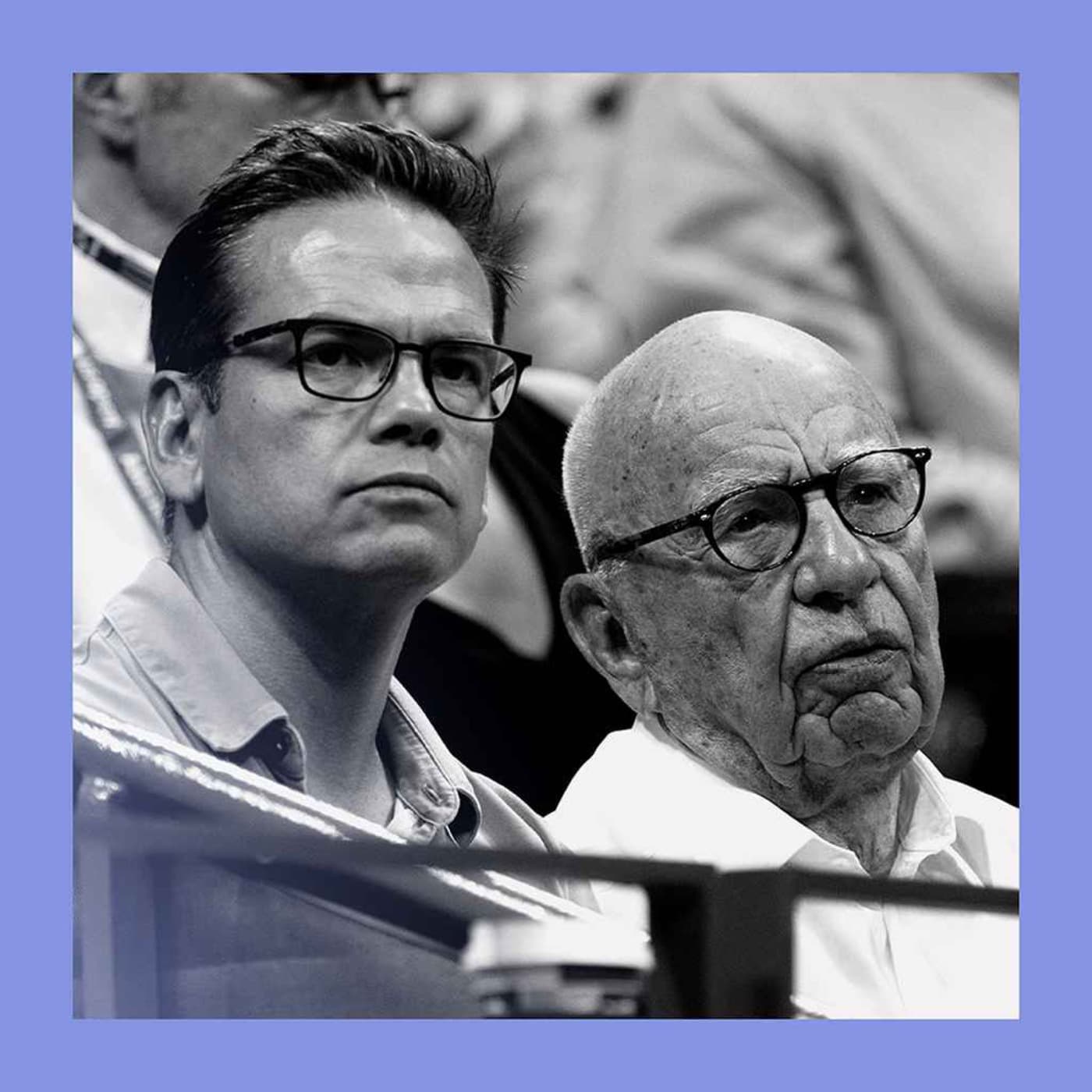
The episode of The Intelligence focuses mainly on two stories: (1) the Murdoch succession battle and what it means for Fox and News Corp, and (2) the spread of the synthetic drug “Kush” in West Africa, especially Sierra Leone.
Guest backgrounds
Tom Wainwright, The Economist’s media editor; he oversees two media companies with combined value over $40 billion. Ori Ogambi, The Economist’s Africa correspondent.
Key claims and notable examples
Lachlan Murdoch (prepared since his teens; worked in Sydney printing presses and at Fox in New York) is positioned to control Fox Corporation and News Corp after Rupert Murdoch’s death. A deal reportedly pays three rebel siblings (James and two sisters) about $1 billion each in exchange for giving up votes until at least 2050. The episode argues Lachlan will likely bring continuity, with pragmatic political flexibility and digital moves like Fox’s 2020 acquisition of Tubi.
Kush segment
Kush is described as a locally cooked mix of synthetic opioids and cannabinoids, reportedly containing nitazines. Examples include psychosis, delirium, agitation, deep self-harm/lacerations, appetite suppression, malnutrition, flesh-eating sores, swollen limbs, and increased STD risk. The episode cites Sierra Leone estimates of thousands dead, mass burials in Freetown since 2022, and a dose costing about 40 US cents. It also notes ingredients can be disguised at borders as mechanical lubricants/flavor sprays and that Kush is spreading to Guinea, Guinea-Bissau, and Liberia.
Written by AI. May contain mistakes. Listen to the episode to check what was said.
Chapters
Tap a time to open that second in VOEmerging Epidemic: Kush in Sierra Leone
1:29 to 2:27
Learn about the terrifying spread of Kush, a synthetic drug in West Africa.
“Kush, a synthetic drug, is both extremely dangerous and extremely cheap.”
The Murdoch Succession Drama
2:27 to 3:28
Exploration of Lachlan Murdoch's rise to power in the family media empire.
“Succession was kinda obviously based on this same drama.”
Lachlan's Journey to Control
3:28 to 5:01
Detailing Lachlan Murdoch's path and the complexities of his succession.
“He quit from Fox after falling out with the leadership there and moved back to Australia.”
The Nature of the Deal
5:01 to 7:45
Understanding the deal that secures Lachlan's control over Fox and News Corp.
“What's your take on that from their perspective, just to take around about a billion reportedly and then simply go away.”
Future of the Murdoch Empire
7:45 to 10:22
Speculations on Lachlan's leadership style and potential changes in strategy.
“And this is actually one that has nothing to do with media.”
Future of the Murdoch Empire
10:26 to 11:00
Speculations on Lachlan's leadership style and potential changes in strategy.
“and some of the world's best chefs to create professional quality cookware, knives, and kitchen tools.”
Kush: Understanding the Drug
11:00 to 14:00
Insight into Kush, its effects, and the growing concern in Sierra Leone.
“Um, tell me about the first time you discovered Kush.”
The Rise of Synthetic Opioids in Sierra Leone
14:00 to 18:30
Learn about the emergence and dangers of synthetic opioids like Kush in Sierra Leone.
“So when other drugs have become more expensive, drugs like Kush are able to stay quite cheap.”
The Impact of Fashion on Identity
18:30 to 24:21
Explore how Giorgio Armani's designs transformed fashion and identity in the modern era.
“The End if the tablecloths were wrong or if the lights were not right.”
Armani's Legacy and Future
24:21 to 25:21
Understand the concerns surrounding the future of the Armani brand after its founder.
“He was still intensely worried about what would happen to the details of things.”
Show all 11 chapters
Armani's Legacy and Future
26:44 to 27:07
Understand the concerns surrounding the future of the Armani brand after its founder.
“to create professional quality cookware, knives, and kitchen tools.”
Transcript
Automatic transcript. May contain errors.0:00Rupert Murdoch:This podcast is sponsored by Made In Cookware. Made In partners with multi-generational artisans and some of the world's best chefs to create professional quality cookware, knives and kitchen tools. Their products are trusted in Michelin-starred restaurants worldwide and designed to perform just as well in your kitchen. From five-ply stainless clad to carbon steel, every piece is built to last and made to actually make you a better cook. Discover award-winning cookware at MadeInCookware.com.
0:33Giorgio Armani:This intelligence podcast is sponsored by Backmarket, the leading global marketplace for refurbished tech. When the kids need phones, laptops, or tablets for school, buying refurbished tech makes sense for families trying to save money without sacrificing quality. At Backmarket, tech costs up to 50 % less compared to new. All devices have been professionally refurbished and come with a one-year warranty and 30-day return policy. Start saving money. Visit Backmarket.com or the Backmarket app to shop now.
1:06Giorgio Armani:The Economist
1:14Rupert Murdoch:Hello and welcome to The Intelligence from The Economist. I'm Rosie Bloor.
1:18Giorgio Armani:And I'm Jason Palmer. Every weekday we provide a fresh perspective on the events shaping your world.
1:28Rupert Murdoch:A terrifying new epidemic is sweeping the streets of Sierra Leone and other countries in West Africa. Kush, a synthetic drug, is both extremely dangerous and extremely cheap.
1:42Giorgio Armani:And you know why the Carabinieri, Italy's national police force, look so sharply dressed? Because their uniforms were designed by Giorgio Armani. Our obituaries editor looks back on the life and career of a man with an unmatched eye for detail.
2:05Giorgio Armani:First up, though.
2:13Rupert Murdoch:It doesn't even make any sense! I'm the eldest boy!
2:19Lachlan Murdoch:I am the eldest boy!
2:22Giorgio Armani:It really is a story that could have come out of the HBO show Succession. Actually, other way around. Succession was kinda obviously based on this same drama. The Murdoch family and control of its media empire. Now, maybe the longest job interview in history has ended. Lachlan Murdoch, he's the eldest boy, will have control of Fox Corporation and News Corp when his 94-year-old father, Rupert, dies. So what can the world expect from media's newest mogul? Lachlan Murdoch has been preparing for this moment for his whole lifetime. Tom Wainwright is The Economist's media editor. He's now in charge of two media companies with a combined value of more than$40 billion, and arguably an influence that's even more powerful than that with brands like Fox News, the New York Post, and the Wall Street Journal.
3:17Giorgio Armani:So this deal makes Lachlan one of the world's most powerful people for decades to come. and let's go back this is as you say a sort of lifelong ambition story for him how did he find his way into into contention well he's been involved in the family firm since he was a teenager i mean he took a gap year and during that gap year he spent some time working at the printing presses in sydney so he's been at this for a long long time after he finished university he went to work for the family newspapers in australia and after that he moved back to work for Fox in New York. And it's been a bit of a bumpy ride.
3:51Giorgio Armani:He quit from Fox after falling out with the leadership there and moved back to Australia. After that, a lot of people thought that his younger brother, James Murdoch, was the more likely successor. But 10 years later, Lachlan returned to the fold and pretty quickly re-established himself as the favourite. James, meanwhile, left the company, apparently unhappy with the political direction that it was taking. And Lachlan really zoomed into pole position once again. But this has been, let's call it acrimonious, right? This required a deal to get it through. What is the nature of the deal? Well, Lachlan's been in charge now for a while.
4:23Giorgio Armani:Rupert Murdoch stepped down officially in 2023 and Lachlan was named the chief executive of Fox and the chairman of News Corp. But people were a little uneasy, or he was anyway, because the threat remained that his siblings, younger brother James and two older sisters, could use their votes that they get with their shares in the family trust to outvote Lachlan after the eventual death of their father. And what has happened now, it seems, it's a complex deal, but the upshot is that the three rebel siblings, if you like, have supposedly given up their votes in exchange for a payment of what's reported to be about a billion dollars each.
4:58Giorgio Armani:And this gives Lachlan a controlling stake in both companies, which lasts until at least 2050. What's your take on that from their perspective, just to take around about a billion reportedly and then simply go away. It's a little surprising. These are people who are already not short of money and they've had this very public acrimonious fight over the future direction of the company. So I was a bit surprised when they seemed to give it up in exchange for some more cash. It remains to be seen what happens next and what they do with this, but perhaps they just felt that that was the way things were going and decided that they'd had enough.
5:37Giorgio Armani:Either way, they haven't done too badly out of it, it's fair to say. Clearly. But as for Lachlan himself, I guess the question is how much he's going to be like his dad, an absolute force in media for absolutely decades. Are they of a similar temperament? Well, he's going to be a tough act to follow, isn't he? I think they're similar in some ways, but he seems to be somewhat less frugal than his dad. There's a story from when Rupert Murdoch was first in Hollywood in the 1980s. A lot of executives there were amused that this guy walks around in shirts from Walmart and sometimes used to walk to work at the Fox lot, which was a four mile walk from his home.
6:11Giorgio Armani:Lachlan, meanwhile, is maybe has slightly different tastes. He recently bought himself one of the most expensive homes in Los Angeles, a 10 acre mansion in Bel Air. The more important stuff is the political outlook though. And here, I think it seems that he shares his dad's political flexibility. The Murdochs are often characterized as being right wing, understandably but I think they're more than anything they're pragmatic and if you look at the history of Rupert Murdoch's political allegiances in the UK for example his newspapers switched their support from the Conservatives to the Labour Party in 1997 just as it became clear that Labour were about to win and similarly Rupert Murdoch initially despised Donald Trump but got behind him after it became clear that he had momentum and it seems as if Lachlan may be similarly pragmatic.
6:58Giorgio Armani:There's a story in a book by Michael Wolfe that in 2016, in his home, he had Lurol printed with Donald Trump's face on it. And yet now he clearly sees that Trump is good for business. So I suspect he may be ideologically pragmatic and somewhat flexible in the same way as his dad. But will he have the same shrewd, maybe even ruthless business sense though, that got the company so far? Well, Rupert Murdoch was probably one of a kind. And when it comes to Lachlan Murdoch, I think you're going to hear the word Nepo Baby a lot. I think it's fair to ask whether this guy would be in charge of a$40 billion company if he had a different surname.
7:34Giorgio Armani:But to give him some credit, he's made some good calls over the years. I think one of the clearest ones was his enthusiasm for an investment that News Corp made a long time ago in a company called REA Group. And this is actually one that has nothing to do with media. It's a property listings website like Zillow or Rightmove. But they made a big investment in it back in 2001 when it was worth almost nothing and it's now worth more than 20 billion dollars so that was one of the great deals of recent years and Lachlan really was the brains behind that he's also contributed quite a lot in terms of digital experiments and this is something where Rupert Murdoch hasn't shown maybe as much flair as others fair enough for somebody who's now 94 and comes very much from the analog era Lachlan meanwhile has pushed into this and in 2020 Fox bought a streaming company called Tubi which is an ad-supported free streaming service.
8:24Giorgio Armani:People didn't think very much of it at the time, but since then it's actually overtaken some of its rivals and seems to be doing pretty well. Fox has just the other month launched a new streaming service as well called Fox One. So I think we're going to see more digital experiments there. And to Lachlan's credit, it's an area where so far he seems to have made some good calls. And so that's the path you see for the Murdoch companies then, is a fairly steady hand, maybe a little on the spendy side, maybe a little more digital, but business as usual. I think so. I mean, certainly politically speaking, I think this spells continuity rather than change.
8:56Giorgio Armani:There was a time when people were wondering whether James and Elizabeth and Prudence, the other siblings, might use their votes to stage a kind of revolution and turn Fox News into MSNBC or something like that. And that is now not going to happen. I think we're going to see more continuity than change, certainly. but the fact that this feud now has been settled and there's now a bit more stability means that it could be time for the companies to make some bigger moves one that people have speculated about is whether or not the two companies fox and news corp could be combined it's something that rupert murdoch tried to do a few years ago and shareholders didn't like the idea some people wonder if lachlan might now give it another go there's also the possibility that fox could bulk up a bit it's an interesting time in hollywood there's a lot of consolidation in the air a lot of smaller streamers are struggling to get the kind of scale that they need to make sustainable profits.
9:46Giorgio Armani:And so some people are wondering whether Fox could combine perhaps with another studio. Certainly it's something that people have been talking about. And so with that succession question answered, it could be time for the Murdoch empire really to get more into the deal-making business once again. Thanks very much for your time, Tom. Thank you.
10:22Rupert Murdoch:This podcast is sponsored by Made In Cookware. Made In partners with multi-generational artisans and some of the world's best chefs to create professional quality cookware, knives, and kitchen tools. Their products are trusted in Michelin-starred restaurants worldwide and designed to perform just as well in your kitchen. From five-ply stainless clad to carbon steel, every piece is built to last and made to actually make you a better cook. Discover award-winning cookware at MadeInCookware.com.
11:00Um,
11:02Lachlan Murdoch:tell me about the first time you discovered Kush. Um, something like three years back. Anyema is a 25-year-old woman from Sierra Leone and we found out later in this interview that she's struggling to battle an addiction with KUSH. Ora Ogambi is our Africa correspondent. She isn't the only one. The drug is sweeping the region's streets and campuses and in the process, it's destroying lives. But nobody no one for help me again. You know, she said I don't change, you know, they say I'm about me again.
11:42Rupert Murdoch:Nobody.
11:46Lachlan Murdoch:Ori, tell me how widespread drug use is in Sierra Leone. Well, it's quite hard to tell just how many people are battling with drugs and addiction, but everyone I met in Freetown knew at least one person who was battling addiction. One estimate by the Klingendale Institute reckons that Kush has killed thousands across West Africa. It's killing so many people that the mayor of Freetown has had to set up a dedicated burial team to pick up abandoned bodies in the streets. These mass burials and cremations have been going on since 2022. And it's clear that it's quite a widespread problem.
12:21Rupert Murdoch:And of course, lots of people suffer side effects from using Kush, even if they don't actually die from it, right?
12:28Lachlan Murdoch:Well, exactly. And I think that's what's becoming most obvious. It's people in the streets who are battling psychosis, delirium and also agitation. So people seem really angry and it sometimes prompts self-harm.
12:40Rupert Murdoch:After smoking a substance which we did not know the name, we started seeing his girlfriend on the screen.
12:47Lachlan Murdoch:I spoke to one doctor and he was describing some of the patients that he came across.
12:52Rupert Murdoch:I went to bring her out. The process had lacerations. and then of course that was the psychotic behaviour.
12:59Lachlan Murdoch:Lacerations on his arm?
13:01Rupert Murdoch:Very deep lacerations on his arm.
13:02Lachlan Murdoch:Apart from just the psychosis and the agitation, it comes with other health risks as well. So it suppresses your appetite. If you don't know where your next meal is coming from, that might be a welcome thing, but that also means that your malnourished body is going to struggle to fight off other diseases. So you have flesh-eating sores, for example, that your body is not healing properly from. Your limbs are swollen. You're at a higher risk of having STDs, which is compounded by the fact that lots of people who are battling kush addictions are selling sex to get more kush.
13:30Rupert Murdoch:All right, what exactly is kush?
13:32Lachlan Murdoch:So there's been lots of misconceptions about what it is. It's a mishmash of drugs. But we now know, thanks to some research from Global Initiative, that it's actually a combination of synthetic opioids and synthetic cannabinoids. So it's a super cheap, locally cooked up drug. When I say super cheap, I mean one dose is going for 40 American cents on the streets of Freetown. and it's really addictive and really potent even in the tiniest amounts. Now this testing by Global Initiative also showed that it contains nitazines. Nitazines is a class of synthetic opioids that is several times more powerful than fentanyl so just to give you a sense of how fatal that can be even in very small amounts and because the key psychoactive ingredients that are used to make this drug are really easy to import you can disguise them at the border as mechanical lubricants and flavour sprays then you can bring in the ingredients and cook them quite easily, which keeps the prices low on the streets and makes the drug really accessible to people who are young and poor in cities like Freetown.
14:30Lachlan Murdoch:So has it taken over from other drugs? Well, exactly. So when other drugs have become more expensive, drugs like Kush are able to stay quite cheap. And so that's driven demand for it. It's believed now to be more common than heroin and marijuana. And that's partly because of that supply chain I was talking about. Unlike marijuana, which relies on crops, or heroin, which relies on the opium poppy, You don't have to think about crops when you're cooking Kush. It also doesn't have a smell in the way that marijuana does. And because, again, you need it in such tiny amounts to get such powerful highs, it's easy to move and transport without getting in much trouble.
15:04Lachlan Murdoch:Sometimes it's mixed with other drugs, which makes the likelihood of having accidental and fatal overdoses much higher. And local cooks of Kush have actually been developing harder varieties of it that are even more potent than the ones that we've been seeing and testing up until this point. it's taken over lots of other drugs but unfortunately that comes with even more fatal consequences.
15:26Rupert Murdoch:And what's the government doing about it?
Read the full transcript
15:29Lachlan Murdoch:Well I'd say they're doing their best. The president declared a national emergency on drugs last year and set up an anti-drug task force which has basically got lots of ministries of the Ministry of Health, Ministry of Education working to rehabilitate people and get them back into schools and off of drugs but it's really hard and it's not enough. They're going to need a lot more funding, they're going to need a lot more expertise, and they're also going to need a better understanding of what drugs they are actually trying to find. So their testing equipment is quite behind, but also you have to know what you're looking for to know what to test for.
16:01Lachlan Murdoch:They also have quite antiquated drug laws in Sierra Leone, where you actually still get in more trouble for just hanging around a drug den than you do actually cooking the drug, because locally cooking up drugs didn't used to be a big issue. The laws are quite out of date, but also the government doesn't quite have the capacity that it needs to deal with an issue of this scale.
16:19Rupert Murdoch:Are there other organisations and other things that are happening to try and help people like Niyama who you met?
16:25Lachlan Murdoch:Well exactly I mean I met Niyama at an organisation that works with young people to try and keep them off the streets and give them somewhere else to hang out that is not a drug den but I think ultimately this is going to take a lot more than just a few NGOs doing their little bit. Lots of the ingredients of Kush come from China. China needs to be scrutinising their exports a lot more. Some of the synthetic cannabinoids that are being picked up in Kush have been picked up in Europe for years. And if Europe clamped down on them a bit more, then that should also have positive knock-on effects for Africa.
16:56Lachlan Murdoch:You also need, again, the drug agencies to have better kit. You need the UN's drug agency to also be a bit more up to date with what's going on in the streets so that they can better support countries. It's going to take a big and concerted international effort. Countries need to secure their borders more. A lot of West African countries have very porous borders. So that also makes this a bigger issue than it needs to be because drugs move around. So it's going to take a lot of coordination and a very intentional effort.
17:22Rupert Murdoch:And talking about porous borders and the knock-on effect through Africa, is Kush spreading across the continent now?
17:29Lachlan Murdoch:Well, yes, it already is. I mean, Global Initiative have seen that the drug is being picked up in Guinea, in Guinea-Bissau, in Liberia already, for example. And the thing is, Sierra Leone has long been a gateway for drugs like cocaine. It's conveniently positioned in a way that makes it an easy gateway for the region. But the worry isn't just about Kush. Kush is dangerous, but it's more broadly about this class of synthetic drugs. Kush isn't the first synthetic drug to take the region by storm. Tramadol, for example, which is actually a legal opioid, has been rampant in the region since the 2010s.
18:03Lachlan Murdoch:And when that got more expensive, Kush propped up to fill the gap. But Tramadol's back on the streets now in even stronger variations. And the thing is with synthetics, like Kush, like Chamadol, is they're very fast evolving. And so when they come back onto the streets, they come back with new properties that can be more dangerous and more fatal, and that the government is even more clueless about. And so I think the hope is that research catches up to the streets. And in that process, you hopefully save more lives. All right. Thank you very much. Thank you so much for having me, Rosie.
19:06Rupert Murdoch:The End if the tablecloths were wrong or if the lights were not right. He once told a colleague that his tie was 1.5 centimetres too long and threw his outfit out. He agonised over how much of a woman's glove he ought to show. He worried too whether the lanterns outside his headquarters in Milan were the right sort, and how heavy the stationery in the branch offices ought to be. Worry, worry, worry. As a result, he was never called Giorgio by any of his staff. He was always Signor Amani, the man who was the arbiter of absolutely everything that impinged on his life. So if you were to show him that classic of tailoring an Englishman's suit, it was obvious that he would find things to criticize in it.
20:09Rupert Murdoch:What he wanted from a suit was movement, so that if he was wearing it, he'd be able to kneel down in front of a model to style a dress, or reach across a table to grab samples. So the first thing he did with a suit was to take the padding out. Then he cut the lining out, so that the whole thing sort of melted off the body. That was the effect of it. The trousers were made fuller, the buttons were made lower. The whole thing was lengthened. And he changed the material to it. It was made of using things like crepe, which were lighter and would fold more gracefully. And he changed the colours, not least, so that instead of dark grey, they tended to be sand, mushroom, biscuit.
21:00Rupert Murdoch:or even like mud. All these colours of nature rather intrigued him. So in the end he created a new sort of man, Armani Man.
21:16Rupert Murdoch:And he changed the way that women looked too because the same effect with suits also looked very good on a woman. It meant that they were wearing trousers that were a looser fit He also loved dressing women in long flowing evening gowns with embroidery. And all these fashion ideas he had by the late 1970s and he never changed them or adapted them very little. He didn't see the need to change. He was told off for being behind the curve and old fashioned. But in his book, if a look was supremely elegant, elegant rather than extravagant, There was absolutely no need to alter it. He criticised the fashion industry very severely for running after the latest trend.
22:09Rupert Murdoch:He didn't intend to do that. He even thought it was immoral. It was this simplicity that was really the key to his success. But what was really the key to his success was cinema.
22:27Rupert Murdoch:As he grew up in Italy in the war years and then afterwards, cinema was the greatest entertainment.
22:38Rupert Murdoch:He absolutely loved it and the images he saw then really formed his view of the world. He went further and he thought that life itself was cinema and his clothes were the costumes. He saw himself as a director and he wished sometimes he had been a film director. So when in 1980, his style flew to fame because it was worn by Richard Gere in American Gigolo, this was a very sweet moment for him. And after that, Hollywood flocked to his door. And he dressed stars as diverse as Sean Connery, Tina Turner, Diane Keaton, Jodie Foster, Tom Cruise. Bill Clinton wore him. Martin Scorsese wore him, and that was a particular compliment.
23:34Rupert Murdoch:He didn't let all this glitzy company go to his head, however. He was a very shy and reserved man.
23:45he'd set up his company with his lifetime partner and lover Sergio Gagliotti
23:52Rupert Murdoch:after Sergio died of AIDS in 1985 he was the sole stockholder in Armani it was his company he believed utterly in its independence he fought off all attempts by the big for French luxury brands to take him over. But it was a life that was very self-contained and quite lonely at times. He just devoted himself to the company. He was still intensely worried about what would happen to the details of things. Could there ever be anybody at the head of Armani who cared so much, who would care whether buttons were put on a suit in the right place or whether the milk in his chocolate range would come from the Piedmontese Alps.
24:50Rupert Murdoch:These tiny details that mattered so much to him, he felt he couldn't leave behind. And what would anyone do if they had a problem? Who would they go to if they could not go to him? He tried to think of himself as being immortal. But the problem was, as he knew, that once he went, it did not seem that anybody could really keep Armani, as he had endeavoured to keep it at the forefront of fashion for all those years.
26:02Giorgio Armani:The Intelligence We'll all see you back here tomorrow for the Weekend Intelligence, which returns to the subject of Britain's Reform Party and Nigel Farage, the man who could be the next Prime Minister. In just a few short months, polling numbers have shifted enormously. Does the party, does Mr. Farage, have a real plan, real policies? Or is the whole thing just vibes?
26:40Rupert Murdoch:This podcast is sponsored by Made In Cookware. Made In partners with multi-generational artisans and some of the world's best chefs to create professional quality cookware, knives, and kitchen tools. Their products are trusted in Michelin-starred restaurants worldwide and designed to perform just as well in your kitchen. From five-ply stainless clad to carbon steel, every piece is built to last and made to actually make you a better cook. Discover award-winning cookware at MadeInCookware.com.
From the publisher
A high-stakes tussle about who will take over Fox and News Corp from Rupert Murdoch has concluded; Lachlan, his eldest son, came out on top. Will the new boss be the same as the old boss? Our correspondent looks at kush, a synthetic opioid tearing through west Africa. And a look back on the life and style of Giorgio Armani.
Get a world of insights by subscribing to Economist Podcasts+. For more information about how to access Economist Podcasts+, please visit our FAQs page or watch our video explaining how to link your account.
Hosted on Acast. See acast.com/privacy for more information.