In short
This episode of The Intelligence from The Economist covers three main topics. First, China’s upcoming leadership reshuffle: Xi Jinping is almost certain to keep power at the next Party Congress, with succession rules changed in 2018 to allow “president for life.” James Miles (Economist Global China writer) says Xi has not signaled any successor; a key sign would be adding a civilian to the Central Military Commission, which he argues is unlikely before 2032. He claims Xi will likely appoint loyalists, not younger “groomed” officials, creating a “gerontocracy,” amid purges since 2022 (about a fifth of the Central Committee). Second, Europe’s tech prospects: Guy Scriven (Global Business writer) argues Europe has only 6 of the world’s top 100 tech companies, but may improve due to reversed talent flows, reduced reliance on unreliable US policy, and venture capital shifting away from China. He cites bright spots in climate tech, defense tech, and “deep tech,” including companies like Helsing and Quantum Systems, and notes European defense spending up about 40% (2023–2025). Third, a culture obituary: Michel Rolland (died at 78), a Bordeaux winemaker, is portrayed as a pragmatic scientist who helped vintners make riper, fruit-forward wines; examples include consulting during bad Bordeaux vintages, influencing Napa, and being featured in Mondo Vino.
Written by AI. May contain mistakes. Listen to the episode to check what was said.
Chapters
Tap a time to open that second in VOEurope's Evolving Tech Landscape
1:34 to 2:21
Explore how Europe's tech scene is changing and gaining momentum.
“When the big countries and regions for high tech are mentioned, Europe doesn't often get a look in.”
China's Leadership Reshuffle
2:21 to 3:08
Discuss the upcoming leadership changes in China and Xi Jinping's position.
“In China, a five-yearly churn of leadership posts is underway.”
Xi Jinping's Succession Strategy
3:08 to 5:50
Insights into Xi Jinping's approach to succession and maintaining power.
“So coming up to next year's party congress, the 21st, we'll be looking for signs as to whether he might actually, in spite of that, be lining up a successor.”
Challenges of Succession in China
5:50 to 8:12
Delve into the difficulties of establishing a stable succession plan in China.
“Xi Jinping was originally supposed to step down in 2022.”
Tensions in Chinese Politics
8:12 to 9:46
Examine the stress and tensions within the Chinese political elite.
“James, there's no shortage of younger Communist Party members, so why isn't he injecting younger blood into the Politburo and beyond?”
Europe vs. American Tech Ecosystems
11:52 to 14:07
Analyze Europe's position in technology compared to America and China.
“American companies make up about 56 and Chinese companies about 16.”
European Tech's Rise Amid American Missteps
14:07 to 17:08
Learn how American tech failures are creating opportunities for European startups.
“And that's meant that lots of European governments and to some extent European businesses are more worried about using American technology for everything they do.”
Bright Spots in European Tech
17:09 to 18:43
Explore the areas where Europe is making significant strides in technology.
“If you look at new exciting technologies like AI, it also seems way behind in a lot of the important parts of that, right?”
Challenges and Opportunities for European Innovation
18:44 to 19:46
Understand the potential hurdles and optimistic outlook for European tech development.
“as Trump seems like less and less of a reliable ally to NATO.”
Transcript
Automatic transcript. May contain errors.0:00If you felt stuck trying to lose weight, you're not alone. Enter Weight Loss by HERS. It's designed to support you in reaching your goals. And HERS now offers access to an affordable range of FDA-approved GLP-1 medications, including the WeGovi pill at its lowest price ever and the WeGovi pen. Even better, with a range of affordable GLP-1 options, HERS makes it simple to find an approach that fits your needs and your budget. If eligible, you'll get a treatment plan personalized to you and unlimited dosage changes as needed. It's weight loss designed to work with your life. Ready to reach your goals?
0:33Visit ForHers.com slash eligible to get personalized, affordable care that gets you. That's F-O-R-H-E-R-S dot com slash eligible. ForHers.com slash eligible. Based on advertised cash price for 30-day supply of medication only. Membership required, fee not included, and billed separately. Weight loss by HERS is not available in all 50 states. WeGovi is the registered trademark of Novo Nordisk AS. To get started and learn more, including important safety information, Wegovi clinical study information, and restrictions, visit ForHers.com.
1:19Hello and welcome to The Intelligence from The Economist. I'm Jason Palmer.
1:22Rosie Blau:And I'm Rosie Bloor. Every weekday, we provide a fresh perspective on the events shaping your world.
1:34When the big countries and regions for high tech are mentioned, Europe doesn't often get a look in. But our correspondent says that is changing, in part because Europe's few early tech winners are now spinning out more and more new ones.
1:49Rosie Blau:And Michel Rolland spent his school holidays riding a tractor and helping with the harvest. For him, there was no question of doing anything other than spending his life among vineyards. We remember the life of a master wine connoisseur.
2:11Rosie Blau:But first...
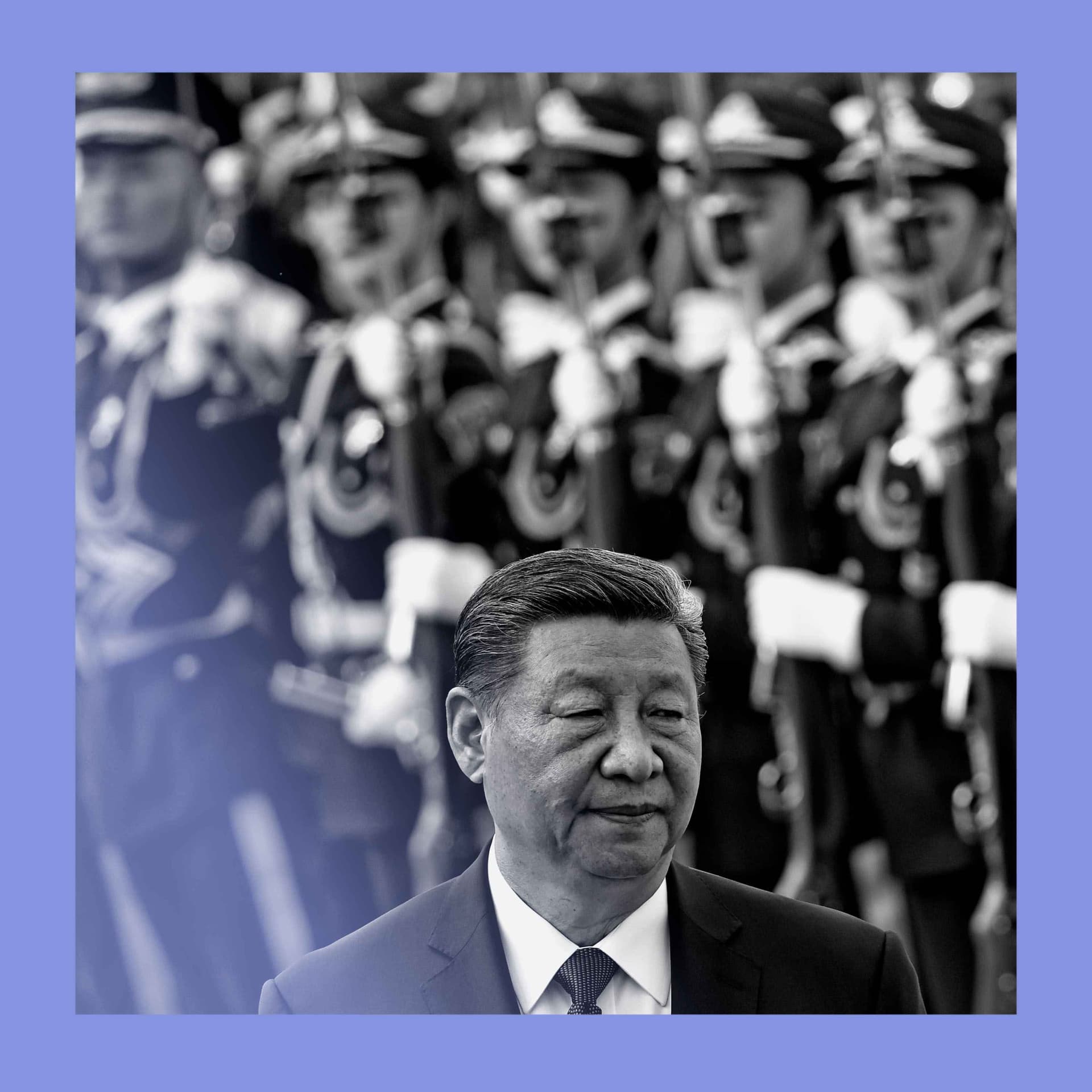
2:21Rosie Blau:In China, a five-yearly churn of leadership posts is underway. Hundreds of thousands of jobs will change hands in this giant reshuffle, moves that will affect every level except one. Xi Jinping, China's ruler, is almost certain to hold on to his position, which will be confirmed at next year's Pivotal Party Congress. All of which means some people are already wondering what might happen a further five years on, by which time Xi Jinping will be 79.
2:56Xi Jinping ripped up the succession rules in 2018 when he revised them to allow himself to be president for life.
3:08Rosie Blau:James Miles is our Global China writer. So coming up to next year's party congress, the 21st, we'll be looking for signs as to whether he might actually, in spite of that, be lining up a successor. James, for a number of decades, you've been a professional tea leaf reader of the Chinese Communist Party. What sorts of things are we looking for? And just talk us through the process. Well, we're just at the early stages now of a five-yearly churn of the Chinese leadership. And this is always a very stressful part of the Chinese political process. A couple of years are spent changing jobs at every level of the Communist Party and the state apparatus from bottom to top.
4:01and we saw this getting underway at the end of last year with elections in hundreds of thousands of villages across the country. That's a process that actually involves people casting a vote but of course it's a sham. The winners are decided in advance and the winners are almost always local Communist Party bosses and that then works up through the system this year with local party chiefs, government officials chosen. Eventually, it will reach the provincial level. And ultimately, this will lead to a Communist Party Congress late next year, which will see the party's ruling elite reshuffled massively.
4:49And only one job will remain for sure at the end of it in the same hands, and that will be Xi Jinping's.
4:57Rosie Blau:So tell me what we know about what happens at the top, the reshuffle of the ruling elite. Who fills those positions? Well, those positions are going to be filled by Xi Jinping's loyalists. We saw at the last Communist Party Congress in 2022 that he had filled the ruling Politburo with people who had worked closely with him, who were closely identified with him, and were clearly his yes men. So anyone who is not of that ilk, I think, is extremely unlikely to be in the frame for those very top slots. But I think what we won't see is the injection into it, crucially, of younger officials who are being groomed to take over from Xi Jinping at the Congress after that in 2032.
5:54I think that would go against what we've seen so far, which is Xi Jinping wanting to concentrate power in his own hands and wanting really nothing to do with the traditional kind of succession arrangements that his predecessors have been involved in.
6:10Rosie Blau:Xi Jinping was originally supposed to step down in 2022. He obviously abolished term limits. Are there any signs that he's preparing a successor now for in five years' time? None whatsoever. A key indication of succession arrangements being made would be the placing into the Central Military Commission, that's the armed forces' supreme body, of a civilian leader in addition to Xi Jinping. At the moment, Xi Jinping is the only civilian in that body. and another civilian is normally put into it in preparation for that person taking over as the supreme commander. We saw that in 2010 when Xi Jinping was placed in the Central Military Commission.
6:56Two years later, he took over as general secretary and commander-in-chief of the armed forces and then as president. That hasn't happened yet and is highly unlikely to happen before the next Congress in 2032. I think the last position that Xi would want to surrender is that of commander of the armed forces. That is the one that confers the most power of all of the three big jobs he's got. We would be possibly looking for those younger officials, not only in the Politburo, but also in the wider Central Committee. That's a body of the ruling elite that consists of more than 300 people. Those people might ultimately become candidates for membership of the Politburo or even to take over as General Secretary.
7:41But we see even at the level of the Central Committee, fewer and fewer younger people are getting jobs and even at the provincial level. So what we're seeing gradually is the formation of a new kind of gerontocracy in China, with Xi Jinping at the head of it, who is reluctant not only to take on people who are not his yes-men, but also reluctant to take on people who are yes-men of yes-men, because they are one step removed.
8:14Rosie Blau:James, there's no shortage of younger Communist Party members, so why isn't he injecting younger blood into the Politburo and beyond? Well, I think it's a problem that is hardwired into the system. It is extremely difficult to arrange a succession that doesn't prove turbulent. His predecessors tried and those succession arrangements fell apart. So you're kind of damned if you do and damned if you don't in China. Appoint a successor and things start getting tense between that person who has been identified as successor and the actual leader. Don't appoint a successor and the chance then of huge fighting once the leader has left the scene is enormous.
9:05And I think Xi Jinping may well have decided, why should I bother?
9:10Rosie Blau:Xi Jinping can't live forever. So what does happen next? Well, assuming that he remains in good health until the 22nd Party Congress in 2032, I think we're going to see more and more questioning among the elite as to what should happen. It may be that Xi Jinping himself doesn't really want to face up to this question. And don't forget that this reshuffle is taking place against a backdrop of huge stress already as a result of the purges particularly that have happened since the last Congress in 2022. About a fifth of the Central Committee has been purged since then. Maybe about a half of the top leaders of the armed forces, the People's Liberation Army.
9:56I mean, all of this, a huge upheaval within the elites. Of course, many officials who have been purged under Xi Jinping, who are resentful of that and are certainly eager to know whether they might have futures after Xi Jinping is gone. So you've got all this stress, all this tension, these questions being asked. And I think the possibility for more unexpected things to happen in Chinese politics over the next five years is really quite considerable.
10:29Rosie Blau:James, thank you very much. Thank you.
10:45Less support through telehealth, but it feels overwhelming and rushed. Check out orderlymeds.com now. Orderlymeds.com was built to be different. Here, you connect with real doctors who take the time to understand your goals, review your eligibility, and guide you through a plan that's right for you. Orderlymeds provides access to proven GLP-1 medications like semaglutide and terzepatide, including both name brand options and personalized compound versions when appropriate. So you have choices backed by clinical oversight, not guesswork. It's a simpler, more supportive telehealth experience designed around people who want clarity, care, and confidence in a weight loss journey.
11:23And your medication is delivered directly to your home in discreet packaging. So your experience stays private from start to finish. Do your research. Ask the right questions. Then visit orderlymeds.com slash podcast for an exclusive offer. Again, that's orderlymeds.com slash podcast. Individual results may vary. Not medical advice. Eligibility required. See site for details.
11:51If you take the world's top 100 tech companies divided up into regions, what you'll notice is that European companies account for only six of that 100. American companies make up about 56 and Chinese companies about 16. Guy Scriven is our global business writer. What this tells you is something that's been well known for a long time. Europe is a laggard when it comes to creating tech giants. But more recently, we've seen that Europe now has a chance to close that gap. Well, let's start with why that gap exists in the first place. There's plenty of people, plenty of money, plenty of talent. Yeah, that's exactly right.
12:35In a sense, Europe is a bigger consumer market than America. If you add in the EU, Norway and Britain, there's over 500 million people there. Its problem is that it's divided up by different languages, different cultures, different sets of rules and laws. And that makes it really hard for companies to scale in the same way that they can in America or China. Another problem related to the fragmentation is that Europe has rather shallow capital markets. And that means if you're a tech company trying to grow fast, it's harder to get the cash that you need to invest. But you hinted that something's changing.
13:14There's hope to close the gap. Talk me through it. Yeah, there's hope on the horizon. So probably two really big things are happening. The first thing is that China and America have been making quite big mistakes when it comes to nurturing their smaller tech companies in the last few years. And the second thing that's happening is that the few tech successes that Europe has had in the past decade or so are starting to help to nurture new companies and invest in them. And that's creating a kind of ecosystem and helping what techies like to call the flywheel get spinning. So coming back to the decision making in America and China, what do you mean by that?
13:56So start with America. One of the big problems that Europe's realized in the past few years is that the Trump administration has basically become quite an unreliable ally. And that's meant that lots of European governments and to some extent European businesses are more worried about using American technology for everything they do. I heard this from a lot of European startup founders, that they were getting more business from European companies and to some extent from European governments that were worried about being overly reliant on American tech. So that's one way in which American missteps are helping European tech companies.
14:37Another way has to do with the flows of talent. There's long been a brain drain on European tech talent traveling to America to go to Silicon Valley because the opportunities were better there. That brain drain seems to have started to reverse itself. And so if you speak to European tech companies, they say it's become easier to hire top American talent into Europe. If you look east from Europe, the mistake that China has made is that the government is getting really very involved in the tech ecosystem. It's handing out subsidies to industries that it thinks are particularly strategic on a much bigger scale than the subsidies in the West.
15:21It's putting its thumb on the scales in lots of different ways. This is driving out private capital. And as a result, China's share of venture capital investment has actually fallen in the past five years or so. And some of that capital we think is flowing to Europe instead. So broadly, a lot of talent from America, a lot of money that might have otherwise gone into China coming to Europe. How are European techies responding to that opportunity that they're presented with? Well, one thing that's happened in Europe, I think, is that the European tech ecosystem has just become a bit older. And one of the things that's meant is that past European success stories, companies like Klarna and Spotify and Revolut, their founders, who are now millionaires and billionaires, have been able to invest their money back into the European tech ecosystem.
16:19And that is helping with a kind of flywheel to get spinning. So that's one thing which is happening. Another thing which is happening is that these kind of successful tech companies are also creating more startups as well. I read a statistic that former employees of Klarna have created something like 60 different startups. And so this is something you see all the time in Silicon Valley. It's been happening for decades in the Valley. But in Europe, it's a reasonably new thing that's happening. And it's a new phenomenon. And it gives people a hope that Europe could grasp this opportunity in terms of becoming a tech power.
16:58So what's the outcome of all of this, do you think? Does Europe rise to the level of America or China in the tech stakes? No, probably not at any time soon, right? We said at the beginning, Europe has far fewer big tech companies. If you look at new exciting technologies like AI, it also seems way behind in a lot of the important parts of that, right? So I think it only produced two of the really exciting frontier models out of about 100 in 2025. So in areas like AI model making, it seems to be falling behind. But there are particular bright spots in Europe. and we looked at three. So one is climate tech, another is defence tech and another is deep tech.
17:44And these are areas which seem to be particularly promising for Europe in various ways. So if you look at the climate tech spending in Europe, the total amount of venture investment a few years ago was about a quarter of what was happening in America and Europe is catching up there. So now it's about half. So there's promising opportunities there, for instance. And what about deep tech and defense tech? Also, what's deep tech? The best definition is that it's a kind of business where the majority of the risk is scientific rather than in the business model. So you're actually trying to invent something new rather than making a business-to-business software platform the right product to sell to HR departments.
18:29So like quantum computing, that kind of thing? Yeah, quantum computing, fusion energy, that kind of thing, where the kind of science is somewhat unproven at this point. So deep tech and defense tech are two of the other kind of big opportunity areas. Defense tech has really got a boost again from America as Trump seems like less and less of a reliable ally to NATO. European governments have been increasing their spending. So that's jumped about 40 % between 2023 and 2025. and that's created a whole load of opportunities for these new defense tech startups. And these are companies like Helsing, which make drones, Quantum Systems, which is another drone maker, and there's a whole bunch of them that are trying to benefit from the increase in European defense budgets.
19:19So not trying to take on America directly, but definitely Europe seems to be more likely than before to find its deeply techie niches. Yeah, that's right. This all could go wrong. There's plenty of investors I spoke to who've been investing in European tech for decades, and they say that every few years, there's a new European horizon in tech. So everything could fall apart. But with that caveat, it does look much more promising for European tech than it did just a few years ago. And particularly with the state of America and China at the moment, there are plenty of reasons to be optimistic about where European tech might be in five, ten years from now.
19:56Thanks very much for your time, Guy. Thank you, Jason.
20:09Wine is a simple product. Yeast converts the sugar and grape juice into alcohol and carbon dioxide through fermentation.
20:17Rosie Blau:John Fasman, our senior culture correspondent, is standing in for our obituaries editor.
20:25People have been making it, or for much of human history, allowing it to be made by nature, for more than 8 ,000 years. After the flood, Noah planted a vineyard. Jesus' first miracle was turning water into wine. Nearly a millennium ago, Omar Khayyam, a Persian mathematician, astronomer, and poet, asserted that wilderness would be paradise, with just a jug of wine, a loaf of bread, and thou beside me singing. And yet most of it, probably most of the wine ever drunk from most of human history, was not very good. Nature takes a long time to turn juice into wine. Sometimes what it makes is delicious, but sometimes it's undrinkable, or at best generously called complex.
21:09Some consider this part of wine's romance. It is, after all, a living thing, as people are. Michel Roland had little patience for such starry-eyed babble. Wine is an agricultural product made by human hands, and like anything else people make, it could be improved. Which is not to say that he scorned the romance and lineage of wine, especially French wine. He was, after all, born into a family of vintners in Pomerol, on Bordeaux's right bank. His grandparents founded Chateau Le Bon Pasteur, which still produces velvety, elegant reds, and he spent his school holidays riding the tractor and helping with the harvest.
Read the full transcript
21:46There was no question of doing anything else, he once said. But he left the vineyards, first for university, where he studied oenology, and then for a laboratory that he joined with his wife in Liborne, on the banks of the Dordogne, to chemically analyze wines. This was in the mid-1970s, in the midst of a bad stretch for Bordeaux. Poor weather led to a series of bad vintages, rumors of adulterated wine had crippled sales, and financial pressures left many chateaus strapped for cash. Mr. Roland started consulting for local wineries. He stressed the importance of waiting to pick grapes until they were fully ripe, and reminding vintners that winemaking begins in the field, not the cellar.
22:33Burly and bearded, with a ready laugh and a renowned gift for blending grapes, he also started visiting California, just as Napa and Sonoma Valleys were coming into their own, and the newly flushed baby boom generation began taking a serious interest in wines. Robert Parker, a critic who ranked wines at a 100-point scale, and who, like Mr. Roland, became equally renowned and reviled, began his career at around the same time, and the confluence of their tastes changed the wine industry. They both liked ripe, plush, and fruit-forward red, high in alcohol and low in acidity, with heavy notes of sweetness and roundness from the new oak barrels used for aging.
23:11Mr. Parker rated such wines favorably, which boosted sales, and Mr. Roland helped vintners produce them.
23:20Mr. Roland, who consulted for vintners as far afield as India, South Africa, and Israel, insisted that he did not impose a style. He simply helped ambitious vintners understand what their terroir could produce. but his critics didn't let him off so easily. Mondo Vino, a muckraking documentary about wine and globalization released in 2004, showed him in the back of a Mercedes, barking into a mobile phone before they were ubiquitous, and calling himself winkingly, in English, a flying winemaker. Small-scale winemakers talked reverently about, and sometimes to, their vines, and discussed the wines they produced as a religious experience and a communion with their earth and climate.
24:01They derided contemporary Bordeaux because it worships only money, they said. Mr. Roland, meanwhile, derided the peasants, bumpkins, and hicks standing in the way of progress. He told a chateau owner to micro-oxygenate her wines. Asked if she understood what it meant, Mr. Roland answered, No, but she doesn't give a damn. If she understood everything, she wouldn't need me. If I say micro-oxygenate, she micro-oxygenates. If it doesn't work, she fires me.
24:31Mr. Roland said the film was good for business. After all, it showed him as he was, decisive and thoughtful, with a ready laugh, and above all, successful. Vintners took his advice because it worked. People liked and bought the wines he helped create. Nostalgia was a mug's game. In a late career interview with the New York Times, he recalled that when he first started going to Napa, you could taste all the good wine produced in the county in an hour. Now he couldn't taste all the good wines in a week. Some may complain that too many wines taste too similar, but if that is what the market wants, that's what vintners will produce.
25:09Wine is done for what, he asked rhetorically. The public. Wine is a business. They want to make wine to sell wine.
25:21Rosie Blau:John Fassman on Michel Roland, who has died aged 78.
25:45Rosie Blau:The Intelligence
26:01Rosie Blau:Galloway. Our senior producers are Henrietta McFarlane and Alize Jean-Baptiste. And our producers are Anne Hanna and Jonathan Day. Our assistant producer is Kunal Patel, with extra production help this week from Benji Guy. We'll all see you back here for the Weekend Intelligence tomorrow.
26:31through telehealth, but it feels overwhelming and rushed? Check out orderlymeds.com now. Orderlymeds.com was built to be different. Here, you connect with real doctors who take the time to understand your goals, review your eligibility, and guide you through a plan that's right for you. Orderlymeds provides access to proven GLP-1 medications like semaglutide and terzepatide, including both name brand options and personalized compound versions when appropriate. So you have choices backed by clinical oversight, not guesswork. It's a simpler, more supportive telehealth experience designed around people who want clarity, care, and confidence in a weight loss journey.
27:09And your medication is delivered directly to your home in discreet packaging. So your experience stays private from start to finish. Do your research, ask the right questions, then visit orderlymeds.com slash podcast for an exclusive offer. Again, that's orderlymeds.com slash podcast. Individual results may vary, not medical advice eligibility required. See site for details. Thank you.
From the publisher
A giant leadership reshuffle is underway in China, but one job will stay the same: Xi Jinping is almost certain to secure another five-year term at next year’s party congress. Reasons to be optimistic about Europe’s tech future. And the life of controversial winemaker, Michel Rolland.
Guests and host:
- James Miles, global China writer
- Guy Scriven, global business writer
- Jon Fasman, senior culture correspondent
- Rosie Blau, co-host of “The Intelligence”
- Jason Palmer, co-host of “The intelligence”
Topics covered:
- Xi Jinping, China, Party Congress
- Tech, quantum computing
- Michel Rolland, wine, obituary
Listen to what matters most, from global politics and business to science and technology—Subscribe to Economist Podcasts+
For more information about how to access Economist Podcasts+, please visit our FAQs page or watch our video explaining how to link your account.
Hosted on Acast. See acast.com/privacy for more information.