
In short
The Intelligence episode “Your peace or mine? Prospects for Gaza deal” covers Donald Trump’s announced 20-point U.S.-backed Gaza-Israel ceasefire/peace plan, what’s immediately plausible (war stop, freeze lines, Hamas releases 48 Israeli hostages, aid surge) versus what’s “fuzzy” (Hamas disarmament, who provides a peacekeeping force, and postwar governance via a “Board of Peace”). It also compares the plan to earlier late-2023 and Biden-era proposals and assesses obstacles to Hamas acceptance and lasting peace.
Guests
Greg Karlstrom (Economist Middle East correspondent) reports on the deal; Avantika Chilkoti (Economist global business correspondent) discusses Lululemon’s athleisure slowdown; Leo Marani (Economist India correspondent, Mumbai) explains why Indian cities have so many animals and what could help.
Key claims/examples
Netanyahu endorsed but rejects Palestinian Authority role in Gaza; no country has committed troops for the peacekeeping force; Hamas fears releasing hostages removes leverage. Examples include Trump pressuring Israel (Qatar phone call) and India’s Delhi stray-dog controversy (neutering order).
Written by AI. May contain mistakes. Listen to the episode to check what was said.
Chapters
Tap a time to open that second in VOLululemon's Market Struggles
1:27 to 2:28
Discussion on Lululemon's recent financial challenges and market position.
“form-fitting style with at least a nod towards physical fitness.”
Trump's New Gaza Peace Proposal
2:28 to 4:10
Exploration of Donald Trump's newly proposed peace plan for Gaza and Israel.
“in concert with other countries, and the American president promised it would stick.”
Understanding the 20-Point Plan
4:10 to 6:10
Detailed breakdown of the 20-point peace plan and its implications.
“What would happen in the first few days after this was agreed is that the war would stop, the lines of conflict would freeze.”
Challenges in Implementation
6:10 to 9:02
Discussion on the challenges of implementing the peace proposal and Hamas's response.
“on Monday, Benjamin Netanyahu, the Israeli prime minister, was very clear that he doesn't want that to happen.”
Pressure on Israel and Future Prospects
9:02 to 13:17
Analysis of the pressure on Israel and the broader implications for peace.
“So Netanyahu has been brought to the table, albeit begrudgingly.”
Pressure on Israel and Future Prospects
14:04 to 14:43
Analysis of the pressure on Israel and the broader implications for peace.
“you need the London Business School MBA.”
Lululemon's Decline in the Athleisure Market
14:43 to 20:14
Explore the challenges facing Lululemon and the competitive landscape of athleisure.
“I hesitate to throw the words neologism and portmanteau around in a single sentence, but athleisure really merits it.”
Stray Animals in Indian Cities
20:14 to 26:53
Discuss the complex issue of stray animals in India and the societal implications.
“The sound of animals is everywhere in India.”
Transcript
Automatic transcript. May contain errors.0:00To grow beyond limits and even beyond your aspirations, you need the London Business School, MBA. Ranked fourth in the world by the Financial Times, the program delivers academic excellence and unlocks access to leading global businesses and a network of over 58 ,000 professionals. 86 % of the most recent class accepted a role within three months of graduating, and the returns continue beyond today. Search Discover London Business School MBA to find out more. This intelligence podcast is sponsored by Backmarket, the leading global marketplace for refurbished tech. When the kids need phones, laptops, or tablets for school, buying refurbished tech makes sense for families trying to save money without sacrificing quality.
0:46At Backmarket, tech costs up to 50 % less compared to new. All devices have been professionally refurbished and come with a one-year warranty and 30-day return policy. Start saving money. Visit Backmarket.com or the Backmarket app to shop now.
1:05The Economist
1:12Hello and welcome to The Intelligence from The Economist. I'm Jason Palmer. And I'm Rosie Bloor. Every weekday, we provide a fresh perspective on the events shaping your world.
1:26For dedicated followers of fashion, the brand Lululemon screens the snazzy end of athleisure, form-fitting style with at least a nod towards physical fitness. Yet recent results and stock drops suggest Lululemon has less and less of a legging to stand on. and cows, crows, monkeys, snakes, just some of the wildlife our South Asia correspondent may encounter on his average day in India. He explains the meaning of this menagerie and what to do about it.
2:05But first...
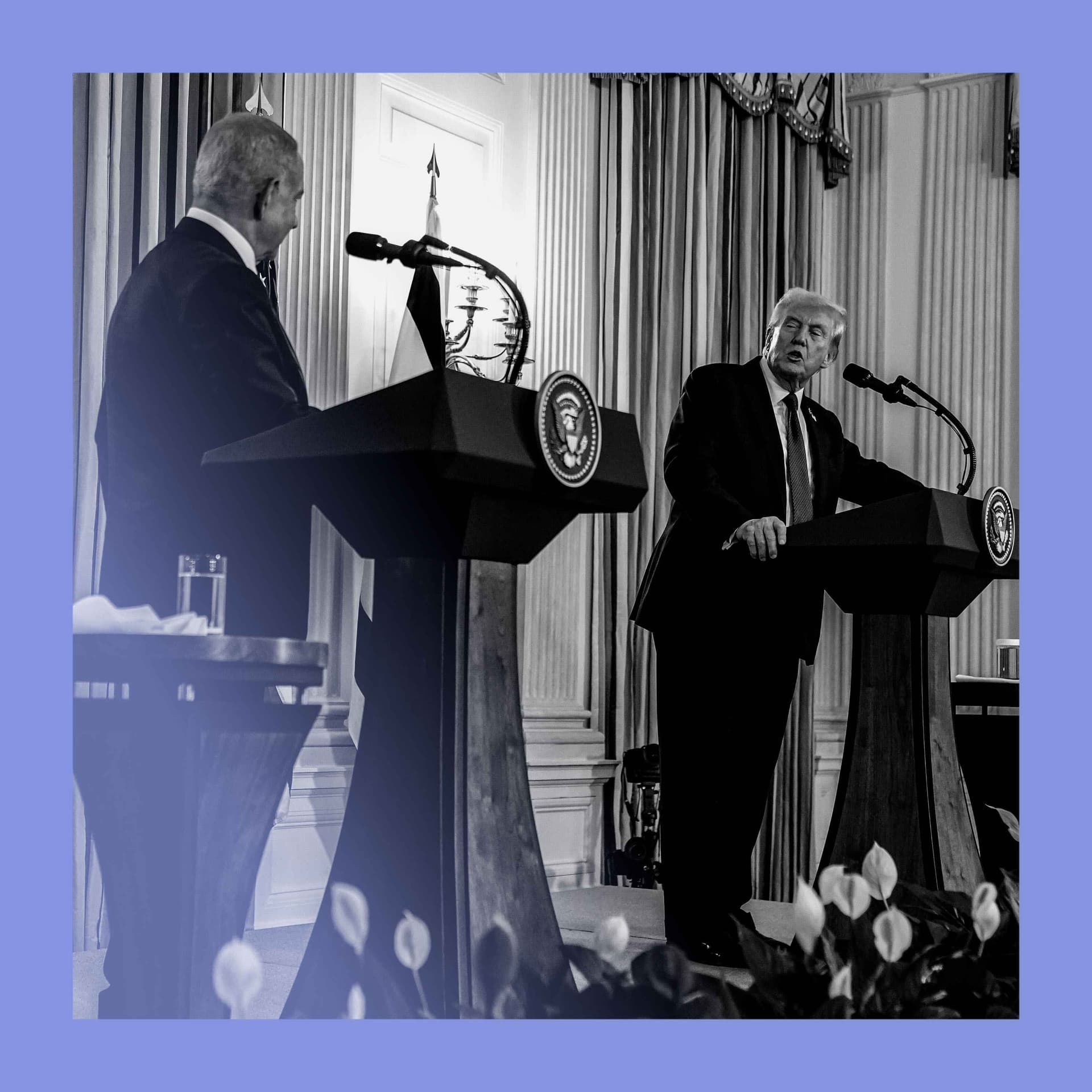
2:09So this is a big, big day, a beautiful day, potentially one of the great days ever in civilization. Peace could finally be within reach for Gaza and Israel. At the White House yesterday, Donald Trump presented a deal developed by the U.S. in concert with other countries, and the American president promised it would stick. The tyranny of terror has to end, and this is, again, something that we're looking for. This is eternity. This is for forever. What's notable is that this 20-point peace plan has been endorsed by Israel's Prime Minister Benjamin Netanyahu. He tried to put on a brave face, despite being strong-armed into agreement.
2:54I support your plan to end the war in Gaza, which achieves our war aims. It will bring back to Israel all our hostages, dismantle Hamas's military capabilities and its political rule and ensure that Gaza never again poses a threat to Israel. That a plan has been laid out is a huge breakthrough. The question now is whether that can lead to a lasting peace. We have the most serious plan Donald Trump has put forth since taking office in January. Greg Karlstrom is our Middle East correspondent. That's despite the fact that the press conference where it was announced on Monday afternoon was a meandering and sometimes deeply unserious affair.
3:43But it's a real plan to not only end the war in Gaza, but stabilize and rebuild and try to move on from the war. The problem now or the challenge now is convincing Hamas to accept, working out many of the details which are still left quite vague, and then how to actually implement this proposal. Before we get to Hamas, just tell me what's in this plan. The proposal has 20 points, and I think you can divide them into things that are meant to happen almost immediately and then things that are much longer term. What would happen in the first few days after this was agreed is that the war would stop, the lines of conflict would freeze.
4:26Hamas would release all of the 48 Israeli hostages, both living and dead, in Gaza. And there would be a surge of aid going into the territory, similar to what we saw back in January during the last ceasefire. All of that is plausible. You can imagine that taking place. Where it starts to get fuzzy is what happens after that. There's talk of disarming Hamas, for example. The group is meant to lay down its weapons. members of hamas that agree to do so and to live peacefully would be given amnesty by israel there would be some sort of international peacekeeping force that would come in to oversee that process and and to provide security in gaza and then there's something called the board of peace that would be established to oversee and govern the territory after the war the board of peace We call it the Board of Peace, sort of a beautiful name, the Board of Peace, which will be headed not at my request.
5:27Believe me, I'm very busy, but we have to make sure this works. The leaders of the Arab world and Israel and everybody involved asked me to do this. So it would be headed by a gentleman known as President Donald J. Trump of the United States. Also on that board would be Tony Blair, the former British prime minister, and then other members are meant to be announced in the coming days. But again, where this gets fuzzy, the Palestinian Authority, which governs parts of the occupied West Bank, is also meant to have some say in post-war governance in Gaza. Trump has been clear he wants that to happen.
6:05America's European and Arab allies want to see that as well. But at the press conference at the White House on Monday, Benjamin Netanyahu, the Israeli prime minister, was very clear that he doesn't want that to happen. Hamas will be disarmed. Gaza will be demilitarized. Israel will retain security responsibility, including a security perimeter for the foreseeable future. And lastly, Gaza will have a peaceful civilian administration that is run neither by Hamas nor by the Palestinian Authority. And that disagreement about the Palestinian Authority, that gets at my broader concern about this proposal, which is that it spells out the basics and the basics all make sense, but there is a lot of detail that still needs to be hashed out.
6:54And just for context, how close is this plan to previous ones that have been on the table? It's very similar, not only to what has been negotiated over the past few months by various Arab and Western countries, but by what they've been discussing almost since the beginning of the war. I mean, that's what struck me reporting on this the past few days is how many of the elements of this plan have been discussed by America and Arab states and other countries as far back as late 2023, when they first started discussing what the day after the war would look like in Gaza. And of course, Israel refused to take part by and large in those negotiations.
7:35But so much of this is not new. And it drives home, I think, how many missed opportunities there have been over the past two years to try and end the war. If you go back to February, the first meeting that Trump had with Netanyahu at the White House, when Trump surprised everyone with this outrageous plan to ethnically cleanse Gaza and turn it into a beach resort, we've moved a long way from that. Obviously, none of that appears in this proposal. If Trump hadn't done that, if he had presented something like this six months ago, we'd be in a very different place now. I think similarly, you compare this to what Joe Biden presented in May of last year, almost 18 months ago now.
8:15There are a lot of similarities between this plan and the Biden plan. The problem back then was that Biden wasn't willing to put pressure on the Israeli government to accept the plan. He allowed Netanyahu to stonewall him and to refuse any serious ceasefire negotiations. Trump, I think, finally has realized he needs to put pressure on the Israeli government. He did that at the White House yesterday. He went so far as to get the prime minister of Qatar on the phone so that Netanyahu could apologize to the Qataris for that Israeli airstrike in Doha a few weeks ago. So Trump finally bringing pressure to bear on the Israeli government.
8:53And I keep thinking, if someone had done that earlier, either Trump or Biden, this war could have ended months and many thousands of dead Palestinians earlier. So Netanyahu has been brought to the table, albeit begrudgingly. What about Hamas? They have not agreed to this deal yet. The statements that they put out after the White House press conference on Monday said that they haven't even seen the proposal yet, that they were learning about it. At the same time, all of us were. When I've been speaking to negotiators over the past few days, their expectation is that Hamas will take several days to study it.
9:28They will probably then have amendments that they want to make, and then there will be a period of further negotiations. I think there are going to be some things in this deal that are very difficult for them to swallow. On the question of the hostages, for example, the fact that they are all supposed to be freed in the first three days of the agreement, Hamas is worried that if it releases all of the hostages, it will no longer have any leverage over Israel and there will be nothing stopping Israel from breaking the deal and restarting the war. Now, Trump at the White House essentially tried to frame that as a false choice.
10:03He was very clear that if Hamas rejected this deal, the alternative was something much worse. I have a feeling that we're going to have a positive answer. But if not, as you know, Bibi, you'd have Marfao backing to do what you would have to do. Bibi, of course, being Netanyahu's nickname, and the prime minister then tried to reiterate that point as well. So trying to frame the choice to Hamas is either you make this deal or a horrible war is going to get much worse. So that's one issue that I think will be difficult. Another question on disarmament. I think it's very hard to imagine Hamas seriously agreeing to lay down its weapons.
10:43So then the question is, who will disarm it? And per the 20 points of this deal, an international force is meant to come in and disarm Hamas. The problem is, one of the negotiators told me on Monday, no country has actually committed to send troops to be part of this peacekeeping force. So it's not clear who is going to join it. And even if you can convince Arab countries to send troops, it's not clear to me that Arab armies are going to want to essentially get into a fight with Hamas in Gaza. So many of these questions, not just around the immediate issue of the hostages, but I think around the long term prospects for Hamas as well.
11:21And Greg, the all important question, where does this ultimately leave the proposal for peace and the likelihood of it working? What struck me yesterday watching the press conference was the sharply different messages from the two leaders. If you listen to Trump, you think this is a done deal. He said, we're about to end the conflict that has been raging for 3 ,000 years, which was an interesting reading of history as if the Israeli-Palestinian conflict has been going on since the days of the biblical King David. He said this was one of the greatest days in the history of civilization, you know, basically telling the Nobel committee to start polishing my peace prize because I've achieved peace in the Middle East.
12:00If you listen then to Netanyahu when he spoke afterwards, it was a much different message. He said he accepted the deal, he endorsed the proposal, but he was very clear that he wanted to leave himself some wiggle room. So the question of the Palestinian Authority and what role it will play in Gaza has a good example of that, where Netanyahu was very clear that is not going to happen anytime in the foreseeable future. And so I think that's the challenge going forward. It's not just for Trump to apply pressure to Hamas. It's also about keeping pressure on the Israeli government. Trump sees this as a first step towards some kind of bigger regional peace where you can then get back to expanding the Abraham Accords and striking perhaps a peace deal between Israel and Syria, maybe a deal between Israel and Lebanon.
12:49He is seeing this as part of a much bigger regional agenda that could also include serious talks about ending the occupation and trying to create a Palestinian state. Netanyahu isn't interested in a lot of that, certainly when it comes to Palestinian statehood. And so the challenge for Trump is going to be, how do you, after this one day at the White House where you did it, how do you keep the pressure on Israel in the weeks and months going forward? Greg, thank you very much for talking to me Thank you
13:45International businesses, including 13 of the top 20 global technology companies, have established a base here. IDA Ireland, the inward investment promotion agency, partners with you, connecting your business to unique opportunities. Learn more at IDAireland.com. To grow beyond limits and even beyond your aspirations, you need the London Business School MBA. Ranked fourth in the world by the Financial Times, the program delivers academic excellence and unlocks access to leading global businesses and a network of over 58 ,000 professionals. 86 % of the most recent class accepted a role within three months of graduating, and the returns continue beyond today.
14:30Search Discover London Business School MBA to find out more.
14:42Athleisure. I hesitate to throw the words neologism and portmanteau around in a single sentence, but athleisure really merits it. All the appearance of athleticism, all the dressed-down comfort of leisure wear. Who knew that the whole vibe of yoga pants in the 2000s would end up not only widely worn, But there would also be a posh end of it. Well, one company knew. For a decade, Lululemon has stretched above the rest when it comes to earnings. But it looks like something might have snapped. The business is doing pretty badly. They've had two lots of results that I've watched that have been disappointing.
15:24Avantika Chilkoti is a global business correspondent for The Economist. Sales in their biggest markets are down and the stock has fallen by about a half since January. I mean, for my part, walking around London, everyone still seems to be very much into athleisure wear. What's the issue for Lululemon in that market? Yeah, you're right. So it's not that athleisure as such is completely out of fashion. There is some market for it. But there's two things here. One, that is Lululemon's core product. And in that product, they've got new competition. There's brands like Aloe and Viori that are doing really, really well in the US.
16:03And also, you know, the brand has tried to produce new lines, things like shoes and casual wear. They're trying to attract younger shoppers. And so they're producing stuff with massive logos, which apparently is what young people like. And, you know, after the last earnings call, you even heard the CEO of the company, Calvin McDonald, being pretty critical of itself. The primary cause is that we relied too heavily on some of our core franchises across lounge and social for too long. We did not have the appropriate balance between existing and new styles across our casual offerings and the guests stopped responding as they had in the past.
16:44He did say that there are also external challenges for the business, which is fair enough. Earlier this year, he pointed out that US consumers are cautious with the economy in the state. It's in the Trump tariffs also really affect this business. Last year, about 40 % of its products were made in Vietnam. Almost 30 % of the fabrics came from mainland China. Both of those are markets that have been really hit by tariffs. And then, you know, more recently, this idea that Trump has of getting rid of the de minimis waiver that allowed them to get lower priced products in from Canada without facing massive charges.
17:20The company now expects the fact that Trump's got rid of that de minimis exemption to cost them about$240 million in gross profits just this year. So we're coming at the Lululemon story in the middle of things. Take me back to the beginning. How did it get to be top of the pile in athleisure or athleisure? So about 1998, it's a setup in Canada, Lululemon. And it was at that time kind of the cool kid in the sports industry. It was bringing in a fashionable, stylish new type of sportswear, whilst the big companies in the industry, Nike, Adidas, were kind of looking like dinosaurs. And what's happened is that over time, Lululemon has become one of those dinosaurs.
18:02I was looking at some industry estimates and the global sportswear industry is worth almost $450 billion. Lululemon is the third biggest company by sales now. And they haven't managed to retain their image as sort of exciting and new. The new competitors that you have, like I mentioned, Allo, they are the exciting brands that people are buying more and more from. And Lululemon hasn't been able to refresh its product portfolio quickly enough. At the same time, you know, fashion is fickle. If you look at what fashion editors are writing at the moment, the trend is for baggy clothes. Things like jeans are doing well.
18:39At the same time, fitted clothes, skinny jeans, or obviously the main product for Lululemon leggings, are not trendy. And that does not help the business. There is a fighting chance I might be slightly on trend if that continues. But for Lululemon, if fashion is indeed fickle, doesn't that speak to the possibility the winds could shift again and it could be riding high? Yeah, so there is one argument that just if the macro environment change, so fears of inflation calm down, trade war stops adding to their costs, that would be a good thing. But I think the business fundamentally also needs to change.
19:15So on one hand, just having better products people are excited about. But one thing I really noticed looking at their results is that they really relied on organic word of mouth to get information about their new products out there. They're spending about 5 % of revenues on marketing. By comparison, On, there's a Swiss company I went to visit actually last year. They devote about 10 % of revenues to marketing. That means that they can do celebrity deals and partnerships. They have Zendaya and they have a partnership with Loewe, a luxury brand. When I look at Lululemon, I think, well, I wonder if you don't just need a better product, You need to actually be putting it in front of people, be that on socials, be that on billboards.
19:59And, you know, if Lululemon doesn't do that, we know where it's going. We've all seen Under Armour, which everyone was excited about a few years ago and now is struggling to turn itself around. So it could really go both ways for the business from here. Avantika, thanks very much for joining us. Thanks for having me, Jason.
20:35The sound of animals is everywhere in India. Where I'm sitting in my office, largely what I can hear is birds of all sorts, especially crows who wake me up early in the morning. But elsewhere, and most commonly, what you get in the middle of the night is yowling, yelping, howling dogs. Leo Marani is an India correspondent for The Economist and is based in Mumbai which for some reason he still insists on calling Bombay In Delhi there's about a million stray dogs and lately they've been making headlines In August India's Supreme Court, alarmed by reports of canines savaging children told authorities in Delhi that they had eight weeks to put the city's stray dogs away into shelters That caused a whole amount of controversy in Delhi because there's tons of animal lovers.
21:25And the court modified its order a few days later to say that they should just be neutered. But this points to a pretty wide-ranging problem in Indian cities, which is that there's a whole bunch of animals. These animals cause harm to humans. Humans also cause harm to animals. And indeed, some animals cause harm to other animals. But nobody seems to be able to do anything about it.
21:50In cities as well as the countryside, there are cows everywhere. They trample over property, they obstruct traffic, and they're generally a nuisance. In many cities, there are monkeys, and they can be quite aggressive. They steal food, sometimes they even steal people's phones. Lots of cities also have snakes, and these guys are actually fairly chilled out creatures. But they can lash out when they feel threatened. It's not just humans who have to worry. There are leopards in some cities, such as Bombay where I live, and occasionally they attack street dogs. But the dogs are really the biggest nuisance.
22:25So in Delhi alone, government figures show that there were some 25 ,000 dog bites last year and 50-something deaths by rabies. These numbers are probably an understatement. The UN reckons that the number of rabies deaths nationally was somewhere between 18 ,000 and 20 ,000.
22:45I've been to lots and lots of cities around the world, not just cities in rich countries, but the cities at about the same income level as India. And I'm always pleasantly surprised when I go to these places to find that their streets are mercifully free of animals. So I started wondering why it is that Indian cities have so many animals of so many sorts. There's several reasons for this. The first, which is quite obvious, is that Indian cities have expanded really rapidly in the last decade or two decades. And as a result, they've expanded into what used to be the habitats of animals. Secondly, the sort of miserable state of public services in our cities has allowed wildlife to thrive.
23:24So there's lots of construction debris, abandoned cars, general junk. These things give animals convenient shelter. And then there's piles of rubbish everywhere, in every city, even in the posh areas of cities. And that provides food. On top of all of this, municipal authorities tend not to be very well-funded and not to have very high capacity. So they're unable to gather all these animals and neuter them and put them back. So you combine all of these things and you've basically created quite a hospitable environment for animals.
23:58So the civic ills are easy enough to understand. But that can't be all there is to it, right? I mean, lots of other countries have cities that aren't well-funded, that don't have high state capacity. These are not uniquely Indian problems. What is a uniquely Indian problem is the social and religious stuff. So, socially, animals are very well protected in India. We have very strong animal protection laws. For example, you cannot move aggressive or violent dogs from their neighborhood to another neighborhood. It's considered cruelty to animals. You most certainly cannot harm them. And then secondly, pretty much every animal has some form of mythological representation in India.
Read the full transcript
24:39So the cow is revered as a mother, snakes are worshipped, on Nagapanchami especially, which is a festival, but throughout the year really. Monkeys are represented by the god Hanuman. And as a result, there's a certain amount of reverence that attaches to these animals that also prevents Indians from considering doing them any harm or making their lives difficult. Here's an example. In Bombay, like in many Indian cities, there are stations for feeding pigeons. This is an ancient practice. However, pigeons are also flying vermin that carry disease. So the city of Bombay has tried to shut down these pigeon feeding stations.
25:16But the Jain community protested against this. They refused to let the city shut it down. They said that feeding pigeons was part of their culture and that they were willing to even take up arms, even though they're a peaceful religion, to protect their own way of life.
25:35So what can we do about this? How can I, for instance, walk down the street without worrying about dogs being molested by cows or having my phone stolen by a monkey? The first and most obvious thing is better funding for animal control programs. Municipalities, urban authorities of other sorts should have robust and well-funded programs so that they can take these animals, neuter them and put them back in certain cases or what's really wild animals, probably send them off to the jungle. I don't know, but I don't think cities are the right place for monkeys personally. Second, and related, is cleaning up the cities.
26:10I mean, this would be good for everyone in many ways, especially when it comes to the health of people who live in Indian cities, but it would also help reduce the problem of animals in cities. The third, and perhaps most important, is the way people who live in Indian cities think about their relationship with animals. As one conservationist I spoke to said to me, India's annual problems need to be managed scientifically, not sentimentally.
26:53That's it for this episode of The Intelligence. We'll see you back here tomorrow.
27:01Thank you.
27:30and a network of over 58 ,000 professionals. 86 % of the most recent class accepted a role within three months of graduating, and the returns continue beyond today. Search Discover London Business School MBA to find out more. Ireland's workforce tops the world rankings for flexibility and adaptability, qualities critical to any company driven by innovation and vision. It's just one of the reasons 1 ,800 international businesses, including 13 of the top 20 global technology companies, have established a base here. IDA Ireland, the inward investment promotion agency, partners with you, connecting your business to unique opportunities.
28:13Learn more at idaireland.com.
From the publisher
After pressure from US President Donald Trump, Israel’s Prime Minister Bibi Netanyahu has been strong-armed into agreeing a deal for Gaza. Will Hamas sign up too? Our correspondent analyses the path to peace. Lululemon needs a legging-up. And why leopards, crows and monkeys populate India’s cities.
Listen to what matters most, from global politics and business to science and technology—Subscribe to Economist Podcasts+
For more information about how to access Economist Podcasts+, please visit our FAQs page or watch our video explaining how to link your account.
Hosted on Acast. See acast.com/privacy for more information.