
In short
The episode of The Intelligence from The Economist covers three topics. First, the Supreme Court case Trump v. Slaughter: President Trump fired FTC commissioner Rebecca Kelly Slaughter in 2017 without citing “inefficiency, neglect of duty, or malfeasance,” as required by the FTC’s 1914 statute. The key claim is whether presidents can remove directors of independent, multi-member agencies at will, potentially overturning the Humphrey’s Executor precedent. Conservative justices criticized Humphrey’s Executor as a “decaying/dried husk” and argued agencies must be accountable to the president; liberals warned it could dismantle Congress’s structure and independence, possibly affecting agencies like the Federal Reserve. Second, mega-constellation satellites (Starlink, OneWeb, etc.) increasingly streak telescope images: a Nature paper projects up to ~500,000 satellites by the 2030s, with Hubble ~1/3 contaminated and other telescopes ~96%+. Notable examples include simulated crisscrossed star fields and mitigation attempts like dimmer satellites and data-sharing. Third, it discusses Legami gel pens: an Italian firm (Bergamo) behind “invisible” animal-head gel pens that became a viral craze in Europe, with 2022 sales around €76M and a target of €300M; teachers ban them for distraction, while competitors like Pelikan/Faber-Castell face job cuts.
Guests
Stephen Mazey (Supreme Court correspondent), Tim Cross (senior science writer), Wendelin von Bredow (Germany correspondent).
Written by AI. May contain mistakes. Listen to the episode to check what was said.
Chapters
Tap a time to open that second in VOAstronomers and the Challenges of Space Debris
0:30 to 0:41
Understand how man-made objects are obstructing astronomers' views of the stars.
“Taxes aren't something you can only think about once a year.”
Astronomers and the Challenges of Space Debris
1:23 to 1:59
Understand how man-made objects are obstructing astronomers' views of the stars.
“But the growing number of man-made objects in orbit are obscuring their view.”
Presidential Power and Independent Agencies
1:59 to 2:21
Explore the implications of a Supreme Court case on presidential power over independent agencies.
“Let's talk about the case of an American president with a sweeping economic plan who disagrees with someone from the Federal Trade Commission, someone who's from the rival party.”
The Case of Trump vs. Slaughter
2:21 to 4:28
Learn about the details of Trump's attempt to fire Rebecca Slaughter from the FTC.
“The case makes its way to the Supreme Court.”
Legal Precedents and Future Implications
4:28 to 6:04
Discuss the legal precedents that may impact the outcomes of agency removals.
“sided with Slaughter and blocked Trump from dismissing her.”
The Stakes of Independent Agency Autonomy
6:04 to 11:25
Examine the potential consequences if the court sides with Trump on agency independence.
“So clearly the court has some sympathy for the president's argument here.”
Satellite Constellations and Astronomy
14:00 to 19:10
Explore the impact of increasing satellite numbers on astronomical observations.
“And that's great for people who want to get internet in the boonies or when they're on a plane or at sea or something, but it causes problems for astronomy.”
The Craze of Legami Gel Pens
19:18 to 26:02
Discover the success and cultural impact of Legami gel pens among children.
“Consider an innovation that you could use to express your creativity, to communicate with friends, even just to make a note about that ingredient you need to pick up.”
Transcript
Automatic transcript. May contain errors.0:00When you're a maintenance engineer in a beverage manufacturing plant, you keep production lines moving and quality on track because there's no room for slowdowns. with Granger's vast selection of high quality motors, sensors, belts, and hard to find parts. You can get what you need fast and all in one place. So nothing gets in the way of getting the job done. Call 1-800-GRANGER, click granger.com, or just stop by. Granger, for the ones who get it done. This message comes from Jackson. Taxes aren't something you can only think about once a year. With investments, planning for tax days year round.
0:37Fortunately, Jackson offers tax-efficient products. Visit jackson.com for more information on how our products can make your tax bill a little bit less painful. Jackson is short for Jackson Financial Incorporated, Jackson National Life Insurance Company, Lansing, Michigan, and Jackson National Life Insurance Company of New York. Purchase New York.
1:00The Economist.
1:07Hello and welcome to The Intelligence from The Economist. I'm Rosie Bloor. And I'm Jason Palmer. Every weekday we provide a fresh perspective on the events shaping your world.
1:23Astronomers often put their telescopes in space so that turbulence in the Earth's atmosphere doesn't blur their clear vision. But the growing number of man-made objects in orbit are obscuring their view. And the digital era is coming for the makers of some seriously analog technology. The pen. Big manufacturers are laying off pen-making staff left and right. Except at one cutesy Italian firm.
1:59First up, though.
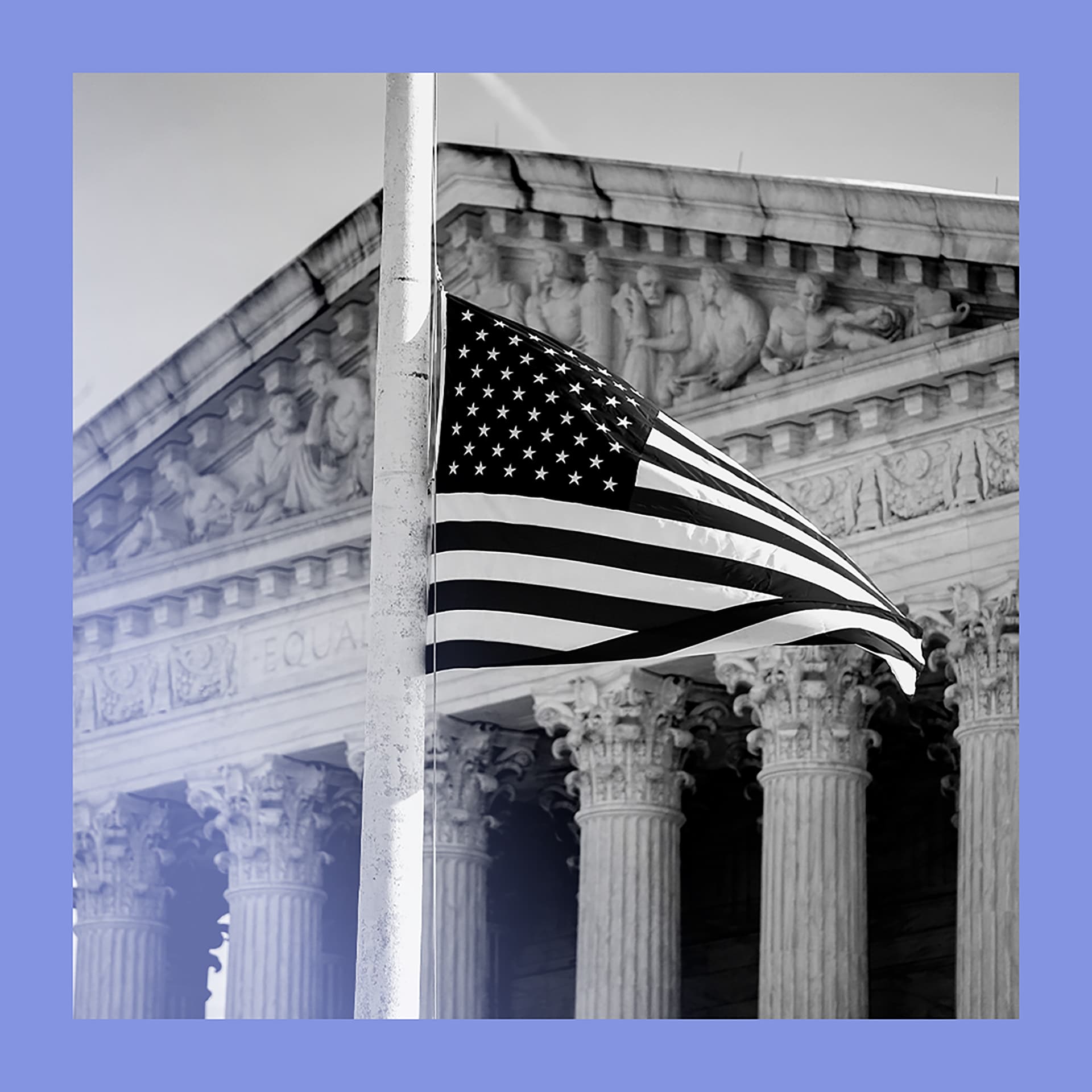
2:07Let's talk about the case of an American president with a sweeping economic plan who disagrees with someone from the Federal Trade Commission, someone who's from the rival party. The president fires that someone. The legality of the firing is question. The case makes its way to the Supreme Court. I'm talking about the case of William E. Humphrey, sacked by Franklin D. Roosevelt in 1933, and about a precedent that another fire-at-will president wants to overturn. A case that's a lot like Humphreys has made its way back to the Supreme Court. It's about how much power over independent agencies the president can exert and ultimately how independent those agencies actually are.
2:51Donald Trump is making a play for a significant expansion of presidential control over the executive branch. Stephen Mazey is our Supreme Court correspondent. Trump versus slaughter, a case the Supreme Court heard on Monday, is a direct challenge to every statute that shields directors of independent agencies from presidential dismissal. If the case goes his way, it could transform America, transferring a huge amount of power from Congress to the president and giving President Trump, along with future presidents, a degree of unilateral authority they have never had before. So Stephen, before we get to the implications, let's wind back.
3:34How did we get here? Well, the story begins in March when Trump decided to fire Rebecca Kelly Slaughter from the Federal Trade Commission. Slaughter was one of five commissioners at the time on the FTC, which is the nation's consumer and market watchdog. It approves mergers, it makes sure companies play fair, and recently it's been heavily focused on big tech. The law that founded the FTC in 1914 aimed to insulate the agency from political pressure. It did that by requiring that if a person is going to be removed from the FTC, they can be removed only for inefficiency, neglect of duty, or malfeasance in office.
4:15When Trump sent a letter to Slaughter firing her, he made no claims along those lines. He just said, you don't fit with our administration's priorities. Lower courts over the summer sided with Slaughter and blocked Trump from dismissing her. That prompted an emergency appeal to the Supreme Court, which in September kept Slaughter out of her seat for the time being and placed her case on the court's regular docket. Okay, and what's your read on how the court will handle it? We've had many signs about the direction the court has been leading. The FTC is not the only agency where Trump has been sacking people.
4:55Over the past nine months, the court's conservative majority has been confronted with emergency disputes about dismissals at other agencies, at the National Labor Relations Board, the Merit Systems Protection Board, the Consumer Product Safety Commission. And in the interim, on the emergency docket, the court has blessed all of those removals and let Trump keep them out of their positions. But beyond that, the Supreme Court has been expanding presidential power to remove executive branch officials for some time. Humphrey's executor came under attack in 2010 in a case called Free Enterprise Fund.
5:34Ten years later, in a case called Sela Law, the justices said that presidents could remove the director of the Consumer Financial Protection Bureau, an agency that has a single head, and it did the same the following year for the Federal Housing Finance Agency. But it never made the additional step of invalidating the protections at multi-member agencies. That is the question in Slaughter, and it seems pretty clear the justices are ready to take that next big step. So clearly the court has some sympathy for the president's argument here. What did the justices have to say yesterday? Well, there was very little love expressed by the conservative justices for Humphrey's executor.
6:16Chief Justice Roberts called it a dried husk, which I guess is not quite as bad as the reference from John Sauer, the Solicitor General arguing Trump's side. He called it twice a decaying husk. It continues to tempt Congress to erect at the heart of our government a headless fourth branch insulated from political accountability and democratic control. Beyond that, many of the conservative justices said that independent agencies should not be able to exercise executive power over individuals and industries unless they are accountable to someone, namely the president. The three liberal justices know that Humphrey's executor has been on the ropes, but they all issued warnings about what would happen if this case were wiped away.
7:02Justice Sonia Sotomayor said, you're asking us to destroy the structure of government. And to take away from Congress its ability to protect its idea that the government is better structured with some agencies that are independent. Justice Elena Kagan, who has over the years taken the lead in resisting the steady loss of removal protections, said independent agencies do a huge range of work in our government. The notion that all of that was unconstitutional from the start is quite something. I was surprised there wasn't more discussion about history. Most of the arguments were instead based on contested views about the separation of powers and what terrible things might happen one way or the other.
7:45At one point, John Sauer warned that if the FTC can be protected from presidential removal, Congress could reconstruct virtually the entire executive branch outside the president's control. So the fear is that Congress would be motivated to, say, take the Department of Commerce or the Department of Labor and turn those into multi-member agencies, unanswerable to the president. Which is a pretty expensive vision of how things might go, but what if the court does side with the president ultimately? Well, the liberal justices had slippery slope arguments of their own. Their worry was that the FTC is just a foot in the door.
8:27About two dozen other independent multi-member agencies, regulating everything from nuclear power to transportation, would instantly be put under the president's thumb, completely removing their independence. But that could be just the start, Justice Kagan said. What about legislative courts with appointed judges, like the tax court or the Court of Appeals for the Armed Forces? What about the civil service? Would any government employee be subject to at-will dismissal by the president? Isn't it problematic, given what we know about the founder's vision, that what this is going to amount to at the end of the day is putting not only all executive power in the president, but an incredible amount of legislative-slash-rulemaking power and judging in the president's hands.
9:20One open and important question is what might become of the Federal Reserve. The Fed was created by Congress a year before the FTC. It, too, has multiple governors with fixed terms. It, too, exercises quite a bit of executive authority. So if presidents can sack commissioners of the FTC without cause, why shouldn't they be able to sack members of the Fed Board of Governors? There is a separate case involving Trump's attempt to fire Lisa Cook coming up at the Supreme Court in January. The conservative justices seem very interested in keeping the Fed independent. But the logic for doing that, if Humphrey's executor is overruled, seems quite strained.
10:03But in any case, that would seriously undermine Congress's role in a co-equal branch of government. Oh, it would be a serious diminution of Congress's power. Establishing independent agencies is one of the most important roles Congress has had in making the government work. It's how Americans' food is kept safe, how their markets stay relatively fair, and how everything from nuclear plants to credit cards are overseen. And the tradition is that they are overseen by experts rather than partisans. Taking away the independence that Congress gave these agencies does clip Congress's wings. And it introduces a set of concerns about how honest and effective these agencies can continue to be.
10:49We all saw President Trump flanked by billionaire CEOs at his inauguration. At a recent event, Rebecca Slaughter said she looked at that image and realized that the FTC was in active litigation against most of the companies those CEOs run. So those are the stakes before the court now. Whether these independent agencies that were meant to serve the public will be honest and objective and nonpartisan, or if they will ultimately be steered by those who stand closest to the president. Stephen, thanks very much for joining us. Thank you for having me. www.procurement .com
11:59If you wait until something breaks, you're already behind. Count on Grainger for quality products, easy reordering, and 24-7 support. Call 1-800-GRAINGER, click grainger.com, or just stop by. Grainger, for the ones who get it done. If you're looking for something predictable and low friction over the long term, public markets may be a suitable option. But the moment you want different investment characteristics, it may be time to consider the private markets. See how your wealth can work smarter at creativeplanning.com slash access.
12:37Twinkle, twinkle, little satellite. It doesn't quite have the same ring as the original song, does it? But when astronomers look up from Earth, increasingly their vision of the stars is blurred by man-made objects. Astronomy is probably one of the oldest sciences. People have been looking up at the heavens for thousands, tens of thousands, hundreds of thousands of years. Tim Cross is our senior science writer. But the problem with looking at the stars from the ground is that the atmosphere gets in the way. And the atmosphere is turbulent. You know, there's all these tiny little eddies and currents always around in the air.
13:14And that's why when you look from the ground, the stars seem to twinkle. And in the last 30, 40 years, we've finally managed to get around that problem by taking our telescopes and putting them in space. There's no air to get in the way and the stars don't twinkle. They shine consistently. And that makes it easier for astronomers to get high quality pictures. And high quality pictures means happy astronomers. And yet I feel you're about to tell me that astronomers aren't so happy after all. They're getting less happy, yes. So there's a problem that's already affecting ground-based telescopes. which is these so-called mega constellations of communication satellites.
13:51So the best known one is Starlink, which is run by SpaceX, and it beams satellite internet from many, many thousands, over 9 ,000 now satellites that all fly in relatively low orbits, just a few hundred kilometres up. And that's great for people who want to get internet in the boonies or when they're on a plane or at sea or something, but it causes problems for astronomy. Because the satellites are so low, they catch the sunlight and those reflections can be seen from the ground. Sometimes you can even see them with the naked eye, but you can certainly see them with the sensitive telescopes that astronomers use.
14:25And the result increasingly is that when you try and take a picture of the night sky, you'll find it contaminated by these streaks of bright white light as satellites pass overhead. So just how many satellites are we talking about here? Well, the numbers exploded in the last few years. So in 2018, there were around about 2 ,000 satellites in orbit in total. These days, Starlink alone has 9 ,000. The total number in orbit hit five figures a couple of years ago. And it's going to get much, much bigger because Starlink is very popular. It's growing very rapidly. And that's attracted lots of competitors and rivals.
15:01So you've got companies like OneWeb and Amazon in the West who are either already flying or starting to fly their own constellations. You've got Chinese firms getting in on the game, Chanfan and Guo Wang. You've got the Russians looking into this. This number is rising really exponentially. if you plot it on a graph, it's become pretty much a straight line. So there's been a trend to put telescopes in space. Does that get round the problem? Even space telescopes, depending on how high they fly, can be vulnerable to this. And in fact, there's an interesting paper just published in Nature that tries to look 10 or 15 years ahead and work out how bad things might get.
15:37The authors scoured regulatory filings around the world to get a sense of just how many satellites we're planning to launch. And they concluded that if every company flies all the satellites that they say they want to, we could see around half a million of these things in orbit by the end of the 2030s. Blimey, that's a lot. Yeah, it's rising so, so quickly. What the researchers then did was they took all the satellites, they fed them into a computer model and tried to work out what it would mean for four space telescopes in particular. So one of them was the Hubble, which was the first major space telescope to be launched, and another instrument called SPHERE-X, which is also in orbit at the moment.
16:14Then a Chinese instrument called Shun Tian due to launch next year and a European instrument called Arrakis, which is due to go up in 2030. And the results make for quite depressing reading, at least if you're an astronomer. So the Hubble gets off the lightest of all. They reckon that about a third of its images would end up contaminated. But for the other three, you're looking at 96 % plus of the images having satellite streaks in them, and not just one or two, but dozens and dozens and dozens. So they have some simulated pictures of these things, and they're just, it's literally an image of a star field, and it's crisscrossed all over with white lines as if a toddler's basically got a white pen and drawn all over it.
16:53It looks absolutely awful. So is there a solution to this? There doesn't seem to be an easy one. So SpaceX has tried to make its satellites look dimmer, and it has had some success. The newest ones, despite being bigger, are not as optically bright as the early ones, but they are still bright enough to cause a problem. And the kind of business logic of running these kind of constellations seems to be pointing in the direction of making the satellite sort of bigger and bigger over time. So the latest set of Starlink satellites are designed to talk directly to smartphones on the ground. And that means they need really big, really powerful antennas.
17:29That means they need big solar panels to power them. And the bigger a satellite is, if everything else is equal, the brighter it is when you see it from the ground. And can you actually get the telescopes beyond these mega constellations of satellites? So one thing you can do is data sharing. If you know where the Starlink satellites are at all times, you can time your observations to minimise the problem. But that works less and less well as the skies get more and more crowded. And yet in the long run, perhaps the only option is going to be to launch these telescopes into much, much higher orbits so that they're sort of way above these swarms of satellites.
18:05And there are some telescopes that fly very high. So the James Webb, for instance, which we've written about before, that's about one and a half million kilometres from Earth. That's obviously so far away that this is not really a problem. Some telescopes that don't observe in optical or infrared light, so things like the Chandra, which observes in x-rays, that's not really affected. But it's interesting when you talk to astronomers, they'll say, well, you could fly the telescopes much higher, but you then need to redesign them. there are advantages to flying low so for one thing it insulates you from the worst of the cosmic rays that would otherwise mess with the telescope's electronics and you know you can build shielding but then it's more expensive and your telescope's heavier and it's harder to launch so what the astronomers are hoping to do they've set up a body to talk to these mega constellation operators and see if everyone can come to some kind of compromise and they talk about things like well you know maybe we could restrict the numbers or maybe we could restrict the orbits that the satellites fly in, but I don't think there's any kind of silver bullet.
19:03So tech is the enemy of tech? In this case, yes. Tech is the enemy of tech and science. Tim, thank you very much. Thanks, Rosie.
19:26Consider an innovation that you could use to express your creativity, to communicate with friends, even just to make a note about that ingredient you need to pick up. An invention so basic to modern life, yet so compelling that teachers have banned them from classrooms. So valuable that people steal them. No, not smartphones. Children across Europe, in particular in France and Italy and Germany, but in other countries too, love Legami gel pens. They are invisible gel pens with little animal heads. And my nine-year-old son is part of that craze. Wendelin von Bredow is our senior Germany correspondent Kids collect them, they trade them I think for teachers there are sort of a mixed blessing and actually maybe no blessing at all because for instance in my son's school they are now banned from the schoolyard it was so distracting that the teachers just said okay enough, enough, you have to keep these pens at home So wind back a bit, these gel pens made by a company called Legami who are they?
20:33They are actually 22 years old. They're based in Bergamo in Italy. And they suddenly grew incredibly fast over the last two years. So I think sales were 76 million euros in 2022. And they are now aiming to increase sales to 300 million by next year. So there are very few European companies that have such growth in such a short time. Well, why? What are they doing right? Or is it just that they've caught on? it's a viral craze of any other sort? Well, they somehow, I think, tap a bit into the zeitgeist in the sense that these pets are colorful. They have these little animal heads. They have fun little slogans.
21:17So for instance, the llama pen says no problema. The bee is bee different with two Es. The bunny pen is don't worry, be hoppy. And I think at a time when the world is in crisis, so many gloomy things going on, people are drawn to cuteness, to cute, colourful things. And not only children, I think grown-ups like them too, but of course, it's the children that drive this market. And this at a time, I guess, when people are using pens less and less as they use devices more and more. Indeed. The digitization of offices and homes play a big role and people just use fewer pens. I was recently at our London office and I searched for a pen in three of our offices and I just couldn't find a pen.
22:05Then another problem is costlier raw materials. Then there's more competition from Asia, in particular China. China is already dominant in ballpoint pens, and they might become dominant in other types of pens too. So old companies, such as in Germany, you have Pelican, you have Faber-Castell, you have Schwan, Fabulo, they're having a tough time. They're shedding jobs, they're closing production sites. It's not been an easy year for them. In America, there's a company that makes Sharpies, these sort of markers President Donald Trump favors for signing yet another executive order. they said this month that they would cut 900 jobs and that's one tenth of its workforce.
22:49So it's not a particularly rosy time for pen makers all over the world. Not even the fancy ones, the high end of the market? Well, interestingly enough, they occupy a niche that's still doing quite well. So if you are really prepared to spend thousands, even tens of thousands on pens, then it's somehow a market that kept steady. And Switzerland has a company called Café Hontage and they are doing very, very well. And they have, I think, a fountain pen carved in gold and set with diamonds that costs as much as$1 million. But the real volume orders are going for the moment to Legami pens. I mean, do you use them yourself?
23:33Do you like them? I use them when I'm about to. My son has 13 and he would love to have 24 like his best friend. But every now and then I'm allowed to use the llama or the bee. Do I know what's going to be under the Christmas tree for him this year? If he's lucky. But do you think this is just a short-lived craze or is Legami here to stay, do you think? I think it could be hype. It could be a short-lived craze. But Legami has diversified into other things. They do stationary. They do raincoats, even charging cables for phones. So I think by diversifying, they're trying to be safe or endure. So I think it's anybody's bet.
24:16Generally, the toy, anything related to kids can be very volatile. So I think the jury is still out. Fendelin, thanks very much for joining us. Happy writing. Always a pleasure. Thank you, Jason.
25:02Transcription by CastingWords
25:07This message comes from Jackson. Taxes aren't something you can only think about once a year. With investments, planning for tax days year-round. Fortunately, Jackson offers tax-efficient products. Visit jackson.com for more information on how our products can make your tax bill a little bit less painful. Jackson is short for Jackson Financial Incorporated, Jackson National Life Insurance Company, Lansing, Michigan, and Jackson National Life Insurance Company of New York. Purchase New York. when you're a maintenance engineer in a beverage manufacturing plant you keep production lines moving and quality on track because there is no room for slowdowns with granger's vast selection of high quality motors sensors belts and hard to find parts you can get what you need fast and all in one place so nothing gets in the way of getting the job done call 1-800-GRANGER click Grainger.com or just stop by.
Read the full transcript
25:58Grainger, for the ones who get it done.
From the publisher
Of all the sackings at federal level President Donald Trump has carried out—and that the Supreme Court has upheld—the one now under consideration has the greatest implications for presidential power. Now that satellites are going up by the thousands, earthly astronomers are struggling for clear views. And how one firm is bucking the downward trend in the pen industry.
Get a world of insights by subscribing to Economist Podcasts+. For more information about how to access Economist Podcasts+, please visit our FAQs page or watch our video explaining how to link your account.
Hosted on Acast. See acast.com/privacy for more information.