
In short
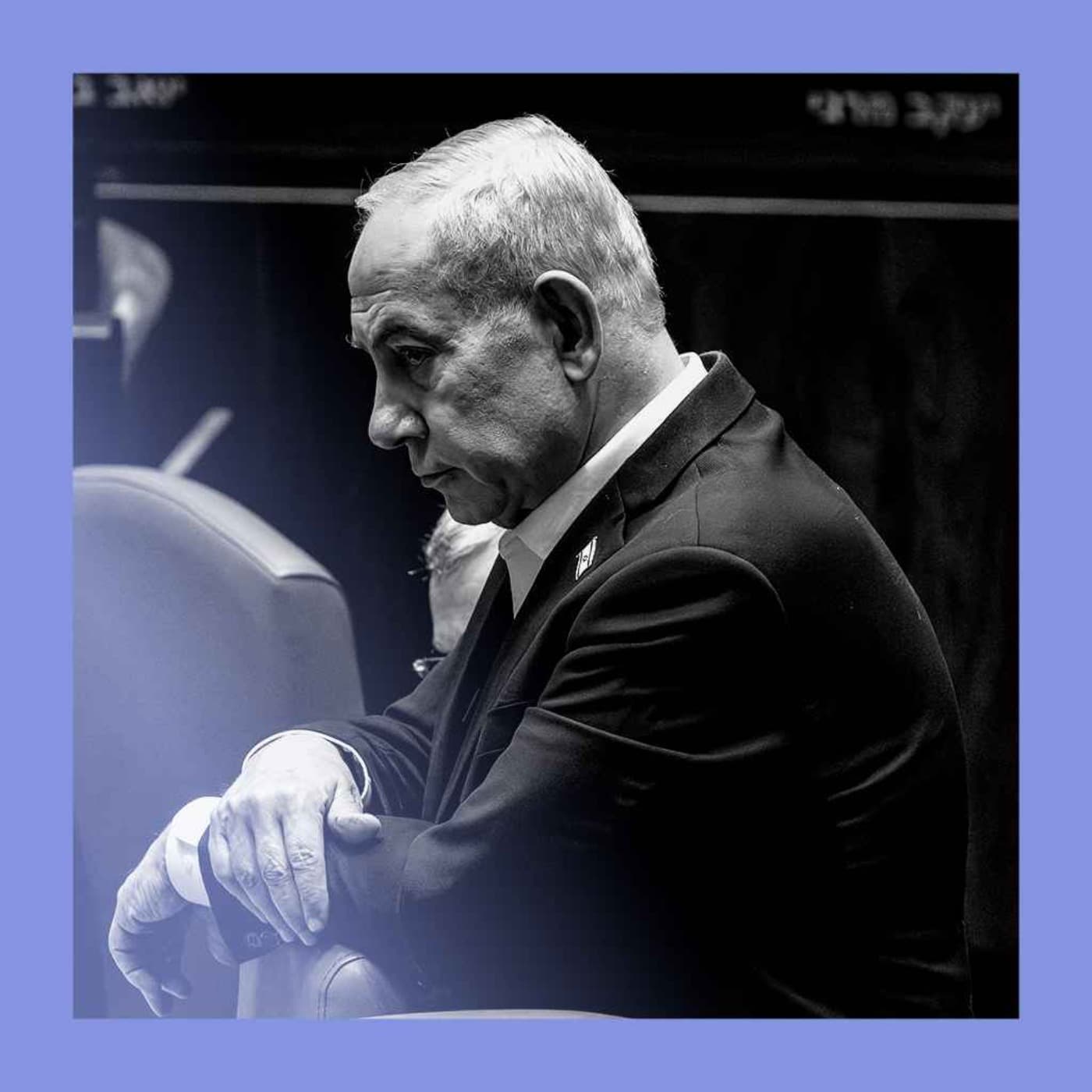
The episode covers three main topics: Israel’s crucial late-October election after the Knesset voted to dissolve itself; the FIFA World Cup’s on-field and off-field controversies ahead of the final; and the melting of the world’s largest iceberg, A23A.
Guests
Josie (interviewed about Israel’s election; described as a political analyst/hosted by The Intelligence) and John Fassman, senior culture correspondent (World Cup coverage).
Key claims
the election is a judgment on the post–Oct 7, 2023 government, seen as especially extreme in ultranationalism and religiosity; opposition polling could reach a majority (about 66 seats) but coalition-building is difficult; a major vote-winner is ending the Haredi conscription exemption (now up to ~90,000 people).
Notable examples
Together’s proposed national education system; debate over avoiding Palestinian issues; FIFA overturning a USA red card and Trump’s admitted intervention; Cape Verde’s 40-year-old goalie Virginia; A23A’s 1986 origin and 2020 wobble near South Georgia.
Written by AI. May contain mistakes. Listen to the episode to check what was said.
Chapters
Tap a time to open that second in VOIsrael's Election Context
1:25 to 2:35
An overview of Israel's upcoming election and its significance.
“This morning, Israel's parliament voted to dissolve itself.”
The Opposition Parties
2:46 to 5:12
Discussion on the diverse range of opposition parties and their leaders.
“And so when Israelis vote on October the 27th, they're going to be choosing between another version of that government and its vision for the future of Israel or an alternative.”
Voter Concerns in Israel
5:16 to 7:27
Key issues affecting Israeli voters in the upcoming election.
“The problem is that this is a very diverse group of politicians.”
The Palestinian Question
7:39 to 9:26
The significance of the Palestinian issue in the Israeli election debate.
“One of the policies that Together is putting forward is that there should be a national education system.”
Betting Against Netanyahu
9:28 to 11:13
Speculation on the election outcome and Netanyahu's political skill.
“is the possibility of another intifada, an uprising in the West Bank, where people are angry and responding to growing settlements and growing settler violence.”
Tournament Highlights and Drama
14:00 to 18:02
A recap of memorable moments and geopolitical drama during the World Cup.
“There have been accusations during the tournament that Argentina has benefited from some very friendly refereeing.”
Insider Video Series on France's Election
18:02 to 19:11
Discussion about an upcoming video series focusing on France's political landscape.
“Quick Friday aside here about Insider, our video series that takes you behind the scenes of our newsroom.”
The Story of Iceberg A23A
19:11 to 24:40
A detailed account of the life and eventual dissolution of iceberg A23A.
“Fresh water poured into salt water and each absorbed the other.”
Transcript
Automatic transcript. May contain errors.0:00With no fees or minimums on checking accounts, it's no wonder the Capital One bank guy is so passionate about banking with Capital One. If he were here, he wouldn't just tell you about no fees or minimums. He'd also talk about how most Capital One cafes are open seven days a week to assist with your banking needs. Yep, even on weekends, it's pretty much all he talks about. In a good way. What's in your wallet? Terms apply. See CapitalOne.com slash bank. Capital One N.A. Member FDIC.
0:32This intelligence podcast is sponsored by Backmarket, the leading global marketplace for refurbished tech. When the kids need phones, laptops, or tablets for school, buying refurbished tech makes sense for families trying to save money without sacrificing quality. At Backmarket, tech costs up to 50 % less compared to new. All devices have been professionally refurbished and come with a one-year warranty and 30-day return policy. Start saving money. Visit Backmarket.com or the Backmarket app to shop now.
1:05The Economist
1:12Hello and welcome to The Intelligence from The Economist. I'm Jason Palmer.
1:21Today on the show, takeaways from the World Cup and the passing of the world's largest iceberg.
1:36First up, though.
1:45This morning, Israel's parliament voted to dissolve itself. That puts the country officially back in campaigning season. An election will be held in late October. Long-time listeners will remember just how tired of that Israeli voters can get. Before this government, the country had five elections in less than four years. Each time it was an uphill battle to cobble together a coalition that could actually govern. Each time, of course, with Benjamin Netanyahu at or with easy access to the top. This time, well, it will again be compromises and horse trading. But the stakes seem far, far higher. I think this is one of the most important elections that Israel has ever had.
2:35It's the first chance for people to pass judgment on the government since the attacks of October 7th in 2023 and the wars that have come after that. And it is a chance to pass judgment on a government that has been perhaps the most extreme that Israel has ever had in its ultranationalism and its religiosity. And so when Israelis vote on October the 27th, they're going to be choosing between another version of that government and its vision for the future of Israel or an alternative. So essentially, Josie, you're suggesting it's a Netanyahu government like the one we have now or other. What does the other look like?
3:22Who is the opposition here? The current government has a lot of opponents. And we shouldn't forget that the current government is a coalition, as Israels always are. So that contains more than one party. But the opposition parties are a diverse group. Naftali Bennett and Yair Lapid, both former prime ministers. Both probably centre-right, although I think it's a mark of how far to the right Israel as a country has moved that we see them as such. They brought together two of their parties to create together. And then the other big challenger is Gardi Eisencott, who is a relative newcomer to politics.
4:03He used to be head of the IDF. He served in Netanyahu's war cabinet in the early days of the war, after October the 7th, but then resigned after criticizing the prime minister's strategy. And he has been rising in the polls. His party, which he launched in September last year, is looking like it could be a real rival to Likud, Netanyahu's party. Then you've got a host of smaller parties. You've got parties that represent Israel's Arabs. You've got the Democrats, which is another coalition party formed of Labour, Israel's founding party, which ruled the country for its first few decades, and Meretz, a left-wing Zionist party.
4:48Both of them have become a lot less popular in recent years, and they've come together in an effort to boost their standing. So the question becomes whether you could build a coalition without Likud, without Benjamin Netanyahu. When you look at the polling of the opposition parties as a whole, at least at the moment, they tend to come out on top. They win perhaps 66 votes in the Knesset, Israel's parliament, which would be enough to give them a ruling majority. The problem is that this is a very diverse group of politicians. They do not agree on a lot of things. And so it's not enough for them to win enough seats to beat Netanyahu and his allies.
5:31They also have to find some way of working together to form a governing coalition. And what are the issues specifically that are in the minds of Israeli voters for this election? Well, you would think that the fact that Israel has been fighting wars for three years, arguably without achieving the victory that certainly Netanyahu has promised, would be at the forefront. But ending the wars probably won't be the biggest question of the campaign, even though it's probably the most urgent issue facing Israel today. One of the biggest issues that people are going to be talking about is the ultra-Orthodox, the Haredi communities in Israel.
6:17And something that has become incredibly controversial in recent years is the fact that there is an exemption for the ultra-Orthodox when it comes to conscription, which dates back to 1948, to the founding of Israel, which allows religious students to avoid serving in the army. When that was first introduced, it applied to about 400 people. Today, it applies to as many as 90 ,000. And given that Israel has an army in which everybody serves, and it's one that has been fighting on multiple fronts for almost three years now, the fact that this group of people who also receive a huge amount of funding from the government do not play a part in, as Israelis would see it, fighting to defend their country, has become incredibly controversial.
7:09The ultra-Orthodox parties that are part of the current governing coalition are obviously very keen to keep this exemption, which the Supreme Court has previously ruled is unconstitutional. And so the opposition parties are making a big part of their platform the fact that they will not allow this exemption to remain in place. So that's the focal point, the vote winner, but what else are voters thinking about? There is quite a lot of debate about domestic issues. One of the policies that Together is putting forward is that there should be a national education system. At the moment, ultra-Orthodox go to schools where, quote-unquote, secular subjects like maths are often not taught.
8:01Arab Israelis often go to schools that have been neglected by successive Israeli governments over the years. And so for a country that is quite rich and has a flourishing high-tech sector, Israel's educational performance is really quite bad. And what this ties into is concerns that Israel's economy is very dependent on this high-tech sector. And the fear is that Israel is not educating the next generation of researchers who are going to keep this sector on which the economy is so dependent flourishing. I'm sort of surprised that up to this point we haven't spoken of the Palestinian question. You're right to be.
8:43It is the most profound conflict within Israel, and it's the thing that is crucial in terms of the country's future. And what was really striking to me when I went to Israel recently was the number of politicians that said, we will not talk about that during this election. And I think there is a feeling that since October the 7th, something that Israelis still feel deeply traumatized by, a serious conversation about the Palestinians can't happen. That voters don't want to hear that. That's a real problem because finding a just settlement with the Palestinians is central to Israel's future. And because one of the biggest dangers that Israel faces in the immediate future is the possibility of another intifada, an uprising in the West Bank, where people are angry and responding to growing settlements and growing settler violence.
9:47Astonishing that a question of that size then should be shunted aside for this election. But for the moment, let me ask you if you have an early guess as to how this shakes out, what kind of Israelis are going to choose? Betting against Netanyahu is always a dangerous option. My worry is that the opposition potentially win sufficient seats to put together a government, but refuse to work together. There are people who will refuse to work with the Arab parties, those who represent Israel's Arab population. And And there is no more skillful politician than Netanyahu at persuading people to come into government with him.
10:33Now, there's a huge amount of anger directed at Netanyahu and his allies. The October 7th attacks happened on his watch. And there are many other reasons why Israelis are angry with him. For these wars that have failed to achieve what he said that they would achieve, for the deteriorating relationship with America, something that he's always held up as his secret superpower that he knew how to handle American presidents. It's no longer clear that that is the case for his pandering to the ultra-Orthodox, to the far right. However, it would be a mistake to write him off. Josie, thanks very much for joining us.
11:14Jason, my pleasure. Thank you.
11:52In a good way. What's in your wallet? Terms apply. See CapitalOne.com slash bank. Capital One N.A. Member FDIC.
12:11Ann Wroe:And the weight and the pain goes on for English football.
12:22So, after England snatched defeat from the jaws of victory on Wednesday, we have the match-up for the World Cup final. Argentina will face Spain at New York-New Jersey Stadium on Sunday. Along the way, there have been some dramas, some justly questioned refereeing decisions and complaints about how the tournament was run.
12:43Ann Wroe:Sportsmanship is in question at the Football World Cup after FIFA overturned a red card given to one of the USA's star players. FIFA is facing calls to answer questions now after allegations of artificially inflating prices and misleading fans over the sale of tickets for the upcoming World Cup. A Somali referee who was named African Referee of the Year has been withdrawn from the list of World Cup referees. This is after he was denied entry to the US. So will this World Cup be remembered for what happened on the pitch or off it? The vibe has been surprisingly great. John Fassman, our senior culture correspondent, is trembling with anticipation in New York.
13:27Every game is a home game for someone. You can always find a bar where fans of a certain country are congregating and go and soak in the atmosphere. Outside New York, the best thing about the tournament has been watching the world discover that there's more to this country than stereotypes in the current president. I was especially moved by the bonds that have reportedly developed between the Algerian national team and their hosts in Lawrence, Kansas, where they lived. So it has felt really good to have the World Cup here. And let's just get the predictions out of the way, right out of the gate.
13:57Who's your money on for the final? I would be shocked if Spain didn't win. There have been accusations during the tournament that Argentina has benefited from some very friendly refereeing. I don't know whether that's true or not, but they haven't played as well as we thought they might play. and I would be shocked if Spain loses. And looking back on the tournament as a whole, what have been the high points, the memorable moments for you? There have been a few. I loved watching Cape Verde advance to the round of 32. They are the smallest country by geography to ever qualify for a World Cup. They had a 40-year-old goalie named Virginia who just played brilliantly.
14:31They held Spain to a tie in the group stage and they had Argentina on the ropes in their round of 32 games. I loved watching them. I loved watching Norway. way. They just seemed to be having a great time. Erling Holland was such a fan favorite over here. I liked their discipline row. For me, the standout game, though, was England and Mexico at Azteca. I was sure, sadly sure, that England were going to lose. That stadium is massive and at high altitude, and it's physically tough to play there. It's mentally tough to play there. The fans are very passionate, but England just looked wonderful. For me, that's been the best game of the tournament so far.
15:09And there has been a reasonable amount of drama or implication thereof that you hinted at in parts earlier there. Tell me more. Yeah, I think you can't have a global event during a Trump administration without a little bit of geopolitical drama. It was made clear that the Iran team would be only grudgingly welcome. And so they stayed in Mexico and flew in for all their games. You'll remember also that there was a referee, the first Somali referee to ever be chosen for the World Cup that the Trump administration did not allow into the country. The prices for the games have been just astronomical.
15:42And so it's been very hard for ordinary fans to attend. Those seats have gone to a lot of VIPs throughout. In New York, the ordeal of getting to the stadium, which is actually in New Jersey, has been famously miserable. I suppose the biggest off-pitch drama, or I guess near-pitch drama, was Trump intervening over a red card given to an American player. And there have been accusations, rumors of political interventions like this before. But this is the first time I remember seeing it so directly when the intervener, President Trump, admitted that he actually intervened. It sets a really ugly precedent.
16:20So we have to hope that that kind of thing is not what this World Cup will be remembered for. But will it? Yeah, I think there are three things the Cup will be remembered for. The first is that direct intervention. It was so brazen and so shocking, and it gave life to things that had only been rumored before. Second, it's probably the last World Cup for two of the dominant players of our time, Lionel Messi for Argentina and Cristiano Ronaldo for Portugal. I think third as ever, the Cup will be remembered for its winner. We will see after the final whether Spain and its relentless defense managed to get through the entire tournament without allowing a single goal, or whether Lionel Messi beats them and brings the cup home to Argentina for a second straight time.
17:04And looking to the future, the next tournament and beyond, what do you see on the basis of what you've seen? Well, I think the first thing we saw this year is that it's been incredibly successful, fun, engaging World Cup with its large field of 48 teams. There's already talk of expanding to 64 and there's the usual hand-wringing over whether this dilutes the tournament and so forth. I would love to see it. I think the more teams, the better, because it means more football and a longer, bigger tournament. The next tournament is going to be in 2030. It will mark the 100th anniversary of the World Cup.
17:37And like this year's, it will be held in three nearby countries, Spain, Portugal, and Morocco. I am really looking forward to that tournament, maybe even to seeing it in person if I can manage to find a way over there. These are three countries that are just passionate about football, that have shared culture and history, and that just seem like a wonderful place to watch a tournament. John, it's been a great pleasure as always. Always a pleasure, Jason. Great to talk to you. Enjoy the final. I will.
18:16Quick Friday aside here about Insider, our video series that takes you behind the scenes of our newsroom. This week, my colleagues take a hard look at France's coming election and the poll favorite to become the next president, Marine Le Pen, leader of the populist right national rally. She's just got back in the race after a court ruled she could run, despite a conviction for misappropriating European Parliament funds. Our deputy editor Edward Carr, our foreign editor Adam Roberts, and our Paris bureau chief Sophie Petter consider what a Le Pen presidency would mean for France, for Europe, and for the world.
18:51If you're a digital subscriber, Insider is already included in your subscription. If you're listening for free, you can watch extended clips via the link in the show notes.
19:11Ann Wroe:Nothing would remain but water. That is the way of ice. Fresh water poured into salt water and each absorbed the other. Some observers thought they saw a bluer tinge in the ocean round about. Anne Rowe is The Economist's obituaries editor.
19:32Ann Wroe:In its dying months, the iceberg A23A carried parallel blue lines of meltwater on its scarred surface. Each represented a crack that would soon gape wider. It drifted at about 30 kilometers a day in runnels of its own blood. As other icebergs had grown or decay, it became the biggest iceberg in the world. It weighed, at a brave estimate, about a trillion tonnes. It was the size of two greater Londons. But it was not a tiring, massive monster. It was a table of snow. Its great flat whiteness filled the horizon from east to west.
20:22Ann Wroe:It broke off, or carved, in 1986 from the Filchner ice shelf. There were two siblings as well, and all three of them were so vast that they sank to the bottom of the sea. The younger two went up to more tepid water and melted away. But A23 stayed at the bottom of the Wendell Sea for 30 years.
20:58Ann Wroe:Then, it began to wobble and loosen its grip on the seabed. This happened in 2020. By April 2024, it had drifted up towards South Georgia, and it had met a great vortex of swirling water called a Taylor Ice Column from which it could not escape. for quite some time. As it was stuck, it was turned through 15 degrees every day, the whole huge mass of it. It escaped more battered than ever with huge cracks and arches along its edges, like cloisters, and with caverns in which whole ships could disappear. Almost every wave that hit in those tumultuous seas brought down crashing cascades of its own crumbling ice.
21:53Ann Wroe:In the end, it was only half its size at carving by 2023. What would its dissolution mean? Opinion was divided. On the one hand, far smaller icebergs breaking up near South Georgia had threatened ships. They had blocked fishermen's access to their fishing grounds and the feeding grounds of fur seals and penguins. So much fresh water spilling out into the sea reduced the krill and plankton that liked things saltier. A vast mass of ice and rock grinding to the shore could destroy a host of sea slugs, coral and sponges. On the other hand, disasters predicted in the past had not occurred. The fur seals and penguins had suffered sharp declines for a time.
22:48Ann Wroe:but then they had recovered. Iceberg deaths were simply part of a polar life cycle that had been going on for generations. Besides, A23A was so vast that its breakup would be like a bomb of nutrients exploding in the Southern Ocean. So far from depriving local creatures, it would bring them life and it might even fertilize the seas of the whole world.
23:24Ann Wroe:There were mixed feelings, therefore, about its disappearance. Although it had carved long ago in iceberg terms, it was still an emblem of the warming seas of climate change. It was not the fact of its mortality that worried people, as much as the speed of its breaking up and the long-term fate of the continent it had been part of. Tributes were paid to how long it had lasted against the odds, as if it refused to die. Yet it moved from the Wendell Sea as if its time had come, for death was inevitable. Ice returned to water, water to the ocean. That is the way of ice.
Read the full transcript
24:21Anne Rowe on A23A, which finally melted, aged 40 or so.
24:39That's all for this episode of The Intelligence. The show's editors are Chris Impey and Jack Gill. Our deputy editor is Sarah Larniuk, and our sound designer is Will Rowe. Our senior producers are Henry-Anda McFarlane and Alizé Jean-Baptiste Our senior creative producer, William Warren And our senior development producer, Rory Galloway Our producer is Anne Hanna And our assistant producer is Kanaal Patel With extra production help this week from Eleanor Sly and Sarah Treanor We'll all see you back here tomorrow for the Weekend Intelligence This week we're taking a frankly disquieting dive into a game called Love and Deep Space You've got your fictional setting in the future You've got your extraterrestrial beings to battle and of course you've got a crew of incredibly caring, intimate, smoking hot dudes.
25:21We look at a rabid subculture where the lines between gameplay, romance, and commerce are weirdly blurred.
25:40With no fees or minimums on checking accounts, It's no wonder the Capital One bank guy is so passionate about banking with Capital One. If he were here, he wouldn't just tell you about no fees or minimums. He'd also talk about how most Capital One cafes are open seven days a week to assist with your banking needs. Yep, even on weekends, it's pretty much all he talks about. In a good way. What's in your wallet? Terms apply. See CapitalOne.com slash bank. Capital One N.A. Member FDIC. I thought, what if I've scaled businesses? What if I scaled my philanthropy? What if I did as much in one year as I've done in my whole life?
26:17See how your wealth could have even greater meaning at creativeplanning.com slash impact.
From the publisher
Binyamin Netanyahu’s government will, unusually, serve out its full term. What comes after October’s election will decide what kind of Israel will emerge. Our correspondent asks whether the World Cup will be remembered more for the dramas on the pitch or off it. And a tribute to A23a, the world’s largest iceberg, after it melts away at last.
Guests and host:
- Josie Delap, Middle East editor
- Jon Fasman, senior culture correspondent
- Ann Wroe, obituaries editor
- Jason Palmer, co-host of “The Intelligence”
Topics covered:
- Israeli election, Binyamin Netanyahu
- World Cup
- icebergs, climate
Watch extended clips from Insider here. And listen to what matters most, from global politics and business to science and technology—subscribe to The Economist.
Hosted on Acast. See acast.com/privacy for more information.