In short
Emerging Brands Podcast: Episode Summary - Loonen
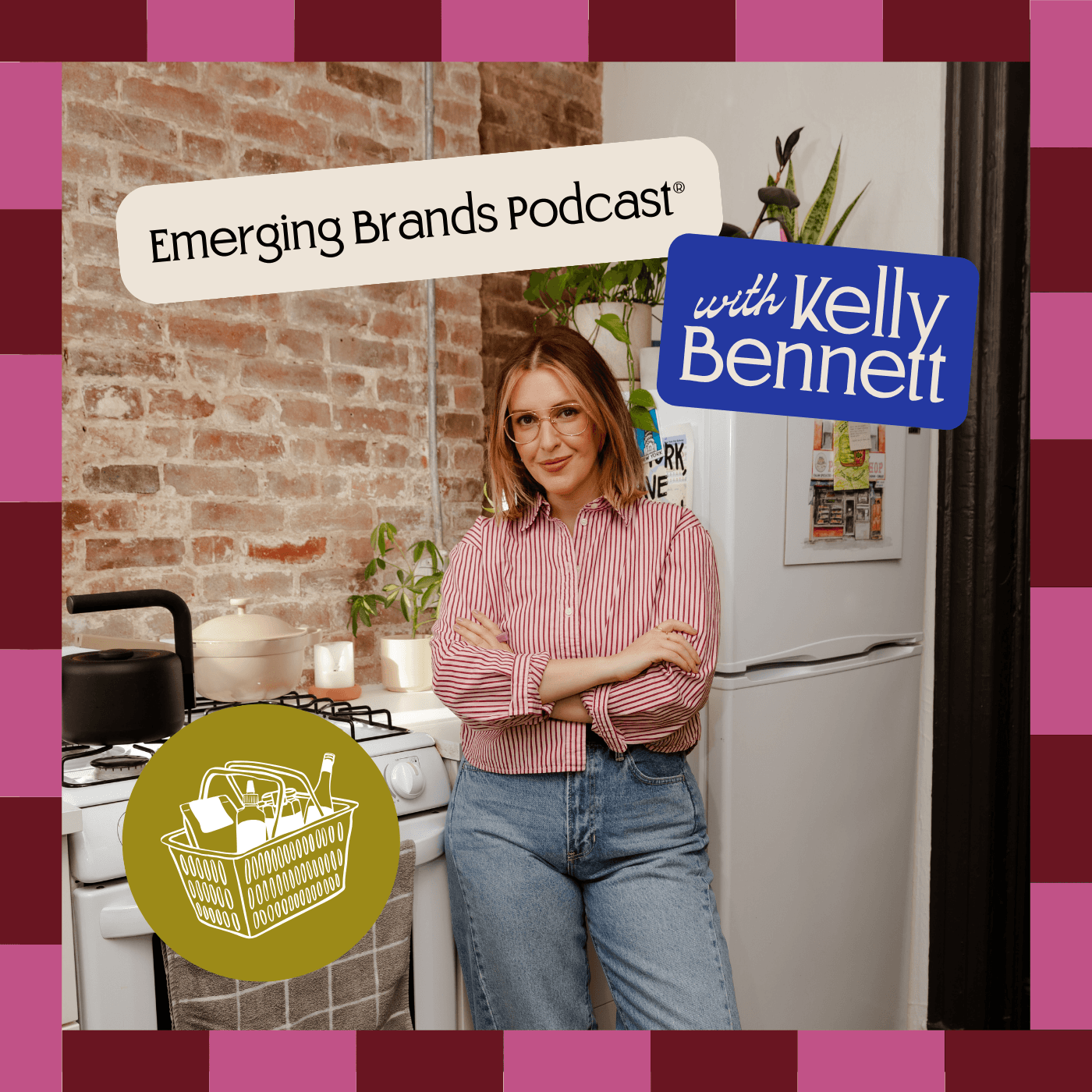
Podcast Overview Title: Emerging Brands Podcast Host: Kelly Bennett Description: This podcast explores the stories behind emerging Consumer Packaged Goods (CPG) brands, featuring insights from founders, industry experts, and practical advice for new brand builders.
Episode Title
Loonen Guest: Clara Sieg, Founder of Loonen Episode Description: Clara Sieg transitioned from a General Partner at Revolution Ventures to create Loonen, a bottled water brand focused on purity and safety for families. This episode covers her journey, the motivation behind Loonen, and the innovative solutions the brand brings to the water category.
---
Key Topics Discussed
- Foundational Inspiration
- Clara's personal journey through pregnancy led her to focus on health and safety, particularly regarding water consumption.
- The discovery of microplastics and endocrine disruptors during her pregnancy spurred her to seek cleaner and safer alternatives for her family.
- Water Category Challenges
- Confusion in Bottled Water: The bottled water category is often misleading, with many brands lacking transparency in testing for contaminants.
- Environmental Concerns: The podcast discusses concerns regarding contaminants like microplastics in water and the implications of plastic packaging on health.
- Loonen's Unique Approach
- Third-Party Verification: Clara emphasizes the importance of external verification for building consumer trust in a market that traditionally lacks it.
- Production Method: Loonen sources water from high-quality springs and utilizes advanced filtration methods to produce bottled water free from contaminants while retaining essential minerals.
- Brand Development
- Clara partnered with David Kimmel, a seasoned expert in beverage operations, to leverage his knowledge in launching Loonen.
- The brand emphasizes beautiful and functional packaging, utilizing glass bottles designed for consumer convenience.
- Market Strategy
- Pricing Strategy: Loonen's price point is competitive within the premium bottled water market, focusing on quality and transparency.
- Distribution Plans: Initially launched in California, Loonen aims for regional and national distribution, using platforms like Amazon to expand reach and brand awareness.
- Insights on Amazon and Direct-to-Consumer Sales
- Clara shares lessons learned about leveraging Amazon for brand exposure and converting sales.
- The challenges of selling fragile glass bottles through e-commerce are noted, emphasizing the realities of the CPG space.
- Advice for Emerging Founders
- Clara stresses the importance of acknowledging what you don't know and building a knowledgeable team to fill those gaps.
- The significance of balancing operational execution with a long-term vision for brand growth is highlighted.
---
Key Takeaways
- Personal Motivations Drive Innovation: Clara's personal experiences catalyzed her journey to create a brand focused on safer consumer products.
- Emphasis on Transparency and Quality: The need for third-party verification and transparency in safety testing is crucial in building consumer trust.
- Strategic Market Entry: A thoughtful approach to market entry, including leveraging e-commerce platforms and local partnerships, is essential for new brands.
- Team and Culture: Building a supportive and knowledgeable team is vital for navigating the complexities of launching a CPG brand.
---
Conclusion The episode highlights Clara Sieg's commitment to improving water safety through Loonen and provides valuable insights for aspiring entrepreneurs in the CPG landscape. With a focus on transparency, quality, and consumer education, Loonen aims to redefine standards in the bottled water category.
Call to Action: Check out Loonen's offerings on [Amazon](https://go.shopmy.us/p-43689948) and follow them on social media for updates.
---
Disclaimer: This episode was sponsored by Glimpse, an AI-powered deduction management tool assisting CPG brands in recovering lost revenue from invalid retail deductions.
Written by AI. May contain mistakes. Listen to the episode to check what was said.
Chapters
Tap a time to open that second in VOIntroducing Clara Sieg and Lunen
1:18 to 2:28
Clara Sieg shares her journey and the inception of Lunen bottled water.
“Welcome back to the Emerging Brands Podcast with Kelly Bennett.”
Personal Journey to Lunen
2:28 to 5:26
Clara discusses her personal experiences that led to the creation of Lunen.
“Yeah, I mean, it really grew from personal obsession.”
Sourcing and Quality Control
5:26 to 9:21
Clara explains the sourcing, filtration, and quality control of Lunen water.
“And I was super conscientious about the formula that I chose.”
Design and Packaging Insights
9:21 to 10:53
Discussion on the thoughtful design and packaging of Lunen bottles.
“And then we remineralize with the highest quality minerals.”
Strategic Market Positioning
10:53 to 14:01
Clara outlines the strategic approach to launching and positioning Lunen in the market.
“And it does taste really refreshing too and just like a really nice mouthfeel.”
Launching Loonen in California
14:01 to 15:48
Learn about Loonen's strategy and market presence in California.
“On Amazon, we're quite a bit more expensive.”
Lessons Learned from Amazon
15:49 to 17:48
Discover key insights on utilizing Amazon for product launches.
“For Amazon in particular because I know many of the listeners of the podcast are emerging brand founders.”
Navigating the Competitive Landscape
17:49 to 20:14
Understand the challenges of launching in the CPG beverage market.
“and how to balance that of like you have a cool product, but you also have to have some education of why they need or why they could be making this swap.”
Consumer Awareness and Transparency
20:15 to 22:20
Explore the importance of consumer education and product transparency.
“And you've just, you got to have a stomach for it.”
Building a Strong Brand Foundation
22:21 to 24:13
Insights into creating a brand with purpose and community focus.
“It's very much how I make my own food choices as a consumer and the brands that I'm the most excited about.”
Transcript
Automatic transcript. May contain errors.0:00Clara Sieg:Welcome to the Emerging Brands podcast. Sharing the stories behind brands you'll want to shop next. I'm your host, Kelly Bennett. I am a New York City-based brand strategist for CPG Food and Beverage Brands. In each episode, I'll take you behind the scenes of founders that are building better-for-you products and bringing them to market. it. Also, I talk to brand builders, retailers, industry experts, and tastemakers who help bring those cool products to your shopping cart. You will hear stories of real-life founders, their launch strategies, and practical advice you could use to grow your own brand or simply discover what's next on shelf.
0:42Clara Sieg:And the best part is you could shop all the brands featured on the show. This podcast is brought to you by Glimpse. Glimpse is an AI powered deduction management tool that disputes and recovers invalid deductions, winning brands, thousands of dollars and hundreds of hours back to founders so that they can focus on what really matters most. If you're a brand selling in retail, go to tryglimpse.com backslash trial for 30 days free and let them know I sent you. Now let's dive into the new episode. Hi everyone. Welcome back to the Emerging Brands Podcast with Kelly Bennett. Today I have Clara Sieg.
1:28Clara Sieg:She is the founder of Lunen, which is a new bottled water brand that I'm literally sipping as we record just right off the top. This sparkling water is incredible. I was telling Clara before we hit the show that I probably have had every sparkling water on the market and the bubbles in this sparkling water is a knockout. So Clara, Thank you so much as a sparkling water nerd. I consider myself the same. So it's great to hear from you that you love it. Yes, I really genuinely do. So let's dive into Lunen. I know that you just launched in November 2025 and you've already gotten into Amazon. You're growing in California, soon to be East Coast distribution, which makes me excited being based in New York City.
2:20Clara Sieg:But I would love to hear about what was the white space that you saw in the bottled water category? And how did the idea of Lunen come to be? Yeah, I mean, it really grew from personal obsession. So an emphasis on the personal piece of it. So I'll jump right into that. I had a baby. She'll be two in March, which is crazy. and the path to getting pregnant was longer and more complicated than expected. And I ended up going through IVF and along that road, tried to do everything in my power to support a good outcome. And that meant looking to lifestyle changes that I could pair with the IVF. And ultimately, that led me to learn a lot about endocrine disruptors and microplastics and plastics exposure and, um, how detrimental those things are to our fertility, you know, a host of other, um, problems from a health perspective that we're learning about every day, but really, um, studied and known to be bad for fertility.
3:31So, um, I went through our household and really tried to make foundational changes to eliminate those or at least reduce exposure and let us live a normal life kind of on a 80-20, like set the foundation and run with it. And every category of consumer sort of had an answer. So, you know, food, we eat mostly organic. We use glass food storage containers. We don't use nonstick. Beauty and personal care. I use the clean brands that you guys all know and have probably switched to. And same with home cleaning, like use branch basics at home. And there are a number of other brands like that, that, that exist and have given the easy button solution for the consumer once they figured out the problem.
4:14And then we got to the water category and it was the thing you drink most of all day, every day. And your, your fluid volume actually goes up by about 50 % through pregnancy. So it's actually even more impactful than you would think. And it was just super confusing. I was reading a lot more about concerns with tap water. And we were living in a rental and couldn't put an under counter filtration system in. And so I look for a bottled solution that really checked the box on that. And the bottled water category has a lot of plastic, a lot of plastic lined aluminum, a lot of plastic lined cardboard.
5:01and brands that are really anchored on geography as a proxy for your purity, but not necessarily transparent in their testing and test results. And that just sat with me and I got sort of obsessed with it. And when I went back to work, I stopped breastfeeding and transition my daughter on to bottle feeding. And I was super conscientious about the formula that I chose. And then the main ingredient when you mix formula is water. And that was kind of the straw that broke the camel's back for me in terms of like, I might be 80, 90 % plastic at this point, but my baby isn't. And I want, I felt compelled to do something and just started thinking about what that could look like, how it could come to life.
5:57And I reached out to who's now my co-founder. I named David Kimmel, who's wonderful and who I'd known for quite a long time because he was on the founding team at Spindrift, where he led all operations and R &D for the first decade of the business. Got it. And he is, he just knows the water and beverage category inside and out. And when I started talking to him about this, it clicked for him. And when it clicked for him, I knew there was something. You were onto something. Yeah. So we left our jobs about a year ago now, last January.
6:30Clara Sieg:Oh, you went all in even before launch? Oh, yeah. I mean, like, it takes a lot to start a company. No, it does. No, no, no. This is cool. Okay. I didn't even realize that. Yeah. And I would say, like, again, back to the personal piece of it for me, um, pregnancy. And then, um, the first months of being a parent actually increased my risk appetite because it was something really, really hard that I'd never done before that I had no, um, real clarity on whether or not I'd be able to do it in a reasonable way. And, you know, we made it our ways through that and have a beautiful daughter. And, um, And it's sort of, I think for many women, it is a really empowering experience where you're like, oh my God, my body just made another human and we've kept her alive for however many months.
7:20And she seems to be thriving. So I can probably start a bottled water company. I love it. So yeah, we started ideating on how this would come to life. And originally our thinking was with David's operational expertise, we would have a flexible supply chain. we'd be able to really source from any spring that met our testing standards and bottle it and always use glass. And then we spent about six months going all over the U.S., meeting with different springs, going through test results, et cetera. And all of them had some footnote, right? Because our world is one connected water system. And, you know, there are better, much higher quality places than others.
8:10But ultimately, you know, our world has stuff in it, right? Whether it's nitrates, arsenic, radium, etc. It is in our groundwater. And so we decided that we wanted to really take a production method that was in line with effectively the way that the World Health Organization recommends you treat water, which is starting with the highest quality starting point. So for us, that means really high quality spring sources, and then pairing it with the highest quality filtration, mineralization, and bottling practices alongside of it. And so it's really borrowing from the best of both worlds. You have the purified water camp, which is all municipally sourced, and modern filtration is really powerful, but it's not perfect.
9:00And so disinfection byproducts and stuff that comes from legacy piping and that sort of stuff in the US, it's really, really challenging to fully filter out. That doesn't come from natural spring sources that we use. And then we use physical membrane filtration only. So we never introduce chemicals into the process. And then we remineralize with the highest quality minerals. So think Celtic sea salt instead of refined table salt um potassium magnesium calcium that's all been lab tested um and then we only ever bottle it in glass um and that is it's a really beautiful glass bottle too i was impressed when i picked it
9:42Clara Sieg:up i'm like wow they did not spare on beautiful packaging and also just it feels like high quality glass too when you pick it up yeah in case you haven't noticed i'm a little bit obsessive and there were a couple of things that I really cared about in terms of bottle design so we did do our own custom glass mold one was that it's thin enough to always fit your car cup holder a lot of bottles don't and then they're like sloshing around on your passenger seat and that's just a poor consumer experience the spout is quite a bit wider than what's norm in industry I think it's a much nicer drinking experience because it feels like you're drinking from a glass on some level.
10:24But then also accepting of the fact that folks love their hydration packets and greens mixes and stuff. And it just makes it easier to mix those things in if you choose to. And we put some rippling at the bottom of the bottle and that's just for a little bit of added grippability. And so it feels really nice in hand.
10:43Clara Sieg:No, I got those cues absolutely when even and taking it out of the packaging and just opening them. And it does taste really refreshing too and just like a really nice mouthfeel. Before you went all in on Lunen, what was your nine to five? Like what was your background? I was on the investing side, on the venture capital side for the past 15 years. So I was a general partner at a fund called Revolution. We did a lot of consumer oriented stuff. And it was through that lens that I've always really believed that the best companies are born from somebody who's really passionate about solving a problem that they feel and also kind of a simple solution to a big category with TAM and tail lens.
11:39And when we look at the category, you know, the consumer has woken up to the issues with plastic. I think wave 1.0 in water was really focused on sustainability. So introducing packaging with less plastic like aluminum or cardboard. But I think this next wave is really, now that we know more about the implications of plastics and leaching on our health, trying to make smarter decisions around particularly water where, you know, it's not just the thing that you consume the most of. But it also has a fundamentally different supply chain than a lot of other categories of consumer because it's an extremely long shelf life and it's not temperature controlled.
12:24So that means it's sitting on hot trucks and warehouses that are not temperature controlled and then on shelf under light for however long it takes to sell. And what causes plastic leaching? It's light exposure, heat exposure and time. And so that's, you know, you think about like plastic or sorry, yogurt in a plastic container, short shelf life, cold chain, not as much chance for leaching in any regard. And so those are just like little things that we think are important when you think about the category.
12:53Clara Sieg:When you were starting to put the strategy together to bring the product to market, can you give us some broad strokes of how you were seeing this? Because you are doing something that's going to be higher price point, glass bottles, doing something that, like you said, is the next wave. So you're really introducing and educating people on the importance of this. I would love to hear your point of view of how you thought about from a strategic point of view of bringing the product to market. Yeah. So the category is interesting in the fact that premiumization happened in the water category a long time ago.
13:32But the consumer didn't get much for it outside of bottle design, to be totally candid. And like some water is great, right? Lots of people have their own favorites. We hope they convert over to Lunen at some point. But so from a pricing perspective, we want to sit in line with category. Right now, our MSRP is between$350 and$399 at retail. On Amazon, we're quite a bit more expensive. Turns out it's expensive and not something we want to do long term to ship glass bottled water all over the U.S., but it's really a bridge for us to national distribution because we get asked all the time when we'll be available in certain places.
14:19And the reality is that we can't be live nationally from day one. It's just too hard in a beverage category where we want to grow brand awareness thoughtfully in market and pair that with an on-premise strategy where we're sitting in cafes, we're sitting at coffee shops, we're where you show up throughout your day because the occasion of drinking water is really from morning to night.
14:46Clara Sieg:That makes sense. And so you're starting, you're based in California, right? I'm based in the Bay Area. Very cool. And we launched in the Bay Area towards the end of November. We're in about 200 doors there now. Amazing. Yeah, it's been a really fun couple of months. Crazy. We're in SFO. We're an amazing restaurant partners like Flower and Water and Bodega and Penny Roma. And then LA, we are getting ready to launch retail in the next couple of weeks. And right now we're at a bunch of our similarly favorite cafes and restaurants like Leora and Dialogue and Croft Alley. and that's the strategy on California right now and focus there and then the hope is that we start taking on a broader regional and then national accounts later this year.
15:48Clara Sieg:Very cool. For Amazon in particular because I know many of the listeners of the podcast are emerging brand founders. They're just getting started. Curious about Amazon. Is there any lessons learned so far just from Amazon of launching a new product and that's relatively new to market and leveraging Amazon? I think Amazon is an incredible platform and conversion rates are so much higher than they R D to C, um, on your own website. And that's a really, really powerful tool. It's also really easy to link to, um, to the extent that you have people talking about your brand. Um, I will say for us, um, we have a heavy product that can break.
16:39Um, and so that's been a doozy and that's not necessarily specific to Amazon. That's just the reality of glass bottled water. Um, so that's just a footnote cautionary tale. We only, uh, are on Amazon from an online perspective. We don't have our own DTC, um, fulfillment.
17:05Clara Sieg:Which makes sense because this is a conversation I have with so many of my clients. Cause I work with, uh, food and beverage CPG pre-launch and so many founders come in. They're like, we're going to launch DTC. And I'm like you probably won't because it's just not the nature of how most people shop food and beverage though Amazon to get them into new hands and to build exposure it really is a smart place so thank you for sharing that I like how you've mixed on-premise local but getting a sense of who your consumer is like out in the wild so to speak you leveraging Amazon getting that data and then growing your distribution.
17:46Clara Sieg:So thank you for breaking that down. That was perfect. Is there any other piece of advice you would share with someone who's just starting out maybe doing something that is the next wave of consumerism, things that people see on the horizon, but takes a bit more of the back end to get it organized because you're one of the early movers as well? and how to balance that of like you have a cool product, but you also have to have some education of why they need or why they could be making this swap. I would love to hear your perspective on that.
18:27I think the biggest lesson I took from sitting on the other side of the desk for a long while was really embracing knowing what you don't know. Okay. And then building a team around you that can fill in those gaps. So I think the biggest mistakes I've always seen in founders are those who are not embracing of what they don't know and don't ask for help. And then when you do raise your hand for help, it's like in some sense like too late. So I've really focused on building a team that has real depth of knowledge operationally from a marketing perspective, from a field marketing perspective, on the distribution side, and screening really closely from a cultural perspective of being able to pair gritty grinder mentality, get stuff done with thinking about the team.
19:28a vision and what we want to build long term and bouncing back and forth between those two. And I think that skill set is really, really important for an early stage company if you have a big vision.
19:38Clara Sieg:Well said. I like that analogy because that very much resonates with me, my approach, the founders that I look to work with as well. It's like who's willing to roll up their sleeves but also sees the bigger vision and has a great story and purpose and drive behind them and able to, like you said, bounce between both because you do need both. I think to really cut through the noise and have a successful brand long-term. And the CPG category is hard. I mean, we pick glass bottled water, probably the hardest, least differentiation, most competitive category there is. And you've just, you got to have a stomach for it.
20:19Yeah.
20:20Clara Sieg:No, you chose a pretty intense category. I respect it. I was like, okay. When I heard about your brand, I'm like, I am so curious to learn how Clara is going about this because it's not easy. Like you really chose easy. It's hard, but I think it's also, if we can win and water, which is, you know, the base of every beverage, I think we have a real opportunity here. You know, I talk about this a lot, but the USDA organic certification didn't come out until 2002. And people forget the dramatic amount of change that's happened in the food category since then. And sort of for the consumer, the ability to screen for this sort of stuff.
21:06I grew up in the 80s and 90s in Pittsburgh, Pennsylvania, not really the bastion of health. And my mom did all of this in our household, Right. And she did the research herself and figured out how to make the right eating choices for us, which milk to buy, et cetera. And, you know, I think. A lot of households are doing similar stuff today as it relates to these environmental toxins and endocrine disruptors and plastics exposure. and my hope and sort of vision for what we hope other brands join in is that you know in a number of years the consumer has a reliable framework to think through what they're buying that foots to testing transparency you know we test for over 350 different um things and provide that testing really transparently via qr code from back of label onto site um packaging knowing what's in
22:06Clara Sieg:your packaging, knowing what your food is sitting in and stringing that all together to feel really confident in the choices you're making of what you're bringing in your household. So you can have that foundation and then live your life 80-20. I love that approach. Thank you for breaking that down. It's very much how I make my own food choices as a consumer and the brands that I'm the most excited about. It's the ones that go that next step. A few extra steps, I should say. And I just admire what you're building and also your background and how you're going about it. And also, again, this sparkling water.
22:45Clara Sieg:It's a knockout. Thank you. I'm so, so glad. Yeah, the thing, like the funny thing is, you know, when you come to market, you have all these theories about what the consumer is going to attach to. And I was like, people are going to be obsessed with our test results and they're going to love that we have such pure water. And the reality is the thing that I'm most proud of is the taste. It tastes really good, right. That's what keeps people coming back and everyone's like, I didn't know water could taste as good. Yeah, no, I'm genuinely excited that you're coming to the East Coast too because I'll definitely keep it stocked in my New York City apartment for sure.
23:18Well, you can get us on Amazon today.
23:20Clara Sieg:Okay, perfect. That's a bridge. Yes, and that goes to my last question of where you would love to send people to shop Loonin today. So Lunan, it's spelled L-O-O-N-E-N, like the loon, the water bird, with an E-N on the end. And you can find us nationally available on Amazon. And then we've got regional distribution and a lot of retailers that you can find on our website. That's lunan.com in California, spreading quickly. And then you can find us on social at Lunan. Amazing. Well, congratulations on what you've built in just a short period of time, launching in November. We're recording in February.
24:02Clara Sieg:I know in entrepreneur years, it probably feels like you've lived 10 lives, but truly, you've done such an incredible job in such a short period of time. And I am really excited to see where your brand grows from here. Thank you so much, Kelly. We really appreciate you having us on and having the conversation. Of course. Thank you, everyone, for listening. Go check out Lunen, and I'll see you on the next episode. Bye. This episode was brought to you by Glimpse. As we know, building a brand is not as sexy and glamorous as it looks on social media at times. A lot of those unsexy problems come into play when brands start to scale in retail distribution.
24:42Clara Sieg:Founders are always incredibly excited to see their products on shelves at major retail chains, but they don't realize all the hard work that starts to begin. Retailers and distributors are known for their processes of deducting amounts from invoices. Most of the time, those are totally valid. Promos, slotting fees, free fills, and all the things that brands agree to to be part of the retail experience. But sometimes those deductions are invalid, costing brands thousands to millions in fees. Actually finding those needles in the haystack though and fighting to win back lost revenue, it's a costly, manual, and time-consuming issue.
25:31Clara Sieg:And that's where Glimpse comes in. Glimpse is an AI-powered deduction management tool that disputes and recovers invalid deductions. Winning brands thousands of dollars and hundreds of hours back to founders so that they can focus on what really matters most, scaling their businesses. With a team of in-house deduction experts who come from some of the most successful and profitable CPG companies. And custom-built AI with 100 % accuracy and precision. you'll recover money that you never should have had leaked in the first place if you're a brand selling in retail go to try glimpse.com backslash trial for 30 days free and let them know i sent you thank you again for listening to this episode of the emerging brands podcast it really means so much to me that you listen to this show share it with your friends and support it if you are a cpg food and beverage founder, and you're ready to launch a brand people want to shop, head to withkellybennett.com for the details.
26:46Clara Sieg:And as always, thank you so much for listening, shopping the brands featured on the show, and following brands I'm working with. It means so much. See you on the next episode.
From the publisher
After a decade as a General Partner at Revolution Ventures, Clara Sieg turned her analytical eye toward the most foundational thing we consume: water. Triggered by the toxins and microplastics she discovered during her pregnancy, Clara traded her venture capital seat for a mission to build a transparent, reliable solution for the modern family.
Loonen is the first third-party-verified water that is perfectly pure—stripped of contaminants while remaining rich in essential trace minerals. By combining her investing expertise with a commitment to safety, Clara is setting a new standard for the water category and ensuring our most basic necessity is also our safest.
Inside the Episode:
-
The reality of microplastics in our water infrastructure and how Loonen is engineering a cleaner path.
-
Why Clara insists on external verification to build trust in a category that has traditionally lacked it.
-
How motherhood informed the brand's mission to support the long-term health of families.
This podcast episode was made possible by Glimpse — the AI-powered deduction management tool helping CPG brands recover lost revenue from invalid retail deductions. With in-house experts and custom-built AI, Glimpse saves founders time, money, and countless hours so they can focus on scaling. Try it free for 30 days at tryglimpse.com/trial.