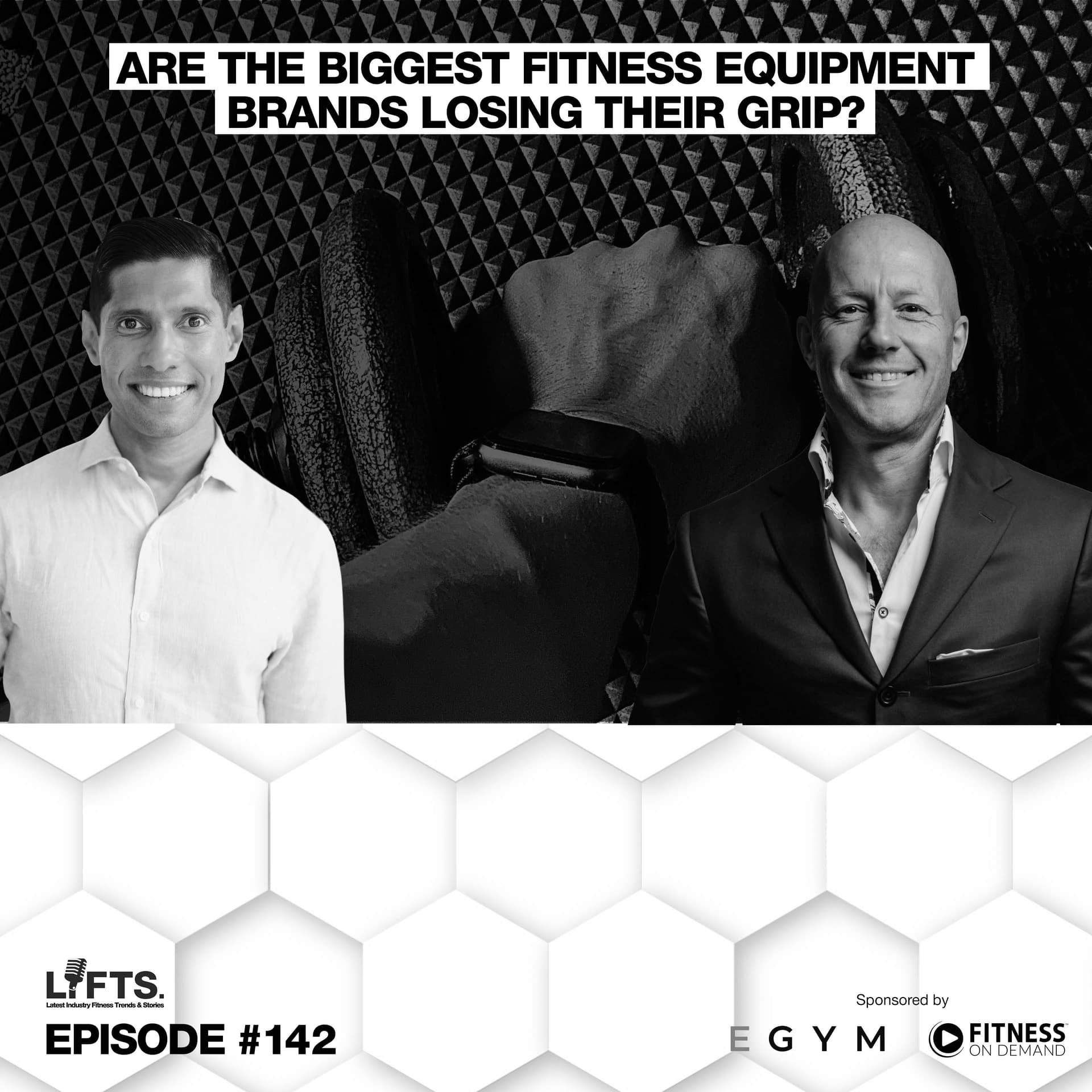
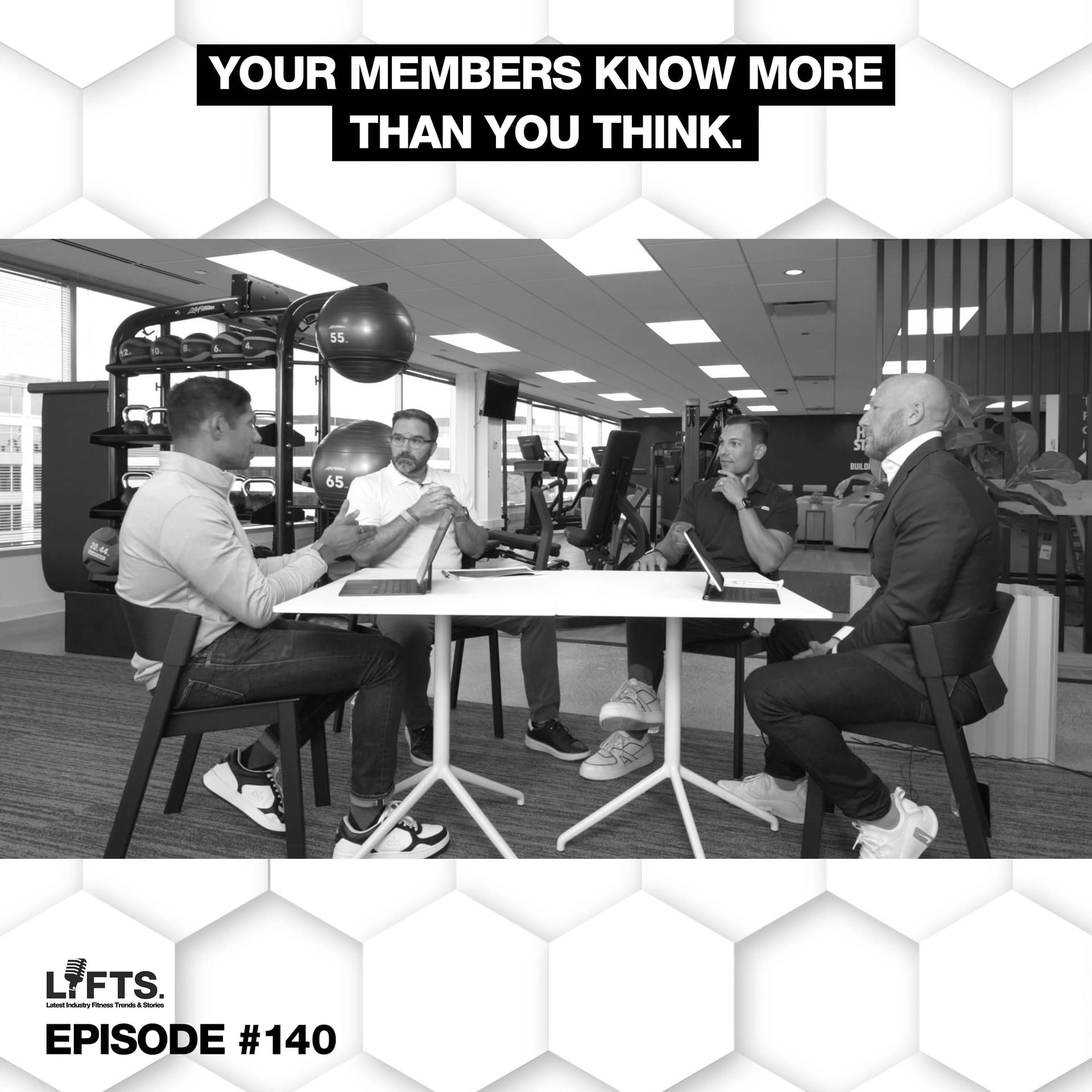
In short
Podcast Episode Notes: LIFTS Episode 111 - Strength, Pilates & Wellness Are Booming, But Something Isn't Adding Up?
Episode Overview Podcast Title: LIFTS Hosts: Matthew Januszek & Mo Iqbal Guest: Sean Turner, CEO of Les Mills US Release Date: [Insert Release Date] Duration: Approximately 30 minutes
In this episode, the hosts discuss the challenges of member retention in the fitness industry with Sean Turner, who emphasizes that retention issues are fundamentally human, not content-based. They explore insights from the Les Mills 2026 Global Fitness Report, which reveals growing trends in wellness and fitness.
Key Themes and Concepts
- Member Retention Challenges
- Retention remains a significant challenge in the fitness industry, with statistics remaining stagnant over the years.
- Sean Turner emphasizes that retention is not merely a content issue but is tied to human experiences, confidence, and belonging.
- The episode discusses the "confidence gap," highlighting that many new members lack assurance in their fitness journey.
- The Role of Technology and Content
- The fitness industry has heavily invested in content, technology, and on-demand solutions, which has not effectively addressed member retention.
- Turner argues that fitness cannot be treated like a streaming service (e.g., Netflix) because physical activity requires active participation and motivation.
- The need for human interaction and coaching is critical in creating a supportive environment for gym-goers.
- Importance of Group Training and Experience Design
- Group training is crucial in fostering a sense of community and long-term engagement, which contributes to retention.
- The episode discusses how fitness operators often misunderstand motivation and disengagement, leading to higher attrition rates.
- Structured systems that are scalable and personable are necessary for enhancing member experiences.
- The Mental Health Element
- Mental health is increasingly recognized as a vital aspect of fitness, with a 29% rise in individuals citing exercise for mental wellness since 2021.
- The shift from aesthetics-focused fitness to a more holistic view of health and wellness is becoming prominent.
- Insights from the Les Mills Global Fitness Report
- The report reveals that:
- 94% of gym members identify gyms as crucial for overall wellness.
- There is a significant increase in regular exercisers, from 44% to 61% since 2018, despite a drop in self-reported confidence.
- The importance of community and belonging is emphasized as a driving force for participation.
Key Takeaways
- Human-Centric Approach: Fitness operators must prioritize human interaction, creating welcoming environments to improve retention.
- Educating Members: Effective onboarding and member education are crucial for easing the intimidation many feel regarding fitness.
- Emphasis on Community: Programs that foster community through group fitness can significantly enhance member loyalty.
- Mindfulness Focus: The movement toward wellness and mental health in fitness is becoming more prevalent, shifting the industry narrative.
Future Directions
- Les Mills plans to launch new initiatives focusing on heavy strength training programs and improving the accessibility of Pilates through innovative instructor training models.
- The need for clubs to adapt and embrace new trends while fostering inclusivity and confidence among members is crucial for sustainable growth in the fitness industry.
Conclusion In summary, the episode emphasizes the necessity for a shift in the fitness industry from content-heavy strategies to a more human-centric approach that prioritizes engagement, community, and wellness. The insights from Sean Turner and the findings from the Les Mills report provide a roadmap for fitness operators to enhance member experiences and retention in an ever-evolving landscape.
For further insights and to access the Les Mills Global Fitness Report, visit [Les Mills](https://www.lesmills.com/clubs-and-facilities/research-insights/fitness-trends/2026-global-fitness-report-strength-and-wellness-to-drive-next-wave-of-member-growth/).
Written by AI. May contain mistakes. Listen to the episode to check what was said.
Chapters
Tap a time to open that second in VOChallenges in Retention
0:00 to 0:34
Learn about the ongoing challenges in customer retention within fitness clubs.
“And retention is still one of the biggest challenges.”
Introducing Sean Turner
1:00 to 2:24
An introduction to Sean Turner, CEO of Les Mills US, and his extensive background in fitness.
“But before we introduce our special guest today, I want to give a bit of context and frame the conversation for our listeners who might not be familiar with our guest or the brand who he represents, which is Les Mills.”
Sean's Fitness Journey
2:24 to 4:20
Sean shares his journey in the fitness industry and insights on its evolution.
“He brings an operator first and global perspective to our conversation.”
History of Holmes Place
4:20 to 7:12
Sean discusses the origins of the Holmes Place brand and its impact on the fitness industry.
“What do you call these big experience events where they're almost like a kind of rock concert?”
Dress Code in Fitness
10:16 to 12:20
Discussion on the importance of presentation and elegance in the fitness industry.
“I did not know about, but you and I last time I think we met, we spoke about your home's place history.”
The Evolution of Fitness Attire
12:20 to 14:02
Exploring shifts in gym attire and professionalism in fitness settings.
“They are showing up for work because they know that they've got to do more to win that person over.”
The Role of Professional Appearance in Fitness
14:02 to 14:39
Explore the impact of professional attire on brand perception in fitness.
“And there were elements in the tradition of the company that was very important to be elegant because of the spaces and the design and everything.”
The Intersection of Fitness and Healthcare
14:40 to 16:46
Discuss how the fitness industry is aligning itself with healthcare standards.
“How far I'd go, you know, if it's suits and ties or just jackets or, I mean, we spend hours on that stuff.”
Gym's Role in Mental Health
16:47 to 17:46
Discover how gyms are increasingly seen as vital for mental well-being.
“because I think you both make an interesting point.”
Shifts in Exercise Motivation and Awareness
17:47 to 21:52
Understand the transition from aesthetic-focused fitness to holistic health awareness.
“really work hard type of environment where you're sweating on the floor or you're laying on the floor in a pool of sweat.”
Show all 28 chapters
Challenges in Attracting and Retaining Gym Members
21:53 to 24:26
Examine the difficulties faced by gyms in both attracting and retaining members.
“mental health, reducing stress, recovery, and general happiness, actually, in a very kind of hectic digital first world sometimes.”
The Importance of Experience in Fitness
24:27 to 28:00
Learn about the significance of experience and community in gym success.
“train, you train and continue to nurture that community?”
Understanding Member Retention and Acquisition Costs
28:00 to 28:53
Learn the costs associated with member acquisition and the importance of retention in the fitness industry.
“So what we wanted to do with that study is who are the most value participants in your club, okay?”
Rising Participation vs. Declining Confidence in Fitness
28:53 to 29:55
Explore the paradox of increasing participation in fitness yet declining confidence among exercisers.
“And there's a couple of examples in here where if you look at page five, regular exercises are up 61 percent from 44 percent in 2018.”
Challenges of the Post-COVID Fitness Landscape
29:55 to 31:15
Discuss how COVID-19 has reshaped member engagement and support in fitness clubs.
“Now, clearly, Les Mills are working on that, which is part of the magic of some of your programmings.”
Bridging the Gap for New Lifters and Gen Z
31:15 to 34:25
Identify strategies to support beginners and Gen Z in their strength training journey.
“And often, as you touched on before, Mo, people that like to exercise, we can't understand how people wouldn't be motivated to work out.”
The Role of Technology in Fitness and Trust Building
34:25 to 36:22
Examine how technology can enhance fitness experiences and build trust among gym-goers.
“Give them the social element that they seek, especially Gen Z.”
Exploring the Impact of GLP-1s and Obesity Trends
36:22 to 41:51
Learn about the growing use of GLP-1s in the U.S. and the implications of obesity trends in fitness.
“i think you know human-led technology enabled is kind of a theme that i think is kind of be going to be driven more in a lot of health clubs.”
The Rise of Pilates and Strength Training Demand
41:51 to 42:07
Understand how Pilates meets the growing demand for strength training and confidence building.
“It's only starting to get traction and there's awareness about it in other countries.”
Exploring Pilates and Its Growing Popularity
42:07 to 44:28
Learn about the rising demand for Pilates and its challenges in gym implementations.
“But yes, that was in Australia where I spoke in the Gold Coast and I mentioned GLP-1s and I saw all these looks like, what is that?”
Les Mills' Innovations in Wellness and Accessibility
44:29 to 46:46
Discover Les Mills' strategies for making wellness programs more accessible.
“The two areas we focused on in our evolution over time and a lot of our innovation collection is focused on it is really the growth of strength and the growth of mind-body for wellness type activities.”
Pilates Reimagined: A New Approach
46:49 to 49:10
Hear about the launch of a new Pilates program that incorporates music and flow.
“And one of the appeals to that is that we can get a boutique-like experience in the clubs, and it's easier for them to recruit and train instructors in that space.”
Future Directions for Les Mills and Pilates
49:11 to 51:41
Insights into upcoming Pilates classes and how they aim to overcome industry challenges.
“We launched Pilates, and we call it Pilates Reimagined.”
Final Thoughts on the Fitness Industry's Evolution
51:41 to 55:40
Reflect on the changes within the fitness industry and Les Mills' role in it.
“We can do a Pilates podcast and ask a few questions as we're going through it.”
The Current State of the Fitness Industry
56:00 to 56:48
Discussion on the inclusivity and direction of the fitness industry in 2023.
“I just, you know, kudos to Les Mills and what they're doing.”
Mindfulness Over Aesthetics
56:48 to 57:39
Exploration of the shift from aesthetic-based fitness to mindfulness and wellness.
“By and large, there is a general consensus on the strategy, and it seems to be the right one.”
The Death of VR Fitness
57:39 to 57:51
A surprising revelation about the decline of VR in fitness, showcasing industry consensus.
“are really going to be transformative to make fitness even more mainstream than what it is today.”
Innovations in Group Fitness
57:51 to 58:45
Introduction of new programming focused on heavy strength training and its potential impact.
“But we've also just launched what we call Body Pump Heavy.”
Transcript
Automatic transcript. May contain errors.0:00Sean Turner:And retention is still one of the biggest challenges. You know, when I speak to people like Dr. Paul Bedford and other people, you know, you can continue with almost the same stats and they haven't changed much in the attrition or retention space for years. When we offer our services to clubs, we're looking at going far beyond just selling them content, but actually selling them a system that helps drive retention ultimately.
0:33Matthew Januszek:We're live. Welcome to this week's episode of Lifts. I'm Matthew Januzek and this is my co-host Mohamed Iqbal. And before he introduced our guest, we were chatting last week because a lot of times when we say welcome to our guest, it kind of goes silent and our guests do not generally know what to say in response. So Mo was going to come up with a really thought-provoking question so that it gives a nice intro into the person that we're interviewing today. So over to you, Mo.
1:00Mohammed Iqbal:Well, I really appreciate that. No pressure for me. But before we introduce our special guest today, I want to give a bit of context and frame the conversation for our listeners who might not be familiar with our guest or the brand who he represents, which is Les Mills. I actually had a chance to visit Les Mills HQ about a year ago, and I had a chance to go to a couple of their flagship locations. And Matthew, I have to tell you, I don't know if you've been to New Zealand and to Les Mills HQ, but it is one of the most interesting experiential experiences in fitness that I've ever been to. And you and I get to go to gyms, you know, almost on a weekly basis.
1:43Mohammed Iqbal:We're looking at something new. but this was really special. I mean, one, just the energy of the members who are there, the staff who are kind of all living the Les Mills brand, but just getting to the classes and taking the classes, it is an out of this world experience. And I've taken a ton of boutique classes. I enjoy boutique classes. Something about the Les Mills DNA, kind of owning the facility and owning the experience was something that is truly special. So today, I'm excited to have someone who I've known for many years. I forget how many years I've known Sean for, but our guest, Sean Turner, the CEO of Les Mills US.
2:24Mohammed Iqbal:He brings an operator first and global perspective to our conversation. Sean has more than 30 years of experience driving growth and transformation and innovation in health and fitness industry. His experience spans club operations, brand leadership, sales and marketing, and innovation. He is currently the US CEO of Les Mills. And I think, Sean, I want to move it to you here in a minute, but you being in your position today and working with such a global brand, you've got a unique vantage point on where fitness is today, how to scale it, and I think where it's also going to be going. So with that, welcome to Lyft.
3:08Mohammed Iqbal:We are really excited to have
3:10Sean Turner:you want thanks mo and very impressive uh introduction yeah wasn't it i know you like your history and you've done your research um yeah but i don't think i could have beaten that one um so i'm happy matthew with your new uh format here that you pass it to you know you give the hospital pass to mo but he handled it uh perfectly brilliant i love that um yeah really happy to be here good to see you guys uh for the kickoff of on the new year and uh i'm sure we start hitting um different conferences very soon and we'll see each other in person as well um but excited and excited for this year and where we're going in the fitness industry for sure well i whilst i didn't
3:55Matthew Januszek:ever get to see and hopefully one day i will but i never i've never actually been out to new zealand we we've been involved with les mills for a number of years i've known philip for quite some time. Many years ago, we launched the Smart Step with Les Mills in the UK. So we were a distributor of that product back then and the Smart Bar as well. So through that relationship, I got to go to a number of the, I don't know what you call it. What do you call these big experience events where they're almost like a kind of rock concert? What are they called? Les Mills Live? Les Mills Live. Yeah. So I've been to a number of Les Mills Live events.
4:32Matthew Januszek:And I think the last one I went to was one in Los Angeles that was just, I went into the bus and watched the whole film production behind the scenes. So I got a lot of admiration for what you guys have done as a company, but to start the conversation, you and I had a bit of a chat last week and I didn't realize that you've been in the industry as long as what you had. I thought you were one of these people that springboarded from something else and just got involved in fitness, but you're one of the OGs of the health and fitness from an operator's perspective, and you were running through a few of the stories about your previous life and how some of the things that we see or we talk about as being innovative today have actually been around for quite some time.
5:15Matthew Januszek:And so I thought a good place to start would be give us a little bit of a background on where you started but in addition to that uh it would be interesting to share your perspectives on a few of the things and terminology that that i guess the organization you were with spearheaded many many years ago when you were at home's place with some of the the whole wellness drive and longevity that we're talking about today and and just maybe for people who are not aware or some of the younger listeners you can explain where the origins of some of those things really
5:49Sean Turner:really started uh yeah um taking me back a few years um so yeah i mean i started in the industry i've always been active coming from the southern hemisphere country you know my kids are always amazed by how many sports we used to play back then instead of just focusing on one um and working out and everything was just part of our lifestyle um got into i studied uh i was in law school first then studied exercise science and then branched off into the exercise area and started off personal training when I saw a gap when I first moved to Eastern Europe and worked with a lot of athletes, you know, transitioning from a strength and conditioning coach into where the money was at that time with executives and in the movie world.
6:44Sean Turner:I got into working for Holmes Place when they went into that emerging market which was eastern europe i was based in the czech republic and that was really the start of my career in the health and fitness operator space and i was there for about 15 years um host place uh for people in the us that aren't familiar um was one of the or came to be one of the first lifestyle clubs um alan fisher who founded the the company uh incredible person great visionary and legend in the industry um decided that the old style of clubs which were kind of uh sweaty workout areas um for him and his friends at the time he thought there must be a better way.
7:34Sean Turner:And then they started a club that was more hospitality and leisure focused. And they started their first club in the late 70s on the Fulham Road. The street happened to be called Holmes Place. And that's how they got their name. I didn't know that. The first lifestyle club. If you had ever been in clubs back in those days, Matthew, you probably were I mean, club managers and teams used to wear suits. So it was pretty high-end we had a more of a concierge type service but the best of everything really and we're pretty high-end lifestyle clubs uh they grew that to a pretty big footprint eventually selling in the uk to virgin active um but they still have clubs uh in europe um and through the years that i was there we went through a number of uh evolutions uh with the brand expanded our brand into other areas but fundamentally we were really focused on wellness and we had a great tagline which was one life live it well and i remember when we did the rebranding we had a real challenge at thinking well there's such a great tagline how could we how could we change it but the idea was holistic health health really and wellness they always had spa a spa element and relaxation and recovery element.
9:01Sean Turner:Obviously, that's evolved. But the idea around holistic health, I feel that he had the vision pretty early. And we executed pretty well on that, and then went into emerging markets. So that's the big picture on how that evolved. And then as I said, I was living a life of almost retirement, except for working hard for Jonathan Allen in Portugal, where everyone's discovered now. And then I got Keith Burnett brought me over to Les Mills in Chicago. So I've been on the operator side for most of the time. And now I'm on the partner side, as we like to say. This episode is brought to you by our partners at eGym.
9:47Matthew Januszek:eGym believes the future of health starts on the gym floor with strength training at the center. That's why they're building an ecosystem of connected equipment, AI-driven software, and wellness solutions to empower operators and improve lives. Their mission? To transform healthcare from repair to prevention and make fitness accessible, personalized, and measurable for exercises of all shapes and sizes. See how this all fits together at egym.com.
10:16Mohammed Iqbal:I did not know about, but you and I last time I think we met, we spoke about your home's place history. I did not know how long you were at home's place for, nor did I hear about wearing suits. You know, I think there's something about elegance in general, you know, as I'm speaking in my Lululemon sweater here, that we have to go back to. We had our ABC summit last week, and our CEO, Bill Davis, for one of the evenings, had us get dressed up in suits. I was at CES, Sean. And so I kind of got the note. I probably didn't read the email notifications earlier, but I got the note while I was at CES.
10:57Mohammed Iqbal:I'm like, I didn't pack a suit and I was gone traveling for a week. So actually I was with Matthew over the weekend in Huntington Beach and he took me over to Fashion Island and we grabbed the suit off the rack in 40 minutes. And I actually got good compliments on it. So there you go. Shout out to Suit Supply for helping dress me up. Which is pretty funny because we were in between sessions. So I had to like run out, go get it and come back and make it in time for this evening session I was doing. But I think there's something about just elegance and elevating the experience and not being so carte blanche about it.
11:31Mohammed Iqbal:And I think we're kind of shifting back towards that. And I only say that because one, I do travel a lot. I'm seeing people more in real life compared to like the Zoom era. But I think for the last 10 years, we went through this shift of getting very casual, almost too casual. And then during the pandemic, we went into this other phase of getting so comfortable that you're showing up on video calls in things that, you know, you'd be very comfortable just wearing on a weekend at home. and over the last couple of years, something that I've noticed in gyms, in studios, and even in the workplace is people who want to be successful, who want to be high intent, who want to provide a good experience to their client, in this case, a gym member, they are elevating themselves.
12:22Mohammed Iqbal:They are dressing better. They are showing up for work because they know that they've got to do more to win that person over. And I've seen this even with flight attendants as well, right? but everyone is just paying a bit more attention to how they're showing up for their brand. I'm just curious, given your vast experience and just hearing that comment about showing up in suits, which I kind of really respect, any thoughts on that? Have you seen that shift happen as well?
12:50Sean Turner:Wow, that's an interesting one. Because anyone that used to work with me would know that once I became the chief digital officer and moved into the cool, innovative tech space, the first thing the executive team told me around a table after I'd bought a brand new Hugo Boss suit and thought I looked pretty fly was Alan was there as the chairman and he looked at me and he goes, I never want to see you dressed like that again. And it took me back to boarding school days where, oh man, is my hair cut properly? Is my tie up? And I was like, sorry, Alan, what do you mean? and he said, you know, someone that's working in innovation should never be wearing a suit.
13:37Sean Turner:So from now on, you never have to wear a suit anymore. So that was one of my outs on wearing a suit. So I'll be honest about that. I do think that, you know, maybe we come from an old school base. And when we were at HomeSpace, we, as an executive team, we often discussed if it's overkill or not, and how, you know, it's a workout environment. So should people be wearing suits in the sales team and front desk team or not? And there were elements in the tradition of the company that was very important to be elegant because of the spaces and the design and everything. And I think that's continued.
14:21Sean Turner:I'm not sure I always agreed with it, But I do agree with you, Mo, on a level that it does bring a certain amount of pride and consistency and deliver the level of service sometimes that you would expect that should be elevated in an environment like that. So I think there is something to it. How far I'd go, you know, if it's suits and ties or just jackets or, I mean, we spend hours on that stuff. So I'm not sure I can be a good gauge of that, but there's something in what you're saying, I would say.
14:55Mohammed Iqbal:I think for me too, I'm with you. When I started off my career at Sharper Chronics, I went in a suit. Every day I was in a suit. And when I got into fitness and also tech in around 2012, 2010, I'm with you. Like people said, hey, don't wear a jacket, just show up. And you kind of let your guard down a little bit. And here's why I think it's important. I really think that it's important in how you show up, how you show up for your team, how you show up for your clients, because how you show up as a brand reflects how serious your members or your clients are really going to take you. So I do see a little bit shift happening there.
15:33Mohammed Iqbal:The other thing that I've noticed, Sean, is when, and I speak about this a lot, we keep on talking about our industry converging with healthcare, that fitness and healthcare are at an intersection. Well, guess what? When you go to a hospital, what do you see? You can probably identify the nurses from the physician assistants to the doctors and anesthesiologists and so on. They all have the garb that they were. And that shows, I think, one, teamwork and execution, identifying your role and taking seriousness into what that role is. And typically, even underneath the garb, guess what doctors are wearing?
16:06Mohammed Iqbal:They're wearing a suit. Or most doctors, and then you tend to have this level of respect. And I think as we tend to deal with more intimate data and we're getting a little bit closer with the customer and we're trying to be informative and thoughtful on advising them on their health, which we'll get to the Les Mills report here in a few minutes. I just think that having a trainer or having a teamer does not need to be a full-on suit, but just making sure that you're showing up, that your shirt isn't wrinkled or that you're clean. Whatever that showing up means for you as an individual, I think will carry a lot of weight when we are speaking about advising someone on their health journey.
16:46Matthew Januszek:Yeah, I think just to bring it back to the report, because I think you both make an interesting point. And I would, sometimes when you say dressing up, people automatically think about a suit. But to your point, Mo, it doesn't necessarily mean a suit, but it means taking yourself seriously. It means taking care of your appearance, and it means representing the brand. Now, if that means a really, you know, hot sort of workout gear that's matching, that's nice brand, nice quality iron and all that sort of thing. I think that plays a part. And if we go over to the report, one of the things that I think is quite relevant is that there's a statement in the report which says 94 % of gym members say that the gym is one of the most important tools in their overall wellness and motivation to exercise for mental health has risen by 29 % since 2021.
17:41Matthew Januszek:And what comes over for me is that you do think of gyms, particularly I would say over the last four or five years, where you imagine this really work hard type of environment where you're sweating on the floor or you're laying on the floor in a pool of sweat. And that's really what probably people would think about when it comes to a gym or an exercise experience historically but when i when i look at some of the key points in the report it seems as though a lot of people are now exercising because they like exercise people are exercising because they recognize that it's important for mental health that the word wellness that you refer to at home's place is is a big thing in there and and so i think now the the workout and exercise environment is a lot more inclusive you do have this spa element where you've got red light and cold therapy you've got your personal training you've got your strength areas and so I think as an industry showing up in a professional way and and just I guess being able to compare yourself or align with more of a serious medical element as opposed to somewhere where you go and just beast yourself.
19:01Matthew Januszek:Personally, I think that's a direction that's important to go. But just curious, Sean, on your views in terms of some of the information that we've seen from your report, which seems to be a trend around more of a move to wellness than just traditional fitness.
19:21Sean Turner:Yeah, yeah, definitely. So, I mean, that's part of the discussion that we had last week on our call, Matthew, is around the shift from, and you've mentioned on this show a number of times, around the shift from aesthetics to holistic health, or, you know, if you will, health span, people are becoming much more aware of that. I mean, I was thinking the other day, I know more about my body now than I did when I studied exercise science. And that's because of how we track and how, you know, how we use wearables and, you know, how you can geek out on a lot of those things. And I've spoken to both of you at various times around our, you know, nocturnal habits or not, how healthy we are, what our sleep scores, et cetera, are.
20:13Sean Turner:And I think it's people are getting a lot more knowledgeable about their health and their demands on how to stay healthy um if that's not drinking by the way i'm over a year not drinking now it's a draft wow found it pretty easy actually um and then getting better at forming other habits so there's definitely a shift in the consumer and their awareness uh one of the biggest shifts we've seen because the the report we're speaking about uh we surveyed people um for in a generous general global fitness report over three different periods so what the first one we did was in 2018 the next in 2021 and we just did one last year and the biggest shift and the mover was moving away from you know into general health and also the other thing is much more people are actually regular exercises than they were in 2021.
21:15Sean Turner:I think it's somewhere from around 44 % to like 61%. So that's very encouraging because a lot of people were thinking, I want to start working out. And often back in the day, that would be, yeah, but I don't know how. And until you get them into the gym is quite a challenge. So we've seen that shift and we've seen people that were thinking about it actually take action, which is very encouraging for an industry and for all of us that want people to move more and more often. So those are the big shifts. As I said, the other big one is moving to a more holistic view of health. And the third one, which you touched on, is the element around mental well-being, mental health, reducing stress, recovery, and general happiness, actually, in a very kind of hectic digital first world sometimes.
22:13Sean Turner:So those are the big findings, yeah.
22:16Mohammed Iqbal:Something which we talk about quite a bit on this podcast, and even when we're offline, Sean, is we are in a really nuanced industry in that when you are building a product that your brain just wants to consume, I use Netflix often as an example because so many people will say, well, I'm going to build my fitness app based off of what Netflix does or what YouTube does, because they do such a good job in bringing you in. I said, you're starting from the wrong place right away. And clearly you haven't done anything in fitness. And the reason for that is because Netflix and YouTube are playing into something where our brain and our mind really wants to go, right?
22:52Mohammed Iqbal:They want to go to the couch. They want to just have that automatic thing come next. We just want to sit there and binge because that's comfortable for us. But when you talk about doing fitness, it is a really hard to do. And that's why when I came into this industry, I started listening to leaders like yourself and Matthew who've been there. And that's really how I really learned through mentors. That's really, and one of the things that people always told me is that it's really hard. It's hard to attract people into the gym, but it's even harder to keep them from doing the thing and keep them staying.
23:27Mohammed Iqbal:And when I think about Les Mills, you've got decades, multi-decades worth of history. A lot of people, and I've gotten an appreciation for this over the last couple of years in working with Les Mills, but the science behind it, the science behind the craft, the class, the programming, the music, and the role that music plays, when you look at the competitive elements today, you find some gyms that take on their own programming. Other gyms that just bring on a potential kind of instructor, could be a former Les Mills instructor off the street to say, hey, I'm going to have you lead the thing. And then even digital, right?
24:07Mohammed Iqbal:You've got a lot of YouTube influencers coming in. I know this is a really big question, but what I'm trying to get at to you is speak about the importance of experience and why the science and the research and all the different levers that a team like Les Mills does to make sure that you acquire, you retain, train, you train and continue to nurture that community?
24:33Sean Turner:It's a great question. I mean, as you say, you have options out there, then there's plenty options. And Philip, for example, and Jackie often like to touch on the magic, like where is the magic and it's not necessarily one ingredient. It's a number of ingredients together. So it's science backed in the exercise prescription flow, etc. There's an element around the music, which we're one of the biggest music producers in the Southern Hemisphere. So we do a lot in that area. And that's a science in itself. And then you've got basically workouts that are on trend and actually help people get excited about going into studios and working out.
25:23Sean Turner:And then, of course, also we've got the other element, which is creating rock star instructors. So how our training keeps evolving, how we've got ongoing education workshops for those people, and then how we train those instructors, not only to make a safe and effective workout back by science, but also in how we get them to pack their classes, right, through how they perform on the one end and how they connect on the other end. So that creates a sort of magic ecosystem that fundamentally we're selling into the clubs. So when we offer our services to clubs, we're looking at going far beyond just selling them content, but actually selling them a system that helps drive retention ultimately.
26:10Sean Turner:And we did a, I don't know if you guys have seen, but we did another big survey with Roar and 4Global in the UK with about 2.5 million members. And it's titled MVP, which stands for Most Valuable Participant. And we drilled into, we wanted something that was data-driven around how effective group training can be in clubs and the impact on retention. Furthermore, for ourselves, we wanted to know how we're performing against other formats. And overwhelmingly, the Lesmos formats are performed both gym floor and other formats in the areas of attendance, how often people actually come to the club to take part in group training, and then also in their willingness to spend, refer, and clearly lifetime value as well.
27:10Sean Turner:So those are the things that make up the building blocks of how we go around creating an ecosystem. The challenge often is our industry is so focused on acquisition. And I know that well because I was in the operator space and driving that most of the time. And retention is still one of the biggest challenges. You know, when I speak to people like Dr. Paul Bedford and other people, you know, you can continue with almost the same stats and they haven't changed much in the attrition or retention space for years. And the challenge with that is retention is much harder to do well. And it's a longer and more, let's say, perilous effort.
Read the full transcript
27:57Sean Turner:You know, it takes resource. It takes human capital. It takes real effort and strategy. over just focusing on acquisition. So what we wanted to do with that study is who are the most value participants in your club, okay? And how do you go after them to actually drive bottom line results?
28:16Mohammed Iqbal:Matthew, before you go, just on retention, a couple of key points, which we've seen, is to acquire a new member, depending on if you're HVLP or premium, but you're roughly between$150 and$300 for that member acquisition. Sean, retaining a member is less than$80 on average. That's it. In addition to that, the industry, and depending on what type of club you have, churns between 40 % to 50 % a year. That's how much we churn. So if we could solve the retention problem, it's a much easier way to grow your business. Matthew, I'll hand it back to you. Yeah. Well, in relation to the point you've made, it does seem to say in your report that even though participation seems to be rising, confidence is falling.
29:02Matthew Januszek:And there's a couple of examples in here where if you look at page five, regular exercises are up 61 percent from 44 percent in 2018. But if you look at page eight, 37 percent don't feel confident about working out. And on page 10, people are less confident about working out now than they are years ago. So although we're definitely fitness is probably there's no surprise. Everybody's excited about fitness or they recognize the importance of getting involved in fitness. However, it still seems to say that as an industry, we're not quite getting that message through to people. and clearly, as you both indicated, that this is not resulting in the long-term retention of this habit as we need it to be.
29:55Matthew Januszek:So what are your thoughts on this? Now, clearly, Les Mills are working on that, which is part of the magic of some of your programmings. But I'd just like you to, maybe with your operator's hat on, give us your thoughts on that and what are some of the key things that we need to do to move this? Because it is an old conversation. Totally. Absolutely.
30:14Sean Turner:Yeah, it's an old conversation. And, you know, Lee was on with us in a webinar a few months ago from ABC, and he was saying that last year's stats were across ABC, the ABC platform where we grew by 1%, but we lost 4 % or something like that. I'm not sure if I heard that right, but it sounds kind of scary. And that's been, you know, the prevailing stats over quite a couple of years. I think there's a challenge since COVID, actually, that's impacted this area. Because we've been able to become leaner when we operate clubs within that time based on expectations. I think also maybe there was an idea in the operator space of cut the fact because maybe we were, you know, over indexed on support, etc.
31:08Sean Turner:However, by taking some of that out, we've become less human centric. And often, as you touched on before, Mo, people that like to exercise, we can't understand how people wouldn't be motivated to work out. but we're in a very small percentage and sometimes the curse of knowledge as i like to say sometimes you know it doesn't allow us to think about the majority of the population that have what we call at les mills gym intimidation right they they're really intimidated to go into the club uh they may be new to it they may not know so i think that's the one thing that maybe there's less resource that is focused on that in the majority of clubs maybe they've gone digital maybe they've lost sales teams you know where are the days back you know in the home space days we used to have someone that was dedicated to member interaction i mean that's what we called it all they did was walk around the club and speak to you know is your workout up to date would you like a personal that type of thing and a club manager was expected to be out on the gym floor not in the office in fact i met other club operators in norway that they didn't even build offices for their teams because they wanted their teams to be with the members.
32:24Sean Turner:I don't see that happening as much in clubs these days, except for very, very good operators. So I think that that's the first. It happens in restaurants and good hotels.
32:34Matthew Januszek:You know, it's very common to see that. And for such a service-led industry like we are, it's surprising that there's not a, you know, reverting back to some of those basic ideas, really. Yeah.
32:46Sean Turner:And the second thing I would say is there's almost information overload. I heard Anthony on your podcast a while ago, and he was kind of touching on the desire for people to move away from technology and more become more human, you know, for more human engagement and connection. And I think that that's true. And I think in our report also, one of the things that stood out to me and something that Tom from Raw mentioned on a webinar a while ago was the distrust that people have or Gen Z have in AI. And there's so much information and workout information on there that I think people are on their phones, but often they're not sure if they're getting conflicting guidance or training advice, and they're not sure what's true anymore.
33:37Sean Turner:And I think that that's the area that we could really impact in. And a lot of our new formats are really driven around that. So, for example, one of the things we speak about in the report is the rise of strength. So strength, you guys speak about it all the time. Everyone's speaking about it. But you go out on a gym floor, and if you've worked out for a long time or been a trainer, you notice how many crazy things people are doing. And some of them are downright dangerous without support, right? So you're seeing people on squat racks, lifting fairly heavy stuff, doing Olympic lifting, but they don't have that much of a background.
34:20Sean Turner:So where we're trying to look at is how do we bridge the gap? Can you bring people that are intimidated or new to lifting and wanting to lift heavier into classes? Give them the social element that they seek, especially Gen Z. give them confidence and technique to lift better and actually have a good experience so they can actually go onto the gym floor and do some of this in a more effective and safer manner. So I think those are the two big things that I would say are driving some of them that we could do in clubs to overcome some of that. So how do we, and onboarding. So are we sending people into the right spaces?
35:07Sean Turner:Are we onboarding? Are we going around the gym floor? Are we creating opportunities that are inclusive enough to get beginners into lifting safely, having fun, and connecting socially?
35:20Mohammed Iqbal:You know, I think that a lot of that resonates with me. Something interesting, too, when you talk about technology and people getting conflicting advice through AI, to your point, I mean, that was in your report, as you had just mentioned. But that's also something that is a reality that we have to live in today. Over 30 % of people are coming into gyms today with some sort of programming that they got online, whether it is from a YouTube influencer, it's from ChatGPT, who just released ChatGPT Health two weeks ago, while I was at CES. How do you kind of view the role of technology and how do you build the trust so that even though uh and i think you call them movers and you to use a les mills term your movers might be something online on social media on tech talk chat gpt but then you want to be that source of truth
36:16Sean Turner:look first of all i'll say i love technology and i always have and i think there's a place for it and i think you know human-led technology enabled is kind of a theme that i think is kind of be going to be driven more in a lot of health clubs. I know I heard you guys speaking about AI and maybe that bubble is going to burst, etc. I really believe that there's a place for tech. And let's not forget, a lot of the tech solutions have driven people into the club. They say that 35 % of people that see an online workout will go and try that workout in the club. And that's stats that we have from our content, which is awesome, right?
36:59Sean Turner:I guess what you're speaking about is how do you get people that aren't experienced and get them up to speed? And I think what you see is that, you know, for golfers out there, it's like when you're trying to improve your golf swing or you're doing anything that's biomechanical, you think you're moving in a certain way. But when you really see a recording of that, you're moving very differently. So maybe in your youth, Matthew, as I've heard you say, you spend a lot of time in clubs and raves. Maybe you thought you were a good dancer, but when you video, maybe you're not so good. Oh, I am.
37:32Matthew Januszek:I'm confident about that.
37:35Sean Turner:So I think once you start seeing yourself, and, you know, so there's a lot of space for human coaching around technique, especially for compound lifts and things like that, that are usually, and back in the day, we're more done with coaches and personal trainers. The challenge I believe is, is when you go from something fairly complex in movement to someone that hasn't got the experience, and you're using a lot of weight to keep up with your friends and peer group, that's when it borders on, you know, how dangerous can this become? And I think they're having different stages of entry into your onboarding when you get new members into a club is critical.
38:18Sean Turner:So I think there's a lot of opportunity there. And by the way, Mo, I think from a tech perspective, you know, I'm often excited about the opportunity. I know we're not there yet, but what role AI could play in helping the, you know, human tech crossover in onboarding, like you could scale, personalize, et cetera. In the traditional health club space, we take a long time and we've seen kind of interesting stuff happening in the acquisition space with AI and marketing, but we haven't seen much in member journeys and onboarding. And I wonder about that. And I can envision there being some very interesting elements that we could use to scale and personalize in that space.
39:05Mohammed Iqbal:Well, I can tell you the parts that I'm involved in from an industry perspective, 26 is going to be a big year for the things that you're talking about around assessments, onboarding and using AI to really have drive the member journey. But it brought us something interesting because this is a lot of what you just talked about. We talked about just 10 % of consumers prefer AI guidance over human coaching. And then 33%, which is close to what I mentioned, about a third of exercises use a fitness app for every workout. And then 78 % use some sort of tool or device to track their workout, which is pretty remarkable.
39:43Mohammed Iqbal:and then 76 % are holding off on weight loss medications. And when I look at this data, to me, this is surveying potentially Les Mills or gym members. I would probably push back a little bit here and say that number one, one in eight of Americans have tried or been on a GLP-1, which is an alarming statistic, alarming statistic.
40:08Sean Turner:By the way, I can touch on that. I think you've got to look at it. This is, as I said, 14 countries. So the U.S., I mean, there's so much opportunity in this space, and it's growing at an unbelievable rate. I saw a consumer analyst, elite consumer analyst from PwC the other day on a news channel, and she was speaking about the growth and how glp ones have impacted retail beyond fitness in the united states and it's it's mind blowing so how portions that restaurants serve what type of drinks the alcohol industry retail at leisure um on and on activities how people are getting more into activities agility that people get that they're able to do things that they would.
41:02Sean Turner:So I think in the US, I mean, there's, they said there's like 13 % in clubs using GLP ones. I'm not sure. I saw that stat somewhere. But there's, you've got 40 % of people that are obese and 70 % of people that are overweight in the US. But I think we far ahead in the US speaking, we now I'm American, we in the US are far ahead of everywhere else in the world, I would say, around GLP-1s. Maybe the UK is moving. So I think that's a good call out, Mo. And I think that this skews because of the worldwide view of it and how that's balanced. So I would say that there's a lot larger number in the US.
41:51It's only starting to get traction and there's awareness about it in other countries.
41:57Sean Turner:I heard you say that you gave a talk somewhere recently and you spoke about GLP-1s and people didn't really know what you're speaking about.
42:07Mohammed Iqbal:Yeah, that was in Australia. And I just pulled up an article that Jeffries did a research that they released last week in the New York Times that airlines are going to save$580 million a year because people are weighing less and they save less in fuel costs. But yes, that was in Australia where I spoke in the Gold Coast and I mentioned GLP-1s and I saw all these looks like, what is that? But then when I talked about a Zempick, people understood that.
42:31Matthew Januszek:Well, we have to get, if we've got GLPs on, GLP1s, which is a regular on the podcast, we can't finish without mentioning Pilates as well. And if you look, Pilates seems to reflect the demand for strength training. It seems to be a place where people can feel safe and structured. and it builds confidence, which I would say, with a key demographic that are coming into the clubs trying Pilates. However, almost every week I follow Athlitech and there's a new brand that's offering Pilates in their gyms. Today I saw that Pure Gym, which is a low-cost operator in the UK and I think they're in the US now, have also included Pilates.
43:19Matthew Januszek:Going back to your report, page 7, it says, Pilates is identified as one of the fastest growing categories. Page 31, 59 % want yoga, breathwork, and meditation on timetables. And pages 14 and 15 says there's barriers around intimidation, uncertainty, and fear of judgment. And so when you think about Pilates and coming back from the Pilates Expo just last week, I realized that this is a really sophisticated product to deliver from a trainer perspective, from a safety perspective. It's not easy just to roll out Pilates like it is to add a few squat racks in there, although it does seem as though this is being approached in a similar way.
44:00Matthew Januszek:So I want to get your view on this whole Pilates and yoga and breathwork category that seems to be growing. What do you see as some of the challenges that the industry are facing by going into this too quickly without really having the infrastructure and support delivery. What are Les Mills doing? And it'd be nice if you can maybe be, you know, this can be one of the first places where you maybe tell us about some of the innovation that's due to be launched pretty soon by Les Mills. Okay.
44:28Sean Turner:So first of all, wellness is a massive thing. The two areas we focused on in our evolution over time and a lot of our innovation collection is focused on it is really the growth of strength and the growth of mind-body for wellness type activities. Obviously, Pilates, Sculpt, which is our Shape program, which is a mix of a number of disciplines that are mind-body, and yoga are huge in that area. I mean, if you look on search, yoga is one of the highest searched activities on the internet. Adrian usually throws out a stat, but I don't want to make a mistake on how many million there are. But it's generally growing, and that's also the shift in how people want to actually work on their mindfulness and other areas.
45:25Sean Turner:So we've recognized that trend. Traditionally in clubs, I feel it's been fairly hard for them to execute well on that. It's quite The courses are very intensive, so 100, 200 hour courses, and often they find that it's challenging for them to get instructors in that space. Or people that want to attend those classes often feel intimidated by, you know, that it's very, very pure and maybe they're not a yogi or as flexible, et cetera. I might have been in that space myself, but I was introduced to yoga by my ex-CEO who goes to India every year and I really found that it's a fantastic practice. At Les Mills we've really looked into that and look how can we make it more inclusive, more accessible and as you touched on Matthew, how can we get more instructors involved so they can focus on the teaching rather than creating the program and having to go into all the technical elements around them being able to actually go through the physiology and all of those type of things.
46:35Sean Turner:And what we've come up with is we released our yoga program, which is actually four programs, yin, hatha, vinyasa, and breathwork, the end of last year or third quarter of last year. That's starting to go well. And one of the appeals to that is that we can get a boutique-like experience in the clubs, and it's easier for them to recruit and train instructors in that space. The reason for that is they don't need to do 100 or 200-hour course because we're focusing mainly on the teaching and how they educate the people. A lot of those instructors also come from other disciplines like body balance or other areas in the mind-body space, and it's more focused on how they teach rather than how they create the programming.
47:23Sean Turner:Why? Because we've given them the template with the flow and their exercises and it's science-backed in that space. So it's much more accessible, easier. And we've also looked at making it more Gen Z friendly. What does that mean, make it more Gen Z friendly? In the way that they actually learn. So looking at learning styles, attention spans, not suggesting that longer or shorter attention spans, although when I look at my kids, I'm not sure. But basically making so 10, five to 10 hours is pre work, which they go through a lot of stuff that's on video, etc. Then they're going to two day training, which some of our trainings were a bit longer before.
48:08Sean Turner:And then there's post work that's basically bite sized, that they get coaching on, etc. before they actually go into filming their tracks, and then they get certified. And then there's follow-up through grading, through workshops, et cetera. So we've really looked at the education tracks and, you know, made it more accessible and user-friendly in that space. And that's not necessarily only Gen Z, you know, you've got different type of learning styles.
48:40Mohammed Iqbal:Well, one thing which I would encourage your research team to do for next year with this report is you combined yoga and Pilates in a singular category in the report. And I think that they're taking diversion paths in that since the pandemic, really, yoga's been on a bit of a decline, even though it's still highly popular, to your point, one of the most searched terms in fitness. While Pilates is having a moment and having a boom. did I hear you say that Les Milt is coming out with the Pilates type of program? I'd love to hear more about it. Is that equipment-based? Do you have a reformer? Or is it more mat-based?
49:15Sean Turner:So we have. We launched Pilates, and we call it Pilates Reimagined. So there's an element of music and flow to the music, and we find that that helps with the mindfulness element of it. So it's based on the original Joseph Pilates stuff, and that's a mat-based workout. But we are going to bring something out later this year. Is that a first? Is this being broken now? Wait and see. Yes, yes. You might come and try it out, let's say. No, but we can share because we're going to share it at HFA anyway. We're looking at, we've developed and we've trialled a reformer class in New Zealand. So anyone that goes down can see it.
50:08Sean Turner:And the idea is we'll allow clubs to be able to have boutique reformer-like Pilates in their clubs. And also be able to actually drive through that as a revenue stream, but a lot of clubs have tried to do it. Overcome some of the barriers with the instructor challenge and the design of the content, keeping it consistent, refreshing it every quarter, et cetera. So at HFA, we're going to have an invite-only trial of that. I've done it down in New Zealand, and it's been going very well in New Zealand.
50:45Mohammed Iqbal:I've got questions, but since we don't have a lot of time here, but I'm just curious, how do you deal with the different reformers that a club might have? There are so many brands of reformers out there. Great question.
50:56Sean Turner:we had to make it agnostic. So we don't have a specific reformer. We've got people much smarter than me that thought about all the gaps and didn't just dive in and make it one reformer. So it's reformer agnostic. It's designed to make it as easy as possible and frictionless for the operator to execute in the club as possible.
51:20Mohammed Iqbal:I'm excited. Maybe you can find a way to get Matthew and I on that list. Actually, I've been trying to get Matthew to do a Pilates class. I do Pilates about once a week, and it's been transformative for my strength and running and all the things. So he has not. So maybe, Matthew, that will be the time when it's only, I think, a month or so away. We'll take it.
51:40Sean Turner:Very different from ceremony that you did. We can do a Pilates podcast and ask a few questions as we're going through it.
51:49Mohammed Iqbal:No, I think we should. Well, listen, I think we're at time now. So Sean, one of the things, you are a regular listener of the podcast, so you know we like to wrap up with the final takeaways. I'd love to start with you. Given this report, given the moment that we are in as fitness and the legacy of Les Mills, anything that we should be looking at in 26 that we should get excited about?
52:11Sean Turner:I think that our industry has always been good at the human element and we're we always say we're a service industry and we're all passionate about passionate about getting people moving more and more often right and that's the fundamental thing that keeps us all together we want to create as we say at Les Mills a healthier planet which is a really awesome purpose and most companies in our industry and people have that. I just wonder, you know, and I'm excited about how we look at becoming more human centric, but looking at human led tech enabled and how we do that in a better way. So we use tech in the ways that really help us get more people to work out and make their journeys a lot easier and help it stick.
53:02Sean Turner:Right. So I think there's so much opportunity in that space that I'm pretty excited by where we could go with that and who are going to be the first to actually really dive into that and prove it very effective.
53:16Mohammed Iqbal:Matthew, how about you? I don't really see you as someone who is going to be all in on a boutique fitness class. We did this ceremony together and you have committed to doing a Pilates class with me soon. Any key takeaways?
53:28Matthew Januszek:yeah uh my my key takeaways i've followed les mills for a long time when i came into the industry les mills body pump had just started and i followed them very closely through the aerobic studio boom where all of the health clubs had a step class and then they had body pump and i watched that the programs expand into group cycling and then i also saw the the shift in the industry where studios were starting to be removed, where the low-cost gyms came in, and Les Mills had this, and this is just as an outsider, but seemed to observe this move towards equipment and then digital and then also a big push in terms of the consumer space.
54:14Matthew Januszek:And this, for me, seems like another new chapter for Les Mills, where a lot of the shortcomings of the industry and a lot of the changes in terms of staffing and quality of instructors almost seems to be coming back again. And when the boutiques came along, I almost wondered, well, what are Les Mills going to do in response to this? Because this was almost a lot of these small entrepreneurial businesses were doing exactly what Les Mills was offering. And it was like Les Mills was anti-boutique fitness. It was, you know, there was this almost like competition going on between the two. So it's really encouraging to see.
54:54Matthew Januszek:One, it speaks to the innovation of the people and the leadership within Les Mills. They've been going for a number of generations and clearly they know what they're doing. But it's always impressive just to stand and whether you work with them or not, just to stand back and watch what this company does. because they are truly an impressive company. The partnerships, the relationships, the products that they deliver are always five-star and first-class. And I just want to say, whilst I've got the opportunity for anyone listening, I've got a huge amount of respect for the company and looking forward to seeing what they come out with in the next year or so.
55:31Matthew Januszek:So thanks very much. Mo, what's your takeaways?
55:35Mohammed Iqbal:Yeah, I think just to add to what you said about Les Mills, most gym goers and obviously even industry experts don't really realize the scale and scope of Les Mills. It isn't until you go from like a New York sports club in New York to a David Lloyd's in the UK or somewhere else in Australia and you see the consistency of how the brand delivers, which is really hard to do, right? Because it's not a franchise. You're dealing with mixed environments. You have to localize the products. I just, you know, kudos to Les Mills and what they're doing. My key takeaway is we've been having a lot of conversations.
56:11Mohammed Iqbal:We're a couple of weeks into the new year now. I think it's the inclusivity of the industry in how we're thinking about what is next. We live in such a polarized world, and everyone has these super strong opinions about things that are out in the world. But in our industry, I keep on hearing, we almost seem joined together in terms of what we need to do to advance things forward. And the theme today which came out is really this focus on mindfulness and emotional and the move away from aesthetics to wellness and all the different drivers of the industry. By and large, there is a general consensus on the strategy, and it seems to be the right one.
56:55Mohammed Iqbal:I've heard in past years, you've heard very, very polarizing things. Sean, I'll give you an example. I was at a Les Mills live event in LA, and I was on a panel with someone from Meta. I'm not going to mention names, but I had an opposing view to VR. I said, I don't know if you recall that or not, but I said, I don't think VR is fitness and I don't see this thing growing. And the Meta person, who I know and respect, but said, no, no, I disagree. I do think it's going to be a big thing. Well, a couple of weeks ago, Meta just killed VR and fitness. I don't want to say I told you so, but I told you so.
57:30Mohammed Iqbal:But today there's so much consensus in just the general direction. So I'm excited about that because I just feel like these next three years are really going to be transformative to make fitness even more mainstream than what it is today.
57:45Sean Turner:The one thing that I just wanted that I forgot to say is the two things we're really excited about. I mean, obviously the wellness area of our programming, the yoga, seeing how that grows, But we've also just launched what we call Body Pump Heavy. And that's a heavy strength, you know, metabolic, you know, program that we've launched and we're starting to roll out in clubs. And that's a fantastic upgrade or something different that's come by. And I think it's exciting where heavy strength group classes go, if that's on the gym floor or in the studio, and how we get more people into lifting heavier weights in certain areas that they get great results, but in a safe and effective way as well.
58:40Sean Turner:That's also in somehow motivating and connects people together. So look out for that. And that's rolling out in January. So over the next two, three months, we'll have an interesting view on where that's going to go as well. I'm sure it'll be a success.
59:00Matthew Januszek:David Barton did that concept about 15 years ago in some of the studios. And it used to be really, really popular. So I'm glad that someone's coming out with a heavy group strength class. So anyway, look, that's it. We could talk for hours. Thank you very much, Sean, for joining us. I hope you've enjoyed this episode. If you have, then please leave a few comments, share it with a couple of people, and it will allow us to continue to invest in getting great guests on like Sean from Les Mills. Thank you for listening to this episode.
59:43Bye.
From the publisher
Welcome to the latest episode of LIFTS, your bite-sized dose of the Latest Industry Fitness Trends and Stories.
In this episode, hosts Matthew Januszek and Mohammed Iqbal are joined by Sean Turner, CEO of Les Mills US, to explore one of the most persistent and misunderstood challenges in fitness today: member retention.
Drawing on decades of experience as both a club operator and global brand leader, this conversation examines why retention is not a content problem, but a human one. Sean shares how confidence, belonging, and experience design play a far greater role in long-term engagement than endless workout libraries or digital platforms.
As the industry continues to invest heavily in content, technology, and on-demand solutions, the discussion focuses on why fitness cannot be built like a streaming service and what actually drives consistency and behavior change. From group training and coaching quality to structured systems that scale, this episode highlights what operators often misunderstand about motivation and why members quietly disengage.
This episode moves beyond tactics and trends to highlight what fitness operators, brands, and leaders should prioritise if the goal is not just acquisition but long-term retention and meaningful participation.
In this episode, we cover:
• Why retention is driven by confidence and belonging, not content volume
• The "confidence gap" that prevents people from fully engaging in fitness
• Why fitness isn't Netflix and why that analogy matters
• How group training and coaching create long-term adherence
• What operators misunderstand about motivation and disengagement
• Lessons from Les Mills on building systems that drive retention at scale
👉 To learn more about Sean Turner, click here: https://www.linkedin.com/in/seandturner/
👉 To learn more about Les Mills, click here: https://www.lesmills.com/
See comments for how to access the Global Fitness Report - add link - To download a copy of the Les Mills Global Fitness Report 2026 click here: https://www.lesmills.com/clubs-and-facilities/research-insights/fitness-trends/2026-global-fitness-report-strength-and-wellness-to-drive-next-wave-of-member-growth/
👉 To learn more about our sponsor, EGYM, click here: https://bit.ly/3JzsosR
======================================================
Support fitness industry news by sponsoring future LIFTS episodes.
Contact us at wendy@liftspodcast.com for advertising opportunities.
Subscribe to our YouTube channel and turn on notifications so you never miss a new video when it's published:
https://www.youtube.com/user/EscapeFitness
Shop gym equipment:
https://escapefitness.com/shop
View our full catalog:
https://escapefitness.com/support/catalog (US)
https://escapefitness.com/support/catalogue (UK)
======================================================
Join the conversation at LIFTS LinkedIn:
https://www.linkedin.com/company/liftspod
0:00 Retention, attrition, and why the problem hasn't changed
3:30 Why fitness isn't Netflix (and why content fails)
7:30 Systems, operators, and the Les Mills perspective
11:30 Sponsor: EGYM
13:00 Confidence, intimidation, and why people disengage
22:00 Group training, belonging, and behavior change
34:00 What operators misunderstand about retention
48:30 Final lessons on experience, systems, and retention at scale