In short
Podcast Summary: LIFTS Episode 116 - GLP-1s Are Changing Fitness
Overview In Episode 116 of the *LIFTS* podcast, hosted by Matthew Januszek and Mo Iqbal, the discussion focuses on the transformative impact of GLP-1 medications on the fitness industry. The episode features Dr. Hussain Al-Zubaidi, a GP and health coach, who shares insights into GLP-1s, obesity management, and the evolving role of gyms in supporting members using these medications.
Key Context
- GLP-1 Medications: These are medications that aid in weight loss by mimicking the hormone GLP-1, which regulates appetite and insulin secretion.
- Current Trends: GLP-1s have gained significant traction in the U.S. and UK, with a noticeable impact on gym membership demographics and health approaches.
Major Themes and Discussions
- Impact of GLP-1 Medications
- Transformation in Weight Loss: GLP-1 medications are reshaping weight loss strategies, with notable increases in their usage among the population seeking sustainable health benefits.
- Health vs. Weight Loss: The discussion emphasizes the distinction between achieving weight loss and improving overall health.
- Challenges with GLP-1 Treatments
- Muscle Loss Risks: Rapid weight loss associated with GLP-1 usage can lead to muscle loss, which is critical for maintaining health.
- Weight Regain Concerns: Studies indicate that individuals often regain weight quickly after stopping GLP-1 treatments, which raises questions about long-term effectiveness and sustainability.
- Role of Fitness Operators
- Welcoming Environment: Gyms need to create inclusive spaces for new members, particularly those who have never engaged in fitness before.
- Support Programs: Operators should develop tailored programs that focus on health gains rather than merely weight loss, emphasizing muscle preservation and functional fitness.
- Collaboration with Healthcare: There's a growing need for collaboration between fitness professionals and healthcare providers to create holistic support systems for users of GLP-1s.
- NHS Perspective and Challenges
- Caution in Rollout: The NHS is cautious about broadening access to GLP-1 medications due to potential weight regain issues and the cost of treatments.
- Investment in Prevention: There are discussions around the need for better preventative care strategies that focus on sustainable lifestyle changes rather than quick fixes through medication.
- Education and Training Needs
- Understanding Obesity: There's a need for enhanced education within both healthcare and fitness sectors to address the complexities of obesity as a chronic condition.
- Tailored Training: Fitness professionals must learn to adapt their approaches to meet individual needs and challenges faced by members on GLP-1s.
Key Takeaways
- Health Gains Over Weight Loss: Emphasis should shift towards health improvements rather than just weight loss metrics.
- Importance of Muscle Preservation: Maintaining muscle mass during weight loss is crucial for long-term success and metabolic health.
- Community and Support: Creating community and support systems in fitness environments is vital for encouraging sustainable lifestyle changes.
- Collaboration is Key: Bridging the gap between fitness and healthcare professionals can lead to better outcomes for individuals using GLP-1 treatments.
Conclusion The episode sheds light on the changing landscape of the fitness industry shaped by the rise of GLP-1 medications. It calls for a thoughtful approach to integrating these developments into fitness practices, emphasizing the importance of education, support, and collaboration in fostering sustainable health outcomes for all gym members.
Written by AI. May contain mistakes. Listen to the episode to check what was said.
Chapters
Tap a time to open that second in VOUnderstanding GLP-1: Phases of Treatment
0:00 to 0:45
Learn about the three critical phases for effective GLP-1 treatment and weight management.
“And in terms of the evidence, it's important in terms of three phases.”
The Importance of Healthy Habits
0:45 to 2:20
Discover why health habits are crucial for sustainable weight loss with GLP-1.
“British Medical Journal, which looked at post intervention, what was the rapidity of the weight regain for people off injections.”
Obesity Trends and GLP-1s in the US
2:20 to 3:50
Examine the recent decline in obesity rates and the rise of GLP-1 usage in the US.
“I'm from Peterborough originally, and I've still got my accent.”
Comparing GLP-1 Accessibility: US vs UK
3:50 to 5:25
Analyze how GLP-1 access differs between the US and UK, affecting obesity management.
“So the private access to GLP-1s, and a lot of it is largely not covered by insurance.”
Audience Engagement: GLP-1 Awareness
6:10 to 8:00
Engage with the audience's awareness and usage of GLP-1 in fitness settings.
“Raise your hand if you're either a trainer or own a facility where your members are actually using GLP Ones.”
The Role of Fitness Programs in GLP-1 Treatment
8:00 to 11:20
Explore how fitness programs can support individuals on GLP-1 medications.
“And the new ones that are coming out, yes, they see really significant weight loss, but they also see faster weight regain.”
NHS Guidelines and Cost-Effectiveness of GLP-1s
11:20 to 14:00
Discuss the NHS's criteria for GLP-1 use and its financial implications for healthcare.
“And then they have to go to the overflow car park, which is the fat.”
The Weight Regain Challenge Post-GLP-1
14:01 to 14:38
Learn about the challenges of long-term weight management with GLP-1 injections.
“although there is no published data from the pharmaceutical companies, we know from clinical consensus that even if they stay at the dose, they're going to start regaining weight.”
Preventative Models in Healthcare
14:38 to 16:16
Explore the need for a shift towards preventative health models in the NHS.
“You can lose up to 21 % body weight loss to Zepatide.”
The Expanding Role of GLP-1s
16:48 to 18:15
Discuss the growing research and potential of GLP-1 medications beyond obesity.
“What are you seeing probably that may not be necessarily recognized by the NHS at the moment but do you it seems like we're still at the very beginning of people using GLP-1s.”
Show all 22 chapters
Cautions with GLP-1 Usage
18:16 to 19:32
Understand the risks of GLP-1 medications and the importance of supporting health.
“But time will tell, and evidence definitely is pouring in.”
Supporting Gym Clients on GLP-1
19:39 to 20:44
Strategies for gym operators to support clients using GLP-1 medications.
“It's a community issue because there are so many social determinants, whether it be disabilities, deprivation, that really play a much bigger role when it comes to obesity than just individual choices.”
Creating Positive Gym Environments
20:45 to 24:34
Learn how to foster a supportive and non-judgmental gym atmosphere.
“how instrumental of a role does that frontline worker, as I call it, is the fitness operator?”
Education Gaps in Fitness for Obesity
24:36 to 28:00
Identify current educational needs for fitness professionals working with clients facing obesity.
“Like when I'm doing the assessment and reviews of patients, I don't care how many kilos they've lost.”
Engaging the Right Audience for Fitness Programs
28:00 to 28:50
Learn about effective ways to attract diverse populations to fitness programs.
The Need for Improved Fitness Education
28:50 to 30:20
Explore the challenges in fitness education and the importance of adapting training to individual needs.
“These things, they don't take long to learn, really.”
Barriers to Weight Loss and the Role of GLP-1
30:20 to 32:20
Discuss how GLP-1 injections are viewed as a quick fix in weight loss journeys.
“means you can become more and more trained to know all the ins and outs of sleep, etc.”
Accessibility of GLP-1 Treatments
32:20 to 34:10
Understand the differences in GLP-1 treatment accessibility between the US and UK.
“And it's taken me now working with RHHS in the U.S., but it's taken me now a couple of years to get on the other side and being able to see the benefits.”
Concerns Over Microdosing GLP-1
34:10 to 36:20
Examine the trend of microdosing GLP-1 for non-obese individuals and its implications.
“So they may ask themselves, do they really want to go through that rigmarole?”
Skepticism Around Emerging Peptides
36:20 to 38:30
Delve into the lack of evidence for peptides like BCP-157 and the importance of quality studies.
“Yeah, and currently microdosing isn't in any kind of clinical pathway because they haven't run trials with those individuals.”
The Value of Relationships Over Supplements
38:30 to 42:00
Learn how building strong relationships can be more beneficial than relying on supplements.
“Even a published study is typically a cohort of just 200 people.”
Evaluating Supplements and Life Choices
42:00 to 43:47
Learn how to assess supplements and prioritize lifestyle changes for better health.
“You do better for longer at a much bigger index.”
Transcript
Automatic transcript. May contain errors.0:00And in terms of the evidence, it's important in terms of three phases. Before they start the medication, those that do best need to achieve that 5 % to 7 % body weight loss, not on the injection. The reason that you want to try and achieve that before intervention is because you vastly increase the likelihood of weight maintenance if they come off it or even if they stay on a maintenance dose. and when they're on treatment ensuring that that weight loss is both sustained but slow and ensuring that that weight loss is assessed not based on the kilos but on the body composition and ensuring also that they are getting those healthy habits that are going to build long-term sustainable health we're looking for health gained rather than weight lost because that's really what's going to show the improvement and there was a study published last month in the British Medical Journal, which looked at post intervention, what was the rapidity of the weight regain for people off injections.
0:58And the new ones that are coming out, yes, they see really significant weight loss, but they also see faster weight regain. So compared to behavioral programs, weight regain off these injections is from four to eight times faster, depending on the agent being used.
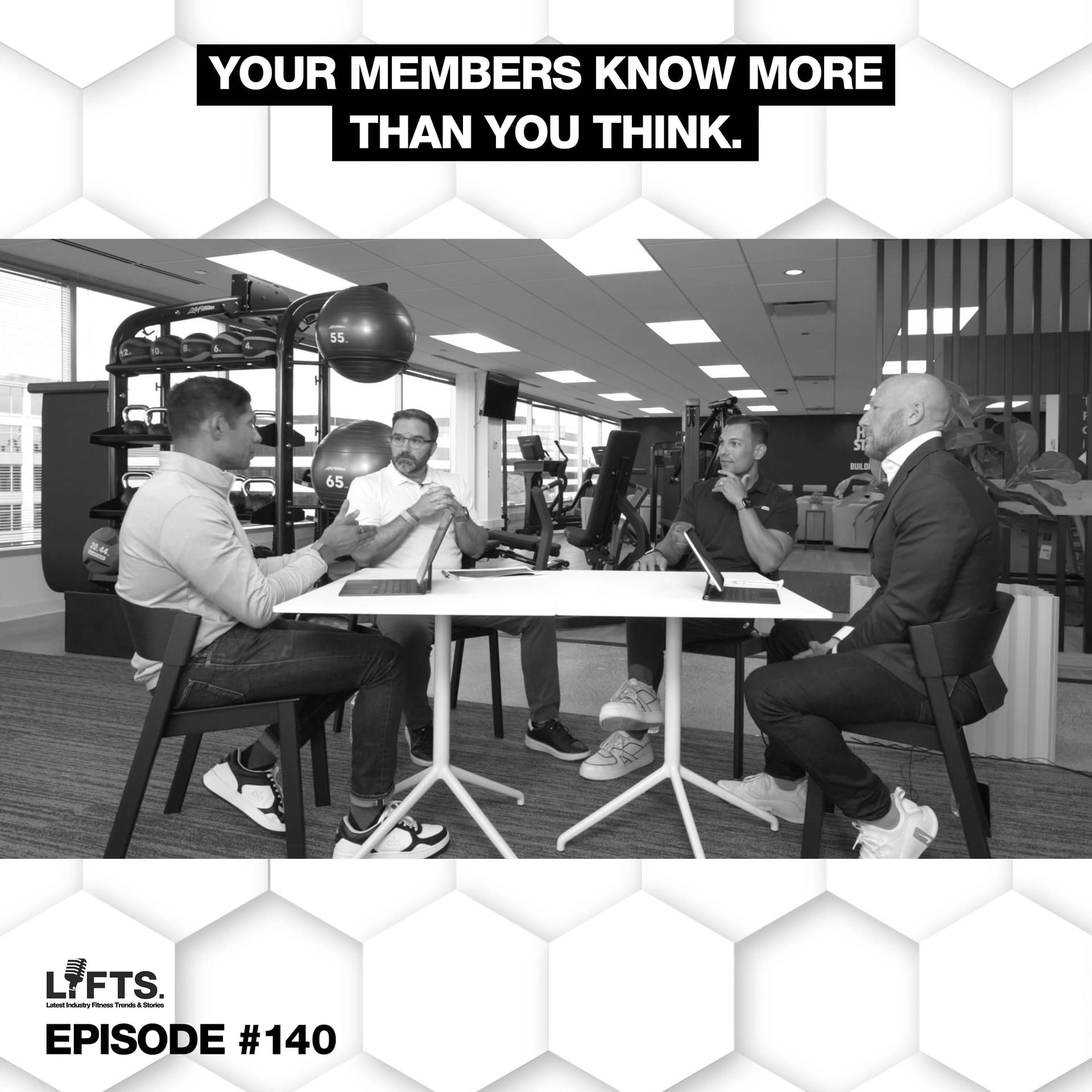
1:18Matthew Januszek:Hello, hello, hello. Hello indeed. Good afternoon. Are we still awake? We're going to have to bring the energy up. This is a thinner audience, but it's the best group. The ones that stay to the end are the ones that are most committed. So anyway, welcome to the final session of the day. We're here representing PerformX, so we appreciate being invited here. And also, we do a podcast each week, a fitness industry podcast each week called Lifts. And so for those of you that want to listen to this session again, or if you've got anyone else that's interested in it, then we'll be putting this out live in the next couple of weeks.
2:00Matthew Januszek:So I'm Matthew Januzek, and I'm here with my co-host, Mohamed Iqbal. How are you doing today, I'm doing good, Matthew. I'm really excited for this conversation because GLP-1 is where we live. I know you are originally from the UK, but I always say you are an honorary US citizen now. You've been there eight years? Eight years, yeah. I'm from Peterborough originally, and I've still got my accent. But now you're in Newport Beach. GLP-1 in the U.S. has just exploded over the last couple of years, which I think is a good thing overall because obesity in the U.S. is really getting out of control. And for the first time, and it's interesting because a lot of people who are not American, who travel to America or think about America, think about it being a paradox.
2:48paradox where you've got a very unhealthy overall population that is full of chronic disease, but then also a very fit wellness-focused culture. And the obesity rate in America for the last five decades has been increasing every single year until last year. So for the first time, the obesity rate in America actually went on a decline. And there's a lot of factors for that, better accessibility to food, the COVID pandemic increasing awareness on health. 28 % of Americans now participate in fitness gyms and studios, so there's awareness around that. National parks are at a high number. But also, nearly 10 % of Americans have now taken a GLP-1 drug.
3:35And in January of this year, in 2026, GLP-1s now came out in a pill format. But here's the thing. In the United States, like many things, things are just more accessible and more available and in some cases more affordable. So the private access to GLP-1s, and a lot of it is largely not covered by insurance. And in fact, insurance is covering not only less cases of people who are getting on a GLP-1, but also when you're on it for much more limited time. So originally they might have been covering it for a year at a dose that is pretty effective. Now it might be three months and they're not even covering a maintenance dose, but people are spending money and finding other ways to get GLP-1s.
4:22In the UK, however, just shifting gears here, you still have an obesity epidemic. About 28 % of the UK population is obese. only 15 % of the population in the UK participates in fitness or wellness. Yet, GLP-1 has taken a very different pathway towards accessibility in that a lot of it is largely driven by the criteria set by the NHS, but private access to GLP-1s are actually increasing. I remember us coming here a year ago, Matthew, and I think we mentioned GLP-1s, looked that at the audience, a lot of people said, I did not know what that was. And I even did a talk in Australia at the end of last year.
5:05They have not even heard of GLP-1s. But today, it certainly is very much part of the active conversation. So I'm really excited to have Dr. Hossain here. So one, welcome to Performix and also welcome to Lyfts. Thank you for having me. Well, if you could maybe start by giving a 30-second overview on your background and your role. Yeah. Hi, my name's Hossain. I'm a GP. I'm also a personal trainer and a health coach. and I work with a number of organizations. I'm the Royal College of GPs, Lifestyle and Physical Activity Lead. In my Leamington Primary Care Network, I'm the Personalized Care Lead. And at FutureFit, I deliver training for fitness professionals on obesity management and GLP-1s.
5:45And the largest NHS educator, I lead their obesity and lifestyle medicine course.
5:51Matthew Januszek:Well, look, just you mentioned that we raised GLP-1 last year and the fact that when you went to Australia, there was not too many people knew about it. I just thought for a start, we'll just have a show of hands for a couple of questions just to see sort of where GLP Ones is in many of the businesses out there. So quick question. Raise your hand if you're either a trainer or own a facility where your members are actually using GLP Ones. Okay, so probably around about half, would you say? About 50 % of people there? Yeah. Now, raise your hands if you think that GLP-1s is a threat to your sort of traditional fitness business.
6:34Matthew Januszek:I've got no hands there, so no concerns. Raise your hand if you're running any sort of special program or specific program for GLP-1s. Okay, relatively small number. and raise your hands again if GLP-1 programming of any type is some kind of strategic priority. Okay. I think that's pretty interesting. So in the United States, 8 % of all new members in 2025 joined the gym because they were on a GLP-1. So I think, you know, as an operator, if you have someone coming through your doors in your front desk, one, and those are people who have actually stated that they're on GLP-1, I would assume that the number might even be higher than that, but just think about that for a minute.
7:25If your trainers or people in sales or even how the gym is structured and set up is not welcoming to someone who might never have stepped foot into the gym, it could really be intimidating. So I think the first question to you is, one, from a UK perspective, when people get on a GLP-1? Are you prescribing them a fitness, nutrition, and workout program? And how important is it for them to stay on that during the treatment and also after? Yeah, really good question. And it will differ depending on the provider because in the UK, the majority of prescriptions of the nearly two and a half million people in the UK that are on them access that privately.
8:04There's only a very small proportion that get it through the NHS that it's around 220 ,000 over the next three years and I'll go into why that is in a second but from the private providers you get a big range you get some where it's essentially focusing on the prescription and giving them some signposting in terms of leaflets information but no genuine support around dietician physical activity behavioral support and you do have others where they're going beyond that and they're looking to support them in a holistic way and in terms of the evidence like it's important in terms of three phases before they start the medication those that do best need to achieve about five to seven percent body weight loss not on the injection the reason that you want to try and achieve that before intervention is because you vastly increase the likelihood of weight maintenance if they come off it or even if they stay on a maintenance dose and when they're on treatment ensuring that that weight loss is both sustained but slow and ensuring that that weight loss is assessed not based on the kilos but on the body composition and ensuring also that they are getting those healthy habits that are going to build long-term sustainable health.
9:12The key thing that we often say in our service is we're looking for health gained rather than weight lost because that's really what's going to show the improvement and there was a study published last month in the British Medical Journal which looked at post-intervention what was the rapidity of the weight regain for people off injections. And the new ones that are coming out, yes, they see really significant weight loss, but they also see faster weight regain. So compared to behavioral programs, weight regain off these injections is from four to eight times faster, depending on the agent being used.
9:46And that's a really big issue. And it's that issue is why the NHS is being very cautious over its investment, because if we're going to roll it out, it's going to cost about three billion per year. If we see weight regain, then you will not get the outcomes that you need to make it a cost-effective intervention.
10:03Matthew Januszek:Yeah, I was reading before this interview that muscle loss with people that are taking GLP-1s, according to this step trial, was around about 25 to 40 percent of lean muscle mass. So with many people here in the fitness and wellness industry, Like, what's the opportunity to sort of almost, like, offset some of the challenges that people are getting from using the drugs? Yeah. Like, it's both a combination of sarcopenia and dinapenia. So, like, it's both the bulk and the function and quality of the muscle that really matters. And it matters for so many reasons. If we're focusing purely on terms of obesity, if we can improve the ratio, the body composition, at the end of intervention, you'll vastly increase the chances that they can have resistance to weight regain.
10:51If you think of the muscles, not as important for movement, which they are, but instead as metabolically active organs, these store glucose as glycogen. So they're great sinks. Think of them as car parks. And you want big car parks, but you also want car parks that you know where to find the spaces, with attendants that direct you the way. And that's when we talk about muscle quality. So what is their insulin sensitivity, etc.? So when someone eats a meal, if they don't have a big car park and they don't have any attendance showing the way, when that car's come in, they'll fill up the small car parks.
11:22They won't really use them efficiently. And then they have to go to the overflow car park, which is the fat. And that fat can be subcutaneous, but also visceral fat, which is then going to lead to further metabolic issues. So what we want to try and do through the intervention is we want to make bigger car parks. We want to make better car parks with signs and green and red lights that therefore all the energy can move through. and that really does improve the resistance to weight regain. And there was a trial that looked at liraglutide, which was one of the older GLP-1s, alongside supervised exercise, and looked at the weight regain afterwards.
11:55So 12 months after stopping treatment and the exercise, you had six kilos regain on just the injection and only two and a half kilos regain on the injection plus physical activity. So it is, at the moment, the biggest lever when it comes to the weight regain angle. So it's interesting in terms of, one, we'd love to get your perspective on accessibility. So the NHS has this strict criteria. Some of it is because of cost restrictions. What do you think the plan is? So obviously, GLP-1, weight in general, chronic conditions, obesity, we can go on and on, but leads so much to chronic conditions, which could then lead to heart disease, which is the number one killer of all cause mortality.
12:40So when you start there, you're like, well, to reduce all-cause mortality, which is a big impact to the NHS, a big cost of the NHS overall. Well, you would think that if I make an investment down the chain in a GLP-1, maybe even furthermore down the chain into preventative care, that it would reduce the overall cost of the system. But is there something that is either not clicking or not happening? I mean, I'd just love to get your perspective because you work at the NHS. Absolutely. And I work at a national level making these kind of decisions in my role at the college. And the simple fact is, when you look at the evidence and all the agents that are currently licensed in the UK, none of them meet the threshold that if you just simply give them, you will get your money back.
13:23The reason I say that is, let's say we look at disepatide. The cost that you would need to spend in order to see an improvement in one quality adjusted life year is just under£20 ,000 in a very specific population. That's a BMI of 35 and over, and they need to have one or more weight-related comorbidity. You need to invest that amount of money in order to improve the markers, which means you get the outcome of improved quality of life, reduced impact on health. And the issue is that that's all great, and that's assuming that they don't regain weight. But sadly, they do. They do. The vast majority, for example, coming up to Zepatide, will regain all of the weight they lost within a year and a half.
14:00and even if they stay on the injections, although there is no published data from the pharmaceutical companies, we know from clinical consensus that even if they stay at the dose, they're going to start regaining weight. And so we need to ensure that we have mechanisms in place that means that the investment we put in, which is estimated at under 3 billion per year in the UK to deliver it in the NHS, that we get that back. Because sadly, we have a limited purse. We can't just look for short-term solutions. So we need to see how can we apply these injections in such a way that we get continued benefits, not just over two years where they work brilliantly.
14:37If you tell me over one two-year period, they're brilliant. You can lose up to 21 % body weight loss to Zepatide. But then if I look three years down the line, assuming that they stopped it after a year and a year and a half, they're back to where they started. Is there something, as an example, with the NHS that has been deployed where you've seen that return successfully? Yeah, no, like there are lots of instances where we see the benefit in terms of cost effectiveness. When NICE decide whether an intervention is cost effective enough, the threshold that they use is 20 ,000 or cheaper per quality adjusted life year that is gained.
15:13And there's loads of interventions. Now, what is a shame is that a lot of the preventative elements, that's if we just want to get a physical activity program to support people with their strength and their aerobic benefit. The cost of that is actually peanuts. The cost is peanuts. The issue is that when it comes to delivering that, there is a real mismatch in terms of the willingness and the ability to scale it at a national level. But we know that would help. It's the challenges in trying to do that. So we're trying to shift to that preventative model. But there's so many hurdles that means that trying to, let's say, encourage and support people with long-term conditions to get access to the physical activity offering that they need, there's just so many missing bits in the system, which is a shame.
15:53And it's because the healthcare system has been built and designed around an acute problem solution. You know, back in the late 40s when the NHS was created, we didn't really have a problem with long-term conditions. And so the 10-minute consultation, the referrals to the hospitals, every way that it's been built is not designed for the problems we have today. And it's going to take a long time to restructure it. A system like the NHS, seventh biggest company in the world, that's going to take time to adjust to the present landscape.
16:22Matthew Januszek:today's episode of the lifts podcast is sponsored by egym egym delivers smart strength solutions that help gyms and health clubs attract engage and retain members while improving health outcomes at scale from intelligent equipment to ai-powered training programming and corporate wellness via well pass egym is leading the way in smart fitness visit egym.com to learn more
16:47Matthew Januszek:one of the things that i've been reading there's there's a lot of new research coming out around GLP-1s and a lot of time we're focusing on people with obesity but it seems that it's a bit of a miracle drug because it reduces all kinds of issues and illnesses and almost like helps people live a lot longer and better quality of life. What are you seeing probably that may not be necessarily recognized by the NHS at the moment but do you it seems like we're still at the very beginning of people using GLP-1s. And it looks like that probably over the next decade, many more people, not just people obese, are going to be using it because it makes such a huge difference on all kinds of diseases that we're still understanding a little bit more about.
17:34Matthew Januszek:What do you know about that? And would you generally agree with that as a direction? So I would never use the term that GLP-1 is a miracle drug, in my opinion. I think GLP-1 is a brilliant tool for those living with obesity because we know that obesity has strong genetic components as well as social determinants which influence it and yes there is growing evidence in particular around conditions where there is a kind of a reward element so things like adhd gambling alcohol addiction we're seeing that actually the fact that glp1 not only acts on insulin sensitivity glucagon etc it acts on the reward centers in the brain we're seeing improvements in those elements Now, we need better and longer trials to really ascertain whether this is something that is safe and appropriate for someone without obesity.
18:21But time will tell, and evidence definitely is pouring in. Now, there are other agents that are beyond GLP-1s, like they're looking at some of the other neurogastric hormones as well as the other peptides. And that's going to be interesting, and we'll see how they evolve. But what we need to be careful of is, for example, if someone came in with osteoarthritis of their knee, and I gave them a knee brace, it improves things. in the short term. In the long term, it makes things worse because what happens is it deconditions the muscles that was trying to support the joint and it relies more on the brace.
18:54That what can happen in GLP-1s if they're inappropriately prescribed because GLP-1s can make things easier, but then everything that's around that actually needs to support what's happening, they decondition. We've seen that in the same when it comes to opiates and giving long-term painkillers. Yes, it provides great relief over eight weeks. Beyond that, you run into whole issues that both our countries are struggling with. Antidepressants as well, great in the short term if they're applied correctly and they're used in a holistic manner, but if they become a reliant tool, then actually outcomes are worse.
19:24So we do need to be careful how we utilize pharmacology, and we need to use it at the minimum effective dose and not instead of. It has to not ever be framed as the solution, but it needs to be framed as a really useful tool for some people that are really struggling. What we need to realize, especially in obesity, it's not really an individual issue. It's a community issue because there are so many social determinants, whether it be disabilities, deprivation, that really play a much bigger role when it comes to obesity than just individual choices. We need to create an environment that produces health rather than illness.
20:01The pill form came out early this year. Is that available in the UK yet? Not yet. Not yet, okay. So in the U.S., you can now take a daily pill of a GLP-1, and the adoption of that has been incredible and through the roof. And as you see that happen, I would love to get your perspective from a gym-operated perspective. So what I've seen is a lot of gyms that we work with, both digital and physical, have adopted things like talking about strength training and education around that, but also the importance of VO2 max and understanding how to improve that, eating more protein, making that a central focus of your meal planning and meal prep.
20:39What are some things that as an operator that they could do? Because to your point, when someone is on a GLP-1, whether you know it or not, how instrumental of a role does that frontline worker, as I call it, is the fitness operator? Because they might only see you at very specific points, maybe during the assessment, at specific points during the treatment, but they could be going into their gym three, four times a week. So to me, that is the front line, right? Which I know is interesting from a medical perspective because I'm sure your colleagues would say, hey, we're the front line. How can operators be best prepared for someone who's coming in with the GLP-1?
21:19What kind of program should they be thinking about such that they don't gain that weight once they come off the treatment? Yeah, really good question. So first and foremost, it needs to be a place where they feel comfortable, confident, and not judged. And we need to avoid wanting to just give advice. Because a lot of time, these people get advice from everyone. From their family that tell them, oh, you should just do this and do that. From the doctor who says you just need to move more and eat less. And so try to avoid just wanting to blurt out lots of helpful, often, but advice. Instead, listen to them.
21:53Ask them, what are the challenges you're facing? because people with obesity aren't just some homogenous group. Some of them actually super fit, super strong, already go to the gym lots, have great muscle already. Some may really struggle with confidence, haven't been physically active or physically literate for a long time. So firstly, just listen to them and find out what do they actually need rather than just giving them some generic advice. When it comes to the nutrition side, we want to get a grounding in food quality rather than just calorie tracking because we want to improve the actual makeup of the diet to ensure that one, they're able to fuel the workouts, two, that they're not looking as the best result is the quickest weight loss.
22:32Because actually the quicker the weight loss is, the worse you see in terms of the body composition that they're losing. So you're gonna lose more muscle mass the quicker it is. And what we wanna do is get them to see the right outcomes. So often they'll look at the scales as the outcome for what they're doing. And often when they start becoming physically active, actually you don't lose that much weight. You may even gain a bit because you're gaining a bit of muscle, you're improving body composition so do you have access to high quality body composition assessment but one of the things that we've got in our nhs facility is we've got a seeker device which is high quality high grade and people can track they see what they're doing and so they don't stress that okay i haven't lost any weight but actually i lost three kilos of fat and i've gained a lot of muscle these are the kind of things get them to assess the right stuff and then in terms of the programs that you're delivering name them correctly do not name this the obesity group or the GLP-1, let's help me.
23:23Like, give it a positive frame and instead focus on, you know, using the terms that they're looking for. You know, improved health, feeling stronger, feeling more confident. Even things like toning can be better than just talking about purely weight loss. And then really consider the impacts that these medications have. You're on a calorie restriction because of the appetite suppression. So be mindful that they're going to maybe struggle with energy. So how can you make them feel like they're still getting a useful and meaningful workout by just reducing the intensity a bit, maybe reducing the length, focusing on things that matter.
23:55And how can you build the advice you give around the specific needs? So identifying that, look, let's support you maintain that muscle mass. Let's support you improving your baseline fitness. Let's support you being more confident in your body and how it moves. So focus on functional things, things that are going to mean that next week, next month feels that bit easier. So it's simple things that often matters to people. How easy is it to get up the stairs? How easy is it to pick up the kids or the grandkids? How easy is it to walk to work? You know, these are the things that often changes quality of life.
24:26So yeah, so consider the side effects, consider the importance of muscle preservation, and consider getting them to track the right things, not the kilos on the scales. I literally don't even care. Like when I'm doing the assessment and reviews of patients, I don't care how many kilos they've lost. I care more about what's actually happening. metabolically and composition-wise.
24:46Matthew Januszek:You mentioned that there's different groups of people that are coming into the gym, some people that are already going to gyms and that are fit, but a big percentage of the people that are on them have probably never worked out, which is partly the reason why they're taking this in the first place. You're involved in an education organization. Where do you think the education level is in terms of being able to treat this specific... It is a specific, I guess, demographic where there's specific requirements, both on the, I guess, communication and coaching level, and then also on how to deliver programs for people that probably have very, very limited ability to do some of the exercise.
Read the full transcript
25:29Matthew Januszek:And also there must be, you know, I was sitting in the sauna the other day and, you know, you're sitting there in your shorts with other people. There must be a huge level of sort of personal intimidation of even stepping into a facility like that. So what are some of the things that you're seeing with your education and where do you think we need to get to as an industry to do a great job addressing some of those needs? Yeah. Like, I think first and foremost, there's a lot of great professionals and knowledge within the physical activity sector already. That's something that I've gathered through doing the obesity course that we do and through some of the assessments that we do, because I deliver to both healthcare professionals and to physical activity professionals.
26:08So it's about how do you utilize that knowledge and apply it for this group? So it's not about changing their expertise, but getting them to understand the complexity of obesity. It's not simply that they're eating too much and not moving enough. It really isn't. And once they understand the biology and the social determinants and all these factors, they can then apply what they know with that manner for the individual. Because you can really tell when you have a fitness professional that gets it, that does understand. And the individual will get that as well. They'll feel confident from it. In terms of the healthcare professionals, there's a real lack of knowledge around lifestyle medicine.
26:45It's growing. And definitely amongst newly qualified clinicians, there's a greater interest. but what I'm trying to see here is how can we rather than trying to get the healthcare professionals to do what the physical activity professionals should be doing or vice versa is how can you work and collaborate together so my local area we have a great relationship with our local leisure center plus eight different some of them private some of them volunteer sector physical activity providers so in fact we support the patients in some of that behavior change and identity change so they start to feel a bit more confident approaching the gym so we actually attend with them to the leisure center we do some of the group settings and the reviews in that environment we introduce them to some of those professionals and you know let them know and get that rapport building and we have a slow process it's not like they go to the leisure center and then they're straight on the equipment over time over weeks we just slowly just build things through we don't take them on a whole tour of the place we just focus on free things because we just want them to do some basic things just to get things started and then let that activation build and their approach go through and for each person it'll be different some people over six weeks they can start doing quite more complicated workouts others it can take six months so it's about how can you build adaptability into the program so people don't feel rushed they don't feel intimidated and they can go at a pace that works for them um and through the sessions that we've done at the we call it the nhs fitness club it's at lehman's in primary care network those sessions like what's really telling is when I ordered loads of sort of t-shirts to come through I did different sizes and we still have like millions of mediums and smalls even though this is a free fitness club that is open to everyone in Leamington you do not need to have obesity or any chronic condition it's just open to all we've done the right thing and how we've promoted it the right people are coming because I thought that surely just fit people are going to want to have free sessions with personal trainers that are coming with fitness professionals etc they don't come so if you frame it right then you get the right people coming i haven't framed it right for your fit 25 year old that's doing brilliantly and that's perfect and it just shows that you know if something is framed in the right way the right people will come
28:51Matthew Januszek:and get them to design that as well yeah i just want to jump in on that because you said we do have a lot of the skills already in the fitness industry and i i guess i'll challenge that question because a lot of the people i've spoke to in the education side seem to say that the traditional fitness education, how long it takes to go through the work, the courses, the quality of the courses and the quality of instructors that are coming out seems to be going down. And so having a relatively specialist population that needs slightly different skills to somebody who just wants to have a six pack, you know, do you really think that we need to be bringing up the standard of education and sort of going back to a little bit more in-depth education uh compared to probably what we're actually doing today yeah like of course high quality education is always super important like i work for two education companies i'm gonna say that but i think more than that it's actually getting understanding and appreciation that people have different lives different approaches and you need to just appreciate those individual needs because in reality the vast majority of the impact in obesity are the things we all know about sleep, regular movement, reduce stress, improve nutrition, healthy relationships.
30:03These things, they don't take long to learn, really. What does take long to learn is how should I adapt my approach for someone that I don't know, that I don't relate with, I haven't lived their experience. How can I actually instead listen to them and then apply my expertise? Because the expertise means you can become more and more trained to know all the ins and outs of sleep, etc. But in reality, 95 % of the benefits you get from sleep are basic stuff that really, I could probably get all of us to answer together. We're just focusing on let's get the basics really good. Let's get them solid.
30:36Let's get them consistent. I haven't met many fitness professionals that can't tell me the basics. So instead, I want to just empower them with the knowledge of let me appreciate that obesity is more complicated than failure of motivation or people that just can't be bothered. Honestly, they really can. They can be bothered so much that some of them are selling the furniture at home to pay for these injections. That some of them are going through loosing hair, feeling nauseous every day, like struggling with lots of symptoms. They still do it because they can be bothered. But they just really struggle to engage with some of the basics because either they haven't been shown, they haven't been role modeled it, they don't feel like it fits into their identity.
31:16There's so many challenges. So instead is how can we frame it, restructure it so that it fits into more people's life? Well, I think that's right. And I do think that AI is going to be transformative in not only the being able to change and be flexible with programs and people, but also in the age of GLP-1. And we're certainly seeing that. You bring up an interesting point around people would rather take a shot than make simple changes, even hydration, drinking water, sleeping a little bit more. And these are all simple things you could do. But something that we've seen, I would say, in the U.S., where it's been around for a few more years than here, is that people have many, many reasons for why they have struggled to go on their weight loss journey.
32:01And this has almost helped, for a lot of people, jumpstart it. And then they start buying new clothes. Then they start drinking more water. Then they start having intentional movement coming in. So I struggle with that, too. I'm with you. I mean, we started talking about GLP-1 early in the podcast a couple years ago, and I really was not on the side of a GLP-1. And it's taken me now working with RHHS in the U.S., but it's taken me now a couple of years to get on the other side and being able to see the benefits. I want to switch gears a little bit and talk about accessibility. And again, you know, I think the U.S.
32:38is a bit more of a future lens to what's happening. But we are now seeing Eli Lilly, who is one of the GLP-1 providers, have a very successful direct-to-consumer website. So you could literally go online in an afternoon, get prescribed GLP-1s to come right to your house. You could self-pay it. We're seeing some employers covered. In fact, for my team, I do support GLP-1s, and we do cover that for six months as well. We're seeing med spas, not just the compounds, but regular GLP-1s start incorporating that. And to your point, the med spas are incorporating CICA-type scales as well. Do you think the UK is going to move a bit more into open or flexible accessibility of GLP-1s?
33:24Do you think that right now it just seems like it's a lot more structured, criteria-based? You've got to lose, wow, like losing 5 % to 7 % of your body weight for someone who's never been on a health journey, who might have a BMI of 30 to 40. That's a lot. It just seems like, I know in the US for bariatric surgery, you've got to lose some weight. But a lot of that is because they can't do the surgery successfully. It just seems like a lot. Yeah. So with that 5-7, it's an aim. It's that approach. So it won't be that they wouldn't be given it on the NHS without it. It's just that you know you get the best results without.
34:04Let's say if someone doesn't lose any weight through that first process before signing the treatment, it's actually highly unlikely that they're going to see sustained benefits on it. So they may ask themselves, do they really want to go through that rigmarole? Now, in terms of accessibility, there's a lot more protections in the UK to prevent that kind of open prescribing. And I think that's for a very good reason. because we do need to be mindful of the potential harms and impacts that many pharmaceuticals, including GLP-1s, can have when they are not used correctly. And I think you mentioned a really good point.
34:35When it's used alongside other behavior changes and it helps motivate and build that, then you see great results. And there's so many patients that we have that have gone through the process and it's transformed their lives as well as the people around them. But when they're just used as the miracle cure on their own, then we're going to see people essentially burdened with these injections regaining weight anyway even if they stay on it and then they're stuck in paying a regular monthly fee for something that is no longer having a benefit and if they come off it it's then even quicker regain so I think we have to be really cautious with how we roll it out we firstly don't want people that aren't within the classification of obesity which is a chronic condition we don't want people just using it as a way to just, you know, lose a few pounds before going on holiday.
35:22I actually have an interesting point there. So another trend that we see in the U.S., especially where Matthew lives in Newport Beach, California, and a bit less in D.C., is microdosing. We're talking about people that look like the three of us that are on microdosing. In fact, I was at a Stanford conference on Saturday, one of the most preeminent exercise doctors and researchers, Dr. Michael Snyder, who you probably know. I mean, he's like you. But on stage, he said he's microdosing on GLP-1s. Now, he is also a type 2 diabetic. There's other health reasons for why he's on GLP-1. But I was a little bit surprised to hear that.
35:59That clearly is not a trend here in the U.S. You just don't have the average Joe, as we would say, who is seemingly healthy, kind of tweaking themselves for a wedding or for a vacation.
36:11Matthew Januszek:Yeah, it seems to almost be like a little performance enhancer that people are saying, look, it's just generally better for me as a whole to be taking something. of a GLP-1. Yeah, and currently microdosing isn't in any kind of clinical pathway because they haven't run trials with those individuals. I think it's likely in the future that some form of microdosing in a clinical pathway will exist. But again, as long as it's for the appropriate candidate. Yes, if they have type 2 diabetes, if they have the condition of obesity, then yes. But where it's being used by others, I'll give you one example.
36:43I'm also an athlete coach, and one of my athletes, she's 34. She's got a BMI of 24. And she admitted to me that she's using GLP-1s, even though technically she's accessing it illegally, unfortunately, because many people can access it through TikTok and other social platforms illegally. Absolutely. And I asked her, why are you taking it? And she goes, because I look at everyone around me and I'm not slim like them. And I was saying, actually, your body composition is brilliant. You're an incredible athlete. You've just got lots of muscle. But already the narrative, and we've seen it, I think, if you've noticed over the last few years, the sort of perception of what an attractive body looks like, GLP Wands is driving this trend towards being super skinny and to being super slim.
37:29And I really worry that when accessibility is as open as this, you then run the risk of developing really dangerous narratives. And people like her, incredibly fit, incredibly strong, feeling that because her BMI was 24, that she needed an injection to help bring it down. And it's such a shame.
37:48Matthew Januszek:I heard on, just on that, because it's an interesting point. I kind of had two, you know, two bits of information on that. Someone said that, you know, microdosing, actually, unless you take a certain amount of it, you're not actually benefiting from it anyway. So if you microdose, it's not really going to do too much. Like as a doctor, like, do you know if that's correct? The thing is, you can't give an answer either way because there are no randomized control trials looking at microdosing. So maybe there is. I think theoretically, looking at the sort of physiology, I think it's unlikely. I think the main benefit is that you're going to get very mild appetite suppression, and that will be useful to try to ensure you don't see weight regain if you are, for example, lost a significant amount of weight or your lifestyle is such that the balance of weight regain is there.
38:33but from a kind of beyond physiological level looking at let's say liver looking at the heart looking at the effects on on cognitive I think it's unlikely that microdosing is going to have that benefit but I can't say either way and I think that's what's really important is that people should be really cautious about interpreting things unless you get that higher quality evidence because trust me a number of the studies that have occurred haven't been published and they don't publish a lot of studies because it doesn't fit the marketing of what they're doing so like Unless you see a published study, don't be confident with any claim that you see.
39:05Don't follow it on TikTok. 100 % no. Even a published study is typically a cohort of just 200 people. So you need multiple studies to really validate something. I want to ask something which is also peptide related but not GLP-1. We're seeing the growth of BCP-157 skyrocket in the U.S. I don't know about the U.K. here. Have many of you heard of BCP-157? You've heard of it? I'm actually considering it myself. It's fully legal in the US. Well, I'm going to be 46 this year. I want to look more like you. He's one of those people on TikTok. I'm actually not on TikTok. But I'm just considering including testosterone, like TRT, as we get older and we age and we want to make sure that we're performing our best and that we're just no different than protein or creatine.
39:57I mean, I remember in the 90s, creatine was like, oh, why are you doing that? I mean, now my mom and dad, who are in the 70s, are taking creatine for cognitive benefits. So I'm just curious to get your thoughts on peptides or specifically even BCP-157. Yeah, yeah. So when you look at supplements, there's a whole range of the bags. So if you look at creatine, lots of evidence, really robust. Decades. Oh, yeah, tons. And high-quality evidence as well. And so you will not find many clinicians not encouraging it. Some just may not know about it due to a lack of education, fair enough. But no, all specialists in my field were very confident with creatine.
40:32When you look at some of the peptides, including what he described, there is a lack of evidence in human trials. We've got plenty of animal studies that came moderate to low-quality evidence that show some benefit, but animal studies don't always translate into human impact. It's quite common that it doesn't, because we're not a cow or a rodent or a pig. And so what we have to see is show us in the human trials. Show us in proper, high-quality, randomized controlled human trials, because I can promise you that if there is any agent out there that has an impact on health that's meaningful, the big pharmaceutical companies, which are the biggest companies in the world, they will get behind it.
41:15They will start selling it. Anything that they don't really sell tells you that, okay, there's not that much evidence base behind it. So yes, things can be emerging. And yes, often we do need time to allow them to come through. But none of the peptides that I have seen yet reach the threshold where I could tell you that, yes, that's probably going to help. And I think we just need to be careful with that.
41:35Matthew Januszek:I want to, so I'm not, maybe you take your doctor's hat off for the moment and coming back to this BP157. So if you're kind of sitting on the fence, there's clearly a lot of people that you you hear and read about that have had amazing benefits from it it seems to be another kind of so-called miracle drug like what what if how how would you approach that like if you had an injury and someone said hey look this can really fix you up to do you know whatever you want to do um would you consider taking it and and if so what were some of the things that or uh that you would look at before taking it whether it was you or your your partner or your kids or anything like that yeah yeah so like bp157 for example i have looked into that and the animal study data is okay um but not enough to convince me that it's worth the cost to benefit ratio like in terms of the cost there's other things that i could spend my money on that will get me more return um so that's how i'd base it well i would spend time to actually improve my relationships so if for example, you look at the data in terms of performance as well as longevity, if you have healthier, stronger relationships in your community, you do better.
42:45You do better for longer at a much bigger index. And that actually takes money because you think that, oh, that doesn't take any money. But no, but I need to now potentially work a little bit less to spend more time with my neighbours, with my community, doing activities. Those kind of things matter more. Those are the big levers. I would spend time to make the environment in my bedroom as optimal for sleep as possible. whether it be the temperature, the lighting, et cetera. I would spend time to incorporate a little bit more physical activity routine. Maybe it's a piece of equipment or something that I'm doing that can help specify what I'm training for.
43:18Like it's very rare that I've seen many of these various supplements overcome those other bits. If I've spent and I've done all these other things, then yeah, go for it. If you have gone mad and that's all you do and you try to optimize in every single area, then fine, you know, you take a risk. Why not? but there's just so many other things that often people do not look at they do not value as much that has such a big impact on health and it has a sort of impact on so many of the other pillars and when we think about lifestyle medicine there are six key pillars that have really strong evidence base and that is physical activity nutrition sleep mental well-being and that's stress kind of management healthy relationships which i think often gets neglected and forgotten And then when we think about that kind of last one, which is, you know, how do you build an environment that is conducive to long-term health span?
44:11Okay, so that's making sure that, you know, whether it's work environment, your home environment, that we're not doing things that's going to impact that. Well, we are at time. Thank you so much for joining us at Performix. Thank you very much. Thank you. Thank you. Thank you. Thank you.
44:27Matthew Januszek:Give me a big hand.
44:32Thank you.
From the publisher
Welcome to the latest episode of LIFTS, your bite-sized dose of the Latest Industry Fitness Trends and Stories.
In this special episode recorded live at PerformX, hosts Matthew Januszek and Mohammed Iqbal explore one of the most significant and rapidly evolving topics in health and fitness today: the rise of GLP-1 medications and what they mean for the fitness industry.
Joined by Dr Hussain Al-Zubaidi, GP, personal trainer, health coach, and one of the UK's leading educators on obesity management and lifestyle medicine, the conversation explores how these medications are reshaping the health landscape.
As GLP-1 treatments become more widely used across the US and UK, gyms are beginning to see a new type of members entering their facilities, individuals who may be starting their health journey for the first time and looking for guidance on building sustainable habits.
The discussion explores how GLP-1 medications work, the challenges around muscle loss during rapid weight reduction, and why strength training, nutrition, and lifestyle change are critical for long-term health outcomes.
The panel also examines how healthcare systems such as the NHS are approaching GLP-1 treatments, the risks of relying on medication alone, and why fitness operators may become one of the most important environments for supporting members during and after treatment.
From body composition tracking and behaviour change to collaboration between healthcare and fitness professionals, this conversation explores the growing role gyms could play in supporting sustainable health outcomes.
This episode is Part 2 of a three-part series recorded live at PerformX, exploring the ideas shaping the future of fitness.
In this episode, we cover:
- Why GLP-1 medications are transforming the weight-loss landscape
- The difference between weight loss and health gain
- Why muscle preservation matters during GLP-1 treatment
- How exercise can reduce the risk of rapid weight regain
- What gym operators can do to better support members using GLP-1s
- Why body composition matters more than the number on the scale
- The opportunity for collaboration between healthcare and fitness professionals
👉 To learn more about Dr Hussain Al-Zubaidi, click here: https://www.linkedin.com/in/hussain-al-zubaidi-402b141a7/
👉 To learn more about our sponsor EGYM, click here: https://bit.ly/3JzsosR
======================================================
Support fitness industry news by sponsoring future LIFTS episodes.
Contact us at wendy@liftspodcast.com for advertising opportunities
Subscribe to our YouTube channel and turn on notifications so you never miss a new video when it's published: https://www.youtube.com/user/EscapeFitness
Shop gym equipment: https://escapefitness.com/shop
View our full catalog:
https://escapefitness.com/support/catalog (US)
https://escapefitness.com/support/catalogue (UK)
Join the conversation at LIFTS LinkedIn: https://www.linkedin.com/company/liftspod
0:00 Welcome to LIFTS Live at PerformX
0:46 Why GLP-1s Have Exploded in the US
3:05 The UK Obesity Challenge & GLP-1 Access
6:07 Why Exercise Matters During GLP-1 Treatment
8:45 Muscle Loss and the Opportunity for Gyms
11:01 Why the NHS Is Cautious About GLP-1
18:17 What Gym Operators Should Actually Do
33:38 Micro-dosing, Misuse & Industry Risks
42:04 The Pillars of Lifestyle Medicine