
In short
PerformX (Part 3/3) argues the fitness/wellness industry is entering a “golden era” focused on longevity, mental fitness, and human performance. It stresses outcome-based “dosage” and prescriptive recovery rather than extreme tolerance (e.g., sauna/cold plunge “as long as possible”). Key concepts include allostatic load (cumulative physiological/nervous-system burden), capacity management, and sleep/circadian protection (jet lag, alcohol, caffeine, temperature regulation, bedding).
Notable examples
men’s mental fitness via gyms as proactive coaching spaces; Jay Worthy describing a breakdown during a high-achieving moment (after a major business sale).
Guest backgrounds
Giles Denning (event host; runs/organizes PerformX; personal passion for men’s health). Phil Learney (long-time fitness industry figure; frames wellness as human-performance calibration; discusses sleep, travel, environment, and evidence-based “hype vs science”).
Key claims
wellness should be accessible and evidence-led; industry must blend domains (hospitality, travel, elite sport) with physiological outcomes; AI will help but still needs expert coaching and correct inputs.
Written by AI. May contain mistakes. Listen to the episode to check what was said.
Chapters
Tap a time to open that second in VOExcitement in the Fitness Industry
0:45 to 2:32
Discussion on the revitalization of the fitness sector and the role of consumer demand.
“So if you look at the elite model of what we would look at with elite performer or elite team or whatever it might be, fundamentally it's the same model for human beings.”
Men's Health Panel Insights
2:32 to 6:10
Exploring the significance of men's health discussions and the stigma around it.
“It's been trying to get back to where it was and different forms.”
The Importance of Capacity in Life
6:10 to 11:39
Understanding the pressures on men and the concept of capacity in balancing life roles.
“Well, you're fascinated and I love what you're doing.”
The Impact of Lifestyle Choices
11:39 to 14:01
Discussing the effects of lifestyle choices, including alcohol and sleep on health.
“They traded all this stuff off to create this vehicle, this wealth vehicle.”
The Impact of Travel on Wellness
14:01 to 15:12
Explore how traditional travel habits can negatively affect our health.
“and i think covid really highlighted a lot of these things to us where we've you know i was talking about like holidays what do we used to do as holidays traditionally first thing we do is we'd book a red eye.”
The Importance of Dosage in Recovery
15:13 to 16:06
Understand how proper dosage in recovery practices can enhance performance.
“And if I'm there for business, I'm certainly not productive.”
Cumulative Stress and Its Effects
17:02 to 20:56
Discover the concept of cumulative stress and how it impacts our well-being.
“There's a lot of talk on recovery, a lot of thought around describing it, outcome, focus on outcomes.”
The Role of Environment in Health
20:57 to 22:36
Learn about how your living and working environments affect health.
“So for me, I want to get into bed cold Which for Fahrenheit is about what?”
The Future of Wellness in Hospitality
22:37 to 24:34
Explore how the wellness sector is evolving within the hospitality industry.
“The problem we have is that because there's a lack of health literacy, hype always exceeds science, which means I can come out and just make up something about, you know, I used an example of a very famous supplement.”
Cultural Influences in Wellness Coaching
24:35 to 27:23
Understand the importance of cultural awareness in wellness coaching.
“Because the biggest decision for them will be, we don't want to invest in something we don't get a return on.”
Show all 11 chapters
Conclusion and Farewell
28:00 to 28:25
The hosts wrap up the episode and express gratitude to the guests.
“Because if you didn't, that changes what I'm gonna do with you in the gym.”
Transcript
Automatic transcript. May contain errors.0:00Something that really struck with me was a chat I had with John Penny earlier, MD of Third Space, and he just said we're coming into the golden era of fitness and well-being and this is just the exciting place to be. And it feels like we've had probably quite a struggle since COVID really as a sector. It's been trying to get back to where it was and different forms. and I think now it feels like we're in a really exciting place and a lot of brands are coming into the spectrum. This is the biggest show we've ever done. A lot of positive conversations, a lot of excitement and a lot of that is led by the consumer and that shift.
0:39The opportunity we have as an industry right now is probably bigger than it's ever been because we're now blending into so many different environments, demographics. People are now looking at wellness as this larger thing and obviously we've got all these different definitions of what wellness is, but ultimately wellness is this calibration of essentially what we see as human performance. And I always go from the elite model. So if you look at the elite model of what we would look at with elite performer or elite team or whatever it might be, fundamentally it's the same model for human beings.
1:09You look at the old wellness wheel. The wellness wheel is essentially just an interpretation of a human performance wheel.
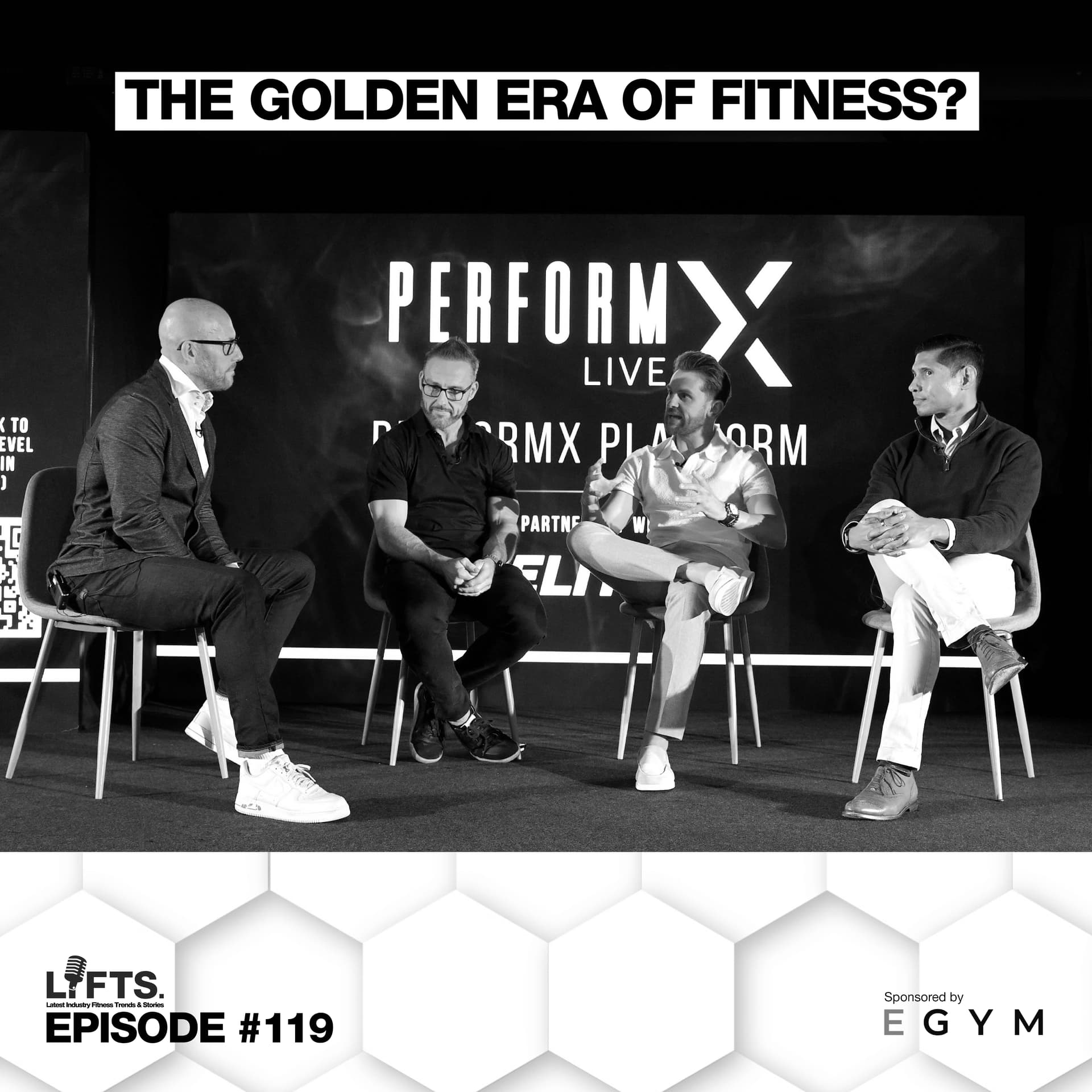
1:19Matthew Januszek:All right. Alright, over to you mate. Am I picking the phone? Yeah, come on, you're the... We're at PerformX, on the PerformX platform stage, and we're with Gilles in his coffee briefcase. Gilles. We're all completely engaged, congratulations. Thank you. You got engaged. I got engaged in October. Congratulations, my friend. Thank you mate, thank you. Do you have a date planned for the wedding? Yes, July. So you got, you just launched this event, at the end of it while launching it somehow did the proposal and get trimmed and all that and she came home one day and told me we need to get married this summer because this this and this so so technically this was an afterthought was it yeah luckily I'm alright it was an afterthought I'm alright at running events so I've kind of got the spreadsheet out for the wedding and yeah so I've got a question for you Giles like you've met loads of people in the run up to this event I've seen you on a bunch of podcasts give us a couple of things that are top of mind after the event today some of the people you've spoken about and some something that you really you know it's interesting to share that maybe not too many people would have known or thought about i think something that really struck with me was chat i had with john penny earlier md of third space and he just said we're going we're coming into the golden era of fitness and well being and like this is just the exciting place to be and it feels like we've had probably quite a struggle since COVID really as a sector.
2:48It's been trying to get back to where it was and different forms. And I think now it feels like we're in a really exciting place and a lot of brands are coming into the spectrum. This is the biggest show we've ever done. A lot of positive conversations, a lot of excitement and a lot of that is led by the consumer and that shift in demand and the decline in, I guess, hospitality and drinking and the boom in fitness as different people caring about their health, but also it being a real fashionable and trend-led thing to do. So I think, yeah, I think we're in a really exciting place. Well, I think excitement is a term I've heard from a lot of people.
3:28This is seemingly, and it's obviously bigger than it was in prior years. Really interesting panel that stood out to me that you did today was one on meds health. I know that meds health was an important journey for you the last year, as far as I know, maybe it's been a little bit longer but this is the first time we can incorporate dedicated men's health panel at Formex it's so telling you talk about you know I have a son of 16 so I talk about young adults young men men's health it's kind of been something that's not been really talked about for a long time yet so relevant and important in the world that we're in speak a bit about why was it important for you and and why did you include it here yeah I appreciate you bringing that up it's been a huge personal passion of mine and I think who I've been able to transform into as a result of leaning into it has been huge and just the growth in all areas of life from that but I think it's something that is it's awareness is like male suicide is in a terrible place and awareness is growing and initiatives are growing but none of the initiatives are quite hitting the mark it's very it's imagine if the fitness industry didn't exist and you just had hospitals and people are getting to this absolute crisis point and then there's cool lines and this that and the other and men aren't drawn to that um to because it feels weak so what the importance for me and it was such early days is one of the first talks that's really been put on in our space about it um but having it as a proactive pursuit so reframing it as mental fitness um and what parts of people's day or routines should they be proactively doing on a weekly basis to thrive which for men really is about having a calling or a big higher purpose and being able to serve other people so yeah just I think that our industry is quite uniquely positioned to serve that because you think about we already get men together we've already got men doing challenging things.
5:32Most men only have sort of one close friend, which is quite, quite sad stats, but that's the way it is. So gyms are naturally that place where men can come together, train together, push each other. And then if we can layer on an element of, be it coaching, be it, because it's not therapy that's necessarily needed, it's coaching and future planning and getting you to kind of think outside of the restraints that you feel you're constrained to. And I think having Jay Worthy as part of that panel talking about his breakdown because you always think about it as maybe as the weaker men that are really struggling and in the dark place but it's actually sometimes the men in that really high achieving moment of life he was talking about when they when life fitness's sale went through for half a billion pounds and he was it just the shell of a man you know and he's it is needed for all men ultimately it's like it's not something that's just reserved for the struggling it's something that is a proactive pursuit for for every man um so yeah something that's personally massively affected changed my life so it's something i see the fitness industry can become a real catalyst for that and it can change culture i think it can also no i agree my one male friend is that so thank you it's important i don't want me to stress myself but i want to go to phil as well but i do think that we're coming out of a couple of decades or in a lot of ways what it is to be and we talked about this with Jeff we've run the podcast a few episodes ago what it means to be a man and a lot of the young male or adult male feelings were really suppressed but they were really suppressed was this arrow saying like testosterone is bad no it's actually good for men and women there's good things about it and then Phil thank you for coming on we have to get you on I just had such a wonderful conversation with you before we hit the record button.
7:23Well, you're fascinated and I love what you're doing. Thank you. Speak a bit about, I guess, introducing the audience about your role and what you're building. Okay. Well, I've been in the industry a long time. I've been through all the fitness era, and as Giles said, this has drastically changed the opportunity. I agree with what was said by John Penney. The opportunity now, I actually put a big LinkedIn post about it not so long ago, and And it was the opportunity we have as an industry right now is probably bigger than it's ever been. Because we're now blending into so many different environments, demographics.
7:58People are now looking at wellness as this larger thing. And obviously we've got all these different definitions of what wellness is. But ultimately wellness is this calibration of essentially what we see as human performance. And I always go from the elite model. So if you look at the elite model of what we would look at with an elite performer or an elite team or whatever it might be. fundamentally it's the same model for human beings. You look at the old wellness wheel. The wellness wheel is essentially just an interpretation of a human performance wheel. When we look at that, we've now got all these additional domains that we can start to look into, like wellness modalities that didn't exist, or they kind of existed, but we didn't, ice baths have been around forever, but nobody really knew how to use them.
8:37And we used them for one purpose. We didn't really use them for multiple purposes. We didn't know what the outcomes were. There wasn't enough evidence on them. so a lot of what we're seeing now is this amalgamation of all these different industries hospitality, elite sport, travel, we're looking at all these things all coming together and all going well hold on we want a physiological outcome that benefits us as human beings and I talked about this before with capacity and very much akin to what you were talking about with the men's health piece is that and I mentioned to you guys about allostatic load which is the term that again some people are familiar with some people aren't but that cumulative stress that we take on board as human beings, whether we're men or women, is all to do with our capacity.
9:17The problem we've had as males is there's a certain expectancy that's demanded of us. You know, we've typically been the breadwinners. There's a lot of financial pressure. There's an expectancy to react and to act a certain way. There's an expectancy to be as good, you know, good fathers. There's an expectancy to be good husbands, to succeed in business. and we have all these mantles and it's capacity. It's how much capacity we got as human beings to do all of these things accumulating together. Now, I know that if I trade off my relationships, so I spend less time with my friends. Yeah. Because remember, that crutch of, you know, barbershops and bars and things that we experienced during COVID.
9:58And we talked about all these areas that we go and we have this dump of information and we talk to our barber about physical and mental problems. and it's this thing of, yeah, we don't have many friends, but I think that's our choice and by default because we haven't got the capacity for it. You know, once you get married and you've got kids, I'm like, I haven't got capacity for loads and loads of friends. I haven't. But the ones that I do, I want to put in that little bubble and go, I'm going to make time for you. And the problem is, as men, as human beings, is we don't make time for ourselves to reflect and contemplate and do all the things that we should do.
10:32So therefore, we're out in this environment where we're either spending 17, 18 hours a day working and then we're also expected to do all these other things. And it becomes this trade-off of, look, I can, and again, we talked about it just before we came on air, if that's the word, we hit record. We talked about it. It's this thing of, look, if you go historically and look at people who've been successful in one of those modalities, they were a great parent, but they were terrible at business because they traded one off for the other. and the new what i would term it the new flex really is the ability to be able to do all of these things and to still be successful and still be and this is where we need to look at capacity as a it's not an ever-ending thing and we can't prop it up with more stimulants and by neglecting sleep you know sleep was the biggest trade-off ever we look at biological markers if you can improve someone's sleep the amount of biological markers that move in their favor from a health perspective are unbelievable unbelievable but we will still happily trade off sleep because we want to do something else which was a flat sleep yeah it was a lot of it was this thing i i survive on four hours sleep but ultimately at that point in time we didn't understand the biological consequence it was given us so then we've got that same demographic that we look at and i talked about this cohorts we've got these cohorts of people have done this human study for us your first First generation wealth, they traded off relationships, relationships with the kids.
12:00They traded all this stuff off to create this vehicle, this wealth vehicle. Next generation were like, well, we don't need to work. So what we're going to do is we're going to party. And then they got it wrong. And then now we're at the generation we are now. And we're going, well, hold on. We can learn something from all these generations ago. We can actually do this right. But we've got to be very precious of capacity. So when I see my kid, we have a rule with our little one is that she's allowed to watch YouTube or whatever it might be. But the second she starts swiping, I'm like, that's capacity.
12:29She's using up her cognitive capacity to learn positive things that create a better outcome. And I don't want to use that capacity for something else. You know, we were talking about flying. Flying creates a physiological burden. I want to mitigate that burden the best I can. Alcohol creates a physiological burden that we once never knew about. We didn't know it affected our sleep. We thought it was a positive because alcohol is a sedative, right? It helps to sleep, but four units of alcohol will reduce sleep quality by 40%. So I have two drinks. It helps me get to sleep, which might stop me ruminating or being in my own thoughts or whatever it might be.
13:09But I could also pick up a journal and do the same thing. But I'm using alcohol as a crutch and often that crutch of alcohol is the fact I needed a depressant because I've overdone the caffeine because I came into a culture that is used to using stimulants. so I'm now in the circular pattern of you know and I always talk about school teachers a lot of my friends ended up as school teachers and it was this thing of you know you get into this culture you walk in and you never really drank coffee and now you're somebody who drinks coffee six or seven times a day you know with a room full of 25 kids I would drink a lot of coffee as well but it's this thing but then the culture also then exists that you then go home and you have a glass of wine or a beer on your own so it's not a social thing remember we use alcohol as a social construct but when you start going home and drinking it on your own we've got a problem right you know and then it creates you know that that that mental space that really what we're trying to do is preserve and look after we've just created a bigger problem than existed in the first place and i think covid really highlighted a lot of these things to us where we've you know i was talking about like holidays what do we used to do as holidays traditionally first thing we do is we'd book a red eye.
14:17So the first thing we do is disrupt our sleep. Our circadian rhythm would then therefore be disrupted. We'd then stay out later than we'd normally stay out. So we'd disrupt it on one end. We'd get to the airport and start drinking alcohol immediately. 6am. Yeah. And we'd get to wherever we were, we'd eat crap food for a week, and then we'd come back feeling worse than we left. And now when we look at tourism, we talk about wellness tourism, people want to go, they want to fly somewhere, and they want to feel great when they get there. They don't want to spend four days acclimatizing to a new, you know, jet lag is a killer, right?
14:51You know, LA is like one of the worst types of jet lag on the planet, in my view. You know, I've been to loads of places, but LA was the kicker. That was the real bad one. And it's just because it sits in that kind of sweet spot of, oh, the timing's just enough out that it's actually really bad. What we've got to remember is it takes us 24 hours to acclimatize to one hour shift. That's huge, right? So I could be in LA for four days and I've basically ruined my trip. And if I'm there for business, I'm certainly not productive. So, you know, and all of this is now becoming relevant. So everything we do, whether it's physical training, whether it's recovery, whether it's restoration, whether it's modalities of wellness, all of them play a part, but we've got to get the dosage right.
15:33Because if we don't get the dosage right, the capacity you bought disappears. You know, we all jump, you know, let's say we had a nice bath in front of us. typical bloke thing is we jump in it and we stay in there for as long as we can. Yeah. You know, but what we're doing there is we've now.
15:47Matthew Januszek:It's a competition now, like to everyone. It's like, how long can you stay in it? It's that, that seems to be like the masculine thing to do. It's the dosage. So now the dosage is wrong. So now we've just actually, we've diminished capacity. The whole goal of it was to increase capacity. It's actually a theme that I heard a lot of performance this time around. Prescriptive on recovery. Yep. So how do you program? How do you prescribe recovery? So it's like, when you think about it, Phil, you're going to just go to the gym and do squats for as much as you can, then just do a bunch of curls. There's a program to grow, right?
16:19There's a program. It's an outcome-based. It's an outcome-based modality. For a gym, it's the same thing, right? How do you increase your view to max? How do you increase your run capacity? It's not just by running as far as you can every single day. That's not going to do it.
16:32Matthew Januszek:This week's episode of the Lyfts Podcast is brought to you by eGym. eGym is building the future of smart fitness. Their connected ecosystem combines intelligent equipment, AI-powered software, and the WellPass corporate wellness platform to help operators grow their business and deliver measurable health outcomes to exercises of all shapes and sizes. From powering gym floors to supporting employee wellness, eGym is redefining the workout one rep at a time. Learn more at eGym.com. You know, on recovery, that's the thing that I heard a lot. There's a lot of talk on recovery, a lot of thought around describing it, outcome, focus on outcomes.
17:11Matthew Januszek:Yeah, it's almost like extreme. I know when I go to my gym, we've got a sauna steam and cold plunge. And most of the guys in there are like, how long can I stay in the sauna for? Until I can, you know, can't stand anymore. How long can I stay in the cold plunge? And it's almost like we're taking that extreme approach that we did to exercise to what's meant to be recovering. It's load, it's capacity, it's load, right? So if you ask me what a good wellness practitioner is, it's somebody who understands dosing across whatever modalities they work in. So it's the same as me. If I stick a 200 kilo bar on your back, I know nothing about you.
17:48I've just randomly picked a load. Same as an ice bath. I've just randomly picked a load and told you get on there and tolerate as long as you can. So something you spoke about, again, before we went live, you taught me a term, and I thought I've known a lot, but a new term that I've not heard before, which is cumulative spread you want to speak about the term how you come up with that yeah it's a term it's been you know we've utilized in the scientific world for a long time is allostatic load so allostatic load is cumulative essentially wear and tear that our nervous system and our entire physiological system takes on a burden basis so if you look at social media was a burden that 10 years ago didn't exist that uses up capacity every single day.
18:30So comparison, men, we do that. We do comparison. Now we do it more than ever. Whereas previously we would use comparison as somebody we read about or somebody we know or whatever it might be. Now we compare ourselves to the entire world. And that creates burden. So that burden is now something else I've got to carry around or I've got to disregard it or I've got to find a way of regulating what I'm taking in. you know curated information now you're we're told what we're going to see you know back in the day you pick up a newspaper and you flick to whatever page is suited you you know and that isn't that long ago in an evolutionary standpoint that was 20 30 years ago mobile phones what 25 years something like that you know so all of these things now we've got additional load coming from so many different your environment we talked briefly about environment the the things that never used to concern us.
19:23So we've got to consider the spaces we reside in. My office space is a precious space for me. I'm gonna spend probably nine hours on average per day in my office working on cognitive output. If I've got anything in there that compromises cognitive output, I need to fix it. It's like a bedroom. You know, we still got people out there who buy polyester sheets. One of the biggest problems we have with sleep fragmentation is temperature regulation. You buy polyester sheets, you don't regulate the temperature. We pay huge amounts of money for these modalities that fix mattress temperature. We work with a bed company that we run fans through the actual mattress and we control the microclimate between the skin and the mattress.
20:10Then we've also got the second microclimate, which is the skin and the duvet. Now if you buy a crap duvet, you just mess that completely up. You just spend however much it might be on controlling one microclimate and messed it up with your other or you're wearing your christmas pajamas you know your polyester christmas pajamas by the way which are now yeah which again well high-end christmas yeah i need to know who's buying yours with my wife yeah but again that is you know if you look at look at a demo look at menopausal demographic right if you can alter their temperature regulation it's life-changing but we'll quite have to get into bed every night and sweat because we want to wear a pair of cheap pajamas you know or we want to use a duvet that we didn't invest in but you're going to spend a third of your life in your bedroom but the temperature in your bedroom is wrong you know most of us tonight we're going to be staying in hotels and the first thing i'll do in a hotel is i'll make sure they give me the right pillow for the loft that i require so i don't wake up with a bad back i'm going to change the temperature immediately what's the temperature you're going Yeah, it's normally pretty low.
21:15So for me, it's 19 degrees. So for me, I want to get into bed cold Which for Fahrenheit is about what? Oh, I'm not sure Don't know that conversion
21:26Matthew Januszek:I don't know it's cold It's cool. So we have to wrap up this episode now, but Given all that we're talking about, are these the types of things that you expect to see at next year's former swell? As in, sorry, what are the themes, what do I predict for next year? Moving towards longevity and optimization and bringing some of this down to make it more accessible so that not only could high network people use your program Phil, but also the everyday person kind of go, I was about to say everyday bloke because I'm in the UK now. Yeah, yeah, yeah. Geyser. Yeah, the hardest geyser. Yeah, yeah. The everyday person kind of going into a regular gym, having access to some of these simple tooth bottle.
22:10Somebody's like, temperature of your room, cocked pajamas. These are simple. I think you've hit the nail on the head in terms of prescription and dosage because I think everyone's got, the consumer is driving the industry now almost, but they're picking up little tidbits of reels on Instagram or TikTok videos. So they're coming with potentially very fragmented little knowledge on this stuff. Like they want to do an ice bath, they want to do this. very low level of knowledge yeah exactly one of the slides i used today was a scientific hierarchy and again i don't know whether you're familiar with it but right at the top we've got meta-analytical data so when we look at science we we start at the bottom and then we work our way up now when you work at the bottom when you sit at the bottom you can also put kind of tick tock and yeah nails and shorts in that bottom category is that it's it's anecdotal it's opinion and what we then need to do is see is there any weight of evidence behind what this person said and my seminar my my latest seminar today was hype versus science.
23:07The problem we have is that because there's a lack of health literacy, hype always exceeds science, which means I can come out and just make up something about, you know, I used an example of a very famous supplement. And I said, look, they've got 70 ingredients. There's six ingredients at human dosage in that formula. It does nothing. It gives you a bunch of B vitamins that makes you feel better. And that's attributed then to, but again, it's backed by scientists. It's backed by doctors. it's backed by but the problem is is that we're not looking at it and going we're breaking this down and i think that credibility piece i think we will i walked in today and there's a red light and i went out and i do this and this is me so i went over and i challenged them i said did you tell me what the fluence is from it i said what about the luminous levels so i'm asking all the technical questions somebody who's selling red lights should know and he knew them all nice nice yeah which go two years ago he wouldn't have had a clue be somebody who was importing them from in China, who just said, red light's a thing, I'm gonna start selling red lights.
24:05Yeah, yeah, yeah. The industry is getting more aware, they're focused on outcome-based, to make sure that efficacy, their research back, fly, but I think that's a common theme that we see.
24:16Matthew Januszek:Yeah, Phil, just final question then, because we did have a great conversation off camera, and we should have recorded that. I think we'll have to get Phil back on to do a dedicated podcast at some point, if you'd agree to that. But what are you seeing in the next few years in terms of what you're working on that may not be discussed here or may not quite be mainstream that are worth us keeping an eye on would you say I think probably environment's a big thing you know I've had a couple of conversations today I spoke to a big design interior design company and they're worried and they're like they're very much like hospitality hospitality is panicking right now because hospitality realized that the legacy consumer in ten years is gone and the problem is that they don't care to so you know luxury hotels used to be fairly rare you know you did five-star luxury high-end hotels used to be fairly rare you go to middle east is a great example middle east every hotel has every amenity modality that you could ever want but what makes the hotel stand out so they're all looking for that new what is that new thing that makes us different and they're all panicking right now because the millennials and the gen z's that are coming through the doors are going you've got nothing for me and they're going well hold on how do we cater to that audience and one of the biggest challenges we've got in hospitality is they they don't have a budget for wellness they have a spa budget they have a gym budget they have a they don't have budget for wellness but wellness goes over all of them bedrooms wellness restaurant wellness you know all those budgets so what we've got to now do is have a completely separate conversation with them and it's say you know it's i go into corporate and corporate, the first thing I'll do is I go to C-suite, I ask them what the KPIs are, and I show them how we're going to move them.
25:58Because the biggest decision for them will be, we don't want to invest in something we don't get a return on. But this is the same as what we're talking about, outcomes. Human beings are sick of investing in gyms. Gyms are full of, we talked about this before, gyms are full of equipment no one knows how to use. And then they rely on someone with a very low level of education to show them how to use it. but they're showing them firstly poor technique never mind the prescriptive dose how many reps sets should they be doing that's gonna help transform AI will smash it you know AI is AI is probably one of the best things that has ever happened you know it's not negative by any stretch of the magic but what we've got is bad trainers now panicking because they think they're replay I'm like look you still need a good coach with the knowledge and the a dose of knowledge to be able to input the right thing into the AI for it to spit out the right program.
26:48So there's still a big aspect to that, but programming is, that isn't really what I do as a coach. And it wasn't what I did as a coach for the clients that I had, I had high net worth clients. They wanted me to manage their sleep, they wanted to manage their travel schedules, they wanted me to manage, and this is where it's going now, in my view. From what I've seen, if you want to work with one-on-one with clients or with collectives, you need to understand more about it. We go into a sports federation. We need to understand the culture of the sport. We need to understand the subculture that exists within that team.
27:21We then need to understand the subcultures that exist within the business of that team. So we work with one of the Formula One teams. The culture that the engineers have is very different to the mechanics. All the engineers are from Italy. All the mechanics are from Chippin Norton in Oxford. And they drink too much tea and they drink too much coffee. but we need to understand those cultures. If we're to influence those cultures, we've got to categorically understand what's happening with them. You know, and that's part of the tools that the wellness world needs to have. I need to understand, so if I don't prescribe you a dose of anything, I need to understand your load.
27:56I need to be able to have a conversation with you to ascertain, did you sleep well last night? Because if you didn't, that changes what I'm gonna do with you in the gym. Well, now you don't have to ask if you see it from your world. Tell me, but how many people know how to read these? That's right. Well, we have to have you back on. Giles, Phil, thank you for coming on. Absolutely. Absolute pleasure. Enjoyed that. Splendid. Thank you. Thank you. Thank you. Thank you, Giles. Enjoyed that. Thank you, Phil. Thanks, Jim.
From the publisher
Welcome to the latest episode of LIFTS, your bite-sized dose of the Latest Industry Fitness Trends and Stories.
In this special episode recorded live at PerformX, hosts Matthew Januszek and Mohammed Iqbal explore why many believe the fitness industry is entering a golden era of fitness and wellbeing.
Joined by Giles Denning and Phil Learney, the conversation explores how fitness, wellness, longevity, and human performance are beginning to converge.
As consumer expectations continue to evolve, gyms and operators are being challenged to think beyond traditional training models. Members are increasingly looking for guidance on mental fitness, recovery, sleep, and overall lifestyle optimisation — not just workouts.
The discussion explores why gyms may be uniquely positioned to support these broader health goals. From bringing people together through challenging training environments to creating spaces where community, purpose, and coaching intersect, the fitness industry has the potential to play a much larger role in supporting long-term wellbeing.
The panel also dives into the concept of cumulative stress and human capacity, exploring how factors such as sleep, travel, alcohol, environment, and recovery protocols influence overall health and performance.
As the conversation develops, Phil Learney explains why recovery and wellness practices must be prescribed with the same precision as training, highlighting the growing importance of evidence-based approaches as the industry moves beyond hype toward measurable outcomes.
For operators, this episode highlights a significant opportunity: as consumer demand shifts toward longevity, optimisation, and preventative health, gyms may become central hubs for supporting human performance across all areas of life.
This episode is Part 3 of a three-part series recorded live at PerformX, exploring the ideas shaping the future of fitness.
In this episode, we cover:
• Why the fitness industry may be entering a golden era
• The growing focus on mental fitness and men's health
• Understanding cumulative stress and human capacity
• Why recovery should be prescribed like training
• The difference between wellness hype and evidence-based practice
• How AI may transform coaching and performance programming
• Why gyms may become central hubs for longevity and optimisation
👉 To learn more about Giles Denning, click here: https://www.linkedin.com/in/gilesdenning/
👉 To learn more about Phil Learney, click here: https://www.linkedin.com/in/phillearney/
👉 To learn more about our sponsor EGYM, click here: https://bit.ly/3JzsosR
======================================================
Support fitness industry news by sponsoring future LIFTS episodes.
Contact us at wendy@liftspodcast.com for advertising opportunities.
Subscribe to our YouTube channel and turn on notifications so you never miss a new video when it's published:
https://www.youtube.com/user/EscapeFitness
Shop gym equipment:
https://escapefitness.com/shop
View our full catalog:
https://escapefitness.com/support/catalog (US)
https://escapefitness.com/support/catalogue (UK)
Join the conversation at LIFTS LinkedIn:
https://www.linkedin.com/company/liftspod
Timestamps
0:00 Welcome to PerformX
1:07 The Golden Era of Fitness & Wellbeing
4:08 Mental Fitness & Men's Health
6:13 Human Performance & Wellness Trends
10:01 Understanding Cumulative Stress
14:45 Recovery Should Be Prescribed Like Training
24:36 Final Takeaways: The Future of Fitness