
In short
Whether the fitness and healthcare industries are ready for “performance medicine” (proactive, data-driven health aimed at recovery, longevity, and full performance), and how to integrate wearables, labs, and therapies (especially GLP-1/GLP-3 and peptides) into real habit change rather than “sizzle” quick fixes.
Guest
Dr. Nestor Rodriguez, co-founder of Carbon World Health. Background in emergency medicine and academic medicine (ran residency programs; involved in medical societies). Focuses on proactive health/performance/recovery/longevity; has worked in this space for 15+ years, including in Canada.
Key claims
US healthcare is capable but inefficient; incentives favor sick care. Physicians and systems (insurance/PE-driven consolidation) under-advocate prevention. Executive programs diagnose but don’t change habits unless followed monthly. GLP-1s are tools for broader metabolic health, not just weight loss; must address diet/exercise/muscle/inflammation. Clinics and gyms should integrate metrics into actionable coaching.
Notable examples
A shingles/COVID-related story where providers pushed medical cannabis and disability rather than recovery. WHO guidance framing obesity as a chronic relapsing disease; GLP market projections. Wearables (HRV, recovery scores, temperature) as early illness signals; Fitbit Air example.
Written by AI. May contain mistakes. Listen to the episode to check what was said.
Chapters
Tap a time to open that second in VOThe State of the U.S. Healthcare System
0:00 to 0:36
Explore the complexities of the U.S. healthcare system and its focus on treatment rather than prevention.
“healthcare system and we say it's broken, it is and it isn't, right?”
Shifting from Sick Care to Performance Medicine
1:30 to 3:54
Discuss the evolving mindset in healthcare focusing on performance and longevity.
“night so it's one of the okay the NAD cream thing yeah I've been trying it myself does it how does it look am I am I looking a bit younger it's working this is what we resort ourselves to Okay.”
Personal Experiences in Healthcare
3:54 to 4:50
Nestor shares a personal story highlighting issues within the healthcare system.
“Are we moving from sick care to performance medicine?”
The Challenges of the Healthcare System
4:50 to 7:26
Understand the systemic challenges in healthcare and the role of physicians.
“So he went to see a number of different specialists and he was telling me the story about how he was contacted shortly after he was diagnosed.”
Incentives and Misalignment in Healthcare
7:26 to 11:41
Analyze the misaligned incentives within the healthcare system affecting patient care.
“I don't want you to smoke marijuana and then chill on Netflix.”
The Impact of Technology and Wearables
11:41 to 14:09
Examine how advancements in technology could influence health outcomes and behaviors.
“But none of it is really around focus on prevention, because if you have a healthy population, all of these institutions that I've mentioned up the supply chain or the value chain does not get their piece.”
Mindset and Implementation in Health
14:09 to 17:33
Learn about the importance of mindset and practical implementation in health management.
“Because when I talk to a lot of people that are in business, they're probably slightly different to the average person on the street, but they're leading companies.”
Understanding GLP-1s and Metabolic Health
17:34 to 19:19
Discover the significance of GLP-1s in managing obesity and broader metabolic health.
“the stories of a lifetime, and I think even moving out of GLP-1s, but really to GLP-3s and peptides in general.”
The Role of Lifestyle Changes in Health
19:22 to 23:43
Explore how lifestyle changes are essential for achieving long-term health.
“So the way like that, I explain it because think of like cholesterol when we had issues about cholesterol back in the day and cholesterol is bad, right?”
Consumer Questions for Performance Clinics
23:44 to 28:01
Understand what questions to ask when considering performance and longevity clinics.
“So I not LinkedIn, a post on Instagram about Brian Johnson, who apparently spends up to two million a year towards this anti-aging.”
Show all 15 chapters
The Role of Wearables in Health Monitoring
28:01 to 28:46
Learn how wearables influence self-diagnosis and healthcare practices.
“a lot of their insights and the first time they've even looked at whether they're getting sick or not is from their wearable telling them something.”
Challenges in Integrating Technology in Fitness
28:47 to 30:16
Discover the importance of understanding technology in fitness facilities.
“So one I would say, you know, from a funny, not funny, but as a doctor, we're sensitive beings.”
The Evolving Landscape of Health and Fitness
30:17 to 31:20
Examine the rapid changes in health and fitness technologies and consumer behaviors.
“That's your fitness facilities, I think, are missing the belt, to be honest.”
Future Trends in Performance Medicine
31:21 to 32:44
Explore upcoming trends in performance medicine, including peptides and brain health.
“Yeah, I think peptides is still a big one, obviously, with Rituatide.”
Key Takeaways and Expert Insights
32:45 to 33:49
Hear expert opinions on navigating the future of fitness and healthcare.
“No, I think my key takeaway here is that consumers are moving ahead of healthcare and they are also potentially moving ahead of fitness.”
Transcript
Automatic transcript. May contain errors.0:00When I talk about the U.S. healthcare system and we say it's broken, it is and it isn't, right? We are phenomenal at picking up things and we are phenomenal at then like, all right, I'm going to give you a medication to try to fix this. But where we leave the mark is all these tools that we have that we could implement sooner, that we can talk to our patients differently so that we change the metric of like, hey, I don't want you to stay home. I don't want you to be on medications. I don't want you to smoke marijuana and then chill on Netflix, right? I want you to get back so you're performing at a higher level, you're performing at your full potential.
0:35I don't want to go to a primary care doctor because he's just going to tell me I need to wait three months, four months, six months, when I can just come to your emergency department and get it done. So I think we have the tools. It's just do we have the system that we efficiently do these?
0:56Matthew Januszek:Okay, well, we're live. Welcome to this week's Lyfts podcast. I'm Matthew Januzek, and I'm here with my co-host Mohamed Iqbal somewhere in the world today. Mo, welcome. And where are you sitting today? Today I'm sitting in a conference room in Dallas, Texas. But before this, John told me that I had impeccable lighting and I looked good. So I could do two things. It's the fluorescent light above me because I've got the studio lighting at home, right? we've got the podcast thing set up or it could be if you remember Matthew when we were in Florida I picked up these peptides it's this facial lotion NAD cream that I've been putting on my face every night so it's one of the okay the NAD cream thing yeah I've been trying it myself does it how does it look am I am I looking a bit younger it's working this is what we resort ourselves to Okay.
1:50Matthew Januszek:Well, we've got an exciting guest today, who I understood just off camera, is one of our first customers in the US. So I'm excited to delve into a bit more detail on that one as well. Yeah, that was interesting. I actually did not know that. So we're joined today by Dr. Nestor Rodriguez, who I've spoken to a few times. He's a co-founder of Carbon World Health. You know, we've been talking a lot about preventative longevity, the intersection of fitness, wellness, and healthcare. And I'm excited for this episode because Dr. Rodriguez, I'm just going to call him Nestor because that's what I've called him, has a unique perspective because he comes from emergency medicine, which is one of the most reactive parts of healthcare.
2:35But his work today is focused on something very different, which is proactive health, performance, recovery, and longevity. in Canada, he's been doing it before you've had a lot of the kind of in vogue companies today for a really long time. And that shift today is what today's conversation is about. For a long time, healthcare was built around treating people once something went wrong. But consumers today are starting to think very differently. They're tracking their sleep, they're tracking their recovery and HRV, their hormones, glucose levels, and a whole bunch of other markers. They're using wearables, they're getting blood work, they're exploring or trying GLP-1s or GLP-3s, and they're not just asking, am I sick?
3:18But the question that they're asking is, how do I perform better? How do I live healthier? And how do I live longer? And the timing matters. Today, the World Health Organization recently issued its first global guidance, well, not today, but rather recently, on the use of GLP-1 therapies for obesity, framing obesity as a chronic relapsing disease affecting more than 1 billion people globally. Morgan Stanley now projects that the global GLP market could reach 190 billion by 2035, which is more than double the levels we saw in 2025. So today I want to unpack the shift that we're in right now. Are we moving from sick care to performance medicine?
4:00What are people getting right? What are people getting wrong about this whole industry? And ultimately, how do we turn all the data that we're collecting into better decisions better outcomes and better habits nester i'm really excited to have you on lifts well thanks for having me it's been a long time coming so i'm pumped and i'm ready for this conversation a very important conversation like you mentioned and for us being in this for over 15 years before wellness was the thing that it is now right when i left academic medicine people thought i was crazy they're like wait you're you're helping run a residency program my next thing was like now I take over the program then I become chair right academic academic coming from that perspective to where I am now it's just been a 180 in terms of how I talk to physicians and then how I talk to my consumers which we call them clients at Carbon
4:50Matthew Januszek:well look I thought a good place to start off is most comments where he talked about are we moving from sick care to health care and it was quite uh timely I had a a colleague he he had um some He got a flu or COVID recently and he found out that he had shingles and it brought on this condition that made it quite difficult for him to walk for a while. So he went to see a number of different specialists and he was telling me the story about how he was contacted shortly after he was diagnosed. And the first thing they offered him was to say, look, one of the things that will definitely help is we could give you a prescription and we could give you some THC type of product, medical, essentially medical marijuana, which they said would certainly help your condition.
5:41Matthew Januszek:And they recommended that he tried that. and then the second thing they said is hey by the way do you realize that you could because of this condition that you've got you could sign on for disability you could get up to something like 4 ,000 a month we can sign you up immediately and so the conclusion of the conversation was there was two things one there was they're almost saying hey you could stay at home and we'll get you prescription for for medical cannabis so you can just stay at home chill out watch netflix and you'll be fine and then secondly you probably don't need to go back to work because we can get you this disability allowance where we'll actually pay you to stay at home watching netflix and getting high and although he's not the type of person that would that would do that it seems as though there is still a system that encourages certain types of people probably not to want to get better and so my question to you like you've spent a lot a lot of your career in emergency high stakes medicine and the healthcare system.
6:43Matthew Januszek:And I was just curious, you know, what did working at that end of the spectrum teach you about the system and where you think it fundamentally breaks down? Yeah, no, that's a good question. So in two parts, I would say one in that we are capable, right? When I talk about the US healthcare system and we say it's broken, it is and it isn't, right? We are phenomenal at picking up things and we are phenomenal at then like, all right, I'm going to give you a medication to try to fix this. But where we leave the mark is all these tools that we have that we could implement sooner, that we can talk to our patients differently so that we change the metric of like, hey, I don't want you to stay home.
7:25I want you to be on medications. I don't want you to smoke marijuana and then chill on Netflix. I want you to get back so you're performing at a higher level. you're performing at your full potential. And what I mean by that is in the US, everyone turns to the emergency department and COVID proved this even more so, right? Because now we, the way our system is set up, you come to the emergency department and colleagues are going to hate me for saying this is we have to do a full workup, whether you came into me for abdominal pain for months or like acute. Why? Because of the way the system is set up and we have access.
8:00So people, I don't blame them when sometimes they come in. They're like, I don't want to go to urgent care because they're slow and they're not going to do anything. I don't want to go to a primary care doctor because he's just going to tell me I need to wait three months, four months, six months when I could just come to your emergency department and get it done. So I think we have the tools is just do we have the system that we efficiently do these? The other example I like to give with that is executive programs, right? When I speak nationally, I have people raise your hand and tons of them do it and that's an executive program is essentially you you have the money and the title to pay to see me one day and i do all this work up and i and i view you as like you two are the best people i got to keep alive and performing well but if you saw me the next day and you guys just came as individuals that didn't come for this program i'm going to say you're good enough you don't need these tests you don't need that stuff so the system we have in terms of the equipment the tools the the diagnostics i think we're doing well we're phenomenal right and i've put us against anyone in the world the way we integrate it is where we're failing right and then the question becomes is it the physicians or is it the system meaning the insurance companies right that's the debate that we have and i'll say i'll be i'll throw ourselves in in that mix and that physicians we're part of the problem because we've left the seat at the table right we're not there we're not advocating like we used to now business uh professionals are running hospitals right the insurance company you you have a system where people that don't understand medicine are running it so how are they going to run it like a business right like financial well let's unpack that a bit more nester because i i agree with you and i think physicians unfortunately sometimes get a lot of the the blame behind it right and and every physician most of physicians that i come across people like yourself and others and people we've had on this podcast are actually trying to influence change.
9:57And I would even go as far as institutions. I was recently at Stanford, at their School of Medicine. They're incorporating wellness and nutrition and longevity and even therapies into their teachings in medical school. The broader population thinks that medical school is so far behind. And I would push back and say, go to medical schools. I live close to Johns Hopkins, I've went to UC Irvine med school. No, they're actually leading the charge. They're not the problem because they are invested in outcome-focused care. I think the problem, at least how I see it, partially because I'm in the middle of it in DC, is incentives.
10:35I think the incentives in our system are misaligned. You brought up a good point around you've got business people running hospitals and not even further to say healthcare, entire healthcare systems now because it's very rare that you find one or two hospitals it's mostly this the pe firms have come in and bought all the smaller practices and made them a part of a larger healthcare system they in a lot of ways have created a monopoly um in local markets so you have nowhere else to go then i would add it is insurance companies who as both matthew and i and yourself we all are entrepreneurs run our own businesses or part of our businesses and invest in others in health insurance costs keep on going up and you keep on getting less and less.
11:16And more frequently, you've got to hire advocates just to get the maximum value from your insurance, which is just crazy when I think about it. And then thirdly, it's the cost of actually delivering or the medications. I think the incentives, everything that I just talked about is incentivized around profit. It's incentivized around people being sick and then the treatment of people being sick. But none of it is really around focus on prevention, because if you have a healthy population, all of these institutions that I've mentioned up the supply chain or the value chain does not get their piece.
11:54How do you influence change when you've got an entire machine and system that is wrongly, you know, that is incentivized for unhealthy people? Yeah. And that's the interesting part, right? For me and in my, let's say from a political world, right i i have been president of the the medical societies and and for me it's getting physicians to once again not say i can't against this system right because i think we i always tell people as a doctor 10 15 years ago you guys would have looked at me differently and said man he's a doctor now i say i'm a doctor you guys are like all right cool okay what's like okay what else did you do right like we've lost that and we've also lost that opportunity of when we sit at the table with Congress, with politicians, that it's for all of us, not just for my particular niche of medicine, but like in medicine in general.
12:47The other thing that has happened in terms of changing is people are willing to pay out of pocket now, right? Because they're saying, if you're going to, if I rather pay you and you give me the value I need, then go to a healthcare system. I'm just going to use them for emergency purposes. So for me, I'm always going to have a job because, you know everyone it's catastrophes but all these other specialties it's now we have to look at how do we as physician and it's and i agree that the new generation is changing it but there's a lot of physicians out there that still agree with the old school way of thinking of like if you're not broken i'm not going to fix it and and that's where you start you have to then start changing the mentality as a doc and we have to start then going to this insurance companies and showing them that they are going to be more profitable because if people are healthy, there's less claims, right?
13:37People are working more. There's so many, and studies have shown downstream effects of a healthier population in your world than a sicker population. No, they can't see that because they're just seeing that immediate need of, yeah, but I need this money here. But long term, like studies have shown time and time again, it's everyone wins.
13:56Matthew Januszek:You've been in medicine and you've also got, I guess, a separate business carbon world and where I guess you're looking at people from two sides of the spectrum. And also, if you look at a lot of the recent developments in technologies and wearables, which we're going to talk about shortly, what do you see coming through the doors of your practice? Because when I talk to a lot of people that are in business, they're probably slightly different to the average person on the street, but they're leading companies. They have access to some of the best health and resources that are out there. Yet so many people that I come into contact with, outside of Mo as the exception, but most of them on paper still feel exhausted, overweight, stressed and under recovered.
14:47Matthew Januszek:So is this still, you know, are we actually getting more unhealthy despite all of the developments in medicine and technology? Or are you actually seeing a breakthrough and some light at the end of a tunnel where we are beginning to make a change in a more positive direction? Yes, that's a very good question. So at Carbon, I would say I'm seeing positive. But it comes from the mentality, the mindset that we're changing. So we're telling people, so for example, let's say both of you guys did the executive program, and a lot of people do it, and you're serious about those three days, but then you go back to your life, right?
15:26So those executive programs are great diagnostic tools. But if you're not then implementing it on your day to day life, then who cares, right? And in our healthcare system, that's the same thing. If you see your primary care doctor once a year, that's not going to change. Unless I scared you, you're not changing your habits. You might for a day, you might for two, but not. So the system we have here is every month they have to meet with us. Right. And so from a business, you're like, how do you scale? How do you it's you're capable of doing it. You're capable of still making money and making people healthy.
15:57But it's that mindset that I tell people, are you applying the same strategies that you are to your career, to your health? Otherwise, you're wasting this access without doing it. And that's what we're seeing with some of the consumables, in my opinion, or some of these like major online companies. great from a business right if we're talking business phenomenal ideas but from a changing the neato i think information we can they're at our fingertips right but we don't need inflammation more information we need is how do we implement it to me right i you know we're on a podcast here people will learn but the next question should be like man now what do i do with this information and how do i do it because the data is there so you let's say i sent you guys 10 page report on everything I do here.
16:42You're going to read it. You're going to be like, holy crap, this is cool. Mo might be like, I get this. I'm going to implement A, B, C, D. But the average person is going to be like, okay, cool. And a month later, they haven't changed anything. Right? So it's that integration. And that's why when we talked with Mo before, when people are trying to bring these things, what I'm seeing is a fitness gym trying to just bring wellness, but it's an afterthought and people see it, right? This side doesn't believe this, this side doesn't do that. and then they never integrate right i don't want any names out there but i i can tell you some big box gyms that are doing it and it's like well you might as well call it two different businesses and you guys aren't even communicating or wearables why do you use it you know i i would i would agree with that but let's get into something that the population has adopted and has used and is growing quickly and that's glp1s because this is one of the biggest health and wellness the stories of a lifetime, and I think even moving out of GLP-1s, but really to GLP-3s and peptides in general.
17:44And this conversation largely started around obesity and weight loss, but it's becoming so much bigger than that. The World Health Organization recently issued its first global guidance on the use of GLP-1s for therapies, obesity, conditionally recommending long-term use for adults with obesity as part of the broader treatment plan. Of course, including nutrition and fitness and so on. But it also framed obesity as a chronic disease. So I think this tells us that this is not a fringe case anymore. It's becoming a part of the global healthcare ecosystem. But I still think that the public conversation around GLPs is very narrow.
18:26A lot of people talk about GLP-1 as a weight loss drug. but metabolic health in general, as you know, Nestor, is much more than weight, right? And you could really do havoc to your system if you're not addressing the other areas like insulin and muscle mass and inflammation and so on. So do you think now that people are just looking at GLP-1 as the magic shot that we're oversimplifying metabolic health?
18:52Matthew Januszek:This week's episode of the podcast is brought to you by eGym. eGym is building the future of smart fitness. Their The Connected Ecosystem combines intelligent equipment, AI-powered software, and the WellPass corporate wellness platform to help operators grow their business and deliver measurable health outcomes to exercises of all shapes and sizes. From powering gym floors to supporting employee wellness, eGym is redefining the workout one rep at a time. Learn more at eGym.com. I agree. We are. So the way like that, I explain it because think of like cholesterol when we had issues about cholesterol back in the day and cholesterol is bad, right?
19:31Sugar, metabolic health is even worse, right? From a disease process, disease state. And once you're in it, it's so much harder to get out. And so the way I look at GOPs is obviously you have to address diet and obviously you have to address exercise. And this is where sometimes the online platform, I kind of push back on because, yeah, you can get it cheaper, but you're not changing these fundamental things that you have to do. Just because like you wouldn't pay me to tell you work out more. You wouldn't pay me to eat to tell you to eat better. Right. But you have to implement those things. Right.
20:04And these GOPs are tools. And the way I explain to people is you can be on a GOP for type two diabetes or for diabetes. You can be on it for weight loss. And you can also be on it from longevity. I'm on a GOP. I'm not your traditional. If you saw me walking around, I am not someone that you're going to think, why are you on a GOP? But family history being Latino, right? I do want to maintain. I have vanity in it. I want to look good. It helps me control these things. But I also then say, I'm giving you, well, I've never had a medication where I can do it once a week per se. And it's decreasing my risk of all those metabolic diseases, heart disease, kidney disease, diabetes.
20:47Now we have into the dementia world, the Parkinson world, right? All these things, we never had that in medicine. And so when we simply say it is just for one thing, I think we're missing the boat because these medics, now with retuitite coming out and it has glucagon. I mean, that's you're burning fat now to use your energy. Which is wild. Yeah, I actually one of my neighbors is on that for that very reason. Not that she needs to be on any kind of weight loss medication, but it's because of the energy component. And she said it's been a game changer. It has. It has. And that's where medicine is back.
21:22Right. Because insurance isn't going to cover it for that. Right. And I recently this week talked to a big insurance company, but they're getting it too. What they're trying to do is, I forgot what the name of, it's not HSA because obviously we know that, but it's a different nation that now they're going to put a lot of money to then allow them to buy their employees to buy GOPs. I was like, that's Britain. Yeah, because that's what people want. Long are the days of wellness programs being like, I'll pay you$100 to go to the gym. No one cares. No one's going to do that. They want different. But the GOP is, yeah, when you do them well, and I will tell people the scale I use.
22:02So you guys have talked to a lot of GOP people, right, in your podcast. If you ask them how do they monitor for or how do you microdose, a lot of people will tell you, well, just titrate. But what does titration mean? If I tell you guys that, you guys would be like, oh, maybe I did this, maybe my buddy. The way we do it is a scale of zero to 10. 10 is where you ate. Like before you got an antidepressant medication, zero is you're not going to eat ever again. I want to get you to that four to five. And then I want you to eat with purpose, like an athlete, for fuel, for protein, right? Protein, protein, protein.
22:38Then I'm going to combine it with the scale that I'm going to show you that the goal is to burn fat, keep muscle. But think about the hospital. We still use a scale that we use in the kitchen where it's just your weight. right so like how we're not implementing these services in there so my goal is i'm going to make you look good i'm going to give you your emotional tie why you want to be on it but i'm also going to slide in all this health benefits not just for today but for the future so i use it as a tool where it's like you should be happy to take it you shouldn't feel guilty about it right like this this is a tool i don't feel guilty that i have a team of business professionals helping me out Same with a legal team, same with a business coach.
23:18Why would I feel guilty if I have that health component too? And that's a mindset that we have to change in people.
23:23Matthew Januszek:I think some of it is down to how different people package it. Like listening to what you're saying makes a lot of sense. And when you answer my previous question, there's a big habit component where you've got to get people into changing their habitual lifestyle patterns and decisions as opposed to a quick fix. But I can't help thinking that the industry always does a good job at selling the sizzle, selling the take this and it will solve all of your problems. And I was there was a LinkedIn post. So I not LinkedIn, a post on Instagram about Brian Johnson, who apparently spends up to two million a year towards this anti-aging.
24:03Matthew Januszek:And he came up with his list of of conclusions about what really moved the needle. And and the first one was sleep is the most powerful drug in the world. next one was be in your bed for eight hours the third one was same time better at the same time at bed every night before midnight and the and the fourth one was don't eat right before bed so all of the things that he seems to be saying are kind of really basic stuff and and my guess is when you work with a client you're you're you're going through the whole package and and explaining to them all of the other things that they need to implement but i'm just wondering if that is the message that's being sold.
24:40Matthew Januszek:So with that being said, and with the advancement of technology, a lot of these new hormones, peptides, and these clinics that are really mushrooming, like what would you want consumers to be asking, not necessarily just for your clinic, but anyone that's getting involved in this, what would you want them to ask before they walk into any longevity or performance clinic? Yeah, that's a great question too. So a couple of things, one from like what does the program entail because you're gonna you want same same that you you ask for as a doctor that you're not getting you should be getting from these programs so how am i going to be tracked how am i going to be evaluated as individual and then how am i going to be shown the next version of myself and so what i mean by that is look at there's foundational things that people need to get so i use cars as an analogy for people the gas tank and then the car itself and so every car, I don't care what car we have, needs brakes, tires.
25:39I used to say engine, but now or gas, but now it's electrical, right? So I'll keep it to those two. And it doesn't matter what car. Those are to me hormones, right? Am I evaluating hormones in the right way? Am I filling the tank? Then we go into this performance world. And then we go to this executive world. And the difference with performance is the difference of what do we want to invest in? What do we want to be? I want to be a Lamborghini. Therefore, I know it costs, right and i know it takes a different attitude and mindset to become a lamborghini so i'm willing to do x y and z and it's okay if you want to be a camera it doesn't matter right but you got to fix the foundational and then you have to do this so for me is how am i going to track how am i going to know that one you're making me healthier plus you're giving me that emotional need that i want right because that's the hook the emotional need is why you came to me so i would tell you matthew i know you came in because you want to look younger i'm gonna give you the creams but i'm making you healthier at the same time, do you want it?
26:31You're not going to be like, no, doc, let's keep away the health thing. Just give me the beauty. The other thing that they have to ask, and this is where, when we talk about peptides, and I think there's a confusion out there because Robert Kennedy just said, Hey, I want some of these peptides unbanned. People are like, Oh my God, this is awesome. No, that makes it easier for me. Cause that means more of the pharmacies I deal with are going to be able to do them again, but it doesn't change the great market that's out there. So you have to ask, where are you sourcing your stuff? Right? Who is managing and how do you know that those pharmacies you're talking about matter?
27:05Because nowadays, every day I get a new pharmacy that says, hey, I can give it to you cheaper. Yeah, but cheaper, like I don't want cheaper. I want it that it's actually safe for the clients. And think about how do we get here where I could tell you this is for animals only take it. So one of the things that I want to shift gears to as well is talk about wearables right so peptides is one where people are going to consume on their own but think about the growth of wearables and recently maybe two weeks ago fitbit announced the fitbit air which is a nine nine dollar wearable today we've got hundreds of millions of people wearing health sensors every single day wearables are going to continue to grow with this new Fitbit product, which really does a lot of the insights of what AWOOP offers.
27:53For$99 and no subscription, I just think you're going to see the growth of wearables explode in the next couple of years. And for many people, a lot of their insights and the first time they've even looked at whether they're getting sick or not is from their wearable telling them something. I know Matthew, you and I have talked about this, looking at our O-ring scores or recovery scores or temperatures. And that's the first sign of illness coming through. Arresting heart rate goes up, but HRV is down and so on. So I'm curious, you know, Nesta, from your perspective, because we talk about this, that how do gyms participate in the wearable journey?
Read the full transcript
28:29But I'm sure given your practice, do you have people coming through your front door or using their wearables to help inform directionally where this should go as the next step? how are you changing your practice with now people almost self-diagnosing themselves? Yeah. So one I would say, you know, from a funny, not funny, but as a doctor, we're sensitive beings. So to my colleagues, we have to recognize that, right? And we have to recognize that people aren't insulting us by saying, I already researched this. I put it in JADGPT. I've done this. And I'm like, okay, great. But you're with me for that assurance, right?
29:07To look at the whole picture, because to add GPT, you could ask it a question, but depending on the knowledge, that question you're going to ask is completely different. So from providers, I have to say, we have to know that this exists and we have to learn about these things, right? I would guess if you asked an average doctor about HRV, about heart rate, we're going to be like, hold up, let me go figure this out. Like we're not getting, because that's not how we think. So one, we have to educate that link. The other then becomes is why they're doing these things, right? Why and how are they interpreting it?
29:41And what do they want the result to be? Because you also can't live just on all these metrics, right? Because they're going to change from time to time. I made a video yesterday about the InBody. You guys know the InBody Composition Scale, right? How many gyms have you gotten in there and people have no idea what it is, right? They walk by it. They step on it with their shoes. And then I put it out when I speak at a conference and everyone's like, oh, my God, my gym has it. I never knew what this was. Right. So it's like it's why do you have this technology and what are you trying to get for it?
30:09That's where places like ours are trying to integrate that. Right. And then integrate it all together to give you a big picture. And then the next step is integrated for you, because those numbers are going to matter differently to you, Mo, than to Matthew. And then how how do you integrate that? That's your fitness facilities, I think, are missing the belt, to be honest. Think of the heart rate monitor. Right. Orange theory. you want to get to orange but if you're in shape good luck trying to give it orange or i'm gonna get the orange and come back down so like trying to give me to orange doesn't make any sense versus our art we teach our trainers hey they're in red because they're out of shape or this exercise isn't getting them teach them that the next step is this teach them that this so that they're not caught up now where they have to hit this metric because as a society we can get pretty anal retentive about like hitting this metric and i have those guys i've had people monitoring their glucose because they're wealthy right where they bought the glucose monitor i'm forgetting the name right now the trackable that the diabetics use before it even came out for them i'm like how'd you get this like well i have connections i have this and now like what do you want to do for it nothing i just thought it was going to help my health so kind of putting perspective in that
31:16Matthew Januszek:is what i would say well look we're we're um we're up on time and as always there's there's there's lots more we could we could ask and maybe for a maybe for a part two as mine i say quite regularly on the podcast but one of the things we normally do is is um is we just wrap up with a takeaway but i probably on this one i wanted you you've certainly got a unique perspective on two worlds the medical world and and this this world of longevity and and fitness as well and i was going to ask you that there's there's also a lot of noise and a lot of change you gave the example of rfk and and some of the statements that are being made out there in terms of peptides but But if there's one thing that you think is worth keeping an eye on, certainly in the next 12 to 24 months of what I would class as a very rapidly changing category, what would that one thing be, would you say, Nesta?
32:06Yeah, I think peptides is still a big one, obviously, with Rituatide. And so we've been using it. It's been out. But how that the more studies that are going to come out, how this third GOP is going to kind of shake out with Lilly. And I'm sure lawsuits and things are going to go. we have to keep track of that the other thing that we didn't touch base but i think is brain health and the technology that's coming around brain health and our thought of how do we keep our brain you know um active for us that that's to me that's the next intrigue of how do i get brain mapping included how do i bring it to the masses how do then i show that all these things we're doing are ultimately affecting the brain that kind of leads the shift for everything else yeah mo any
32:48Matthew Januszek:takeaways for this week? No, I think my key takeaway here is that consumers are moving ahead of healthcare and they are also potentially moving ahead of fitness. So not only are they coming into health organizations, but they're also moving into gyms and practitioners with more data than what we're typically used to. So how do we get ahead of it? How do we serve them better? I think, you know, like the work with what you're doing at Carbon World Health is exactly how fitness brands should be evolving towards. And I think this transition is going to happen a lot quicker than what we're expecting.
33:27Matthew, any key takeaways from you?
33:31Matthew Januszek:An interesting conversation. It's a topic that we have spoke about a number of times, but I think Nesta brings a unique perspective. And I think one of the things that I like, which we started to see, we did an event a couple of weeks ago in Fort Lauderdale with a small group of people and this was actually discussed there for the first time I've heard it and so your comments about brain health I think that's definitely an interesting space to watch there are some cool things a few years ago I went to a clinic quite locally and he did this brain mapping and they work with a lot of surfers and football players that have had injuries and basically get their brain to work again because in most cases when you talk to anyone the first part to any health journey or diet or whatever it starts in the head.
34:15Matthew Januszek:So it kind of makes logical sense that we're not, that the most important driver to any of these results is what goes on in between your ears. And yet there's nothing that really focuses on that. So I think that's a really interesting one and certainly one I'd love to talk about more. So that's it this week, Mo. Do you want to wrap up? Yeah, I think it's been a great episode. You know, we've been chatting with Nestor for a few months now, maybe longer than that. Really excited to see what he's built. And he's been doing this thing for many, many years. And I think a lot of the industry is now just catching up.
34:48So if you want to see the future of where fitness is going, and if you're local to the area, if you want to reach out to him, I highly encourage you to look at Carbon World Health. And I want to thank you for joining us. And if people want to learn more about you or the company, what are the best places to find you? Yeah, thank you for that. And thank you for having me. Obviously, they can go to our website at carbonworldhealth.com or our Instagram. I recently out of our PR group, they put me on Instagram. So it's at Dr. Nestor Rodriguez underscore, where I post a lot of these videos. And I do challenge both colleagues, but also just the consumer and how to think differently, how to implement all these things.
35:27And don't think of this separate silos anymore. Integrate them together. So if anyone needs, I'm all about sharing, helping businesses grow. I mean, we've been doing it, like you said, for years. So reach out to me and I'm willing to help however I can because I want to grow the industry. I think we have to work together to change this narrative.
35:45Matthew Januszek:Well, that's it. Thank you very much for listening to this week's episode. I hope you enjoyed it. If you did get anything whatsoever, please leave us a few comments either on YouTube or on our social media pages. We'd love to hear what you think about it. And also please share it with one or two people so we can get great guests on the future podcast. So thank you very much for listening. Thank you.
From the publisher
Welcome to LIFTS, where we explore the future of fitness, wellness, and human performance.
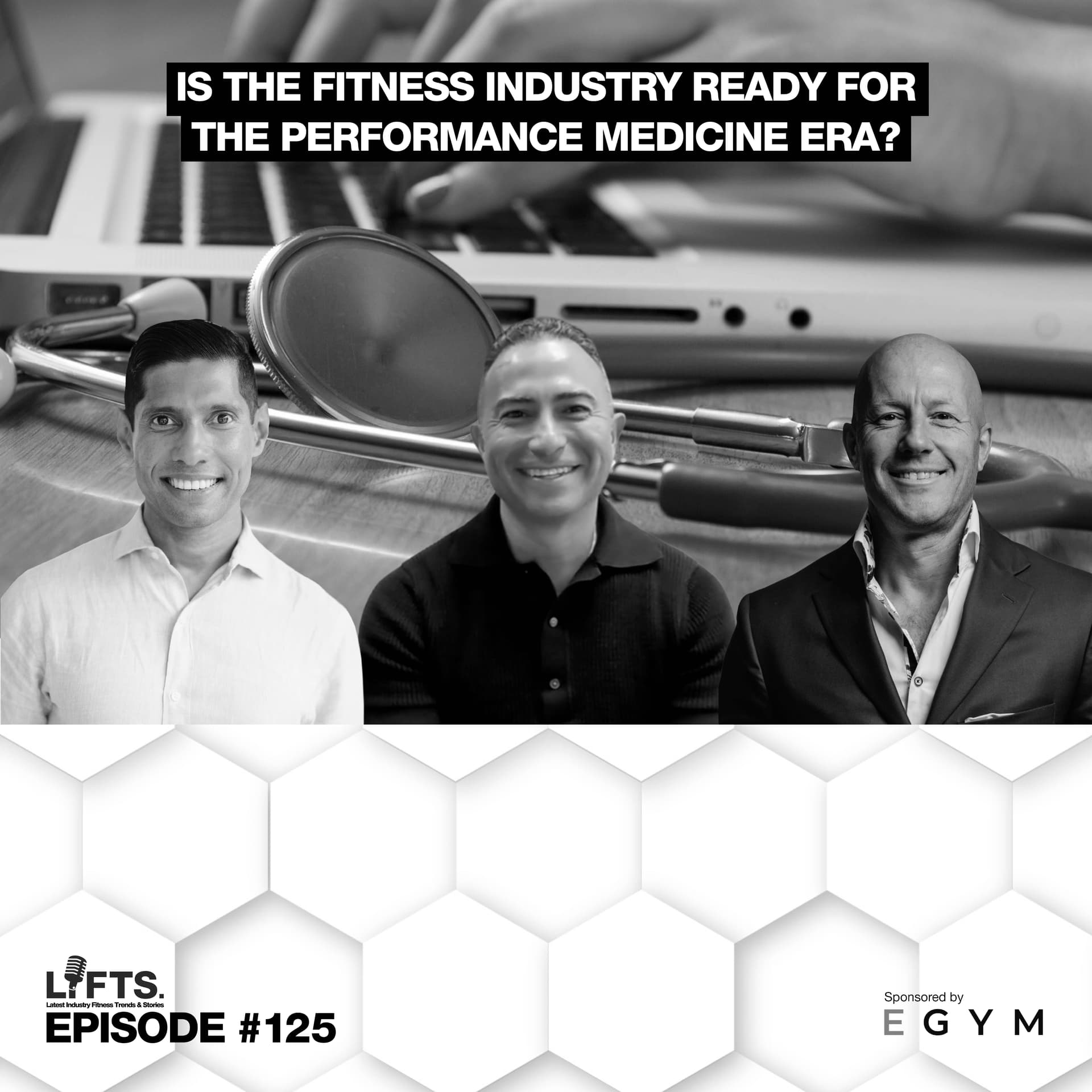
In this episode, hosts Matthew Januszek and Mohammed Iqbal are joined by Dr. Nestor Rodriguez for a deep dive into one of the biggest shifts happening across healthcare, fitness, and longevity: the move from reactive "sick care" to proactive performance medicine.
For decades, healthcare systems have largely focused on treating illness after it appears. But a new model is beginning to emerge - one centred around prevention, optimisation, diagnostics, recovery, and long-term human performance.
This conversation explores why consumers are becoming more proactive about their health, how wearable technology and biomarkers are reshaping the wellness landscape, and why the worlds of fitness, medicine, recovery, and longevity are starting to converge faster than ever before.
Dr. Nestor Rodriguez explains why the future of healthcare may look very different from the systems we know today. As consumers gain access to more data through wearables, recovery tracking, blood testing, and AI-driven health insights, expectations around health and wellness are rapidly evolving.
The discussion also examines the growing opportunity for fitness operators. As gyms continue evolving beyond exercise facilities into broader wellness and longevity platforms, operators may soon play a much larger role in preventative health, performance optimisation, and personalised wellness experiences.
The episode also dives into the limitations of the traditional healthcare system, the growing demand for personalised medicine, and why the next era of wellness may be built around continuous optimisation rather than reactive treatment.
In this episode, we cover:
- Why healthcare is shifting from "sick care" to performance medicine
- The rise of longevity, diagnostics, and preventative health
- How wearables and biomarkers are changing consumer behaviour
- Why fitness operators may become part of the healthcare ecosystem
- The future of personalised wellness and human performance
👉 To learn more about Dr. Nestor Rodriguez, click here: https://www.linkedin.com/in/nestorrodriguezmd
👉 To learn more about our sponsor EGYM, click here: https://bit.ly/3JzsosR
Support fitness industry news by sponsoring future LIFTS episodes. Contact us at wendy@liftspodcast.com for advertising opportunities.
Subscribe to our YouTube channel and turn on notifications so you never miss a new video when it's published: https://www.youtube.com/user/EscapeFitness
Or if you prefer, you can receive the latest news direct to your inbox, subscribe here:
https://www.liftspodcast.com/newsletter
Join the conversation at LIFTS LinkedIn:
https://www.linkedin.com/company/liftspod
Timestamps
0:00 Introduction
4:32 Why Healthcare Is Still Built Around "Sick Care"
11:48 The Rise of Performance Medicine & Longevity
19:42 Sponsor Message: EGYM
21:03 Wearables, Biomarkers & Consumer Health Data
30:14 Why Fitness & Healthcare Are Starting to Converge
39:08 The Future of Human Performance & Preventative Wellness