
In short
Modern gym retention—why “members” leave, how to measure retention when people use multiple facilities, and how to design experiences that reduce anxiety and create repeatable habits.
Guest backgrounds
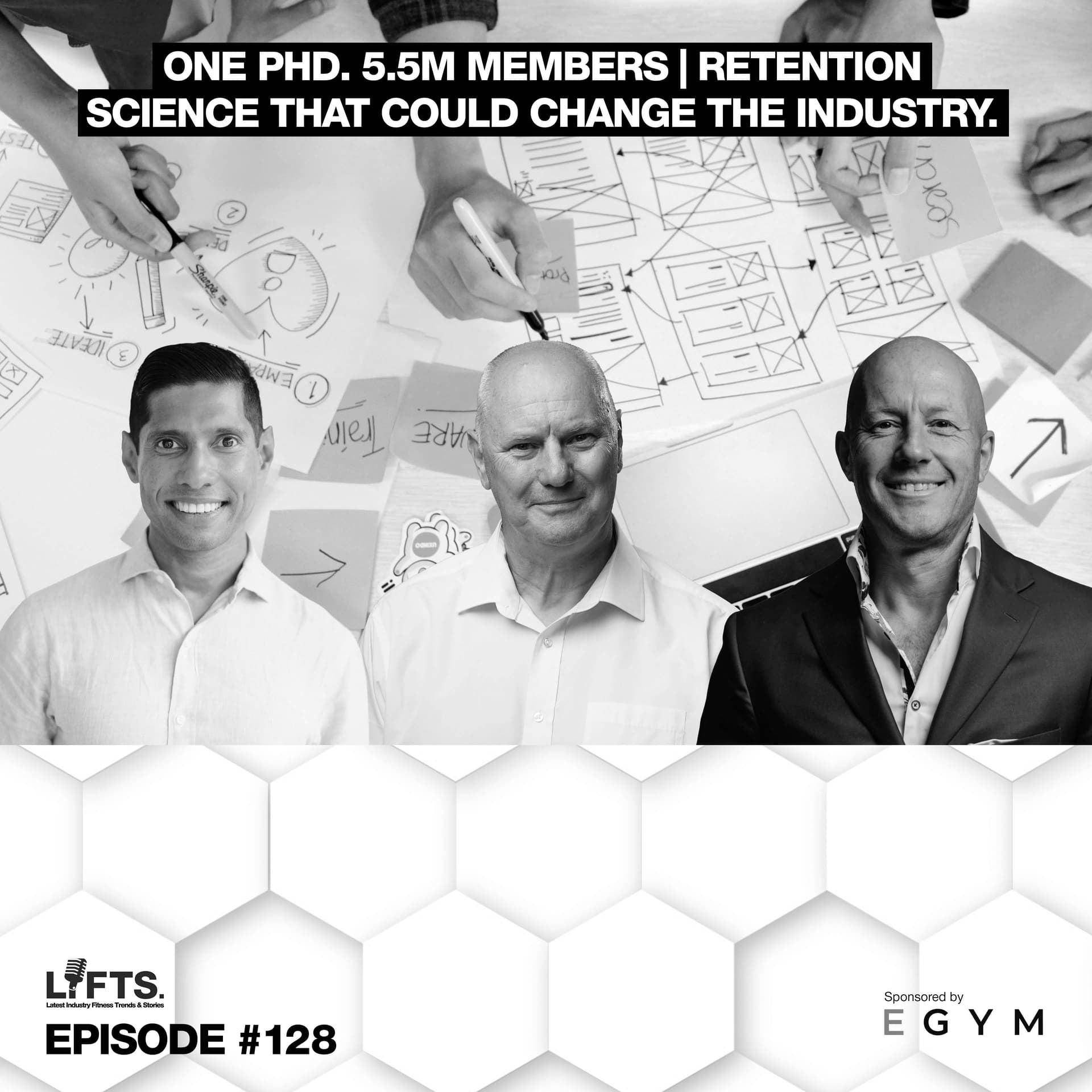
Dr. Paul Bedford, PhD in behavioral science focused on health club retention; started as instructor/personal trainer, became fitness manager/GM; built retention research analyzing behavior of 5.5M customers across 4,500+ clubs; ~200 international presentations in 31 countries; worked with 100+ companies across 4 continents.
Key claims
- Retention can’t be treated as a simple metric (joins/cancels/attrition) because consumers have many alternatives and expect flexibility.
- Operators often miscount “members” vs unique people due to multiple memberships and switching clubs.
- Inactivity is “resistance,” driven by anxiety/shame and feeling judged; members avoid the front desk after gaps and may lie about cancellation reasons.
- People don’t need exclusivity; they need repeatable positive experiences and “minimum dose” success.
Notable examples
- Niece: low-cost membership plus hot yoga and a run club—treated as a fitness “suite,” not abnormal.
- Daughter: anxious about an intimidating Muay Thai environment despite being an Olympian in taekwondo.
- Norway: unmanned gym culture includes taking off outdoor shoes and switching to workout shoes.
Written by AI. May contain mistakes. Listen to the episode to check what was said.
Chapters
Tap a time to open that second in VOThe Changing Landscape of Member Retention
0:00 to 0:37
Explore how member expectations for fitness experiences have evolved.
“Well I think traditionally operators have always looked at it as they are our members and we're going to ring fence them they belong to us and we're going to stop them going anywhere else.”
Introducing Dr. Paul Bedford
1:30 to 3:46
Learn about Dr. Paul Bedford's extensive background in fitness and retention.
“We've got a really special event planned there.”
Understanding Retention Metrics
3:46 to 7:18
Dr. Bedford discusses the historical perspectives on retention metrics and current industry challenges.
“We can't talk about retention typically the way that the industry talks about it.”
Consumer Behavior and Fitness Choices
7:18 to 9:21
A deep dive into how modern consumers approach fitness with more options and flexibility.
“conversation because our guest today has literally spent decades studying why members stay, why they leave, and what operators often misunderstood about retention.”
Redefining Retention Strategies
9:21 to 14:00
Strategies operators can adopt to improve member retention in a competitive market.
“So I wanted to ask you, do you think they're listening yet based on what Mo said?”
The Shift in Membership Dynamics
14:00 to 15:00
Explore how fitness facilities are adapting to retain members in a post-pandemic world.
“But I think the days of one member, one membership are coming to an end.”
Understanding Member Psychology
15:00 to 16:00
Discuss the importance of understanding member psychology and anxiety in fitness environments.
“Because like you said, they'll be doing alternative activities or other preferred activities with other suppliers.”
Building Exercise Identity
16:00 to 18:10
Learn about the significance of creating an exercise identity for members to enhance retention.
“because people are using many different locations.”
Brand Identity and Retention
18:10 to 21:10
Investigate how brand identity influences member retention in fitness facilities.
“So I think for new exercises, it's about that early stages of onboarding.”
Demographics and Gym Culture
21:10 to 24:00
Examine how different demographics interact with low-cost and premium gym cultures.
“The challenge with the low cost operators, whatever we refer to them as, is that then becomes the identity is generated by the other members.”
Show all 21 chapters
Global Fitness Brand Strategies
24:45 to 28:00
Analyze the strategies of international fitness brands and their adaptation in different markets.
“Pure Jim will recently acquire Blink and come to the US.”
Navigating Market Differences Between the UK and US
28:00 to 29:10
Explore the challenges faced by US brands entering the UK market and the importance of local adaptation.
Behavioral Analysis and Unconventional Insights
29:10 to 31:17
Learn about the unconventional behavioral segmentation by zodiac signs and its implications for member retention.
“They need to make sure they've got a really good UK marketing team that can interpret their traditional marketing into what's acceptable here.”
The Evolution of Membership Models
31:17 to 34:55
Understand the changing landscape of gym memberships and the potential shift towards utilization-based pricing.
“But it came from a discussion that I was having in China where I was being asked, does year of birth in the Chinese zodiac sign make an impact on retention?”
Challenges of Dynamic Pricing in Fitness
34:55 to 38:51
Discuss the potential pitfalls of dynamic pricing strategies in the fitness industry and member perceptions.
“One of the things that I think I spent a lot of time just thinking through and talking to operators around is we have gone, if you follow the evolution of memberships from annual contracts decades ago.”
Consistency vs. Intensity in Boutique Fitness
38:51 to 42:04
Examine how boutique fitness models reward intensity over consistency and the potential benefits of shifting that focus.
“So the pricing might have to reflect a less frequent visitor or the weather, you know.”
The Minimum Dose for Fitness
42:04 to 43:32
Learn about the importance of training with the minimum effective dose for long-term health.
“I'm not pushing myself to do HIIT classes and come out not being able to walk.”
Gamification and Motivation in Fitness
43:32 to 45:48
Explore how rewards and gamification can influence motivation in fitness.
Martial Arts and Motivation Systems
45:48 to 48:28
Discuss the differences in motivation systems between martial arts and other fitness regimes.
“I respond to that, but not in an exercise environment, if that makes sense.”
The Essence of Retention in Fitness
48:28 to 51:40
Understand the key factors that create meaningful experiences for retention in fitness businesses.
“But yeah, coming back, I think you make a good point around the minimum required dosage.”
Final Thoughts on Positive Experiences
51:40 to 53:48
Hear final insights on the necessity of ensuring positive experiences in fitness settings.
“But outside of that, for the vast majority of the population is, is the experience for why I'm showing up good enough?”
Transcript
Automatic transcript. May contain errors.0:00Well I think traditionally operators have always looked at it as they are our members and we're going to ring fence them they belong to us and we're going to stop them going anywhere else. I think members nowadays are going actually I don't want one experience I want multiple experiences. And if we ran it parallel to something like restaurants, you don't go to one restaurant exclusively and not go anywhere else in your spare time.
0:37Matthew Januszek:Right, we're live. Welcome to this week's episode of Lifts. I'm Matthew Januzik, and I'm here with my co-host, Mohamed Iqbal, who for the first time I can remember for quite a long time, seems to be in his home studio. So, Mo, how are you doing today? Good. I am in my home studio. I feel like I've been on the road a lot, but some of it just happens to be when we're recording the episodes. But I'm traveling, but I'm trying to think where I was last week. Was I in London last week? I was in Dallas, actually. Yeah. I'm sorry. Thank you. Dallas on the way to Los Angeles. There you go. I know more than you now.
1:12Yeah, I was on the way to Los Angeles, and I was in London the week before that. And next week, you actually don't even know this yet, but I'm going to be in Minnesota.
1:23Matthew Januszek:Oh, very good. And then I'm going to see you in person for the Athletic Summit, which we are pretty excited about. We've got a really special event planned there. Matthew, how about you tell the audience about the event we've got planned? yeah well we're looking forward to being part of the athlotech event in new york it was a great event last year and then this year we're having we're doing something a little bit special where we're collaborating with the team at connected health and fitness and we're going to be doing a private dinner on the tuesday evening where we've got about 30 select guests that are going to be there for conversations podcasting and uh and a great steak dinner in uh what is it i'm i I can't remember the restaurant, but it's, what is it?
2:08Matthew Januszek:Was it like Prime Rib or something like, I always call it Prime Rib. I don't want to give up the name because we don't want people to just crash and - Okay, all right, there you go. It is a very exclusive dinner. For the first time, we've never paired, we've done the dinners before, but we've never kind of done the podcast live with three very special guests, industry leaders, with an audience of industry leaders. and then we're going to have a private Q &A that we're not going to record and we I'm excited for the honest and very transparent open conversations in addition we're going to be at the event as well we've got a very special guest on I think I think we've had this gentleman on at least two or three times he always throws in a number of curveballs so I'm I'll let you do I'll let you do the honors Mo and introduce our guest today today today's guest has spent more than three decades studying one of the most important questions in fitness.
3:01Why do people join gyms? Then why do they leave? He started on the gym floor as an instructor and a personal trainer, went on to become a fitness manager, then a GM, then built one of the deepest research bodies in the world around member retention. His work has analyzed the behavior of five and a half million customers across more than 4 ,500 clubs and facilities. He's delivered almost 200 international presentations in 31 countries. He's worked with more than 100 companies across four continents, including companies that I'm at. He's completed a PhD in behavioral science, focused especially in health club retention.
3:39The industry has called him the retention guru, which I still call him as well. We know him also as Dr. Paul Bedford. Dr. Paul, welcome to Lyfts. Thank you, Mo. Hi, Matt. We can't talk about retention typically the way that the industry talks about it. I've spoken about this a few times at some events early this year. Here's some examples. For years, retention was treated as a metric. We talked about things like how many members joined, how many members canceled, what the average length of stay was, what the attrition rate was. And in many markets, operators had some protection, right? These were in the terms of long-term contracts, a lot of friction around cancellation, low usage was still translated to recurring revenue.
4:27and a consumer who had fewer fitness options than they do today. But fast forward to 2026 and even looking forward to 2027, that world is changing very quickly. Today, the fitness consumer has choice like they've never had before. They can join a low-cost gym, a premium club, a boutique studio. They can do fitness at home. Then there's a wearable ecosystem. There are influencer-led programs. There's AI coach. There's recovery studios. There's one clubs. and even events like Car Rocks, which are coming up with their own training programs. So the competitive set is no longer just that gym across the street.
5:04It's really anything that can replace the actual habit of going to the gym. And that really matters because our industry is growing rapidly and it's also growing globally. Here are some examples. In the U.S. today, fitness facility membership reached more than 81 million people in 2025, with more than 100 million people using fitness facilities in some form. And usage was incredibly strong as well. And this is a crazy stat, which I found out from researching for this episode. We had nearly 7 billion visits recorded in the US in 2025. And the share of members not visiting at all falling down to an all-time low of just 4.6%.
5:48And that is very different than 10 years ago. In Europe, the market continues to grow as well, reaching more than 75 million members and close to 40 billion euros in revenue. And yet, when we zoom out globally, the public health challenge is still enormous. We talk about the World Health Organization estimating that 31 % of adults and 80 % of adolescents do not meet the minimum standards of physical activity. So we have two large things happening at once. On one hand, the fitness industry is growing. But the need for fitness, health, movement, and behavior change is still much larger than the industry itself.
6:25And I think that creates a huge opportunity for us. But it also creates a much harder retention challenge. And that's because the modern consumer has more options. They have more information, more flexibility, and more ways to leave. They expect things like convenience and personalization, digital support, transparency in pricing. They expect flexibility. and increasingly they expect to be able to cancel as easy as it was for them to sign up. So if you operate a gym or studio today, whether you are a Planet Fitness, a Basic Fit, a Good Life, a Crunch, or a local boutique studio, retention might be one of the most important problems in the business.
7:04It's no longer enough just to sell a membership. You have to earn the next visit. You have to earn the next week. You've got to earn the next month. And ultimately, and I talk about this a lot, you've got to become a part of someone's life. And that's why I'm really excited for today's conversation because our guest today has literally spent decades studying why members stay, why they leave, and what operators often misunderstood about retention.
7:30Matthew Januszek:Very excited to have you back on. We've spoke a lot, Paul, and I was digging as I was preparing for this exercise, I was digging and you've been blogging quite a lot recently. And I found some of your, well, one of your blog posts that you did a couple of months ago, and it was referring to this, I think it's a book actually from the exercise sociologist, Mary McElroy. And her argument is something that the industry doesn't seem to have wanted to pay too much attention to. And it says that inactivity isn't apathy, it's resistance. And in your post, you refer to this self-protective response to environments that make people feel exposed or judged or like they don't belong.
8:15Matthew Januszek:And it references that mirrors aren't motivation for someone that's already self-conscious. They feel like they're surveillance. And that the fitness culture has spent decades moralizing exercise, trying to characterize it when someone stops coming. they don't just feel unfit, they feel as though they've morally failed in some way. And some of your data shows that members are avoiding things like the front desk after a gap, walking back in saying they've been bad or there's some kind of shame as opposed to a motivation problem. And then when they cancel, they lie about why they're canceling because the real reason is uncomfortable to say, which means that operators seem to be building retention strategies on data that doesn't necessarily reflect what you think is the actual reality.
9:06Matthew Januszek:So the question to you, Paul, is you've spent 20 years telling the industry that when members leave, it's not necessarily the members' fault. In some cases, there's a big impact that the operators have on this. So I wanted to ask you, do you think they're listening yet based on what Mo said? you know it does seem to be getting better but are the operators actually in the business of building fitness habits or do you think they're still selling memberships and causing churn some kind of personal failure of the of their clients okay so i think to answer this you know there's multiple parts to that but i think if you the industry's certainly growing um we're opening more clubs i do believe we're getting more members but one of the things that i think the industry is misinterpreting is they're counting memberships as members and so they're into if you've got i think in your introduction mo i think you said there was like 80 million memberships now or 80 million members now i already know three or four people that i speak on a regular basis who have three or four health club memberships.
10:22And if you ask the operators directly, you know, how many members have you got? Club one says I've got 1 ,000. Club two says I've got 1 ,000. So does three and four. But that one person could be members of four clubs and get counted four times. And if someone joins and leaves within a year between, you know, when you're surveying them, you could get counted twice because you were in one club and now you're in another. So I do think there's a little bit of not deliberate misrepresentation. I definitely don't think it's that. But I do think it's how we're counting check-ins and how we're counting members.
11:05I've just got this thing of I'm thinking some of that's memberships and it's not members. so i'm just curious how should operators think about retention in that case when the membership journey is really so frag frag because you're today and i've got a couple examples here right even if you look at apps most fitness if you're into fitness and you belong to the gym you have about 3.5 apps yeah that you're using yeah they might belong to low cost them they might be taking a Pilates studio as well. They may use this digital platform. They may be doing a Hirox. And right to your point, attending a sauna studio somewhere else.
11:47But how should we be thinking about retention? Because I think what you're saying is, are you one capturing all the value of that member or are you allowing them to go and have that experience somewhere else? Well, I think traditionally, operators have always looked at it as they are our members and we're going to ring fence them. They belong to us and we're going to stop them going anywhere else. I think members nowadays are going, actually, I don't want one experience. I want multiple experiences. And if we run it parallel to something like restaurants, you don't go to one restaurant exclusively and not go anywhere else in your spare time.
12:33You might have your favourite restaurant that you go to when it's a special occasion or on a regular basis. Then you might have somewhere else you go for something else because they do a different type of cuisine. And I think we're seeing much more of the consumer treating fitness like they would restaurant behaviour. and so I think the operator's role is to rather than saying we need them coming three times a week four times a week and fulfilling all their experiences here is it's thinking along the lines of if they're coming one or two times a week here and they sustain that behavior we should celebrate that and we should be focusing on how many weeks and months of membership we're generating rather than the visits per week just as a count of what's going on.
13:26I use my niece as an example, you know, case study of one. She has a membership at a low cost, high volume operation. She does hot yoga regularly, on a regular basis, but not every week. She's part of a run club and she doesn't see that as abnormal. normal that's just part of her fitness suite of activities so I think operators are going to really have to start thinking about we don't own the whole member experience and I know the big boxes are trying to do that and that's why they adopted a lot of the boutique approaches sort of post-pandemic and a lot of them are signing up to things like high rocks like you mentioned in the introduction to get people in or to keep them there.
14:15But I think the days of one member, one membership are coming to an end. And your role is now going to be, I need them to use my facility for as long as possible. So retaining them, but don't expect exclusivity from that member so then should the focus i guess otherwise said be to say identify the thing that you do well knowing why you remember it's a part of that gym and really yeah key in on that because you know that in the example of your niece she's going to go back to that facility whether it's that look hvop provider the boutique studio the run club over and over and over again as long as you don't change that and i think and i know that there's a rory sutherland the guy from ogle v who does a lot of really clever stuff on marketing you know he's always talking about doubling down on the thing that your competitor can't do do more of what they can't do that you can do really really well and I do think that's an approach I do think that's the approach we'll look at and it's you know from my side of things it's trying to measure retention is going to become even more difficult over time if you're talking about the individual and tracking everything that the individual does because one club won't be able to track all of that.
15:35Because like you said, they'll be doing alternative activities or other preferred activities with other suppliers.
15:41Matthew Januszek:So going back to this question then, Paul, about the post that you make in terms of the psychology of the member, feeling judged, feeling self-conscious. So if we sort of dovetail that into the previous comment, okay, we've got to figure out how we measure retention because people are using many different locations. That's one part. But what about when they do come in and how they feel about that experience? Like what would you do to comment on that point? So I'd start with, I think, if you're talking about new exercises and, you know, we have to, a lot of the way the industry markets is sort of markets to activity in terms of come and do this class, come and use the gym.
16:29But once they're in, I think we should be segmenting on behavior, how many times they're visiting, how long they're visiting for. So there's a different because they sort of after a while, they blend into more than one activity. But I think the. What's the best way of putting this? It's anxiety management with new exercises, but it's also anxiety management with experienced exercises in new environments. so I'll give an example I um my daughter trains she's a martial artist she trains at a Muay Thai gym and I take her training on frequently frequently I was sitting watching her train one night standing next to one of the other parents and we got chatting and she said she represented the UK in taekwondo at the Olympics and I was like wow I said how come you're not in there she goes oh no no no that's far too intimidating and I'm like you're an Olympian and you're anxious about going into that room because it's a different style of combat sport and so she goes in there almost as a beginner again and I think we underestimate the anxiety that drives behavior negatively in terms of if I come into an environment and I feel out of place.
17:55I don't feel like I look like everybody else. I don't feel like I've been accepted yet. Why would I stay? You know, I might as well sit at home with a packet of chips and be comfortable in my discomfort rather than go there and, you know, highlight all of that. So I think for new exercises, it's about that early stages of onboarding. It's the early creating or reducing anxiety keeping things really simple for people so they become successful really quickly um and that will help build the idea of an exercise identity i'm the type of person that does go to the gym to a studio to a class and works out because certainly when people first start they don't have that identity now all three of us have that identity no matter where we are in the world, even if on days we're not training.
18:52But we've built that over time. And it's taken us, you know, if you think back to when you very first started exercising, we had to be resilient in environments we weren't necessarily comfortable in. Yeah, that's a good point. And I wonder, you know, this goes back to, I talk a lot about the idea of having that brand be an identity or creating a lifestyle. I'll give you a couple of examples. I've had the good fortune of working with what I would call more premium brands, especially here in the US, very early with SoulCycle. And I got to see how they were able to leverage the hero instructor, the scarcity of classes, as they were scaling up, you could not get in the premiumization of it and just little things as it relates to even how the studio is set up, having the small hallways, bumping into each other, the creation of community and all of those things.
19:50At the same time, looking at brands like Equinox, you know, really the idea there behind what we've got to do was to make that your entire lifestyle, make that a part of your identity. But fast forward 10 years later, and I think identity is very personal. And in some ways, so you've seen brands that are outside the gym, such as High Rocks, become that identity. You've seen wearable companies like an Aura will become that identity. You might even see a digital company like a Peloton become that identity. Do you think, you know, if you're a gym, that how important does identity play into retention overall?
20:33Because for HLP brands, it's obviously something that's hard to create. No one's going to say identify with Planet Fitness, but they might identify with David Lloyd's. They might identify with lifetime i think that the premium segment has an identity component to it yeah and i think some of that identity with some of the premiums also status it's like i'm an equinox member or i'm a david lloyd member i'm you know i'm a member of a midtown athletic the identity part for me initially is all about the management of anxiety and improvement in terms of confidence and competence, their ability to exercise independently if required, and perform the exercises like in a way that they feel comfortable doing.
21:18The challenge with the low cost operators, whatever we refer to them as, is that then becomes the identity is generated by the other members. So if I go back to my niece and I said, you know, she's a member of a low cost, she's a member of a run club the run club are all members of the low cost but it's nothing to do with the low cost she's also a member of their social club which is nothing to do with the business is organized by one of the members and so people will form communities and create these identities they align with independently of an operator if there's someone there to facilitate it So you don't need, so, but the independent, the low cost operators are at the mercy of whatever the culture is within the club.
22:17Whereas someone like an Equinox, they're creating the culture, they're helping create the identity. In fact, their marketing pushes the identity of, you know, I'm more affluent, I'm health conscious, and I'm not like everybody else. How would you see that?
22:38Matthew Januszek:Paul, just to jump in there for a second. Like, I think you make an interesting point. And certainly many of the, a lot of US brands I've seen, I could see how that works. One of the interesting things I would like your view, if you look at the UK, there's two kind of low-cost brands. You've got Pure Gym and Gym Group, and then also now you have people like Everlast, JD Gym, that kind of fit into a similar category. Now, I would say that there'd be a very different identity for me. Like, I would see my mom and dad probably going to a Pure Gym and Gym Group, where I'd probably see a much younger person going into a different one, purely because of how the brand has positioned itself.
23:18Matthew Januszek:So how does that play in? Does that override what you've just said in any way? No, I don't think so. And I think depending on where, I think it's still locationally biased. So, you know, where I am, all four of those brands, only three of them exist in where I live. But if all four of them did, I think they would still generally attract a lower age group market. because the alternative for someone like your parents' age or someone of my age, I do train in those types of clubs, but I use them as a utility. It's a place to go train and leave. I'm not thinking of hanging about. It's convenient. It's got a lot of equipment.
24:00It also happens to be near somewhere I visit frequently, so I can pop in and have a workout. whereas the sort of the more mid-market are much more likely to start to generate this sense of I'm part of something because it becomes a destination rather than just a utility as a product.
24:35Matthew Januszek:AI-powered training programming, and corporate wellness via WellPass, eGym is leading the way in smart fitness. Visit eGym.com to learn more.
24:47I'm sure we could spend an entire episode on this next question I have for you here, but because your work spans with operators really around the world, how do you view, I guess I'll take one step back, when you've seen international brands, not that experience having Equinox go to the UK, or SoulCycle go into Canada and then the UK. Pure Jim will recently acquire Blink and come to the US. They don't find the success that they have in their domestic market. You're seeing brands like BasicFit go internationally, pick up a different modality like they did in Germany to go into franchising. You're seeing brands like Jim Nation do a tremendous job in the Gulf region.
25:30And I think the strategies really, one, consumers are very different and fickle around the world in their own way. The strategy needs to be very, very different. I guess the first part of the question is, what do you see differently around the world? And maybe you could break it down by markets at US, Europe, the Middle East. And then how should operators be thinking about these markets? So let me work backwards. How do I think they should be thinking about them? I think it's, and I can't remember the exact term, it's driving me mad, but it's like nationally representative, locally relevant. So it's modifying your product to match the environment you're working in.
26:17You know, I travel, like you said, I travel all over the world. I see Starbucks all over the world. I don't see the same products in Starbucks all over the world. There might be some core products, but you go to some countries and there's a much greater emphasis on the food rather than the beverage or the types of beverages that are available. You know, you go to some of the one of the ones that I was aware of when I was in the Middle East recently was the home brand from its home country would often have, I'm going to call them carpet tiles. That might sound a little bit old fashioned, but it's a carpet type flooring throughout the gym.
26:59Every locally developed brand had hard tiling. And everywhere you go, it's hard tiling because that makes sense in that environment. But I think, you know, the the operator coming in when this is what we do in our home country, we're going to drop that in. And it just didn't work. even down to how people use showers. I was in Norway last week and I was in a gym that has no staff. It's fully unmanned. Like if you can be fully unmanned, it's like no staff. They have some personal trainers work there, but there's no staff. Culture in Norway is when you arrive, you take off your outdoor shoes and you put on your workout shoes.
27:47and there were racks full of shoes of people who that's the normal thing to do whereas i think if a uk operator went into norway and didn't know that was the culture they wouldn't provide the things in the first place because they wouldn't think to do it because we don't do it in the uk you know so i think they have to be really mindful and i think having a local understanding of what's going on um can really really make a difference i think uh and i could be wrong with this when pure gym in the u.s converted the blink clubs into more of a pure model people are outraged by the entry pods because of the way they opened and closed it was weird for me i i was like what am i gonna get stuck in this thing yeah but here it's either that or like traditional turnstiles we're used to seeing that because they've always built them that way so our first impression is oh that's how they control excess you know there was even a joke at one point that in those pods they would weigh you to see to make sure that your weight was what you it was each time to prove that it was you not like using someone else's memory it wasn't it never did but you see it as creepy i see it as normal you know it's because i think it's where the brand originates from there can often be these you know we've seen a lot of u.s brands come to the uk as big operators and not be successful and i think it's because it's like and i don't and it's not just with the us brands if you were solid core who's now coming they've announced that they're coming to the uk I don't know how familiar you are with SolidCore, but if you were talking to them, what are some words of advice you would give to them?
29:41They need to make sure they've got a really good UK marketing team that can interpret their traditional marketing into what's acceptable here. And also have a really strong operations person who understands the UK market. So what I refer to as COI, different businesses call them different things. but someone who really understands how to operate a business in the UK and then look at the solid core model and go, OK, that might work in the US. We'll try it here, but don't stay wedded to it. I think what I've seen in the past over the years is people wedded to their original concept and not prepared to modify it regionally.
Read the full transcript
30:32And I think that's where people have struggled.
30:34Matthew Januszek:One of the things, Paul, that I found interesting, particularly coming from you, really, was that there was another post you did, which was talking about how operators segment their members in very, very similar ways to what they always have done, which is demographics, visits that you mentioned earlier, frequency and spend. and it seems like you did some analyzing around behavior patterns across multiple large data sets and something kept surfacing which was date of birth and you you did this piece where you'd group them into the four zodiac categories which was fire earth air and water and it produced these different behavioral profiles and it got me thinking look you've got you know you've got a phd 5.5 million data points and 30 years of peer-reviewed research and i was just i was just curious you know what what it seemed a little bit of a strange thing to link astrology into some of this scientific work like how did what was the thought process behind that okay matthew gonna hate me for this you need to look at when it was published because it was published oh okay It was published on the 1st of April.
31:48Okay, now you're telling me. Okay, that definitely makes...
31:54Matthew Januszek:But... Is there any... Okay, then. Is there anything in that then? Or is that like, it's an April Fool. You definitely got me on that one. I got lots of people on that one. But it came from a discussion that I was having in China where I was being asked, does year of birth in the Chinese zodiac sign make an impact on retention? and I was like I doubt it but let me have a look because sometimes you just have to look outside of what you think you know and then we did it I'd you know and I I'd meant to have published that about three years ago um and I had it all laid out and then I had someone sit down with me who actually is really into astrology and go I'm saying which of these signs would behave like this and they go oh that would be a taurus and that would be and i'm like we don't see it we don't see it but i think sometimes you have to look for things that you don't expect to give you insights to give you insights and you know i i come from that training background of academia and you know too often i hear people say oh if it's not that you know if it's not um um oh what's that i forgot the term like the validated approach you know it's got critic you know it's had a critical analysis and all these things i'm like you know everything starts with an idea i said there's no evidence base to start with you have to have an idea go and test something produce it you know it has to be evidence-based whenever we go oh training has to be evidence-based well some point it start with an idea you know go back to people like charles poliquin charles was using what was already evidence-based but then going actually i've got this idea about the importance of the the postural chain in terms of the way the the back plays and the glutes play in sport i i did that because it was an april fall but i think the industry gets tied up into the metrics it's always measured and i think some of that's driven by investors i think the investors want you know things that they're familiar with and seeing as numbers rather than things that you go actually have you thought about this like dwell time it's people who stay longer in the club do they stay longer as members when do people start buying personal training because if you only track the number of convert when they first sign up you'll miss a huge cohort of people who sign up after six months so that was a joke but i'm caught i'm always conscious of looking for things that are will this give us an insight is it is it an indicator um and can we use that paul the next topic i want to talk about the changing member models or changing membership plans.
34:56One of the things that I think I spent a lot of time just thinking through and talking to operators around is we have gone, if you follow the evolution of memberships from annual contracts decades ago. In fact, some countries today in Asia still have annual contracts. You pay for your membership, you know, one year at a time to then going to twice a year to then monthly contracts. Now you could join and cancel at any time. I think the next evolution of that is really going to be, the gym is going to be free. And you are only going to be paying for utilization when you show up to the gym or what facilities you use within the gym.
35:32And a lot of that's been driven by the evolution of, I think, alternative payment types and payment methods, looking at the class passes, the well hubs. So whether it is they're using an aggregated model or it's been more of a corporate membership play. I'm just curious to get your perspective on And do you think that gyms have to be looking forward and saying we have to be more flexible in our membership? Yeah, I think so. But I think you have to also be mindful to not have too many different offerings. Because as soon as you start having too many different offerings, people then worry about making the wrong decision to buy rather than, you know, being clear about what they are buying.
36:14I think what you'll have is experienced exercises. And this is what we've seen. experienced exercisers don't mind signing up for longer periods if they get a discount on that because they know they're going to use it whereas new to exercise are often anxious about whether they'll be able to stick to this so they're often naturally moved towards the low cost operators because of the the cost of join or the use is low to start with so the risk in risk reward the risk is quite low. I do think we're seeing already more people using, you know, almost pay as you go, as I would refer to it, pay per visit.
36:56The challenge for operators is that money can go away really, really quickly. And in fact, when we did research on the boutique market, you know, people who were paying for even like paying for individual sessions or short packs of five really didn't stay. It was the people who were paying for greater packs. So we're buying 10s, 15s, 20s, they'd stay longer. And when some of the boutiques we worked with had a membership, the people who signed up to membership always stayed longer than the people who paid per visit. So I think there's going to be some real challenges. And I think, you know, you were talking about utilisation.
37:37I often joke, and I think one of the blogs I did a number of years ago was on, imagine an industry where we only got paid on results. How many operators would go out of business if you got paid once the client got the result? Which we're calling outcome-based, right? Look, I don't think that's far out. I would argue that people are going to be asking for that and saying, I'm going to commit to you. and as long as I show up and I do the things you tell me to do. Because as an industry, we're more connected than ever with wearables and food logging. I think we're going to be seeing that model not be in the fringes, but I think we're going to see some mainstream brands in the next five years come out with outcome-based metrics.
38:28But I think the challenge around... I like the outcome-based metrics thing. I am really happy with that. I think the challenge with paying per visit is, you know, climactic conditions can change. And if you're in the, like, some of the northern states in America, the snow comes in, it's like, well, I'm not going today because of the snow. Clubs don't get the money, you know. So the pricing might have to reflect a less frequent visitor or the weather, you know. And I don't think dynamic pricing is ever going to work in the fitness industry because i don't think we have a couple we don't have a lack a lack of resource so i hear lots of people going oh we're going to do dynamic pricing where the price moves up and down i just won't go when it's expensive or i won't join when it's expensive it's not like a flight where i actually need to be somewhere on a certain date and if i don't buy it early enough i'm gonna have to pay more i think you're gonna have a lot of challenges to that in fact we should clip that little piece out and put it out because I'd love to get comments in ministry.
39:36I know some good people. Matthew, you and I know Felipe.
39:40Matthew Januszek:Yeah, I was on a call yesterday just about it, who seems to be working like it's still early days and we definitely have to get Felipe on with you probably, Paul. But the first few months are extremely successful for him. So yeah, that'll be an interesting one. But the interesting thing is, Matt, and I don't know how he's doing it but it's that it's working for him but will it work for the members long term because you know how you feel when you go online to book a flight and the price is one thing and then you come back an hour later and it's almost double you're like you hate them well you think it's you think you've been cookied and uh every time and i think in some cases when you do go back on it goes up and up and up and so i think there's a natural distrust in now they've ping something to me and they're just you know yeah pulling the wool over my eyes and thinking i'm stupid but i'm what i'm saying is also i don't want to say anything against felipe because he's a great client and i don't know how his model is working but we did some dynamic pricing modeling for an operator probably more than 10 years ago and they were a low-cost operator and what they reported back to us once they'd applied it was people just waited till the price went back down before they joined you know it's almost like waiting for black friday well i'm not buying it this week because next week it's going to be on sale and we've also got now a much broader offering so i can just go down the road just just to jump on that because it because it kind of um not not it conflicts but it just there was a question around boutiques and one of the things i i read and i hope this one isn't an april fall but you see but it said that you you felt that some of the boutique operators get it wrong when they reward intensity over consistency.
41:24Matthew Januszek:And I suppose what were you talking about previously was that we were rewarding around results. So for me, aren't results intensity in some ways. And if we did start rewarding around consistency, which I guess also leads to results, do you think that would change in any way the the the model of the boutiques um but in a positive uh aspect well the boot the boutiques already at some level do reward and recognize consistency with their like i think it's pure but it might not be pure bar but one of the bar businesses is like you've done a thousand workouts peloton do it with the hut the century ride they're recognizing milestone visit frequency and that's total visits rather than that rather than consistency but i think what a lot of the boutiques did was they went for the maximum intensity rather than the minimum dose required so the way i train now is i do as the only the amount i need to do and no more even though i have greater capacity.
42:42I'm not pushing myself to do HIIT classes and come out not being able to walk. I'm going to do things that give me the benefits, but none of the negatives. There's a guy I think he'd be useful for you to talk to at some point. He's a tech guy. I was talking to him at an event recently. His name's Steve. He created, using Claude, a behavioral model for himself about what he needs to do now to still be able to do this range of behaviors he's defined when he's 80 and so rather than killing himself he's going he's saying you need to be able to do this amount of walking you need to be able to lift this amount because they've he's worked out how much he's going to lose so it's still long-term goal setting but instead of goal setting for like ultimate performance is like the minimum dose required to be able to still live the life i've currently got i have another quick question for you before we go to our wrap-up here is do you still think rewards and gamification and law i mean you kind of talk about gamification with the milestone um based recognitions but but do you still think that they are valuable today as they were 10 years ago yeah no i do think they are and i but i do think they need to they they fit the types of rewards and the types of gamification fit like there are different models for different businesses a bit like if you look at games you know you've got one person shoot them up you've got group games you've got fantasy you know that the the the sense that gamification is the same thing for everybody i don't think is true we've just finished working with an operator that gamifies the workout and rewards with medals and we were able to show that their approach certainly increased lifetime value so everybody that was going for medals whichever level of medal they were going for it was increasing their lifetime value by somewhere like five to seven months compared to people who weren't doing it so but not everybody's driven by it you know if i went into the what those workouts and they go oh you could earn this medal i just don't care you know it's it's not a motivator for me so i think which is different because my my three-year-old we signed up for this race series here in arlington virginia and every sundays at four o 'clock they run like a 50-yard dash for kids and all season she did not want to go she's like i'm not running i'm not running today dad not doing it yeah but then the last day of the season if you ran that last race you get a medal she said i'm running today because that was what motivated
45:35Matthew Januszek:her i don't know if it's age is is it age or is it a setup because i'm you know for me i'm i've been doing my zone for for like a decade i think it's 12 years and but for me i'm just like i've got to get to the top and then I'm done with it kind of thing so I don't know whether it's necessarily is do you think Paul it's more of a kind of psychological thing how certain people are wired or I do think it's I think it's what people put value on and I think you know when you're talking about my zone and you're trying to get to the next level that's the that's the zagarnik effect it's a psychological effect where you want to complete something and you keep working on it till it's completed and that's how gaming works in terms of going up levels and you know and all those types of things.
46:18I respond to that, but not in an exercise environment, if that makes sense. So the Zagarnik effect still has an impact on me. It just doesn't do it in an exercise environment.
46:31Matthew Januszek:It must work for your daughter, though, because she's like with a belt system. Well, yeah, no, she's a good father. Yeah, but she's – but, no, well, the thing is, It's like the style of, we were talking about this the other week. In lots of the Japanese-based martial arts, you have a belt-based system that gives recognition. Oh, right. In Muay Thai, there's no belts. There's no evaluations. It's fights. So all they go, the questions you get asked, if you walk into a Muay Thai gym, first two questions are, how old are you and what do you weigh? Because they're trying to think, can they match you?
47:10And then they go, how many fights have you had? and it's based on the fighting um whereas like the japanese ones it's like oh i've gone from white belt to i'm gonna say yellow then red then orange but i think that's more of a western thing where we've been able to like layer on um fees there's a grading you gotta pay for a grading We want another one. So you got to pay for another one. You know, Muay Thai is very similar to boxing in that it's based around the actual sport. And so she's not motivated by any type of bell. All she wants to do is fight the best fighters. So she'll look down the rankings and go, I want to fight them next.
48:00Because she wants to test herself against the best fighters rather than have this um mechanism or this measurement that is sort of arbitrary or decided upon by someone else we know if she's won or lost and sometimes it's really close but at the end of the day it's like there's a fight you win you lose it's only you and no one's judging you on the quality of what you're doing they're judging you on did you win it or not so well paul it's been great to have you on we love to wrap up with a final thought um matthew i want to start with you but i don't want you to use an april fools reference that's all posted as a final takeaway i'm never going
48:39Matthew Januszek:to live that one down am i that like he definitely got got me on that's all right no look all it says is you were going through the different posts that i've done and there was a few people messaged me on the day going yeah you got me yeah you got me i didn't i didn't pick up so now but Now I'm going to be aware in future whenever I do my research into what they've written. I'm like, what date did they say that? But yeah, coming back, I think you make a good point around the minimum required dosage. Like one of the things I've been doing with my own training, we got a product called Load and we do this strength training.
49:17Matthew Januszek:And it's almost like I've sort of termed it the Pareto workout, which is, you know, what's the 20 % that has the 80 % of impact? And I think in, certainly in my experience, I've been working out for like 30 plus years now. And I definitely can, you know, sometimes I go through periods where I do a lot, do not a lot. But I know there's a few things I need to do where I can pretty much keep myself in shape and maintain my muscle. And I do think there's something in that. And I don't know whether technology now will allow us to figure what that minimum dosage is. I don't know whether people like eGym, who's one of our sponsors, by the way, no plug, but whether they're able to figure that through some of the technology that they've got.
50:04Matthew Januszek:But I do think that's a really interesting thing, because in a lot of cases, we don't need to do as much as what we think. We don't need to kill ourselves. And particularly as you get above 40, I think being able to have this outcome base, but the minimum dosage, I think there's something quite interesting in that. And I want to know whether you've got any thoughts on that, Paul, as well. Well, I have this concept. It's not my concept, but it's optimizing versus satisficing. Optimizing is, I think, where all the technology is taking us. How many reps, how many sets, how much rest, how much sleep, what should we eat?
50:41It's numbers based. Satisficing is when I turn up and just do enough and I've done something and I walk away internally fulfilled that I've done something today rather than nothing. And I think we don't give enough value to that, just the turning up and doing something, because that would probably be when you're describing it, those stages where you're not training as hard, but you're doing something and you're doing this minimum required. and I think with as people age I think we're looking I think we should be focusing on that what's the minimum you need to do rather than how fit can we get you because not everybody's motivated by that they're motivated by I just want to be able to get up out of the sofa without using my arms or you know all the old cliches about play with my grandchildren they make a difference but i don't need to be an athlete to do those things
51:42Matthew Januszek:yeah mo takeaways from today's episode we covered a lot we did i think the biggest one for me which i noted down here is that retention is really about whether the experience becomes meaningful enough to repeat because you're never where the consumer is going today it's not about and i guess some clubs can achieve that in the premiums like David Lloyd's Lifetime and Equinox, where they had this large facility, multiple use, childcare included, which for parents of young kids is so important. But outside of that, for the vast majority of the population is, is the experience for why I'm showing up good enough?
52:25So I think it's back to the fundamentals, Paul, in a lot of ways. like you mentioned, clean facilities, understanding your local community, awareness around equipment, how to use that equipment. It goes back to the basic fundamentals, even though we live in this age, in this AI era. I think a focus on the fundamental is going to be one of the key levers for retention.
52:47Matthew Januszek:Paul, if there was one final takeaway, then you could leave for anyone listening, boil down your many years of experience. What would you like to leave the listeners with today? I think some of it's what most just said is definitely each visit has to create some level of positive experience. The positive experience doesn't necessarily have to be a high five or a meaningful conversation, but it's not a negative experience. The person's leaving with because at the end of each workout and before the next one, there'll be a process where people will evaluate the last one and go, did that? was that good enough, as Mo suggested, to repeat again?
53:30Or am I going to go somewhere else? And so I think a lot of operators need to start, if they've got the resource to do it, double down on their staff and thinking like, how do we make the experience a positive experience relative to the individual? Well, Paul, it's been fantastic to have you on. And for all of you listening, thank you so much for joining us. If you have not watched us on YouTube, please do. We do share data and reports on YouTube as well. And you also get to see our pretty faces most of the time. And we have also released a Lyft Brief. Episodes like this, including Hollish in the episode, will be in the Lyft Brief.
54:10And if you've not signed up, you can go to our website, lyftspodcast.com to sign up for that. We are also excited just to expand our platform. We're showing up to cities. We've got the Atletech event next year and would appreciate you liking the episode, telling more people about it so that we can have incredible guests like Paul back on.
From the publisher
Welcome to LIFTS, where we explore the future of fitness, wellness, and human performance.
In this episode, hosts Matthew Januszek and Mohammed Iqbal are joined by Dr. Paul Bedford, founder of The Retention Guru and one of the fitness industry's leading authorities on member retention, customer experience, and consumer behaviour.
After analysing more than 5.5 million gym member records worldwide, Dr. Bedford has spent decades helping operators understand one of the biggest challenges facing fitness businesses today: keeping members engaged for the long term.
This conversation explores why retention remains one of the most misunderstood metrics in the fitness industry and why many operators may be focusing on the wrong things. As consumer behaviour continues to evolve, the traditional membership model is being challenged by a new generation of fitness consumers who increasingly belong to multiple gyms, studios, communities, and wellness brands simultaneously.
Dr. Bedford shares insights into why members really leave, the critical role community plays in long-term engagement, and why every member interaction contributes to retention. The discussion also examines how operators can create more meaningful experiences and why positive experiences, not extraordinary ones, are often the foundation of long-term loyalty.
The episode explores the future of member retention, changing consumer expectations, and what fitness operators must do to remain relevant in an increasingly competitive market.
In this episode, we cover:
• What 5.5 million member records reveal about retention
• Why members really leave gyms
• The rise of multi-membership consumers
• Why community drives long-term engagement
• The retention data many operators ignore
• What fitness businesses must do next
👉 To learn more about Dr. Paul Bedford, click here: https://www.retentionguru.com
👉 Connect with Dr. Paul Bedford on LinkedIn: https://www.linkedin.com/in/drpaulbedford/
👉 Follow Dr. Paul Bedford on Instagram: https://www.instagram.com/retentionguru/
👉 To learn more about our sponsor EGYM, click here: https://bit.ly/3JzsosR
Support fitness industry news by sponsoring future LIFTS episodes. Contact us at wendy@liftspodcast.com for advertising opportunities.
Subscribe to our YouTube channel and turn on notifications so you never miss a new video when it's published: https://www.youtube.com/user/EscapeFitness
Or if you prefer, you can receive the latest news direct to your inbox, subscribe here: https://www.liftspodcast.com/newsletter
Join the conversation at LIFTS:
https://www.linkedin.com/company/liftspod
https://www.instagram.com/lifts.podcast/
Timestamps
0:00 Introduction
3:15 Why Retention Matters More Than Ever
8:22 What 5.5 Million Members Reveal
15:04 Why Members Really Leave
21:48 Sponsor Message: EGYM
22:20 The Future of Multi-Membership Consumers
30:11 Why Community Drives Retention
38:42 The Retention Data Most Gyms Ignore
47:18 Creating Positive Member Experiences
55:02 What Operators Must Do Next